The myths that won't quit
Few cars have accumulated as much mythology as the first-generation Ford Mustang. Decades of enthusiast lore, dealer talk, and secondhand auction descriptions have layered misconceptions on top of solid history until the two are nearly inseparable. This article takes each of the most persistent classic Mustang myths and sets the record straight using factory documentation, production records, and the words Ford actually used. For a broader look at how these stories formed and spread, start with the myths hub.
Myth 1: The "1964 and a half" is an official model year
Walk through any classic-car show and someone will point to an early Mustang and say, with complete confidence, "That's a genuine '64 and a half." The phrase is everywhere. It is also entirely unofficial.
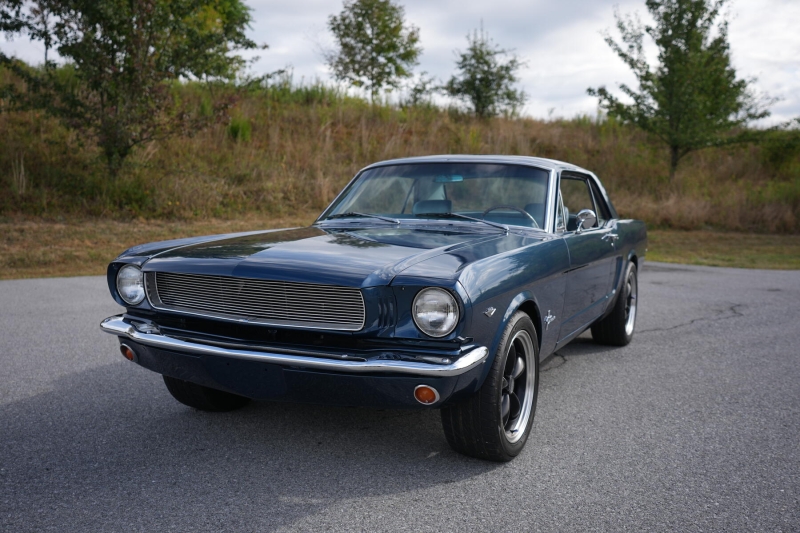
Ford introduced the Mustang on April 17, 1964, at the New York World's Fair, partway through its 1964 production calendar. Because the car arrived mid-cycle, collectors later coined "1964½" to distinguish the early cars from the slightly revised units built after August 1964. The problem is that Ford never used that designation on any title, window sticker, or internal build document. Every Mustang produced from that April introduction through the close of the 1965 model year was titled, registered, and sold as a 1965 model. The VIN structure on those early cars confirms it: the model year digit reads 5.
The practical difference between an early 1965 (the so-called "1964½") and a late 1965 is real. The early cars used a generator rather than an alternator, had a slightly different instrument cluster, and lacked some options that arrived later in the run. Those differences matter to restorers chasing correctness. But calling the car a 1964 model is a collector invention, not a factory fact.
Myth 2: Every fastback is a GT
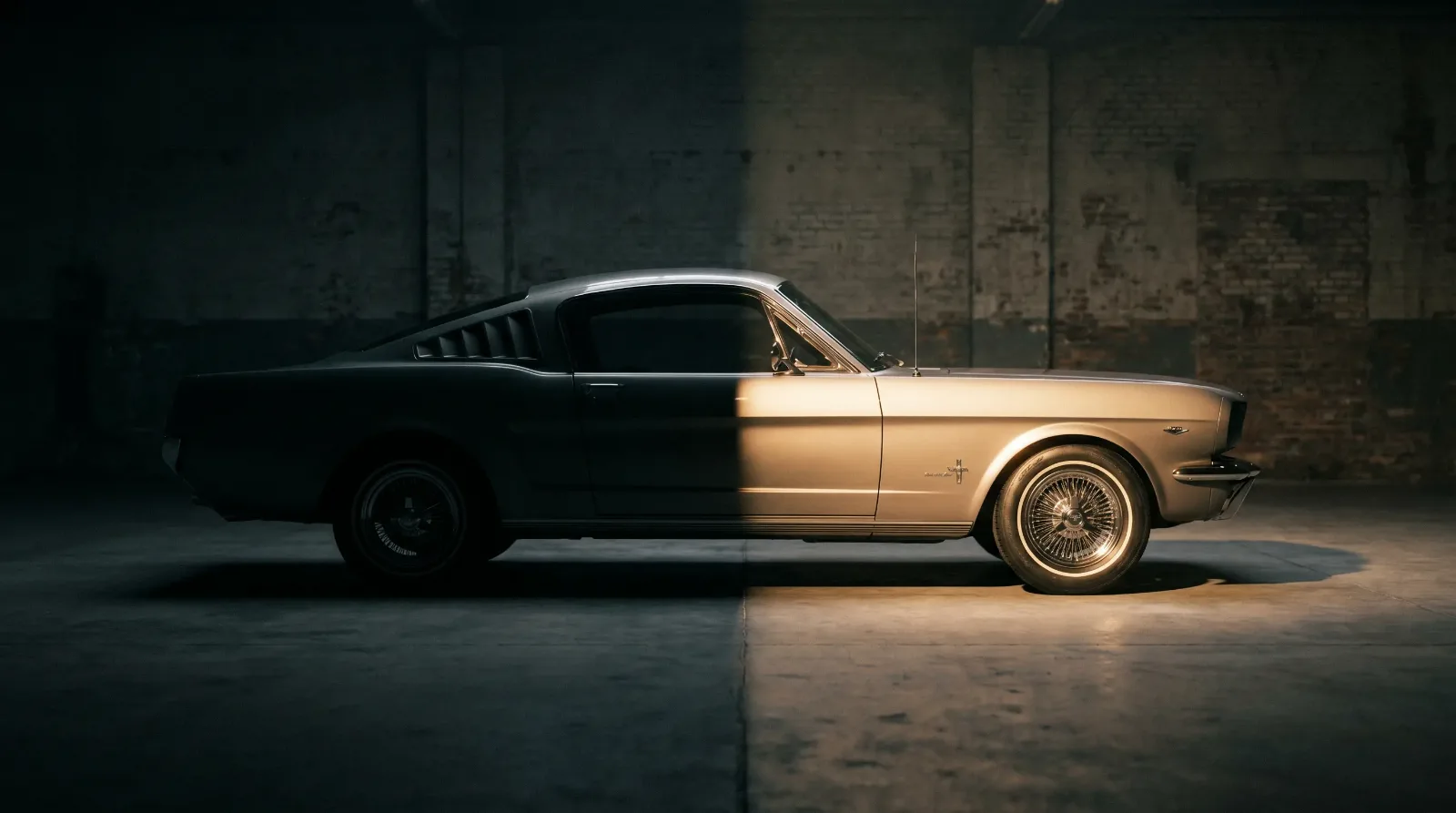
The fastback body style, known in Ford's terminology as the 2+2, is visually dramatic. The sloping roofline reads as performance, so it is easy to assume that any fastback wearing a running horse is automatically a GT. That assumption is wrong, and the confusion costs buyers money when sellers list ordinary fastbacks at GT prices.
The GT was an option package, not a body style. Ford offered the GT Equipment Group starting in 1965 as a separate add-on that could be specified on the hardtop, the convertible, and the fastback. It included features such as fog lamps in the grille, rocker-panel stripes, disc brakes, and specific exhaust outlets. A fastback without the GT package is simply a fastback. A GT hardtop is rarer than most people expect, precisely because buyers could order the package on any body style.
When evaluating a car, look for the broadcast sheet or door-tag codes rather than the body shape. A "GT" claim without documentation is a claim worth questioning.
Myth 3: Any Shelby Mustang is a GT500
The GT500 name carries enormous weight in the collector market. The 428 Cobra Jet, the aggressive hood scoops, the seven-liter displacement mythology. So when people say "Shelby," many picture the GT500 automatically. In reality, the GT350 came first and remained the foundation of the Shelby program.
Carroll Shelby began transforming Mustangs into race-ready machines with the GT350 in 1965. That car used a high-output 289 cubic-inch small-block, and its purpose was road racing homologation. The GT500, with its big-block engine, did not arrive until the 1967 model year. Through 1966, every Shelby Mustang built was a GT350 or GT350H (the Hertz rental variant). Lumping all Shelbys together as GT500s erases the entire early chapter of the program and misrepresents what made those 1965 and 1966 cars significant.
Shelby also built the GT500KR ("King of the Road") in 1968 and a convertible GT500 in 1968 and 1969. The lineup is more varied than the shorthand suggests, and each model has its own production numbers, engine specs, and documentation requirements for authentication.
Myth 4: The K-code and the Hi-Po are two different engines
This one trips up even experienced Mustang owners. "K-code" and "Hi-Po" circulate as though they describe separate powerplants, sometimes implying that one is superior to the other. They are the same engine, described two different ways.
The K-code refers to the VIN digit that identifies the engine option. In the first-generation Mustang's VIN structure, the fifth character indicates the engine. The letter K denotes the high-performance 289 cubic-inch V8 rated at 271 horsepower. "Hi-Po" is simply the enthusiast nickname for that same engine, short for high-performance. Ford's own marketing used "High Performance 289" as well. Whether you call it the K-code, the Hi-Po, or the High Performance 289, you are talking about one engine: the solid-lifter, high-compression 289 with its distinctive intake manifold and valve covers. Decoding the VIN is the definitive check.
"Every time I see a listing call it a 'rare K-code Hi-Po,' I know the seller thinks they're two separate things -- they're not, and a 30-second VIN read confirms it."
— Tom Ramirez
Myth 5: First-generation Mustangs all share the same body
Enthusiasts sometimes refer to "the first-gen Mustang" as a single unified design, as though a 1965 and a 1971 are variations on an identical shell. The reality is that the car grew substantially across its first generation, and the differences are not subtle.
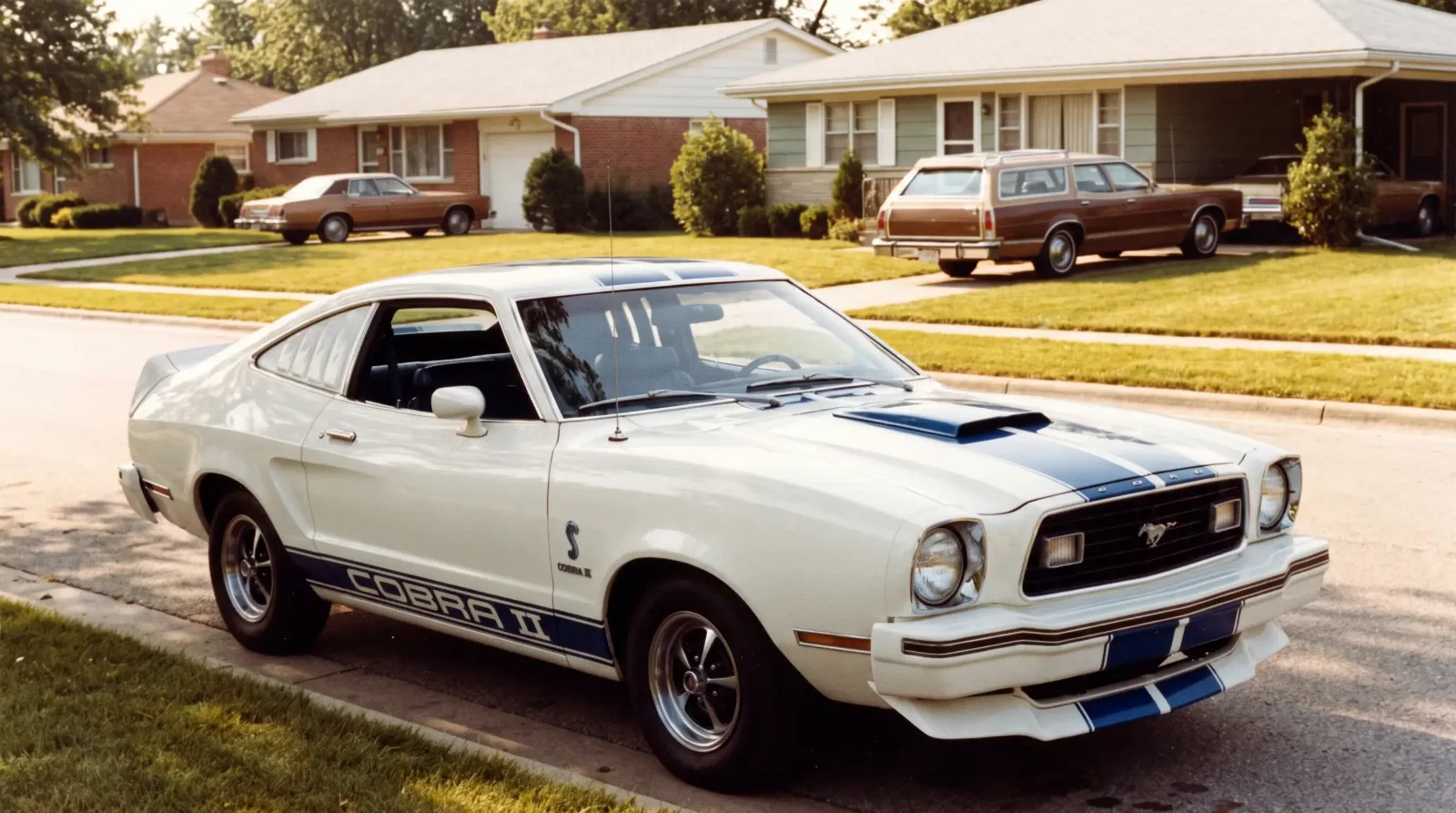
The original 1964 through 1966 Mustangs were built on a relatively compact 108-inch wheelbase with a body width that reflected the era's emphasis on lightness and agility. For 1967, Ford redesigned the body to accommodate big-block engines such as the 390 FE and, later, the 428. The body grew wider, the nose longer, and the overall mass increased noticeably. Then for 1971, Ford made an even more dramatic change: the wheelbase stretched to 109 inches, the body ballooned in width and length, and the hood became the long, flat expanse now associated with that generation. A 1971 Mustang weighs hundreds of pounds more than a 1965 and shares no sheet metal with it.
Understanding how the car changed across its first generation helps explain why they handled the way they did, particularly how the 1971 model's added bulk affected its dynamics compared to the nimble early cars.
Myth 6: The running horse tells you the car is original
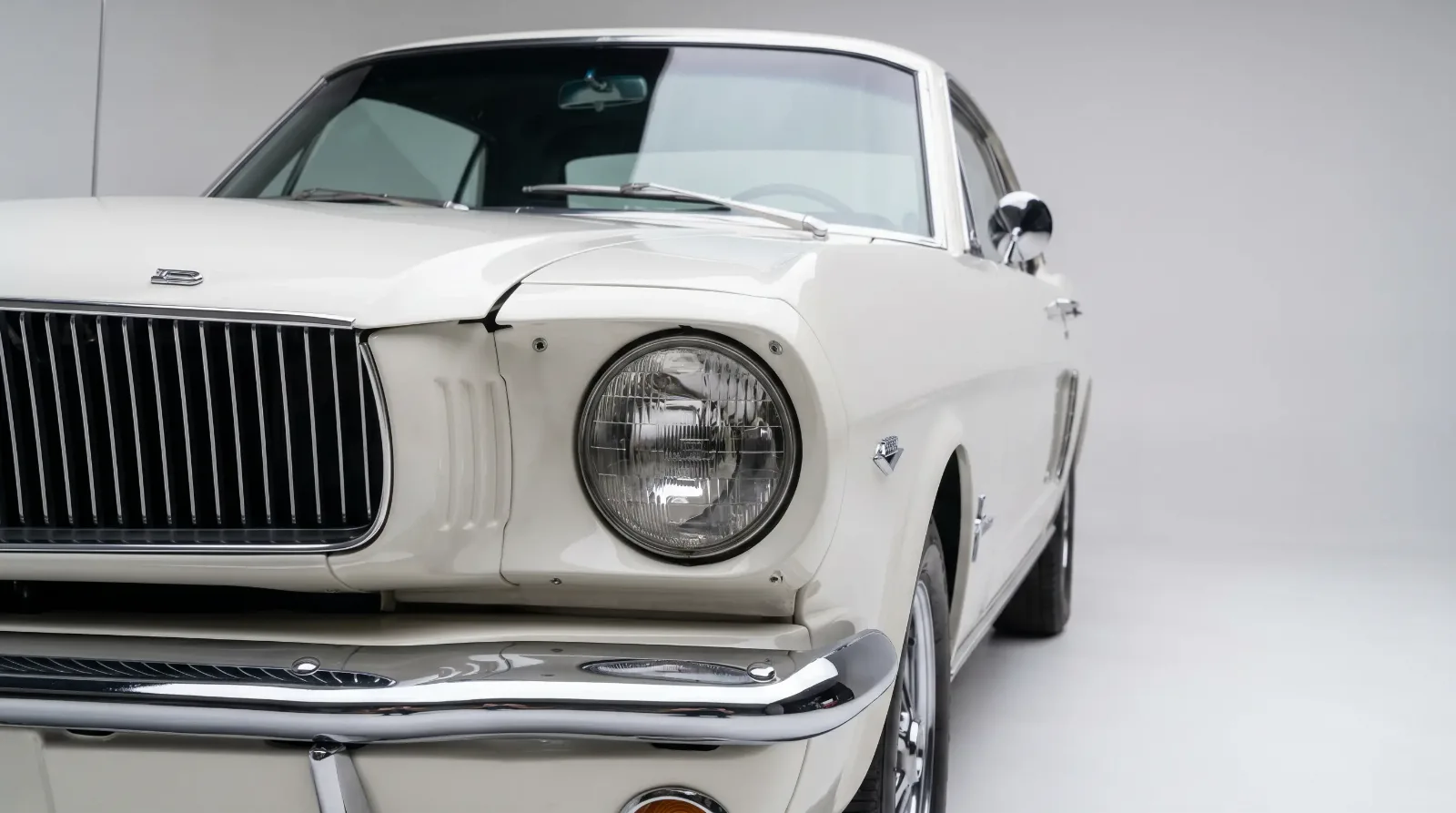
The galloping pony emblem, centered in the corral of horizontal bars on the front grille, is the Mustang's most recognized symbol. It is also one of the easiest badges to reproduce and one of the least reliable indicators of a car's originality.
Reproduction emblems, grille assemblies, and fender badges have been available through the aftermarket for decades. A car with a shiny, perfect-looking pony emblem may simply have had its grille replaced at some point in the last sixty years. Conversely, a car missing the emblem or carrying a faded one is not necessarily less original; it may have had the badge removed for a repaint and never replaced. Documentation, not emblems, establishes originality. The broadcast sheet (the paper Ford inserted into the car's body cavity at the factory), the door-tag codes, and a professional body analysis for original paint under body panels are the tools that actually answer the question.
Buyers relying on the presence of a pony badge to verify authenticity are looking at the wrong evidence entirely.
Sources and notes
This article was fact-checked against the sources below. Figures and historical details reflect the best available published records; for any specific car, always verify originality through factory documentation, VIN and data-plate decoding, and a qualified inspection. Production numbers and sales figures can vary slightly between sources.
- Ford Mustang (first generation) — Wikipedia: model-year designation of early cars, body and wheelbase changes (108 in. for 1965–1970, 109 in. for 1971), and the ~22,000 first-day orders.
- Shelby Mustang — Wikipedia: GT350 debut in 1965, GT350H Hertz program in 1966, and GT500 arrival for 1967.
- Classic Industries — 1964½ (Early 1965) Mustang VIN & Data Plate Decoder: all early Mustangs carry a 1965 (digit 5) VIN model-year designation.
- ClassicMustang.com — 1965 Mustang information: GT Equipment Group offered on hardtop, convertible, and fastback body styles.
- Over-Drive Magazine — The Hi-Po 289 CID V-8: the K-code and "Hi-Po" are the same solid-lifter 289 rated at 271 hp.
- Hagerty — Mustang Memories: April 17, 1964: the April 17, 1964 introduction and overwhelming initial order volume.