A Tank Built for Strategy, Not the Open Road
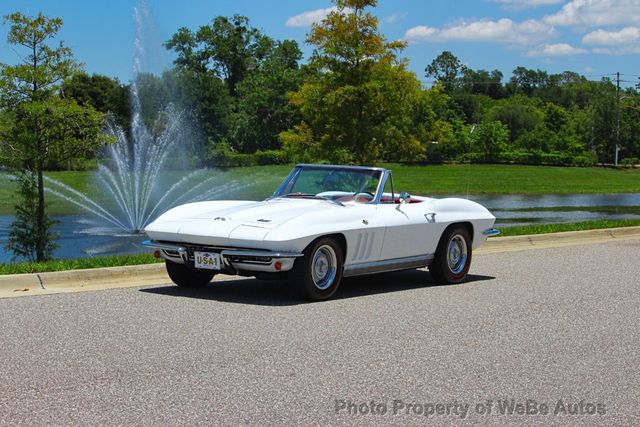
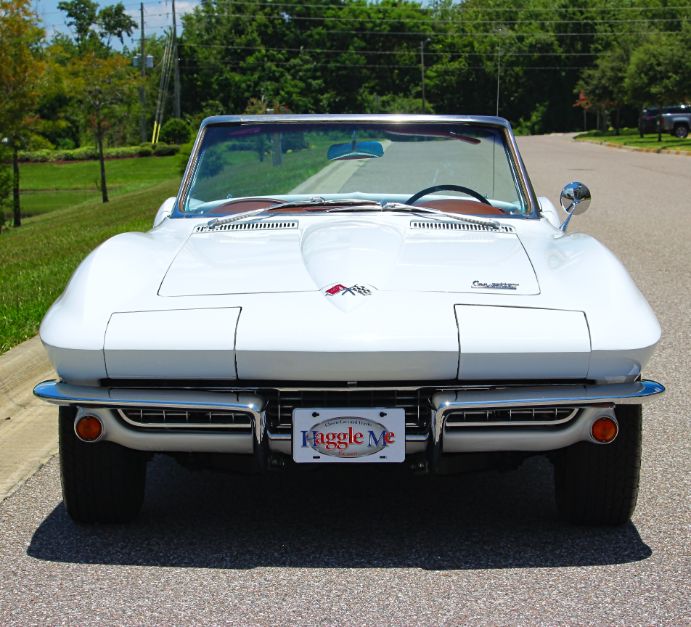
In the early 1960s, endurance road racing operated under a set of rules that rewarded engineers as much as drivers. The SCCA's GT class regulations dictated minimum fuel stop intervals and defined what constituted a legal road car — and inside those constraints lived an enormous amount of competitive room. Chevrolet's racing engineers understood this. When they assembled the 1963 Corvette Z06 package, they were not building a grand touring machine for wealthy enthusiasts. They were building a race car that happened to have a license plate.
At the center of that thinking was a single component that most buyers would never notice on a spec sheet: a 36.5-gallon fuel tank. Standard Corvettes of the era carried a 20-gallon unit. The Z06 option more than doubled that capacity, filling most of the car's trunk and eliminating the spare tire entirely. On paper, it looked like an odd choice. On a race circuit, it was the whole point.
Reading the Rulebook Before the Blueprint
Racing regulations have always driven engineering decisions more reliably than any abstract performance goal. Fuel stop rules under SCCA GT-class endurance formats created a clear mathematical problem: if you must stop anyway, the question becomes how many times and when. Every pit stop costs time — not just the stop itself, but the acceleration back to speed, the mental disruption of rhythm, the small risks that come with a busy pit lane. A car that could complete more racing laps between stops gained a structural competitive advantage that had nothing to do with horsepower.
Chevrolet's engineers ran the numbers. A 36.5-gallon tank, paired with the Corvette's fuel consumption at racing speeds, could meaningfully extend stints compared to a competitor running a standard-capacity fuel cell. At a six-hour event, the difference between two stops and three stops could be worth several minutes — and at the top of GT-class competition, several minutes was the margin between a podium and an also-ran.
This was not a new idea. The intersection of fuel capacity and endurance strategy was well understood across the GT-class racing world by 1963. Carroll Shelby's Cobra teams made similar calculations. Ferrari's preparation of the 250 GTO for GT-class competition involved careful attention to tank capacity relative to circuit fuel consumption. Later, the Ford GT40 program would refine the approach further in prototype-class racing. What made the Corvette Z06 notable was that this thinking was baked into a factory option — not a privateer modification, but a deliberate product decision from a major American manufacturer.
GT-Class Tank Capacities: The Z06 in Context
| Car | Year | Fuel Tank Capacity | Class / Context |
|---|---|---|---|
| Chevrolet Corvette Z06 | 1963 | 36.5 gallons (optional) / 20 gal. std. | SCCA GT-class endurance racing |
| Ferrari 250 GTO | 1962–64 | ~29–35 gallons (varied by race prep) | FIA GT-class; Le Mans, Tour de France |
| Shelby Cobra 289 | 1963–64 | ~18–30 gallons (race-prep dependent) | SCCA A-Production; FIA GT entries |
| Ford GT40 Mk I | 1964–65 | ~40 gallons | FIA prototype class; Le Mans |
The pattern is consistent: serious GT-class racers of this era all sought to carry as much fuel as regulations and weight budgets allowed. The Z06's 36.5 gallons placed it squarely within this strategy, and ahead of most road-derived competitors in practical capacity.
Where the Tank Lived — and What It Displaced
The physical accommodation of the big tank required a complete rethinking of the Corvette's rear storage space. The tank occupied essentially the entire trunk. The spare tire was gone. Any pretense of touring practicality evaporated. What remained was a car with an extremely specific purpose: racing.
This is worth lingering on, because it speaks directly to why the Z06 package produced such low production numbers. When a buyer checked the Z06 box, they were not selecting a performance upgrade in the conventional sense. They were committing to a race car. The trunk was a fuel cell. The suspension tuning was calibrated for track surfaces. The brake system — which we will return to — was designed for repeated hard stops from racing speeds. Driving one of these cars to the grocery store was not the intended use case. Driving one to Sebring or Road America was.
Only around 199 Z06 Corvettes were produced for the 1963 model year. Of those, the large-tank variant represented a subset — a car within a car, configured specifically for teams serious enough about endurance racing to forgo even the minimal convenience of a spare tire. These were not collector purchases. They were working race cars ordered by privateer teams and factory-supported efforts alike.
"The big tank option is the clearest evidence we have that Chevrolet's engineers were thinking about pit stop mathematics before they thought about anything else. That's not how you build a sports car. That's how you build a race strategy in hardware."
— Jim Vasquez, motorsport historian
The Braking System: Same Philosophy, Different Problem
You cannot understand the 36-gallon tank in isolation. It was one component of a coherent race preparation philosophy, and that philosophy extended with equal rigor to the Z06's braking system.
The 1963 Sting Ray in standard configuration used a conventional drum brake setup adequate for road use. The Z06 package replaced this with sintered metallic brake linings — a competition material that resisted fade under the sustained thermal loads of repeated hard braking on circuit. The drums themselves were finned aluminum, increasing surface area for heat dissipation. Ventilated backing plates allowed airflow through the drum assembly, further managing temperature. These were not upgraded street brakes. They were race brakes that happened to be installed on a car with a VIN.
Consider what this combination demanded of the car's systems in a typical endurance event. The big tank created a heavily loaded front-to-rear weight balance in the early laps when the fuel was full. The race brakes had to manage deceleration from high speed under that load, lap after lap, before heat built to levels that would destroy conventional linings. As fuel burned off over a long stint, the car's balance shifted and braking behavior changed. The driver and crew had to account for this evolution throughout the race.
This is a systems engineering problem, and the Z06 package solved it with remarkable coherence for a factory option in 1963. The tank determined the pit strategy. The brakes determined how aggressively the car could be driven at the end of a long stint without brake fade compromising the stop. Each component made the other one viable. Without the big tank, the heavy-duty brake package was overcomplicated for a race of shorter duration. Without the race brakes, the big tank's extended stints would eventually expose the car's braking limits at exactly the wrong moment.
Rarity as a Function of Purpose
The 199-unit production total for the 1963 Z06 has made it one of the most sought-after C2-generation Corvettes in the collector market. But the rarity was not a marketing decision. It was the natural consequence of building a car that served a single purpose extremely well and served nearly every other purpose poorly.
Buyers who wanted a fast Corvette for weekend drives had better, more comfortable options within the lineup. The Z06's competition-grade suspension was harsh on public roads. The absence of a spare tire was an inconvenience that no amount of performance justification could eliminate for a daily driver. And the price premium for the package was substantial — buyers were paying for racing components, not prestige options.
The result was a car that found its way almost exclusively to racing teams, serious amateur competitors, and a small number of well-connected enthusiasts who understood what they were buying. This self-selecting customer base kept production numbers low and preserved the Z06's character as a genuine competition vehicle rather than a boulevard performer.
Some Z06 cars were campaigned extensively through the 1963 and 1964 racing seasons, accumulating race damage, modification, and wear that eliminated their concours value long before the collector market matured. Others were maintained more carefully, but the attrition rate on cars used as intended was significant. The combination of low production and hard use explains why survivors — particularly those with documented racing history — command the attention they do.
The Legacy of a Single Option Checkbox
Looking back across six decades of automotive history, the 36.5-gallon tank option reads as something genuinely unusual in the American performance car story: a factory-installed racing component chosen not for its aesthetic appeal but for its strategic value in a specific competitive context. It required understanding race rules. It required doing math about pit stop timing. It required accepting that the resulting car would be fundamentally less useful for anything outside of a race circuit.
Chevrolet made that option available, and a small number of teams and drivers chose it deliberately. The cars they received were not fast Corvettes with extra features. They were purpose-built race cars that wore the Corvette's fiberglass body because the rules required a connection to a production vehicle. The trunk held fuel instead of luggage because the rules rewarded fewer pit stops. The brakes were built for endurance because the rules demanded cars survive multi-hour events.
The 1963 Z06 is often discussed in terms of its engine output, its suspension specifications, or its role in establishing the Corvette's racing credentials. All of that is accurate and worth understanding. But the big tank is the detail that reveals what the engineers were actually thinking. It is a piece of race strategy made into metal and rubber, fitted inside a trunk, and checked as a line item on a production order. It is, in its quiet way, one of the most honest racing components ever offered on an American car.
For anyone tracing the full arc of the Corvette's history, the Z06's 36.5-gallon tank represents a moment when Chevrolet's engineers looked at the rulebook, looked at the competition, and made a piece of hardware that answered both. It was racing intelligence expressed as an option package, and the cars it produced were exactly as good at their intended purpose as the thinking behind them.
Sources and notes
- Corvette Action Center — 1963 Z06 Specifications and Production Data
- Muscle Car Definition — 1963 Corvette Z06 Big Tank Option History
- Sports Car Club of America — Historical GT Class Regulations Reference
- Hemmings Motor News — 1963 Chevrolet Corvette Z06 Feature
- ConceptCarz — 1963 Chevrolet Corvette Z06 Production and Specifications