Why the Solid Rear Axle Held the Corvette Back
From the moment the first Chevrolet Corvette rolled off the Flint assembly line in 1953, it carried a fundamental compromise that no amount of horsepower could fully mask. Beneath that fiberglass body sat a solid, or "live," rear axle — a simple, robust piece of engineering that connected the two rear wheels on a single rigid beam. When one wheel hit a bump, the other rose with it. The axle behaved less like a precision instrument than like a seesaw bolted to the chassis.
The implications for handling were severe. A solid axle adds enormous unsprung weight — the mass of components that move with the wheels rather than being cushioned by the springs. Every pound of unsprung weight reduces the tire's ability to stay in contact with the road surface over imperfections, and the C1 Corvette's rear axle assembly weighed somewhere north of 150 pounds. On a smooth highway, this was irrelevant. On a winding road or a race circuit, it was a serious liability. The wheels would hop, skip, and lose traction precisely when a driver needed grip most.
There was also the phenomenon known as axle tramp — a violent, rhythmic bouncing of the rear axle under hard acceleration as the torque reaction caused the assembly to wind up and release repeatedly. A Corvette with 300 or more horsepower feeding through a solid axle could literally shake the rear wheels free of the road surface in a lurching, uncontrollable dance. Chevrolet engineers added torque rods and traction bars as band-aids, but the root cause remained. The car was, at its core, a powerful straight-line machine struggling to disguise itself as a sports car.
Zora Arkus-Duntov's Solution
Zora Arkus-Duntov had been pushing for independent rear suspension on the Corvette almost since the day he joined General Motors in 1953. The Belgian-born engineer, who had driven Allard-Cadillacs at Le Mans and understood European sports car dynamics intimately, knew that the solid axle was the single biggest obstacle between the Corvette and true sports car credibility.
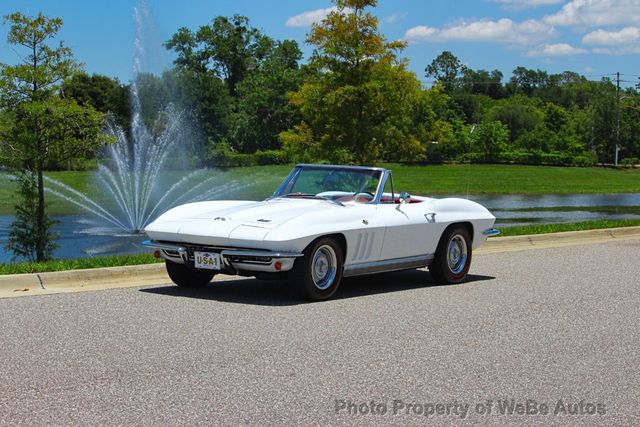
His opportunity finally arrived with the all-new 1963 Sting Ray. The C2 was a clean-sheet redesign — new body, new frame, new suspension front and rear — and Duntov used that blank canvas to engineer an independent rear suspension system of elegant simplicity. The design centered on three key elements working in concert.
First, a transverse-mounted multi-leaf spring served double duty as both the springing medium and a structural element of the suspension geometry. Unlike a conventional coil-spring setup, this single fiberglass-composite-reinforced unit spanned the rear of the car, connecting to a differential carrier bolted solidly to the frame. This arrangement reduced the weight Duntov needed to allocate to separate spring housings and helped centralize mass.
Second, U-jointed halfshafts replaced the single solid axle tube. Each rear wheel was driven by its own independent shaft, connected at the differential with a universal joint and at the wheel hub with a second joint. This arrangement allowed each wheel to move vertically through its travel without disturbing the opposite side — the fundamental mechanical advantage that independent rear suspension provides.
Third, a three-link arrangement per side controlled the wheel's path through suspension travel. Two trailing arms and a lateral strut rod located each hub in three-dimensional space, preventing unwanted camber changes and toe variations that might otherwise cause the car to wander or twitch under load. The geometry was carefully calculated to maintain near-constant camber as the wheel moved through its arc.
What Changed on the Road
The transformation in the Corvette's dynamic character was immediate and profound. Contemporary road tests from 1963 used language that had never before been applied to a production American sports car. Car and Driver described the new Sting Ray as capable of cornering "with the precision and balance of a fine European GT." Motor Trend noted that the rear end now tracked cleanly through sweeping bends rather than fighting the driver for control.
The specific improvements were predictable from the engineering, but visceral to experience. Axle tramp under hard acceleration essentially disappeared. Without a rigid beam connecting the rear wheels, there was nothing to wind up and release. Power could be applied earlier and more aggressively out of corners, a critical advantage both on the road and in competition. The rear wheels tracked independently over rough pavement, maintaining contact and generating grip even when the surface was broken or uneven.
"With independent rear suspension, the Corvette finally behaved the way it looked. The body had always promised European-caliber handling. Now the chassis could deliver it."
— Road & Track, 1963 Sting Ray first drive
Comparing the C2 directly to period European rivals revealed how far the gap had closed. The Jaguar E-Type, introduced in 1961 with its own sophisticated independent rear suspension, had set a new benchmark for sports car dynamics at an accessible price. The new Corvette was not the E-Type's equal in every respect — particularly in steering feel, where Jaguar's rack-and-pinion setup remained more communicative than the Corvette's recirculating ball — but it was now competing in the same conversation. Road testers who had previously excused the Corvette's handling on the basis of its raw power no longer needed to make excuses.
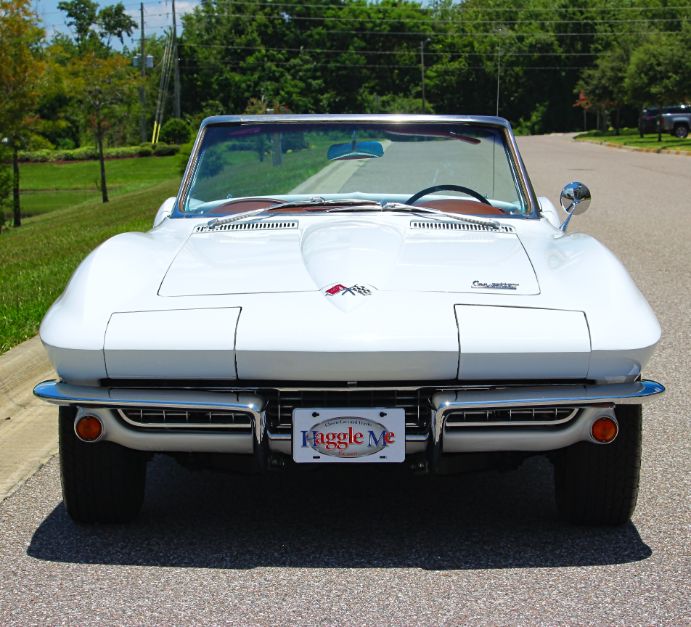
The 1963 split-window coupe remains the most visually iconic expression of the C2 generation, but it was the suspension underneath that made the car genuinely competitive by international standards.
The Weight Penalty and the Tradeoff
There was one uncomfortable reality that Duntov's team had to accept: the new IRS was heavier than the solid axle it replaced. The halfshafts, the differential mounting hardware, the additional control arms, the U-joints — all of it added up. Estimates at the time placed the weight penalty in the range of 30 to 50 pounds compared to the outgoing solid-axle assembly.
For a car that wore performance as its primary credential, this was not a trivial concession. More mass is more mass, regardless of where it sits. But the crucial distinction was in how that weight was distributed. The additional pounds in the new IRS system were largely sprung weight — mass that moves with the chassis, cushioned by the springs, rather than mass that moves with the wheels. The net result was actually a reduction in unsprung weight at the rear corners, despite the overall mass increase. The tires could now follow the road surface more faithfully, and that improved contact patch was worth far more than the raw weight penalty cost in straight-line acceleration.
Duntov understood this tradeoff clearly and made no apologies for it. The goal was not to build the lightest possible car but to build the most capable one. A Corvette that could lap a race circuit quickly was more valuable to General Motors — and more credible as a sports car — than one that could shave a tenth of a second off its quarter-mile time.
A Legacy That Outlasted Three Generations
What Duntov designed for the 1963 Sting Ray proved so fundamentally sound that General Motors carried it forward with only evolutionary refinements through three subsequent Corvette generations. The C3, which replaced the C2 in 1968, retained the transverse leaf spring, U-jointed halfshafts, and three-link rear geometry in essentially identical form. The C4, which arrived for the 1984 model year, modernized the design with aluminum components, revised geometry, and eventually a new aluminum frame in the ZR-1 variant, but the conceptual DNA traced directly back to Duntov's original work. It was not until the C5 of 1997 that the Corvette adopted a fully revised rear suspension design with a torque tube and independent transaxle layout.
Thirty-three years is a remarkable lifespan for any engineering architecture, particularly in a performance car where competitors continually raised the bar. The durability of Duntov's design reflected both its inherent soundness and the refinements that successive generations of engineers layered onto it. Each iteration improved on the original — better geometry, lighter materials, more precise calibration — while honoring the fundamental insight that had made it work.
The Corvette's broader story is inseparable from this moment of engineering ambition. Before 1963, the car was an American muscle car with a sports car's body. After 1963, it was something genuinely different: a purpose-designed sports car that could be discussed in the same breath as the best Europe had to offer. The independent rear suspension was the mechanism of that transformation — not the only factor, but the most decisive one.
| Feature | C1 Corvette (1953–1962) — Solid Axle | C2 Corvette (1963–1967) — IRS |
|---|---|---|
| Rear suspension type | Solid (live) rear axle with leaf springs | Independent with transverse leaf spring and halfshafts |
| Unsprung weight (rear) | High (~150+ lbs including axle housing) | Significantly reduced; halfshafts and hubs only |
| Wheel independence | None — one wheel's movement affects the other | Full — each wheel operates independently |
| Cornering behavior | Axle tramp under power; limited cornering grip | Stable, progressive; competitive with European rivals |
| Ride quality | Choppy over rough surfaces at speed | Noticeably smoother; better wheel-to-road contact |
| Overall rear assembly weight | Lower (simpler hardware) | Higher (~30–50 lbs more), but more sprung weight |
| Architecture continuity | Used through 1962 model year | Carried forward through C3 and C4 (to 1996) |
The engineering calculus Duntov made in 1963 — accept a weight penalty, gain a handling advantage — defined the Corvette's character for a generation. It was the moment General Motors stopped asking whether the Corvette belonged in the sports car conversation and started answering the question on the road.
Sources and notes
- Car and Driver — Corvette History Feature — Long-form retrospective covering the engineering milestones of each Corvette generation, including the 1963 IRS introduction
- Motor Trend — 1963 Chevrolet Corvette Sting Ray Original Road Test — Period road test documenting the dynamic improvements of the new IRS over the solid-axle C1
- National Corvette Museum — C2 Generation Overview — Institutional overview of the 1963–1967 Corvette, covering technical specifications and historical context
- Hemmings Motor News — The Real Story of Zora Arkus-Duntov — Biographical account of Duntov's engineering philosophy and his role in developing the C2's suspension
- Road & Track — Corvette IRS History — Technical history of the independent rear suspension across Corvette generations C2 through C4