The Same Car, Two Different Stories
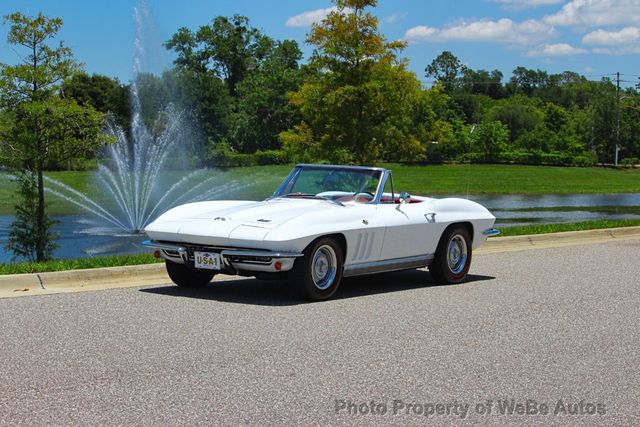
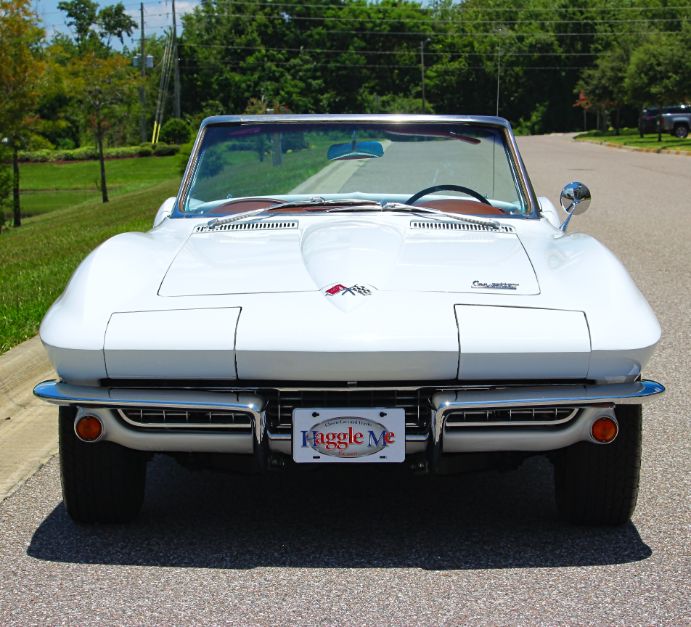
Between 1963 and 1967, Chevrolet offered the Corvette in two body configurations for every model year of the C2 Sting Ray generation: a fastback coupe and an open convertible. At the dealership, buyers chose between them based on taste, budget, and whether they wanted a roof over their heads. In the decades since, collectors, historians, and the auction market have rendered a more complicated verdict — one where the two body styles have diverged sharply in value, symbolism, and the stories people tell about them.
Understanding why requires looking past the surface. The coupe and the convertible were not simply the same car with different tops. They were structurally distinct, built differently, sold in different numbers, and they have come to represent different ideas about what a collector car is supposed to be.
Steel and Structure: What the Roof Actually Did
The engineering reality underlying the C2's body-style debate is often underappreciated. The coupe's roof was not decorative. In a body-on-frame car of this era, the closed roof panel and the pillars flanking it contributed meaningfully to the overall torsional stiffness of the structure — the resistance to twisting forces that arise when one corner of the car hits a bump or the suspension loads unevenly under cornering. The coupe, in other words, used its roof as a structural element.
The convertible could not rely on that same contribution. Without a fixed roof, Chevrolet engineers had to compensate by reinforcing the frame and body structure elsewhere — adding mass in places that the coupe didn't need it. The result was a convertible that was measurably heavier than the coupe despite having less material above the beltline, and one that was somewhat less rigid under dynamic loading. This was a common engineering reality for open-top cars of the period, not a failure of execution. It simply reflected the physical demands of removing the roof from what was already a fairly torsionally loaded sports car chassis.
For drivers of the 1960s, the difference in feel was real but rarely decisive. Corvettes were not yet being used as precision track instruments by most buyers. The convertible's slightly softer character was offset by the sheer pleasure of open-air motoring, which most buyers valued more than a marginally stiffer chassis. The market confirmed this in the production numbers, year after year.
Who Bought What: Production Numbers by Year
When Chevrolet's production records are examined across the full C2 run, a clear pattern emerges: convertibles outsold coupes in every year except 1963, and they did so by significant margins in several of those years.
| Model Year | Coupe Production | Convertible Production | Total |
|---|---|---|---|
| 1963 | 10,594 | 10,919 | 21,513 |
| 1964 | 8,304 | 13,925 | 22,229 |
| 1965 | 8,186 | 15,376 | 23,562 |
| 1966 | 9,958 | 17,762 | 27,720 |
| 1967 | 8,504 | 14,436 | 22,940 |
The 1963 model year is the only one where production was nearly equal — 10,594 coupes against 10,919 convertibles, a difference of just 325 units. From 1964 onward, convertible demand climbed steadily relative to the coupe. By 1965 and 1966, the open car was outselling the closed one by nearly two-to-one. Only in 1967, the final year of the generation, did the gap narrow again, with both body styles seeing reduced output as Chevrolet prepared for the C3's introduction.
The near-parity of 1963 is itself significant, and not merely as a statistical anomaly. That first C2 year gave buyers something the coupe would never offer again.
The 1963 Coupe and the Window That Disappeared
The 1963 coupe's most defining feature was a divided rear window — a vertical spine running down the center of the backlight, splitting it into two symmetrical panes. The design was the work of stylist Larry Shinoda under Bill Mitchell, and it was intended to echo the center spine that ran along the car's hood and roof. In photographs, the split window gives the 1963 coupe a visual coherence that later C2 coupes, with their unbroken rear glass, do not quite replicate.
Zora Arkus-Duntov, the engineer most associated with the Corvette's performance character, disliked the divided window on functional grounds: it created a significant blind spot. His view prevailed, and for 1964 the dividing bar was eliminated, replaced by a single uninterrupted pane. The change was made in the name of safety and visibility. It was also, in retrospect, one of the most consequential design decisions in Corvette history from a collector standpoint — not because the single-pane window is ugly, but because the removal made the 1963 coupe permanently unique.
One year only. No other C2, no other production Corvette before or since, has worn that divided window. The 1963 coupe is the only one.
This single-year exclusivity transformed the 1963 coupe into something unusual in the collector market: an artifact of a decision reversed. Its value is inseparable from the fact that Chevrolet changed its mind. A car that was built once and then deliberately not repeated carries a different kind of historical weight than a car that was simply discontinued when the model generation ended. The 1963 split-window coupe represents the brief window in which a particular vision of the car existed before practical engineering judgment overruled aesthetic ambition.
In the collector market, this translates to a consistent and substantial premium over every other C2 body style. Auction results over the past two decades have placed well-documented 1963 coupes — particularly those with high-performance engine options like the Z06 package — at the top of the C2 value hierarchy. Not because they are mechanically superior to a 1967 coupe, but because they are irreplaceable in a specific historical sense.
Why Convertibles Command the Broader C2 Premium
Outside of that singular 1963 exception, the value dynamic inverts. Across the broader C2 market — for 1964 through 1967 and for the non-split-window 1963 — the convertible has historically commanded higher prices than equivalent coupes. This seems counterintuitive given the structural arguments above, but it reflects something important about what the collector market is actually buying.
The convertible was not more expensive to produce in meaningful ways. The structural reinforcing added to compensate for the absent roof added cost and weight, but the difference was not dramatic. What the convertible offered was an experience — wind, sound, unmediated connection to the environment — that the coupe, for all its structural advantages, could not replicate. And experience, in the collector market, has historically proven to be a durable source of demand.
"The collector market does not simply price historical significance. It prices the desire to use the car — and the convertible is the version more people want to drive."
— Sarah Whitfield
The convertibles were also built in larger numbers, which is a factor that cuts both ways. Greater supply would ordinarily depress price. But it also means greater exposure: more people have driven, admired, and formed attachments to the convertible body style over the decades, sustaining a broader base of potential buyers. The coupe's relative scarcity in non-split-window years has not translated into a scarcity premium, because demand has not kept pace.
There is also the matter of what California and the Sun Belt did to car culture in the postwar decades. The open-air sports car was aspirational in ways that went beyond the car itself. Owning a convertible Sting Ray was a statement about how you intended to live, where you intended to go, what kind of weather you expected. That cultural freight does not evaporate when the car enters a collection — it accumulates.
Two Philosophies of Collecting
The coupe-versus-convertible split in the C2 market ultimately maps onto a deeper divide in how people think about collector cars and why they pursue them.
The 1963 split-window coupe is, in the strictest sense, a historical artifact. Its value is documentary: this is what the car looked like before the engineer overruled the stylist. Collecting it is an act of preservation, of keeping a particular moment of automotive decision-making tangible and real. The car need not be driven for this purpose to be fulfilled; indeed, many of the highest-value examples are rarely if ever used on the road. Their significance lives in their condition, their documentation, and their specificity to a moment that cannot be revisited.
The convertible represents a different proposition. It is a vehicle for an experience that remains available — that can be renewed every time the engine starts and the road opens up. Its value is partly experiential, and that experience is not diminished by use; in some sense it is only fully realized through use. Collectors who buy convertibles are, in many cases, buying access to what the car felt like when new, or as close as the present day can approximate.
Neither philosophy is wrong. But they are genuinely different, and the market has priced the two body styles accordingly — with the caveat that the 1963 split-window confounds the pattern by combining historical uniqueness with the coupe body, making it valuable on both grounds simultaneously.
The C2 generation ran for only five years. In that span, it produced ten distinct body-style-year combinations, each with its own production story and its own place in the collector hierarchy. The divergence between the coupe and convertible — one prized for what it preserves, the other for what it provides — is one of the cleaner illustrations the postwar American collector market offers of how values form and why they endure.
Sources and notes
- National Corvette Museum — Corvette production history and archive resources
- Hagerty — C2 Corvette valuation trends and market analysis
- Motor Trend — 1963 Corvette Sting Ray original road test and specification record
- Corvette Action Center — C2 generation production number documentation by year and body style