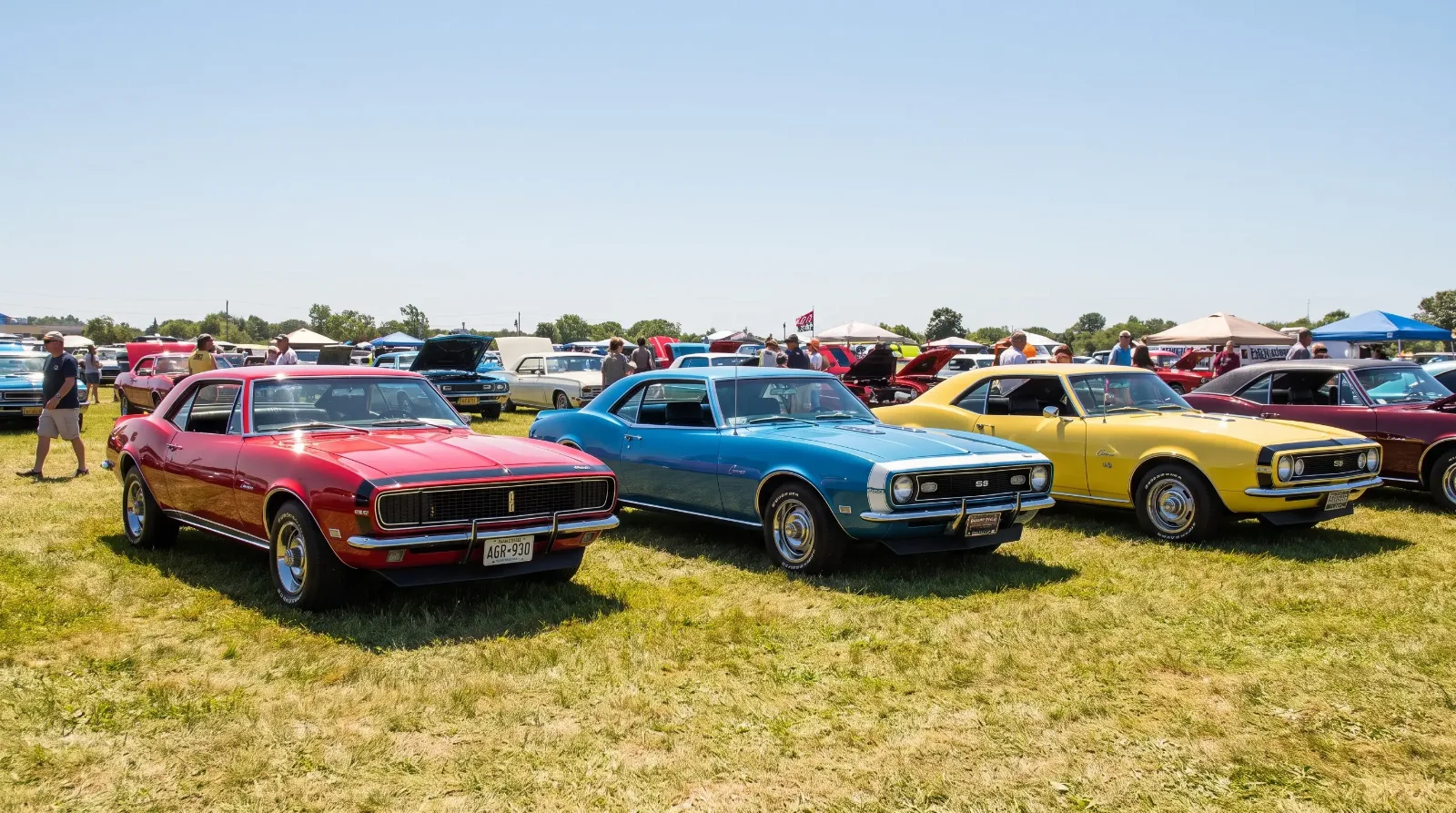
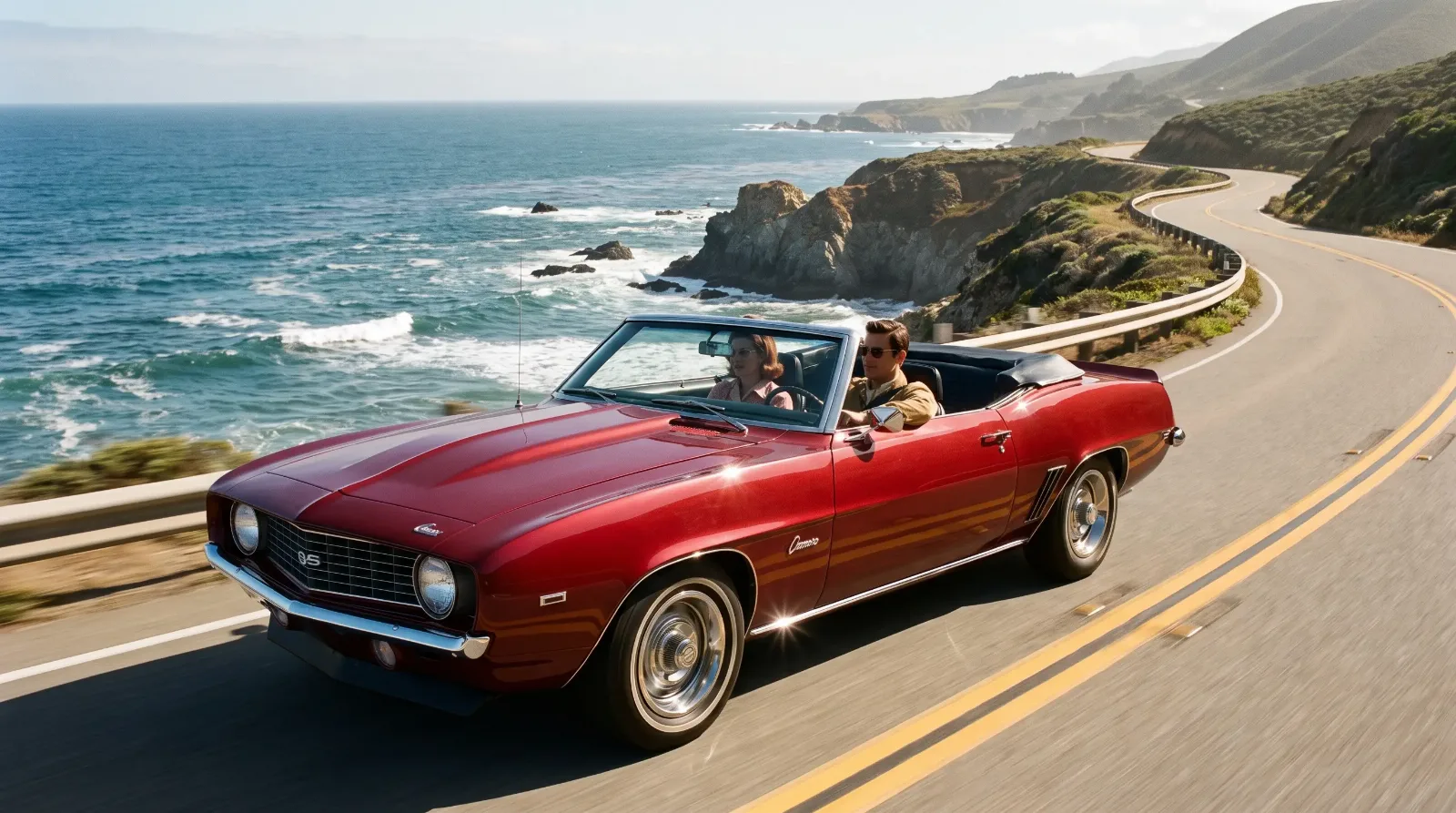
Open-air from day one
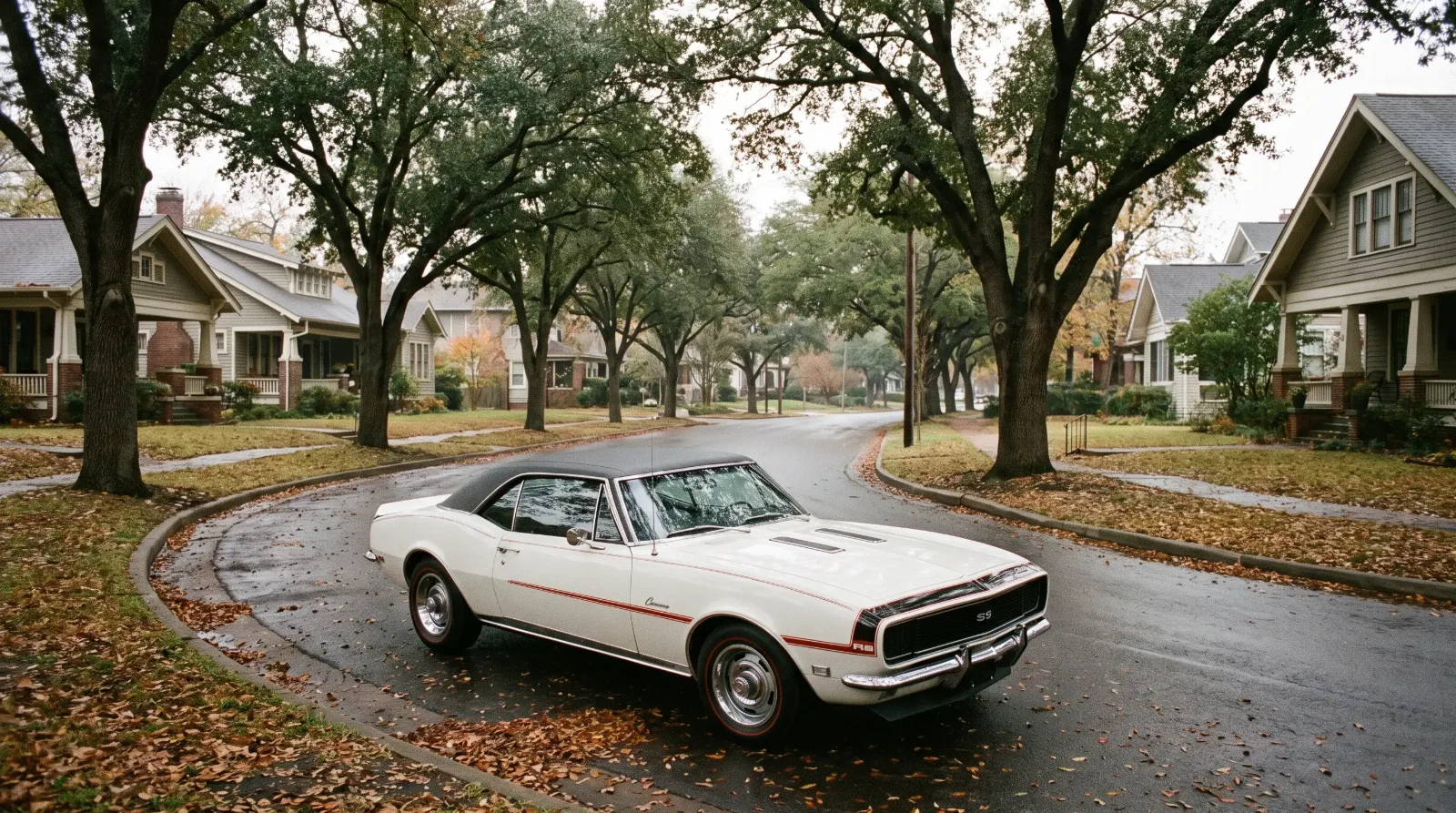
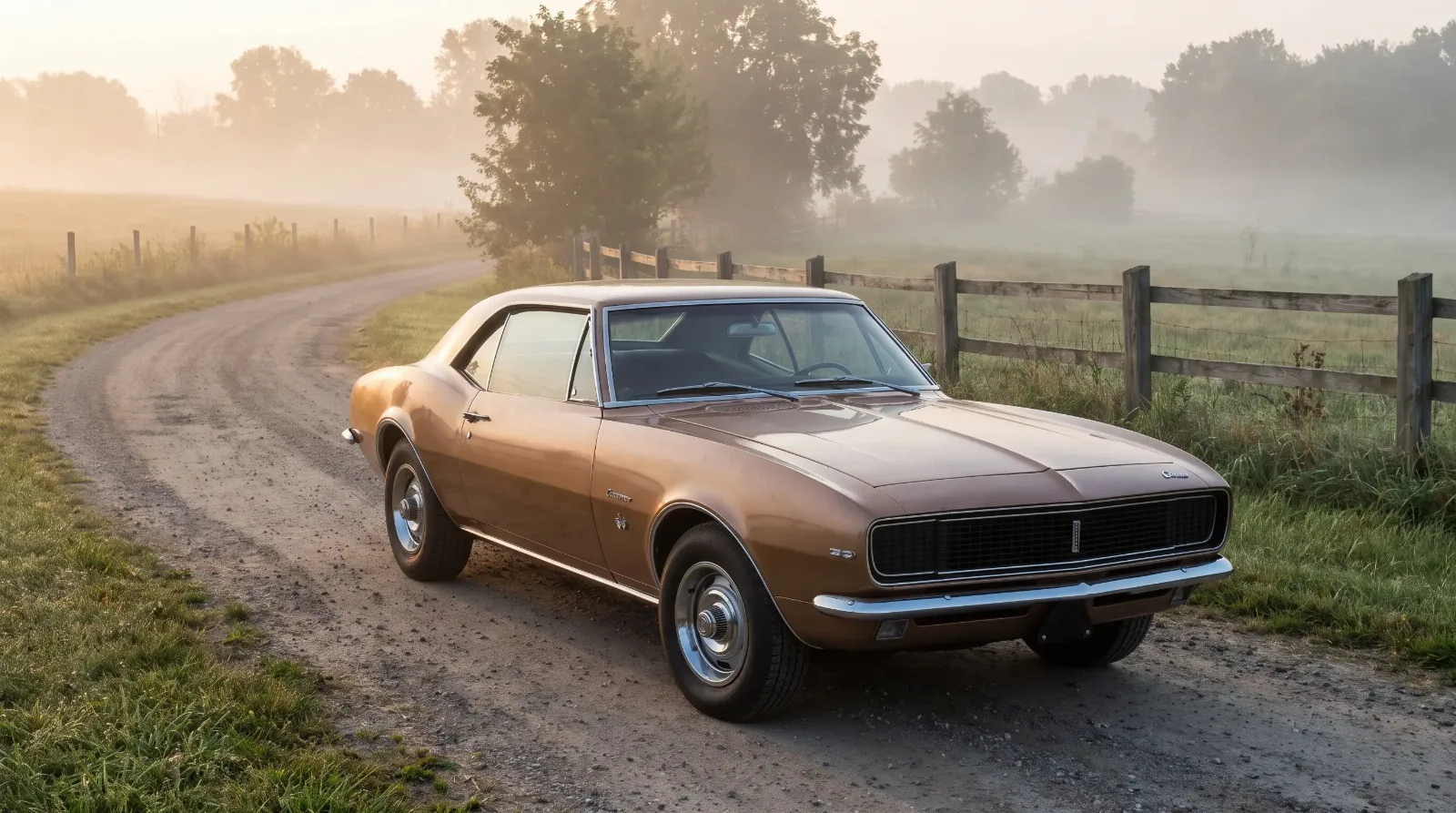
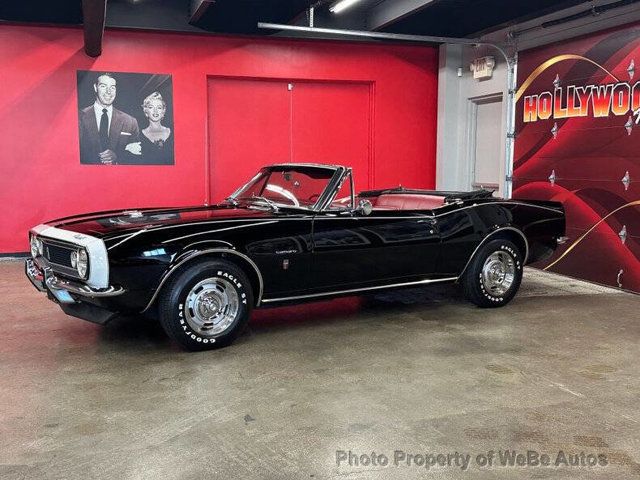
When Chevrolet launched the Camaro on September 29, 1966, the convertible was part of the lineup from the start. There was no delay, no special-order process for early buyers -- you could walk into a dealership and order a 1967 Camaro Sport Coupe or a 1967 Camaro convertible, and both were in the same catalog at the same time. This was a deliberate strategic choice: Ford offered the Mustang convertible from its April 1964 launch, and Chevrolet had no intention of ceding that segment to Ford for even a single model year.
The base price for the 1967 convertible was $2,809, compared to $2,572 for the Sport Coupe -- a $237 premium that reflected the additional engineering and manufacturing complexity of the folding top. That premium included the convertible top mechanism, a reinforced body structure to compensate for the absent roof structure, and the convertible-specific rear seat and trunk layout. Despite the accessible price, the convertible was always a minority choice: most buyers opted for the coupe, which was structurally stiffer, quieter, and less expensive.
For the full story of the generation, including how the convertible fit into the broader Camaro program, the first-generation Camaro editorial overview at Classic Cars Arena covers all three years in depth.
Production numbers across three years
Convertible production represented a declining share of total Camaro output across the three first-gen years, following a pattern visible across the broader American convertible market as safety concerns and practicality shifted buyer preferences toward hardtop coupes.
| Model Year | Convertible Production | Total Camaro Production | Convertible Share |
|---|---|---|---|
| 1967 | 25,141 | 220,906 | ~11.4% |
| 1968 | 20,440 | 235,147 | ~8.7% |
| 1969 | 17,573 | 243,085 | ~7.2% |
These figures match the commonly cited convertible (RPO C05) production records of 25,141 for 1967, 20,440 for 1968, and 17,573 for 1969, set against total Camaro output of 220,906, 235,147, and 243,085 respectively. The declining trend across three years is clear: convertible share dropped from roughly 11 percent in 1967 to roughly 7 percent in 1969, even as total Camaro production increased. The 1969 convertibles are the rarest of the three years by volume, which contributes to their premium in today's market.
The structural engineering of a convertible first-gen
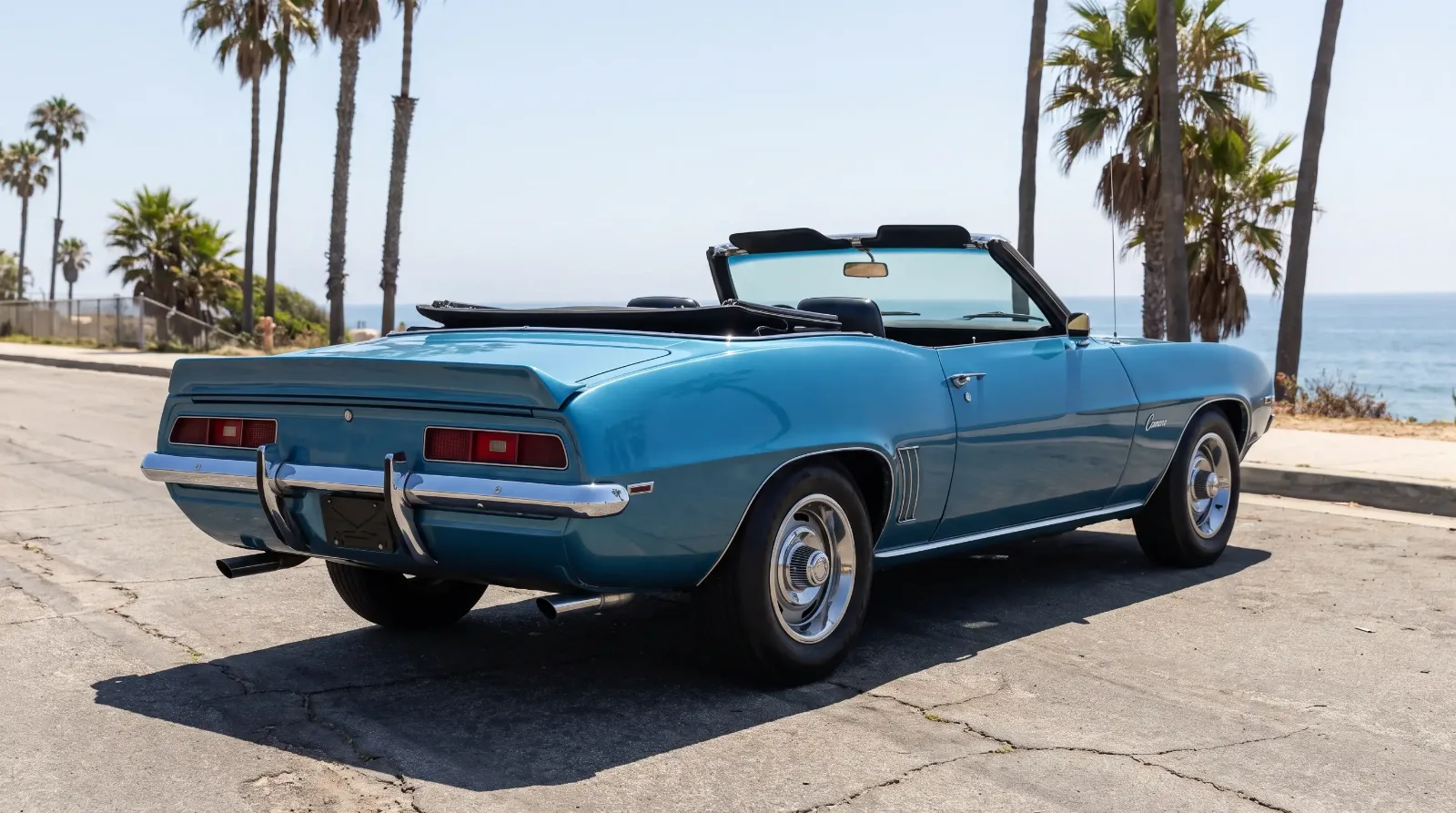
Building a convertible on the F-body unibody required specific reinforcement that coupe buyers never saw. Without the roof structure contributing to overall rigidity, the body engineers at Fisher Body added boxing plates to the rocker panels, reinforced the door hinges and striker plates, and added additional weld points in the floor structure. The result was a car that was still somewhat less rigid than the coupe -- detectable as minor cowl shake on rough roads -- but structurally sound and durable when properly maintained.
The convertible top itself was a stack of vinyl outer material (offered in a small range of colors such as black, white, and blue depending on body color and trim choice), insulation padding, and a headliner. The folding mechanism used a series of bows and a linkage that collapsed into the rear of the car. When lowered, the top sat beneath a tonneau cover that snapped or zippered into place. The glass rear window (not plastic) was an option in 1967 and became more common in 1968-69; the original plastic rear windows on early cars have degraded on most survivors and have been replaced.
"There's something the numbers can't quite capture about driving a 1967 SS convertible on a clear day. The exhaust note without the roof above you is a fundamentally different experience from the coupe. It's not more powerful, but it feels more connected to what the car is. I understand completely why people pay the premium."
-- Patrick Walsh
Performance options in the convertible body
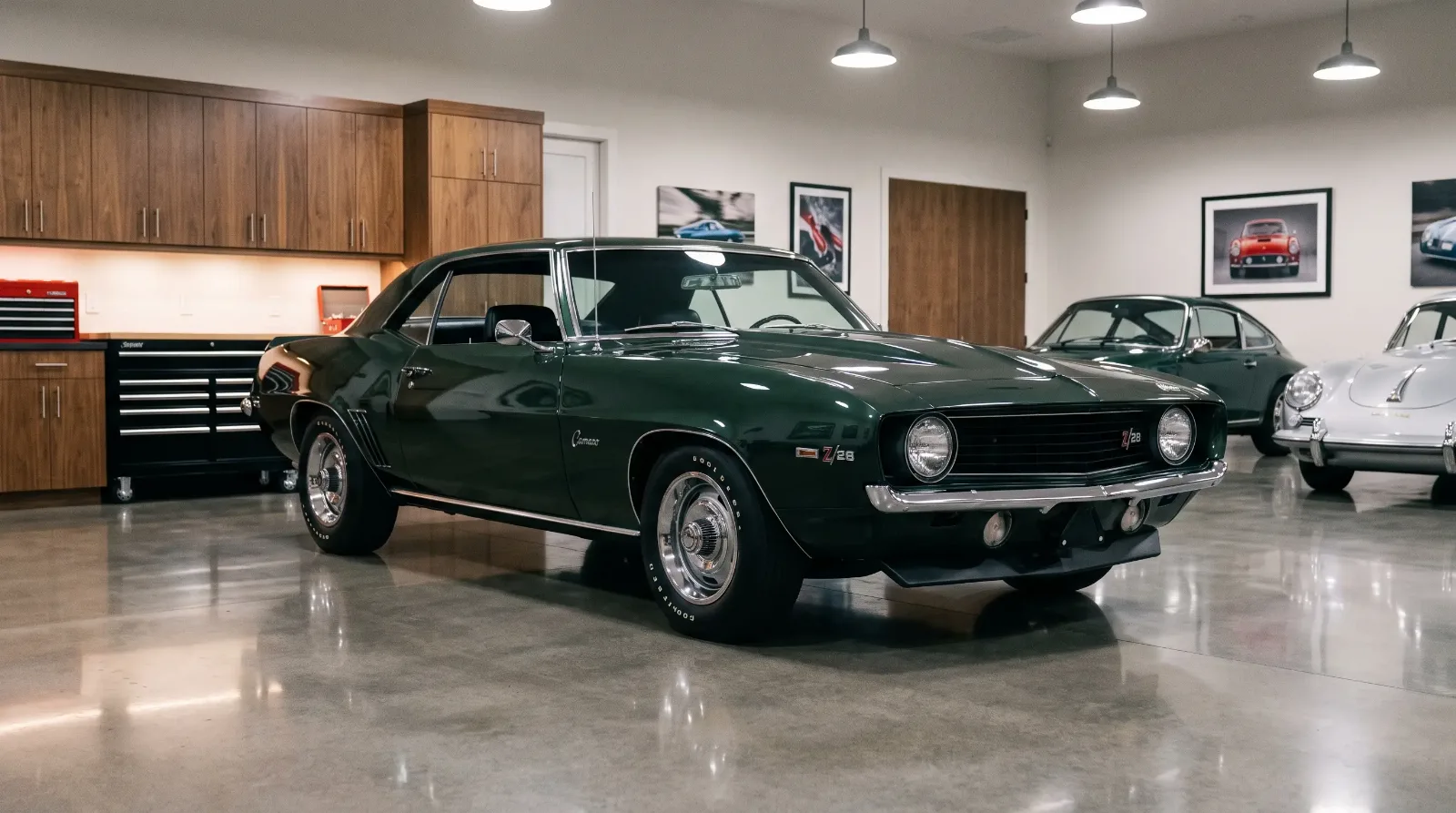
Every major performance option available in the coupe was theoretically available in the convertible as well, and many buyers ordered their open-air Camaros with serious powertrains. SS396 convertibles with L78 engines exist and are extremely valuable. The Z/28, however, was effectively not available as a convertible in period -- the racing homologation use case for the Z/28 required the stiffer coupe structure, and Chevrolet made no factory provision for a convertible Z/28. Any car presented as a "Z/28 convertible" warrants deep skepticism about its authenticity; these are generally post-production conversions and not factory-built configurations.
The RS (Rally Sport) package was popular on convertibles, and the combination of hidden headlights, blacked-out grille, and open top remains one of the most visually striking configurations of the generation. The RS/SS combination on a convertible body -- particularly in a desirable exterior color like Fathom Green, Hugger Orange, or LeMans Blue from the 1969 palette -- represents a compelling combination of drama and collector appeal.
What survives and what it's worth
The survivorship rate for first-gen convertibles is lower than for coupes, for several connected reasons. Convertibles were used more actively as seasonal or recreational cars, accumulating hard use. The folding top mechanism, when neglected, allowed water intrusion that accelerated floor and trunk rot. And the convertibles' higher original prices made them more desirable theft targets in the 1970s and 1980s.
Today, a 1969 Camaro convertible in excellent documented condition with a desirable V8 engine commands a significant premium over the equivalent coupe -- often a substantial premium, depending on the specific option content and color combination. The 1969 model commands the highest premium of the three years due to its lower production volume and the generally stronger market position of 1969 cars overall. Documentation -- broadcast sheet, window sticker, top color/material verification -- is especially important for convertibles because the combination of rarity and value makes them prime subjects for misrepresentation.
This article completes the first-generation editorial cycle. Circle back to where the story began: why Chevrolet built the Camaro in the first place, and how a corporate response to the Mustang became one of the most beloved American automobiles ever made.
Sources and notes
Production figures, engine specifications, codes, and dates in this article are cross-referenced from established Camaro references, period documentation, and owner registries. Where sources differ, the most commonly cited value is used. Cost figures are indicative and vary by supplier, region, and condition.