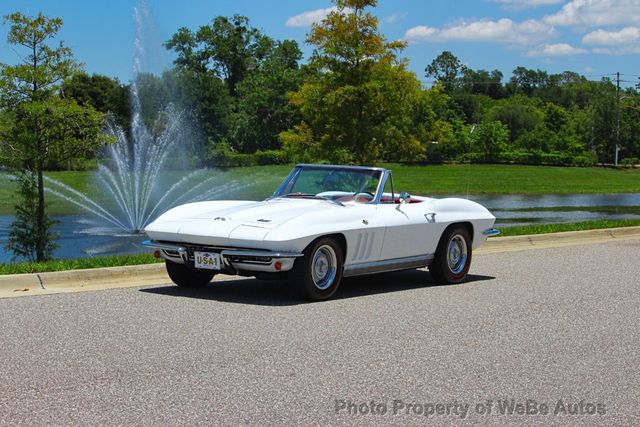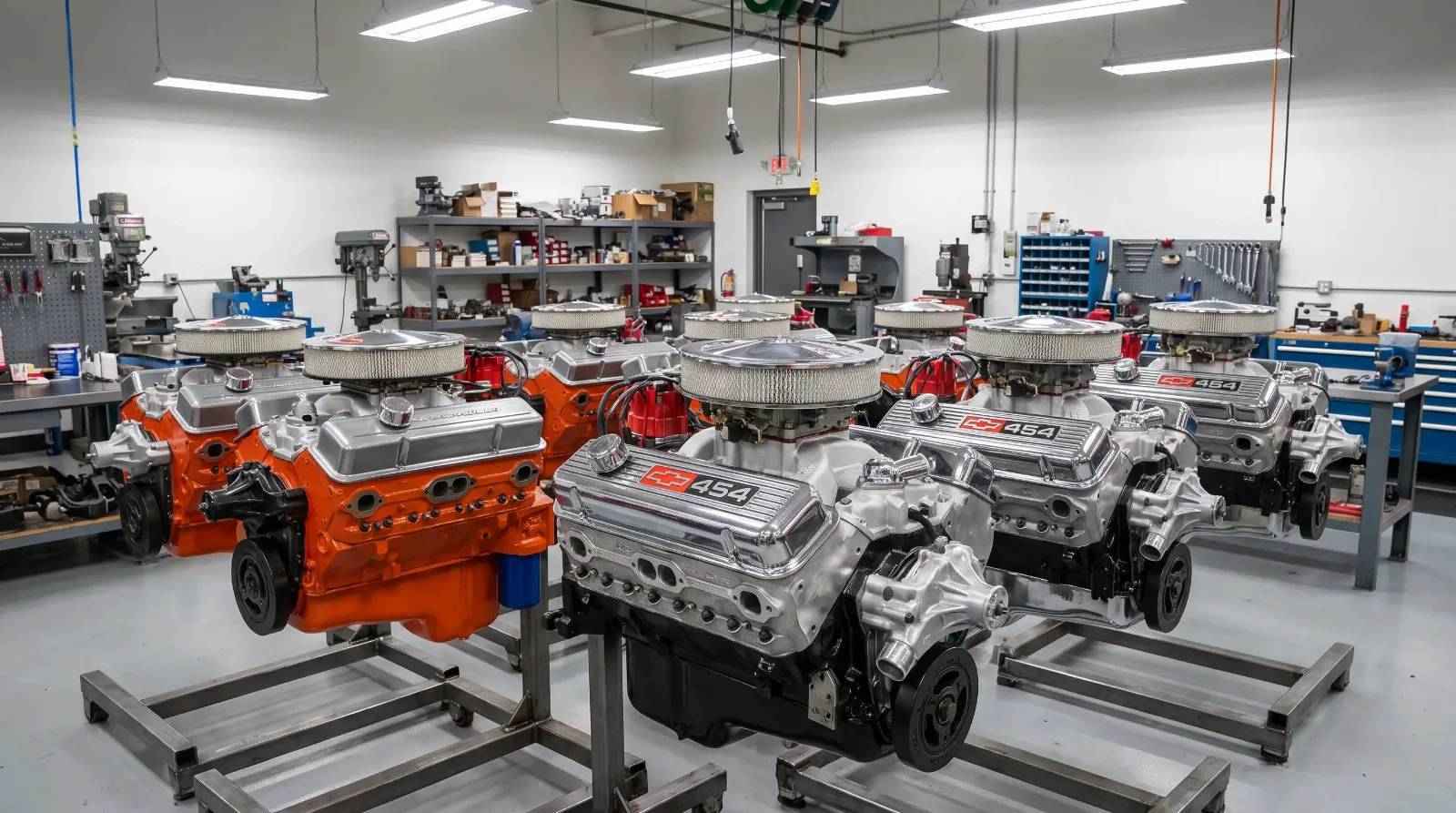
The Number That Changed Everything
In the spring of 1957, Chevrolet's engineering team accomplished something that had never been done before in an American production automobile: they squeezed exactly one horsepower from every cubic inch of displacement in the Corvette's V8 engine. The result — 283 horsepower from a 283 cubic inch small-block — was more than a marketing claim. It was a technical threshold that redrew the performance map for an entire generation of enthusiasts, and it set the Corvette apart from every other car wearing an American badge.
The figure resonated because it was clean, absolute, and immediately understood. You didn't need a dynamometer to grasp what it meant. One horsepower per cubic inch was the kind of benchmark that settled arguments in diners and parking lots from coast to coast, and for the first time, a Chevrolet had claimed it. For the Corvette's brief and turbulent history to that point, this was the moment that proved the car had always been something worth saving.
From 265 to 283: The Bore That Made the Benchmark Possible
To understand why 1957 mattered, you have to start a few years earlier, with the engine that preceded it. Chevrolet's small-block V8 had debuted in 1955 as a 265 cubic inch unit — a revelation in its own right, lightweight and efficient in ways that defied the engineering orthodoxy of the time. That engine had rescued the Corvette from near-cancellation and proved that a small-displacement, high-revving V8 could outrun larger, heavier engines through sheer mechanical efficiency.
But 265 cubic inches, however brilliantly deployed, imposed a mathematical ceiling. One horsepower per cubic inch from that engine would have required 265 hp — achievable in theory but extremely difficult in practice with the fuel delivery technology available through 1956. The path to the milestone required more displacement, and Chevrolet's engineers found it through a deceptively simple change: boring the cylinder diameter from 3.75 inches to 3.875 inches while keeping the stroke at 3.00 inches.
That tenth-of-an-inch increase in bore diameter translated into 18 additional cubic inches — from 265 to 283 — and it did so without meaningfully altering the engine's character. The short stroke was preserved, which meant the small-block retained its ability to spin freely to high rpm. The wider bore allowed larger valves, which improved breathing. And the new displacement set the arithmetic up perfectly: to claim the milestone, the engineering team needed to extract 283 horsepower from 283 cubic inches. The bore change made the target achievable. Rochester fuel injection made it real.
What the Rochester Injection Actually Did
The fuel injection system fitted to the 1957 Corvette was a continuous-flow mechanical design developed with Rochester Products, a division of General Motors. Its contribution to the 283/283 milestone was not dramatic in the way that supercharging or radical camshaft timing might be — it was precise. Fuel injection eliminated the mixture distribution inconsistencies that plagued carbureted engines, ensuring that each cylinder received virtually identical air-fuel ratios under all operating conditions.
That consistency was the difference between 270 and 283 horsepower. The carbureted 283, at its peak twin four-barrel configuration, produced 270 hp — a figure that was itself extraordinary by the standards of the day. But the last 13 horsepower required a level of metering accuracy that carburetors, by their nature, could not reliably provide across the full rev range. Fuel injection also eliminated the fuel starvation that carbureted systems could suffer under hard cornering or braking, which made the fuelie not just more powerful but more consistent when pushed hard.
The 283 horsepower rating was achieved at 6200 rpm — high by any standard of the period, and only possible because the engine's architecture, from its breathing geometry to its valve timing, had been optimized to run cleanly at those speeds. The fuel injection system's ability to maintain precise mixture ratios at high rpm without the fuel atomization problems that plagued carburetors at altitude was central to that achievement.
The Full Power Ladder: All Five Versions of the 283
The 1957 Corvette's 283 cubic inch V8 was offered in a range of states of tune that illustrated exactly how much the choice of induction system mattered to the final output. The lineup showed buyers — and the industry — the full scope of what the small-block platform could deliver:
| Induction | Horsepower | Notes |
|---|---|---|
| Single four-barrel carburetor | 220 hp | Baseline tune, hydraulic lifters |
| Single four-barrel carburetor | 245 hp | Higher compression, solid lifters |
| Dual four-barrel carburetors | 250 hp | Twin carb, hydraulic lifters |
| Dual four-barrel carburetors | 270 hp | Twin carb, solid lifters, highest carb output |
| Rochester fuel injection | 283 hp | The milestone — 1 hp per cubic inch |
The spread between the base 220 hp version and the fuel-injected 283 hp was 63 horsepower from the same displacement — a demonstration of how dramatically induction and tune could transform an engine. The 270 hp twin-carb version was genuinely rapid by period standards, but the fuelie's 13 additional horsepower came with a premium in cost and complexity that made it a choice only serious enthusiasts were likely to make. In 1957, the fuel injection option added $484.20 to the car's price — roughly $5,500 in contemporary terms — which narrowed the market considerably.
That premium meant the 283/283 car was never common. Production of fuel-injected 1957 Corvettes was limited, which has contributed substantially to their collectibility today. Those who browse classic Corvette listings will find that original fuelie examples command a significant premium over their carbureted counterparts.
"The fuelie 283 wasn't just an engine — it was a statement. Chevrolet had done something Ferrari and Mercedes had done on racing machines, and they'd done it in a production car that anyone could order from a dealer."
— Period automotive journalist, Road & Track, 1957
Why One Horsepower Per Cubic Inch Became the Measure of Performance
Before 1957, American performance cars were largely evaluated by displacement and torque — big engines that pulled hard from low rpm, suited to the long, flat roads and automatic transmissions that most buyers preferred. The horsepower-per-cubic-inch ratio existed as a concept in engineering circles, but it had never been a number that carried cultural weight. The Corvette 283 fuelie changed that.
The reason the benchmark stuck was partly mathematical elegance and partly what it implied about the engineering involved. Achieving 1 hp/ci required not just more displacement but better breathing, better fuel delivery, better metallurgy, and better understanding of the thermodynamic cycles inside the combustion chamber. It was, in effect, a certificate of engineering seriousness. When the Corvette achieved it, the ratio became a way for enthusiasts to compare engines across displacement categories — and the Corvette was suddenly on the right side of every comparison.
The 1 hp/ci threshold also arrived at a moment when the Corvette desperately needed a credibility event. The car had launched in 1953 with a Blue Flame six-cylinder that generated enthusiasm more from its styling than its performance, and the 1956 redesign had injected real sporting intent into the package. But the fuel-injected 283 was the moment the Corvette stopped being defended and started being celebrated. It gave the car a technical distinction that no domestic competitor could immediately match.
Ferrari had achieved similar specific output figures in their racing engines, and the comparison was not lost on American enthusiasts who were paying close attention to international motorsport. That a production Chevrolet — one sold at dealer lots across the country — could match exotic European racing engine benchmarks was a genuinely remarkable fact, and the automotive press made sure no one missed it.
The Foundation for Everything That Followed
The 283 cubic inch V8 did not remain the ceiling of Corvette performance for long. Chevrolet's engineers used the small-block architecture — the same basic platform that had been bored out from the 265 to create the 283 — as the foundation for continuous development through the following decade. Displacement grew incrementally: 327 cubic inches arrived in 1962, opening new chapters in Corvette performance, and the architecture ultimately gave rise to some of the most celebrated American V8s of the muscle car era.
But the 283 holds a specific place in that lineage that larger, more powerful engines cannot claim. It was the engine that established the Corvette as an engineering achievement rather than simply an attractive machine. The birth of America's sports car had been troubled and uncertain; the fuel-injected 283 was the moment that made the outcome feel inevitable in retrospect.
The engineering lessons embedded in the 283's development — the value of high-revving short-stroke architecture, the precision advantages of fuel injection, the gains available through careful attention to breathing and mixture preparation — informed Chevrolet's approach to performance for years afterward. When the 327 appeared and itself achieved remarkable specific output figures, it was building on a methodology that the 283 program had refined and proven.
For anyone who wants to understand why the Corvette became America's sports car in more than just name, the 283 fuelie's story is essential reading. It is the moment when ambition, engineering rigor, and a fortunate piece of arithmetic converged to create a milestone that still resonates. The number was 283. The horsepower was 283. And nothing in American performance cars was ever quite the same afterward.
Sources and notes
- National Corvette Museum — 1957 Corvette History — Official museum documentation on the 1957 model year engine options and specifications
- Super Chevy — Small-Block Chevrolet History — Comprehensive technical history of the small-block V8 platform from 265 through subsequent generations
- Hemmings Motor News — The 1957 Corvette Fuel Injection — Period and retrospective coverage of the Rochester fuel injection system and its performance significance
- MotorTrend — Classic Corvette History Overview — Editorial history of the Corvette's development through the C1 era, including engine milestones
- Car and Driver — Corvette History — Long-form editorial history documenting the 283's place in Corvette development and its lasting significance