
A chase scene that changed cinema
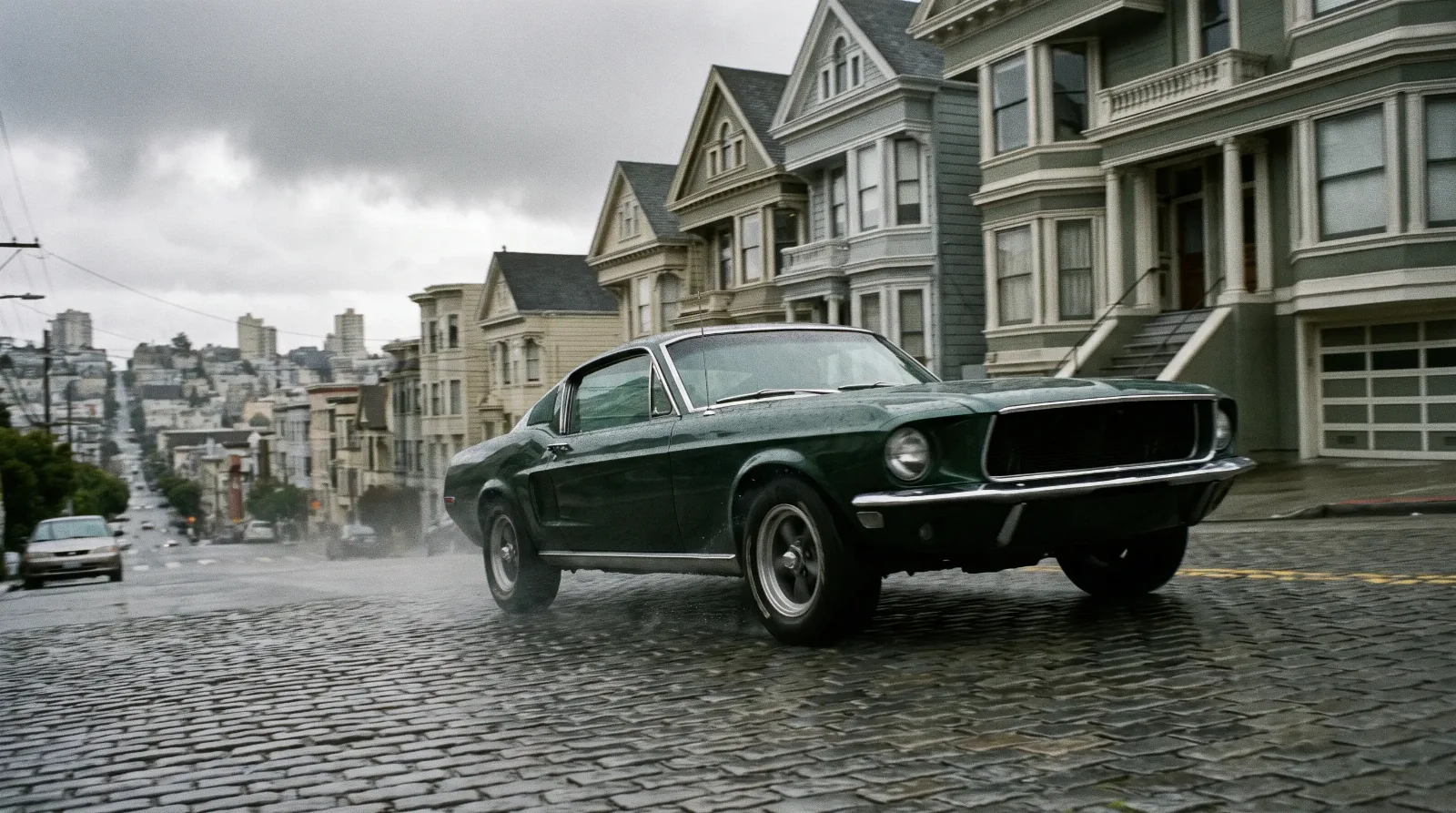
On the steep streets of San Francisco in the autumn of 1968, a Highland Green 1968 Ford Mustang GT 390 fastback tore through intersections, caught air on the crests of hills, and announced itself as one of the most visceral images in American film history. The movie was Bullitt, directed by Peter Yates. The driver, at least for the wide shots, was Steve McQueen. The chase lasted ten minutes and twenty-six seconds on screen. The cars it featured have been arguing their case ever since.
For anyone who has spent time around Mustang in pop culture, the Bullitt chase is the fixed point everything else orbits. It was not the first on-screen car chase, but it reset the standard for what a chase could look like when the camera stayed low, the sound stayed raw, and the editing refused to cheat.
The two Mustangs Ford never expected to become legends
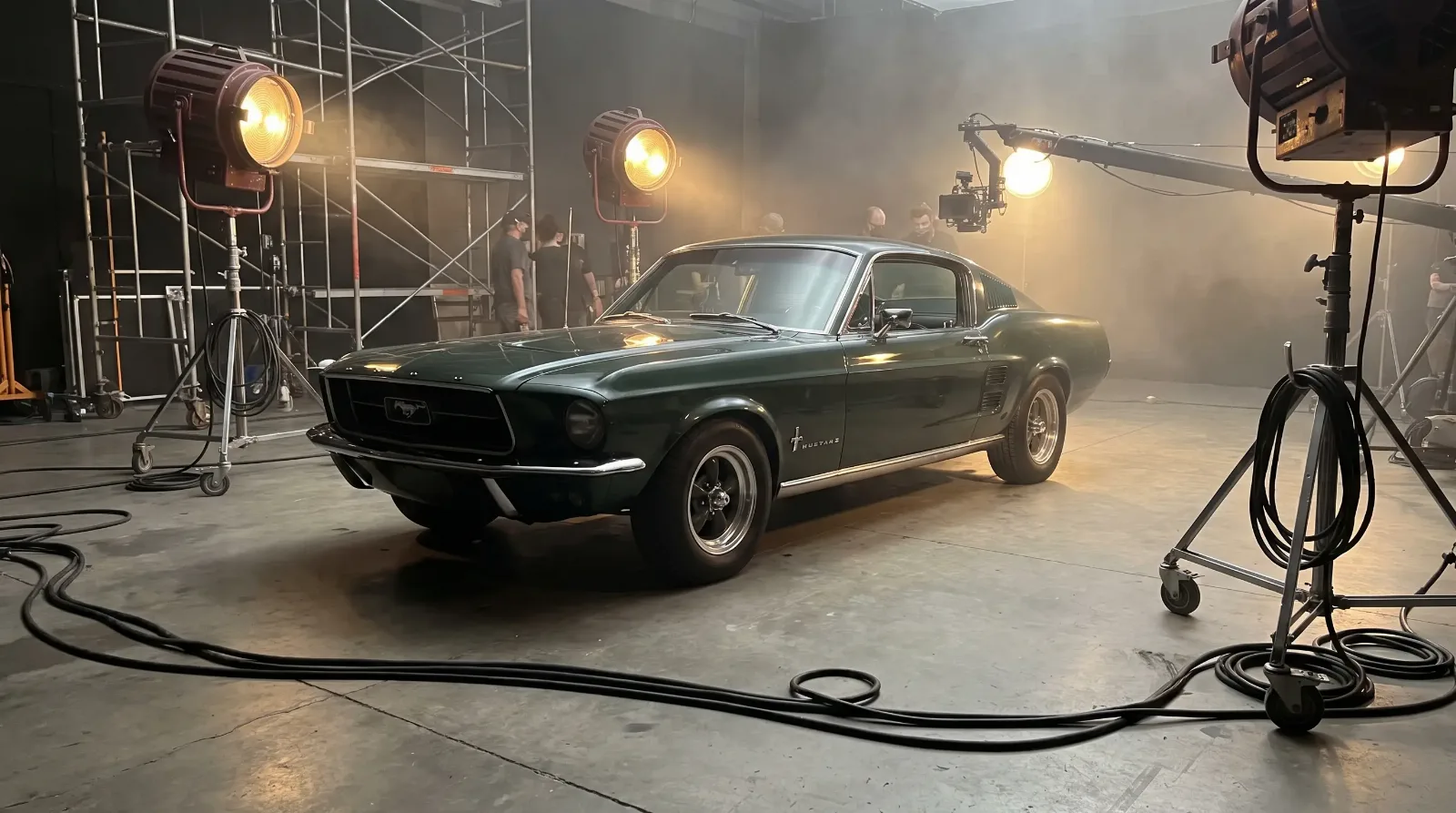
Ford supplied two 1968 Mustang GT 390 fastbacks to the production company, Solar Productions, for filming. Both were painted in the same color, a factory shade called Highland Green. Both carried the 390 cubic-inch FE big-block V8, rated at 325 horsepower in standard trim, though the cars used in filming were modified for performance and camera work. The interior door handles were removed to prevent them snagging camera rigs. Roll cages were installed. The suspension was stiffened considerably.
The cars were identified as 558 and 559 by the last three digits of their sequential VINs (8R02S125558 and 8R02S125559). Car 559 served as the hero car, the one used for the beauty shots and the close-in driving that Steve McQueen and stunt driver Bud Ekins handled. Car 558 functioned as the jump car, taking the punishment in the most violent sequences and absorbing the damage that left it the worse for wear by the end of the shoot.
The production drove these cars hard. By the time filming wrapped, both were mechanically exhausted. The studio sold them off without ceremony, not yet understanding what the film would become or what the cars would eventually mean.
Decades of silence, then a 3.74 million dollar answer
For decades, the whereabouts of both cars remained unclear. Car 558, the jump car, was thought to have been scrapped after filming, only to be rediscovered in 2017 in a salvage yard in Baja, Mexico, missing many parts but verifiable as one of the two movie cars. Car 559, the hero car, simply disappeared from public view.
The trail went cold. Enthusiasts, journalists, and Mustang historians tracked partial leads for years. Then, in 2017, a Kentucky family named Kiernan contacted Ford Motor Company. They had owned car 559 since 1974, purchased by Robert Kiernan for a reported $6,000 after answering a classified ad in Road & Track. It had sat largely unused for most of those decades, eventually parked in a barn in Kentucky, its Highland Green paint faded and chalked, its body carrying the dents and scrapes of a working life on screen.
The Kiernans brought the car to the 2018 Detroit Auto Show alongside the 2019 Ford Mustang Bullitt production model, a reunion that generated enormous attention. Sean Kiernan, who had inherited the car, confirmed the family's intention to sell.
That sale happened at the Mecum Kissimmee auction on January 10, 2020. The hammer fell at $3.4 million, and with the buyer's premium added the all-in total reached $3.74 million, making it the most valuable Mustang ever to sell at public auction at the time.
Ford's Bullitt editions: honoring a moving target
Ford has returned to the Bullitt name three times, each time using the original film car as a touchstone. The classic Mustangs that inspired these editions had a particular character, a combination of big-block torque, minimal trim, and a color that reads almost black in shadow and emerald in direct sun, that Ford has tried to capture in each revival.
The first Bullitt edition arrived in 2001 as part of the Mustang's 35th anniversary year. It used the 4.6-liter two-valve V8, tuned to 265 horsepower, and came exclusively in Dark Highland Green, mimicking the original's palette. Unique touches included five-spoke alloys, a lowered suspension, and Brembo front brakes. Although Ford had planned for roughly 6,500 cars, only 5,582 were actually built.
Ford brought the name back for the 2008 and 2009 model years, this time using the improved 4.6-liter three-valve V8 producing 315 horsepower. These cars were available in Highland Green as well as black and red. They added a short-throw shifter, upgraded brakes, and a more aggressive suspension tune. Ford had announced a planned run of 7,700 cars, but the 2008-2009 downturn cut the program short, with roughly 5,772 built for 2008 and only about 810 more for 2009, for a combined total near 6,500.
The most capable Bullitt edition arrived for 2019 and continued into 2020, built on the S550 platform. It used the Predator-adjacent 5.0-liter Coyote V8, tuned to 480 horsepower, with an active exhaust system and an open-air induction setup that gave the engine a notably aggressive intake note under hard acceleration. It came in Shadow Black and a shade Ford called Dark Highland Green, a deliberate nod to the 1968 original. Steve McQueen's granddaughter, Molly McQueen, helped introduce the car at its official reveal at the Detroit auto show in January 2018, where it appeared alongside the original hero Mustang.
Why the original story still matters
Car 559's journey from film set to barn to auction block covers more than fifty years of American automotive culture. It was used hard, sold cheaply, forgotten, rediscovered, and ultimately valued at a figure that places it alongside the most significant Fords ever made. That arc is unusual. Most film cars disappear into private collections early, their provenance carefully maintained for exactly the reason the Kiernan car was eventually worth what it was.
The survival of car 559 in private hands, unrestored and documentable, is part of what drove the price. The dents are real. The faded paint is original. The car that exists today is the car that was actually on screen in 1968, and that matters enormously to the people who bid on it.
Car 558, the Mexican car, represents a different chapter. Its current state and complete ownership history are still being researched by historians, and details continue to emerge. What is clear is that both cars survived, which given how studios treated film vehicles in that era, is remarkable on its own terms.
"The Bullitt Mustang is the car that made Highland Green a color people actually argue about — and the auction result in 2020 proved that a barn find with real history beats a concours restoration every time."
— Patrick Walsh
Sources and notes
This article was fact-checked against the published reporting below. Production figures cited by Ford and the automotive press are widely reported but occasionally vary by a few units between sources; the auction result is a historical figure from January 2020 and does not reflect any later sale or current valuation.
- Hagerty — "Found: The real Bullitt Mustang that Steve McQueen tried (and failed) to buy"
- ClassicCars.com Journal — "Bullitt hammers for $3.4MM at Mecum Kissimmee — A new record!"
- ABC News — "How one of Hollywood's most famous cars went unnoticed for 50 years"
- Ford via PR Newswire — "McQueen's 1968 Bullitt Movie Mustang Revealed at the North American International Auto Show"
- Steeda — "Ford Mustang Bullitt History: The Complete Guide" (2001 / 2008-09 / 2019 production and specs)
- Mustang Specs — "2001 Ford Mustang Bullitt Production Numbers"