
A song that made the car immortal
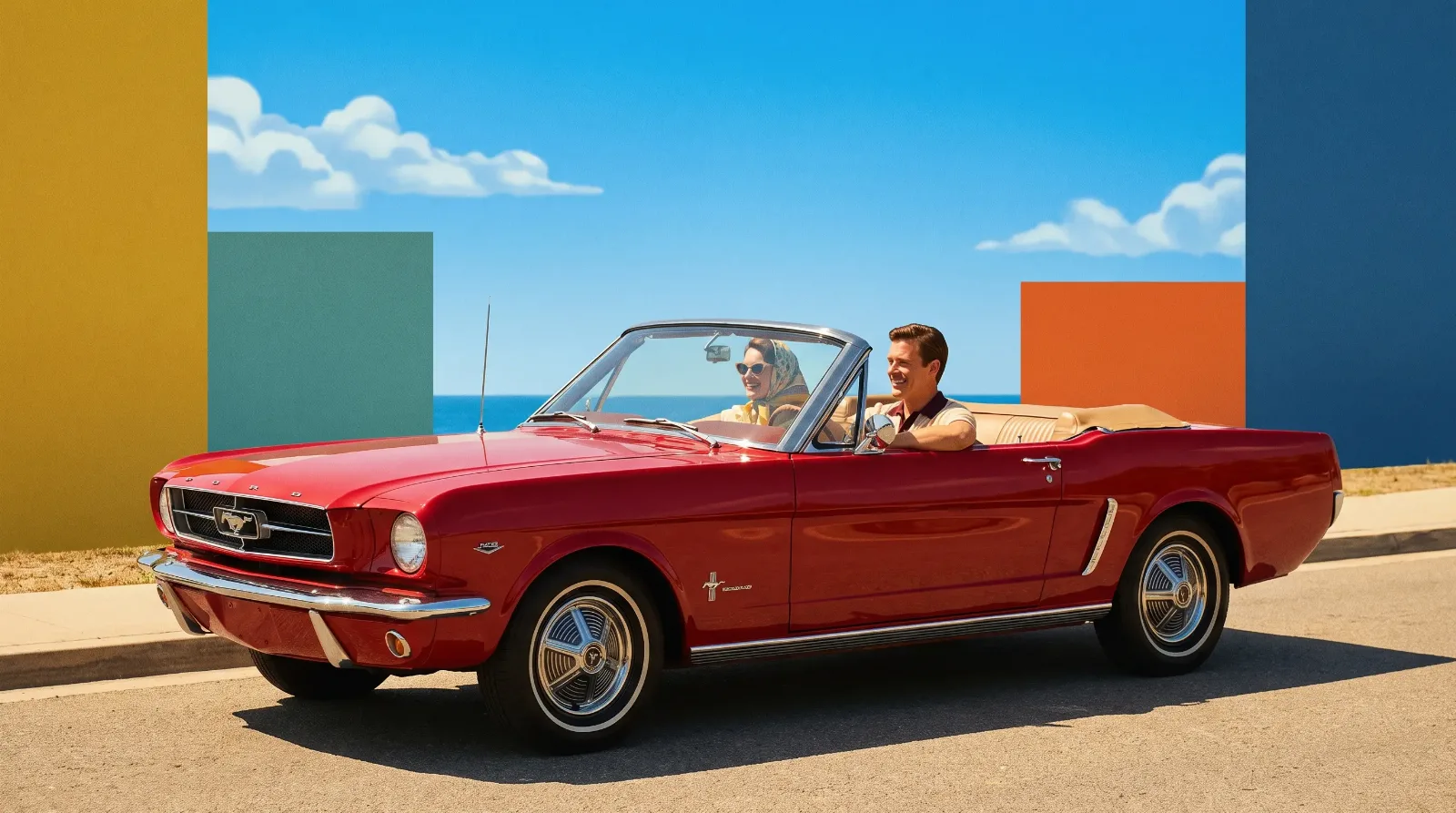
In 1966, Wilson Pickett walked into FAME Recording Studios in Muscle Shoals, Alabama, to cut a song written by Mack Rice the year before. The result, "Mustang Sally," became one of the defining soul recordings of the decade. Rice had written the original in 1965 after a conversation about a friend who wanted a Mustang and would have happily spent all her money just to ride around in it. Pickett's version, released in 1966 on Atlantic Records, reached number 23 on the Billboard Hot 100 and number 6 on the R&B chart, and the name "Mustang Sally" entered the American vernacular as shorthand for a woman as fast and untameable as the car itself.
The song did something Ford's own copywriters could not have engineered: it placed the Mustang inside the emotional landscape of American music. You did not merely drive a Mustang; you became part of a story. That story, told and retold across decades of radio play, cover versions, and film soundtracks, gave the car a cultural weight that went far beyond horsepower ratings and option codes. The Mustang in film and culture traces the full arc of this phenomenon, but the music and advertising chapters deserve their own examination.
Mack Rice, soul radio, and the Mustang name
Mack Rice, a member of the Detroit vocal group the Falcons, built the song around a conversation in which a friend insisted on a Mustang over a far more expensive car, then turned the idea into a woman who only wants to ride around in hers. The car's name was already carrying freight in everyday conversation just one year after launch. That Rice reached for it instinctively, as a symbol of speed, style, and a certain reckless independence, tells you everything about how quickly Ford's marketing had worked. The Mustang was not simply a product; it was an attitude, and attitudes get into songs.
Other recordings followed over the years. The track turned up on stages from small blues clubs to arena tours, covered by artists ranging from the Young Rascals to the Blues Brothers. Each performance reinforced the car's mystique without Ford spending a dollar. The Mustang had become a cultural reference that self-propagated, carried forward by musicians who chose the name precisely because the audience already understood what it meant.
The 1964 advertising blitz that started everything
To understand why "Mustang Sally" landed the way it did, you have to go back to April 17, 1964, and one of the most carefully orchestrated product launches in American advertising history. Ford did not simply place advertisements; it staged a national event. The night before the launch, Ford bought the 9 p.m. slot on all three major television networks at once, reaching an estimated 29 million viewers in a single coordinated "roadblock." The next morning, roughly 2,600 newspapers carried Mustang announcement ads, backed by billboards and dealer displays across the country. Ford's advertising agency, J. Walter Thompson, coordinated a campaign that made the car unavoidable. Showroom traffic was so intense that dealers struggled to keep cars on the lot, and some reportedly had to fend off buyers who would not take no for an answer.
The price point, announced at $2,368 for the hardtop, was part of the message. Ford positioned the Mustang not as a luxury car or a pure sports car but as something every young American could actually reach. The advertising reflected this. It did not dwell on technical specifications. It sold aspiration, freedom, and the idea that driving this car said something specific about who you were.
Walter Mitty and the everyman behind the wheel
A core creative idea behind the early Mustang campaigns was often described in Walter Mitty terms: the ordinary person, the insurance salesman or the schoolteacher, who climbed into a Mustang and became someone else entirely. The reference was deliberate. James Thurber's Walter Mitty daydreams of being a fighter pilot and a surgeon; Ford's version just needed a Mustang to make the fantasy real enough to drive home.
Print advertisements from 1964 and 1965 showed the car in aspirational settings, often accompanied by copy that placed the buyer at the center of the story rather than the machine. Taglines in various executions played on the idea that the Mustang was a catalyst, something that unlocked a version of yourself you had not known was waiting. Lines like "Only Mustang makes it happen" and, later, "It's a personal thing" framed the car as exerting a kind of irresistible influence, which was both a sales pitch and, for many buyers, a fair description of exactly what had happened in the showroom.
Lee Iacocca, the Ford executive who championed the Mustang's development, appeared on the covers of both Time and Newsweek the same week as the launch, an unusual double for a car executive that amplified the cultural moment Ford had engineered. The car was news, and the advertising knew it, pulling back to let the coverage do the heavy lifting while the campaign reinforced the personal, emotional message.
"The genius of those early Mustang ads was that they sold you a version of yourself, not a car, and that is a trick very few campaigns have ever pulled off as cleanly."
— Patrick Walsh
How marketing built the mystique that music kept alive
The early advertising worked because it established a clear identity before the car had any history of its own to draw on. By the time Wilson Pickett recorded "Mustang Sally" in 1966, the car had already sold more than a million units, a pace that shattered Ford's own projections. The advertising had done its job so thoroughly that the Mustang's meaning was available to anyone who wanted to borrow it, including songwriters looking for a word that carried speed, style, and a bit of danger in a single syllable.
The feedback loop between advertising and culture reinforced itself over the following decades. The car appeared in songs, in films, on posters; each new reference drew on the established identity and added another layer to it. Buyers who purchased classic Mustangs in the late 1960s were buying into a story that Ford had written in 1964 but that musicians, filmmakers, and the culture at large had been expanding ever since. That is a rarer achievement than any production number or horsepower figure can capture.
What the Mustang campaigns demonstrated, and what "Mustang Sally" confirmed, is that the most durable automotive marketing does not describe a car. It describes the person who drives one, and it does so memorably enough that the description travels far beyond any single advertisement, into songs, stories, and the broader conversation a culture has with itself about who it wants to be.
Sources and notes
This article is an editorial reflection on the Mustang's place in music and advertising history. Dates, figures, and chart positions have been checked against the public sources below; where an anecdote is widely retold but not firmly documented, it is presented as such rather than as established fact. Readers researching specific recording sessions or campaign details are encouraged to consult primary archives directly.
- "Mustang Sally" (song) — Wikipedia: songwriting credit to Mack Rice (1965), the "Mustang Mama" working title and Aretha Franklin's suggested change, Rice's Blue Rock release, and Pickett's 1966 chart positions (No. 23 pop, No. 6 R&B).
- FAME Studios — Wilson Pickett: confirmation that Pickett cut "Mustang Sally" at FAME in Muscle Shoals in 1966 with the studio's house rhythm section.
- The Definitive Wilson Pickett — duaneallman.info: session discography indicating Duane Allman played on later Pickett tracks such as "Hey Jude" (1968), not on the 1966 "Mustang Sally."
- Mustang Debut at the World's Fair — Ford Motor Company: the April 17, 1964 launch at the New York World's Fair and J. Walter Thompson's role.
- Ford Introduces the Mustang — EBSCO Research Starters: the multi-network television "roadblock," roughly 2,600 newspapers, the $2,368 hardtop base price, and the Iacocca Time/Newsweek covers.
- Ford Celebrates 1 Millionth Mustang — HISTORY: the one-millionth Mustang built March 2, 1966, confirming the million-unit milestone preceded Pickett's recording.