
Classic Chevrolet C10 Buyer's Guide
Complete buying guide for classic Chevrolet C10 pickups (1960-1987). Generation breakdown, frame inspection essentials, common issues by year, restomod vs original valuation, and current market prices.

The Chevrolet C10 is the most popular classic American truck on the road today, and that popularity has driven values up considerably over the last decade. Whether you're after a clean 1967-1972 short-bed Fleetside or a square-body restomod, this guide will help you spot the good, the bad, and the cleverly disguised.
History & Generations
The C10 nameplate ran for nearly three decades across two distinct truck generations and represents the most successful pickup truck design Chevrolet ever produced. Understanding which generation you're shopping is the first step toward smart buying.
First Generation (1960-1966)
The first C10 generation arrived in 1960, replacing the venerable Task Force series. These first-generation trucks introduced independent front suspension and a more car-like driving experience compared to the Task Force rigs that came before. They remain underappreciated by the broader market but are increasingly collected for their distinctive design.
Glamour Era (1967-1972)
The 1967 redesign is the C10 most enthusiasts are after. Curved windshield, sweeping body lines, available CST (Custom Sport Truck) trim, and the introduction of the 396 big block. The 1969 model year added concealed wipers and other refinements. From a collector standpoint, 1967-1972 short-bed Fleetside C10s are now solidly in muscle-car valuation territory.
Square-Body Era (1973-1987)
Fourteen model years of one basic design — the longest-running pickup truck generation in GM history. The "square-body" era covers C10 (and the four-wheel-drive K10) production from 1973 through 1987. Within that, sub-eras matter: 1973-1980 with round headlights, 1981-1987 with the more aerodynamic front end and quad-rectangular headlights.
The square-body has been the breakout segment of the last five years. Clean trucks that sold for $8,000-$12,000 in 2017 now bring $28,000-$45,000. The 1981-1987 short-bed Silverado is the sweet spot for collector demand.
What to Inspect First
Two non-negotiable inspections on any C10: the frame and the cab. If both are solid, you can make any other problem right with money and time.
Original vs Restomod: Which Path?
This is the central question for any C10 buyer in today's market. There's a real and growing divide between two markets: stock-restoration buyers, and restomod builders.
| Path | Cost Range | Audience | Resale |
|---|---|---|---|
| Stock restoration | $30,000-$70,000 build | Period-correct purists, concours | Strong on documented original cars; soft on amateur restorations |
| Resto-mod (LS swap, modern brakes, A/C) | $45,000-$95,000 build | Daily-driver enthusiasts | Strong if professionally executed; very soft if hobby-built |
| Pro-tour (air ride, custom interior, billet) | $80,000-$200,000+ build | Show car circuit | Variable; depends on build quality + builder reputation |
"The best advice I can give a first-time C10 buyer is this: don't buy somebody else's project. Either buy a finished truck where the work is documented and verified, or buy a clean rust-free truck and build it yourself. The middle ground — a half-finished build with parts in boxes — is where most first-time buyers lose serious money."
— Robert Halloran
Engine Options Across Generations
One of the C10's strengths is engine simplicity. Across nearly thirty years of production, the basic small-block Chevy V8 family powered nearly every truck. Knowing what engine you're looking at — and whether it's original — matters for pricing.
- 250 cubic inch inline-six (1966-1984): Bulletproof, slow, fuel-efficient. Common in base trucks. Rebuilds and parts are easy and cheap.
- 305 small block (1976-1987): Smaller bore than the 350. Underpowered but reliable. Common in mid-square-body trucks.
- 350 small block (1967-1987): The C10's signature engine. Strong, simple, parts-everywhere. Look for the optional Quadrajet four-barrel for more power.
- 396 big block (1968-1972): Rare in trucks. Significant value premium when documented original.
- 454 big block (1973-1974, then 1989+): Available in select square-body years. Torquey, thirsty, and adds value when original.
Market Trajectory
The classic truck market generally — and C10s specifically — have been the strongest-appreciating segment of the broader classic vehicle market over the past decade. The 1967-1972 generation moved first, and the 1973-1987 square-body followed about five years behind on a similar trajectory.
Looking forward, the 1981-1987 short-bed Silverado configurations and well-built LS-swapped restomods appear to have the most upside remaining. The first-generation 1960-1966 trucks are still relatively undervalued and may be the smart-money entry point for buyers willing to play a longer game.
Browse Chevrolet C10 listings
 Dealer
 United States
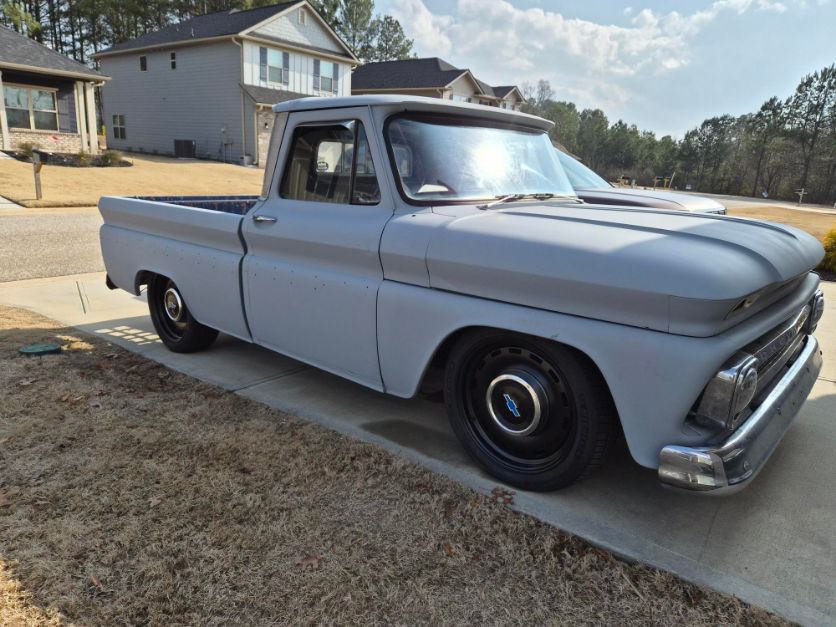
1965 Chevrolet C10
 Dealer
United States
Dealer
United States
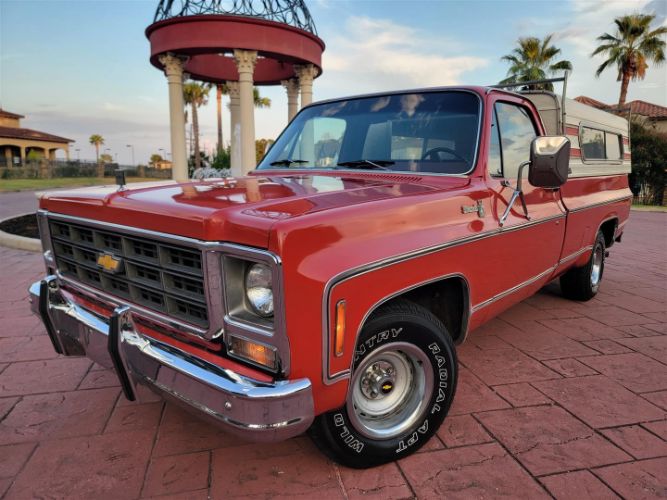
1979 Chevrolet C10
What to Look For
Two things matter most when shopping a C10: the frame and the cab. Everything else is replaceable.The frame should be solid, especially through the section directly under the cab and at the cab mount points. A flashlight under the truck is mandatory. Don't trust shiny paint on the frame — fresh paint can hide flake rust.
The cab is the second non-negotiable. Cab corners can be replaced (they're a reproduction part you can buy for $200), but a totally rusted cab base is a job that justifies finding a different truck. Lift the floor mat, pull the kick panels, and look at the floor pans. Patch panels welded sloppily over rotten metal is a 'restoration' that's actually a re-rotting in slow motion.
For square-body C10s (1973-1987), look closely at the cowl seam where the windshield base meets the firewall. Water collects there and rots both downward into the cab and forward into the firewall. This is one of the more expensive repairs on this generation.
Pre-Purchase Checklist
-
Inspect frame rails under cab
Use flashlight and screwdriver. Stab gently at boxed sections. Solid metal resists; rotted metal flakes. -
Pull floor mats and check floor pans
Both driver and passenger sides. Look for filler over rust holes — common shortcut by previous owners. -
Examine cab corner rust
Visible from inside through kick panels. Rust here often migrates upward into the door hinge area. -
Look at cowl drain area
Where windshield meets firewall. Plugged drains rot the cowl from inside out. Big repair if rotten. -
Lift bed if possible
Inspect bed floor, bed sides, and bed support crossmembers. New paint hides damage; lift it up. -
Check engine block stamps and casting numbers
Verify if the engine claimed (350, 396, 454) matches what's actually installed. Casting numbers identify year and displacement. -
Verify transmission and rear axle
Stamps and tags identify original equipment. Important for documented original-condition claims. -
Test all gauges and electrical
Wire gauge issues are common. Verify oil pressure, temperature, fuel level, alternator. Check headlights, marker lights, interior lights. -
Drive on highway and on backroads
Listen for rear differential whine, transmission slip on shifts, brake pulsation, steering wander. Drive at least 30 minutes. -
Document with photos before purchase
Photo every panel, frame rail, engine bay, undercarriage, and tag/stamp. Build the case before you wire money.
Common Issues
C10 trucks rust in predictable places. Lower cab corners, behind the rear wheels, the cab mount points to the frame, and the bed floor are all classic rust zones. The cab corner rust often hides behind cosmetic patches — always remove the kick panels and look up into the corner from underneath.Frame rust is the silent killer. The frame rails directly under the cab can rot from the inside out, especially on trucks that lived in salt-belt states. Check the boxed frame sections with a hammer or screwdriver — solid steel rings, rotten metal flakes.
Mechanically, C10s are dead-simple — that's part of their appeal. The 250 inline-six, the 305 small block, and the 350 small block are all bulletproof. The Saginaw and Muncie manuals and the TH350/TH400 automatics are equally robust. The leaks and tired components on most surviving trucks are easy fixes — but compounded leaks can mean a tired engine that needs a refresh.
More C10 for sale
 Dealer
United States
Dealer
United States
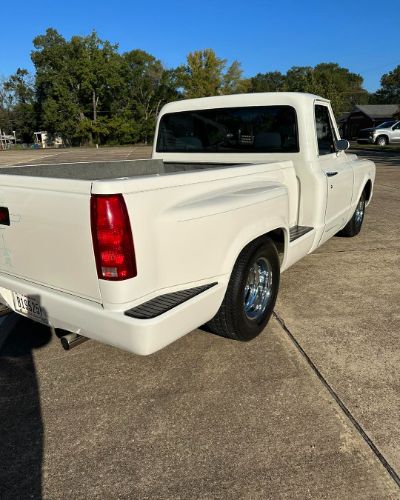
1967 Chevrolet C10
 Dealer
United States
Dealer
United States
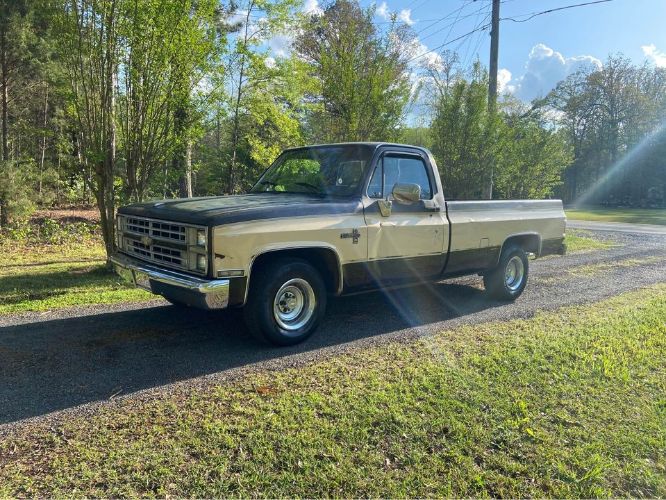
1986 Chevrolet C10
Pricing Guide
C10 prices have moved dramatically since 2018. A driver-quality 1967-1972 short-bed Fleetside small-block runs $28,000-$48,000 today, with show-quality examples hitting $60,000-$95,000. Long-bed Fleetside trucks are $8,000-$15,000 less than equivalent short-beds — they're slower to appreciate but offer the most truck for the money.Square-body C10s (1973-1987) have been the breakout segment of the last five years. A clean 1981-1987 short-bed Silverado runs $22,000-$45,000, with restomods (LS-swapped, modern wheels, air ride) commanding $50,000-$95,000. Step-side beds are slightly less popular than Fleetsides but uniquely characterful.
Project trucks (running but rough) start around $8,000-$15,000. Stripped frame-up restoration candidates can be had for $3,500-$7,000, but be honest about what the restoration will cost — $30,000-$60,000 is realistic before you're done with paint and interior.
Fun Facts
The 1967 C10 introduced the curved windshield that became the signature design element of the second-generation truck. Before 1967, all GM trucks had flat glass.The 'short-bed' versus 'long-bed' distinction comes down to wheelbase: 115 inches for short-beds, 127 inches for long-beds. The short-bed Fleetside is the most desirable configuration in today's collector market by a wide margin.
The term 'square-body' for the 1973-1987 generation didn't exist when the trucks were new — it's a nickname adopted by enthusiasts in the 2000s and 2010s when this generation entered the collector market.
Frequently Asked Questions
Ready to find your C10?
Browse 6+ active Chevrolet C10 listings on Classic Cars Arena.
View Listings →