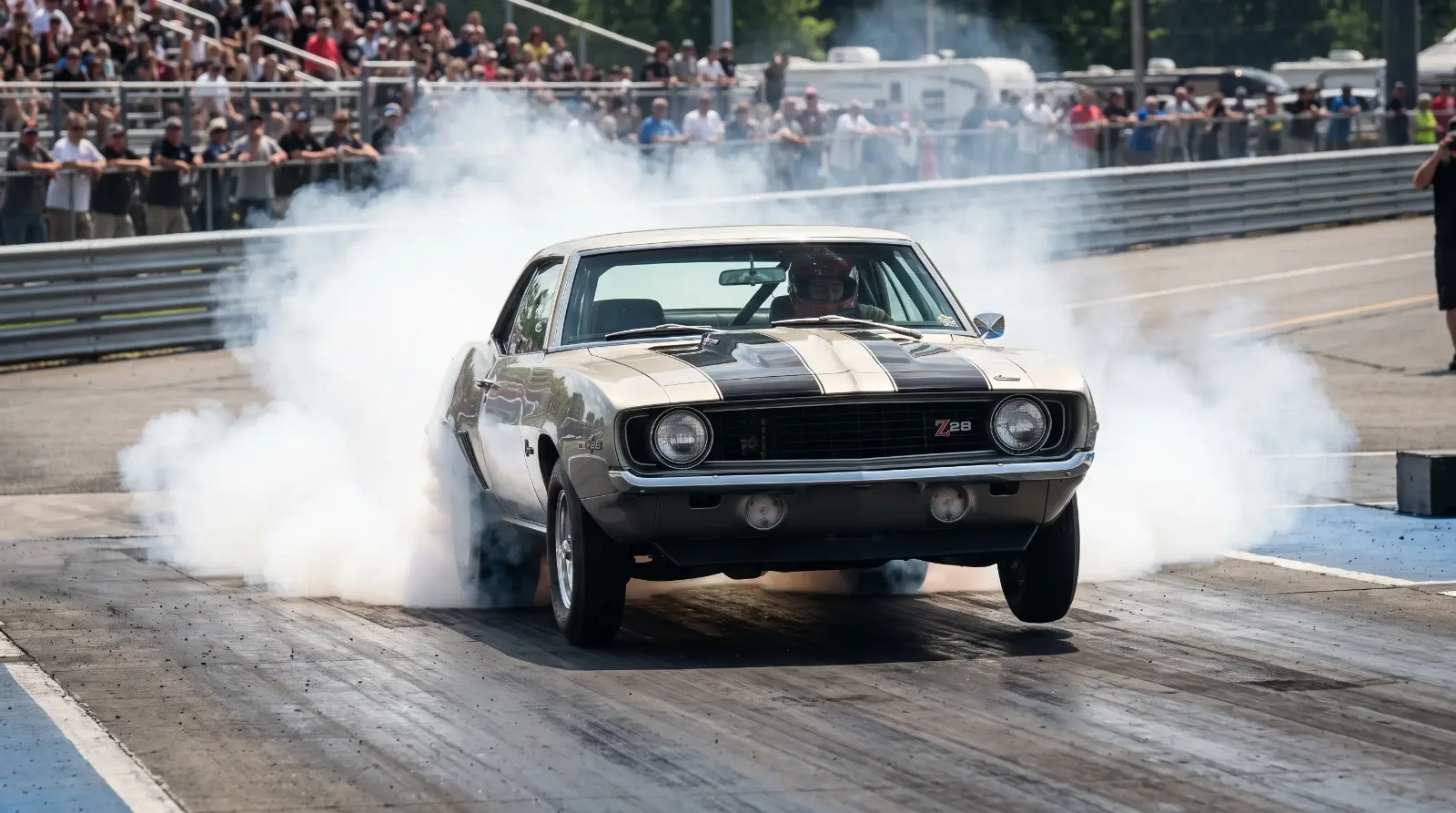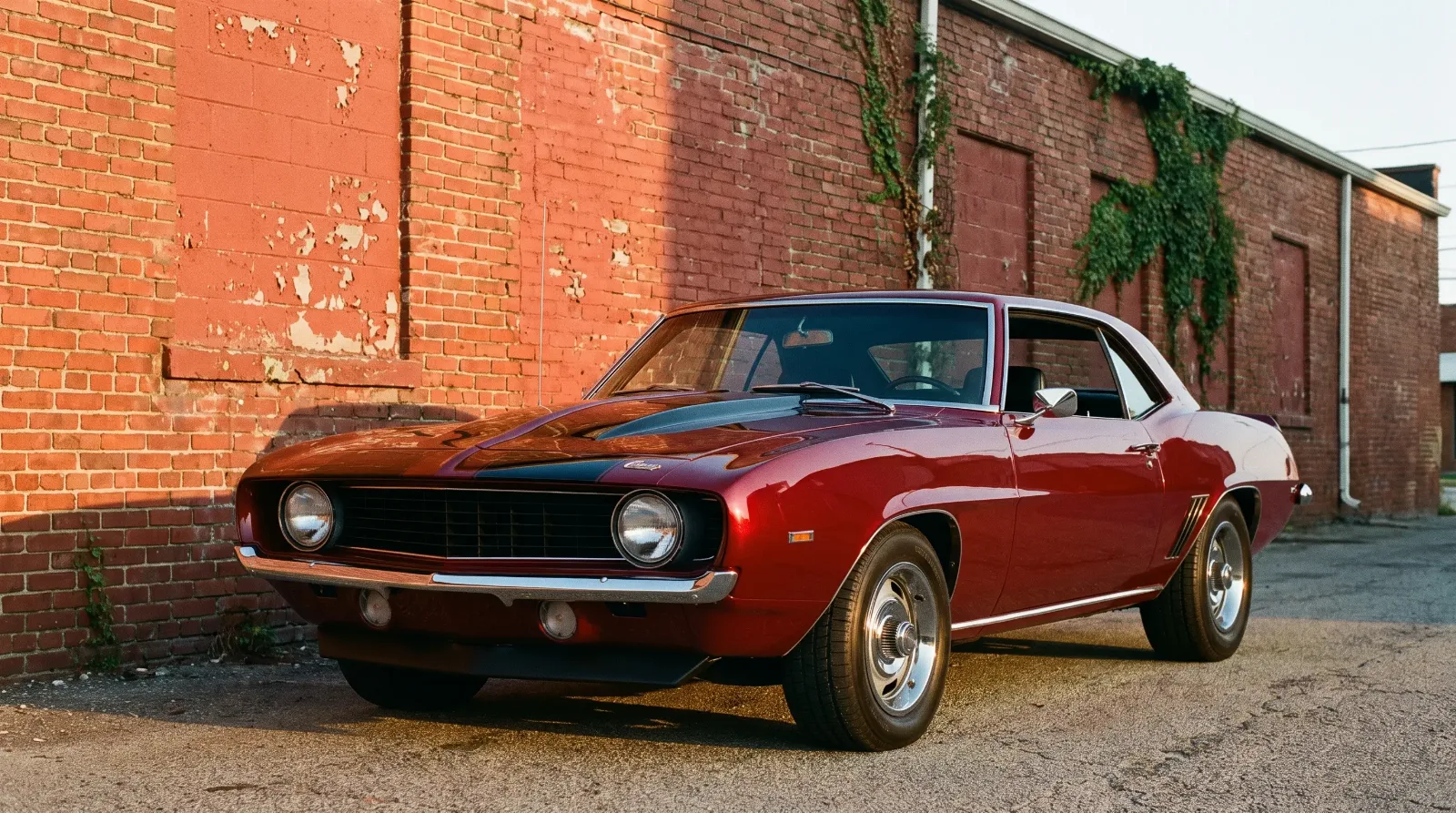
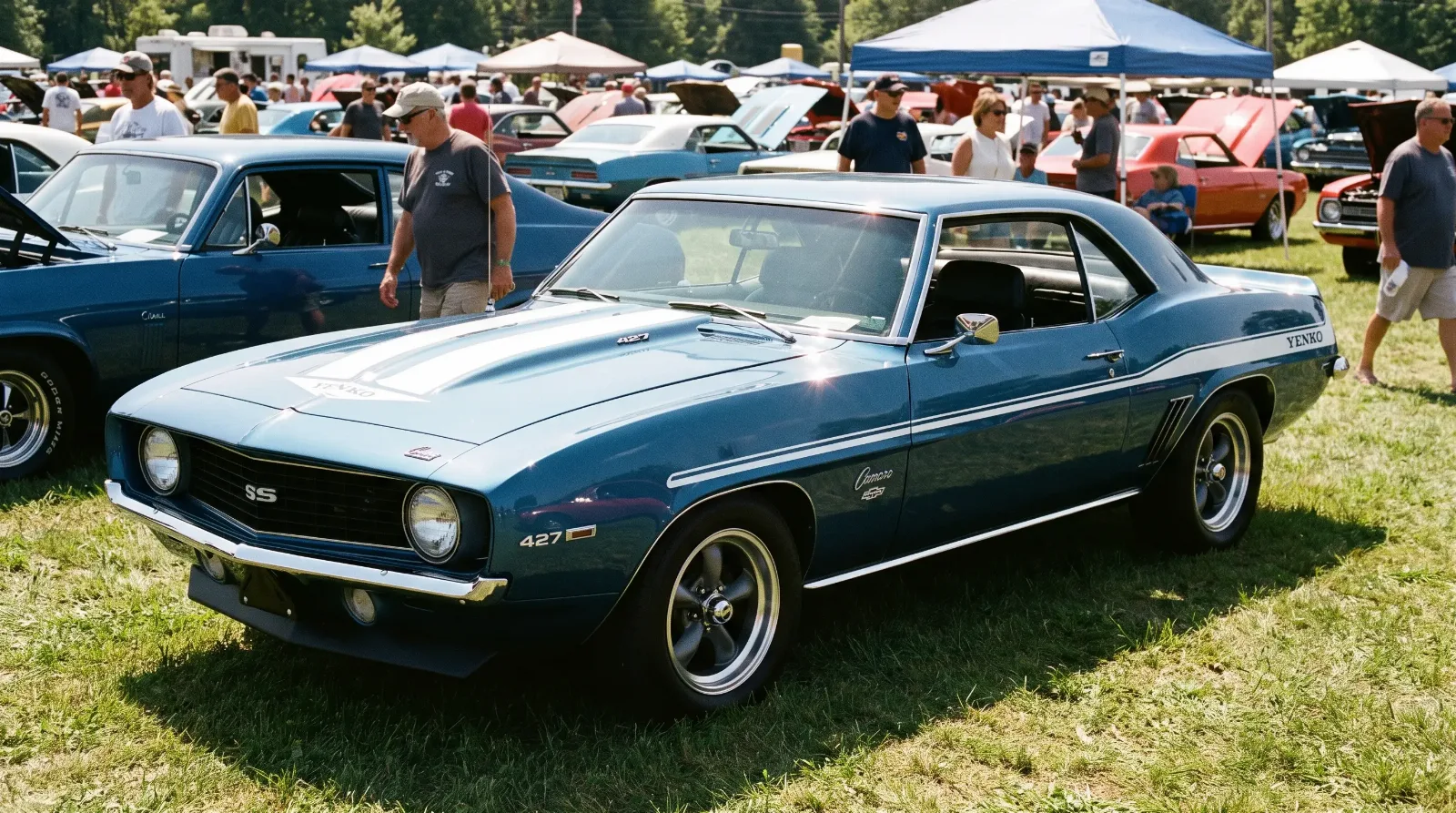
Most Chevrolet dealers in 1969 were in the business of selling Camaros. Don Yenko was in the business of building them into something else. Out of a dealership in Canonsburg, Pennsylvania, he put together a small run of 427-powered cars that the Chevrolet factory would not officially sell you, using a procurement channel most buyers had never heard of. The cars he produced, badged sYc for Super Yenko Camaro, are among the most documented and argued-about muscle cars of the era.
For context on how the Yenko cars fit into the broader Camaro story, it helps to read about the SS, Z/28 and COPO story first, because the Yenko operation did not exist in isolation. It was a direct response to what GM's corporate rules would and would not allow on the showroom floor.
Who Don Yenko was and why it mattered
Don Yenko ran Yenko Chevrolet in Canonsburg, about 20 miles south of Pittsburgh. He was not an engineer or a factory insider. He was a dealer who understood what his customers wanted and figured out how to get it to them within the letter, if not always the spirit, of General Motors policy.
In the late 1960s, GM had a policy restricting passenger cars under a certain weight from being sold with engines displacing more than 400 cubic inches. The Camaro fell under that restriction. The reasoning was competitive positioning within GM's own lineup, not safety or emissions. For someone trying to sell performance cars to buyers who wanted the biggest engine available, this was an obstacle.
Yenko's first approach, used in 1967 and 1968, was to buy new Camaros, pull the factory engines, install 427 cubic inch Corvette L72 engines, and sell the converted cars from his lot. These are real Yenko cars. But they present authenticity headaches because the engine swap happened at the dealer, not the factory. The documentation trail is thinner, and the cars need more scrutiny.
The 1969 cars are different. By 1969, Yenko had figured out the Central Office Production Order system.
The COPO system and how Yenko used it
COPO, which stands for Central Office Production Order, was an internal GM ordering channel designed for fleet buyers. Police departments, taxi companies, and government agencies used it to specify configurations that were not on the standard order form. It was not a secret, but it was not widely known among retail car buyers either.
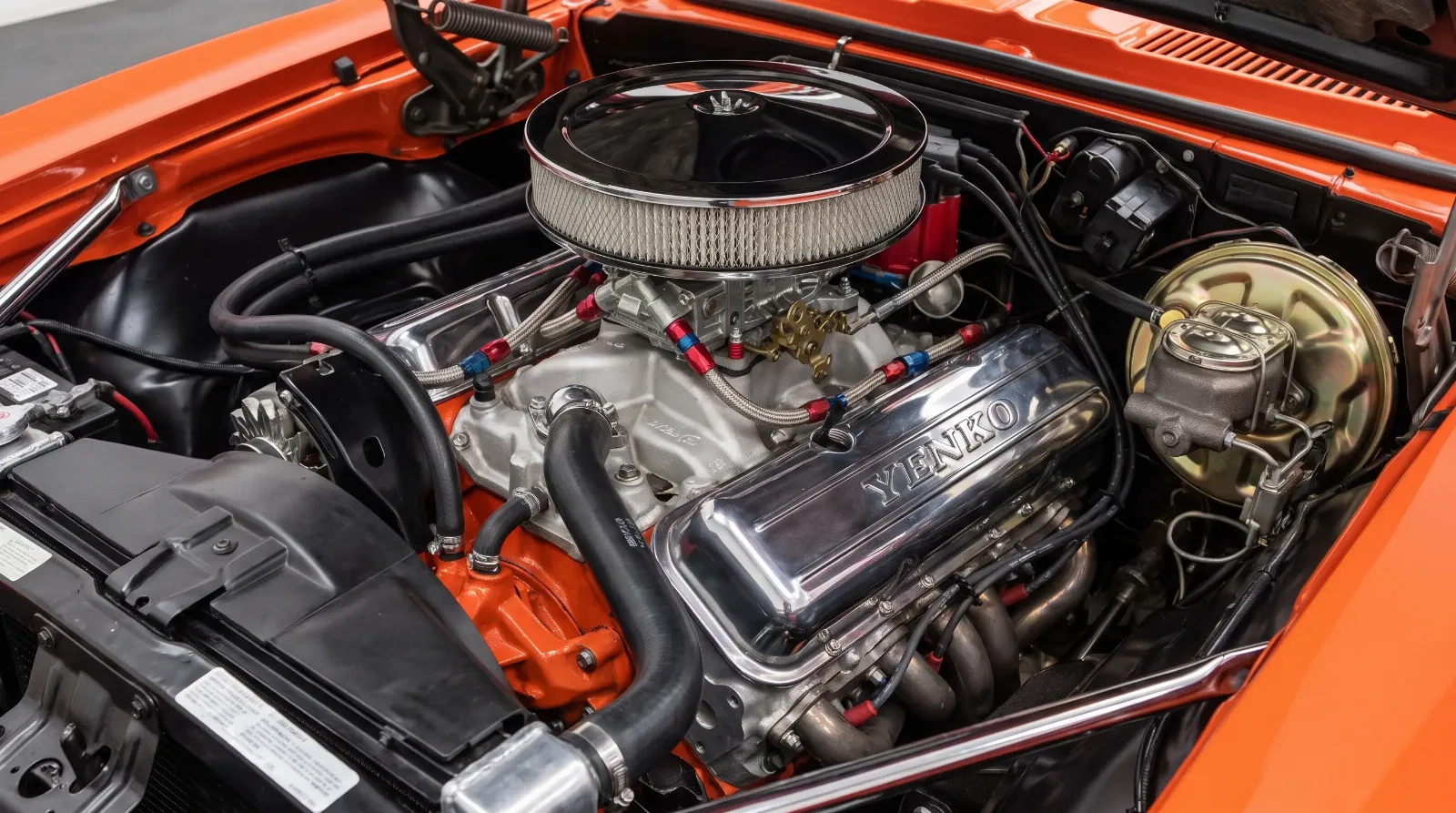
Two COPO codes are relevant to the Yenko story. COPO 9561 covered a 427 cubic inch iron-block L72 engine rated at 425 hp. COPO 9560 covered the ZL1, an aluminum-block 427 rated at 430 hp that was essentially a Can-Am racing engine. Yenko's primary business was the 9561 cars. He ordered them in volume, took delivery of factory-built 427 Camaros, added his own appearance package, and sold them as Yenko Super Camaros.
The advantage of the COPO route over the earlier engine-swap approach was documentation. A 1969 Yenko COPO Camaro built through COPO 9561 left the factory with a 427 already installed. The broadcast sheet reflects it. The trim tag reflects it. The partial VIN stamp on the engine block pad matches the car's VIN. That paper trail is what gives these cars their collector value today, and it is also what makes authentication both possible and necessary.
What the sYc package actually included
Yenko's appearance package on the 1969 cars was straightforward. The cars received Yenko body stripes, sYc badging on the front fenders and elsewhere, and in some cases a rear spoiler. The base for most of them was a Camaro Sport Coupe body. The COPO 9561 engine came mated to either a Muncie four-speed or a Turbo-Hydramatic automatic, depending on how the car was ordered.
Next in the series, see the COPO ZL1 cars.
Production figures for the 1969 Yenko COPO Camaros are cited at around 201 cars. That number comes from Yenko's own order records and has been cross-referenced by researchers over the years, but the exact count should be treated as approximate given how these records have been assembled after the fact. What is not in question is that production was small. In the context of a year when Chevrolet built over 240,000 Camaros, 201 units is not a large number.
| Year | Engine | COPO code | Rated power | Approx. production |
|---|---|---|---|---|
| 1967 to 1968 | L72 427 (dealer-installed) | N/A (dealer swap) | 425 hp | Estimated 54 to 99 |
| 1969 | L72 427 iron-block | COPO 9561 | 425 hp | ~201 |
| 1969 | ZL1 427 aluminum-block | COPO 9560 | 430 hp | ~69 total (all dealers) |
The L72's 427 cubic inches produced considerably more usable torque than the SS 396 cars, and with a four-speed and the right rear gear, these were genuinely quick machines. Quarter-mile times in the 13-second range have been documented in period tests, though the specific result depended on preparation and conditions as much as the car itself.
Authenticating a Yenko before you buy
There are clones. There have been clones since shortly after people started understanding what these cars were worth. Some of them are careful enough to catch a buyer who does not know exactly what to look for. The authentication process is not optional if you are spending serious money.
Start with the broadcast sheet. On 1969 Camaros, the broadcast sheet was typically placed under the rear seat cushion or in the trunk area during assembly. Not every car still has it, but on a Yenko COPO car its presence is significant. The sheet should reflect the COPO 9561 code and the L72 engine. If a seller cannot produce it and cannot explain convincingly why it is missing, that is worth factoring into your offer or your decision to walk.
Next, the engine itself. The L72 block carries specific casting numbers that differ from smaller-displacement big-blocks. The partial VIN stamp on the driver-side pad of the block should match the last eight digits of the car's VIN. If it does not, the engine is not the one the car left the factory with, regardless of what it is. Check the casting date code on the block: it should precede the car's assembly date. An engine cast after the car was assembled is a replacement, not the original.
"I have walked away from Yenko cars with beautiful paint and strong engines because the numbers did not add up. It is not fun to do. But a clone priced like an original is not a deal. It is an expensive lesson."
-- Mike Sullivan
The trim tag on the firewall carries the body color code, interior code, and build information. On COPO cars, some researchers look for specific build date sequences that correspond to Yenko's ordering periods. This is detailed work that goes beyond a casual inspection, and it is the kind of thing worth bringing in a specialist for. The Yenko registry and COPO documentation specialists have seen enough originals to know what holds up and what does not.
For buyers who want to skip straight to available examples, Yenko Camaros for sale on Classic Cars Arena shows current listings with enough detail to start narrowing the field.
What Yenko Camaros are worth and who is buying them
The market for authentic 1969 Yenko COPO Camaros has been consistent at the upper end of the first-generation Camaro price range. A well-documented L72 car with its broadcast sheet, trim tag intact, and numbers-matching drivetrain in solid driver-quality condition trades in the $90,000 to $140,000 range at current market levels. Show-quality examples with full documentation have pushed past $175,000 at major auctions. The spread reflects both condition and documentation quality, and documentation is probably the bigger variable of the two.
The 1967 and 1968 dealer-converted cars are harder to price because their provenance questions are harder to resolve. Expect a significant discount relative to the 1969 COPO cars, and expect more due diligence on the buyer's side before anyone writes a check. A converted car that comes with shop records, correspondence, or other period documentation from the Yenko dealership is in a better position than one that exists only as a car with a big engine and some old stripes.
The buyer pool for these cars is specific. People who want a yenko camaro are generally not cross-shopping it against a Z/28 or a standard SS 396. They want this particular car because of what it represents: a moment when a small dealership in western Pennsylvania built something the factory would not, and did it in a way that left a paper trail that has held up for more than 50 years.
The Yenko COPO Camaro sits within a tradition of dealer-built performance that is uniquely American and specifically tied to how GM's corporate structure worked in the late 1960s. Understanding that context, which you can follow further in the Camaro's beginnings, explains why Don Yenko's cars became collectibles rather than curiosities. He found a real path through a real restriction and built real cars. That combination is harder to replicate than it looks.
Sources and notes
Production figures, engine specifications, codes, and dates in this article are cross-referenced from established Camaro references, period documentation, and owner registries. Where sources differ, the most commonly cited value is used. Cost figures are indicative and vary by supplier, region, and condition.