The only color Chevrolet offered
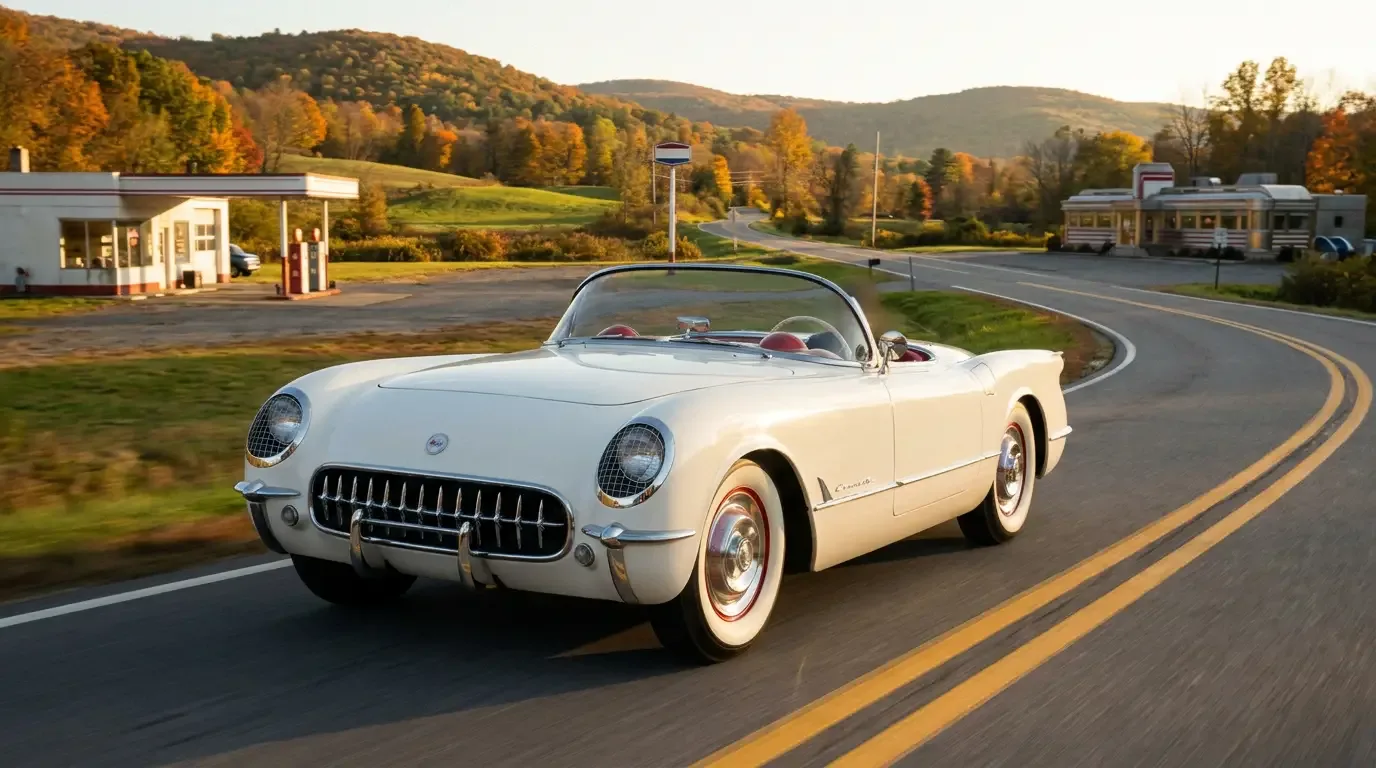
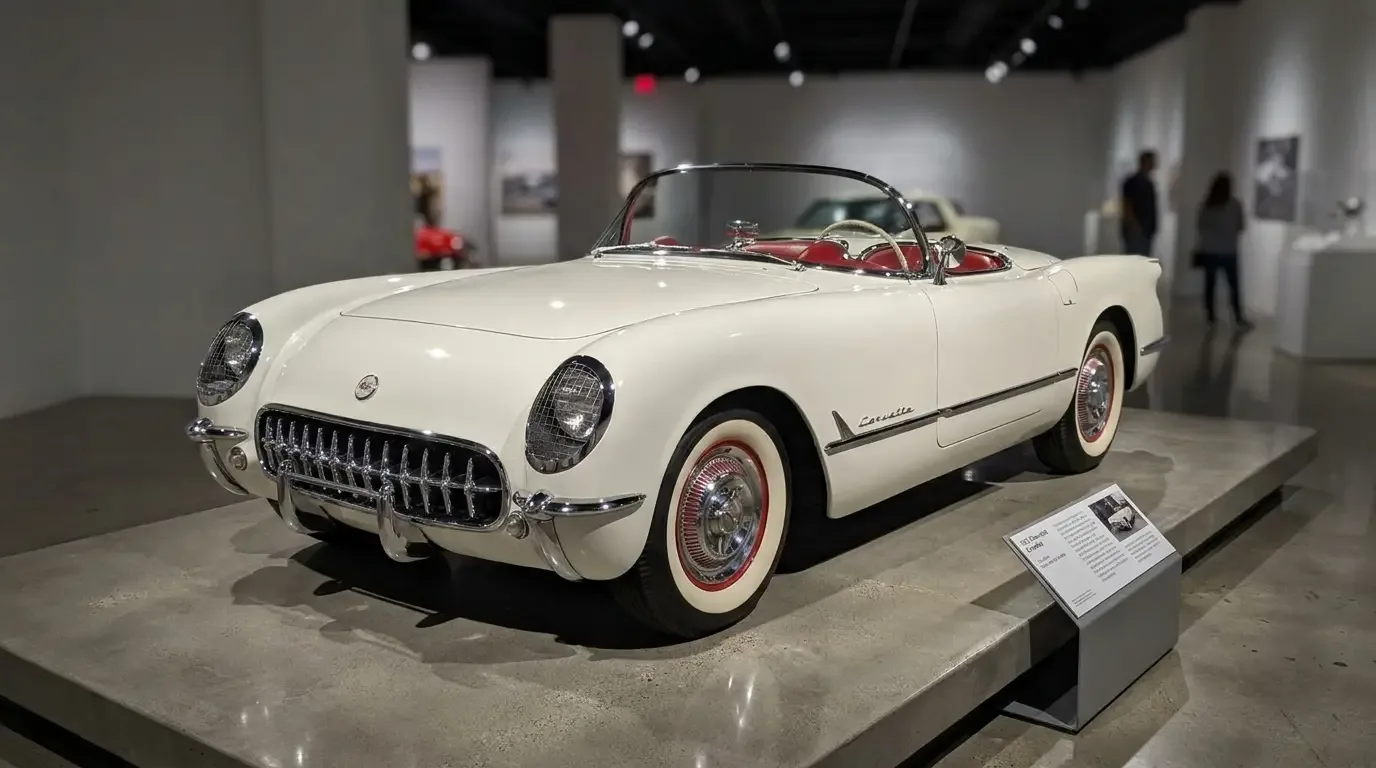
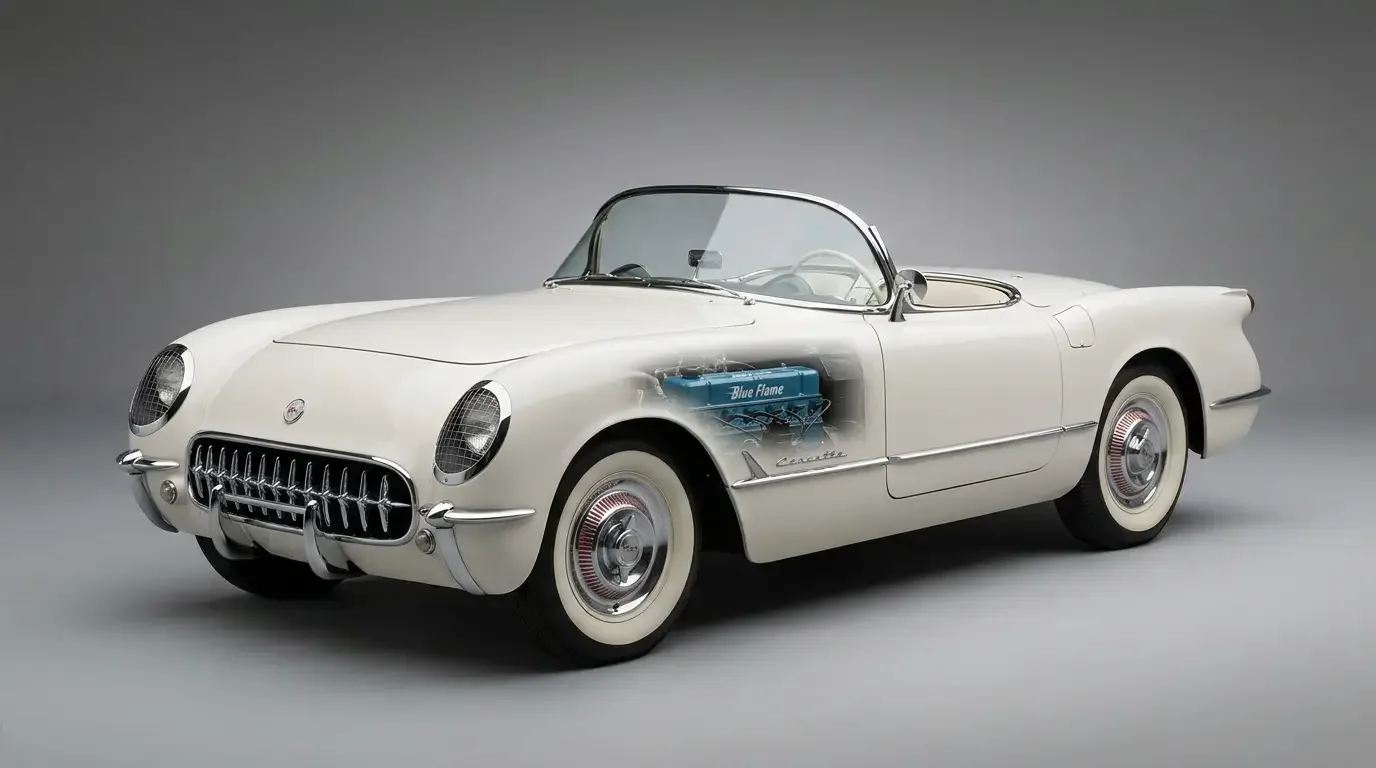
When the first production Corvette rolled off the Flint, Michigan assembly line on June 30, 1953, buyers had exactly one color choice: Polo White, paired with a Sportsman Red interior. That was it. No alternatives, no order forms with paint codes to circle. Every one of the 300 Corvettes built in 1953 wore the same exterior. For a car that was supposed to announce America's arrival in the sports car market, Chevrolet kept the palette remarkably simple.
Polo White was not a new color to the General Motors lineup. It had appeared on other GM vehicles before landing on the Corvette. But on that fiberglass body, with the chrome details and the red interior showing through the wraparound windshield, it read differently than it did on a Bel Air sedan. The color has since become inseparable from the car's identity. When collectors and historians talk about a 1953 Corvette, they are describing a Polo White car. There is no other kind.
For the deeper story of how the Corvette came to exist at all, the production context matters. Harley Earl's team had shown a concept at the 1953 Motorama in January. Public response was strong enough that Chevrolet pushed the car into limited production the same year. The tight timeline left little room for developing a full color range.
What Polo White actually looked like
Polo White reads as a warm, slightly creamy white rather than a stark cold white. Under strong sunlight it looks bright and clean. Under overcast skies or in a garage, it picks up a subtle warmth that cooler whites do not have. The fiberglass body panels of the 1953 car held paint differently than steel, and early production cars have been known to show some variation in panel color when examined closely, which is partly a consequence of the hand-laying process.
The contrast with the Sportsman Red interior was intentional and specific. The red bucket seats, the red door panels, the red dash treatment against the white exterior made the car look sharp in photographs and at shows. It was a combination that worked well for a car that needed to make an impression fast. Chevrolet was competing for attention against established British sports cars from MG, Jaguar, and Triumph, and the Polo White and red combination gave the Corvette a recognizable visual identity immediately.
| Spec | 1953 detail |
|---|---|
| Exterior color | Polo White (only option) |
| Interior color | Sportsman Red (only option) |
| Total production | 300 units |
| Assembly location | Flint, Michigan |
| Body material | Fiberglass |
| Engine | 235 cu in Blue Flame six-cylinder, 150 hp |
| Transmission | Two-speed Powerglide automatic |
Why the single-color decision made sense in 1953
Limited production runs and limited color selections go together for practical reasons. Painting fiberglass required different preparation and technique than painting steel. The Flint plant was building these cars essentially by hand, 300 total across the entire model year. Setting up a paint line for multiple colors, managing inventory for multiple interior combinations, and training workers on color-specific processes would have added complexity that a 300-unit run did not justify.
There is also an argument that the single-color approach served the car's debut well. The Corvette needed a clear, consistent image. A fragmented lineup of colors would have made it harder to establish that image in magazine coverage and dealer showrooms. When a journalist photographed one for a road test, the car always looked the same. When Chevrolet showed one at a regional event, it matched the Motorama car people had already seen in newspapers. Polo White became the Corvette's calling card in a way that would have been harder to achieve with ten color options.
"The factory records for 1953 are unusually consistent because there was nothing to vary. Every car on the line got the same treatment. That simplicity is actually helpful for documentation work today. If you're looking at a '53, you're not cross-referencing color codes against tank stickers. You're asking different questions entirely."
— Tom Ramirez
Color continuity into 1954 and beyond
When production moved to St. Louis and output ramped up for the 1954 model year, Polo White stayed in the lineup. But it was no longer the only option. Pennant Blue, Sportsman Red (now an exterior color as well as an interior), and Black joined the color sheet. The exclusivity of the 1953 Polo White was gone, and the character of the car shifted with it. A 1954 Polo White Corvette is a different collector proposition than a 1953, partly because 1954 production reached 3,640 units, and Polo White still accounted for the large majority of that run at roughly 3,230 cars.
The 1953 car's position as an all-Polo-White, all-300-of-them production run gives it a documentary coherence that later C1 years lack. Authenticating the color on a survivor is straightforward: if it's a genuine 1953, it was white. The question shifts to whether the car has been repainted and, if so, how that affects value and NCRS judging.
For anyone tracing what came next in the Corvette story, the next chapter covers how Chevrolet expanded the lineup and how the early production numbers shaped collector interest for decades after.
Sources and notes
- Wikipedia, Chevrolet Corvette (C1): confirmed 300-unit 1953 production, 235 cu in Blue Flame six at 150 hp, Flint assembly starting June 30, 1953, and 1954 production of 3,640 cars with Pennant Blue, Sportsman Red, and Black added to the color sheet
- CorvSport, 1953 Corvette Guide: confirmed all-Polo-White/Sportsman-Red production, the 150-hp Blue Flame six, and the 46-piece hand-laid fiberglass body process at the Flint plant
- Corvette Warehouse, Corvette Assembly Plant History: confirmed the Flint, Michigan plant location and the hand-assembly of the first 300 cars
- History.com: confirmed June 30, 1953 as the date the first production Corvette rolled off the Flint, Michigan line
- Corvette Blogger: confirmed 1954 color-split figures, including roughly 3,230 cars finished in Polo White
- National Corvette Museum, The Corvette That Started It All: background on the 1953 launch and early production story