The year the Corvette actually started: 1953
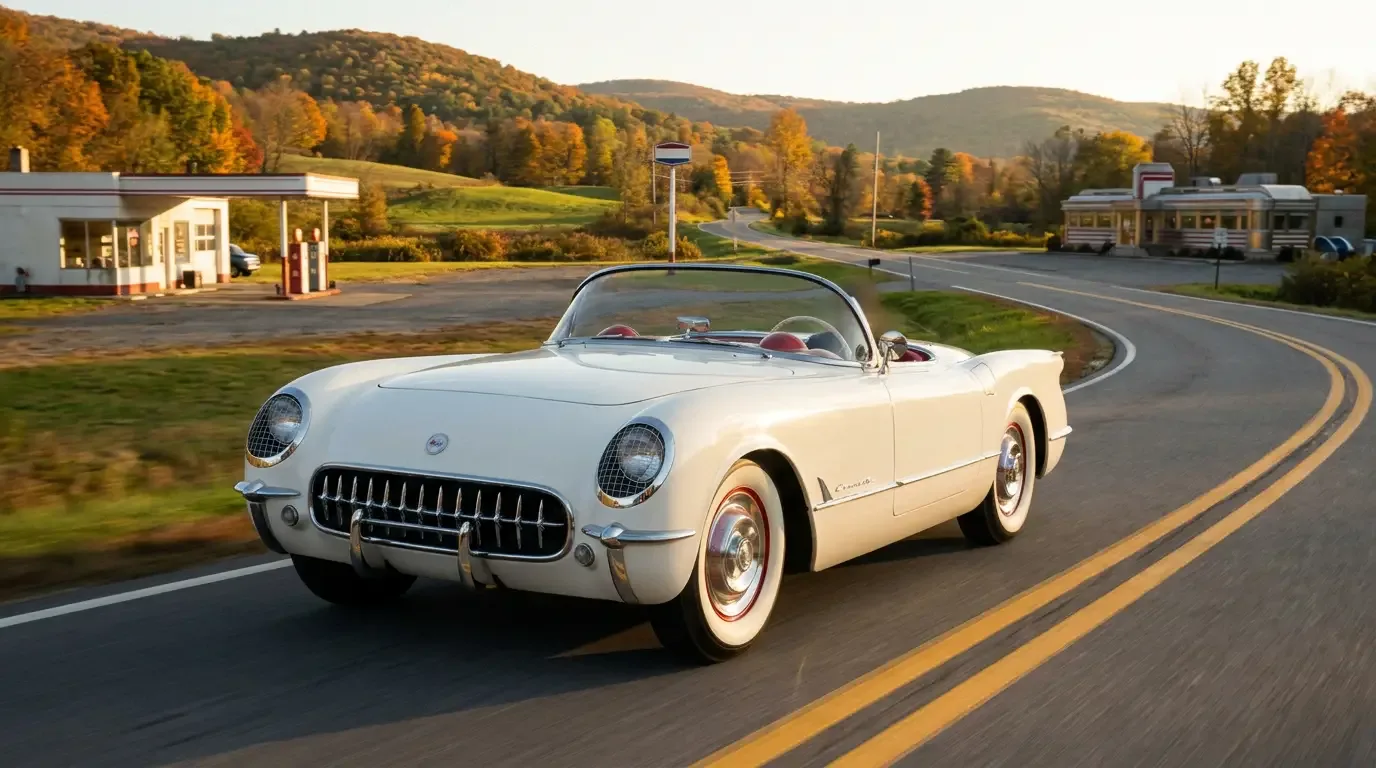
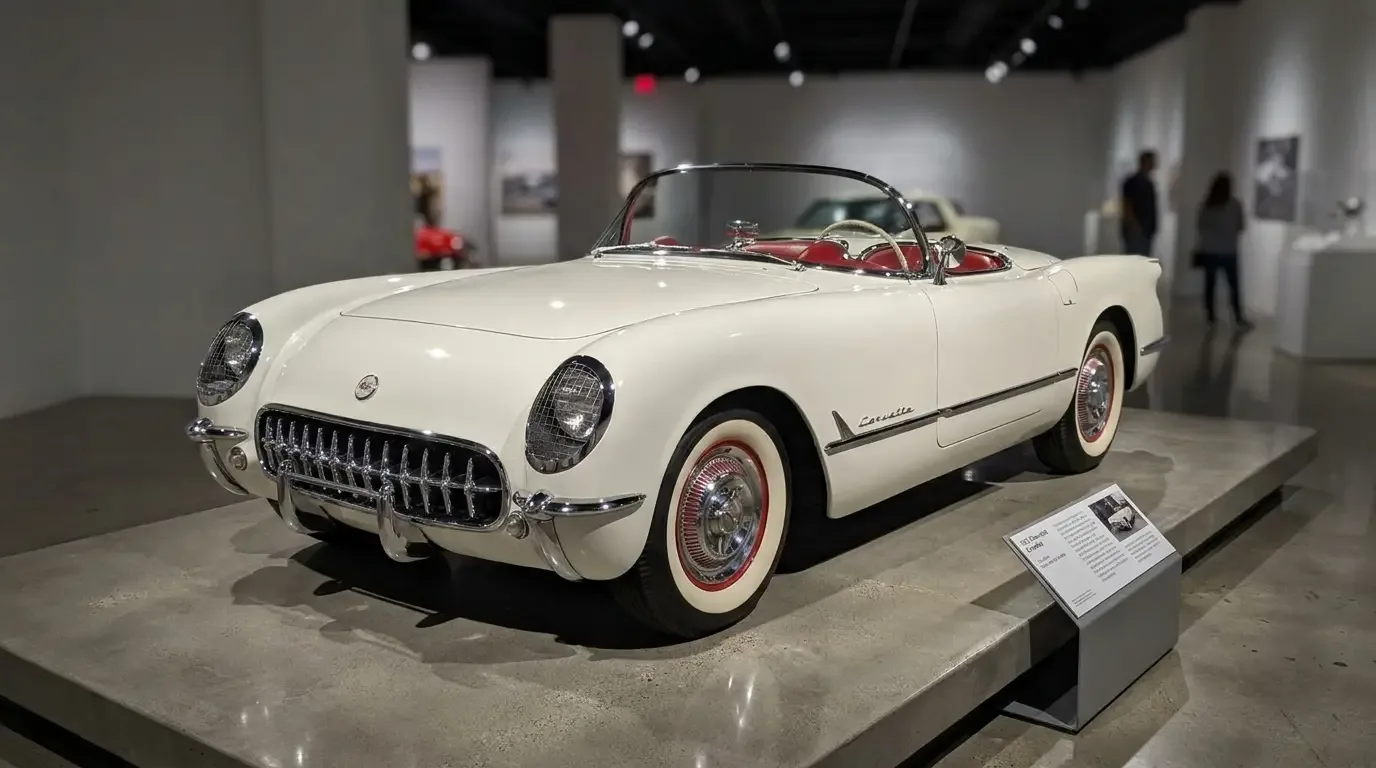
The first Corvette rolled off a temporary assembly line in Flint, Michigan, on June 30, 1953. Not Bowling Green. Not St. Louis. Flint. That detail gets lost in most retellings, and it matters because the whole 1953 program was a rushed, hand-built affair that barely resembled a production car operation. General Motors built 300 units that model year, all of them Polo White with red interiors and black soft tops. There were no options. You couldn't order a different color. You couldn't get a different transmission. Every single one left the line identical, and most went to GM executives and select dealers rather than public buyers.
Understanding the first Corvette year means understanding what Harley Earl was actually trying to do in 1953, and why the car nearly died before it found its footing. If you want the full story of how the Corvette evolved from that fragile beginning into an American institution, the arc is longer and stranger than most people expect.
What the 1953 Corvette actually was
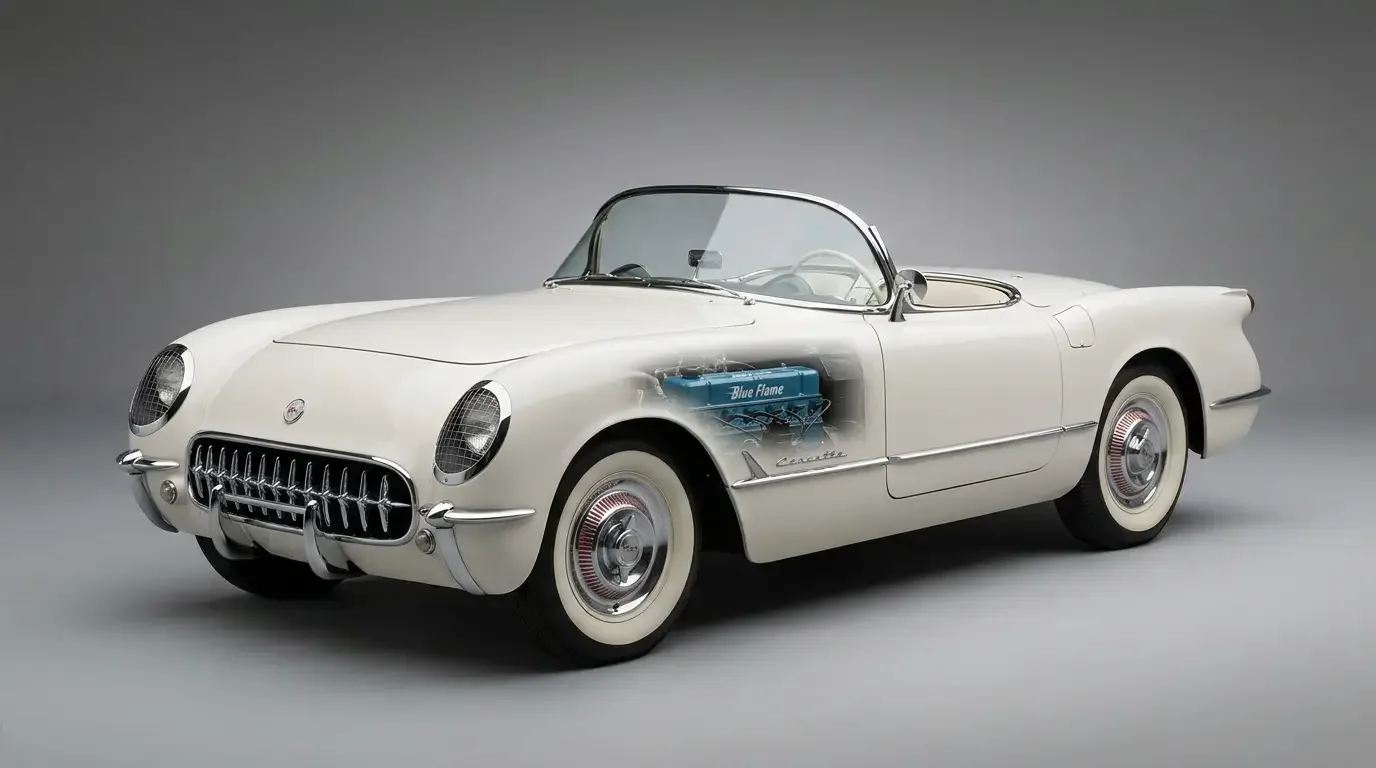
The 1953 Corvette used a fiberglass body over a modified passenger car frame. The engine was the "Blue Flame" inline-six, a 235 cubic inch unit borrowed from Chevrolet's standard passenger car lineup. Power output was rated at 150 brake horsepower at 4,200 rpm, which sounds modest now but was achieved through a higher compression ratio, a special camshaft, three Carter side-draft carburetors, and dual exhaust. The transmission was a two-speed Powerglide automatic, the only option available. No manual was offered in 1953.
That automatic transmission became one of the early criticisms the car faced. Sports car buyers in 1953 expected a manual gearbox. The Powerglide read as a concession to boulevard cruising rather than serious performance, and some of the automotive press said exactly that. The criticism stung, and it contributed to the pressure that eventually brought the three-speed manual in 1955.
| Specification | 1953 Corvette |
|---|---|
| Engine | 235 cu in inline-six ("Blue Flame") |
| Horsepower | 150 hp @ 4,200 rpm |
| Transmission | Two-speed Powerglide automatic (only) |
| Body | Fiberglass over passenger car frame |
| Colors available | Polo White only |
| Interior | Red only |
| Production | 300 units |
| Assembly location | Flint, Michigan (temporary line) |
| Base price | $3,498 (incl. excise tax and shipping) |
The fiberglass body was itself a significant manufacturing experiment. GM had no established process for fiberglass body production at scale, which is part of why the 1953 cars were hand-assembled so slowly. The material had been used in limited applications in aviation and marine contexts, but a consumer automobile at any kind of volume was different territory. Early cars had quality issues, including gaps in panel fit and problems with the soft-top sealing. These weren't minor complaints. Rain got in. Wind noise was significant at highway speeds.
How the car came to exist: the Motorama connection
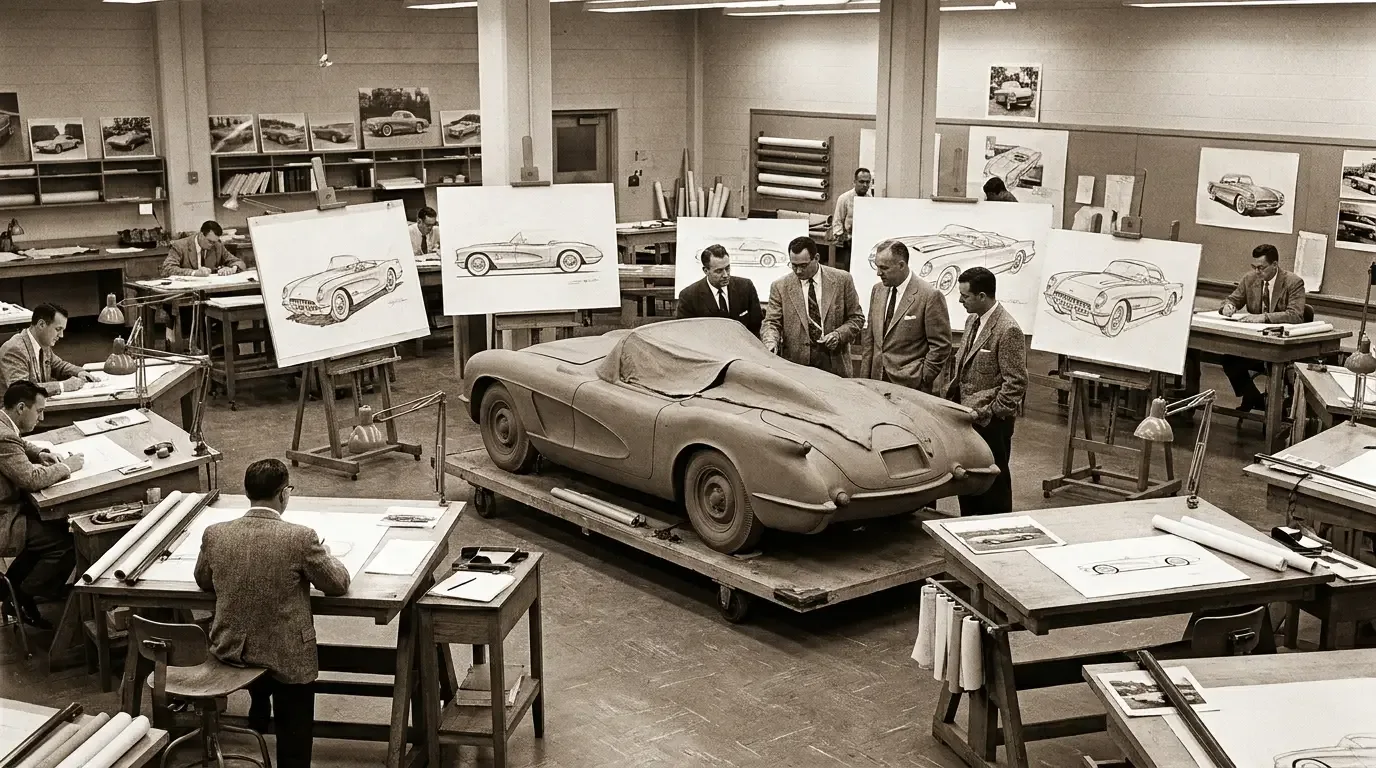
The Corvette's origin traces directly to the 1953 GM Motorama show, where a fiberglass-bodied two-seat roadster concept called "Corvette" debuted at the Waldorf-Astoria in New York in January of that year. The public response was strong enough that GM authorized a fast-track production program. "Fast-track" in this context meant production began roughly six months after the show car debuted, which explains the compromises: borrowed platform components, a single powertrain, no color choices, and a manufacturing process that hadn't been fully developed yet.
Harley Earl, who led GM's styling division and championed the project, drew inspiration from European sports cars he had encountered after World War II. The influence of the Jaguar XK120 in particular has been noted by historians, though the Corvette's proportions and fiberglass construction were distinctly American departures from European practice. For more on Earl's design influences and the concept work that preceded the production car, a related piece covers that territory in detail.
The first year's problems and what they meant for the model
The 1953 Corvette had real deficiencies beyond the automatic transmission and soft-top leaks. Side curtains instead of roll-up windows. An exterior door handle design that didn't work well. Limited luggage space. The car made a statement about American sports car intentions, but it didn't yet deliver on the promise with the same consistency a European buyer might expect from, say, a Jaguar of the same era.
Sales for the expanded 1954 model year were disappointing. Production increased to 3,640 units, but dealers couldn't move them. Cars sat on lots. GM seriously considered canceling the program. What changed the trajectory wasn't a marketing push. It was the arrival of the 265 cubic inch V8 for 1955, which gave the car the power character it had been missing, and the concurrent introduction of a manual transmission option. The c1 corvette story from 1953 through 1962 is really the story of a car that had to earn its right to survive.
"The 1953 cars are important as documents. They tell you what GM was willing to commit to in a hurry, and what they hadn't figured out yet. A lot of early production issues are right there in the build records if you know where to look. These weren't corner-cutting decisions so much as genuinely unresolved engineering problems that a six-month production timeline couldn't fix."
— Tom Ramirez
Collecting the 1953 Corvette today
All 300 of the 1953 Corvettes are documented and tracked within the Corvette collector community. NCRS (National Corvette Restorers Society) records and other registry data mean that provenance for these cars is unusually traceable compared to most collector vehicles of the era. That doesn't mean fakes don't exist, but it does mean the paper trail is denser than average.
Values for 1953 Corvettes at auction in recent years have typically landed in the $280,000 to $440,000 range for well-documented, correct Polo White examples, with exceptionally rare or historically significant cars reaching well past $1 million, such as the early production car #003, which sold for $1.08 million at a 2006 Scottsdale auction. The spread is wide because originality is everything in this segment. A car with a replaced engine, repainted body, or incorrect interior components drops significantly in value regardless of cosmetic condition. Buyers interested in these cars should engage an NCRS judge or a recognized 1953-specialist before committing to a purchase.
Sources and notes
- GM News, "Retro Rides: The 1953 Chevrolet Corvette": confirmed Flint, Michigan assembly, June 30, 1953 start of production, and the move to St. Louis for 1954
- Wikipedia, Chevrolet Corvette (C1): confirmed 150 hp rating, $3,498 base price, 300-unit 1953 production, and 3,640-unit 1954 production
- Corvsport, "1953 Chevrolet Corvette Guide": corroborated 150 brake horsepower figure, base price, and 300-unit production count
- Corvette Action Center, 1953 Corvette Specifications: confirmed 150 hp at 4,200 rpm and 223 lb-ft torque figures for the Blue Flame six
- National Corvette Museum, "1953 Motorama: Corvette Introduced 70 Years Ago Today": confirmed the January 17, 1953 Motorama debut at the Waldorf-Astoria in New York
- Sports Car Market, 1953 Chevrolet Corvette Roadster profile: current auction value range ($280,000-$440,000 typical, up to $1.08 million for the historically significant #003 car)