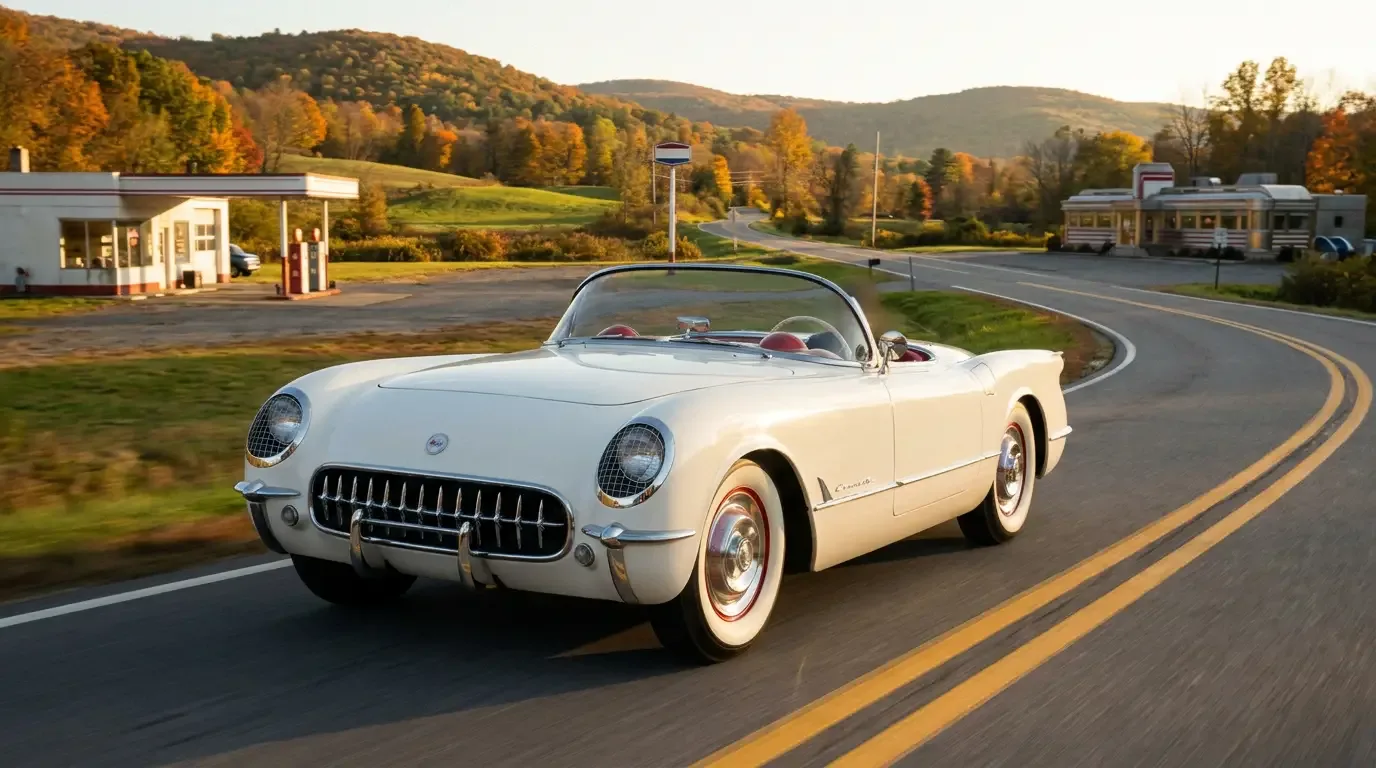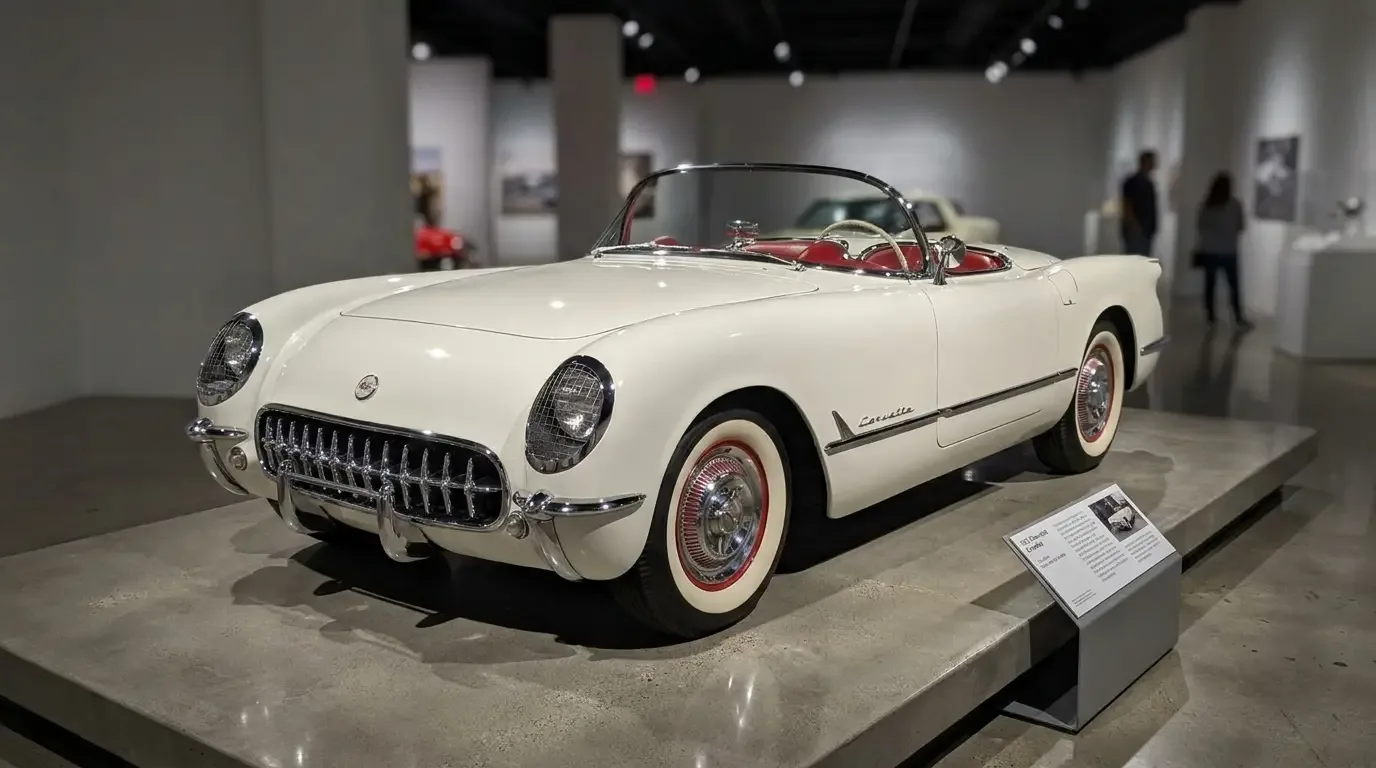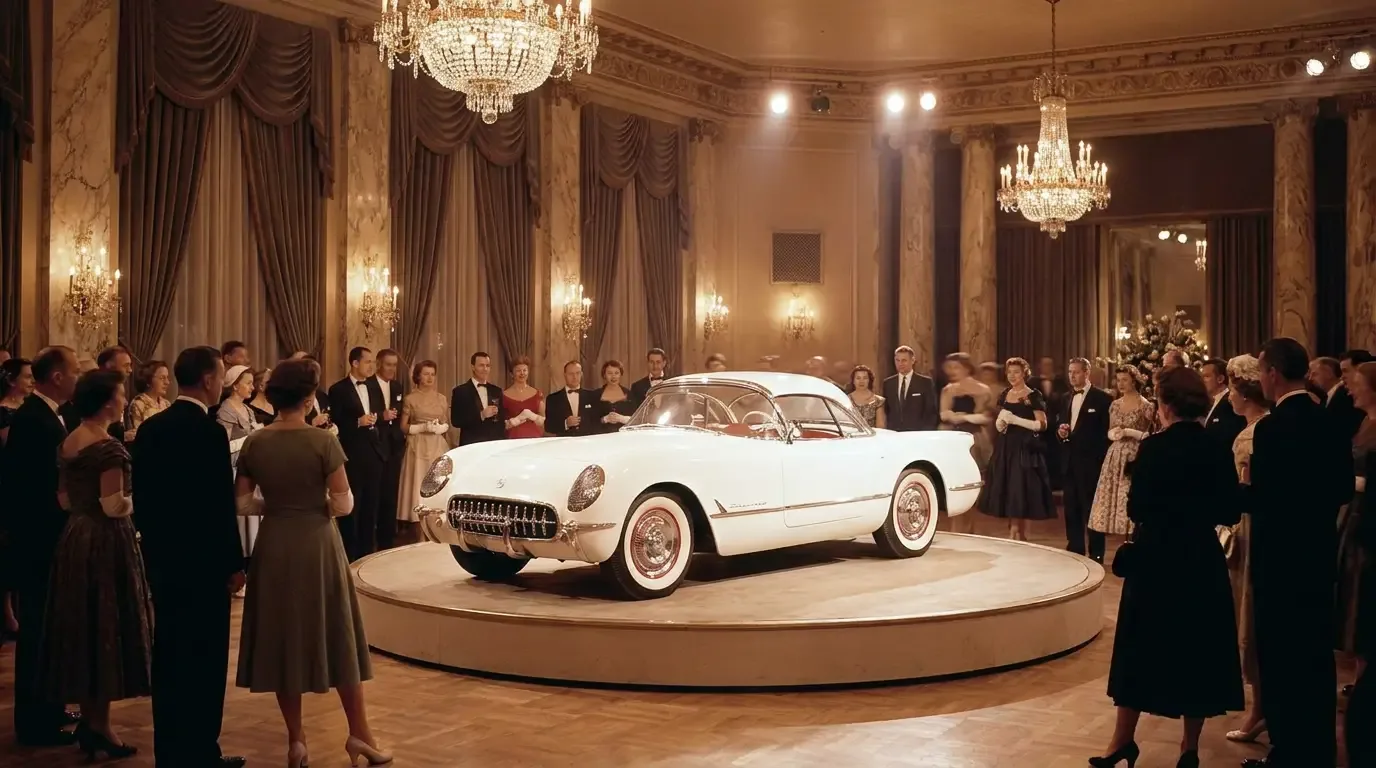

There are a handful of stories in American automotive history where a name hides more than it reveals. The Corvette is usually told as a purely American tale, born at a GM Motorama show on a dream and a deadline. That story is true, and the car's internal codename during development, "Project Opel," has led plenty of people to assume the shape itself came from Germany. It didn't. The name was cover, not a blueprint.
The connection between Harley Earl, the Corvette, and the Opel codename isn't a footnote, but it's also not the design lineage it's sometimes made out to be. It's a window into how secrecy actually worked inside General Motors during the early 1950s, and how a design chief with real authority protected a pet project from his own company. To understand the c1 corvette story fully, you have to understand what Earl was actually looking at before he drew a single line of what would become America's sports car, and it wasn't Opel.
Harley Earl and the postwar design moment
By the time the Corvette concept reached the 1953 Motorama, Harley Earl had spent over two decades reshaping what American cars looked like. He founded the Art and Colour Section at GM in 1927, eventually renamed the Styling Section, and ran it as something close to a personal design empire. His instincts ran toward the theatrical: long hoods, chrome, a sense of forward motion even at rest.
After World War II, GIs returning from Europe brought home MGs, Jaguars, and Alfa Romeos, and those small, light, genuinely quick cars started showing up on American roads and at events in numbers Detroit hadn't planned for. Earl was watching. In the summer of 1951 he attended the Watkins Glen road races in upstate New York, where the field was full of European sports cars driven by their college-age owners, and came away convinced that GM needed an answer of its own.
Opel enters the story only as a codename, not as a design source. Opel had been a GM subsidiary since 1929, and GM's Styling Section did legitimate work for the German operation, which gave Earl a convenient cover story. When he set up a small, restricted team to develop his sports car concept in secret, he called the effort "Project Opel" specifically to mislead curious people inside GM and Chevrolet into thinking it was routine work for the German subsidiary rather than a brand-new American sports car. The name borrowed Opel's reputation for cover, not its sheet metal.
Project Opel and what Earl actually borrowed
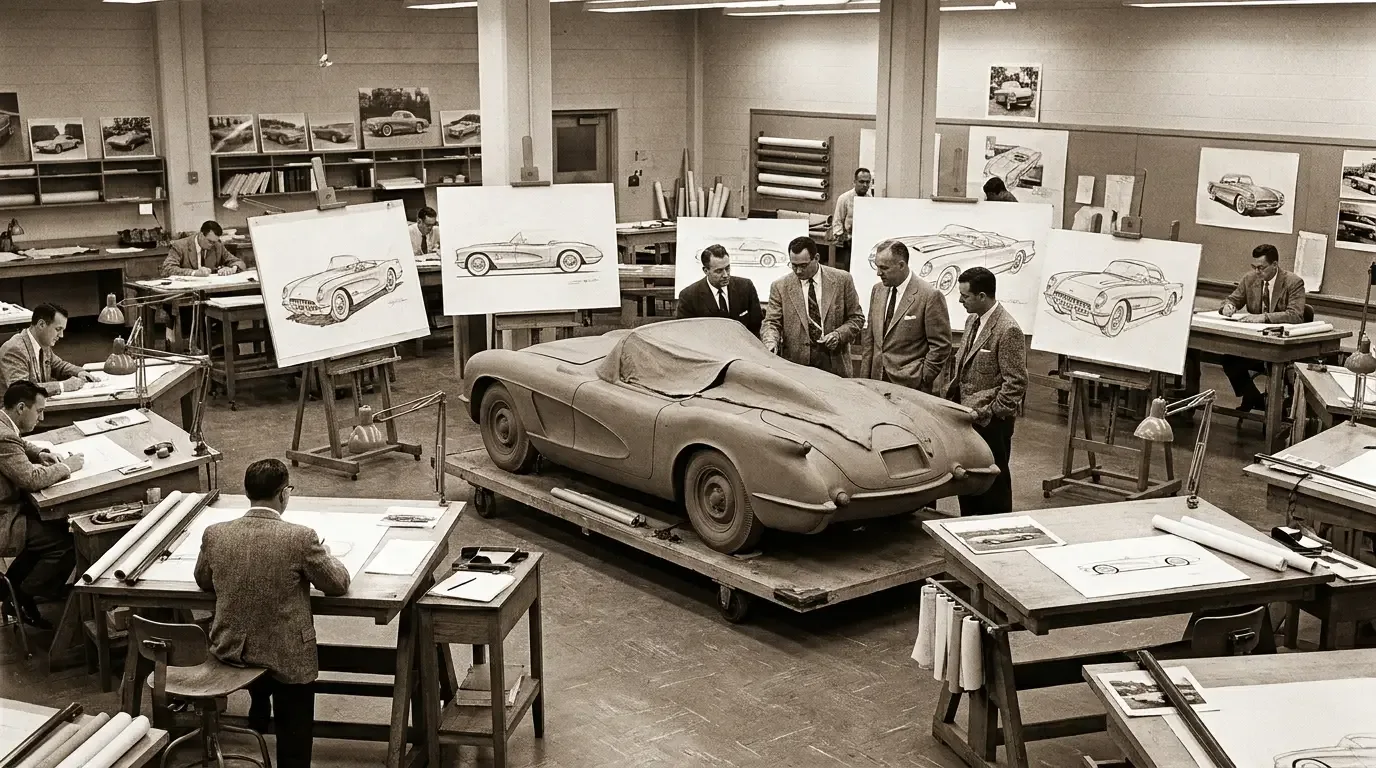
The record on where the Corvette's shape came from is clearer than the codename suggests. Earl had a particular admiration for the Jaguar XK120, and the goal he set his small studio was to build an all-American alternative to it, something with the same low, long-hood proportions and the same sense of speed at a standstill that MGs, Jaguars, and Alfa Romeos already had. The design team, working closely with Earl, developed the concept through hand-sculpted clay models rather than engineering drawings first, which was Earl's preferred method for chasing proportion before mechanics.
What the record does not support is a direct styling debt to any specific prewar Opel model. The 1938 Opel Olympia and its era's Opel design studies are sometimes mentioned alongside the Corvette because of the codename alone, but there is no documented line connecting the Olympia's shape to the Corvette's. The genuine European touchstones for Earl's team were British and Continental sports cars of the era, principally Jaguar, alongside MG and Alfa Romeo.
It would be overstating it, then, to say the Corvette was derived from an Opel. It wasn't. Earl's design vocabulary for what a sports car should look like was shaped by the European sports cars he'd seen on American roads and at events like Watkins Glen, and "Project Opel" survives mostly as a naming curiosity that gets mistaken for a design credit. The Corvette's final form reflects a synthesis of that European sports car ideal filtered through Earl's own instincts, developed inside Earl's Styling Section from 1951 onward before it became the show car that appeared at the 1953 Motorama. You can read more here about how that show debut translated the concept into production reality.
The design process behind the first Corvette
Earl's push to develop a sports car concept began in 1951 following that Watkins Glen trip, and the internal experimental designation for the project, EX-122, moved from sketch to running prototype in about a year. The team at the Styling Section worked from clay models, which was Earl's preferred method, iterating on proportions rather than committing to engineering drawings first. This put aesthetics ahead of the mechanical package, which created some real problems when the car reached production.
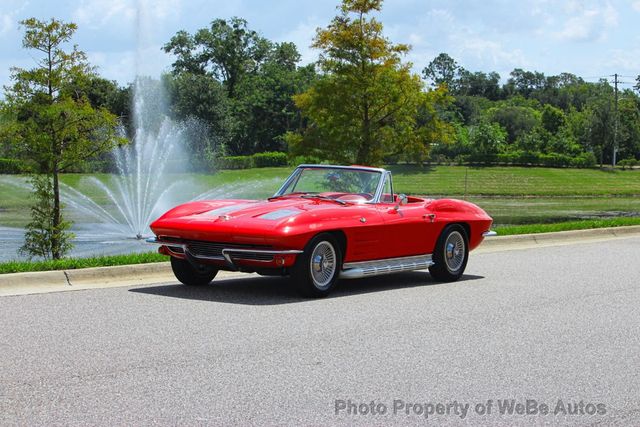
The 1953 Corvette that GM built was fiberglass, which was itself partly a practical decision around tooling costs for a low-volume car, and partly an aesthetic one. Fiberglass allowed shapes that were difficult or expensive in stamped steel. Earl pushed for the body lines he wanted without worrying too much about what the stamping dies would cost.
| Year | Body material | Engine | Transmission |
|---|---|---|---|
| 1953 | Fiberglass | 235 cu in "Blue Flame" inline-six, 150 hp | Two-speed Powerglide automatic |
| 1954 | Fiberglass | 235 cu in inline-six, 150 hp | Powerglide automatic only |
| 1955 | Fiberglass | 235 cu in inline-six carried over at 155 hp; V8 option added (265 cu in, 195 hp) | Manual three-speed available late in the year, mostly with the V8 |
The mechanical specification of the first Corvette disappointed people who expected a sports car to perform like one. The inline-six with the Powerglide was not a racing engine, and it was not marketed as one, but buyers who'd seen Jaguars and MGs at work found the performance underwhelming. This is where the European influence had its limits: Earl's team imported the shape of a sports car without initially importing the mechanical philosophy behind it.
"Earl's real contribution was giving American car culture a shape to aspire to. The Jaguar proportions, the MG stance, he synthesized what he'd seen on American roads into something that read as American because it had to. The 'Project Opel' name was just a lock on the studio door. The Corvette would never have been what it became if someone hadn't first decided what it was supposed to look like."
— Patrick Walsh
What the Opel codename actually means for the Corvette story
The reason the Project Opel thread matters is that it complicates the "purely American" origin story in a useful way, just not the way the codename implies. American car culture after World War II was genuinely insular, and the Motorama shows were partly designed to celebrate that. But Harley Earl was not insular. He had watched European sports cars on American soil, at events like Watkins Glen, and he built an American answer to them under a deliberately misleading internal name. The Corvette is an American car whose design instincts were sharpened by what Earl saw of British and Continental sports cars, not by a German subsidiary's styling studio.
Collectors and historians who dig into C1 provenance often focus on production numbers, option codes, and mechanical authenticity. Those things matter. Understanding the real story behind "Project Opel" mostly corrects a persistent mix-up rather than adding a hidden design lineage, but it's worth getting right when you're looking at a first-generation Corvette's history.
If you're looking at early examples, early Corvettes for sale vary widely in condition and documentation. The 1953 cars were produced in tiny numbers, around 300 units, all hand-built and finished in Polo White with red interiors, and the 1954 cars saw much higher production but slower initial sales. The V8 years beginning in 1955 are where the car finally delivered on the promise Earl's design had made.
Sources and notes
- Chevrolet Corvette (C1), Wikipedia: confirmed "Project Opel" as a codename tied to GM's German division, 1953-1955 production figures (300 / 3,640 / 700 units), and engine outputs (150 hp six in 1953-54, 155 hp six and 195 hp V8 in 1955)
- National Corvette Museum: background on Harley Earl's role as GM Styling chief and his push for an American sports car
- Corvsport: confirmed 1953 production total of 300 units, all Polo White with red interiors
- Corvsport: confirmed 1955 265 cu in V8 rated at 195 hp, optional alongside the carryover inline-six
- Remarkable Corvettes, "1951: How It All Began": confirmed Earl's 1951 Watkins Glen trip and the start of the EX-122 sports car concept
- Corvette Report: context on "Project Opel" as an internal-secrecy codename rather than a styling reference