The night a show car became a production car
Most concept cars die on the stand. They get photographed, admired, shipped back to the design studio, and quietly dismantled. The 1953 Corvette that Harley Earl's team unveiled at the General Motors Motorama in January of that year was supposed to follow the same arc. Nobody at GM expected the crowd reaction to force their hand.
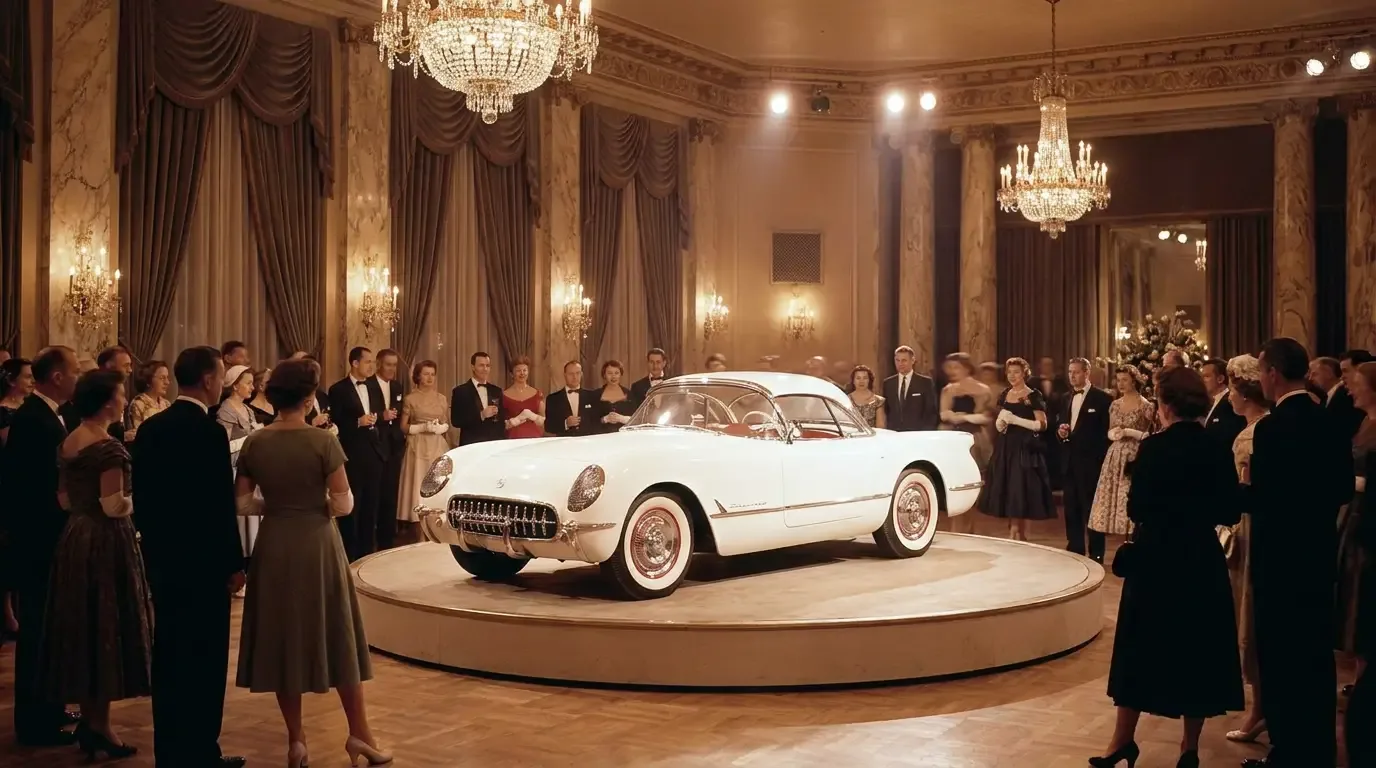
The Motorama was already a phenomenon by 1953. GM had been staging these elaborate auto shows since the early 1950s, renting out the ballroom at the Waldorf-Astoria Hotel in New York and filling it with dream cars that pushed styling ideas the production line wasn't ready to touch. They drew enormous crowds. People dressed up to attend. The show was as much theatre as it was automotive preview.
But the EX-122, as the prototype Corvette was known internally, generated a different kind of response. Visitors weren't just looking at it the way you look at sculpture. They were asking where to sign up. The letters that followed the show told GM's market research department something the company hadn't fully anticipated: there was real, paying demand for an American two-seat sports car. For the deeper story of what that demand set in motion, the origins run deeper than one January weekend.
What the EX-122 actually looked like
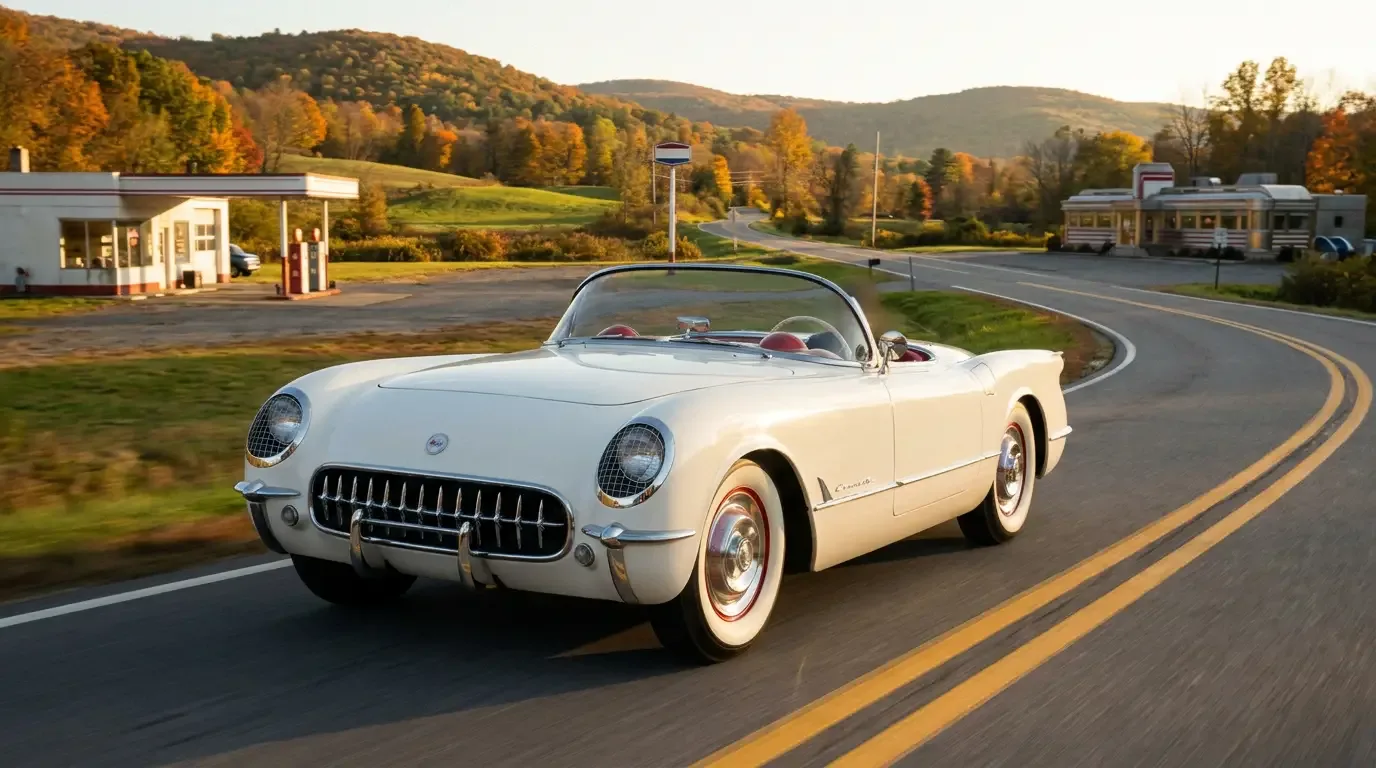
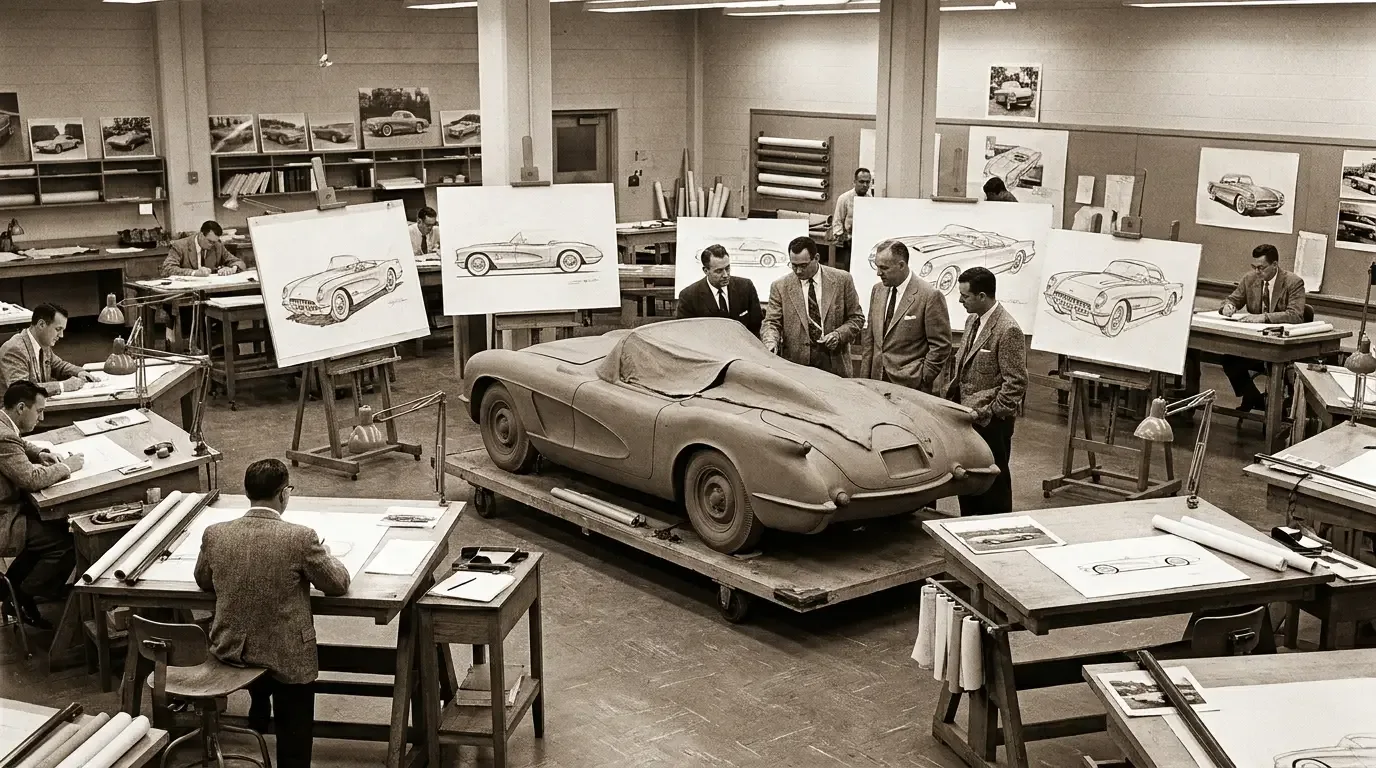
Harley Earl's styling team had been working on the project since at least 1951. The car that landed at the Waldorf ballroom was a roadster with a fiberglass body, a look clearly influenced by European sports cars that returning veterans had been bringing back from Germany and the UK since the late 1940s. The Jaguar XK120 was the car American enthusiasts were talking about, and Earl knew it.
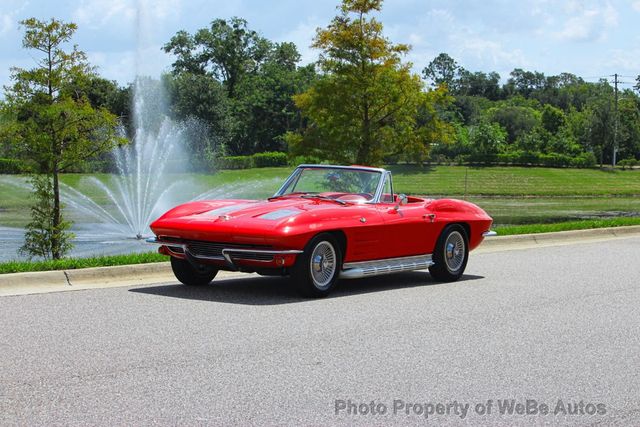
The proportions were low and long. A prominent chrome front bumper integrated the grille opening in a way that suggested teeth without being garish. Side coves ran along the body. The interior was spare by American standards of the era, which leaned toward upholstered excess. Red was the show color, with a red interior to match. The car looked like it was going somewhere fast even standing still in a hotel ballroom.
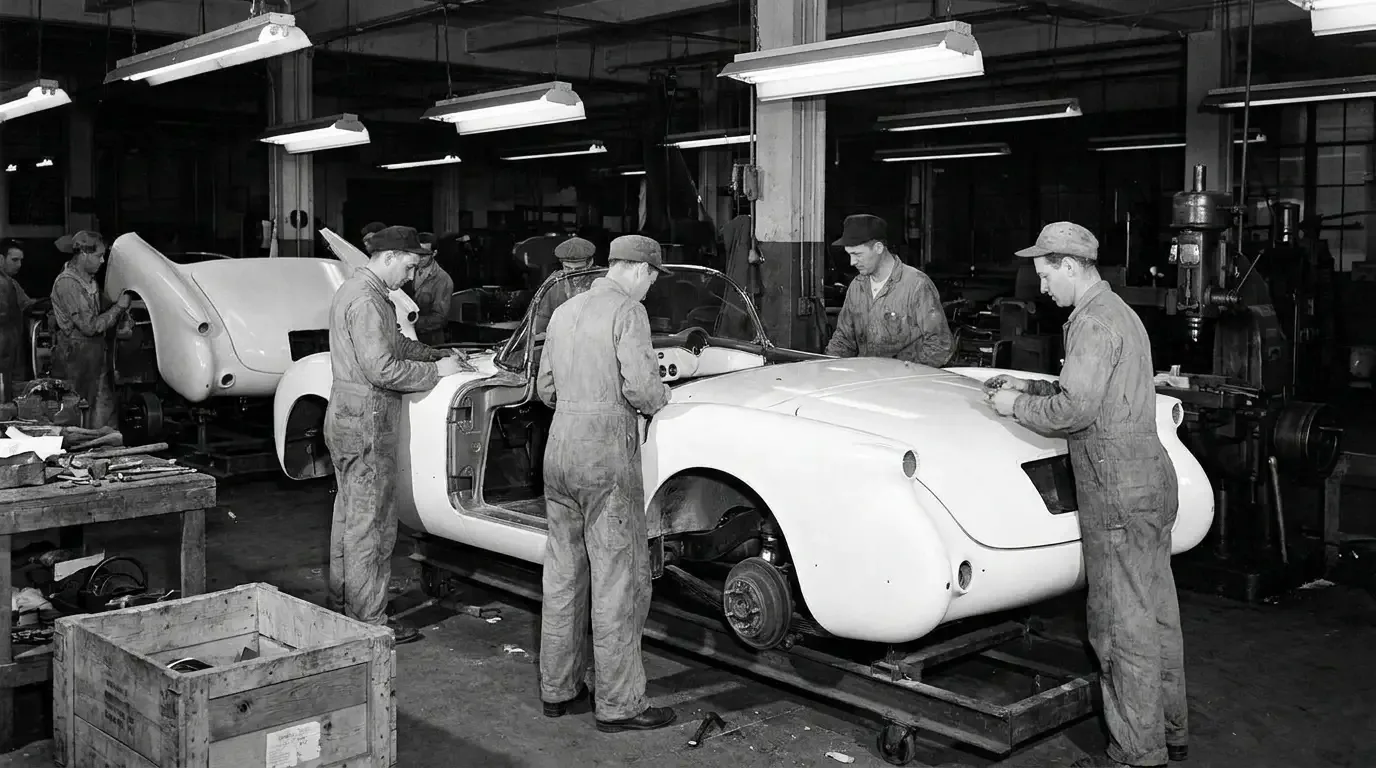
What's easy to forget is how unusual the fiberglass body was in 1953. Steel was what American cars were made of. Fiberglass had industrial and marine applications but hadn't been used for a production passenger car. It was part of what made the EX-122 feel genuinely experimental rather than just a styled-up version of something GM already made. The companion story on how that fiberglass body actually reached production gets into the manufacturing challenges in much more detail than I have room for here.
How the Motorama turned a concept into a production order
The GM Motorama in 1953 wasn't just the New York show. The traveling version hit multiple cities, and the response was consistent wherever it went. People wanted the car. GM's management, which had been skeptical about the market for a two-seater, found itself looking at a different set of numbers.
The timeline that followed was aggressive. GM gave the go-ahead for production in the same year as the Motorama debut, and the first production Corvettes rolled out of a temporary Flint, Michigan facility in June 1953. The speed of that decision is remarkable when you put it against normal automotive lead times. The Motorama had essentially functioned as a very expensive focus group, and the feedback was unambiguous.
Production numbers for that first year were low: 300 units were built in 1953, all Polo White with red interiors and black convertible tops, essentially matching the show car's spirit if not its exact coloring. Early cars went to GM executives, dealers, and select buyers rather than being broadly available on dealer lots. The scarcity was partly practical, given the handbuilt fiberglass production methods, and partly deliberate image-building.
| Detail | 1953 Motorama EX-122 | 1953 Production Corvette |
|---|---|---|
| Body material | Fiberglass | Fiberglass |
| Engine | 235 cu in inline-six (show spec) | 235 cu in "Blue Flame" inline-six |
| Transmission | Two-speed Powerglide automatic | Two-speed Powerglide automatic |
| Approximate power | 150 hp (show spec) | 150 hp @ 4,200 rpm |
| Units built | 1 (show car) | 300 |
| Show location | Waldorf-Astoria, New York | Flint, MI (production) |
What the Motorama Corvette was competing against
The sports car market in early 1953 was small but visible. The Jaguar XK120 was the benchmark. MG TDs were everywhere at road races. The Nash-Healey had been on sale since 1951, an American-British collaboration that found limited buyers at a price well above what most enthusiasts could manage. Ford had nothing comparable. Chrysler had nothing comparable. The space was genuinely open.
Earl and his team understood that the car's pitch to the American buyer was different from what European sports cars offered. The Corvette wouldn't win on refinement or on handling in the European sense. It would win on style, on American scale, on the idea that you could have a sports car that also started reliably in January and didn't require a weekend of carburetor tuning to make a Tuesday morning commute. Whether the 1953 production car actually delivered on that promise is a separate question, and most owners who drove them that year had complaints. But the Motorama car was selling an idea, and the idea worked.
The broader sweep of what followed that January weekend is covered in the full Corvette history on this site, which traces the model through its complete arc from 1953 to the present day.
"The Motorama was where GM figured out that showing people something beautiful and then making them wait for it was a legitimate marketing strategy. The EX-122 response didn't just launch the Corvette. It changed how the company thought about what a concept car could do."
— Patrick Walsh
The lasting significance of that January weekend
It's worth being clear about what the 1953 Motorama did and didn't accomplish. It launched an American sports car that survived long enough to become an icon. That's not a small thing. But the early production Corvettes were imperfect cars. The six-cylinder engine was adequate, not exciting. The automatic transmission was the only option, which frustrated buyers who wanted a proper sports car experience. The handling wasn't in the same league as what British sports cars offered at similar money.
The car came close to being cancelled by the mid-1950s, as 1954 production ran well ahead of demand and 1955 sales fell to only a few hundred cars. Zora Arkus-Duntov, an engineer who wrote to Chevrolet after seeing the Motorama car and joined the company in May 1953, pushed for real performance underneath the styling. Ford's new Thunderbird also pressured GM not to cede the market. The 1955 V8, which Duntov championed, gave the car the performance the styling had always promised and is generally credited with saving it. Those later developments are the vindication of what the Motorama started.
The Motorama itself continued as a GM institution into the late 1950s before being phased out. Other show cars from those years never made it to production. The 1953 Corvette's path from the Waldorf ballroom to the Flint assembly line remains one of the faster show-car-to-production timelines in American automotive history, driven by audience response that GM couldn't ignore and a competitive gap in the market that was genuinely there to be filled.
Sources and notes
- History.com: confirmed the EX-122 debuted at the GM Motorama at the Waldorf-Astoria Hotel in New York on January 17, 1953
- Corvette Blogger: confirmed Motorama debut details and the EX-122 designation
- CorvSport 1953 Corvette Guide: confirmed the Blue Flame six specs, three Carter carburetors, and Powerglide-only transmission
- Vette Vues Magazine: confirmed 150 hp at 4,200 rpm output and 1953 production figures
- Corvette Action Center: confirmed 300 units built in 1953, hand-assembled in Flint, Michigan, with the first car completed June 30, 1953
- Wikipedia: confirmed Zora Arkus-Duntov joined Chevrolet on May 1, 1953 and later championed the 1955 V8
- National Corvette Museum: confirmed the Corvette's near-cancellation in the mid-1950s amid slow 1954-1955 sales