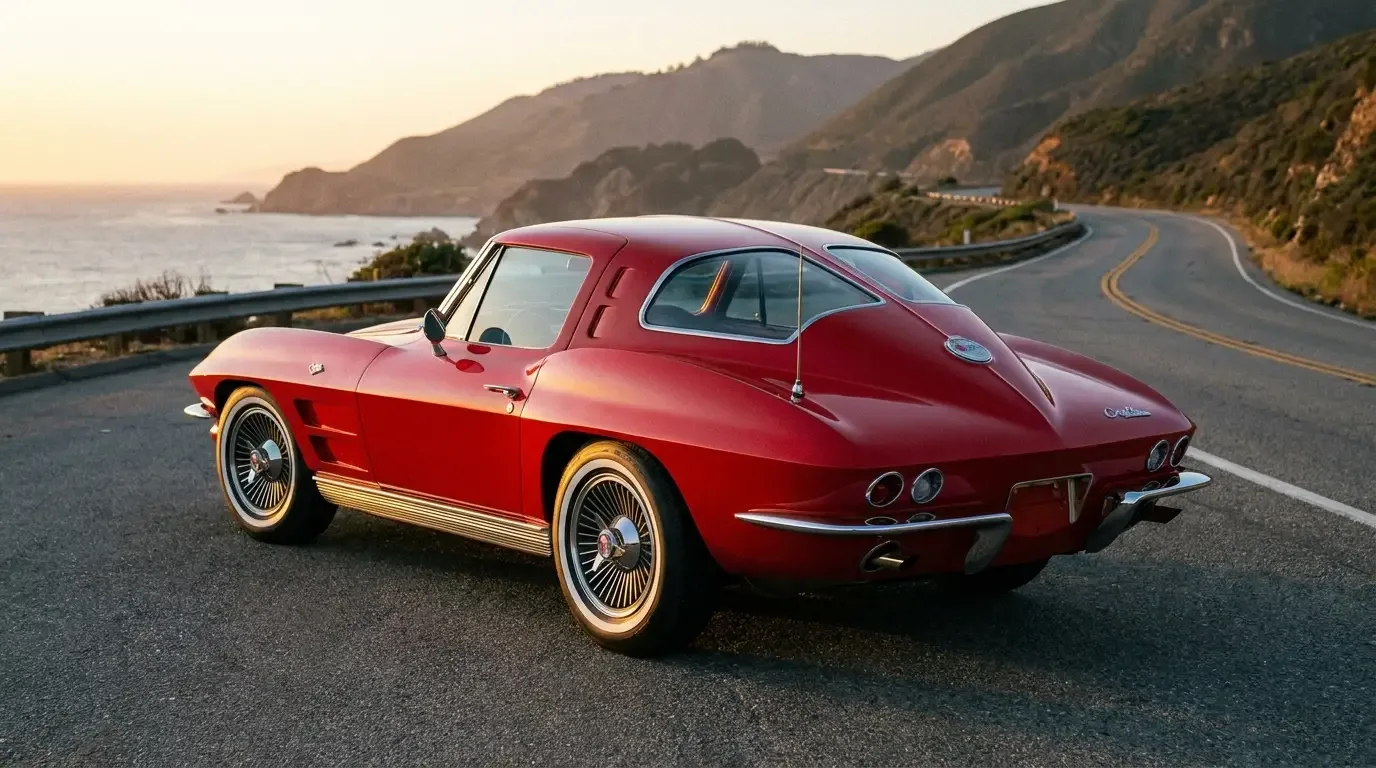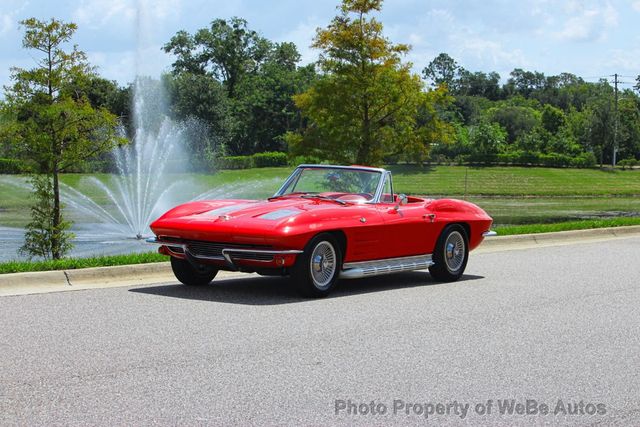

The C2 Corvette has done something unusual in the collector car market: it has held the attention of serious buyers through multiple market cycles without ever becoming cheap. That is not an accident. The 1963-1967 Sting Ray generation combined styling that still reads as genuinely modern, performance that was legitimately world-class for its era, and a production run short enough to keep supply constrained. The result is a car that functions less like a hobby purchase and more like a store of value, provided you buy the right example at a realistic price.
I have tracked C2 auction results at Mecum, Barrett-Jackson, and RM Sotheby's for more than a decade. What I see consistently is a tiered market: correct, documented cars at the top hold value or appreciate; driver-quality cars in the middle trade at a premium that has compressed compared to a few years ago; and projects cluster at the bottom in a range that has not moved much because restoration costs have outpaced what a finished car will bring. Understanding which tier you are buying into matters more than almost anything else.
For a broader look at what makes this generation significant beyond the numbers, the C2 Corvette Sting Ray history article covers the design origins, the split-window controversy, and the year-by-year engineering changes that made 1963-1967 a distinct chapter in the model's development.
What the market actually looks like right now
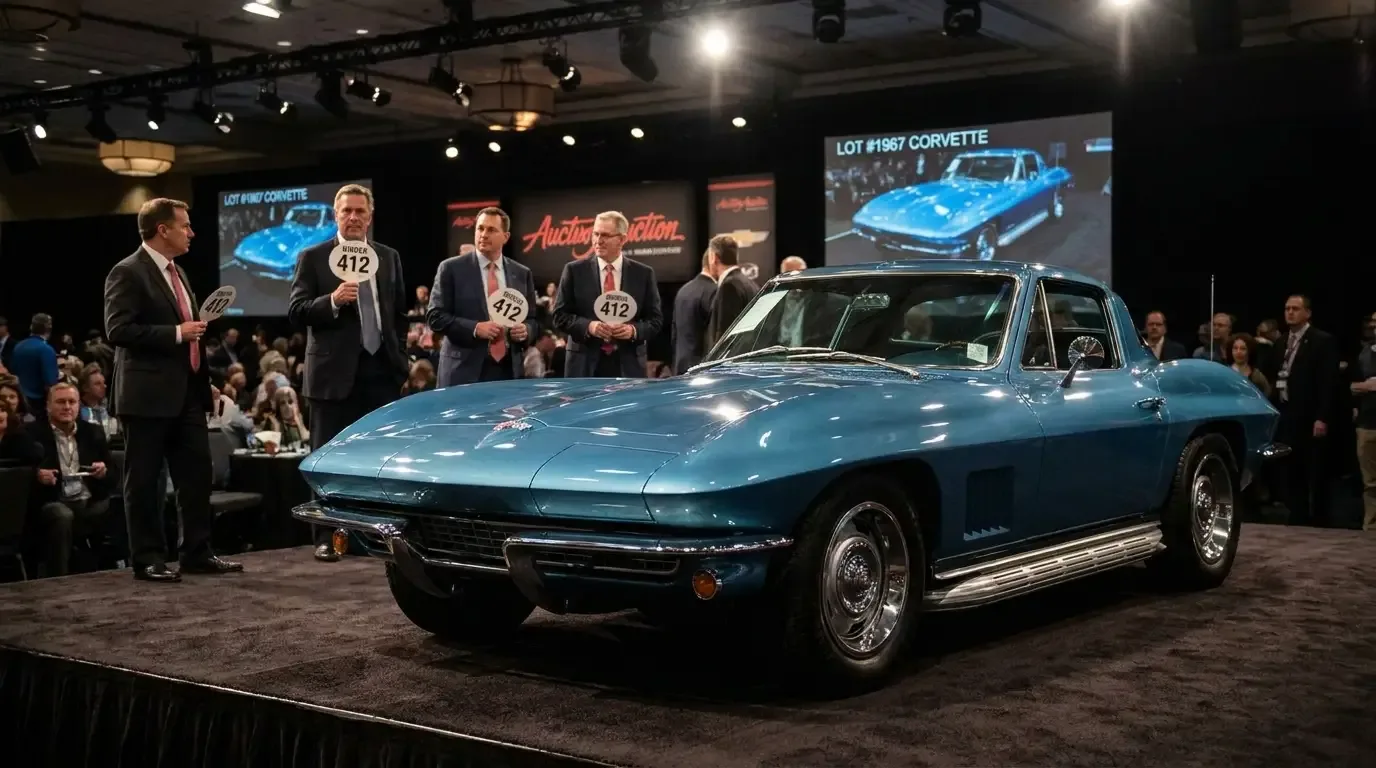
At the top of the range, a numbers-matching 1967 435-hp L71 427 with the correct Muncie four-speed, documented with a build sheet or protect-o-plate, has been clearing well over $100,000 at major auctions, with exceptional documented examples pushing considerably higher. Bloomington Gold survivors in original paint add another layer of premium. The outlier end of the market is the L88: only 20 were built for 1967, and a documented example set a Corvette auction record at $3.85 million at Barrett-Jackson, underlining how far the top of this generation's market has separated from the rest. These cars do not come up often, and when they do, there are enough serious bidders that no-sales are rare.
The more common transaction is a solid 327-powered car in the $35,000 to $65,000 range. Here, options configuration does most of the work. A base 250-hp 327 with Powerglide sits at one end; a fuel-injected 360-hp L84 with a close-ratio four-speed and positraction sits at another. The gap between those two cars in the same body style can run $20,000 to $30,000 or more, depending on documentation and cosmetic condition.
| Year | Notable engine | Approx. power | Market tier (2025-2026) |
|---|---|---|---|
| 1963 | 327 L84 fuel injection | ~360 hp | $65,000-$100,000+ (split-window coupe premium) |
| 1964-1965 | 327 variants; 396 big-block debuts 1965 | 250-425 hp depending on spec | $35,000-$80,000 (driver to show-quality) |
| 1966 | 427 L36 / L72 | 390 hp (L36) / 425 hp (L72) | $55,000-$110,000 (big-block premium) |
| 1967 | 427 L71 / L88 | 435 hp (L71); 430 hp advertised (L88, actual output far higher) | $100,000-$250,000+ (L88 substantially higher) |
The 1963 split window and why the premium is real
The 1963 coupe commands a premium over every other C2 year, and the split-window rear glass is the reason. One model year, never repeated, and visually distinctive enough that even casual observers recognize it. At Mecum Kissimmee, well-presented 1963 split-window coupes with 327 engines have sold across a wide band, from the low six figures for base cars up into the mid-six-figures and beyond for documented, fuel-injected, or otherwise exceptional examples, such as the "Colorama" collection that totaled over $1.5 million for seven cars in 2024. Comparable 1964-1966 coupes in similar condition typically settle noticeably lower, all else being equal. That gap is durable because it is driven by scarcity and recognizability rather than performance, and those factors do not change.
The convertible market is different. Convertibles were the higher-volume body style across all C2 years, and they have historically traded at a discount to coupes. That has softened somewhat in the current market as younger buyers who want open-air driving have entered the space, but documented coupes at show quality still carry the premium. If investment is the primary consideration, the coupe is the defensible choice.
Engine options that move the needle on value
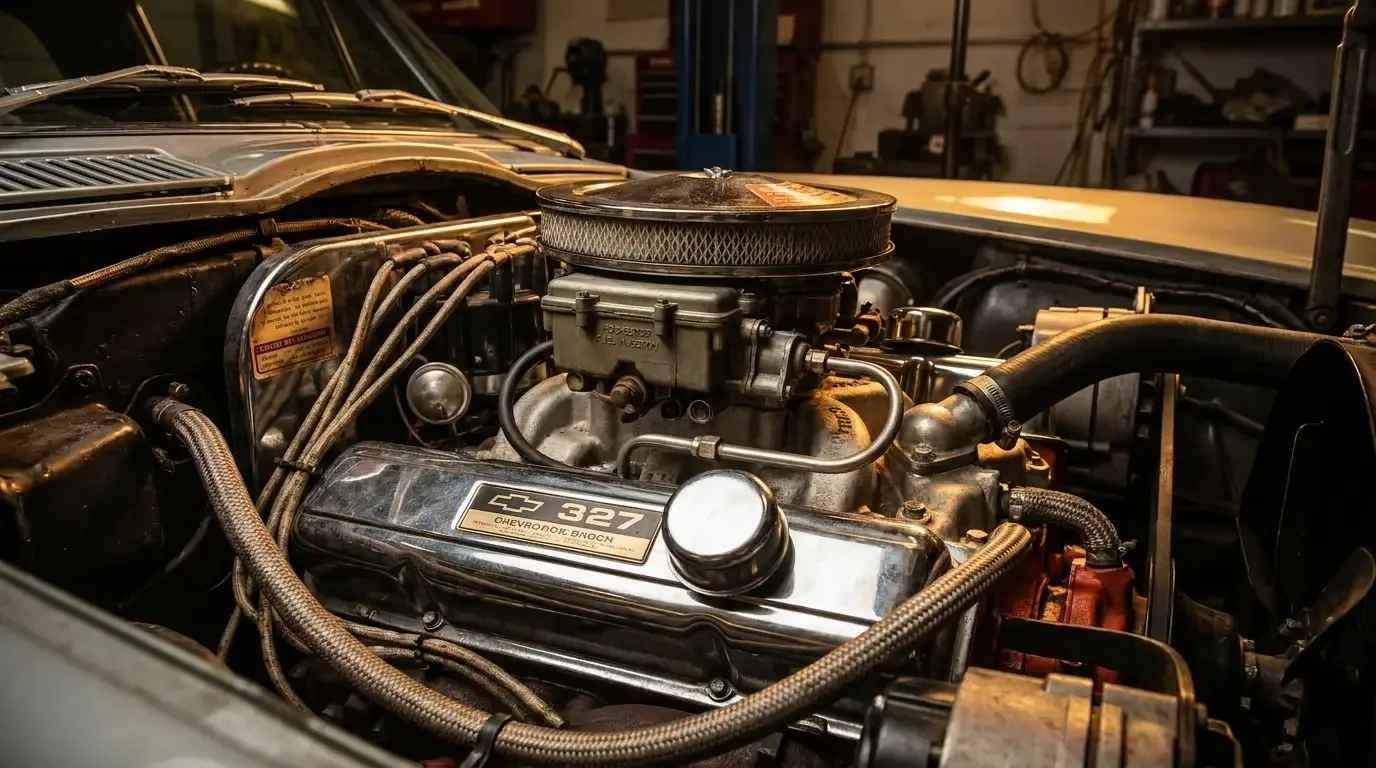
The fuel-injected 327 cars occupy a specific collector niche. The Rochester mechanical fuel injection system used on the L84 was optioned on a relatively small percentage of C2 production, the equipment requires specialized knowledge to tune correctly, and working examples carry real documentation significance. A numbers-matching L84 with an intact, functional injection unit commands a meaningful premium over a carbureted car with identical bodywork. Many surviving "fuelie" cars have had the injection replaced with carburetion at some point in their lives, which reduces value significantly. For more technical background on what distinguishes these variants in period trim, the related article on the the related article covers the 327 option codes in detail.
The 1966-1967 big-block cars represent a different investment thesis. The 427-cubic-inch engine in its various states of tune is what gives the later C2 its performance credibility, and the L72 (solid lifter, 425 hp, introduced for 1966) and L71 (three two-barrel carburetors, 435 hp, 1967 only) versions attract buyers who want among the most powerful production-specification cars Chevrolet built in the era. The L88, advertised at a nominal 430 hp but built for racing with output well beyond that figure, sits above both and is a different collecting tier entirely given only 20 were produced for 1967. These are not the easiest cars to own, but the market for documented examples has remained firm because supply is genuinely limited.
"When I see a C2 offered with 'documented options' in the listing, the first thing I check is whether the documentation is a build sheet, a protect-o-plate, or just the seller's assertion. Those are not equivalent. A car with an original factory build sheet is a different transaction than a car somebody researched after the fact."
— David Mercer
Where C2 values are likely headed
The generational handoff question applies to every segment of the collector market, and C2 Corvettes are not exempt. The buyers who drove prices up in the 2010s are now in their 60s and 70s, and the question of whether the next generation of collectors will support the same price levels is legitimate. My read is that the C2 holds up better than most American cars of the era for a specific reason: it has a design that does not read as dated. A 1963 Sting Ray coupe does not look like a period artifact the way a 1963 Impala does. That crossover appeal keeps the buyer pool wider than a purely enthusiast-driven segment.
The area of greatest risk is the middle tier: cars with period-correct appearance but non-original drivetrains, repainted bodies, and no documentation. These sold well in a rising market where buyers were less selective. In the current environment, buyers at this price point have gotten more sophisticated, and they know what they are passing on when documentation is absent.
If you are looking at specific cars on the market right now, the listings for 1967 Corvettes for sale give a real-time snapshot of what documented and driver-quality examples are actually asking, which is the most reliable calibration for what the private market will bear.
The buy decision
The C2 is not a speculative purchase at this point in the market. The prices for correct, documented examples are established and not going down. What they represent is a reasonable store of value in a car that is genuinely desirable to drive and owns well over time. The speculative window closed somewhere around 2015. What is left is a mature market where the premium is built into the price, and the buyer's job is to make sure the car actually justifies it.
For buyers with a budget in the $45,000 to $75,000 range, the 1964-1966 convertibles and coupes with base or mid-range 327 engines offer the most accessible entry into a genuine C2 without overpaying for options you cannot verify. For buyers who want the top of the market, the documentation has to be there first. A great-looking car without paperwork is a different product than a correct car with a build sheet, and the price should reflect that difference, not the seller's asking price.
Sources and notes
- Hagerty Valuation Tools, 1963-1967 Chevrolet Corvette market data: confirmed current condition-tier price bands and recent comparable sales for the C2 generation
- Corvsport, 1967 Corvette RPO Codes & Order Guide: confirmed L36 (390 hp), L68 (400 hp), L71 (435 hp), L88 (430 hp advertised), and L89 engine option details and pricing
- Corvsport, 1963 Corvette Z06 Model Guide: confirmed L84 fuel-injected 327 rated at 360 hp and total Z06 production of 199 units for 1963
- Wikipedia, Chevrolet Corvette (C2): confirmed the split-window's one-year run and the Zora Arkus-Duntov/Bill Mitchell disagreement over its removal for 1964
- Corvette Blogger, Mecum Kissimmee 2024 Colorama Collection results: confirmed a range of 1963 split-window coupe hammer prices from $176,000 to $412,500 depending on options and documentation
- GM Authority / American Cars and Racing coverage of the 1967 Corvette L88 auction record: confirmed the L88's 20-unit production for 1967 and the $3.85 million record sale at Barrett-Jackson