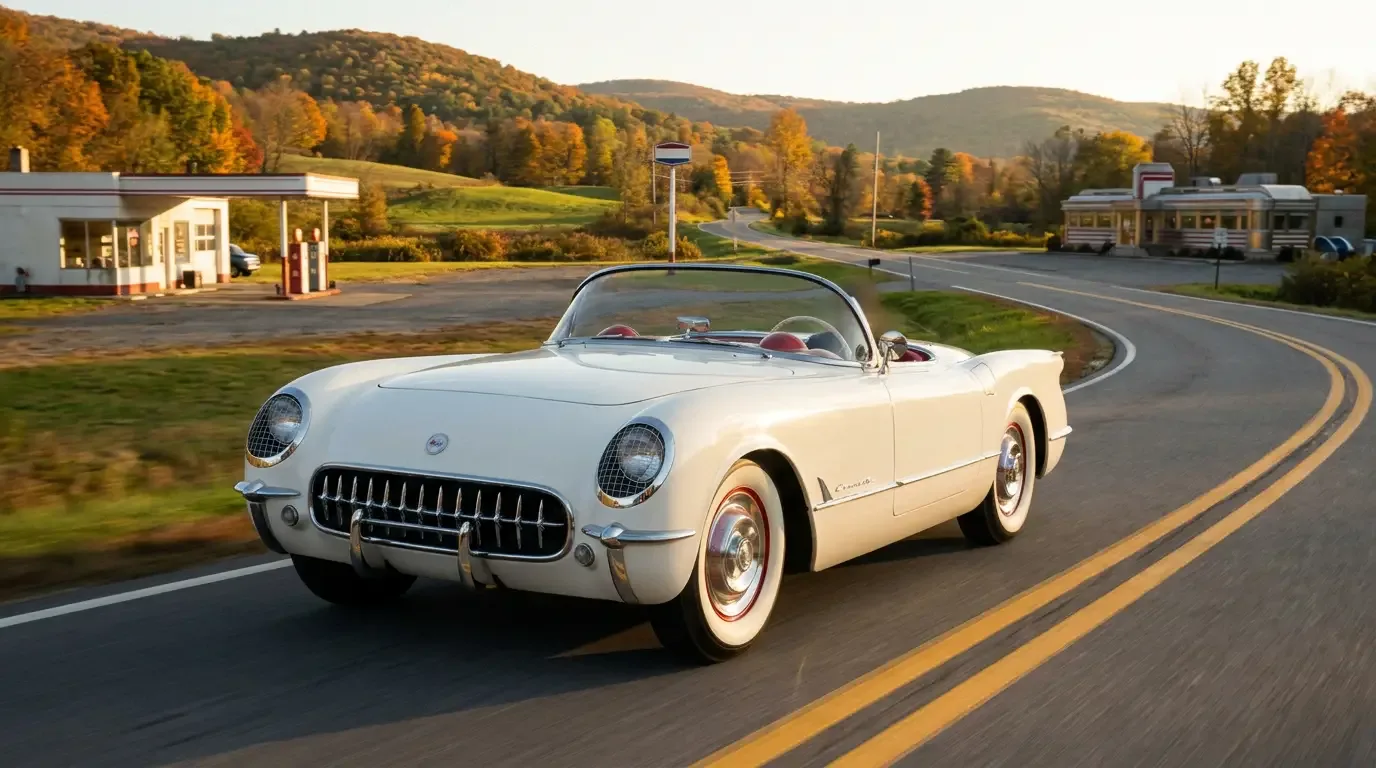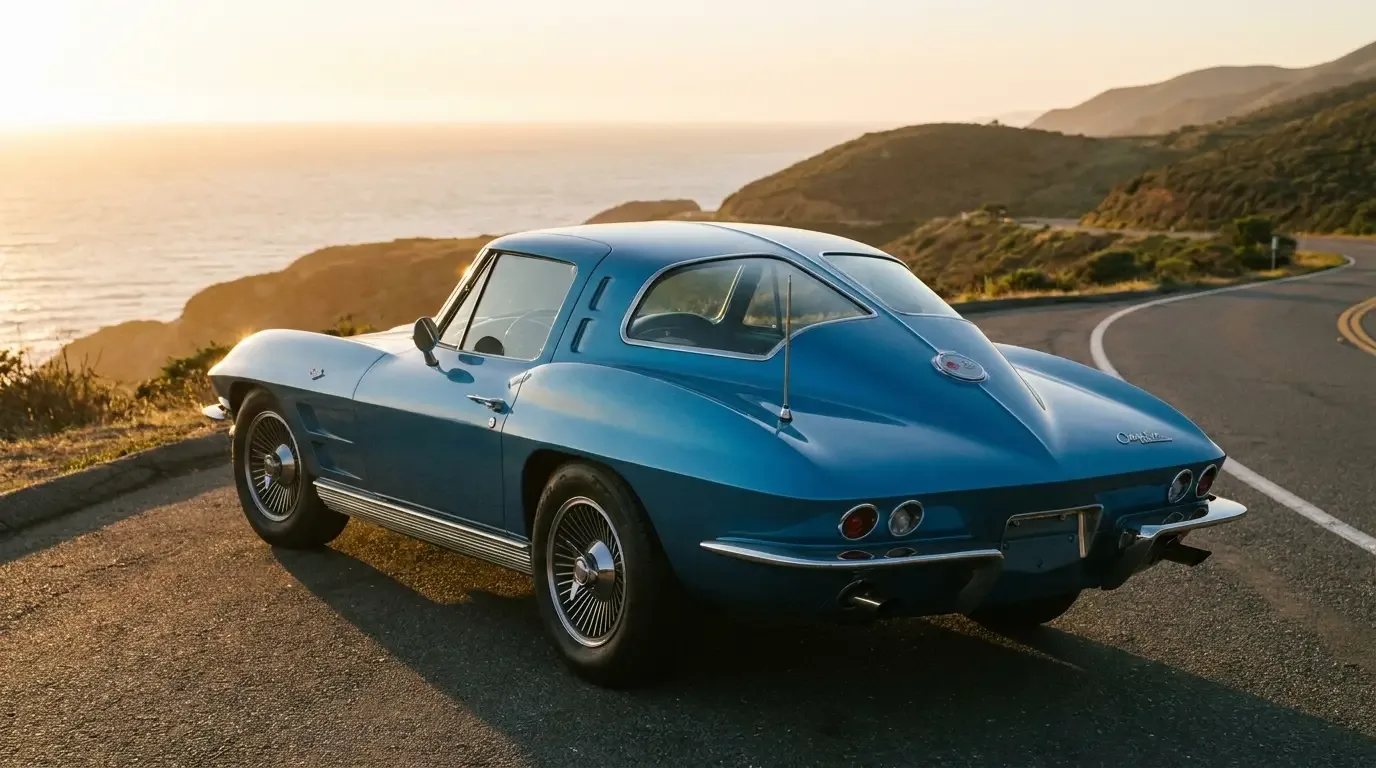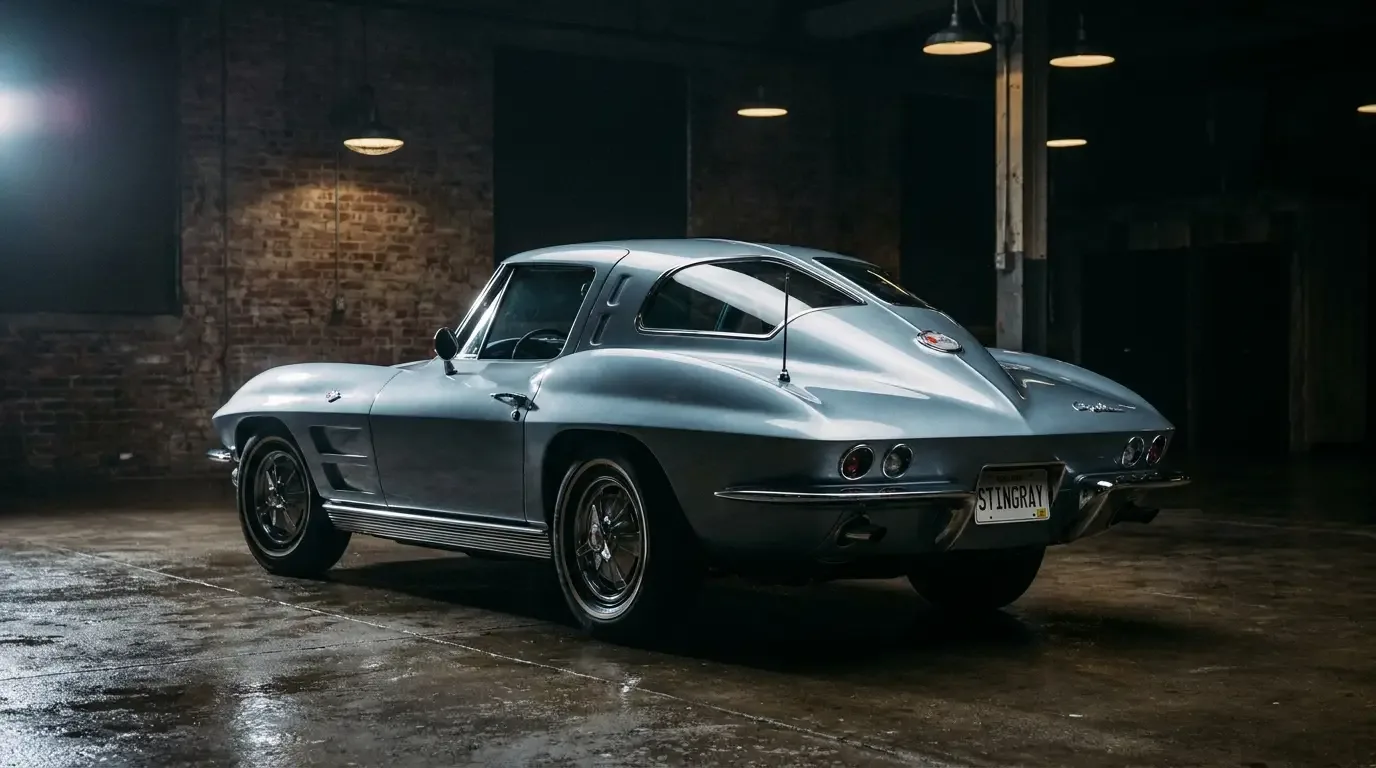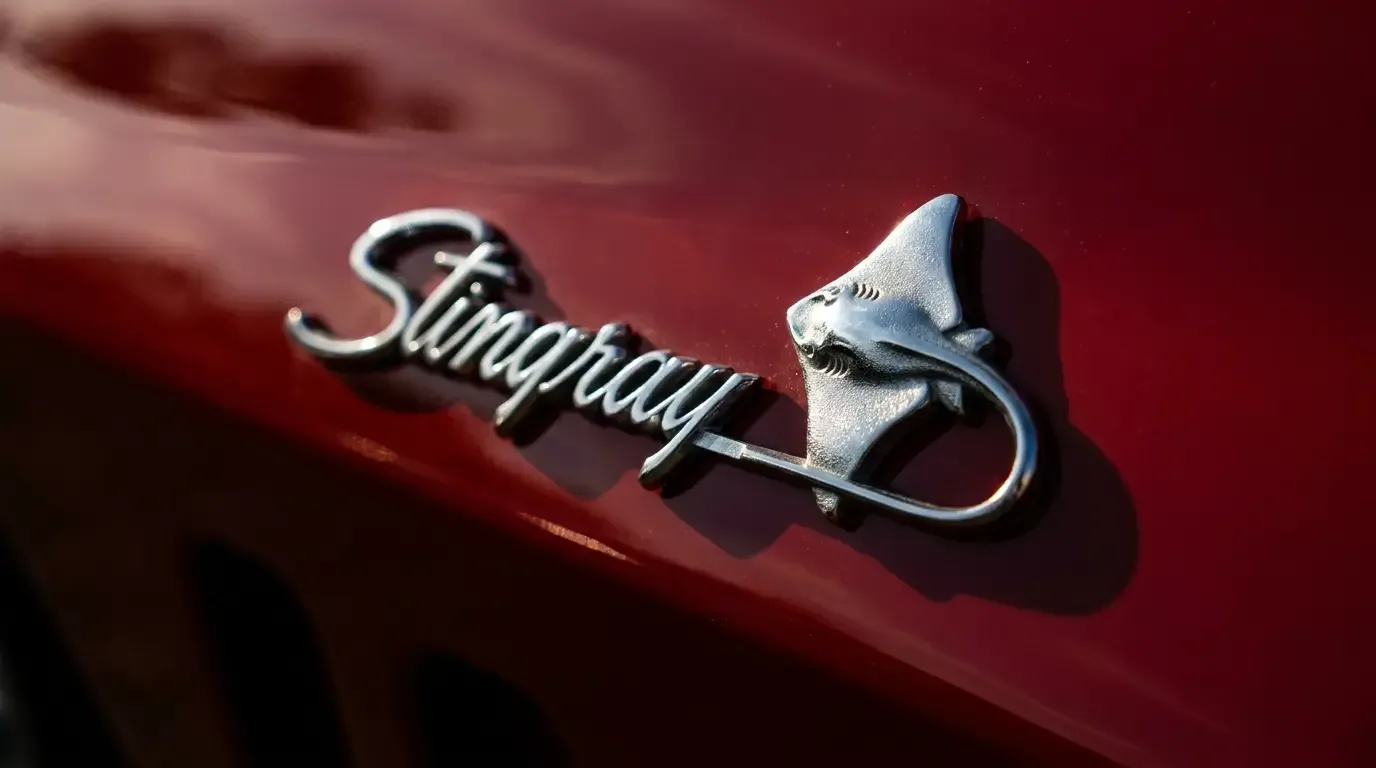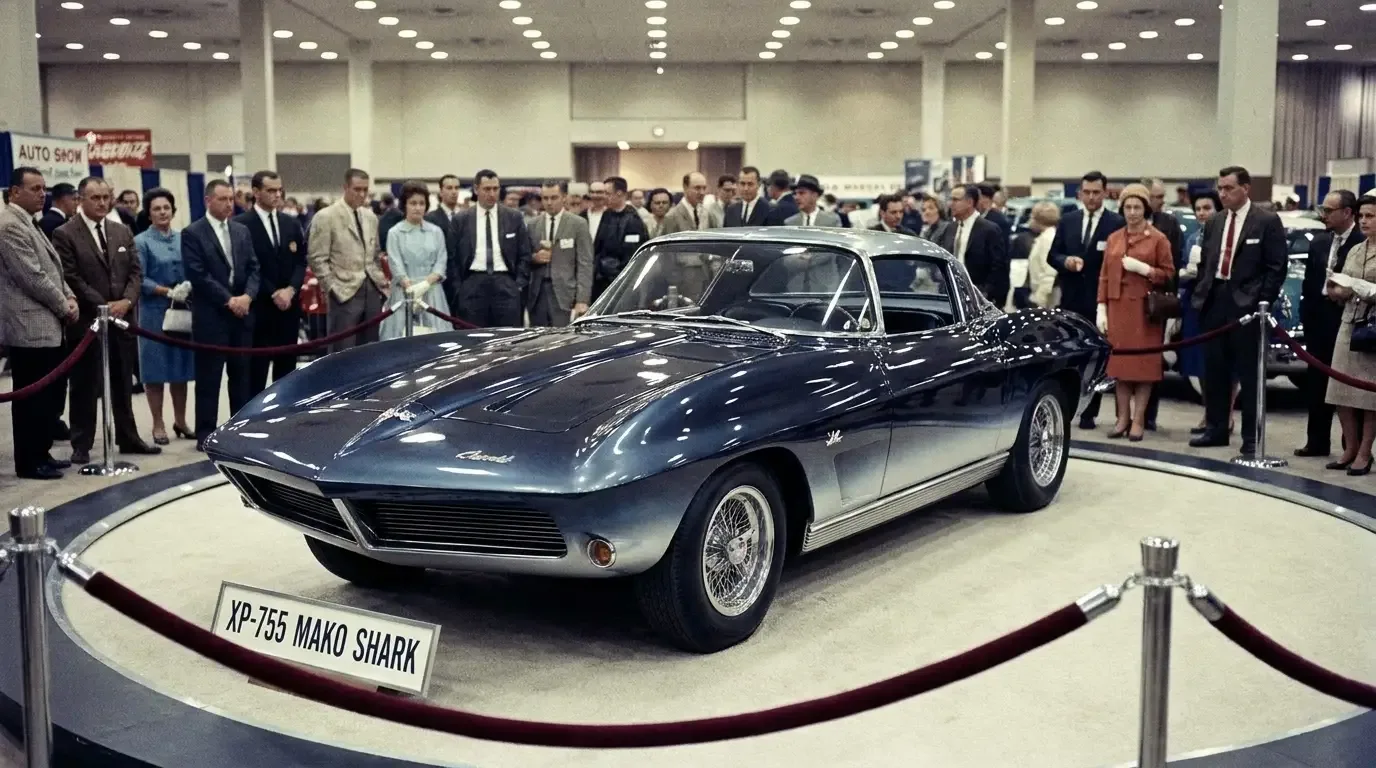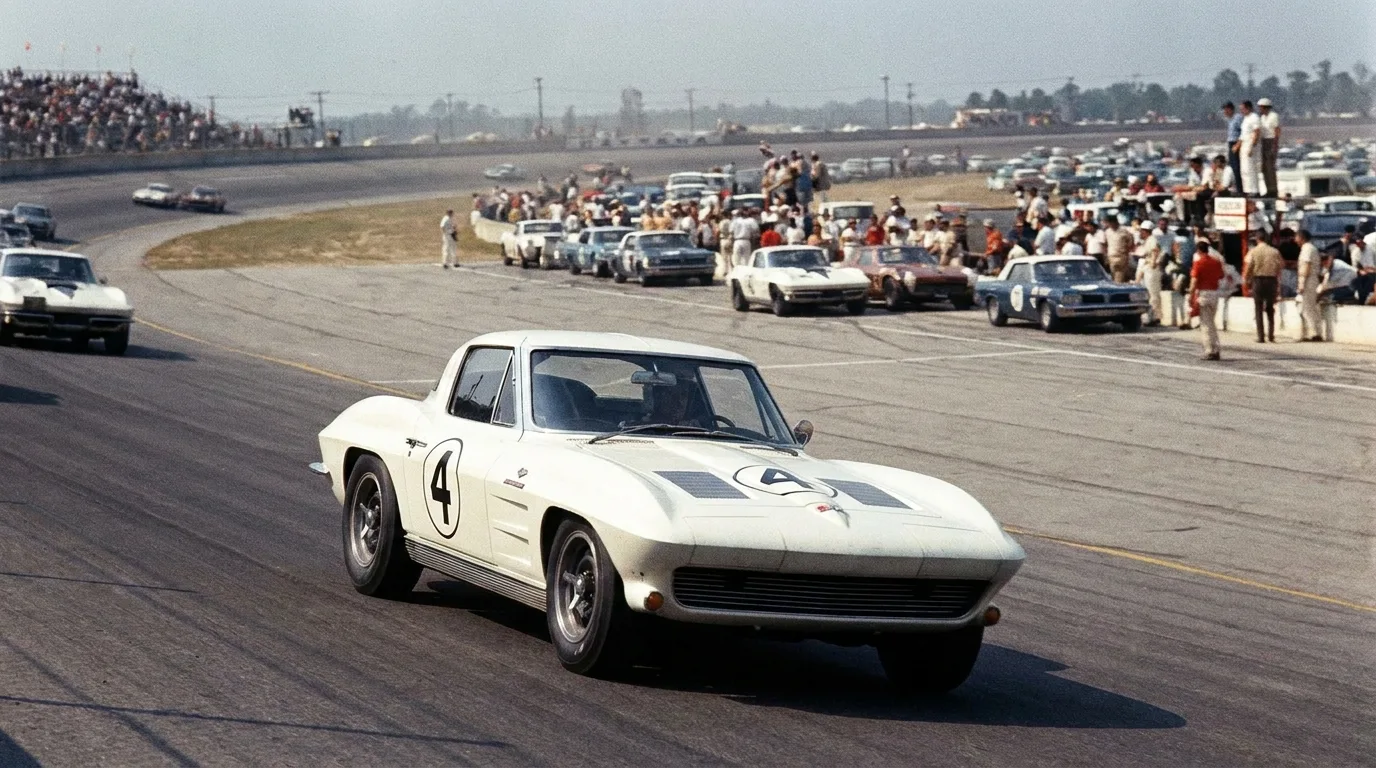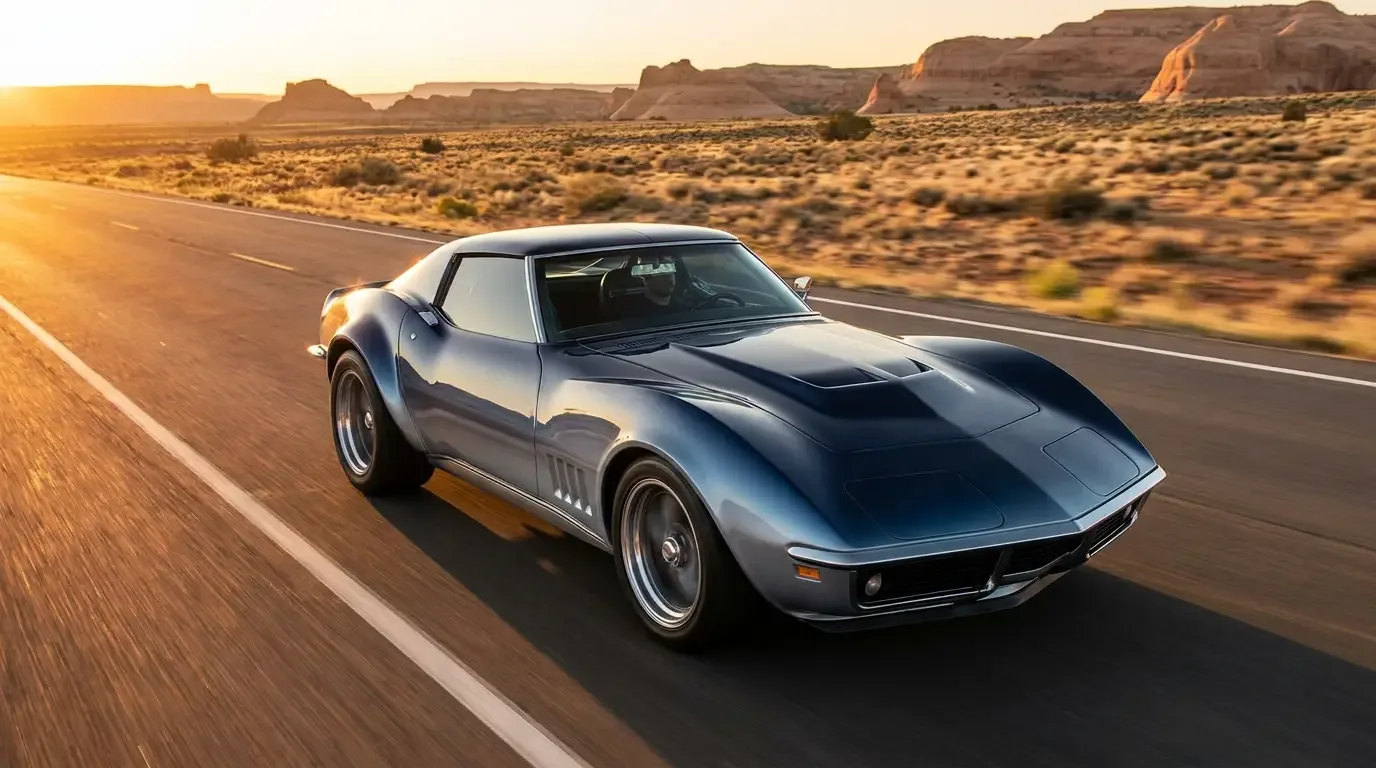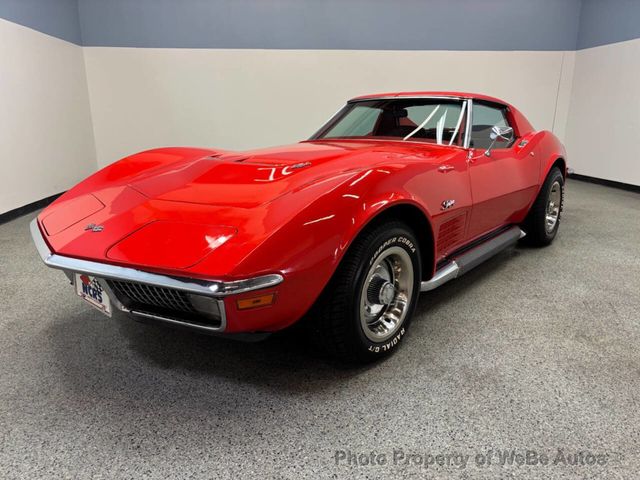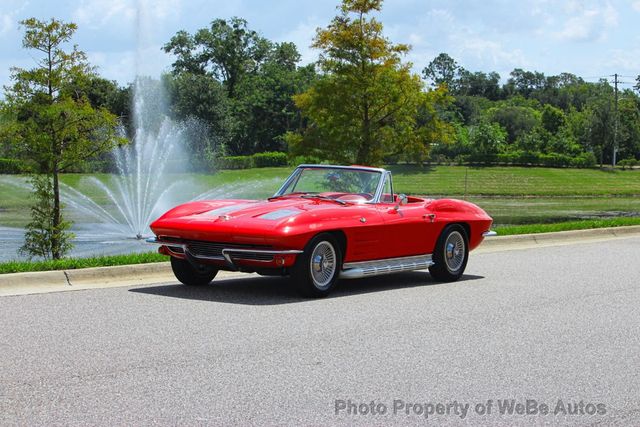

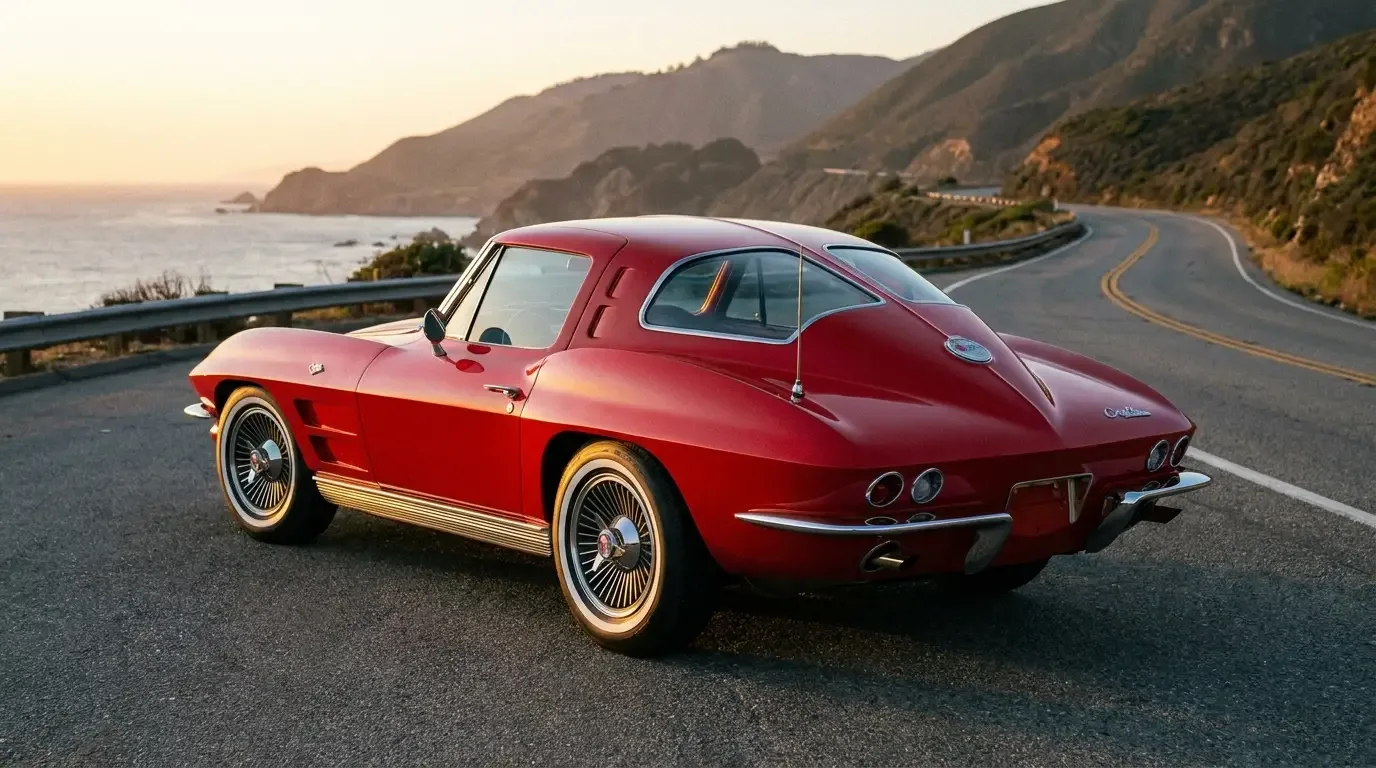
The C2 Corvette arrived in 1963 as something the American car world had not seen before: a purpose-built sports car wearing bodywork that looked like it came from a European design studio rather than a Detroit styling department. The split-window coupe that debuted at the New York Auto Show in April 1963 stopped people in the middle of the floor. That reaction has not changed much in the decades since. The C2 Sting Ray generation, built from 1963 through 1967, remains one of the most studied five-year runs in American automotive history, and the factory records from that period tell a story worth understanding in full.
If you want to trace how the Corvette became America's sports car story in the truest sense, the C2 is the chapter where ambition and engineering caught up with each other. The car that preceded it, the C1, was compelling but compromised. The car that followed, the Mako Shark C3, was dramatic and polarizing. The C2 is the one that got nearly everything right.
The design that changed everything: Mitchell, Shinoda, and the 1963 coupe
Credit for the C2's shape belongs primarily to two men at GM's Design Staff: Bill Mitchell, who had taken over from Harley Earl in 1958 and pushed the Corvette program with personal intensity, and Larry Shinoda, the studio designer who translated Mitchell's vision into production-viable bodywork. Mitchell had already built the Stingray racer in 1959, a car that ran SCCA competition under Dick Thompson and provided the formal language the C2 would eventually speak.
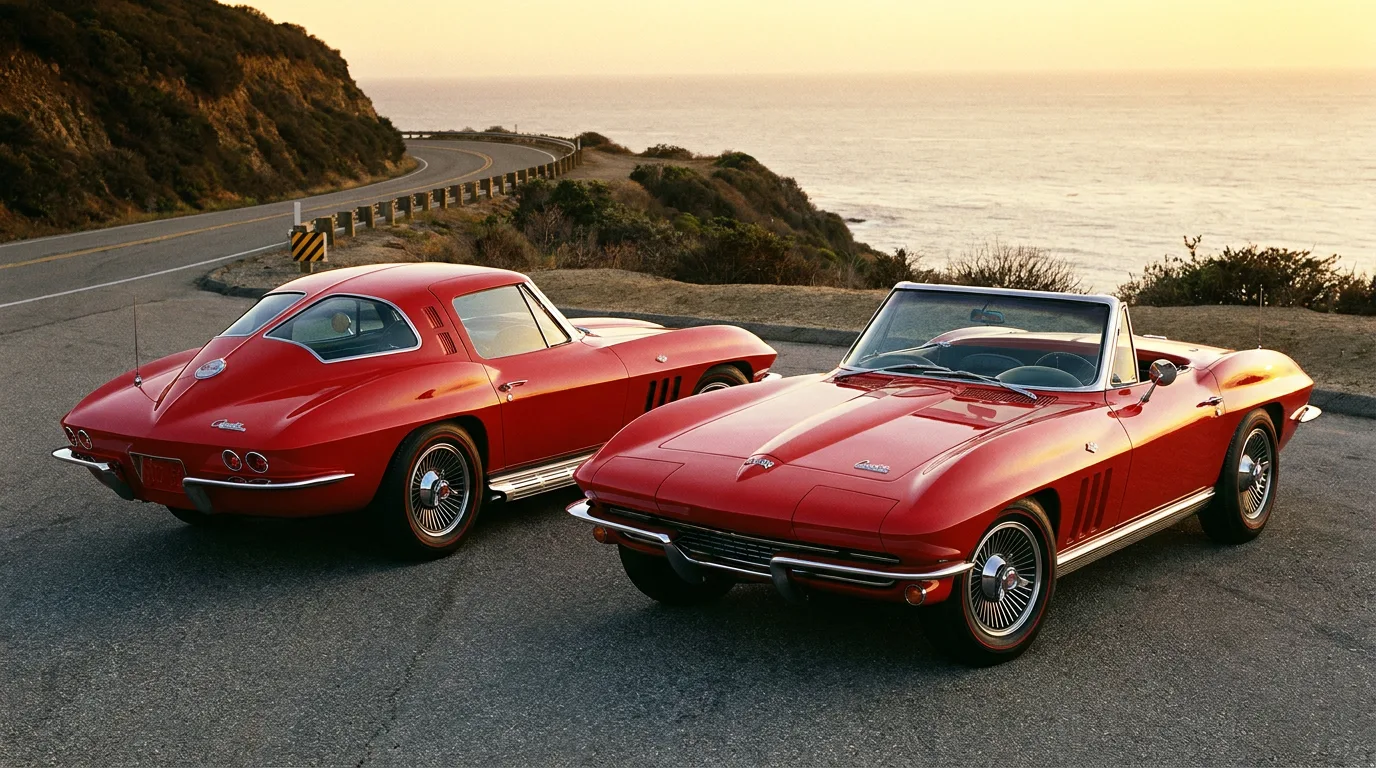
The 1963 coupe was the first Corvette to offer a proper fastback roofline and a closed body. The C1 had been a roadster with an optional hardtop; the C2 introduced a genuine coupe body with a rear split window that divided the backlight down the center spine. That split was Mitchell's call, and it was controversial from the start. Chief engineer Zora Arkus-Duntov argued that the split window destroyed rearward visibility. He was right about that. Mitchell kept it anyway through 1963 and agreed to a single-pane rear window for 1964 onward. The 1963 split-window coupe produced in that single year is now one of the most sought-after configurations in the entire C2 run, in part because of its visual drama and in part because of its one-year-only status.
The body was fiberglass, as with the C1, but the proportions were fundamentally different. The C2 sat on a wheelbase of 98 inches, four inches shorter than the C1's 102 inches, and the overall visual weight shifted lower and longer. Fender vents, rocker contours, and the rear quarter treatment gave the car a purposeful road-car quality that the C1's more baroque styling sometimes lacked.
Independent rear suspension and the engineering shift
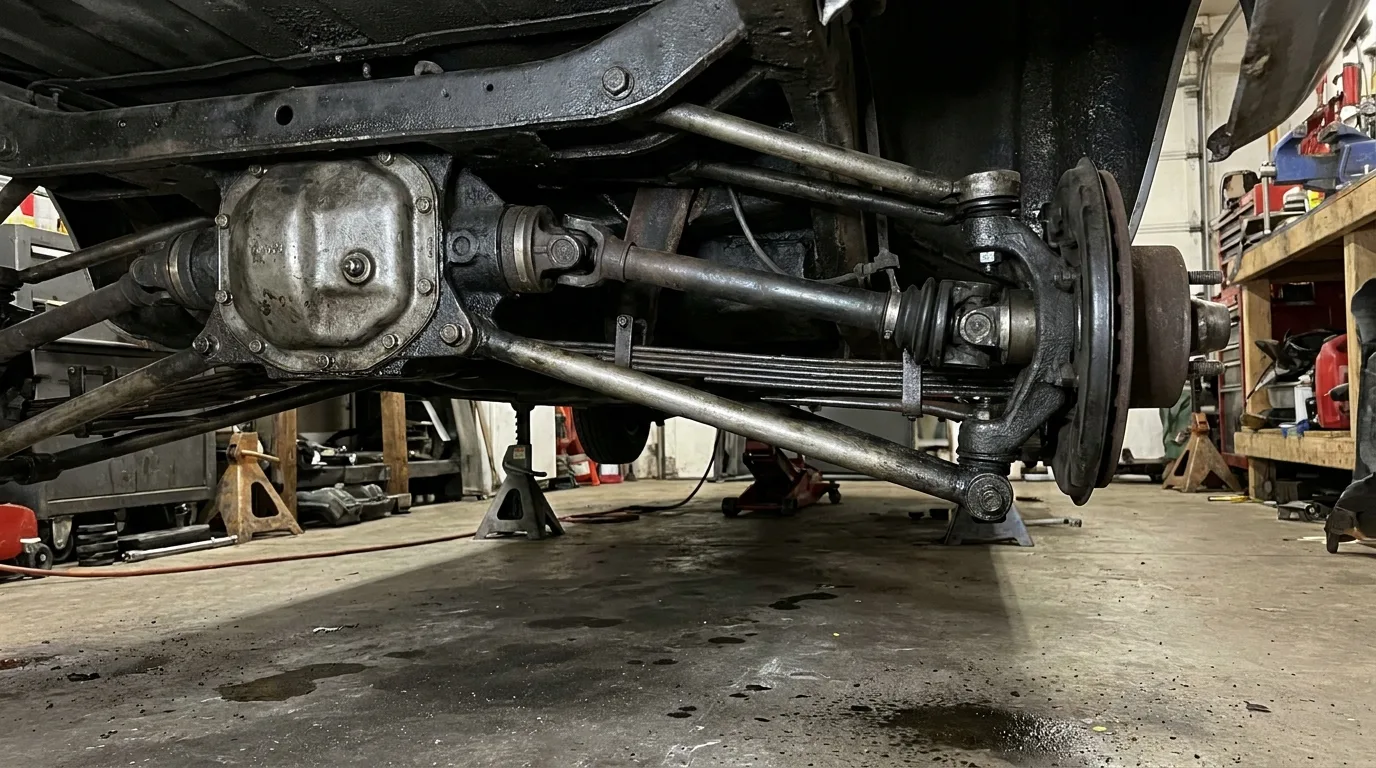
The C2's most significant engineering departure from the C1 was under the car, not in it. The C1 used a solid rear axle for its entire production run. The C2 introduced an independent rear suspension system designed by Zora Arkus-Duntov, who had been arguing for it since the mid-1950s.
The system used U-jointed half-shafts as the upper lateral links, combined with a fixed differential housing mounted to the frame and a single transverse leaf spring. It was not a conventional IRS setup by European standards, but it worked well for the car's weight and power characteristics. The IRS addressed the C1's tendency toward rear-end hop under power and gave the C2 more predictable handling on rough surfaces. Duntov's engineering team had spent years refining this layout on the Corvette SS racing program, and the C2 was the production payoff.
The frame was also new: a ladder-type steel structure with a central backbone section that stiffened the platform significantly compared to the C1. The combination of the new frame and IRS gave the C2 a character that road testers at the time consistently noted as more European than American. Period reviews in Road & Track and Car and Driver described handling that could hold its own against contemporary British and Italian sports cars.
The Z06 package and the big-block transition
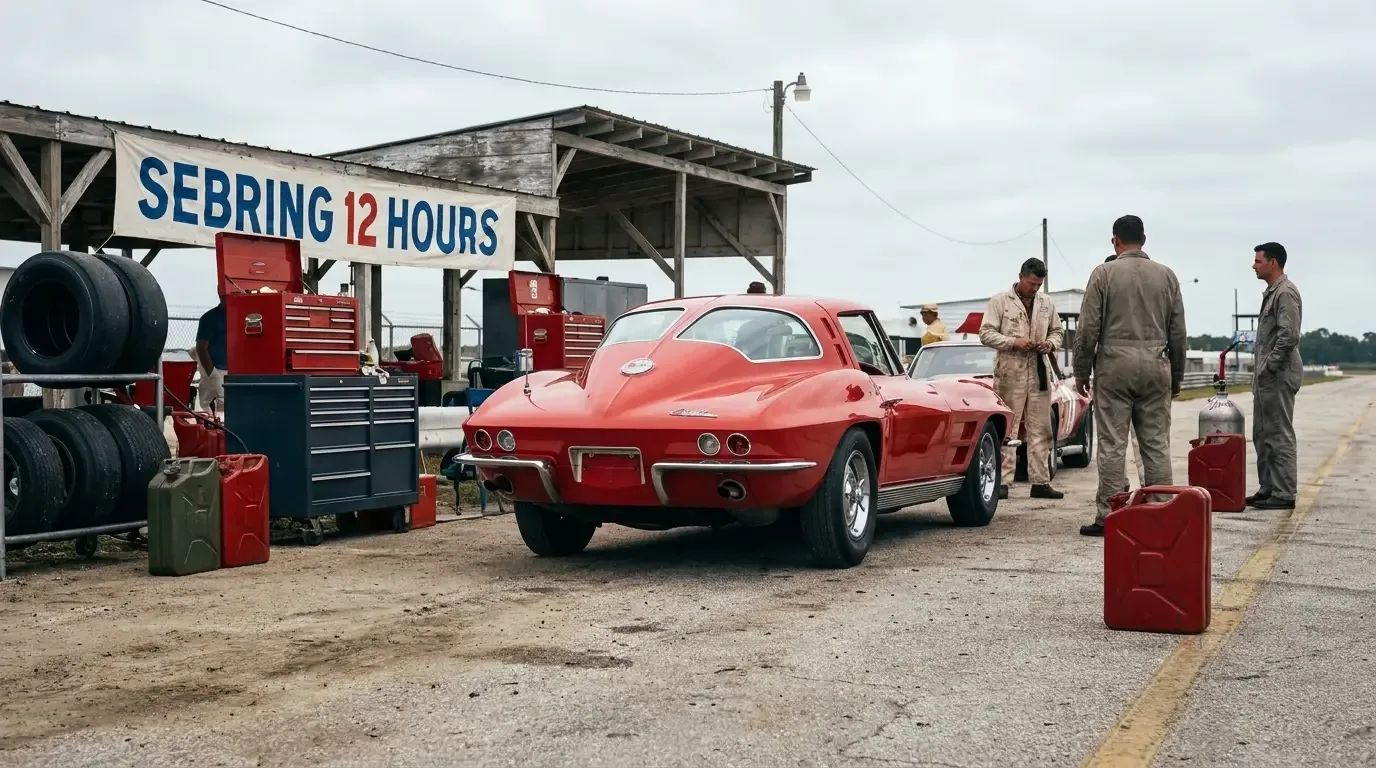
Chevrolet offered performance options on the C2 from the first model year, but the most significant early package was the Z06 Special Performance Equipment option, available on 1963 coupes. The Z06 brought the 360 hp fuel-injected 327 small-block, heavy-duty brakes, and heavy-duty suspension. A 36.5-gallon fiberglass fuel tank was available as a further option (RPO N03) for cars intended to run endurance races without refueling; only about 63 of the Z06 cars were built with the big tank, earning them the nickname "tankers." The Z06 package itself was installed on approximately 199 cars for 1963.
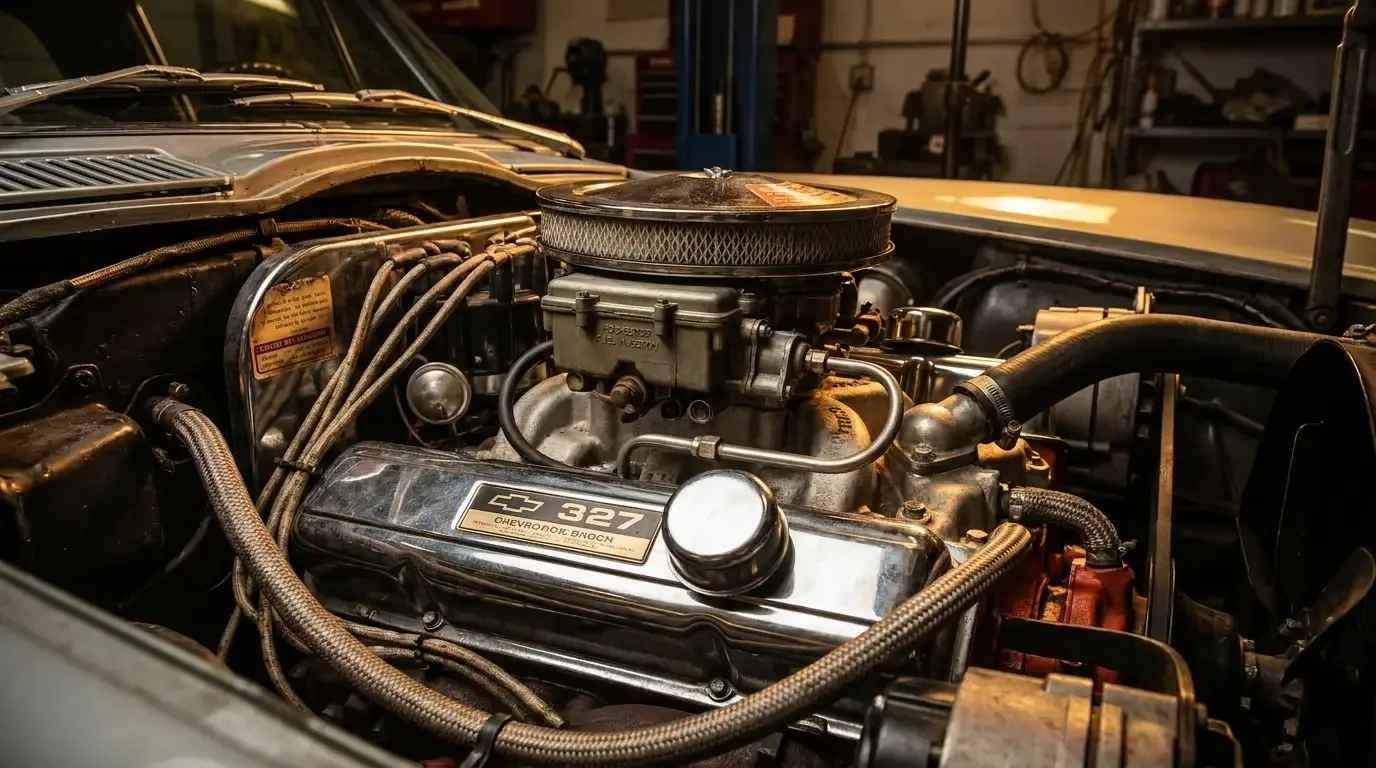
The engine story through 1963 and 1964 was small-block 327 territory: multiple state of tune options, from the base 250 hp two-barrel through the L84 fuel-injected version, rated at 360 hp for 1963 and bumped to 375 hp for 1964 and 1965. Fuel injection had been available since the late C1 years and remained on the options sheet through 1965, when it was dropped. The Rochester Ramjet fuel injection system was effective but expensive and finicky, and by 1965 the big-block option rendered it commercially irrelevant.
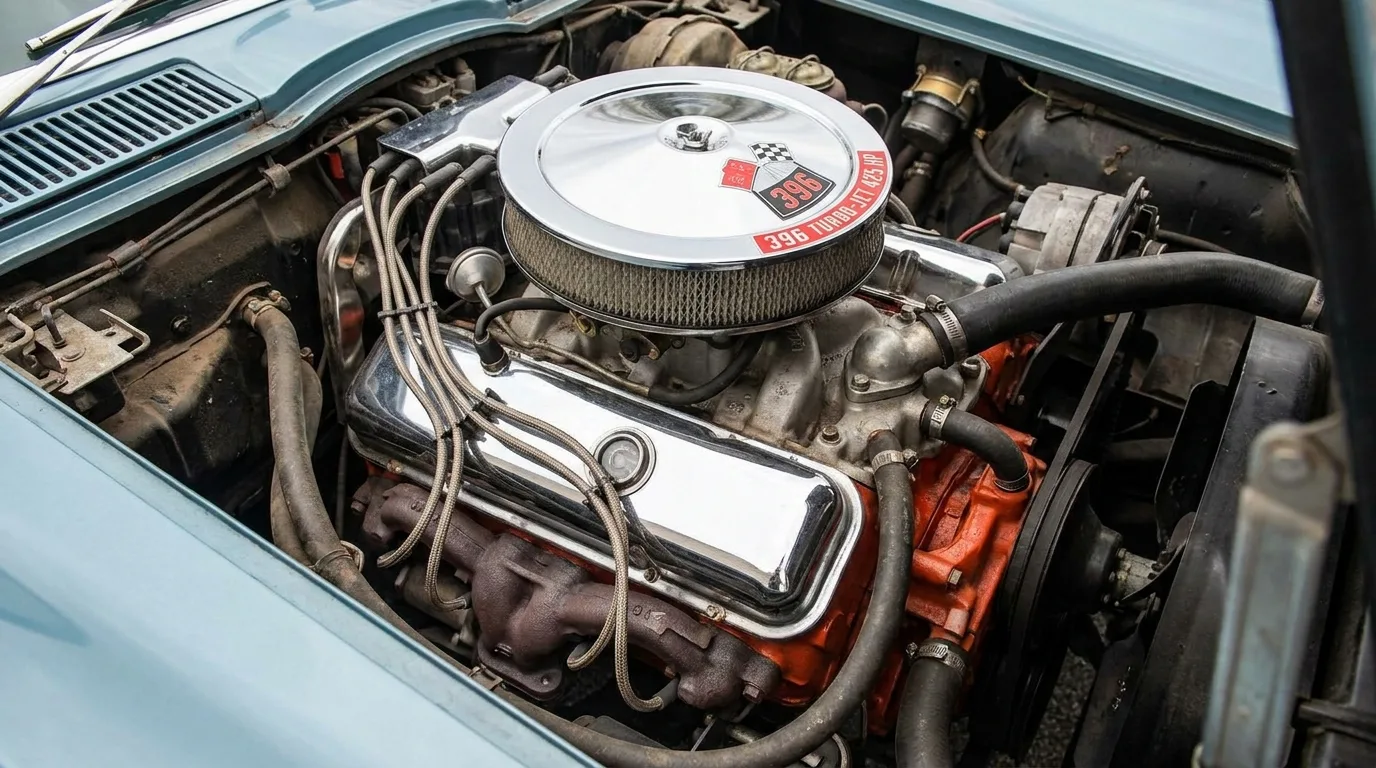
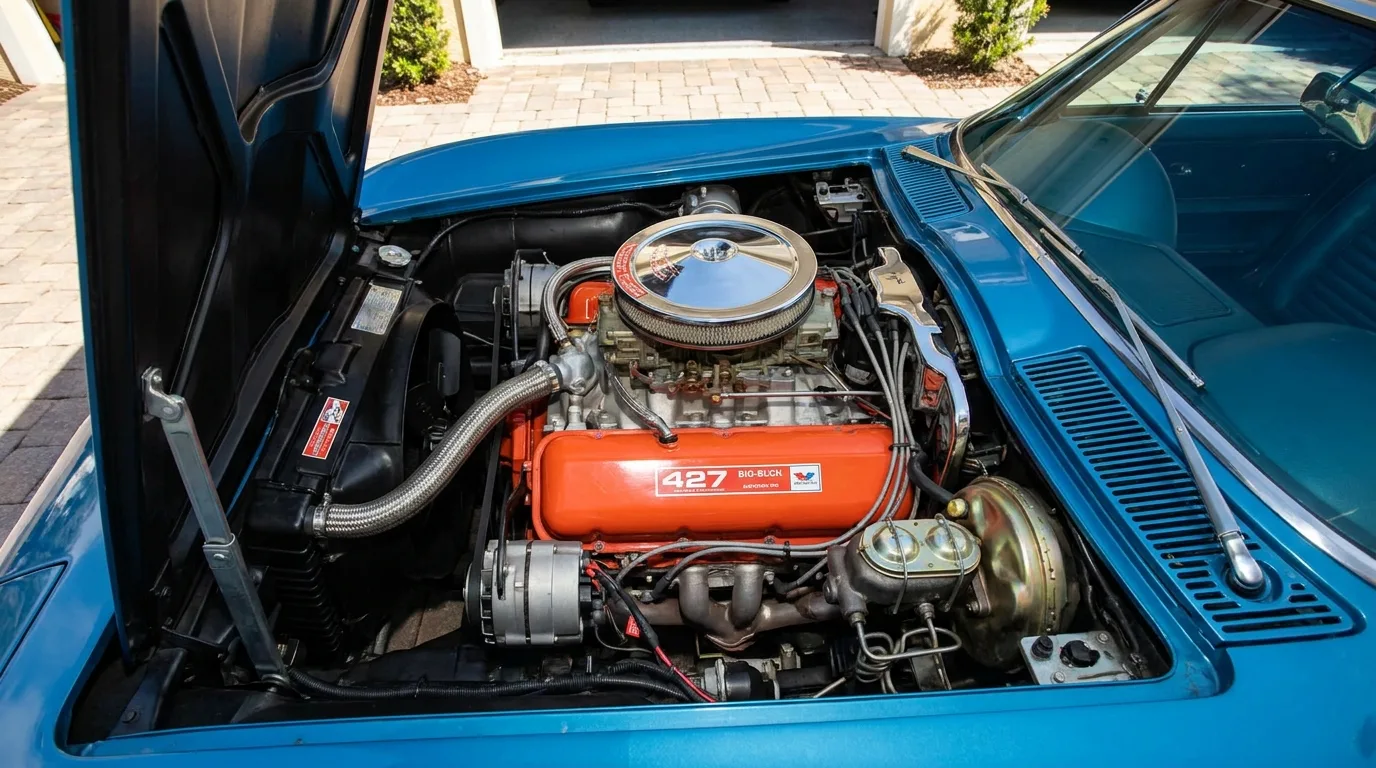
The 1965 model year was the first to offer a big-block Corvette: the L78 396 cubic inch V8 rated at 425 hp. Chevrolet bored the block to 427 cubic inches for 1966 and kept it there through the end of C2 production. For 1966 the 427 came in two states of tune: the base L36 at 390 hp, and the solid-lifter L72 at 425 hp. For 1967 the lineup was reshuffled: the L36 carried over at 390 hp, a new L68 added triple two-barrel carburetors atop the L36's milder cam for 400 hp, and the L71 combined the tri-carb setup with a hotter cam and higher compression for 435 hp. At the extreme end sat the L88, an aluminum-head racing engine first offered for 1967 and ostensibly rated at 430 hp on paper but producing considerably more in practice, by some estimates over 500 hp. Chevrolet deliberately understated the L88's output to discourage street buyers; the car required racing fuel and was unsuitable for ordinary use. L88 production was extremely limited: only about 20 cars for 1967, the rarest single-year total of the three model years (1967-1969) the option was offered.
| Year | Engine option | Displacement | Rated output |
|---|---|---|---|
| 1963 | L84 Fuel Injection | 327 cu in | 360 hp |
| 1964-1965 | L84 Fuel Injection | 327 cu in | 375 hp |
| 1965 | L78 (first big-block) | 396 cu in | 425 hp |
| 1966-1967 | L36 | 427 cu in | 390 hp |
| 1966 | L72 (top 1966 tune) | 427 cu in | 425 hp |
| 1967 | L71 (tri-carb) | 427 cu in | 435 hp |
| 1967 | L88 (racing) | 427 cu in | 430 hp nominal (understated) |
| 1963-1967 (all) | Total production (coupe + roadster) | 117,964 | |
Disc brakes in 1965: a long time coming
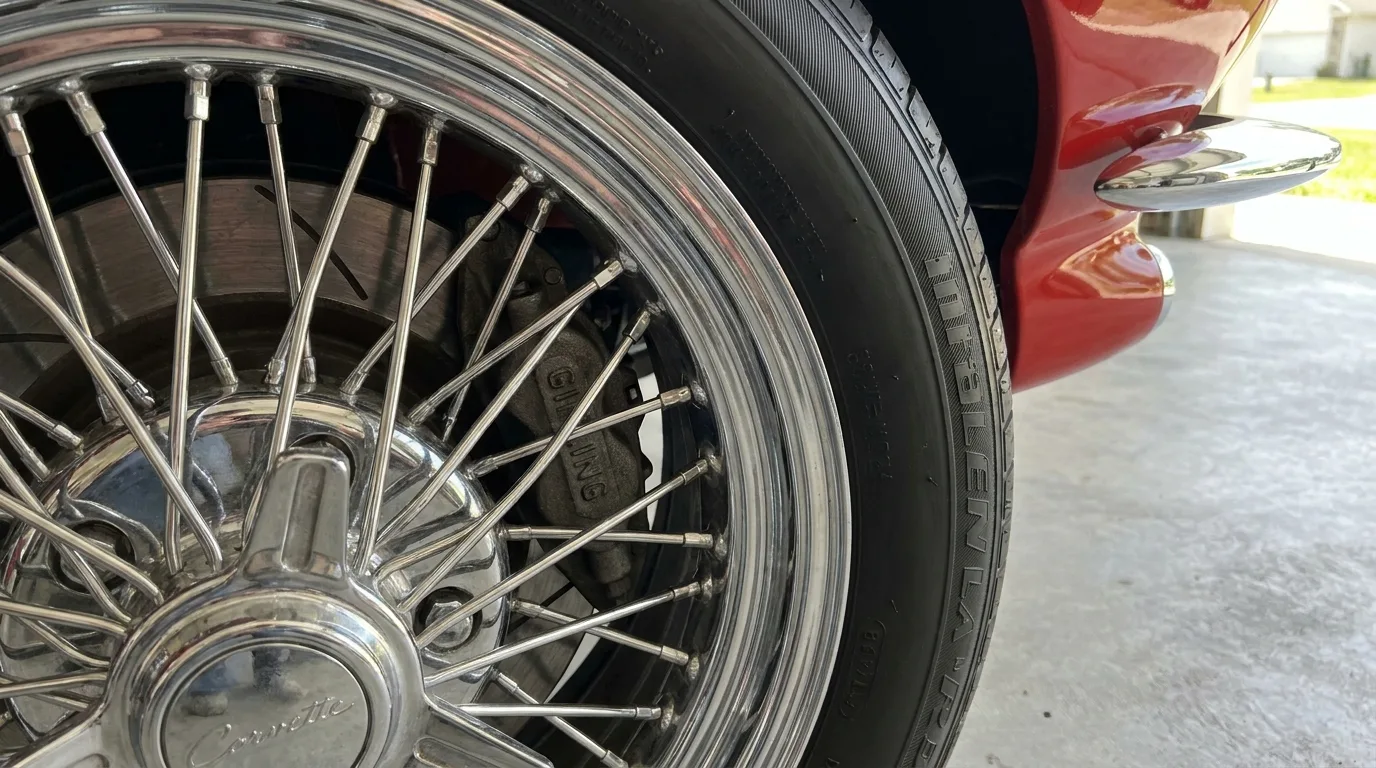
The 1965 model year brought two changes that mattered as much as the big-block option: four-wheel disc brakes became standard equipment, and the previous drum brake system was dropped entirely.
This was not a small development. The C1 and the first two years of C2 production used drums all around, a system that was adequate for normal driving but faded badly under repeated hard stops. The optional sintered metallic drums available in 1963 and 1964 helped somewhat but did not solve the fundamental problem. The 1965 switch to four-wheel discs made the C2 a genuinely complete performance car for the first time. The brakes were appropriate for the power the car carried, and the combination of IRS and four-wheel discs gave the 1965-1967 cars a character that feels more modern than the 1963-1964 cars do today.
Side exhaust became an option in 1965 as well, routed through cutouts in the rocker panels. Visually dramatic and acoustically distinctive, the side pipes became one of the C2's identifying details in its final three years.
"The 1965 model year fixed the one thing that had always been quietly wrong with the C2. Those drum brakes on a car with real power were a problem waiting to happen. When you look at 1965-and-up cars, you're looking at a finished design. The 1963 split-window gets all the attention, but the 1965 disc-brake cars are where the engineering caught up with the styling."
— Tom Ramirez
Why 1967 is revered
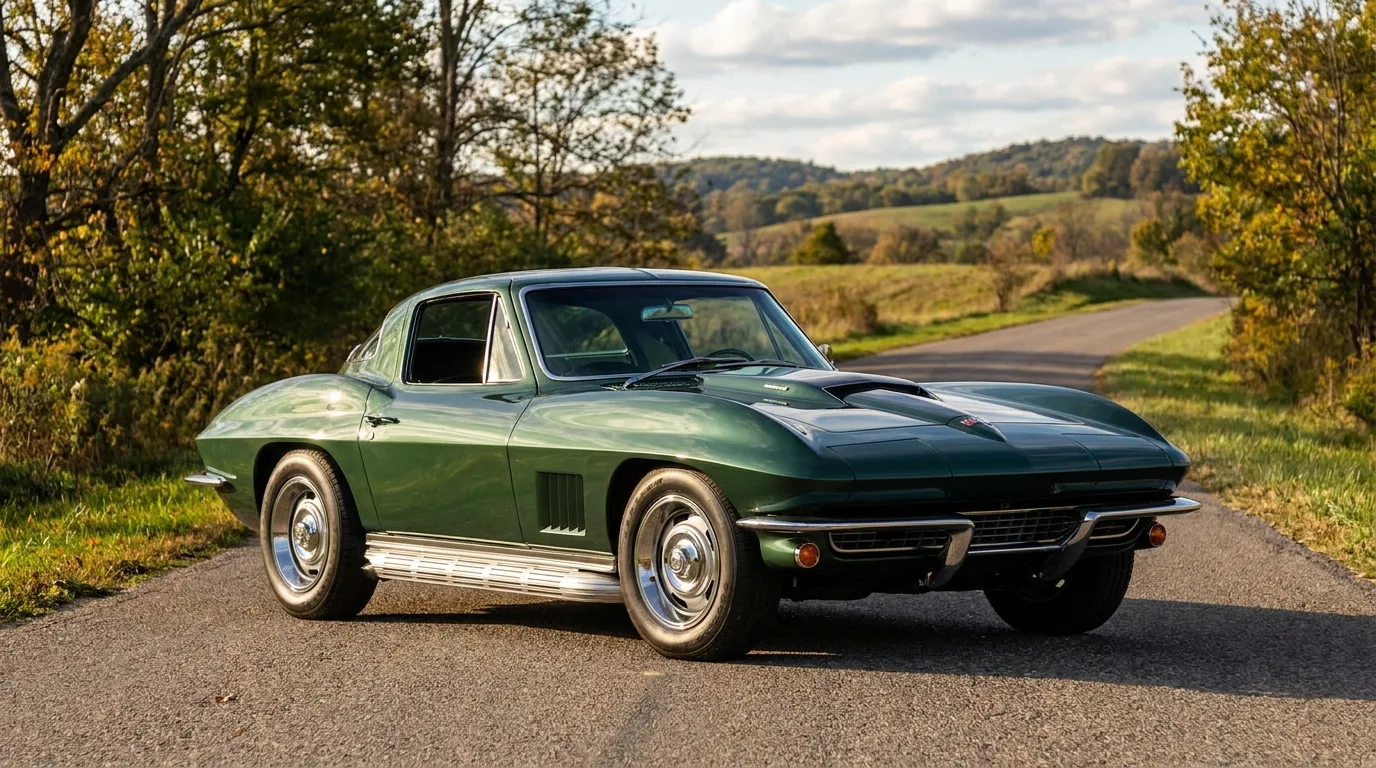
The final year of C2 production, 1967, is consistently cited as the cleanest and most desirable of the generation by serious collectors, and the factory records support that judgment in several ways.
Chevrolet had planned to introduce the C3 for 1967 but pushed it back a year when the new body was not ready. The result was a 1967 C2 that received careful refinement rather than a mid-year scramble to fill the calendar. The exterior received revised front fender vents (five vertical slots replacing the previous three-element treatment), revised wheel covers, and a hood that accommodated the 427's size cleanly. The interior got a revised instrument cluster with a proper round speedometer replacing the earlier horizontal sweep layout, and the dashboard was reorganized for better ergonomics.
The 1967 model also carried the most complete option roster of the C2 run. The L88 was first offered to the public in 1967 (previously it had been available but not officially listed). The L89 option added aluminum heads to the L71 for weight reduction. The M22 close-ratio heavy-duty transmission, informally called the "Rock Crusher" for its gear noise under load, was available for the high-output engines. These are not common options; documented examples carry significant premiums.
Production for 1967 totaled 22,940 units (coupe and roadster combined). The 427-powered cars accounted for roughly 3,800 of those, with the L71 alone making up the bulk of 427 orders at an estimated 3,754 cars. L88 production is generally cited at 20 cars for the model year, the rarest single-year total the option would see across its 1967-1969 run.
Reading the factory records: what the documentation tells you
The C2 generation is well-documented by NCRS standards, and the surviving factory records are specific enough to answer most authentication questions for high-option cars. Tank stickers, window stickers (Monroney labels), and protect-o-plate documents all exist for a meaningful portion of the surviving cars. The challenge is that the C2 market has attracted enough money to make fraudulent option codes a real issue, particularly for big-block cars, Z06 cars, and any car with an L88 or L89 claim.
The VIN structure for C2 cars encodes the model year, assembly plant (all C2 Corvettes were built at the St. Louis, Missouri plant), body style, and sequential production number. It does not encode the engine. Engine identification requires reading the partial VIN stamp on the block pad and cross-referencing with the trim tag and tank sticker data. A numbers-matching C2 with proper tank sticker documentation is a different purchase than one without it, and the price difference is substantial.
NCRS judging criteria for C2 cars are publicly available and worth reviewing before any serious purchase. Bloomington Gold's certification process covers a different set of criteria and is not identical to NCRS. Both programs matter to the high end of the collector market, and understanding the difference saves confusion when reading seller descriptions.
Where the C2 sits in the collector market today
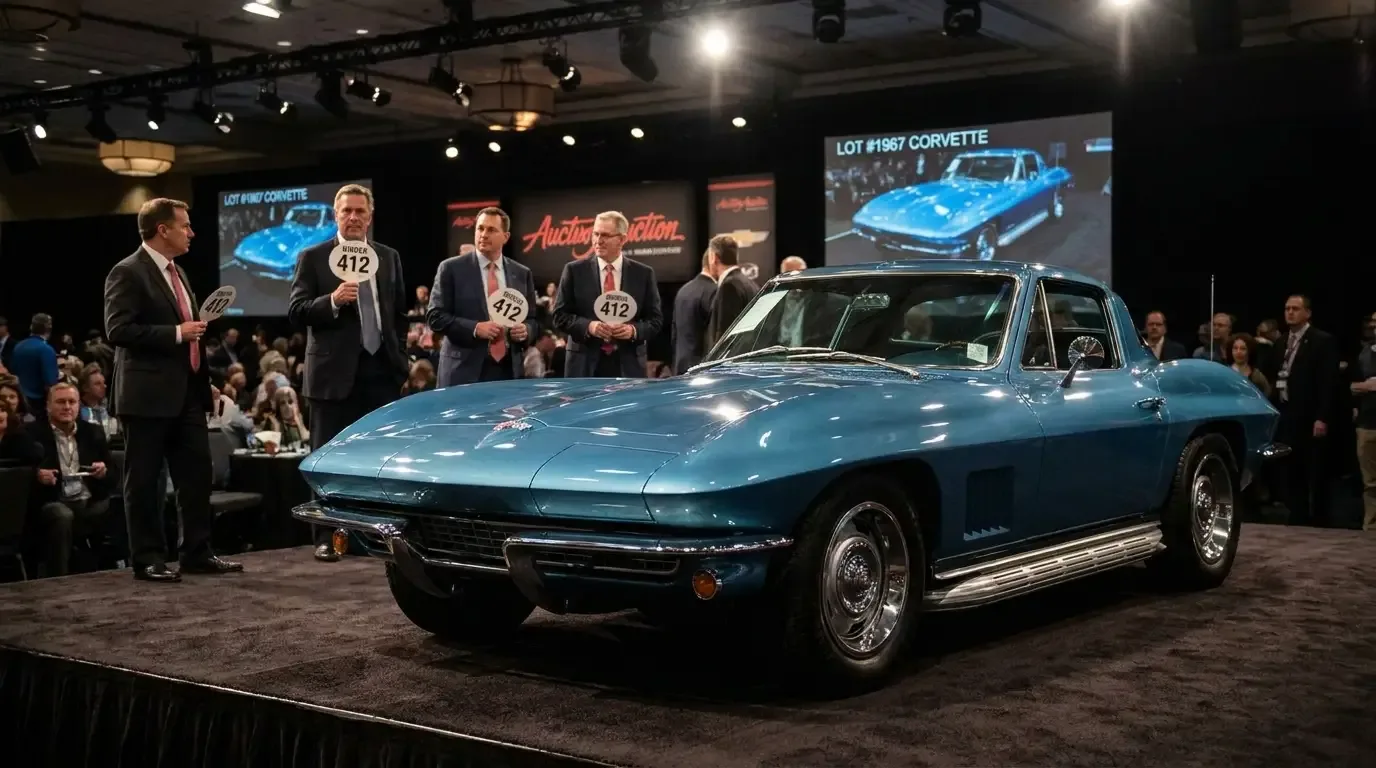
The C2 occupies a specific position in the Corvette collector hierarchy: below C1 fuel-injected cars on pure rarity metrics, above C3 cars on most market metrics, and internally stratified by year, body style, and powertrain in ways that move prices significantly. As a general guide, entry-level small-block roadsters in good driver condition have traded in the $30,000-$55,000 range, while clean small-block coupes with solid documentation push higher, into the $60,000-$90,000 band and beyond depending on options; these figures move with the broader collector market and should be checked against current price guides before any purchase decision. Big-block cars in good condition range from the low six figures upward depending on the specific engine code. L88 cars with authentication are seven-figure territory at recognized auction houses, when they surface at all.
The 1963 split-window coupe commands its own substantial premium above other C2 coupes of comparable condition, with some market data suggesting well-documented split-window cars can command 50 percent or more over a comparably equipped 1964 coupe. That premium is driven by visual distinctiveness and the one-year-only status of the divided rear window.
For buyers entering the market, the 1964-1966 small-block coupes represent the most accessible combination of C2 character and competitive purchase price. The 1965-1966 disc-brake cars add the engineering completeness that the 1963-1964 drums lacked. If you are shopping for a C2 Sting Ray as a driver rather than a show car, the 1965-1966 350 hp L79 327 cars offer strong performance, reasonable maintenance costs, and genuine C2 character without the authentication complexity of the big-block options.
Browse the current inventory of C2 Sting Rays for sale to see what's available now, with condition and option details that let you compare examples directly. The generation that followed this one took a different path entirely, as the Mako Shark C3 showed when it arrived for 1968 with longer, lower, and more dramatic bodywork that split opinion from the start.
Sources and notes
- Corvette Action Center, C2 production figures — confirmed year-by-year and total production numbers (117,964)
- Hagerty, C2 Corvette buyer's guide — confirmed engine option context and collector market positioning
- Hagerty Insider, split-window Corvette market feature — confirmed split-window premium over comparable 1964 coupes
- Wikipedia, Chevrolet Corvette (C2) — confirmed wheelbase, general chronology, and body/engine changes
- Mac's Motor City Garage — confirmed L84 fuel-injection horsepower rating changed from 360 hp (1963) to 375 hp (1964-1965)
- Vette Vues Magazine, L88 Corvette history — confirmed 1967 L88 production of 20 cars, 430 hp nominal rating, and first-year-offered status
- Classic Industries, 1963 Corvette Z06 history — confirmed Z06 production of approximately 199 cars and the separate 36.5-gallon N03 tank option