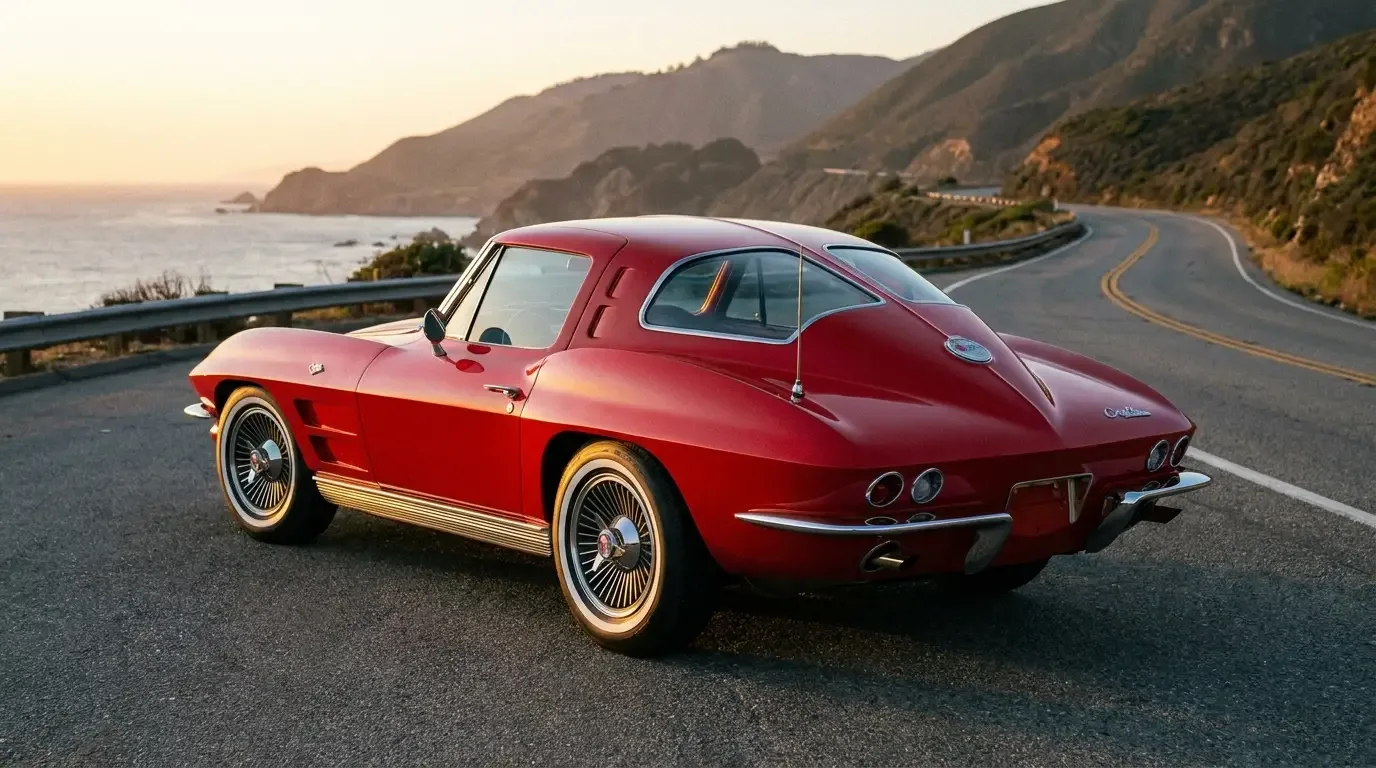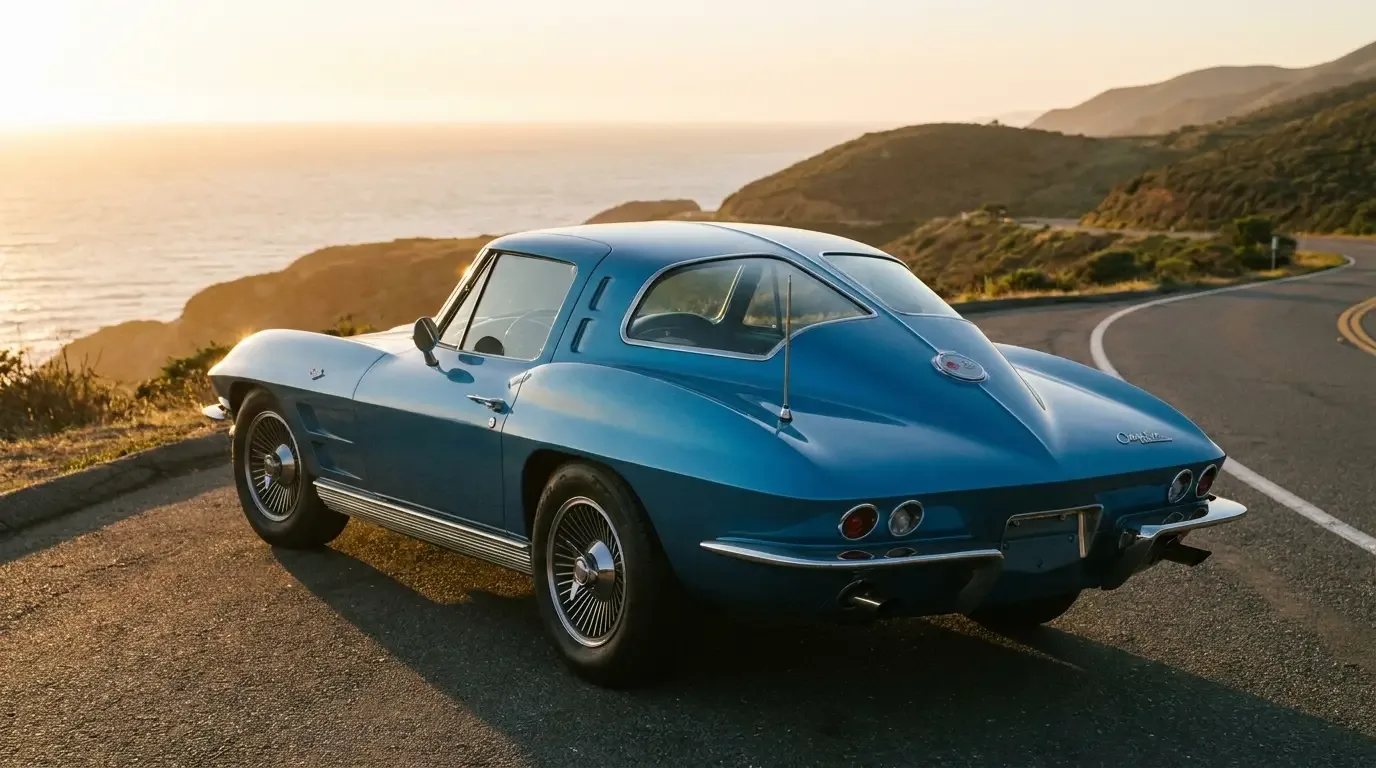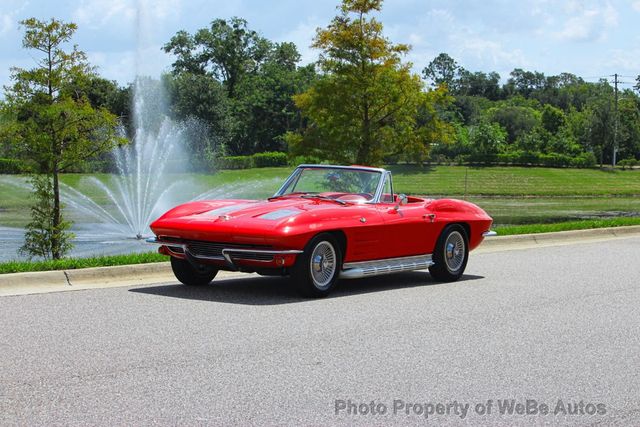
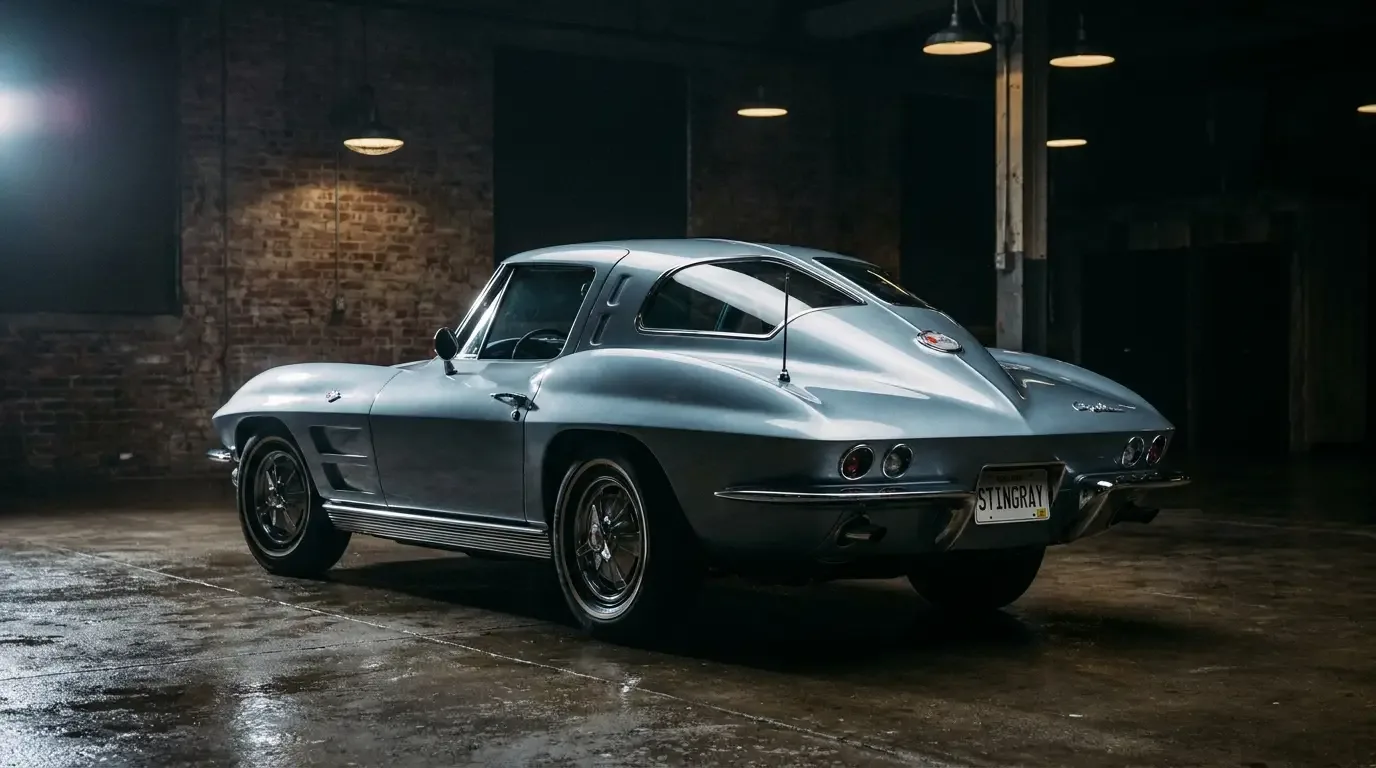
The 1963 Corvette Sting Ray coupe introduced one of the most striking body details in American automotive history: a full-length spine running from the back of the roof to the rear deck, splitting the rear window into two equal panes. It lasted exactly one model year. By 1964, it was gone, replaced by a single uninterrupted piece of glass. The reason touches on one of the persistent tensions in car design, where style and practicality argue over the same piece of real estate, and where the person who drew something doesn't always have to live with the consequences.
Understanding why the split window disappeared means understanding where it came from, who fought to keep it, and why the argument was ultimately lost. For anyone interested in the deeper story of the C2 generation, the rear window dispute is where the design philosophy of the whole car becomes clearest.
Where the split window came from
Bill Mitchell, who headed General Motors Styling through this period, had been working with a racing design called the Stingray that featured a similar spine treatment. When the production Sting Ray was developed for 1963, Mitchell carried the spine through from the show car concept. His argument was visual: the center bar connected the roofline to the rear deck in a single continuous line, creating a unified silhouette. Without it, the coupe read as a soft fastback. With it, the shape had a decisiveness that photographs well and reads from distance.
Zora Arkus-Duntov, the engineer most responsible for making the Corvette perform as well as it looked, hated it. His objection was not aesthetic. It was functional. The center bar blocked the driver's view straight back, creating a blind spot in the middle of the rear window. For a car being positioned as a performance machine, a driver who could not see clearly behind him was a legitimate problem. Duntov pushed for the bar to come out before the car reached production. He lost that argument for 1963. He won it for 1964.
The visibility problem in practice
Factory documentation from the period confirms what Duntov argued: the center bar divided the rear viewing area in a way that required a driver to actively scan both panes rather than take in the full field at once. At low speed, in parking lots, it was a nuisance. At highway speed, where a driver needs to track fast-moving traffic in the mirror and through the glass simultaneously, it was a more serious limitation.
The aftermarket responded immediately. By 1964, suppliers were already offering replacement tinted rear windows that eliminated the bar for 1963 cars, which tells you something about how many owners felt about it. The demand for that modification established early that the split window was a styling decision some buyers wanted reversed as soon as they drove the car.
The 1964 change and what it meant
For 1964, the center bar was removed. The rear glass became a single piece, fully transparent across its width. The change cost nothing in terms of structural integrity and added a meaningful improvement in visibility. From the outside, the 1964 coupe lost the spine's visual drama but gained a cleaner, more purposeful look that most contemporary road tests preferred. The rear roofline read as a proper fastback, which suited the car's performance intent better than the interrupted-spine look.
The production numbers matter here. Chevrolet built 10,594 split-window coupes for 1963, alongside 10,919 convertibles, for a total of 21,513 Corvettes that year. The 1964 coupe run came in lower, at 8,304 units, while total Corvette production for 1964 climbed to roughly 22,229 cars as the convertible carried a larger share of the mix. The 1964 coupe was, by most accounts, a more resolved car mechanically and optically, even if it did not outsell its predecessor body style.
If you are looking at 1964 Corvettes for sale, you will find that the single-window coupe generally trades at a discount to 1963 split-window examples at comparable condition, which is one of those collector market outcomes that says something specific about what buyers value in the C2.
| Model year | Rear window | Base coupe price (approx.) | Coupe production (approx.) |
|---|---|---|---|
| 1963 | Split (two panes, center bar) | $4,252 | 10,594 |
| 1964 | Single pane | $4,252 | 8,304 |
Why collectors value the 1963 now
The split window's rarity amplifies its appeal in the current market. The feature existed for a single production year. Every C2 after 1963 had the single pane. That makes the split-window car immediately identifiable at distance, and in the collector world, distinguishability has value that outlasts any specific design debate.
The irony is not lost on anyone who follows this closely. Duntov was right about the visibility problem. The center bar was a genuine obstacle to rearward sightlines. And yet, decades later, the car with the flawed rear window commands a significant premium over the corrected version. The fix that made the 1964 coupe objectively better to drive made it harder to distinguish at a show. Collector markets reward rarity and visual impact over engineering refinement, and the split window delivers both.
"Bill Mitchell drew it, Duntov fought it, and they both turned out to be right. The split window was a visibility problem and it is now the single most recognizable detail on any C2. That's not a contradiction, that's how collector cars work."
— Tom Ramirez
The Mitchell-Duntov argument as a window into C2 development
The rear window dispute is worth understanding because it was not an isolated disagreement. The entire C2 development involved ongoing tension between Mitchell's studio and Duntov's engineering group over what the Corvette was supposed to be. Mitchell's team wanted a grand touring car with a strong visual identity. Duntov's team wanted a purpose-built performance machine that happened to look good. The split window is the clearest single example of which side won a particular argument and when the outcome was reversed.
The C2's reputation for independent rear suspension, improved handling, and stronger performance in its later years reflects Duntov's priorities gradually prevailing over the course of the generation. The 1963 split window represents the moment before that balance fully shifted, when styling still held enough authority to override a documented functional objection. By 1964, the practical argument had won. The story of how and why those priorities evolved is covered in the next chapter of the Sting Ray's history.
Sources and notes
- CorvSport, 1963 Corvette Guide: confirmed 1963 coupe base price ($4,252) and the 10,594 coupe / 10,919 convertible production split (21,513 total)
- CorvSport, 1964 Corvette Production Numbers: confirmed 8,304 coupes and 13,925 convertibles built for 1964 (22,229 total)
- CorvSport, 1964 Corvette Pricing, Factory Options, & Colors: confirmed 1964 Sport Coupe base price of $4,252
- Green Bay News Network, "Split Personality": confirmed the Mitchell-Duntov design dispute, Duntov's rear-visibility objection, and the one-year-only run of the split window
- SlashGear, Split-Window Corvette value guide: confirmed the single-model-year production run (10,594 units) and current collector pricing tiers by engine option
- Hagerty, C2 Corvette buyer's guide: confirmed the roughly 50-100% collector market premium of 1963 split-window coupes over comparable 1964 coupes