Where the Stingray name came from
Names stick in this hobby for reasons that have nothing to do with marketing. Ask anyone who grew up in the 1960s what a Stingray is, and you'll get a story before you get a definition. The word conjures something specific: a shape low to the ground, a silhouette that looks like it was drawn by someone who cared too much about getting it right. The name came from a car that Bill Mitchell built largely on his own initiative, funded out of his own pocket, and kept clear of official GM involvement so Chevrolet's factory racing ban wouldn't be violated. That kind of origin tends to follow a name around.
The full arc of the Corvette Stingray name runs from a one-off race car built in 1959 to a badge worn by every Corvette sold today. In between, it was retired, revived, hyphenated, un-hyphenated, and claimed by different generations of buyers who each thought they had the definitive version. The history is worth knowing if you're reading about any Corvette built after 1963, which means it's worth knowing for most of them. For more context on the full lineage, read the complete history of the car and how it evolved from a show concept to an American institution.
The 1959 Stingray racer and what it started
Bill Mitchell was GM's vice president of design by 1958, and he had a problem. The Automobile Manufacturers Association had signed a ban on factory racing in 1957, which meant Chevrolet had to exit motorsport officially. Mitchell found a workaround. He acquired a spare Corvette SS chassis, from the same program that had raced at the 1957 12 Hours of Sebring, reportedly for a nominal sum, and had his design studio build a new body on it, working after hours in a small space informally called the Hammer Room. The result was the Stingray Special (also known as the Stingray Racer), a low-slung race car with a shape that didn't look like anything else running at the time.
The car competed from 1959 through 1960, carrying neither the Corvette nor Chevrolet name so it wouldn't be traced back to the factory. Dr. Dick Thompson, the SCCA driver known as "the Flying Dentist," did most of the driving, taking the car to back-to-back SCCA C-Modified class national championships in 1959 and 1960. Mitchell had built a legitimate race car, raced it successfully, and done it without the factory's official involvement. What the Stingray Special also did was establish the visual language that would show up in a production Corvette three years later. You can look at photographs of the 1959 racer and see the 1963 Sting Ray in it clearly.
Sting Ray, 1963-1967: two words, one split rear window
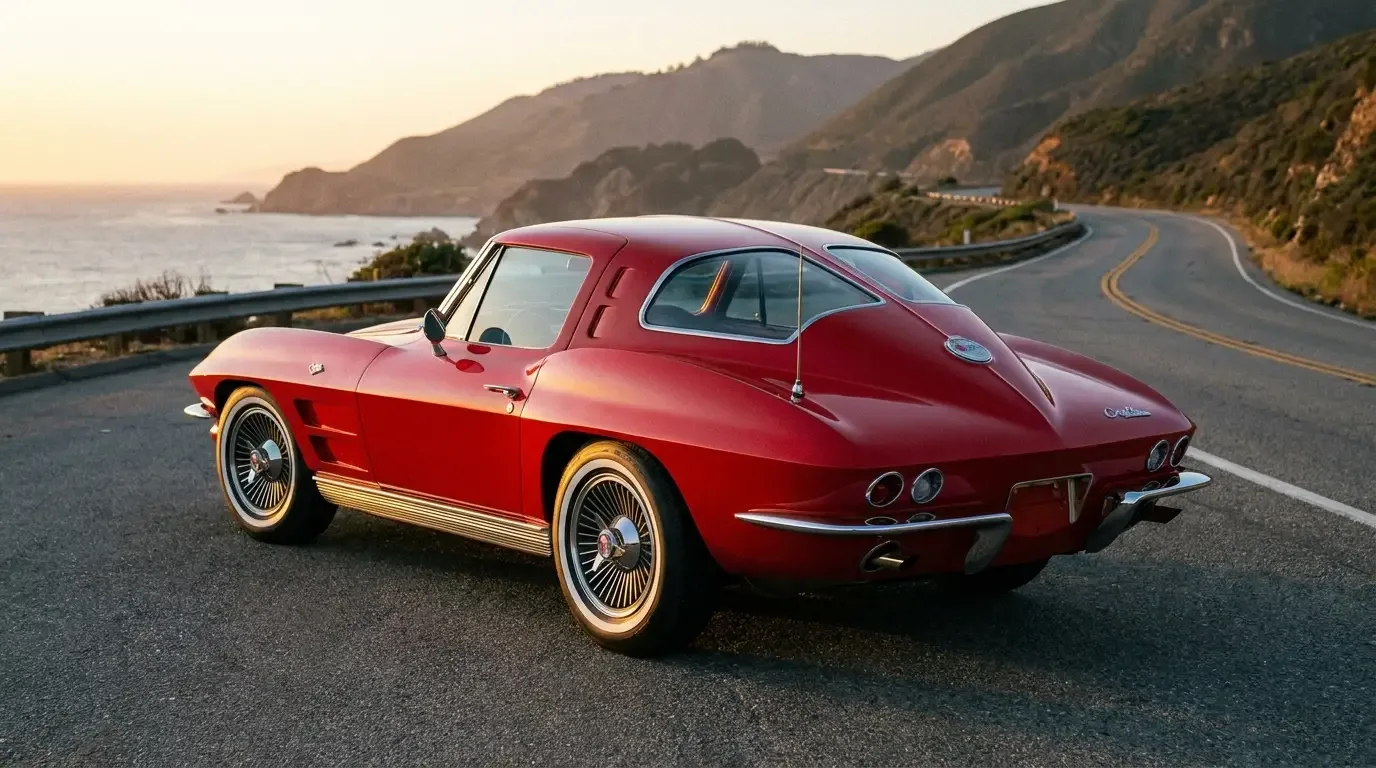
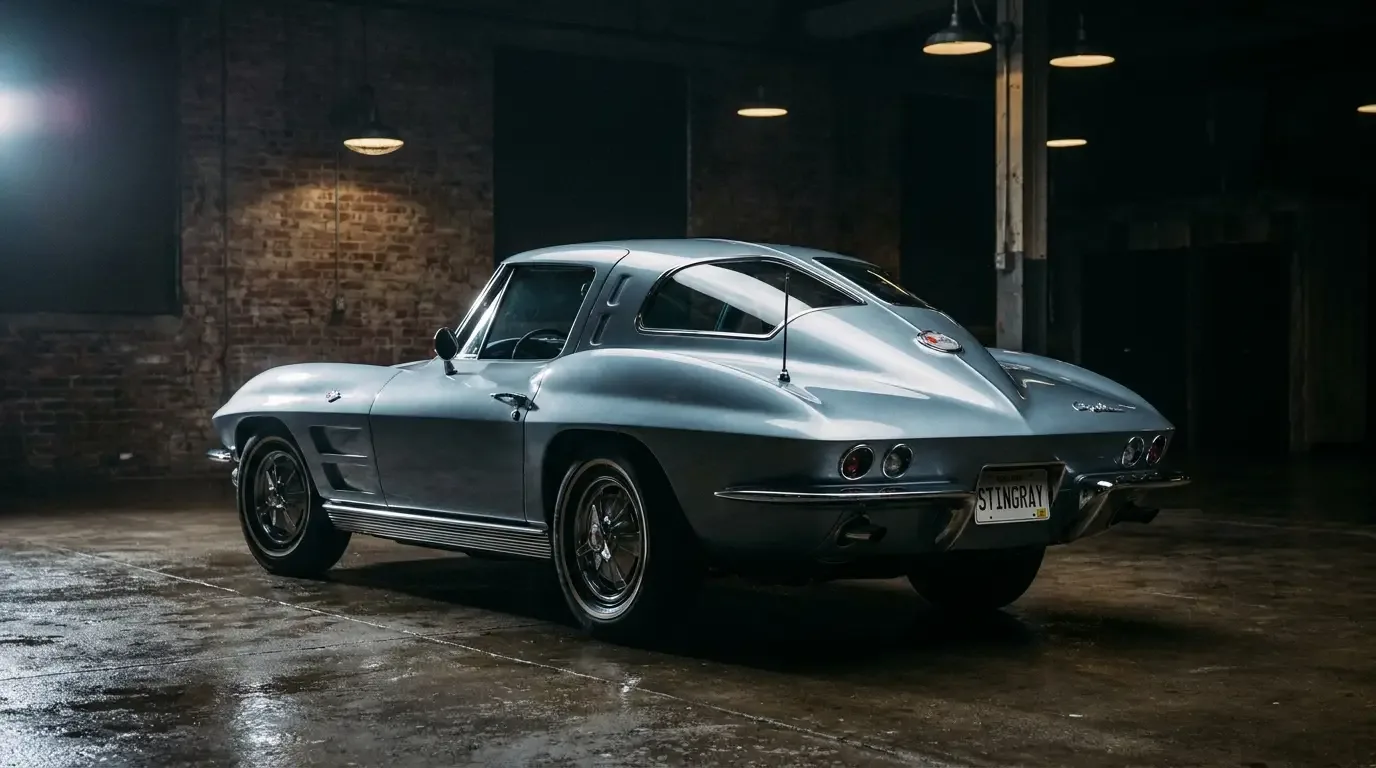
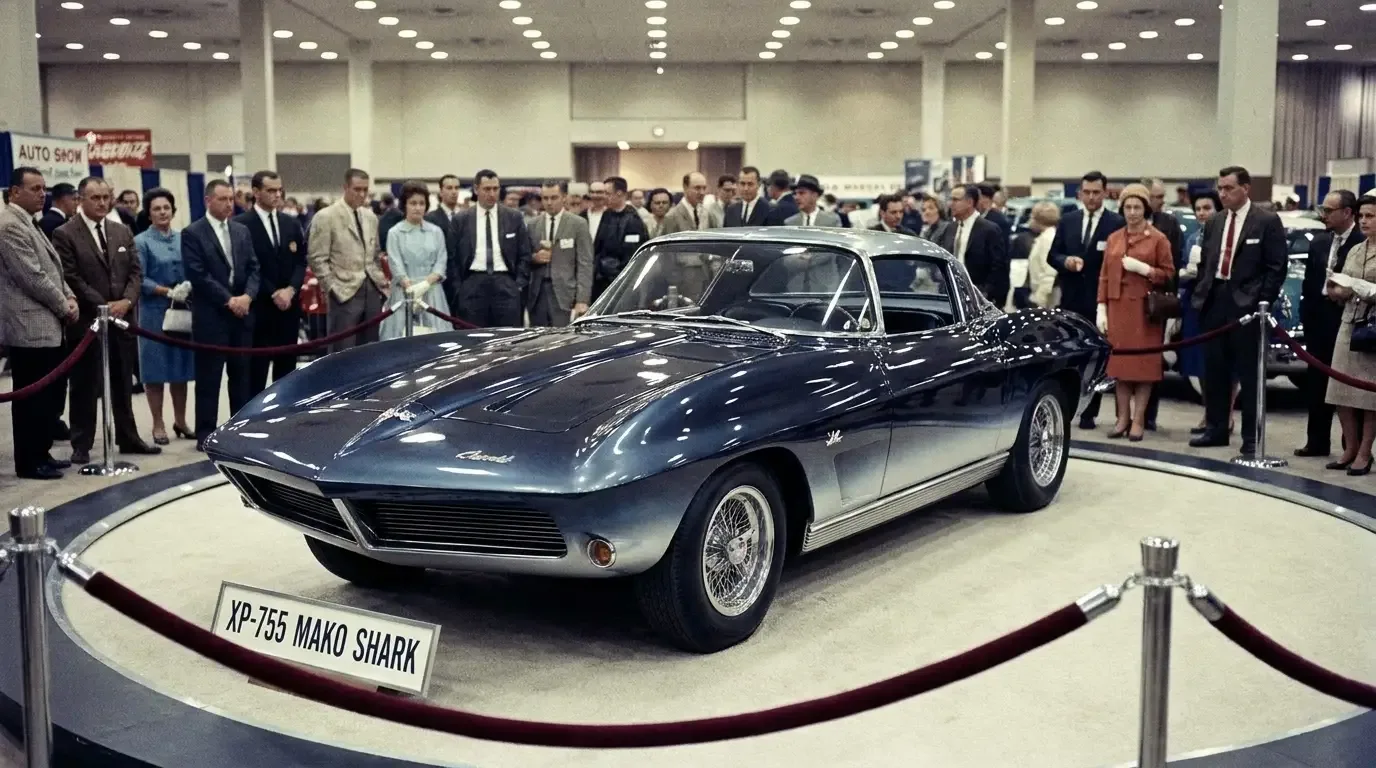
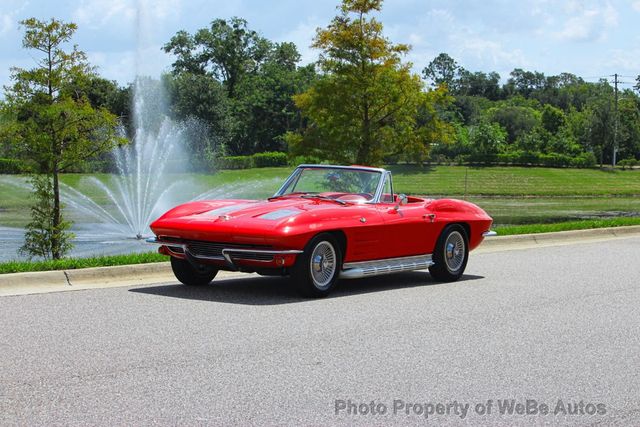
When Chevrolet introduced the C2 Corvette for the 1963 model year, it wore the Sting Ray name as two words on the body. This was the first time the name appeared on a production car. The design came directly from the visual ideas Mitchell had been developing through the race car and through the Mako Shark show car program. If you want to understand how those design threads connected, a related piece covers the Mako Shark I and how Mitchell used show cars to push the Corvette's styling forward between generations.
The c2 corvette sting ray was the first Corvette offered as both a coupe and a convertible, and the coupe's split rear window is the detail that most people know about. Zora Arkus-Duntov, the Corvette's chief engineer, disliked the split window because it obstructed the driver's rear visibility. Mitchell liked it because it completed the visual symmetry of the design. Mitchell won in 1963. Duntov won in 1964, when the rear window became a single piece of glass. The 1963 split-window coupe has been the more collectible car ever since, which would have pleased Mitchell.
The Sting Ray name as two words ran through the 1967 model year, covering what collectors now call the C2 generation. Production numbers varied by year, and the coupe-to-convertible ratio shifted as the generation aged. By 1967, the convertible was still outselling the coupe, with 14,436 convertibles built against 8,504 coupes, though that gap had narrowed from the wider margins seen earlier in the generation.
The name disappears, then returns as one word
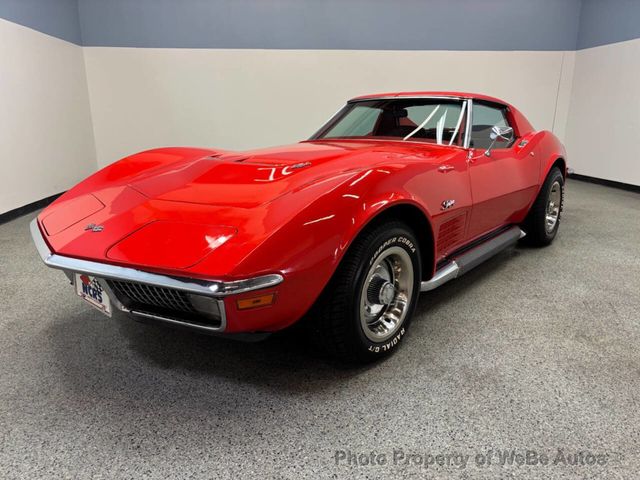
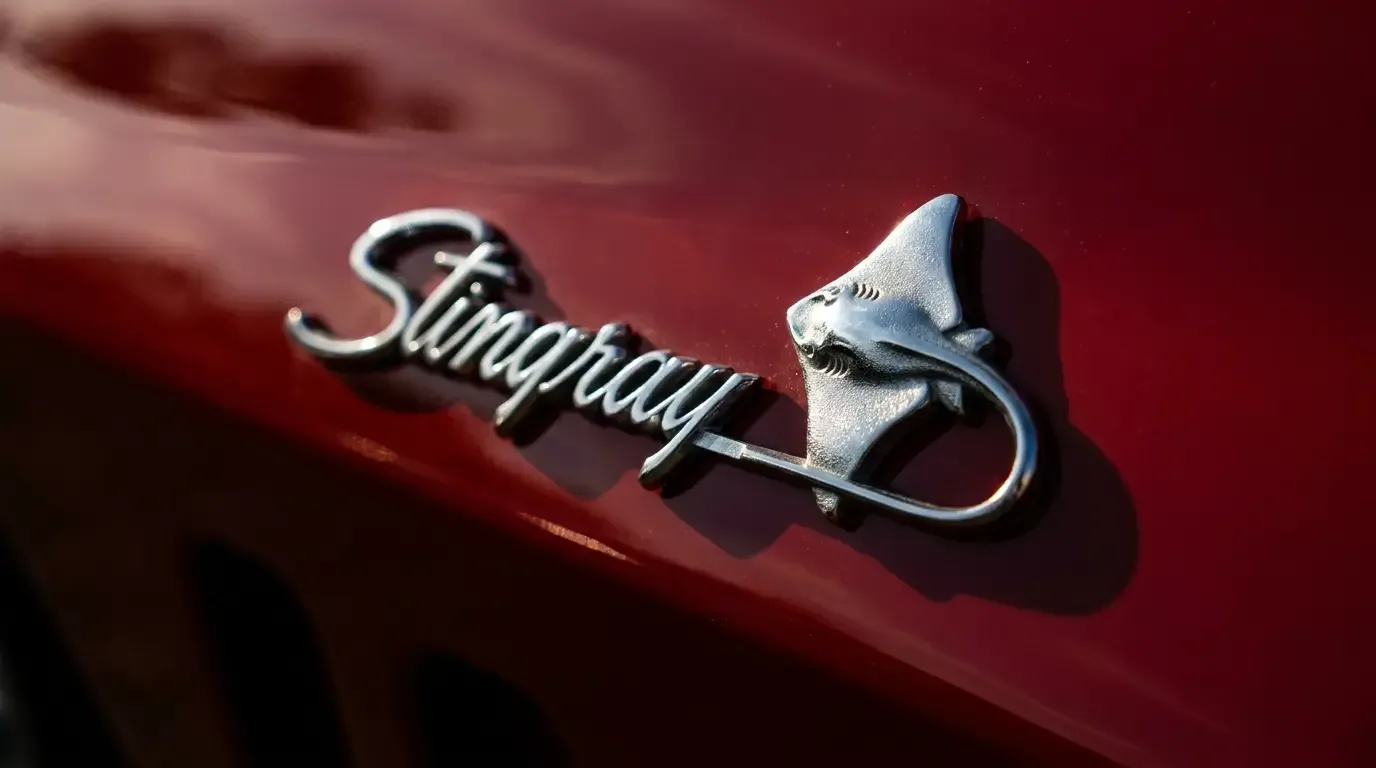
When Chevrolet introduced the C3 Corvette for 1968, the Sting Ray name was initially dropped from the car. The 1968 model used a dramatically different body style, inspired by the Mako Shark II show car, and it went out the door simply as a Corvette. Then, for 1969, the name came back but as one word: Stingray. No space between Sting and Ray. The badge appeared on the front fenders.
That one-word Stingray badge stayed through the 1976 model year, covering most of the C3 generation. It's a distinction that matters for authentication purposes because the early C3s (1968) and later C3s (1977-1982) don't carry the name, while the middle years do. The C3 ran a long time, from 1968 through 1982, so there's significant variation within the generation in terms of equipment, emissions-related power reductions, and which cars are worth pursuing versus which ones require too much work for what they cost.
After 1976, the name was retired again. The C4 Corvette, introduced for 1984, didn't use it. Neither did the C5 (1997-2004) or the C6 (2005-2013). For roughly thirty-seven years, from 1977 to 2013, Chevrolet sold Corvettes without the Stingray designation.
"Names in this hobby carry weight that specs don't. The Stingray name survived being dropped twice, and it came back stronger each time, because it meant something to the people who bought the car. That's not something a marketing department can manufacture from scratch."
— Patrick Walsh
The modern revival: C7 to today
Chevrolet revived the Stingray name for the C7 Corvette in 2014, this time applying it to the base model of the generation. The timing was deliberate: the C7 represented a significant engineering update over the C6, and pairing it with the historically significant name gave the launch a connection to the car's lineage that a new designation wouldn't have carried.
The C8 generation, which arrived for 2020 as a mid-engine car for the first time in Corvette history, also uses the Stingray name for its base model. Higher performance variants within both the C7 and C8 generations carry other names: Z06, Grand Sport, ZR1. The Stingray sits at the foundation of the lineup, which means it's the most common Corvette sold today and the most accessible entry point into the current generation.
What the name actually means
The word stingray referred originally to the marine animal, and Mitchell applied it because the race car's body shape reminded him of one. The connection wasn't just decorative. Mitchell was deeply interested in marine biology and kept aquariums. The mako shark became the basis for another set of show cars. The biological references in his work were consistent enough that they weren't accidental.
| Era | Spelling | Generation | Years active |
|---|---|---|---|
| Race car | Stingray Special | Pre-production | 1959-1960 |
| C2 | Sting Ray (two words) | C2 | 1963-1967 |
| C3 mid-era | Stingray (one word) | C3 | 1969-1976 |
| Hiatus | Not used | C3 late / C4 / C5 / C6 | 1977-2013 |
| Revival | Stingray (one word) | C7 / C8 | 2014-present |
What the name accumulated over sixty-plus years is a kind of shorthand. When someone says Stingray, they're referring to a specific feeling about what a Corvette should look like and what it should do. The race car passed it to the C2, the C2 passed it to the C3, and after the long gap it came back to the C7 carrying all of that history with it. That's a lot of weight for one word to hold, but it has held it.
Sources and notes
- Wikipedia: Corvette Stingray (concept car) — confirmed the 1959-1960 racing timeline, back-to-back SCCA C-Modified championships, and the car's role as a design precursor to the C2
- Hagerty: Instead of collecting dust, GM's 1959 Corvette XP-87 design concept went racing — confirmed Bill Mitchell's acquisition of the SS chassis and the car's unofficial, non-factory racing status
- CorvSport: Bill Mitchell's Sting Ray Racer — background on construction in GM's design studios and the "Hammer Room" origin
- Corvette Forum: Stingray Racer 1960 SCCA "C" Mod Champion — confirmed Dick Thompson's championship results and points totals
- Hagerty: Split Decision — The 1963 Corvette's special allure — confirmed the Mitchell/Duntov split-window dispute and its resolution for 1964
- Corvette C3 Decoder: Is the Corvette C3 Always a Stingray? — confirmed the 1968 badge-free year, the 1969-1976 one-word Stingray era, and the 1977 name drop
- Vettes of Atlanta: C7 Corvette FAQ — confirmed the 2014 Stingray name revival as the C7 base model