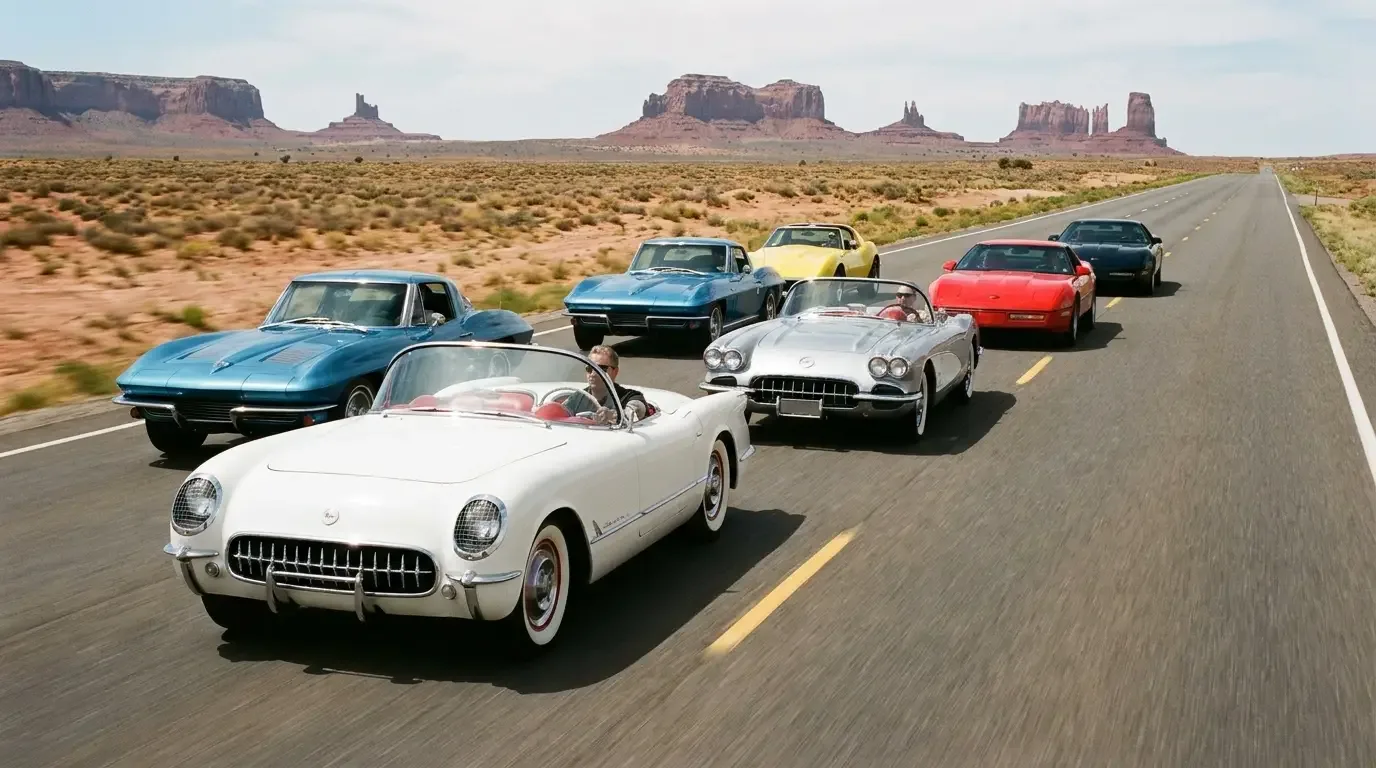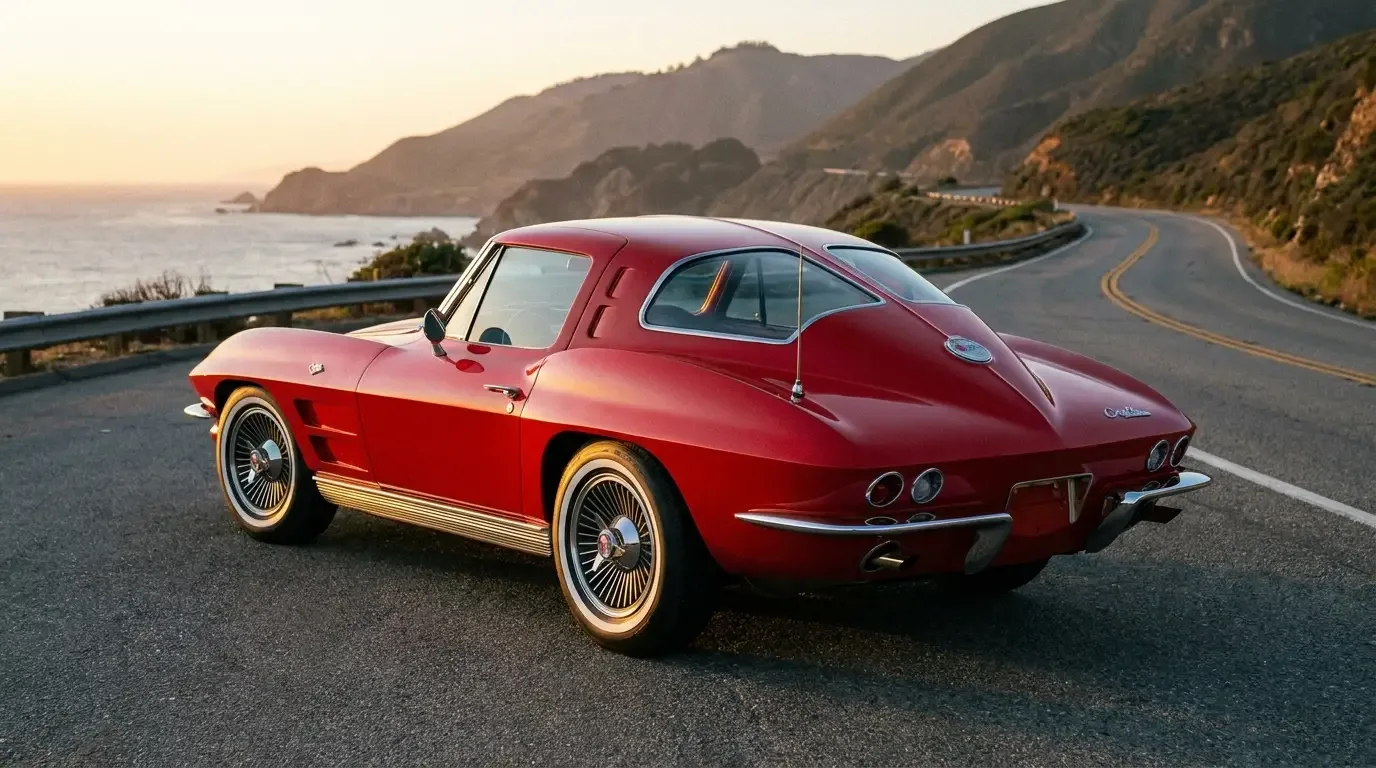
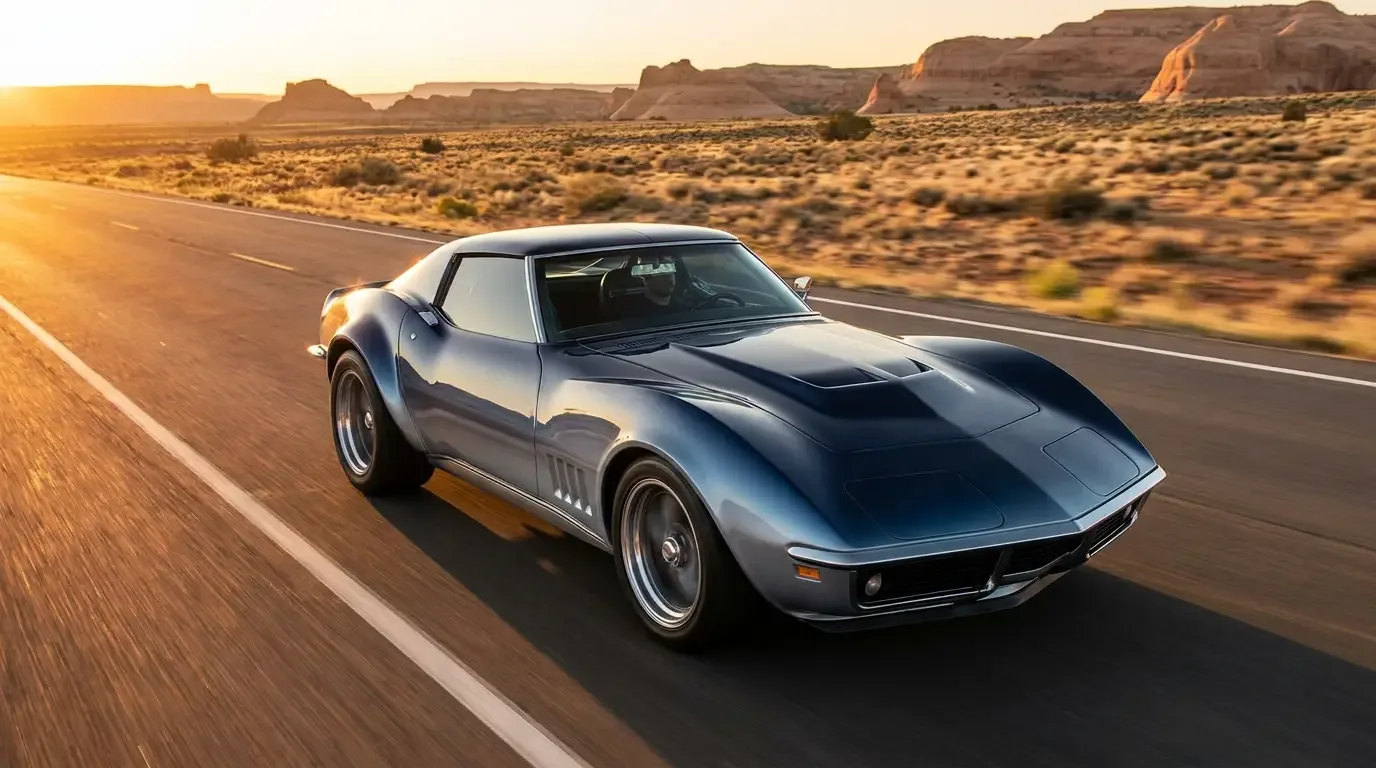
The C3 Corvette ran from 1968 to 1982, a fifteen-year stretch that no other Corvette generation has matched. It arrived as a genuinely exciting sports car, passed through some of the best performance years Chevrolet ever produced, and then endured a decade of regulatory pressure and fuel crises that stripped it of much of what made it exciting. The full story of the C3 is a story of American performance at its peak and then at its low point, often within the same generation badge. If you want to understand the full Corvette history, the C3 years are where the tension between what the car was and what the market was demanding ran highest.
The Mako Shark II and the 1968 redesign
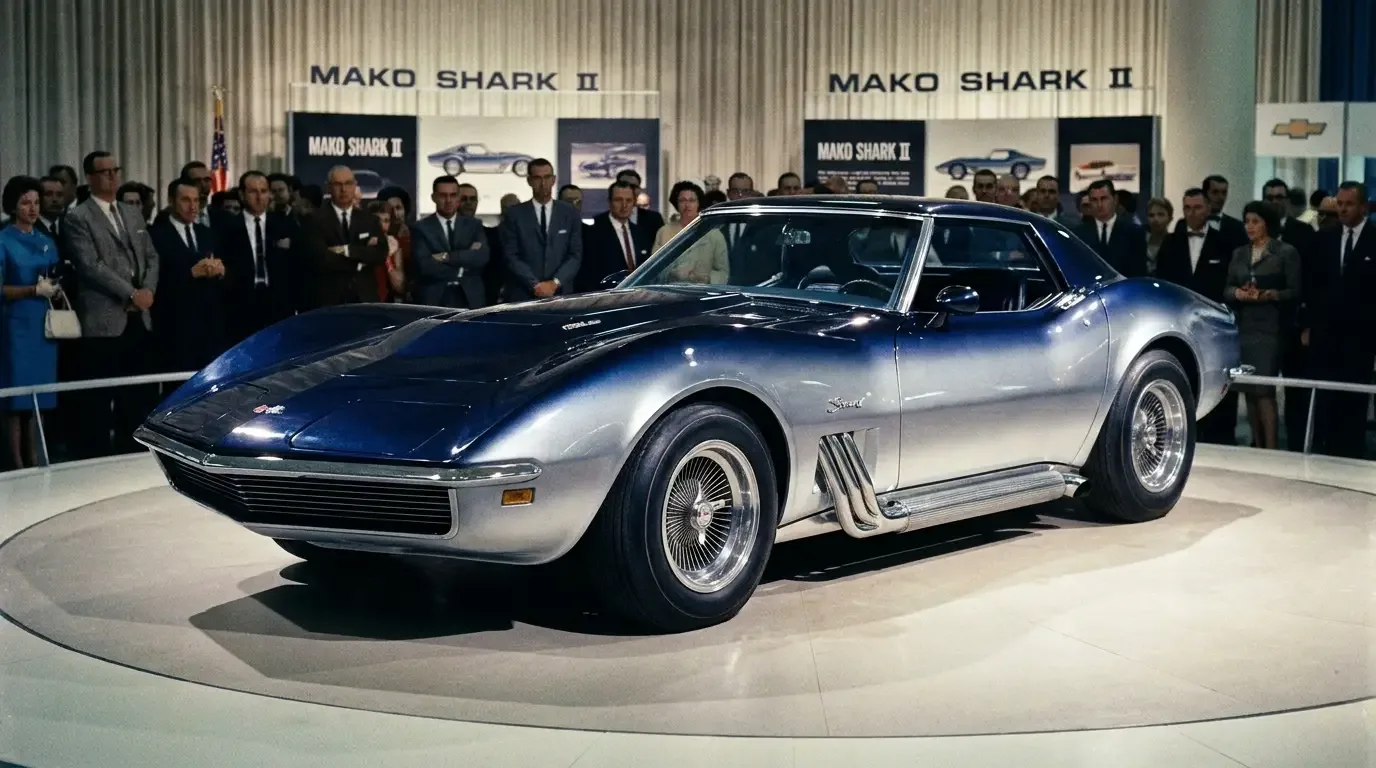
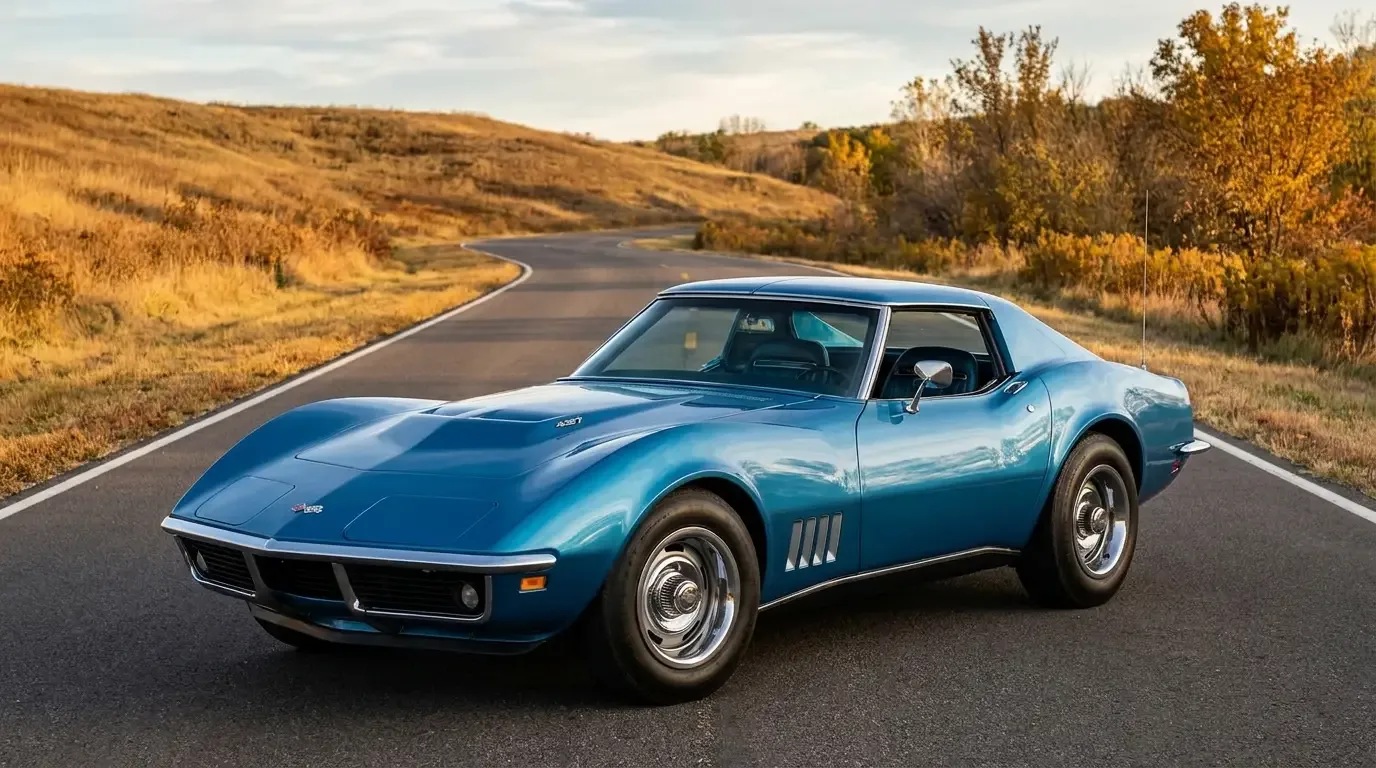
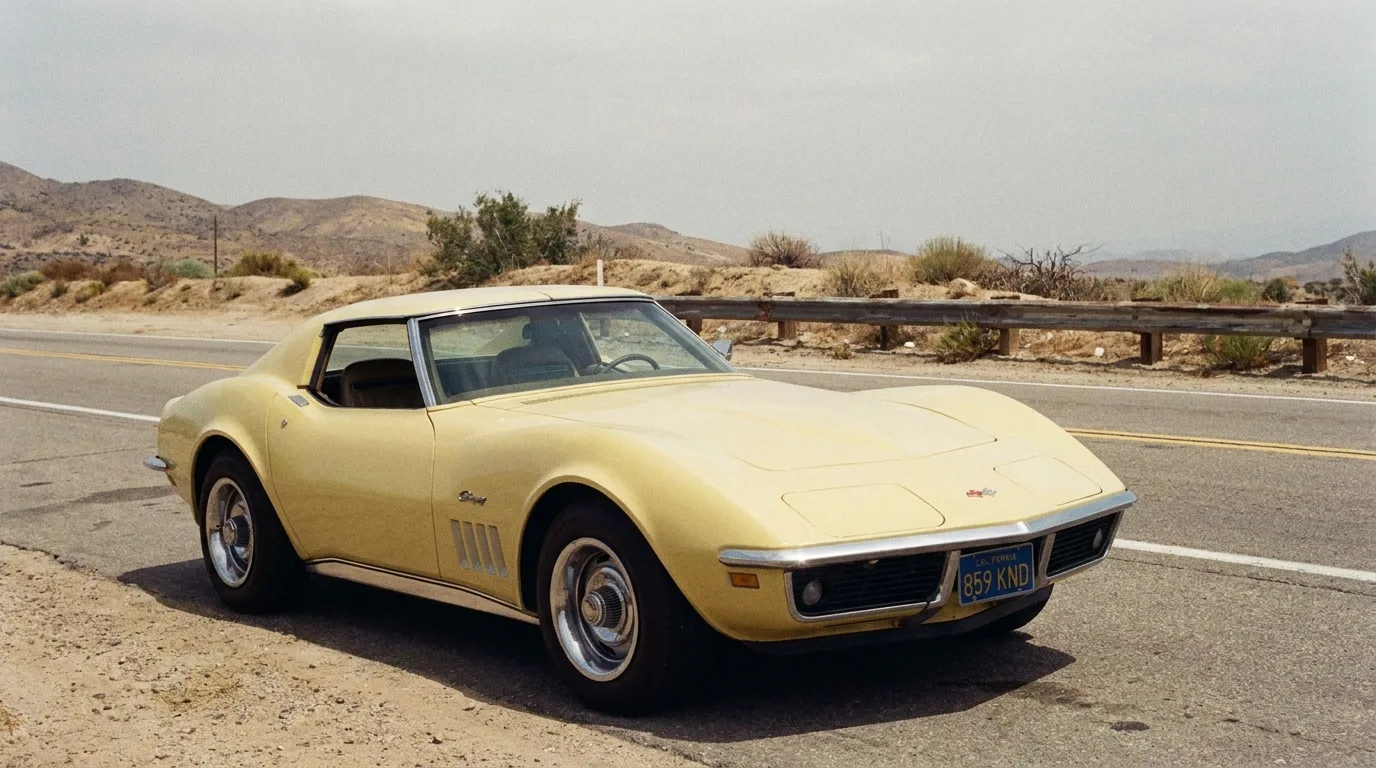
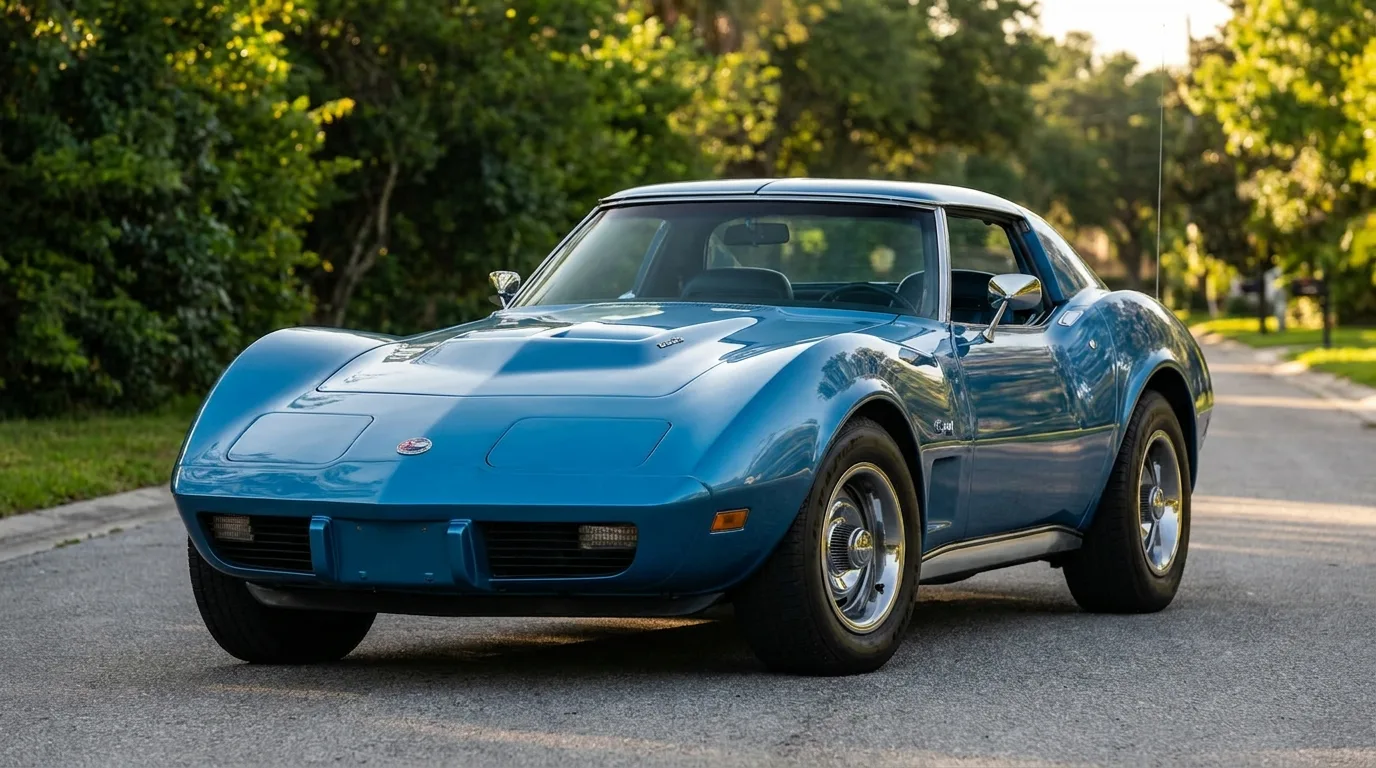
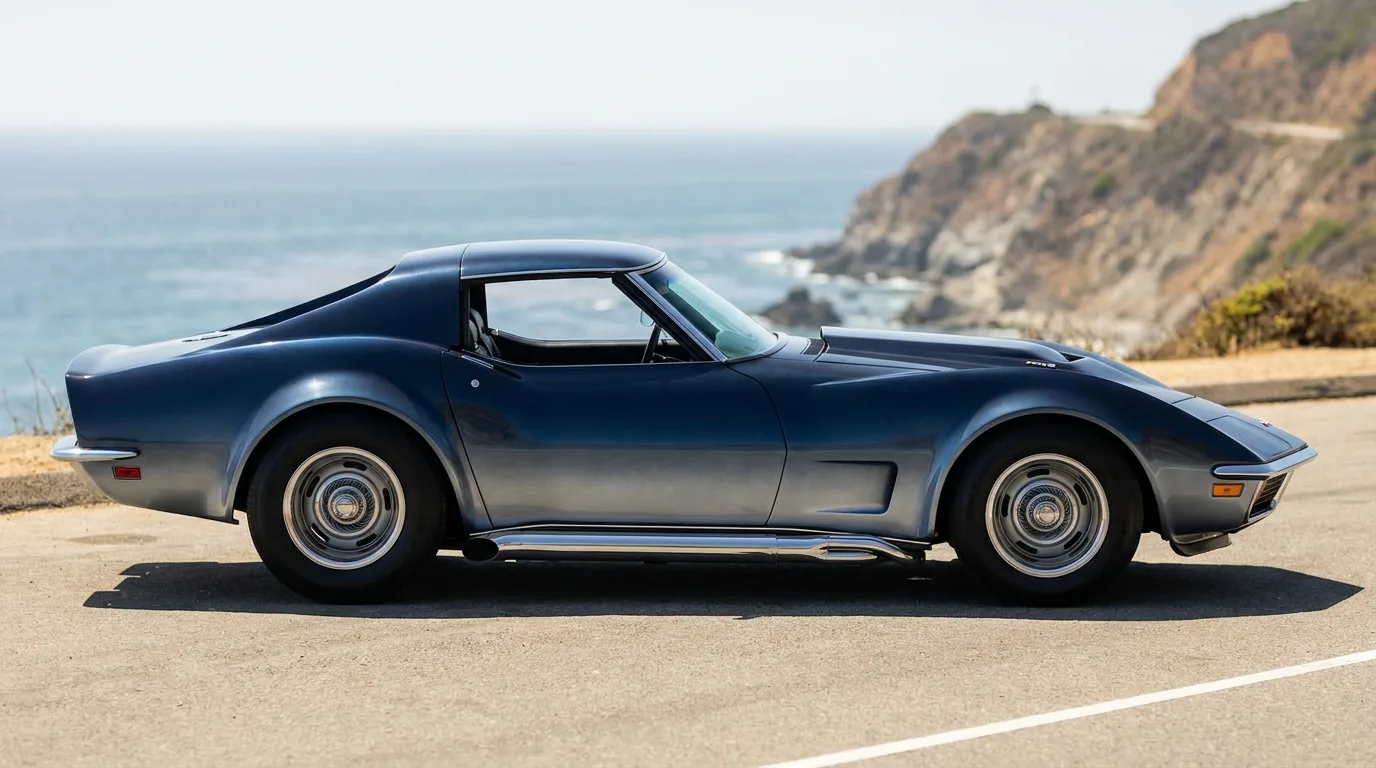
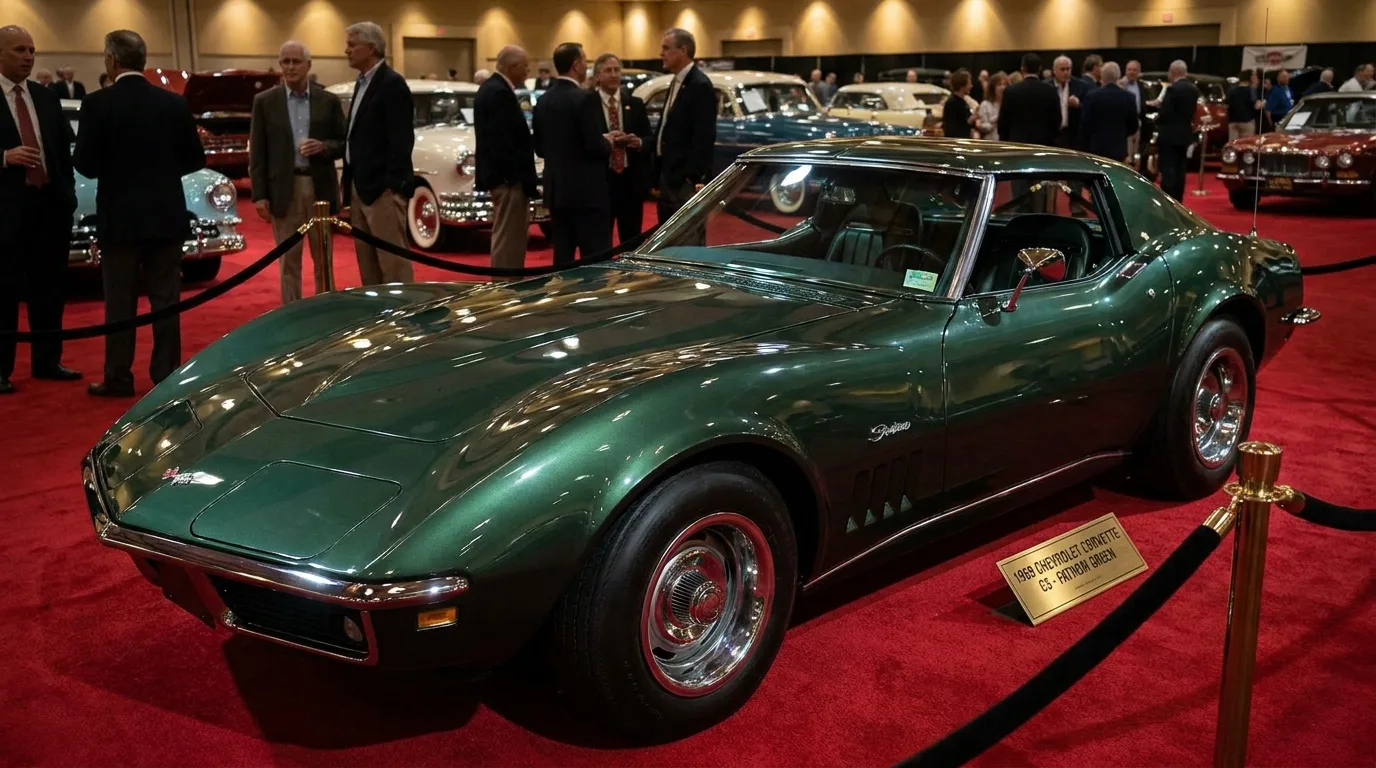
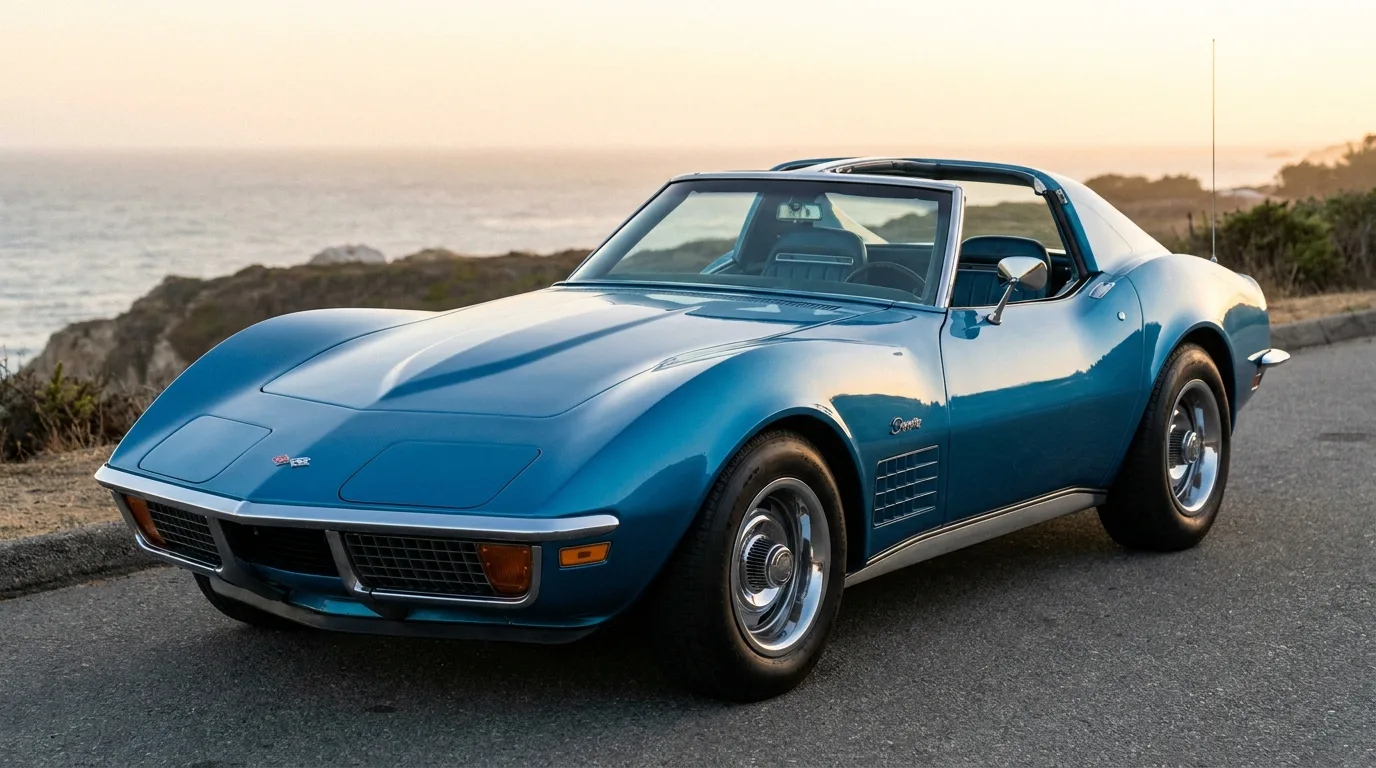
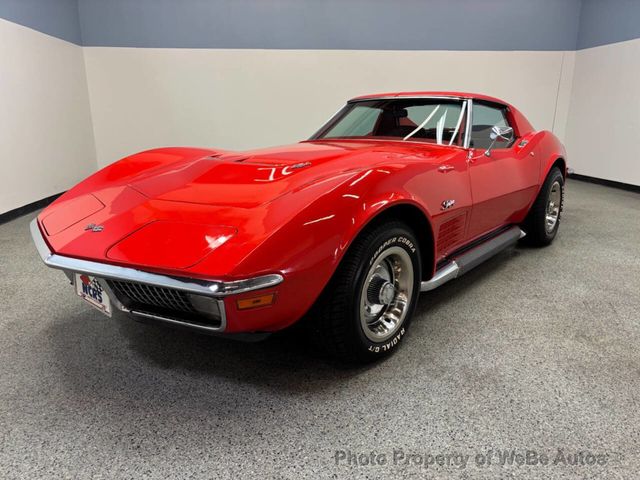
The C2 Sting Ray had been genuinely beautiful. The C3 that replaced it was more extreme. Chevrolet's chief designer Bill Mitchell had been developing the Mako Shark II show car since the mid-1960s, and the production 1968 Corvette wore its influence clearly: a wide, low hood, aggressive front fender bulges, and a tapered rear end that gave the car a silhouette unlike anything else on American roads. The chrome bumpers of the Sting Ray were gone; the body lines did the work instead.
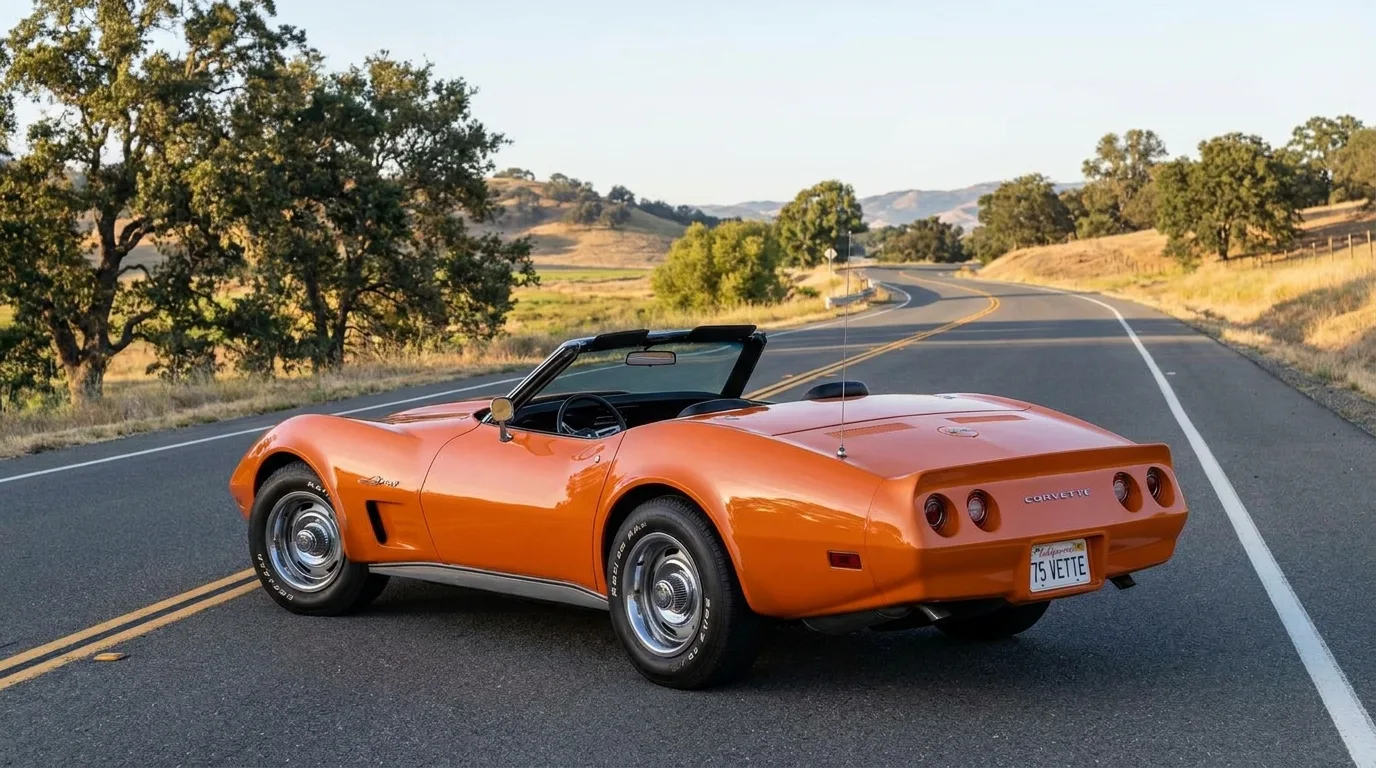
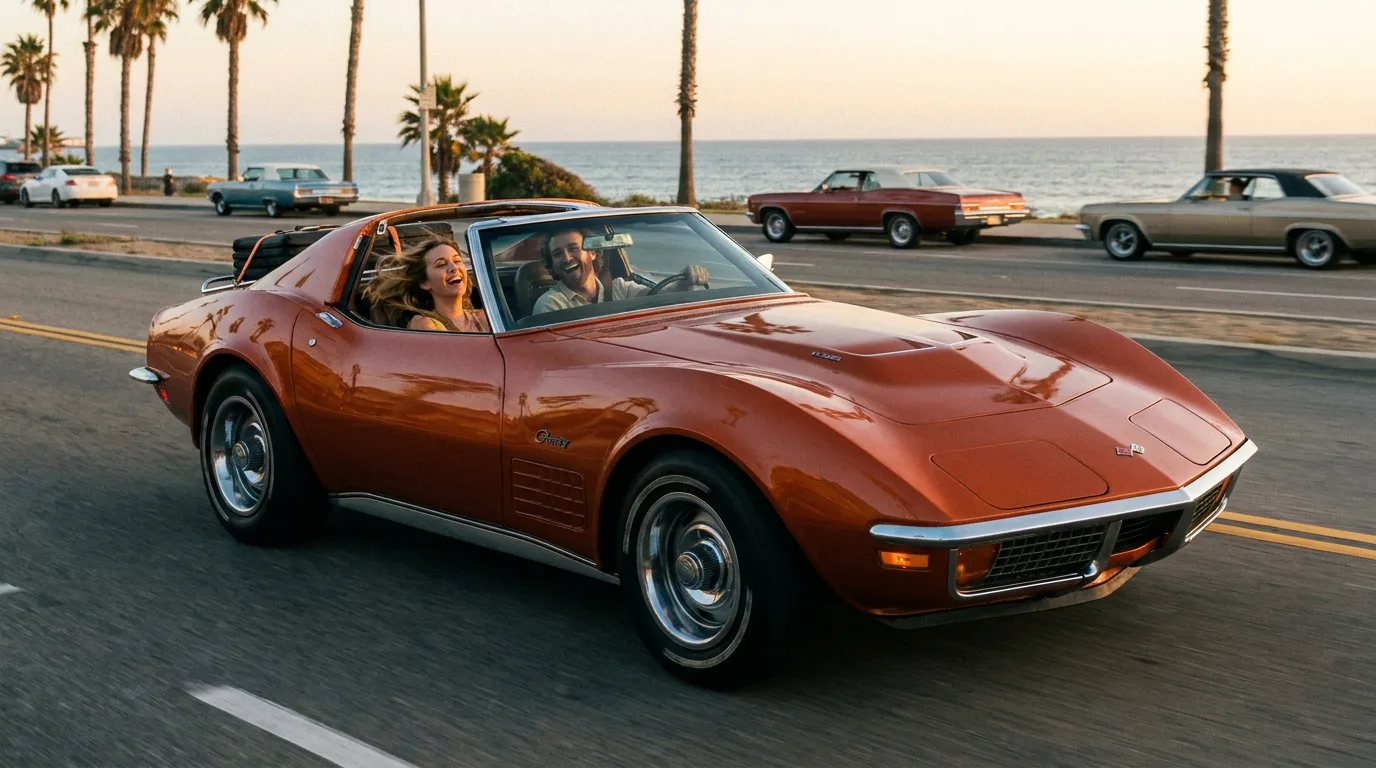
The 1968 Corvette was available as a coupe or a convertible, as the C3 would be throughout its run. The coupe used a T-top design rather than a true fixed roof, with two removable roof panels. This was a styling solution that created real-world problems: the panels leaked, the seals degraded, and the structural rigidity of the body was lower than a true coupe. These issues followed the C3 for years.
Under the hood, buyers could order the base 327 cubic inch small block in 1968, making 300 hp, or step up to a range of 427 big block options including the L88 race engine, which Chevrolet officially rated at 430 hp but which reportedly produced well over 500 hp in practice. Only about 80 L88s were built for 1968. The L88 was not meant for street use and Chevrolet made that reasonably clear in the documentation, but that did not stop buyers from ordering it for exactly that purpose.
The high-water mark: LT1, LS6, and the early 1970s
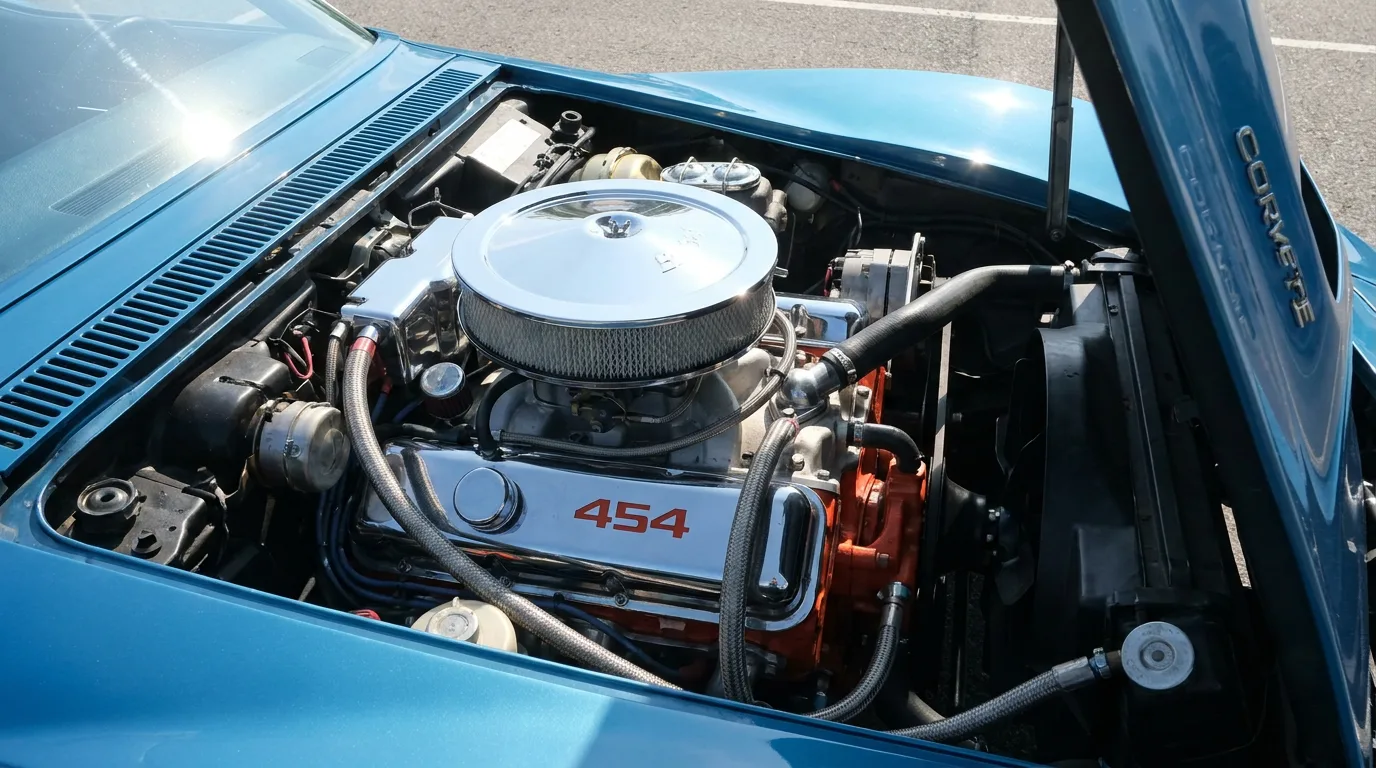
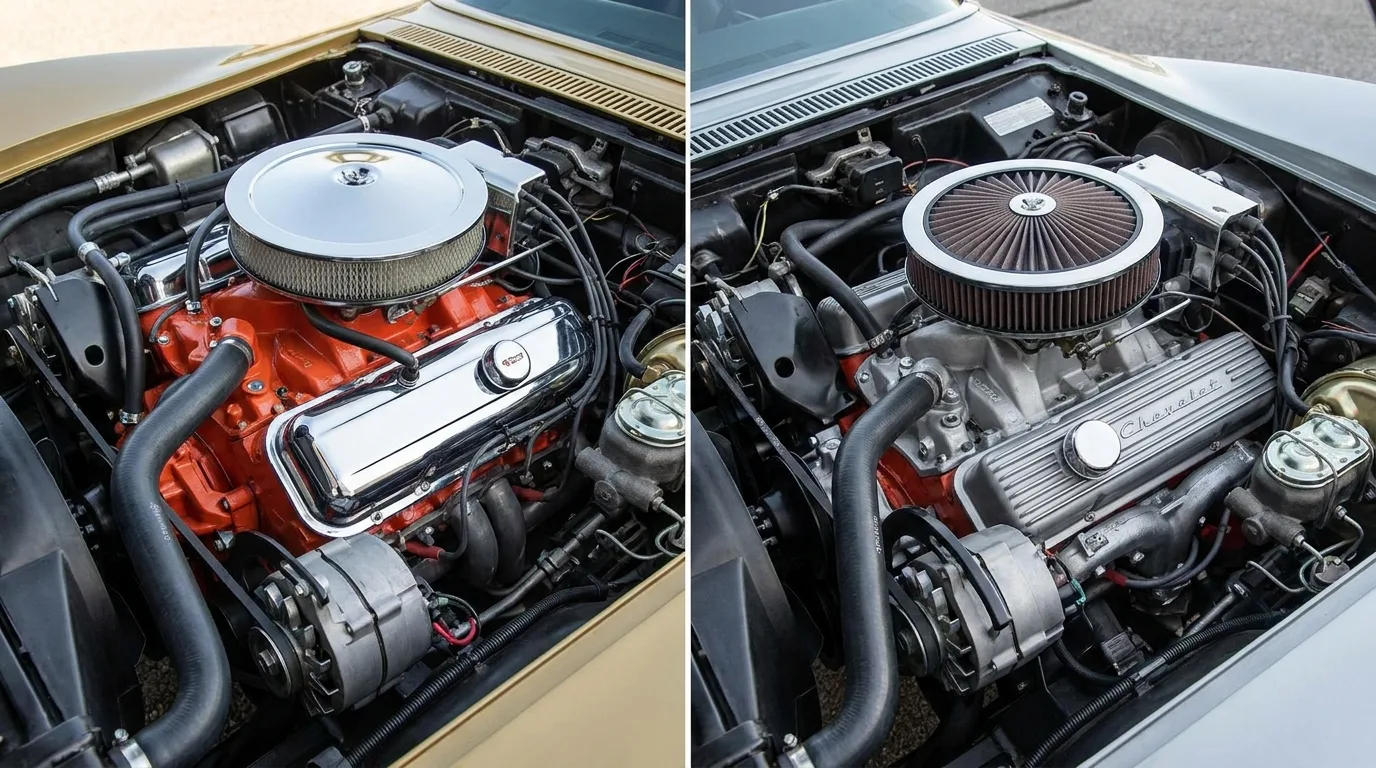
The years from 1969 through 1972 represent what most historians consider the C3's performance peak. Engine options proliferated. The 427 continued, and Chevrolet added the 454 cubic inch big block starting in 1970. The high-compression versions of these engines produced horsepower figures that would not be seen again in a Corvette for many years.
| Year | Engine / RPO | Rated power | Notes |
|---|---|---|---|
| 1970 | LT1 350 / RPO LT1 | 370 hp (gross) | Small block, solid lifter, high-rev |
| 1970 | LS5 454 / RPO LS5 | 390 hp (gross) | Big block; the LS6 option did not reach the Corvette until 1971 |
| 1971 | LS6 454 | 425 hp (gross) | Only Corvette year for the LS6; roughly 188 built, 11.25:1 compression |
| 1972 | LT1 350 | 255 hp (net) | SAE net rating replaces gross; last LT1 year |
| 1973 | L82 350 | 250 hp (net) | Compression reduced, emissions controls added |
| 1975 | L82 350 | 205 hp (net) | Catalytic converter introduced; last carbureted big block dropped |
| 1980 | L82 350 | 230 hp (net) | Base L48 rated 190 hp this year; L82 dropped after 1980 |
| 1982 | L83 350 with Cross-Fire injection | 200 hp (net) | Final C3 year; fuel injection returns for first time since 1965 |
The 1971 LS6 454 is the engine that comes up every time collectors talk about the C3's best years. The compression ratio, the solid lifter camshaft, the big-port heads: this was a purpose-built performance engine wearing street car clothes. It was a one-year-only option, with roughly 188 built, and it disappeared after 1971 as compression ratios fell industry-wide to accommodate lower-octane unleaded fuel and federal emissions requirements. The 454 that carried the LS6 name in 1970 Chevelles was never offered in the Corvette; the top big block for the 1970 Corvette was the LS5.
The LT1 small block deserves equal mention. The 1970-1972 LT1 was not a big block alternative; it was a different philosophy. High-revving, with solid lifters and a compression ratio well above what would survive the coming decade, the LT1 rewarded drivers who used it as an engine rather than a displacement statement. In 1970, a correctly optioned LT1 Corvette would run with most big block cars on a road course.
"The shift from gross to net horsepower ratings in 1972 confused buyers then and confuses collectors now. The engines did not change overnight. The LS5 454 that rated 365 gross horsepower in 1971 became 270 net horsepower in 1972 with modest changes. The number dropped; the engine did not change that dramatically. You have to read the spec sheets carefully and understand which rating system applies to which year."
— Tom Ramirez
1973 and 1974: the bumper years
Federal regulations mandating 5 mph impact-resistant bumpers arrived for front ends in 1973 and rear ends in 1974. The C3's chrome rear bumper was replaced by a body-colored urethane unit that integrated reasonably well with the existing design. The front had been revised in 1973 to accept a similar treatment. The result was a car that looked cleaner in some ways, the shiny chrome no longer interrupting the body lines, but also heavier and slightly longer.
The 1973 Corvette also saw the last of the optional removable rear window on coupes. From that point forward, the coupe's rear glass was fixed. Convertible production continued through 1975, when it was dropped, leaving the T-top coupe as the only body style for the rest of the C3's run.
Performance continued its decline through this period. The 1974 model year saw compression ratios reduced further to run on regular unleaded fuel, and the big block 454 was dropped after 1974. The LS4 version of the 454 that powered 1974 cars was already a shadow of the LS6 from four years earlier: lower compression, hydraulic lifters, and output measured in the new net rating system that made every number look worse than before.
The malaise years: 1975-1977
Calling the mid-C3 years the "malaise era" is accurate and not entirely fair at the same time. The cars were slower than what came before. Horsepower ratings dropped into the low 200s and, for a brief period, below that. The 1975 base L48 350 produced 165 hp net. The catalytic converter arrived that year, and leaded fuel options disappeared from Corvette spec sheets. The standard transmission became a four-speed manual, but the base engine no longer made the car feel quick.
What the malaise-era C3 retained was the shape. The body still looked like a serious sports car even when the mechanicals underneath could not fully support that claim. Sales held up well through this period, which tells you something about how much the styling carried the nameplate. Buyers were purchasing the idea of the Corvette as much as its measured performance.
The interior had its own issues. The C3's cockpit had always been cramped and visibility was poor, qualities that the styling-forward design had built in from 1968. Through the mid-1970s, the interior materials declined in quality along with everything else, and the ergonomics did not improve. The steering wheel was large and the controls were laid out for style rather than function.
The 1978 fastback restyle and Silver Anniversary
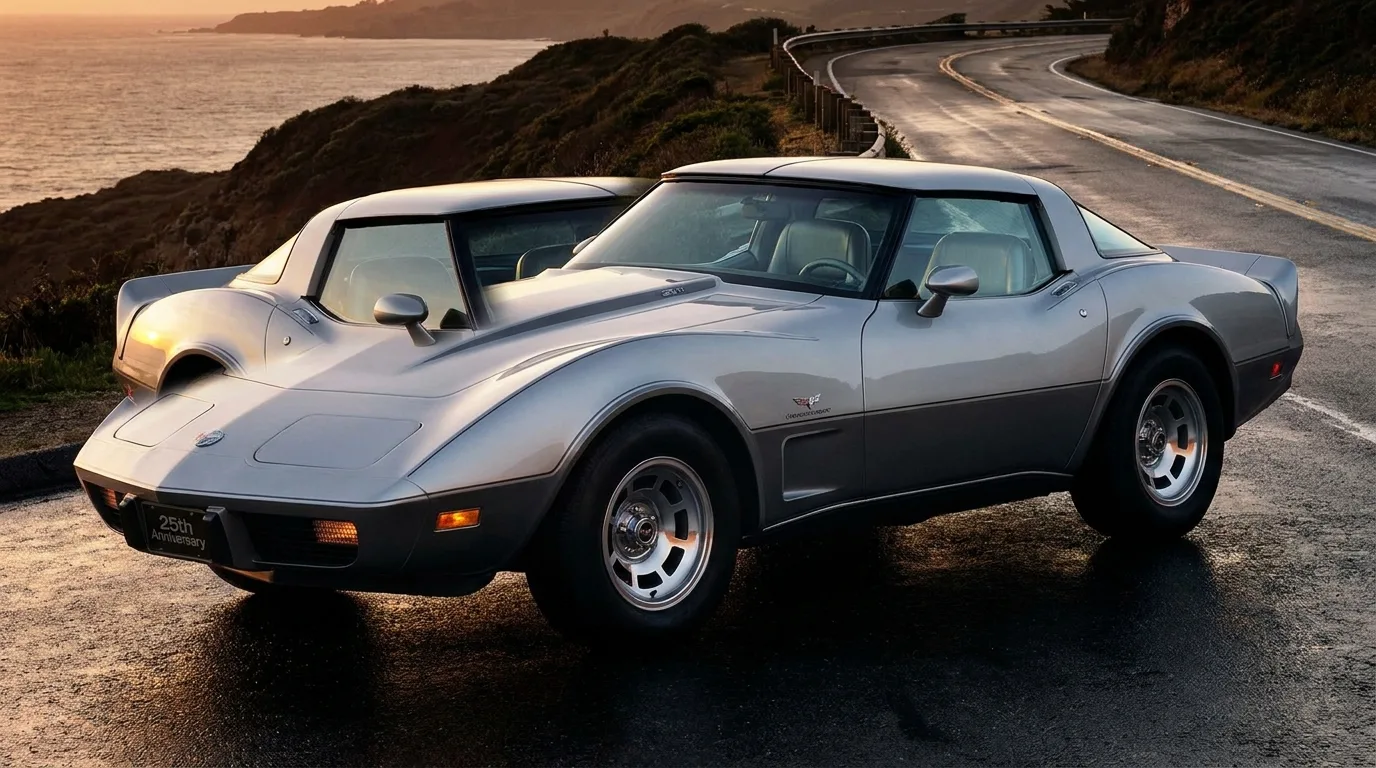
For 1978 Chevrolet gave the C3 its most significant update since the 1973 bumper revision. The rear roofline was reshaped into a fastback profile with a large wraparound rear window, replacing the flying buttress design that had characterized the car since 1968. The change improved rearward visibility and gave the C3 a cleaner overall silhouette. Most observers consider the post-1978 cars better looking than what came before, though this is an argument that has been running in Corvette circles since the car launched.
The 1978 model year also marked the Corvette's 25th anniversary, and Chevrolet produced a Silver Anniversary edition in a two-tone silver and gray paint scheme. A Pace Car replica edition commemorated the car's role as the Indianapolis 500 pace car that year, finished in two-tone Tuxedo Black and Silver Metallic with a red accent pinstripe. Chevrolet originally planned a run of around 300 Pace Car replicas but ended up building 6,502 to meet dealer demand, so the edition was produced in far higher numbers than some replicas of this type, and the market for them today reflects that relative availability.
Performance improvement was minimal in 1978. The L82 option engine produced 220 hp net, which was a real-world improvement over the low point a few years earlier but still far below what the early C3 had offered. The L48 base engine was rated 185 hp net (175 hp in California and high-altitude trim). The C3 was approaching the end of its run, and the engineering resources that might have addressed the power deficit were already being directed toward what became the C4.
The final years: 1979-1982
The last four years of the C3 saw incremental changes but no fundamental revision. Horsepower crept upward slightly as Chevrolet found small improvements within the constraints it was working under, but the character of the car remained what it had been since the mid-1970s: a visually dramatic machine with performance that its appearance overpromised.
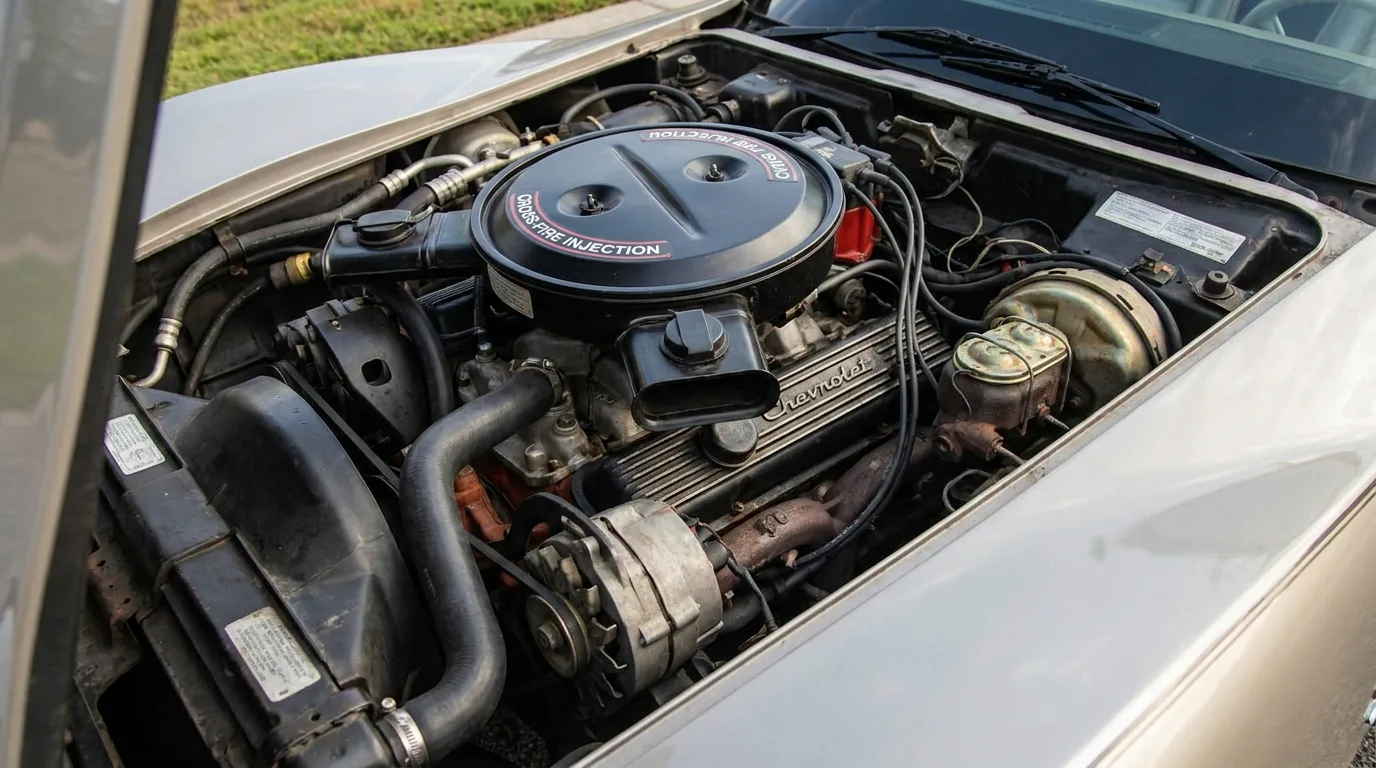
The 1982 model year brought the most technically interesting change of the late C3 period: fuel injection returned to the Corvette for the first time since 1965. The Cross-Fire injection system, using two throttle-body injectors rather than carburetion, produced 200 hp from the 350 small block, the highest output for a small-block Corvette in nine years. This was not a dramatic performance improvement over the outgoing carbureted setup, but it was a signal that Chevrolet was moving the car back toward genuine performance. What the Cross-Fire system mainly did was improve fuel economy and cold-start behavior, both real-world concerns for a car that people drove year-round.
No Corvette was sold to the public as a 1983 model. The C4 development was running behind schedule, and rather than release an unfinished car, Chevrolet skipped the 1983 model year for retail sales. Sixty-one serial-numbered 1983 cars were built as prototypes and pilot-line test units, and nearly all were destroyed under standard GM procedure; a single white pilot-line survivor escaped the crusher and is now on permanent display at the National Corvette Museum. The C4 arrived for 1984 as a completely new platform. If you want to follow what happened next, the C4 comeback is a documented turnaround in American sports car engineering.
The longest generation and what it means for collectors
Fifteen years is a long time for any car to stay in production, and the C3's fifteen-year run reflects both the strength of the design and, honestly, the lack of resources Chevrolet was able to allocate to a replacement during a difficult period for the American auto industry. The same basic body structure that debuted in 1968 was still in production in 1982, with updates rather than replacements. By the end, the car was showing its age in ways that newer European sports cars made obvious.
For collectors today, the C3 presents a range as wide as its production run. An early big block car with documented provenance is a different proposition entirely from a 1979 base engine coupe. The high-output years of 1969-1972 command the strongest prices and the most collector interest, and within those years, the low-production, high-option cars with documented history command premiums that reflect how few survived unmodified. The middle years of the decade are the most affordable entry points into C3 ownership, and the 1978-1982 cars offer the most daily-drivable experience at generally lower prices than the earlier models.
If you are ready to start looking at the market, C3 Corvettes for sale span the full range from project cars to documented numbers-matching examples, with prices that reflect exactly where in that fifteen-year run the car sits.
Sources and notes
- Chevrolet Corvette (C3) — Wikipedia — confirmed the C3's 1968-1982 production span, the 1971-only LS6 option, and the 1975 convertible discontinuation.
- Hagerty Insider — 1971 vs. 1972: How the Horsepower Ratings Change Impacts Value — confirmed the LS5's 365 gross hp (1971) to 270 net hp (1972) figures and the gross-to-net ratings transition.
- CorvetteForum — Award-Winning 1971 Corvette LS6 Is One of Just 188 Built — confirmed LS6 was a 1971-only Corvette option with roughly 188 units built.
- Hagerty Media — Crush Them All: Every 1983 Corvette Was Destroyed, Well All But One — confirmed the 61 serial-numbered 1983 prototype/pilot cars and the sole surviving example now at the National Corvette Museum.
- Vette Vues — 1978 Corvette Pace Car Overview and Specifications — confirmed the Tuxedo Black/Silver Metallic paint with red pinstripe and the expanded 6,502-unit Pace Car replica production run.
- Corvette Report — 1982-1984 Corvette Cross-Fire Injection: GM's EFI Gamble — confirmed the 1982 Cross-Fire L83's 200 net hp rating.