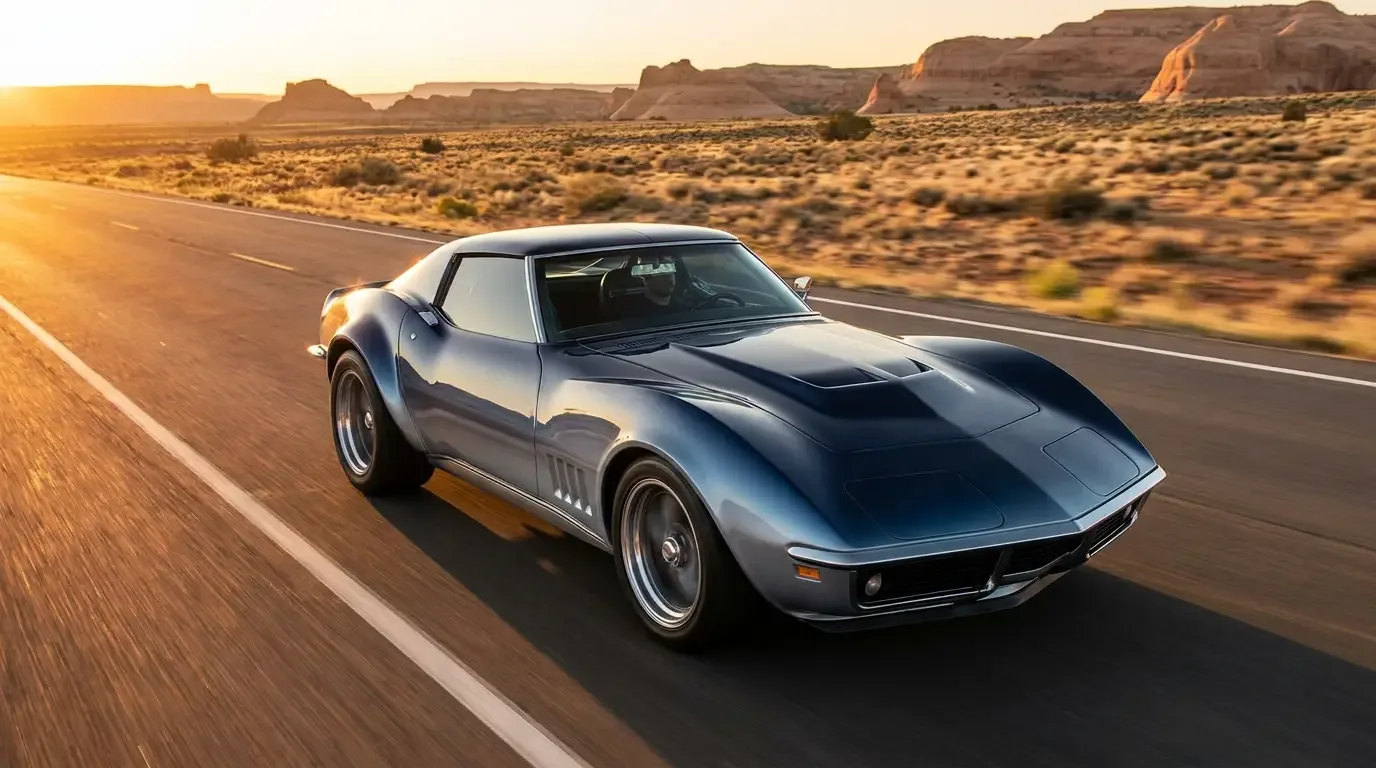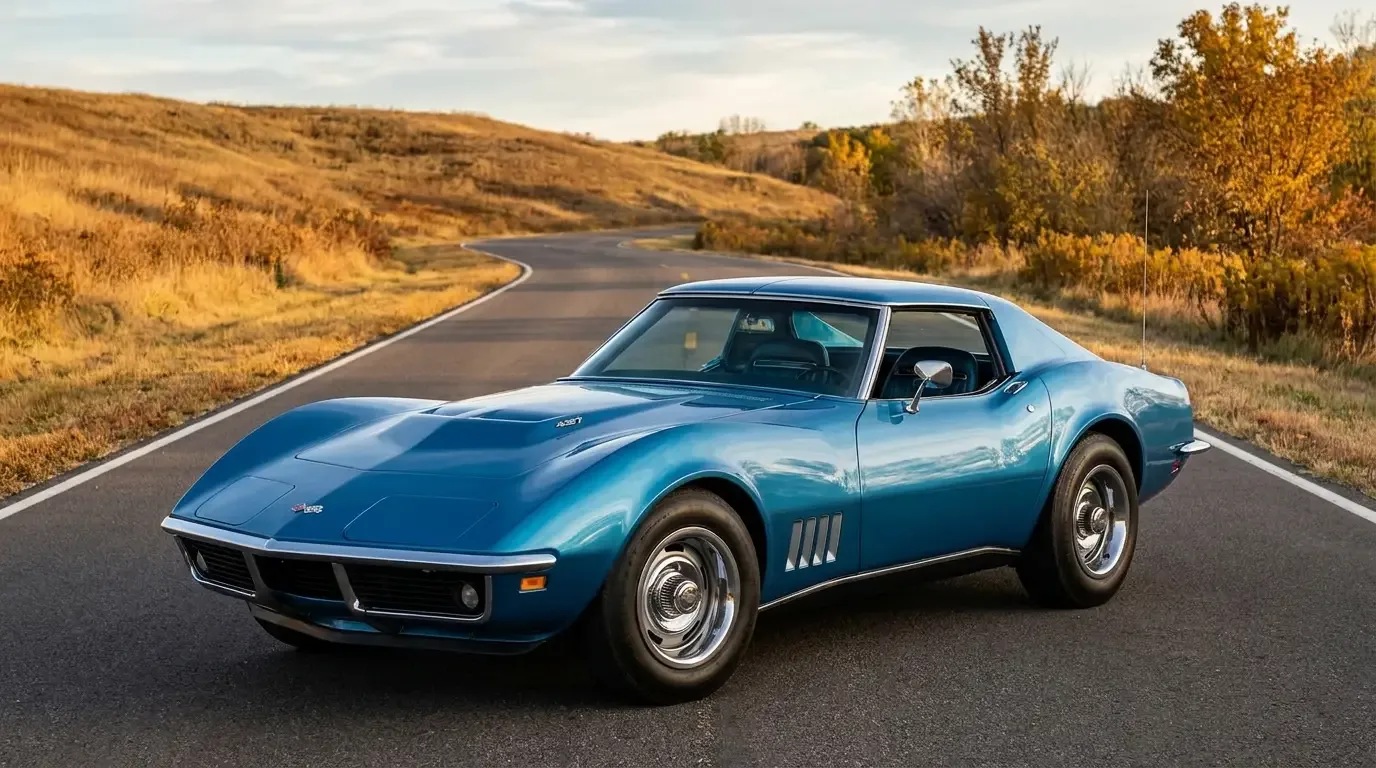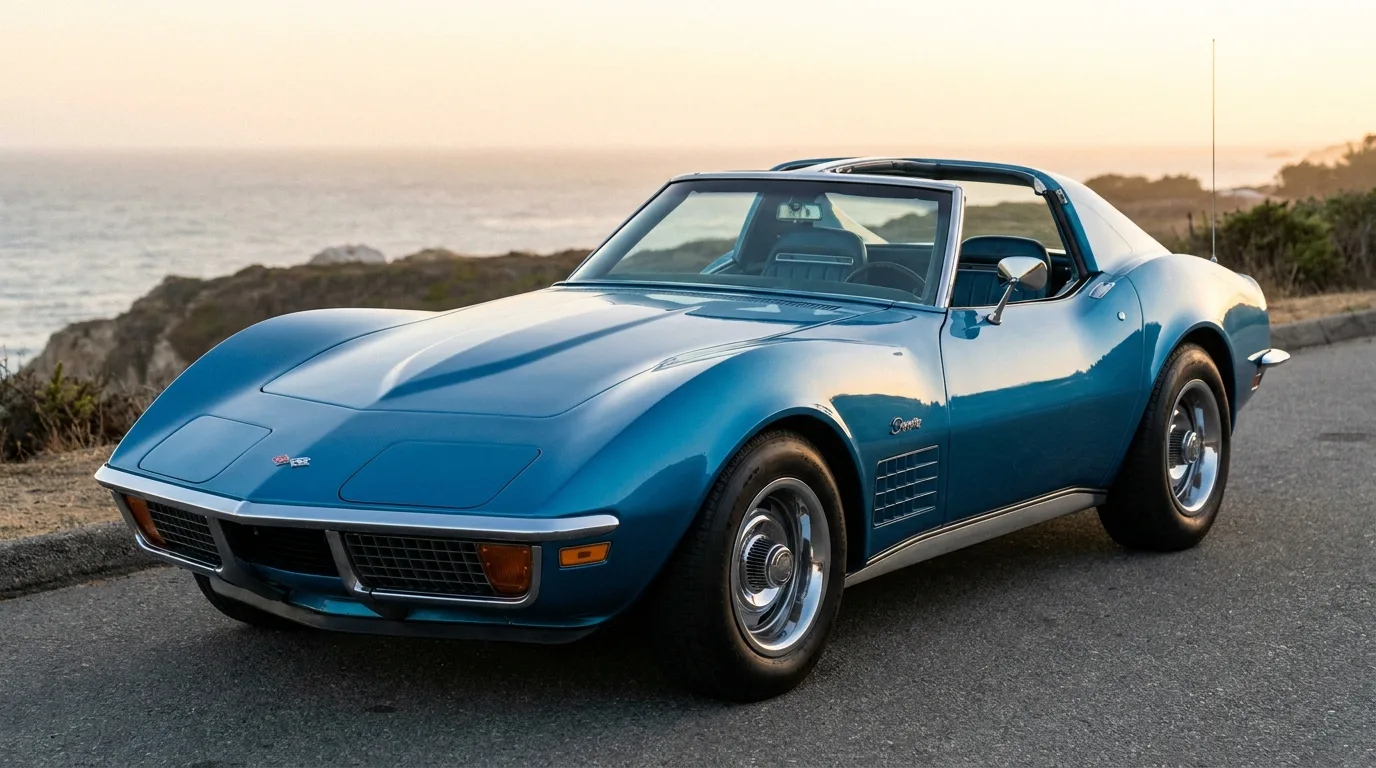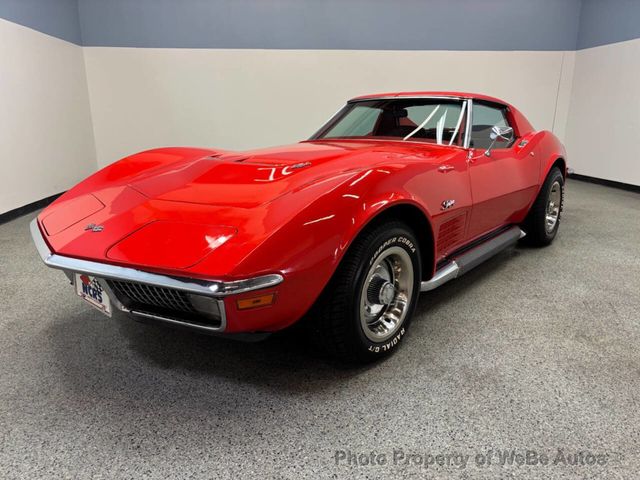
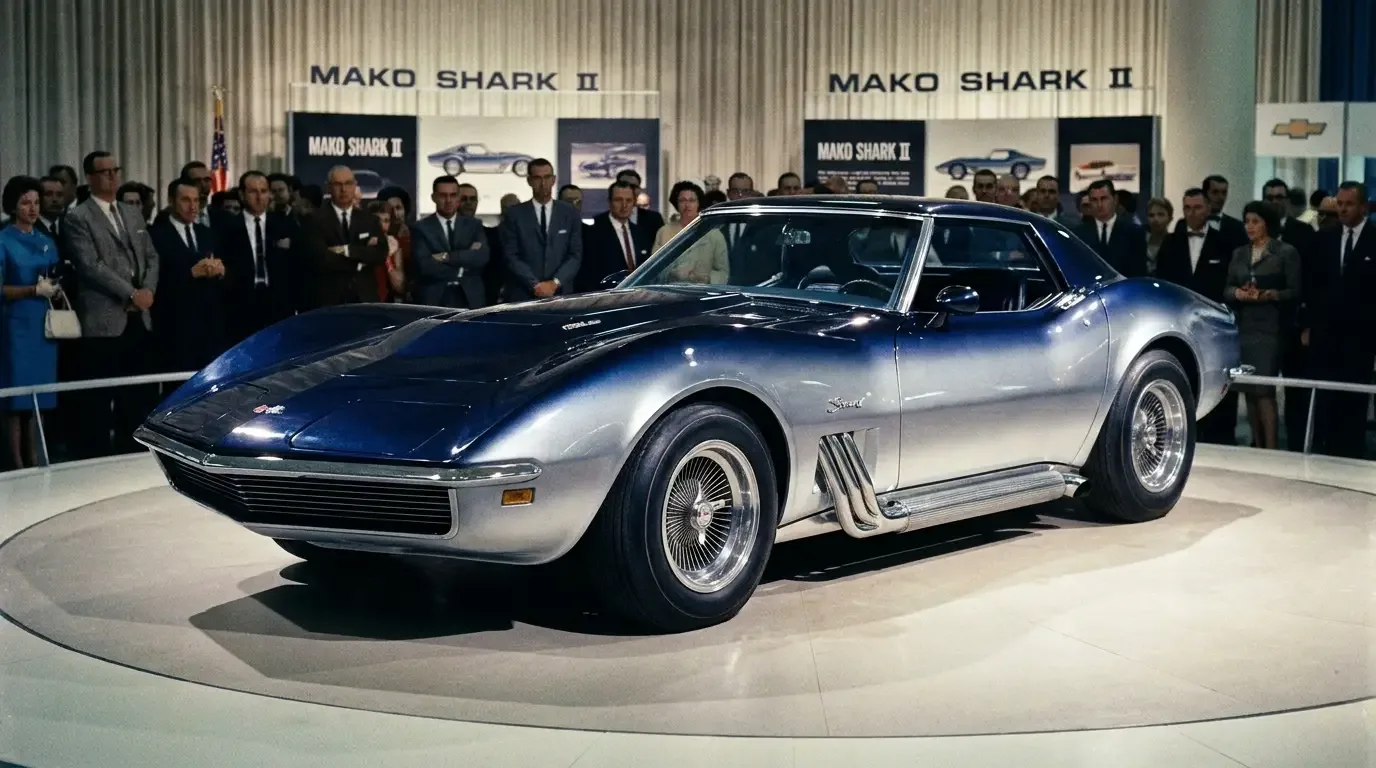
The Mako Shark II did not start life as a production car. It started as a statement. When GM's Advanced Design Studio rolled it out in 1965, the intent was to show the direction Corvette styling would take, not to hand buyers something they could register and drive. What happened next is the part that matters: the production C3 Corvette, launched for 1968, came close enough to that show car that people still argue about which is more dramatic.
Understanding the Mako Shark II and its connection to the C3 is not just a design history exercise. It explains why the third-generation Corvette looks the way it does, why the proportions feel so specific, and why certain production compromises disappointed the people who had seen the show car first. If you want to understand the history of the Corvette, the Mako Shark II is where the C3 chapter begins.
The car that became the template
The Mako Shark II was designed under Bill Mitchell, GM's Vice President of Design and a man who brought genuine personal obsession to his work. Mitchell had a mounted mako shark in his office, and the color gradation on the show car, fading from dark blue-black on top through blue-gray to lighter silver-white on the lower body, was his deliberate attempt to replicate the shark's coloring. The story is well documented: he sent the show car back to the paint shop multiple times until the shading matched the fish he had on his wall.
The car itself was built on a shortened C2 chassis and carried a body shaped by Larry Shinoda, who translated Mitchell's vision into metal. The proportions were aggressive: a long hood, dramatically truncated tail, deeply sculpted body sides with tunneled headlights, and a roofline that sat extremely low. Chevrolet built two versions for the 1965 tour: a non-running display car and a fully functional car powered by a 427 cubic inch Mark IV big block V8, though the specifications quoted at auto shows were not always consistent across the car's touring life.
GM showed the Mako Shark II at the New York Auto Show in April 1965, with the running version appearing later that year at the Paris Motor Show, where it became one of the more photographed concept cars of the decade. The question that followed it everywhere was whether Chevrolet would actually build something like it. The answer, eventually, was yes, with modifications.
How the C3 translated the show car
The production 1968 Corvette kept the essential silhouette: the long hood over a short cockpit, the tunneled instrument panel and cockpit feel, the dramatic body curves. What it could not keep was the extreme lowness of the roofline. A show car built for display does not need to accommodate a driver's head with any real margin; a production car does. The C3's roofline came up relative to the concept, and the windshield angle changed with it.
The tunneled headlights, which gave the show car some of its most distinctive front-end character, were replaced by hidden headlamps that rotated open in the production car. Practical considerations drove this: fixed tunneled lamps were a styling exercise the production engineering team could not translate at reasonable cost and with acceptable function. The hidden units were a reasonable compromise and became one of the C3's signature visual features in their own right.
Body side sculpting followed the concept's general direction but was modified for production tooling. The deeply channeled sides of the show car required hand fabrication; the production car's shaping was achievable with the stamping technology of the period. Enthusiasts who had seen the Mako Shark II at auto shows noted the differences. Some felt the production car had been softened. Others, looking at it without the comparison in mind, thought it was still the most aggressive production car on American roads.
You can read read the related story on the 1968 Corvette's complicated production launch, which had its own set of problems separate from the design translation. The first model year was troubled enough that some buyers and journalists felt the car had been rushed, and the story behind that launch is worth understanding separately from the styling question.
| Car | Year | Status | Engine | Notes |
|---|---|---|---|---|
| Mako Shark II | 1965 | Show car | 427ci Mark IV V8 | Designed by Larry Shinoda under Bill Mitchell |
| Manta Ray | 1969 | Show car (same vehicle, updated) | All-aluminum ZL-1 427ci V8 | Mako Shark II renamed and restyled for continued touring |
| C3 Corvette (1968) | 1968 | Production | 327 or 427 V8 | First production year; body based on Mako Shark II direction |
| C3 Corvette (1969-1977) | 1969-1977 | Production | Various, up to 454 V8 | Refinements through the generation; smog-era detuning from ~1972 |
What the design lineage means for collectors
The Mako Shark II's influence shows up most clearly in early C3 production, from 1968 through the early 1970s, before the body received its most significant facelift for 1973 (when the soft nose arrived to meet federal bumper standards). The 1968-1972 cars carry the most direct visual connection to the show car: chrome bumpers, the original front-end character, and body proportions that track closest to what Mitchell and Shinoda had drawn.
If you are shopping early C3 Corvettes and want the cars that most directly express the Mako Shark II design, the pre-1973 examples are the ones to focus on. The 1973 and later cars have real qualities of their own, and the later body is not worse, but it is a different visual statement. The federal bumper requirements that reshaped the nose for 1973 and the tail for 1974 moved the car away from the pure concept-to-production translation that the earlier cars represent.
For anyone researching the c3 corvette story in depth, the Mako Shark II is the natural starting point. The design decisions made in that 1965 concept determined C3 character for the entire 1968-1982 production run, even as the car evolved through emissions regulations, safety standards, and market changes.
"The tank sticker and the build records tell you what Chevrolet actually shipped. The Mako Shark II tells you what the designers intended. Reading both together is the only way to understand why the C3 looks the way it does."
— Tom Ramirez
Buying a C3 with the design story in mind
The design lineage does not change what you look for mechanically in a C3, but it does help frame which examples carry the most historical weight. Collectors drawn to the Mako Shark II connection specifically will want the 1968-1972 body style, chrome bumpers intact, and preference for early 1968 or 1969 examples with the original front-end treatment.
Early C3s carry known structural concerns that have nothing to do with their design heritage. The birdcage frame, which is the inner structural cage to which the fiberglass body panels attach, can corrode badly, and repair is not cheap. This is the first thing a pre-purchase inspection should address. A car with beautiful paint sitting over a deteriorated birdcage is a much larger project than its appearance suggests.
If you are ready to start looking at actual cars, C3 Corvettes for sale on the listing side let you filter by year range, condition, and price so you can focus on the pre-1973 examples that carry the strongest design connection to the show car.
Price ranges for driver-quality early C3 Corvettes currently run from roughly $15,000 to $45,000 depending on condition, matching numbers, and engine specification, with well-kept #2-condition chrome-bumper cars (1968-1972), especially documented big-block examples, reaching into the $45,000 to $85,000 range according to Hagerty's valuation data. Base small-block models and non-numbers-matching cars come in at the lower end. High-option, documented, numbers-matching 1969 or 1970 examples with big-block engines command premium prices well above the driver-quality range. Prices move with the broader collector market, so treat these as a general guide rather than a fixed number, but early C3s remain a comparatively attainable entry into the design era that the Mako Shark II defined.
Sources and notes
- Wikipedia: Mako Shark (concept car) — confirmed the 427ci Mark IV V8 in the running 1965 show car, the April 1965 New York Auto Show debut, the Paris Motor Show appearance, and the 1969 transformation into the Manta Ray with an all-aluminum ZL-1 427 engine
- GM Heritage Center: 1969 Chevrolet Manta Ray Concept — confirms the Mako Shark II was returned to GM Design and restyled into the Manta Ray
- Hagerty: 1968-82 Chevrolet Corvette (C3) buyers guide — confirmed current driver-quality and #2-condition price ranges for early chrome-bumper C3s
- Hagerty: Why the C3 Corvette's bad rap is beginning to fade — corroborates 1968 production figures and market positioning of early C3s
- Corvsport: 1968 Corvette Common Issues — confirmed the rushed 1968 launch, torsional stiffness problems, and the mid-year T-top fix that started production in January 1968
- Vettes of Atlanta: C3 Corvette FAQ, the Early Chrome Bumper Years (1968-1972) — corroborated early production quality issues and the 1969 refinement round