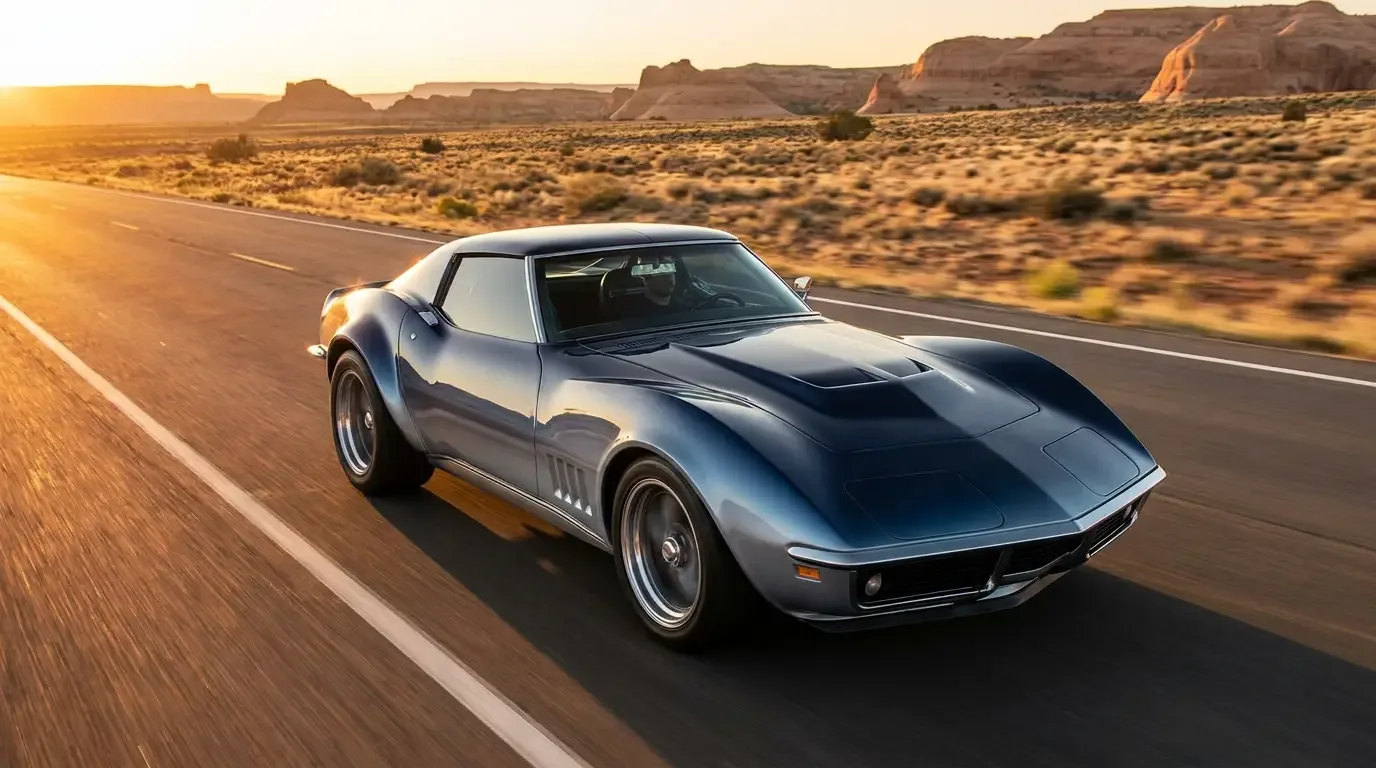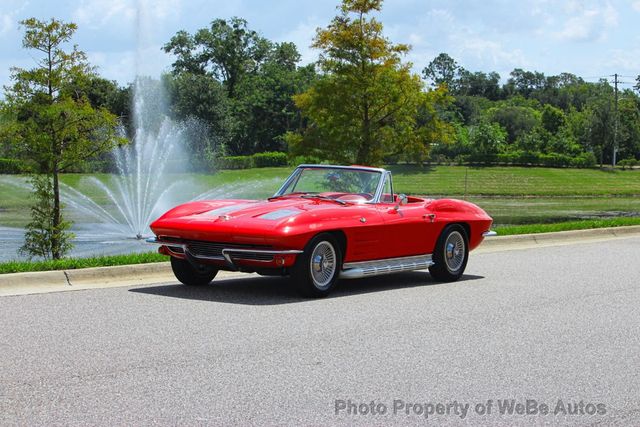
The LT1 is one of those factory options that gets overshadowed in the Corvette conversation because its running mates were so loud about it. Nineteen seventy brought the LS5 454 big-block and the legendarily rare LS7, and most of the ink went to cubic inches. What that left behind was a small-block engine that, by any fair measure, was the best-performing production small-block Chevrolet had ever installed in a car at that point. The LT1 deserved more attention than it got then. It's getting it now.
For anyone tracing the c3 corvette story, the LT1 sits right at the peak of what the third generation could do with eight cylinders and 350 cubic inches. Understanding why that engine matters, and what the 1970 car around it looked like, is the starting point for any serious interest in owning one.
What the LT1 actually was
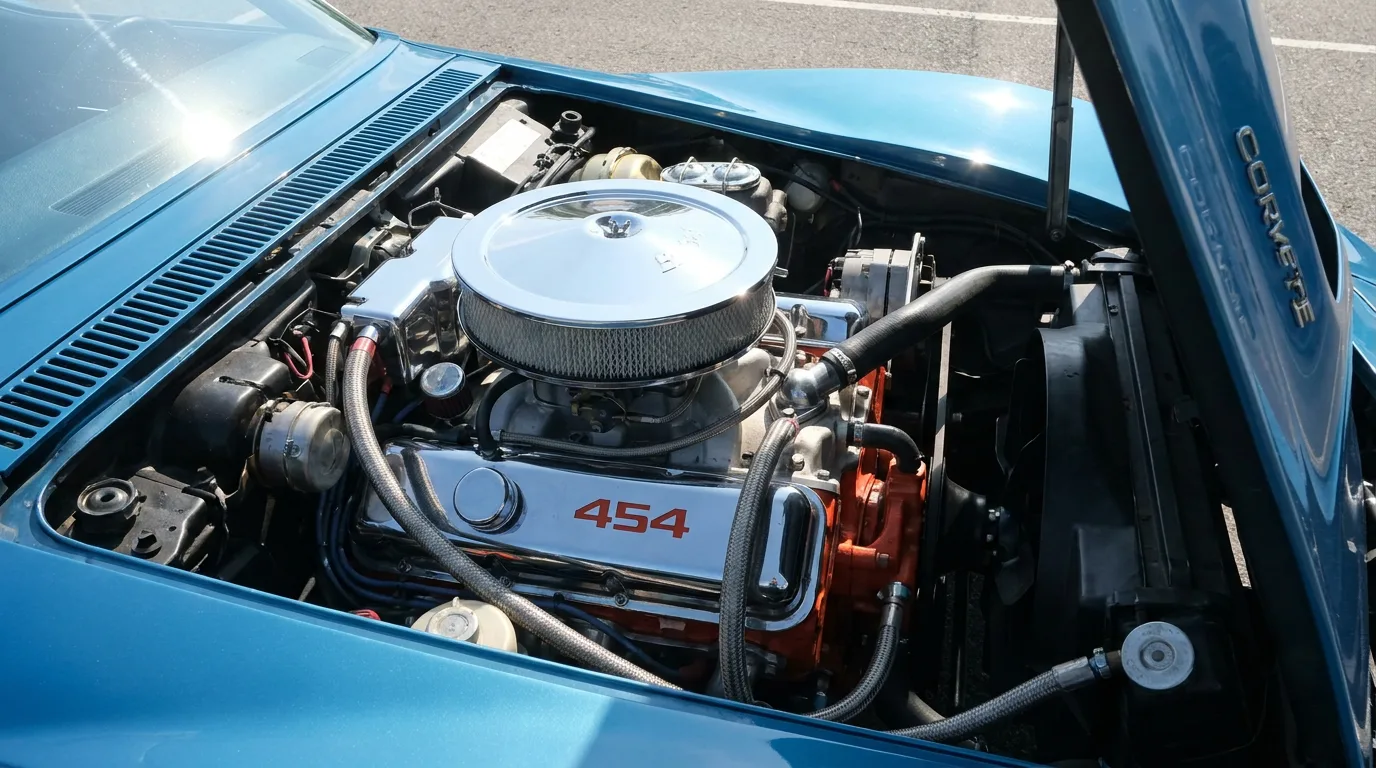
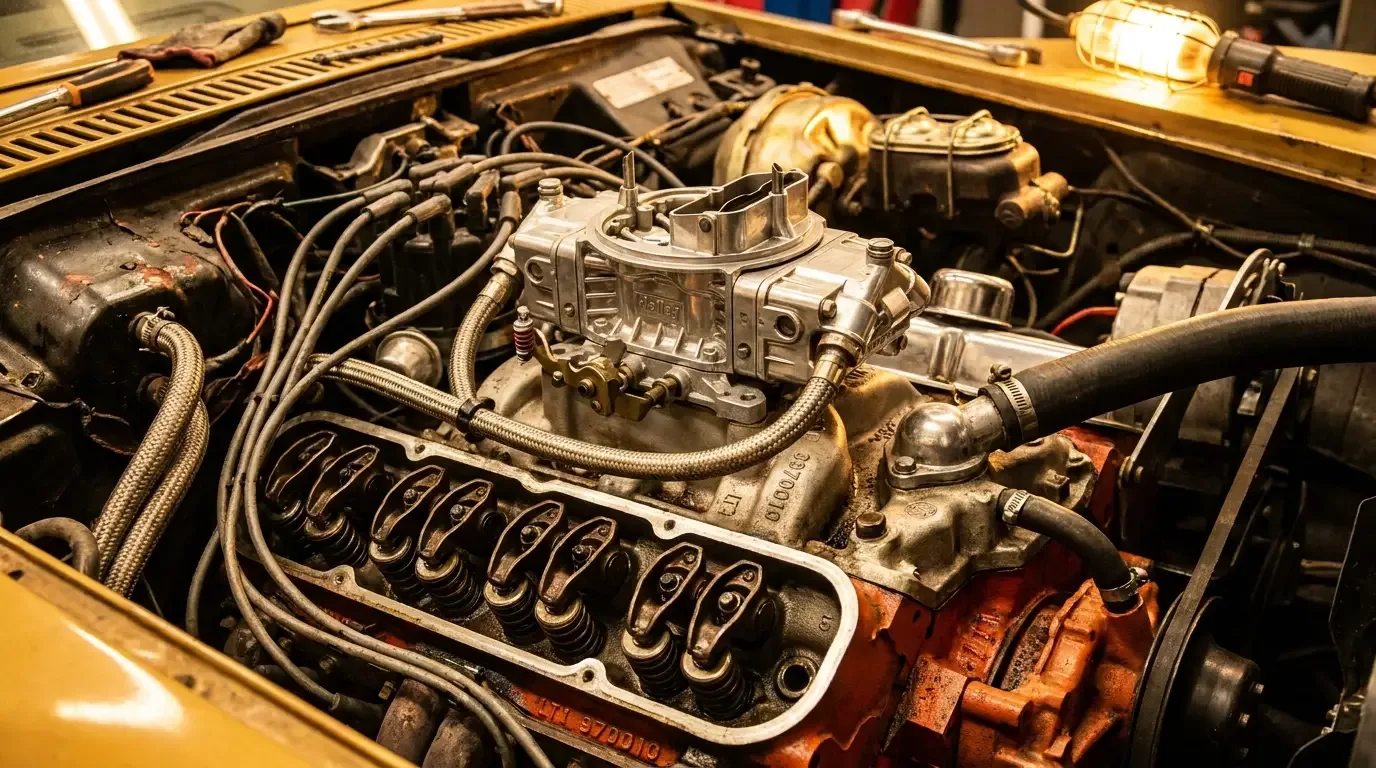
The RPO LT1 designated a high-performance version of the 350 cubic inch small-block V8. The displacement was identical to the base ZQ3 350 and the optional L46 350, but the LT1 was built differently throughout. Solid lifters instead of hydraulic. An 11.00:1 compression ratio. A Holley four-barrel carburetor (780 CFM) rather than the Rochester Quadrajet on the base and L46 engines. Larger valves, revised heads, a hotter mechanical camshaft with 317/346 degrees of duration. The factory rating was 370 horsepower, and that figure, stated at a time when gross horsepower ratings still reflected something close to actual output, was meaningful.
The engine came out of the Corvette racing program. Zora Arkus-Duntov, who ran Corvette engineering, had been working on a solid-lifter small-block with proper breathing for track use, and the LT1 was the production version of that thinking. It revved higher than any hydraulic-lifter engine Chevrolet had put in a Corvette, and it made its power in a different band than the torque-heavy big-blocks. The LT1 rewarded driving technique in a way the LS5 did not.
The 1970 Corvette context
Model year 1970 was complicated for Corvette production. The car that Chevrolet intended to sell as a 1970 model was delayed, the 1969 model ran long into the calendar year, and what became the 1970 Corvette was produced in a compressed window, shortened further by a UAW strike. Total 1970 production came to 17,316 cars (10,668 coupes and 6,648 convertibles), down sharply from the roughly 38,000 built for 1969, and that limited run has made genuine 1970 cars identifiable in the marketplace.
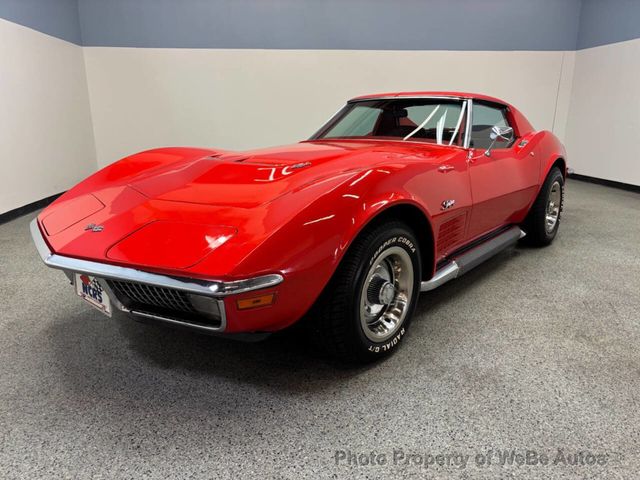
The body was the C3 Stingray in its second season of production, now with revised front fender flares that gave the 1970 a slightly different visual signature from the 1968-69 cars. The interior received updates including a revised gauge cluster. Functionally the car was still fiberglass body on a separate steel frame, independent suspension at all four corners with a transverse rear leaf spring, and the same basic architecture that had been in place since 1963.
The engine options for 1970 spanned an unusually wide range: the base 300 horsepower 350 (RPO ZQ3), the L46 350 at 350 horsepower, the LT1 at 370, the LS5 454 at 390 horsepower, and the LS7, which was announced at a rated 460 horsepower and listed in early literature but was withdrawn before any production Corvette was built with it. If you want to understand the lineup, more here on what the big-block story looked like in the following year, which adds useful context on where the market was heading.
| Engine | RPO | Displacement | Rated HP (gross) | Induction |
|---|---|---|---|---|
| Base small-block | ZQ3 | 350 cu in | 300 hp | Rochester 4-bbl |
| High-output small-block | L46 | 350 cu in | 350 hp | Rochester 4-bbl |
| LT1 solid-lifter small-block | LT1 | 350 cu in | 370 hp | Holley 4-bbl |
| Big-block | LS5 | 454 cu in | 390 hp | Rochester Quadrajet 4-bbl |
Why collectors care about it now
The short answer is that the LT1 represents the high-water mark of naturally aspirated small-block Corvette performance from the classic era. By 1971, compression ratios were already dropping, and the LT1 that year was rated at 330 gross horsepower on 9.0:1 compression. By 1972, the industry had switched to net horsepower ratings, and the numbers looked worse even where the actual output was similar. The 1970 LT1, with only 1,287 built, is the last version of that engine at full factory specification, and the combination of that engine in the compressed 1970 production run has made documented examples increasingly sought-after.
NCRS documentation is the reference point here. The National Corvette Restorers Society has built the most rigorous authentication system in the marque, and a 1970 LT1 with correct tank sticker, correct trim tag, and matching numbers throughout is a different proposition from a car that simply presents with LT1 components. The tank sticker tells you what the car left the factory with. If it's there and it's correct, that's the foundation of any serious authenticity claim.
"A 1970 LT1 without its tank sticker isn't a lost cause, but it becomes a documentation project rather than a verified car. The NCRS process exists precisely because these distinctions matter, and so does the price gap between a judged car and a claimed one."
— Tom Ramirez
What to know before buying a 1970 LT1 Corvette
Numbers matching means something specific on a Corvette, and it goes deeper than the engine stamp. The LT1 block carries a stamp pad on the front of the block, just below the right-hand cylinder head, with the engine suffix code and a partial VIN derivative that should match the car's VIN on the driver's side windshield frame tag. The cylinder heads, the intake manifold, the carburetor, all of these have date codes that need to fall within the correct pre-assembly window relative to the car's build date. An engine assembled from correct-era components but pulled from a different car is not a matching engine, regardless of how it looks.
The Holley carburetor on the LT1 is a specific item. Replacement carburetors from the era were common, and a non-original unit under the air cleaner doesn't disqualify a car, but it should be reflected in the price. Date-code-correct original Holleys are findable but they add cost. Know what you're looking at before you negotiate.
Fiberglass body concerns on the 1970 car are the same as any C3: stress cracks around door openings, separation at the body seams, and condition of the birdcage (the internal steel structure) which can rust even though the outer panels are fiberglass. The birdcage is expensive to address properly. Getting under the car with adequate light before any purchase decision is not optional.
For anyone actively looking, current 1970 Corvettes for sale span a wide range of conditions and documentation levels, which is exactly where careful buying separates a good acquisition from an expensive lesson.
Market position in 2026
Documented, matching-numbers 1970 LT1 Corvettes have held firm in the collector market. Driver-quality cars with correct powertrains but non-original paint or interior have settled into a range where they offer genuine value relative to comparable big-block cars. Show-quality examples with NCRS Top Flight or Bloomington Gold certification command premiums that reflect the work required to achieve and maintain that standard.
The honest word on pricing is that the gap between a well-documented example and a poorly-documented one is larger on this car than on many. Buyers paying for what a car is supposed to be, without the paper to back it up, are carrying risk that the price doesn't always reflect. The authentication infrastructure for 1970 Corvettes is mature enough that there's no good reason to accept claims without documentation.
Sources and notes
- CorvSport, 1970 LT-1 Small-Block Engine Guide: confirmed 370 hp rating, 11.00:1 compression, forged crank, 4-bolt mains, Holley 780 CFM carburetor, and mechanical cam duration
- Corvette Action Center, 1970 Corvette Production Numbers: total 17,316 units (10,668 coupes, 6,648 convertibles), 1,287 LT1 engines, 4,473 LS5 engines
- Hagerty Media, on the 1970 LS7: rated at 460 hp in factory literature but withdrawn under John DeLorean's de-proliferation program before any production Corvette shipped with it
- NastyZ28.com, Second-Gen Camaro Z/28 LT1 Engines: confirmed the shared LT1 was rated 360 hp in the Z/28 versus 370 hp in the Corvette
- Wikipedia, Chevrolet LT-1: overview of the LT1's development history and its rating decline through 1971-72
- CorvetteForum, True HP of 1970 LT1 discussion: cross-checked base ZQ3 (300 hp), L46 (350 hp), and LS5 (390 hp) ratings against period literature