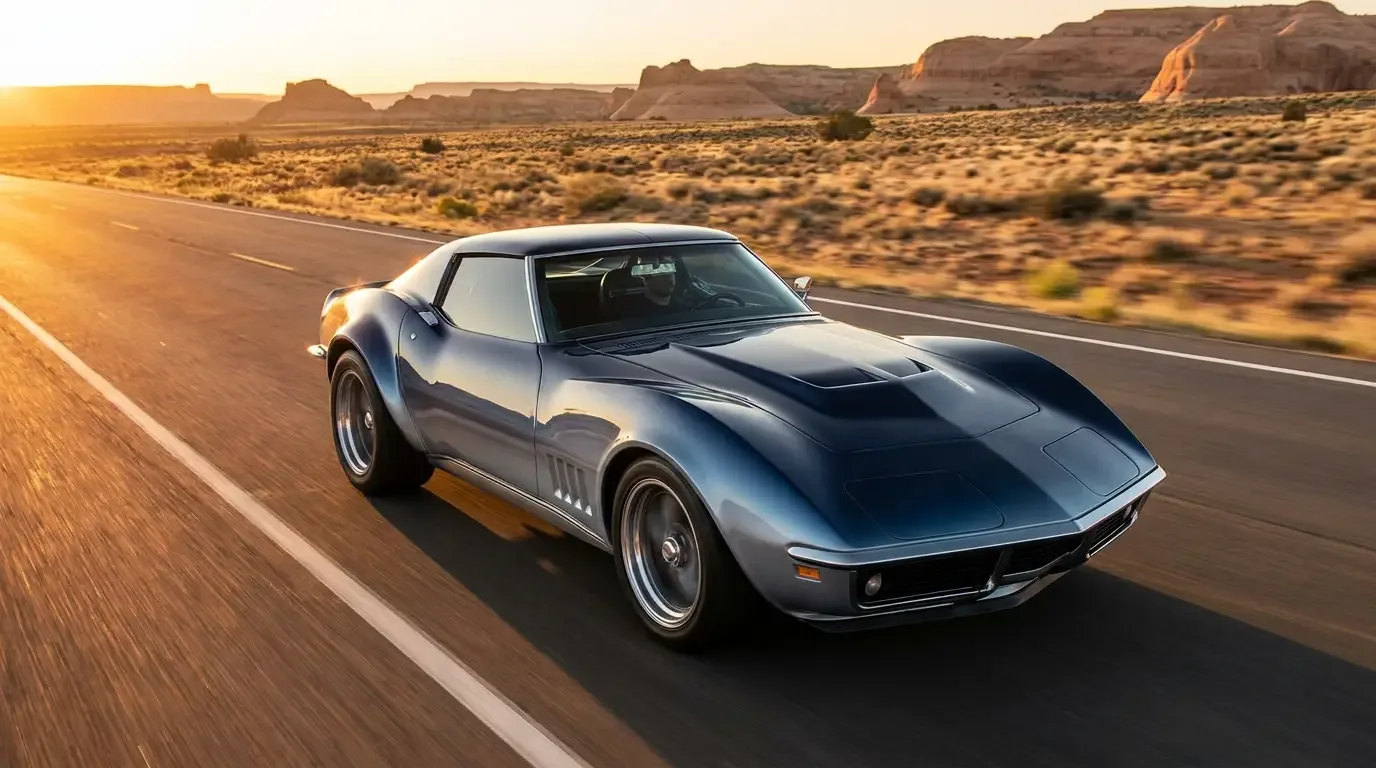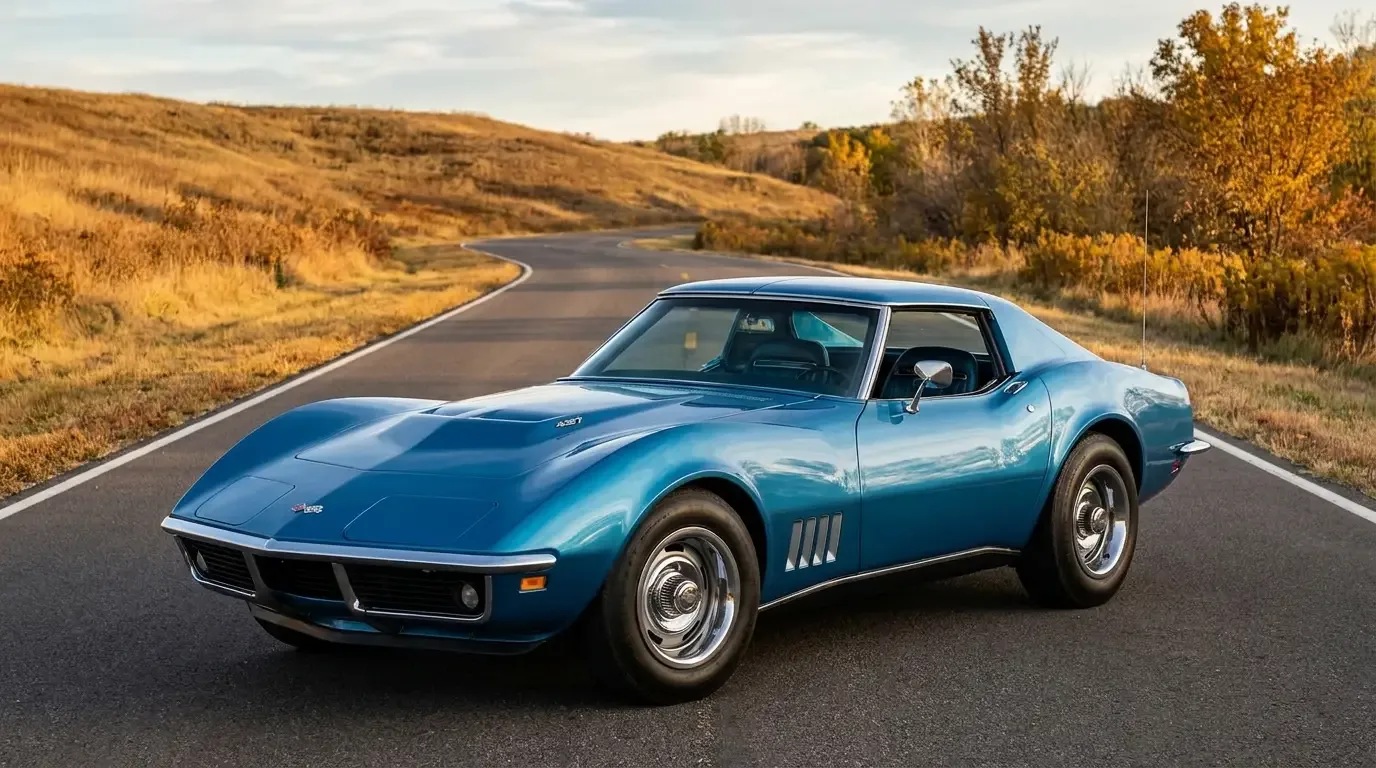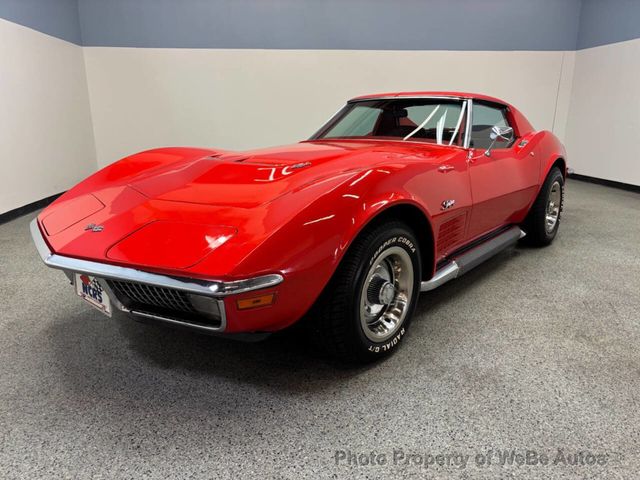
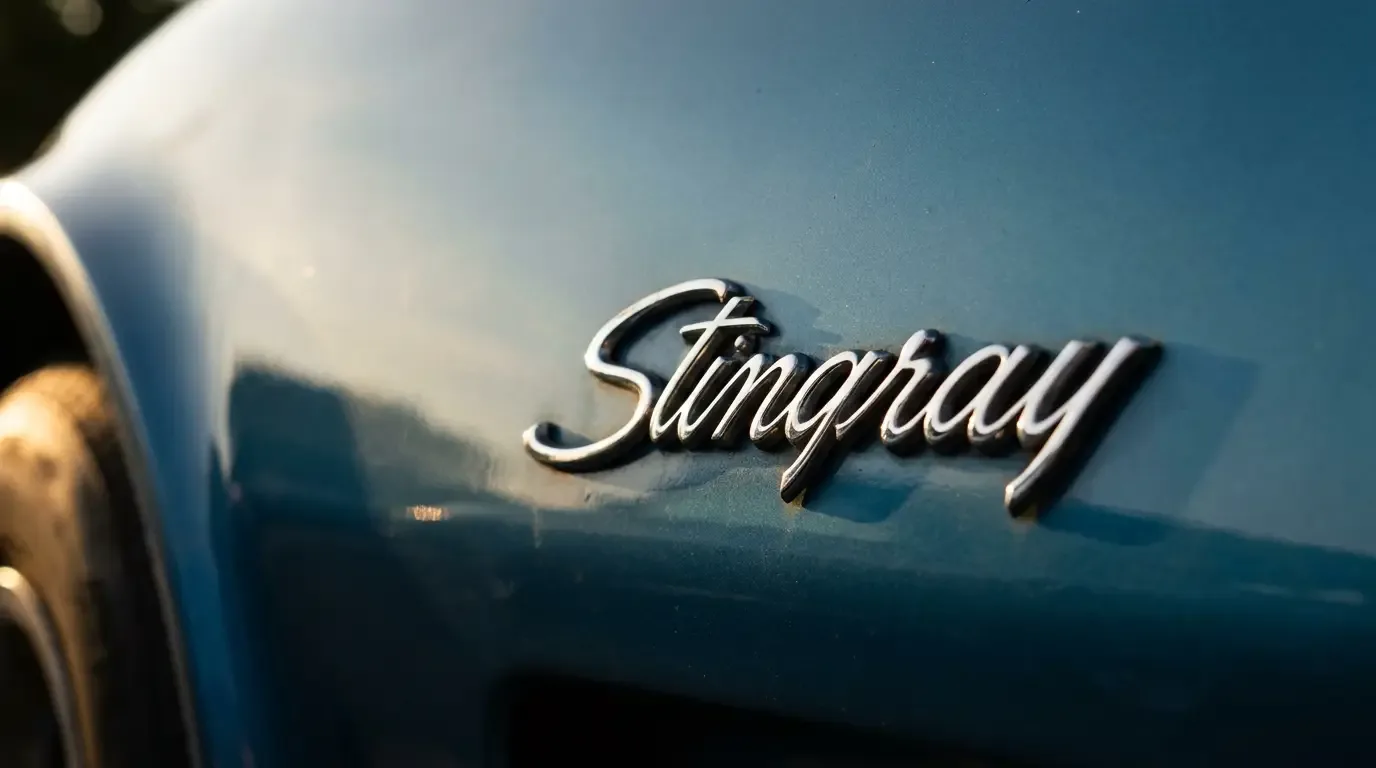
In 1969, for the first time in Corvette history, the name on the front fender read as a single compound word: Stingray. Not "Sting Ray," with the two-word styling the car had carried since 1963. One word. It is a distinction that matters more than it sounds like it should, and the factory records make it unambiguous.
The c3 corvette generation launched for 1968 without the Sting Ray name at all. General Motors dropped it entirely that year, partly to distance the new body from the mid-year C2 cars. Then it came back in 1969, rewritten. The two-word version that Corvette purists associate with the split-window coupe and the convertible roadsters of 1963 through 1967 was gone. In its place: Stingray, one word, cast into the front fender badges and printed that way in factory documentation.
Why the name changed
The short answer is that GM's styling department made the call, and no one has ever produced a memo explaining the reasoning in plain terms. What the factory record does show is deliberate: the 1968 Corvette launched as simply "Corvette," with Stingray imagery baked into the body's design language but absent from the badging. When the name returned for 1969, the styling group chose to treat it as a single proper noun.
The working theory among NCRS researchers is that "Stingray" as one word was considered a distinct trademark rather than a descriptive compound. The two-word version had belonged to the C2 era. The new car deserved its own spelling. Whether that reasoning actually guided the decision or came later to explain it, the 1969 model year is the dividing line. Before 1969: Sting Ray or nothing. From 1969 forward: Stingray.
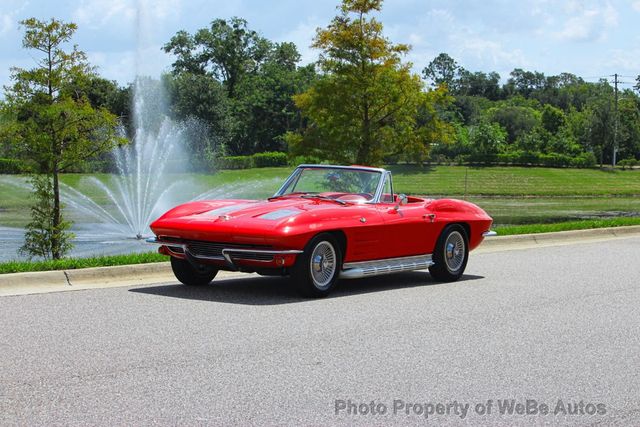
For collectors and documentation specialists, this has practical implications. A C2 car badged with single-word "Stingray" is either a fantasy build, a misguided restoration, or a flag worth checking. The NCRS judges know where to look. A 1969 or later car badged with "Sting Ray" has the same problem in reverse.
The 1969 model year in context
The naming change did not happen in isolation. The 1969 Corvette arrived with a longer body than the '68 (about an inch added to overall length), a revised interior that addressed some of the ergonomic complaints about the first-year C3, and wider wheel openings to accommodate the tire sizes the performance market was demanding. For the full story of how that generation's design evolved, the Corvette legacy runs from the first roadster through to the present day and covers the thinking behind the C3's shape.
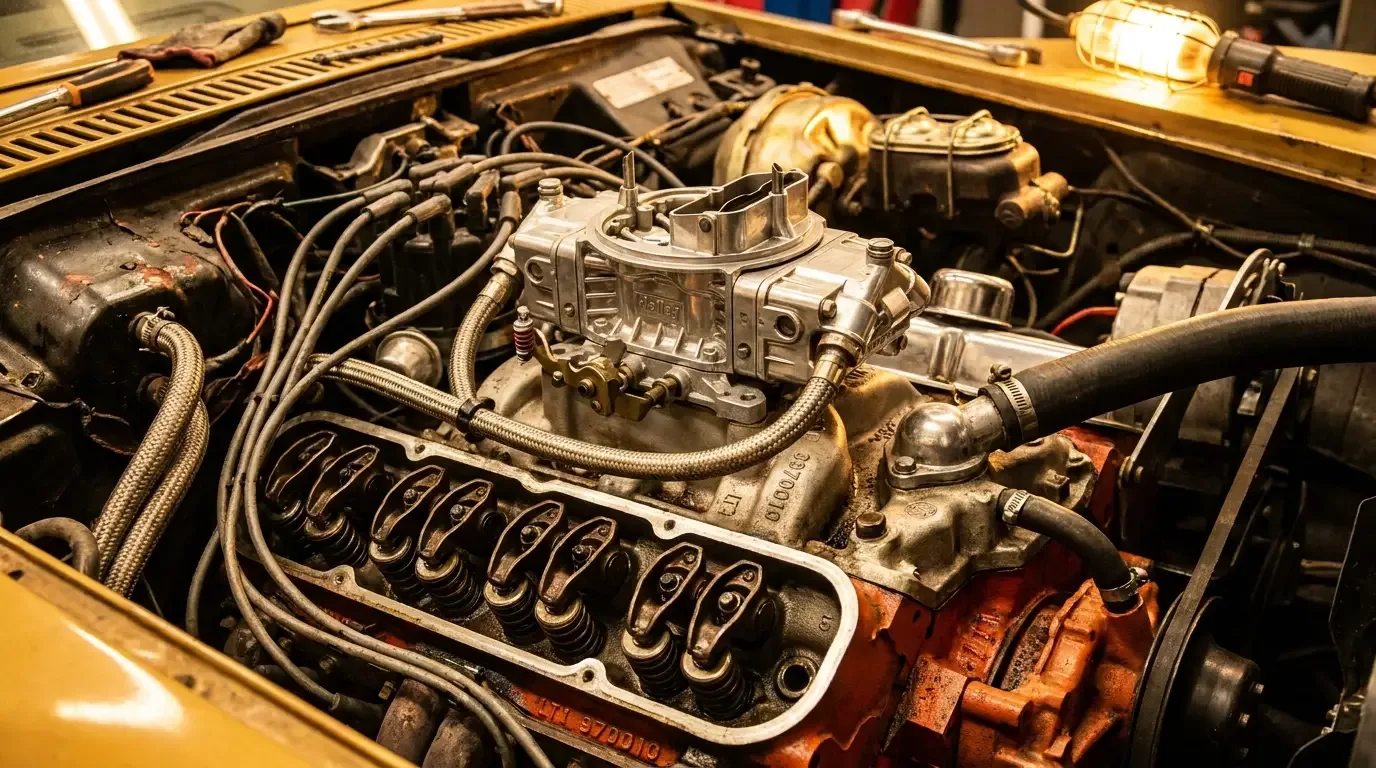
Engine options for 1969 were substantial. The base engine was the 350ci small-block, rated at 300 hp (RPO ZQ3/L48). Available power plants ran upward through the optional L46 350 hp small-block and several 427ci big-block configurations, including the L36, L68, L71, the L88, and the aluminum-block ZL1. The L88 was nominally rated at 430 hp in factory documentation, a figure the NCRS community and period road testers have long argued understated real-world output, with independent estimates commonly landing in the 500 to 560 hp range. It was a genuine racing engine available through the regular order process, though Chevrolet actively discouraged buyers from ordering it for street use.
| Engine (RPO) | Displacement | Rated output | Notes |
|---|---|---|---|
| ZQ3 / L48 | 350ci | 300 hp | Base small-block |
| L46 | 350ci | 350 hp | Optional small-block, manual transmission only |
| L36 | 427ci | 390 hp | Base big-block |
| L68 | 427ci | 400 hp | Tri-carb |
| L71 | 427ci | 435 hp | Tri-carb, higher compression |
| L88 | 427ci | 430 hp (factory rating; widely regarded as understated) | Racing engine, 116 built for 1969 |
| ZL1 | 427ci | 430 hp (factory rating) | Aluminum block, racing-only, 2 built for public sale in 1969 |
What the badge actually looks like
On a correct 1969 car, the Stingray script appears on both front fenders. It reads as a single flowing word, consistent with the cast emblem produced for that model year. The font and proportions differ from the C2's "Sting Ray" script, not dramatically, but enough that someone who has handled both up close will see it immediately. Tank stickers and broadcast sheets from this period document the option codes and equipment, but the name itself does not appear on the tank sticker in the same way the body color or engine code does. You verify the spelling by examining the physical badge and cross-referencing it against known original examples.
Reproduction badges are available in the aftermarket for both spellings, which creates a documented problem for buyers of unrestored or partially restored cars. The NCRS judging standards address this directly. An incorrect badge on an otherwise well-documented car costs points; on a car presented for Bloomington Gold certification, the documentation requirement tightens further.
"The name change is one of those details that separates the people who have actually studied these cars from the people who think they have. It's not obscure knowledge once you know it, but it's exactly the kind of thing a rushed restoration skips over."
— Tom Ramirez
Relationship to the broader C3 naming history
The Stingray name stayed on the C3 through 1976, was dropped again for 1977 through the end of C3 production in 1982, and did not appear on a Corvette again until the C7 revived it in 2014. The C4, C5, and C6 generations never wore the Stingray badge. For anyone tracking the lineage, 1969 is the first instance of the modern single-word form.
This matters for the a related piece on the 1970 small-block, which covers the LT1 engine introduction and the broader direction Chevrolet took the Corvette's performance lineup after the big-block era wound down. By 1970 the Stingray name was settled. The question of one word or two was already answered.
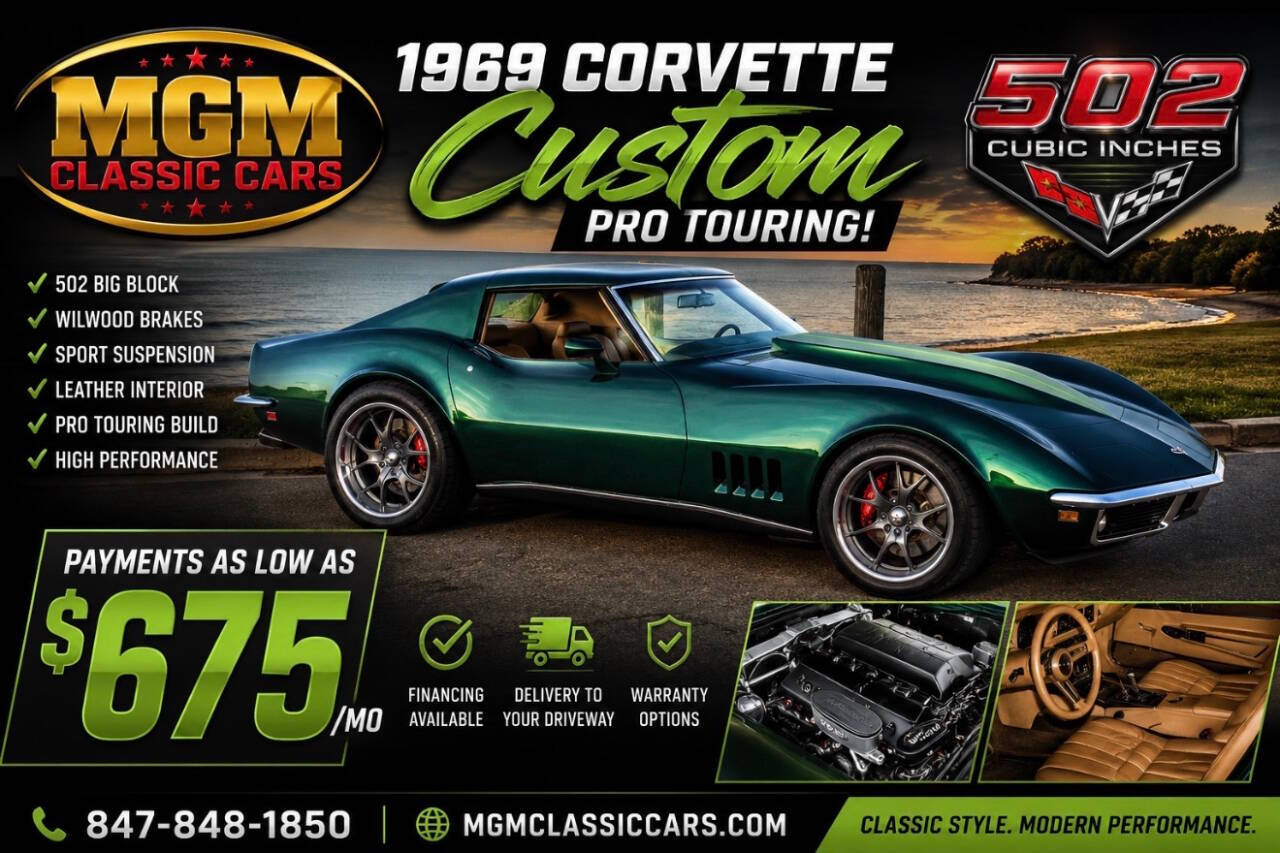
If you are in the market for a 1969 example with correct badging and documentation, the current listings give a direct view of what is available. 1969 Corvettes for sale surface everything from driver-quality big-blocks to documented numbers-matching cars in restoration or concours condition. A driver-quality 1969 small-block coupe generally trades well under six figures, while documented big-block cars command a real premium. L88 examples, of which only 116 were built for 1969, have sold at auction anywhere from roughly $495,000 to $860,000 in recent years depending on condition, originality, and documentation; the ultra-rare ZL1, with just two built for public sale that year, is effectively a seven-figure car whenever one surfaces.
Why it matters to know
The one-word versus two-word distinction is the kind of fact that gets repeated without its context: people know that 1969 changed something about the name, but not always what changed or why it has documentation weight. In the collector community, this is the baseline. Knowing it does not make you an expert on these cars. Not knowing it, when you are presenting yourself as one, is a problem.
For anyone doing a restoration to NCRS or Bloomington Gold standards, the badge is not a cosmetic detail. It is a dateable artifact. The spelling tells you which generation the car belongs to. Getting it wrong on a correct-year car is the kind of mistake that survives photographs and resurfaces when the car changes hands again.
The 1969 Corvette carries enough history without adding confusion about the name. The factory got it right the first time. Restorers should do the same.
Sources and notes
- Hagerty Media: confirmed the two-word "Sting Ray" ran 1963-1967, the 1968 C3 carried no Stingray badge, and the single-word "Stingray" began in 1969
- Wikipedia, Chevrolet Corvette (C3): confirmed the Stingray badge ran 1969-1976, was dropped 1977-1982, and did not return until the C7 in 2014
- Corvsport 1969 C3 Corvette specs: confirmed base engine (300 hp small-block), full RPO engine lineup and pricing, and total 1969 production of 38,762 cars
- CorvetteForum: confirmed 116 L88 Corvettes were built for the 1969 model year
- Hagerty Media: confirmed only two 1969 ZL1 Corvettes were built and sold to the public
- Corvsport auction coverage: documented a 1969 L88 Corvette selling for $860,000, used alongside other reported 2024-2025 L88 sale prices to set the current market range