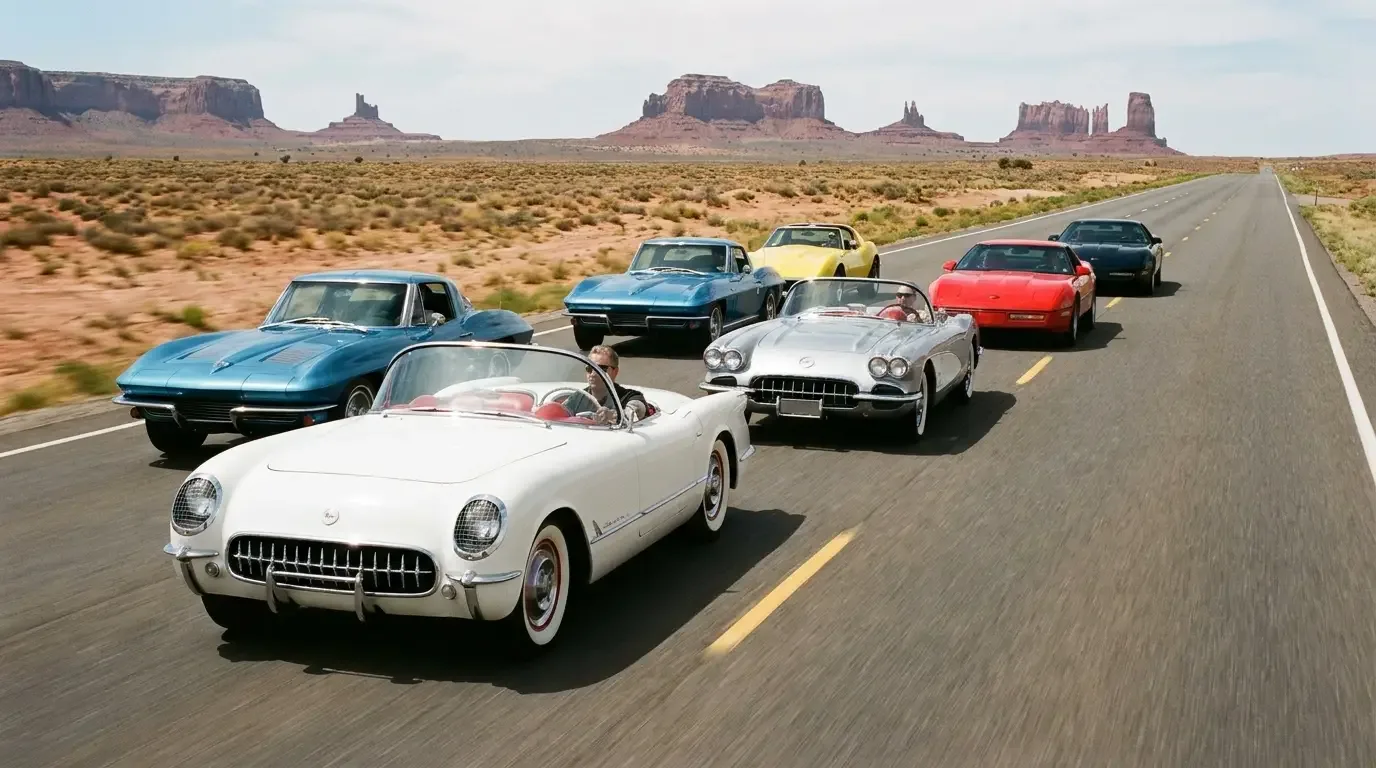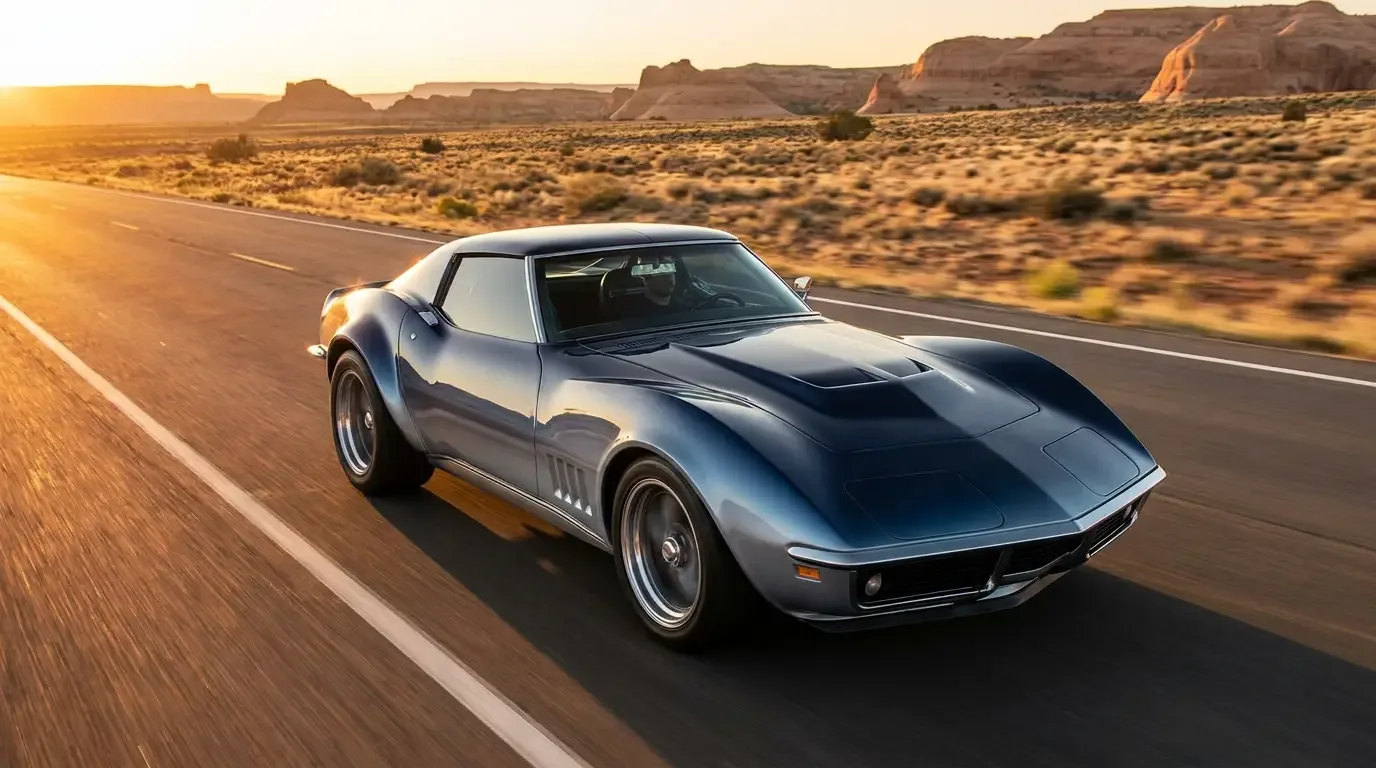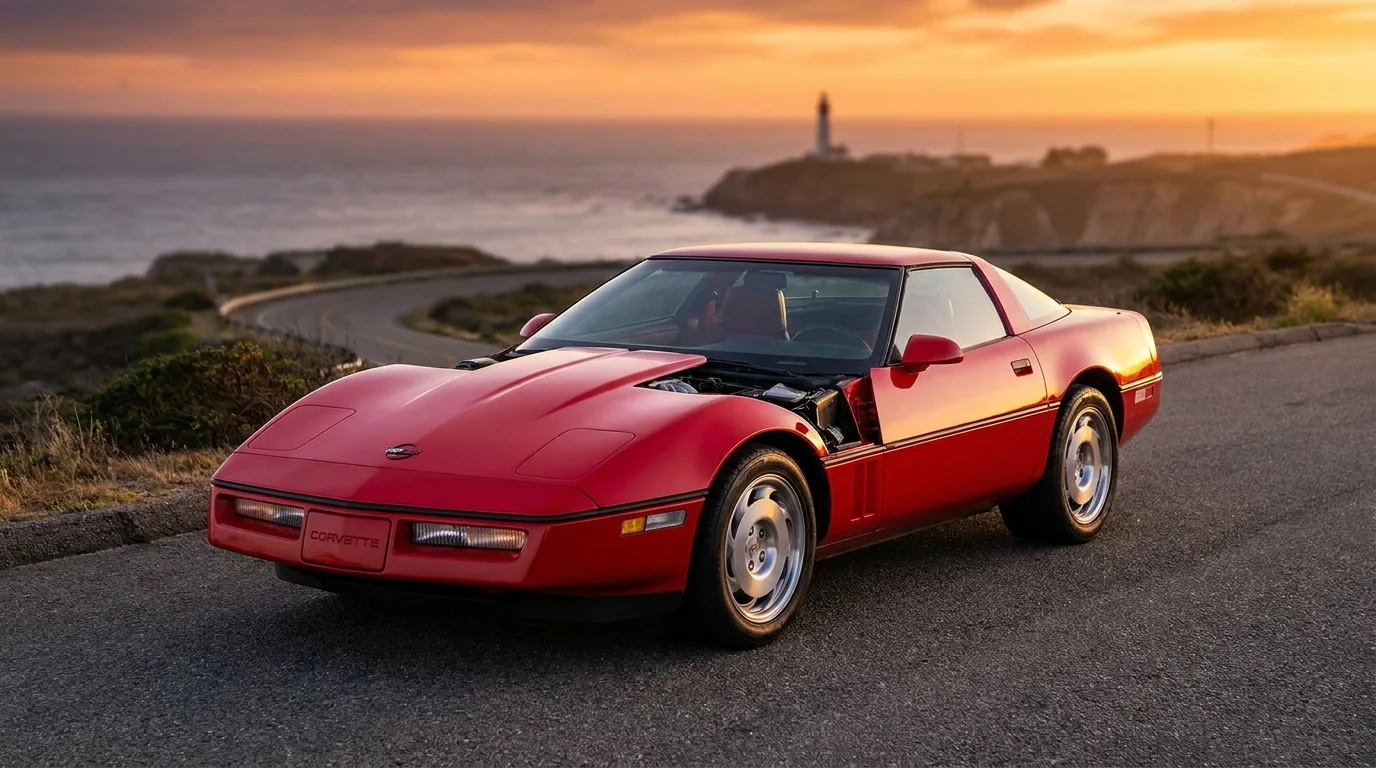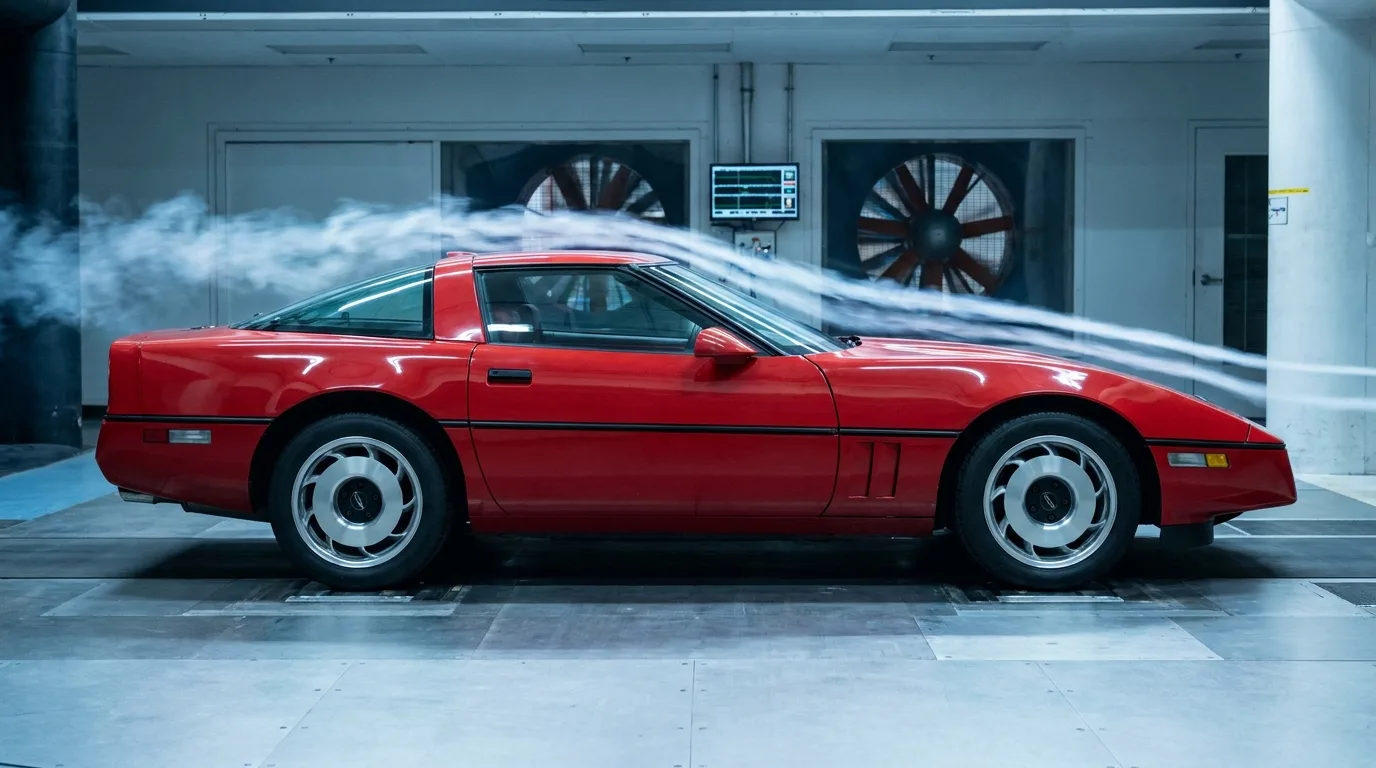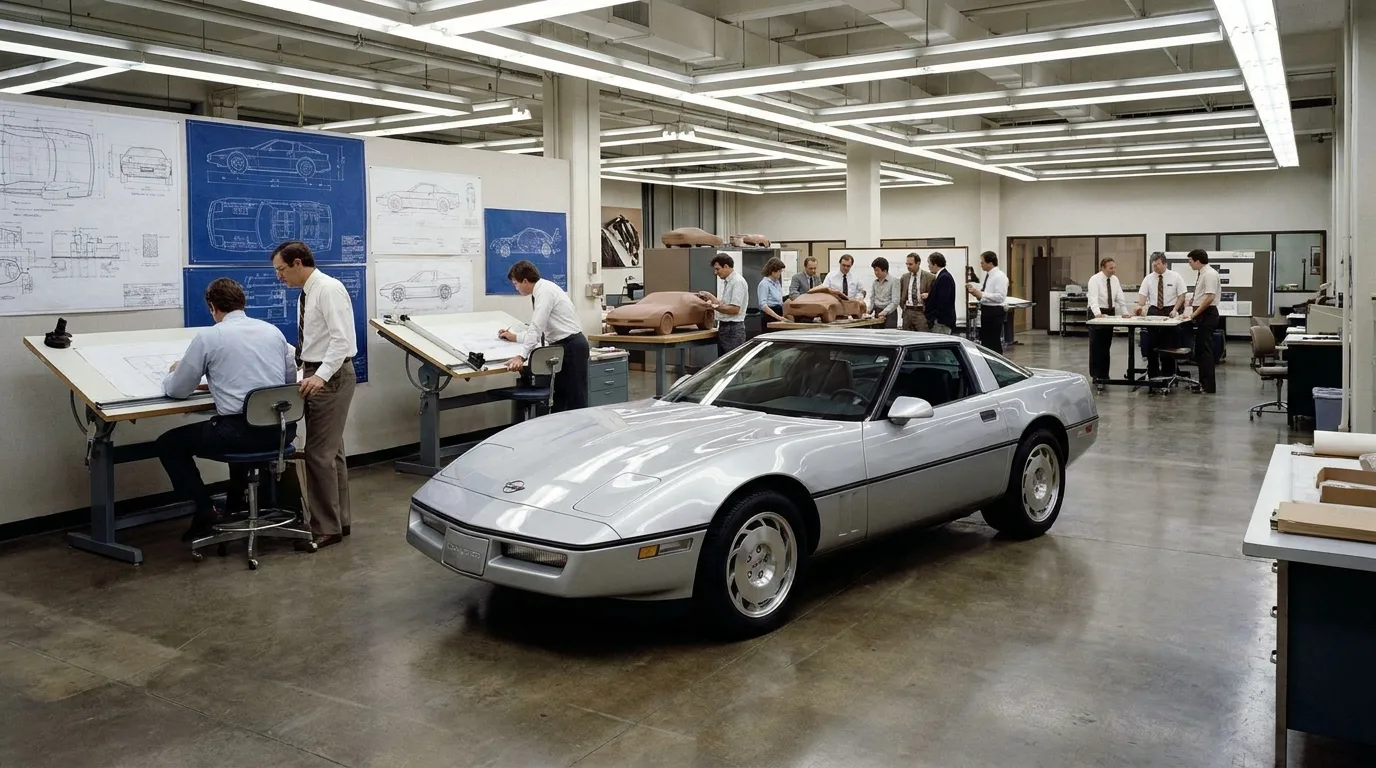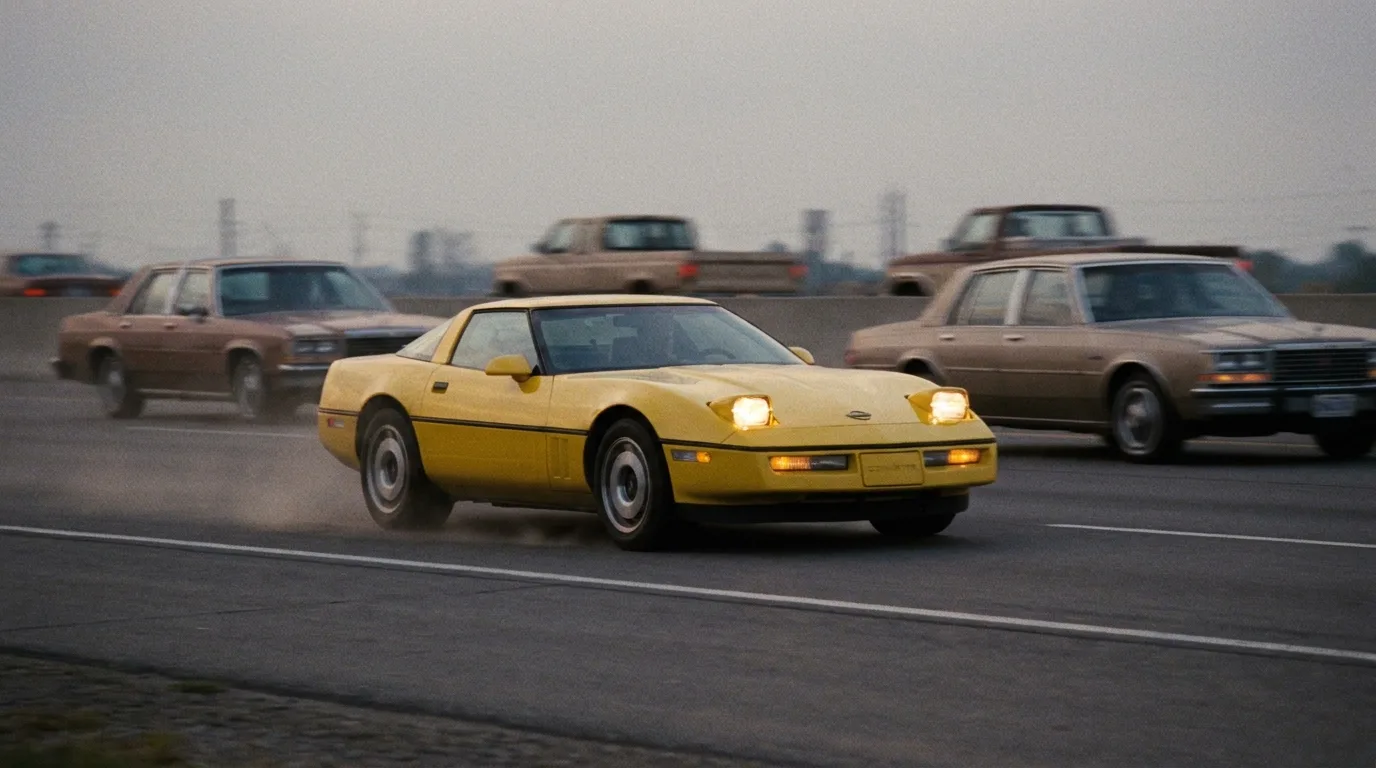
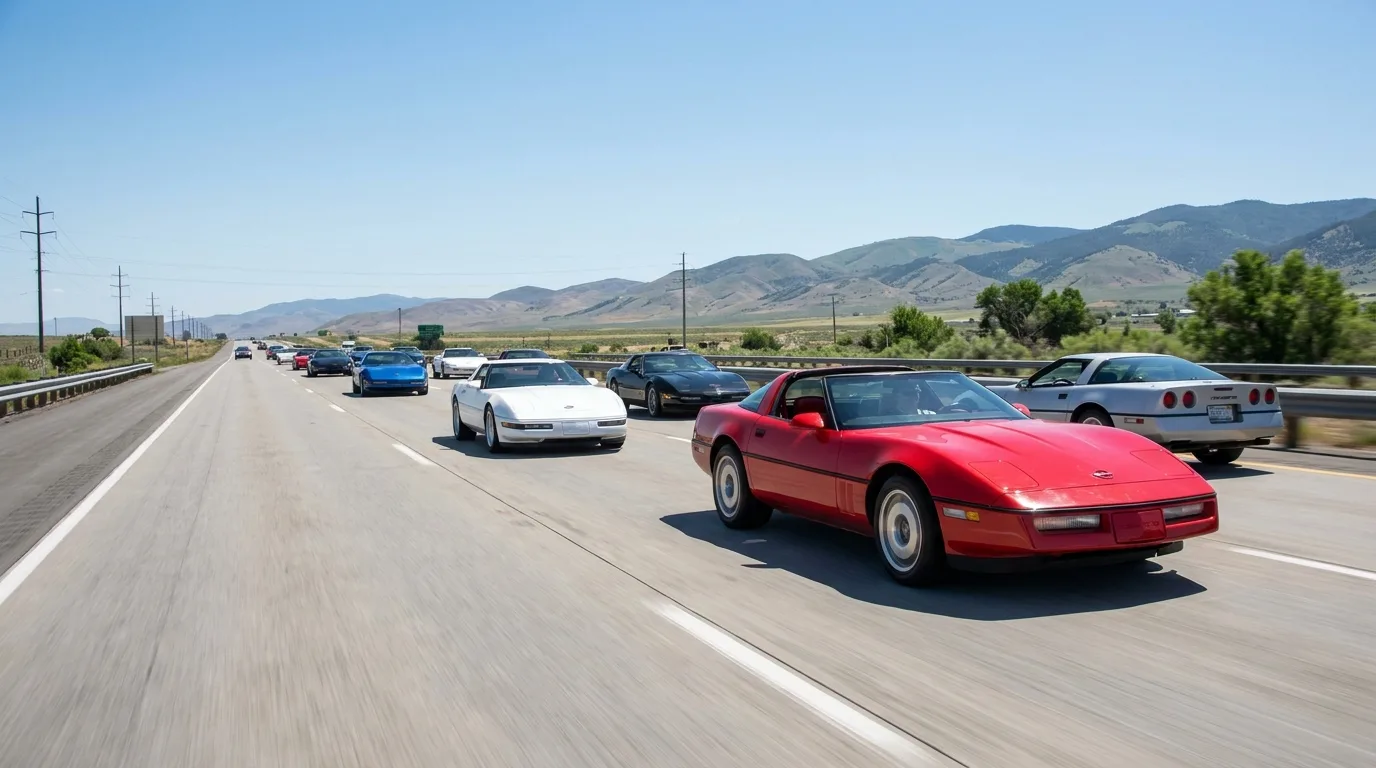
The C4 Corvette had a lot to prove before the first one rolled off the line. After thirteen years of the C3, a car that had grown heavier, slower, and more restricted with every emissions update, Chevrolet's sports car needed a reset. The C4 delivered one, though not without stumbles. What came out of Bowling Green between 1984 and 1996 was a car that started from scratch, found its footing slowly, and ended its run as something genuinely fast again. To understand how the Corvette got here, you have to go back further than 1984, but 1984 is where the modern Corvette begins.
Today the C4 sits in an interesting position. It is old enough to be a legitimate classic, cheap enough that a good driver-quality example is still within reach of most enthusiasts, and mechanically robust enough to be used. That combination does not last. The market has started to notice.
The 1983 that never was
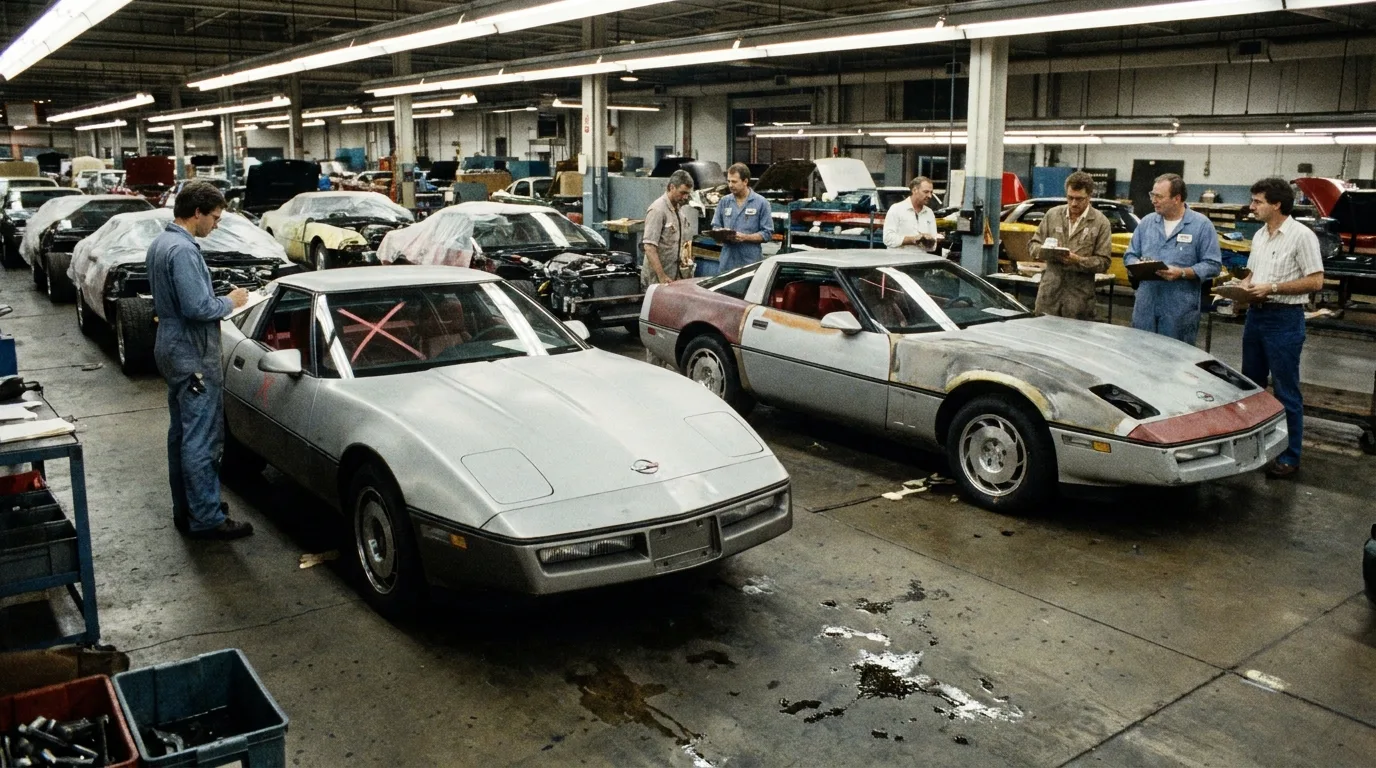
The C4 was originally scheduled to debut as a 1983 model. The car was designed, engineered, and built, and 43 pre-production units carrying 1983 VINs were assembled at the Bowling Green, Kentucky plant before Chevrolet pulled the plug. Quality control problems and time pressure were the official reasons.
The result: every C4 you will ever see carries a 1984 model year or later. There is no 1983 Corvette in public hands. Of the 43 pre-production cars, 42 were destroyed. The lone survivor, a white coupe with a 205-horsepower L83 V8, was displayed above the Bowling Green plant entrance for years before being restored and placed on permanent display at the National Corvette Museum, where it survived the 2014 sinkhole collapse. The skipped year became one of the more memorable footnotes in American sports car history.
When the 1984 model finally arrived, it was a clean-sheet design in most respects. The ladder frame was gone, replaced by a steel backbone chassis. The body was fiberglass as before but reworked completely. The interior was the most dramatic departure: a digital instrument cluster replaced the analog gauges of the C3, and the dash was a sharp-edged cockpit that read as genuinely futuristic by 1984 standards. Whether it was actually easier to read at speed was another question, and Chevrolet would spend most of the decade refining what worked and walking back what didn't.
The L98 years: rebuilding from the ground up
The engine that launched the C4 was the L83 small-block, a 350 cubic inch V8 with Cross-Fire fuel injection (not a carburetor, though it was often mistaken for one) that produced 205 horsepower and 290 lb-ft of torque. That was not an inspiring figure for a car that had once chased Ferraris, but it reflected where American performance was in the early 1980s: squeezed by smog equipment, starved by compression ratios kept low to run on unleaded fuel.
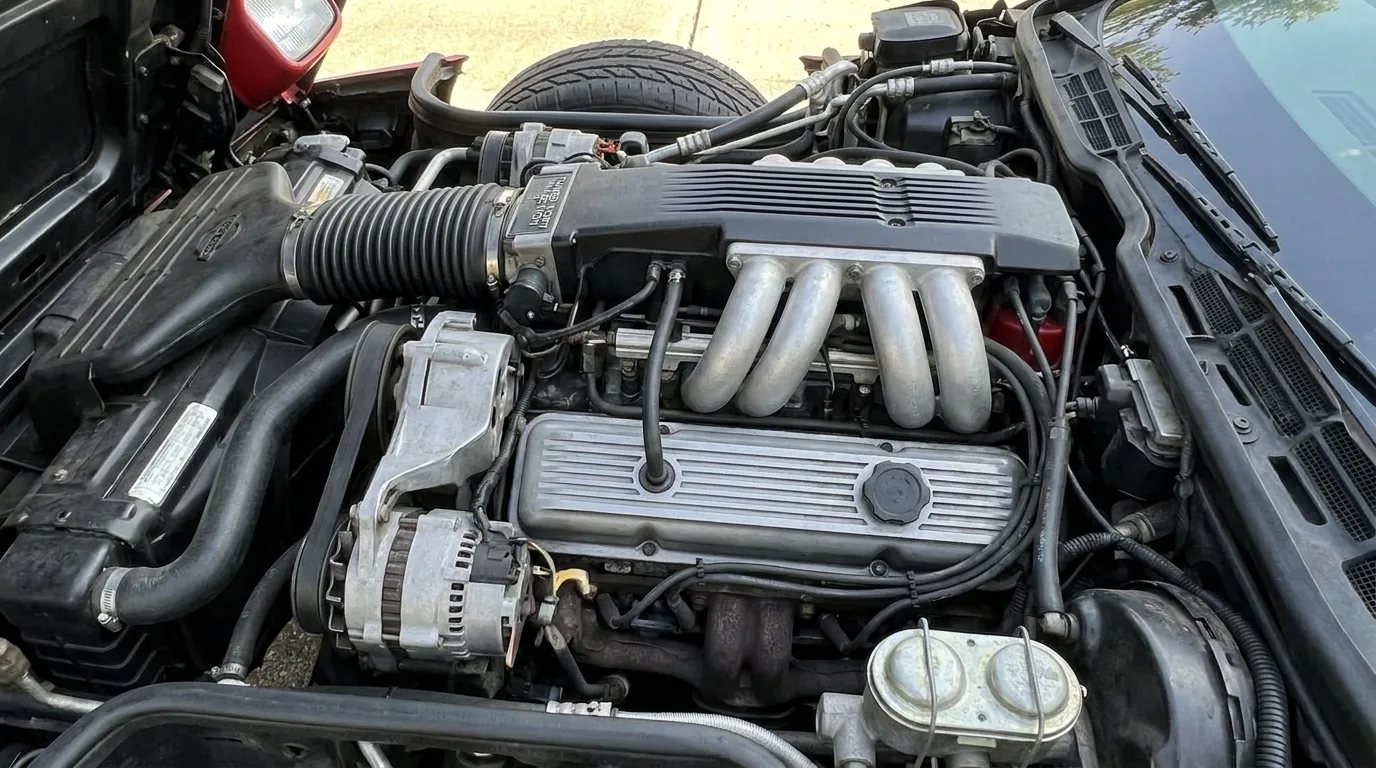
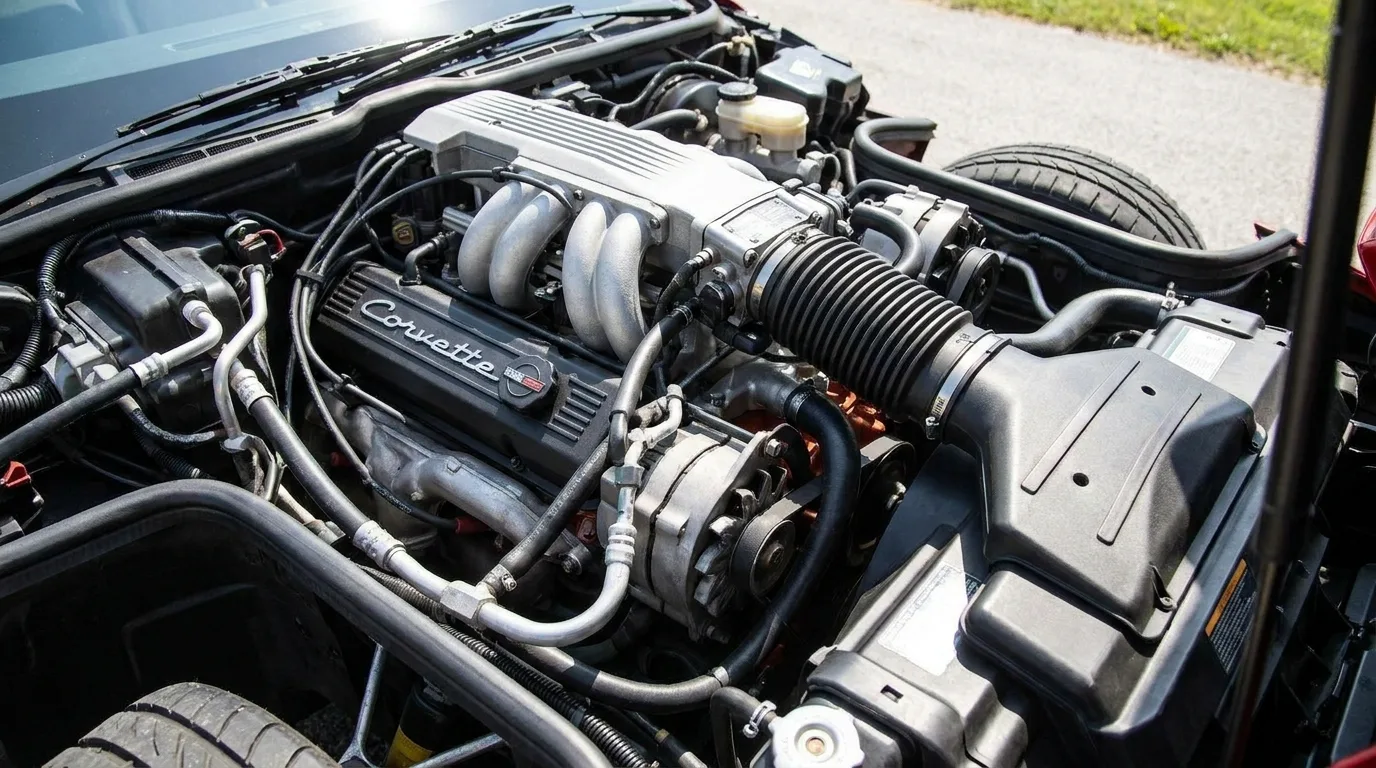
The bigger change came in 1985, when Chevrolet introduced the L98 engine with tuned-port injection. This was not throttle-body injection, the single-injector compromise that most domestic manufacturers used. The L98 used individual injectors at each intake port, fed through a set of long curved runners that looked more like a racing intake than anything Chevrolet had offered on a production Corvette before. The system worked. Power climbed to 230 horsepower at introduction, with 330 lb-ft of torque that came in lower in the rpm range than the earlier engine managed.
Over the next several years, the L98 was refined steadily. By 1991, its final year, it was producing 245 horsepower. That was not back to the numbers of the late 1960s, but it was real power from a reliable, emissions-compliant engine that could be serviced at any GM dealer. For the C4's original buyer, that combination mattered.
| Year range | Engine | Est. horsepower | Notes |
|---|---|---|---|
| 1984 | L83 350 V8 (Cross-Fire injection) | 205 hp | Twin throttle-body injection, not a carburetor |
| 1985-1991 | L98 350 TPI | 230-245 hp | Tuned-port injection, gradually improved |
| 1990-1992 | LT5 V8 (ZR-1 only) | 375 hp | DOHC, 32-valve, co-developed with Lotus |
| 1993-1995 | LT5 V8 (ZR-1 only) | 405 hp | Revised heads, cam, and internals |
| 1992-1996 | LT1 350 V8 | 300 hp | Reverse-flow cooling, substantial improvement |
| 1996 only | LT4 350 V8 | 330 hp | Manual-only, Grand Sport and Collector Edition |
The ZR-1: King of the Hill
If the L98 Corvette was a careful rebuilding of credibility, the ZR-1 was a statement. Introduced for the 1990 model year, it was built around an engine that Chevrolet developed in partnership with Lotus Engineering in England: the LT5, a 5.7-liter V8 with dual overhead camshafts and four valves per cylinder. Thirty-two valves total on a production Corvette. In 1990, that was unusual company.
The LT5 initially produced 375 horsepower and 370 lb-ft of torque. By 1993, revised cylinder heads, four-bolt main caps, new pistons, and revised cam timing raised that figure to 405 horsepower. The ZR-1 earned its "King of the Hill" nickname in contemporary press coverage partly because of those numbers, and partly because it was genuinely fast in a way that American sports cars had not been for a long time. Period road tests, including Car and Driver's, put the 0-60 time in the low-to-mid 4-second range, which was competitive with European machinery at the time.
The ZR-1 was also expensive. Its price premium over the base Corvette was substantial: by 1995, its final year, the ZR-1 package alone added over $31,000 to the standard Corvette's price, pushing a well-equipped example past $68,000. Chevrolet built them in relatively small numbers each year, only 448 for 1995. Today, ZR-1 examples in good condition carry a meaningful premium over standard C4s, though the market has been quieter than some expected given the engineering involved.
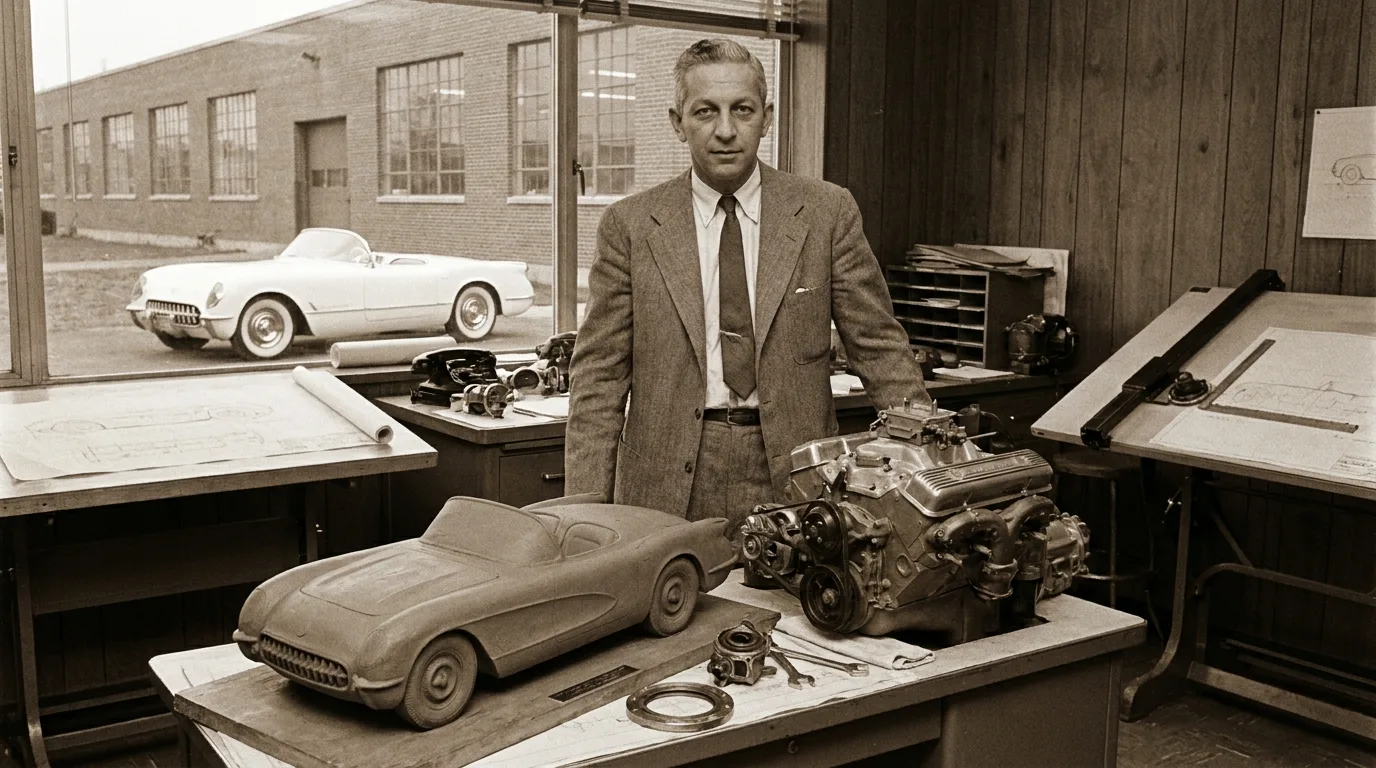
Visually, the ZR-1 was distinguished by wider rear bodywork to accommodate the wider rear tires, and by a set of subtle badges. Chevrolet deliberately kept the exterior understated. The engineering was the point. To read more about the people who shaped that engineering philosophy, the story of the man behind the Corvette provides essential context for why a 32-valve V8 in an American sports car was the natural culmination of decades of deliberate work.
The LT1 revival and the 1992 convertible
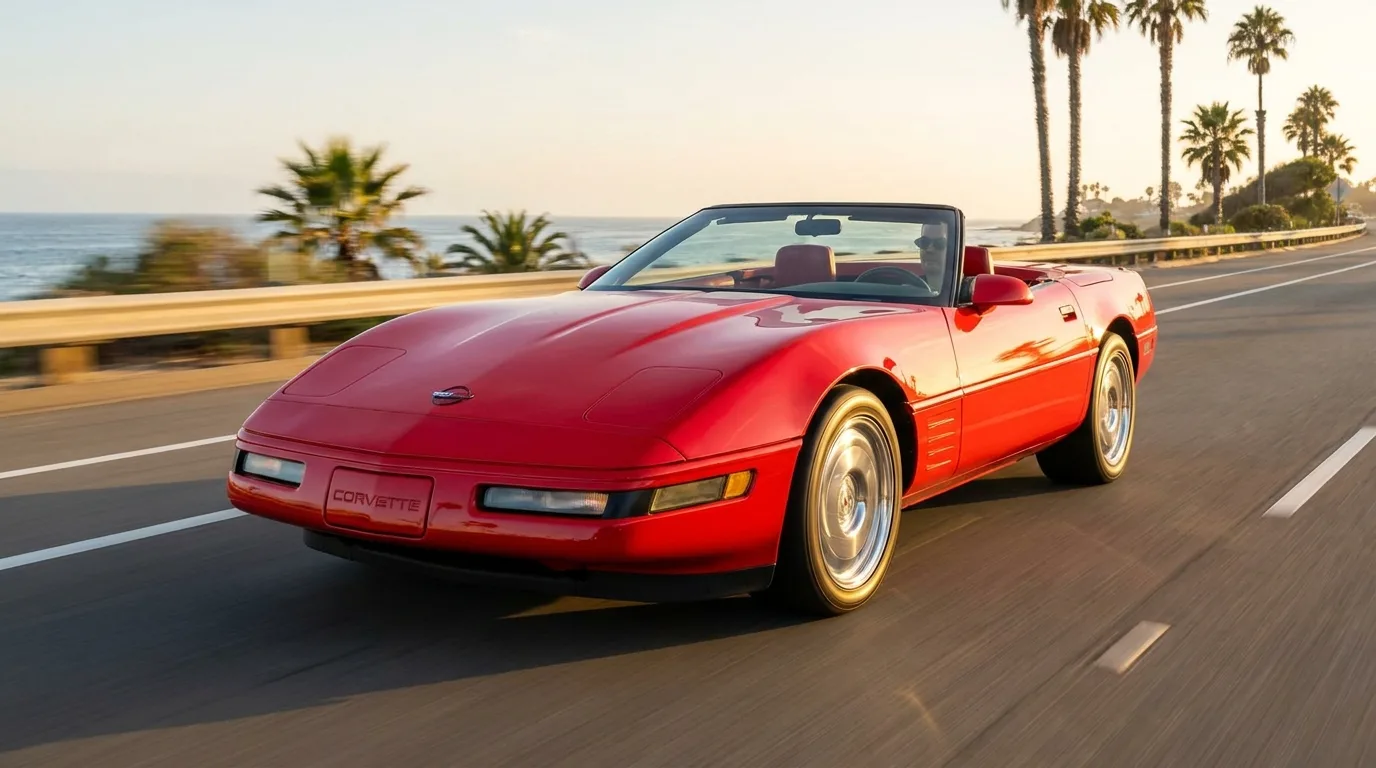
For 1992, Chevrolet made two significant moves. The first was the return of the convertible body style after a ten-year absence from the lineup. The last C3 convertible had been built in 1975; federal rollover standards had made open-top cars commercially difficult for much of the intervening period. The C4 convertible used a body-color removable hardtop as an option and a manual soft top as standard. It sold well from the start.
The second change came in 1992 as well: the LT1 engine. This was a substantially revised small-block that replaced the L98, and it represented a real step forward. The most significant engineering change was reverse-flow cooling, which directed coolant to the cylinder heads before the block. This allowed lower combustion temperatures, which in turn allowed higher compression and more ignition advance without detonation. The result was 300 horsepower and 330 lb-ft of torque from an engine that was also cleaner and more efficient than what it replaced.
The LT1 C4 felt different to drive. The power came in more linearly, the engine revved more willingly, and the car was more responsive at the top of the rpm range than the L98 had been. It was not ZR-1 territory, but it was fast enough that Chevrolet quietly acknowledged the performance gap between the standard Corvette and the ZR-1 had narrowed considerably.
"The LT1 is the version I point people to when they ask about getting into a C4 for the first time. The L98 cars are fine, but the 1992-and-later cars with the small-block are more responsive, better documented by the factory, and the later examples carry enough refinement that they don't feel dated. The power is real. The reliability record is solid. That combination matters."
— Tom Ramirez
1996: Grand Sport, Collector Edition, and the end of an era
The C4's final year was 1996, and Chevrolet sent it out with two special editions that have become among the most sought-after variants in the generation.
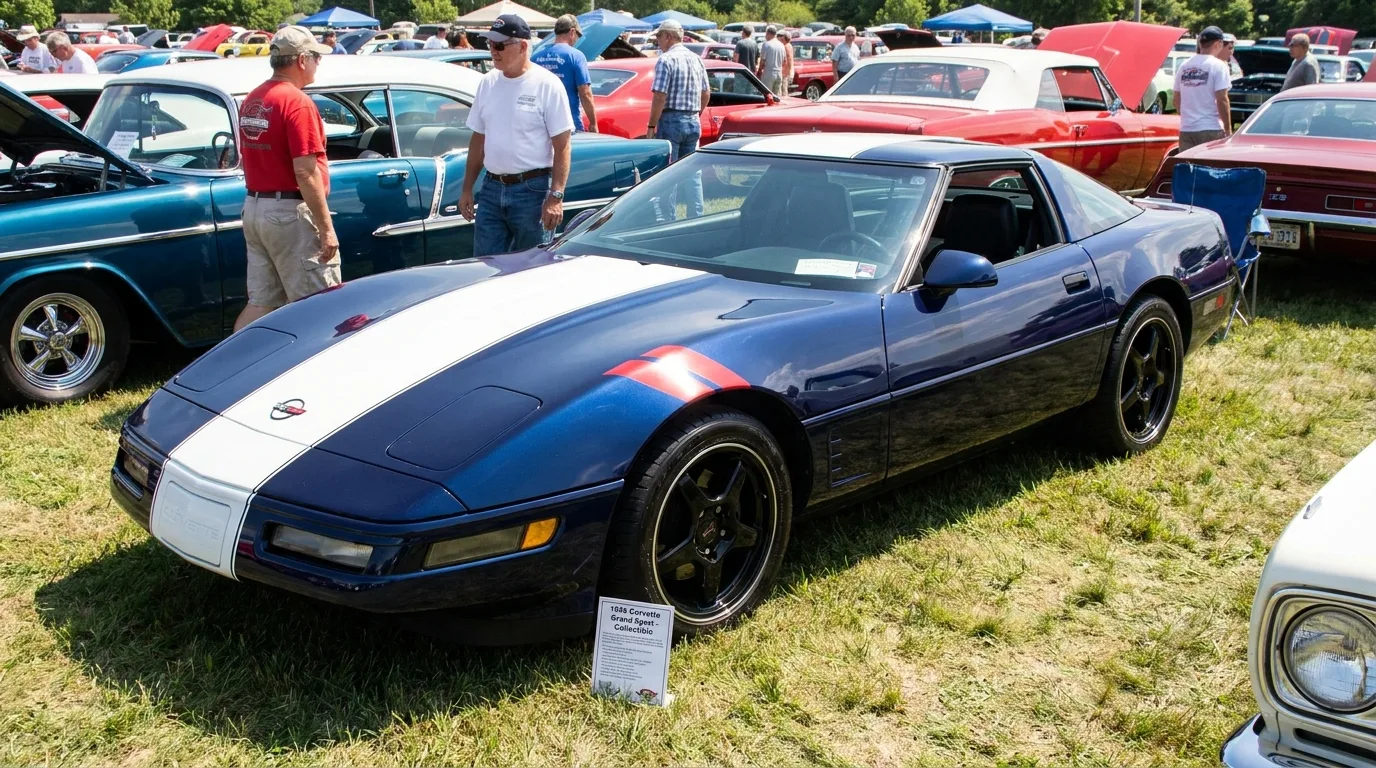
The Grand Sport was a deliberate callback to the five Grand Sport racing Corvettes that Zora Arkus-Duntov had built in 1962 and 1963 before GM's enforcement of the AMA racing ban shut the program down. The 1996 version wore Admiral Blue paint with a white stripe and red hash marks on the left front fender, matching the livery of the original cars. Power came from the LT4, a revised version of the LT1 that added 30 horsepower over the standard engine, for 330 horsepower and 340 lb-ft of torque, and was available only with the six-speed manual transmission. Total Grand Sport production was limited to 1,000 units: 810 coupes and 190 convertibles.
The Collector Edition used a Sebring Silver paint scheme and featured specific interior trim. Both editions have held their value better than most C4s, and the Grand Sport in particular has started to attract serious collector attention.
Beyond the special editions, 1996 was also the last year of the C4 in standard form. The C5 was waiting, and it would be a more capable car in most objective measures. But the C4's thirteen-year run had accomplished what it set out to do: it restored the Corvette's credibility as an American performance car, introduced it to a generation of buyers who had grown up when the Corvette was a performance compromise rather than a performance statement, and built the manufacturing infrastructure at Bowling Green that would serve the car through the C5 and beyond.
What to look for when buying today
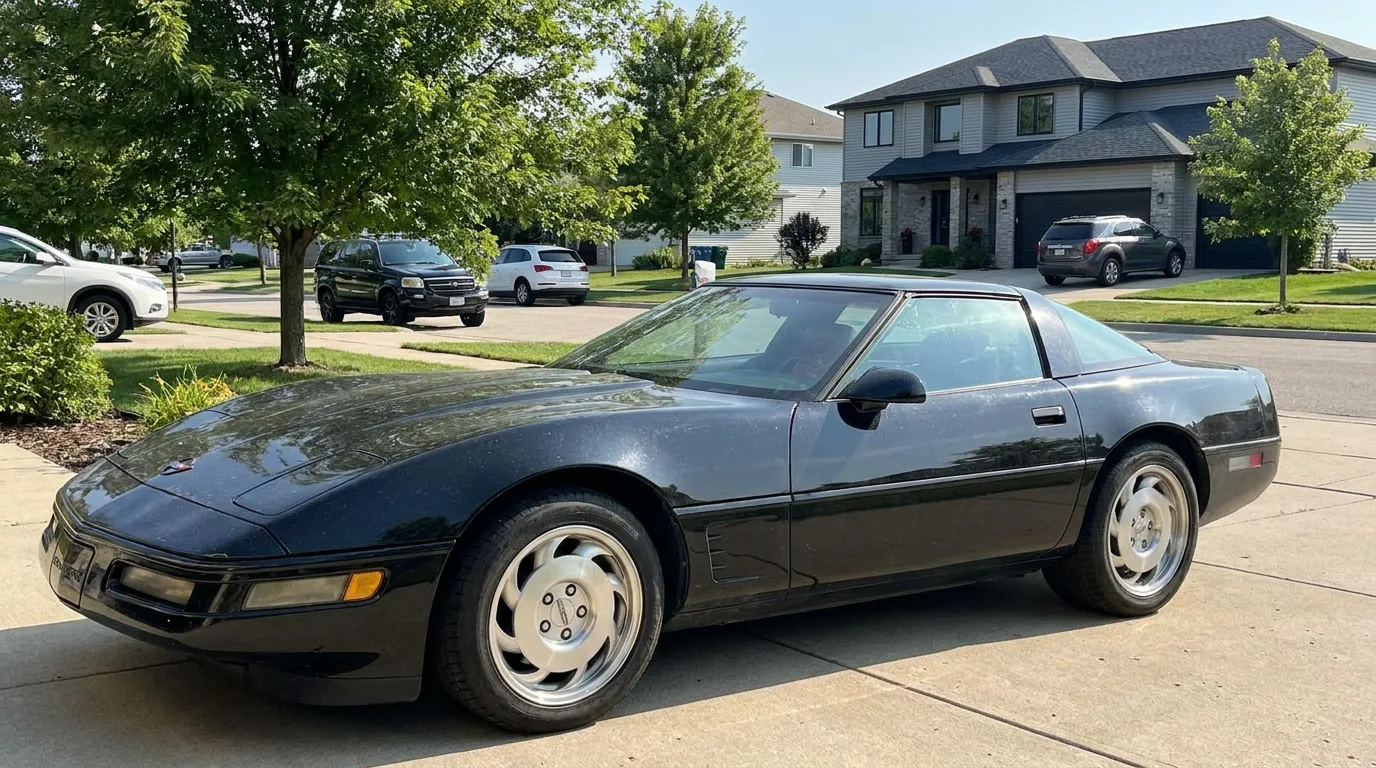
The C4 is now the affordable entry point into classic Corvette ownership, and that affordability is both the appeal and the complication. Driver-quality L98 coupes in decent shape can generally be found in the low five figures, with good-condition examples commonly priced somewhere around $10,000 to $20,000, though the market moves and specific cars vary widely by mileage and condition. LT1 cars in good condition tend to run somewhat higher. Grand Sport and ZR-1 examples occupy a different tier entirely: ZR-1s in good to excellent condition are commonly priced from the mid-$30,000s into the $80,000s depending on model year and condition, and Grand Sports carry a further premium given their limited production, especially with documented history.
The price accessibility has attracted buyers who are sometimes less experienced with this generation's specific failure modes, which means the used market has a real spread in condition.
🔧 Inspection Priorities
- Birdcage frame corrosion. The C4 uses a fiberglass body over a steel birdcage structure. Rust in the birdcage can compromise structural integrity and is expensive to address properly. Check the sills and door jamb areas carefully.
- LT5 service history on ZR-1s. The LT5 engine is not a small-block. It requires specific knowledge to service correctly, and deferred maintenance is expensive. Demand a complete service history before buying any ZR-1.
- Electronic dashboard function. The C4 digital dash uses components that are aging. Dead pixels, failing displays, and non-functional instrument clusters are a known issue. Replacement is possible but time-consuming. Check every display function before you buy.
- Automatic transmission condition (700R4). The 700R4 automatic used in early C4s has known issues when not serviced regularly. A shift that slips or delays going into overdrive is a warning sign worth taking seriously.
- Rear leaf spring condition. The C4 uses a transverse fiberglass leaf spring at both ends. These can crack and sag with age. Replacement is not catastrophic in cost, but it is worth knowing the condition before purchase.
The C4's place in the classic car market now
The C4 spent most of the 2000s and 2010s in the shadow of the C2 and C3, which had established collector premiums that left the C4 looking like merely a used sports car. That has changed. The generation has crossed into classic territory: 1984 is now more than four decades old, 1996 is approaching thirty years. The buyers who owned these new are now in their 60s and 70s, and a new generation of enthusiasts is discovering what the C4 offers.
The LT1 and LT4 cars are the fastest appreciating within the generation, partly because the driving experience holds up well and partly because the performance numbers are genuinely respectable by modern standards. The ZR-1 has a dedicated following that tracks specific VINs, and the knowledge base among that community is deep. Grand Sports, because of their limited production and deliberate collectible design, are already beyond the casual buyer's reach at the better-known auction venues.
For someone who wants a C4 to drive rather than display, the LT1 coupe or convertible from 1992 to 1995 represents the best balance of performance, reliability, and price. The car is fast, usable, and maintainable. Parts availability is good. The aftermarket for these engines and chassis is substantial. If you are ready to look at what is available, the current listings of C4 Corvettes for sale will give you a working sense of where the market sits right now across different conditions and configurations.
The C4 era is closed. The 1996 Grand Sport was the last car off the line, and it ended a generation that had started with a skipped year, a digital dashboard nobody quite understood, and power numbers that embarrassed a car with Corvette on the badge. By 1996, the Corvette was fast again, refined enough to compete, and respected enough that its successor had real expectations to meet. That is a different story than where things stood in 1984, and it is worth understanding how the car got there.
Sources and notes
- Wikipedia, Chevrolet Corvette (C4) — confirmed the 43 pre-production 1983-VIN cars, the surviving example, and horsepower progression across L83, L98, LT1, LT4, and LT5 engines
- CorvSport, The Car That Never Should Have Been — confirmed the pre-production build at Bowling Green and the single surviving car's history, including its National Corvette Museum sinkhole survival
- Hagerty Media, Why the Corvette ZR-1 Is the Bargain Buy of Super C4s — confirmed current ZR-1 valuation ranges and market positioning
- Hagerty Valuation Tools, 1984-1996 Chevrolet Corvette market data — confirmed general C4 pricing trends by condition tier
- Corvette Action Center, 1996 Corvette Grand Sport Production Numbers — confirmed 1,000 total Grand Sports built (810 coupes, 190 convertibles) and LT4 output of 330 hp / 340 lb-ft
- CorvetteForum, citing Car and Driver's 1990 ZR-1 test — confirmed period 0-60 acceleration figures in the low-to-mid 4-second range