There is a version of this story where the C4 Corvette is some kind of compromise car. Not fast enough to be taken seriously. Not old enough to be valuable. Not reliable enough to drive every day. I have heard that story. It is wrong on all three counts, but the third one is what I want to talk about, because I have watched people walk away from solid C4s over reliability fears that, with some basic maintenance, simply do not hold up.
The C4 ran from 1984 through 1996. Thirteen years. That is a long production run for any American performance car, and Chevrolet spent those years sorting out real problems, replacing questionable components, and quietly building one of the more capable sports cars of its era. If you want the full picture on how the C4 evolved across those years, that is worth reading before you buy. But if you are asking whether you can actually live with one as a daily driver, that is a different question, and the answer requires some honesty about what these cars are and what they are not.
What the C4 actually is as a daily driver
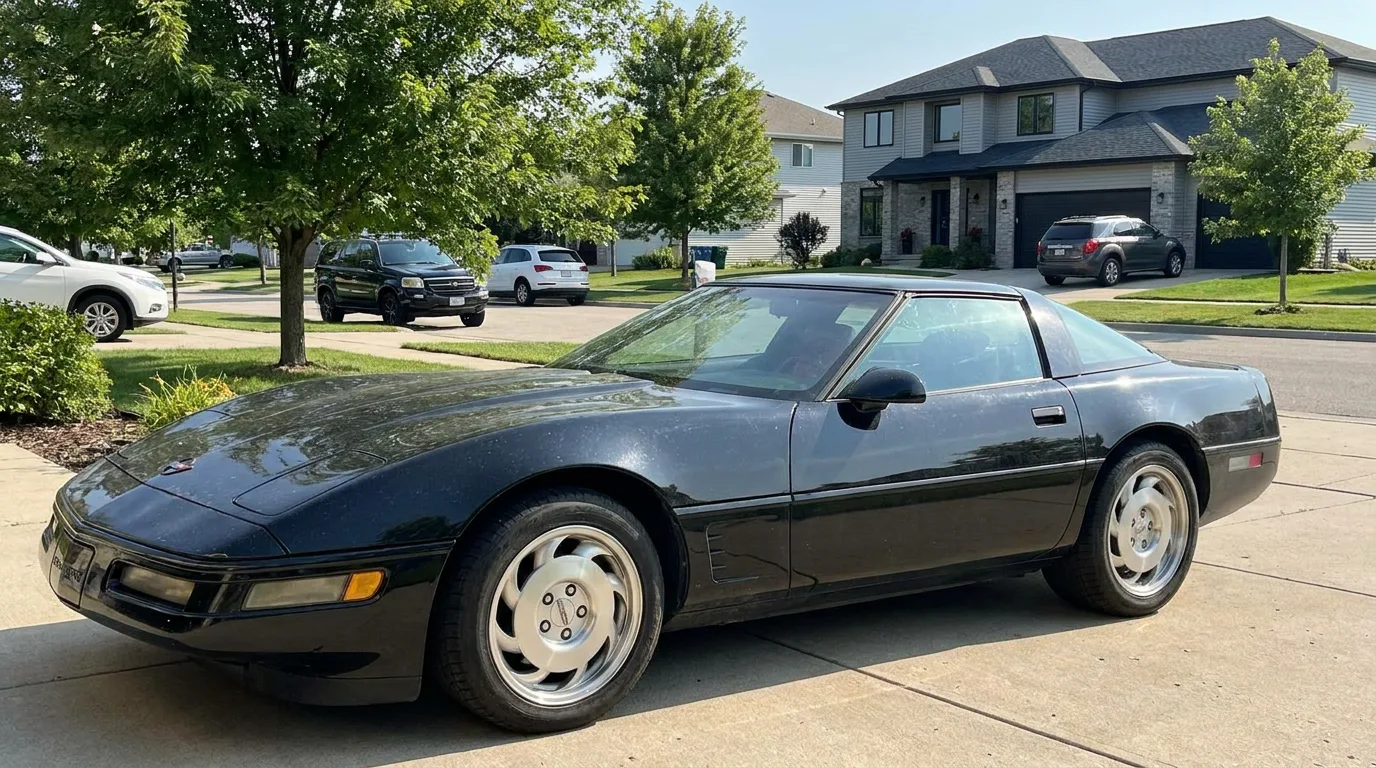
The short version: it is a sports car, not a sports car that has been softened into a touring car. The ride is firm. The cockpit is tight. The visibility out the back is genuinely poor, and the hatch-mounted storage is not going to haul your weekend groceries unless you pack lightly. None of that is a flaw. That is the car doing what it was built to do.
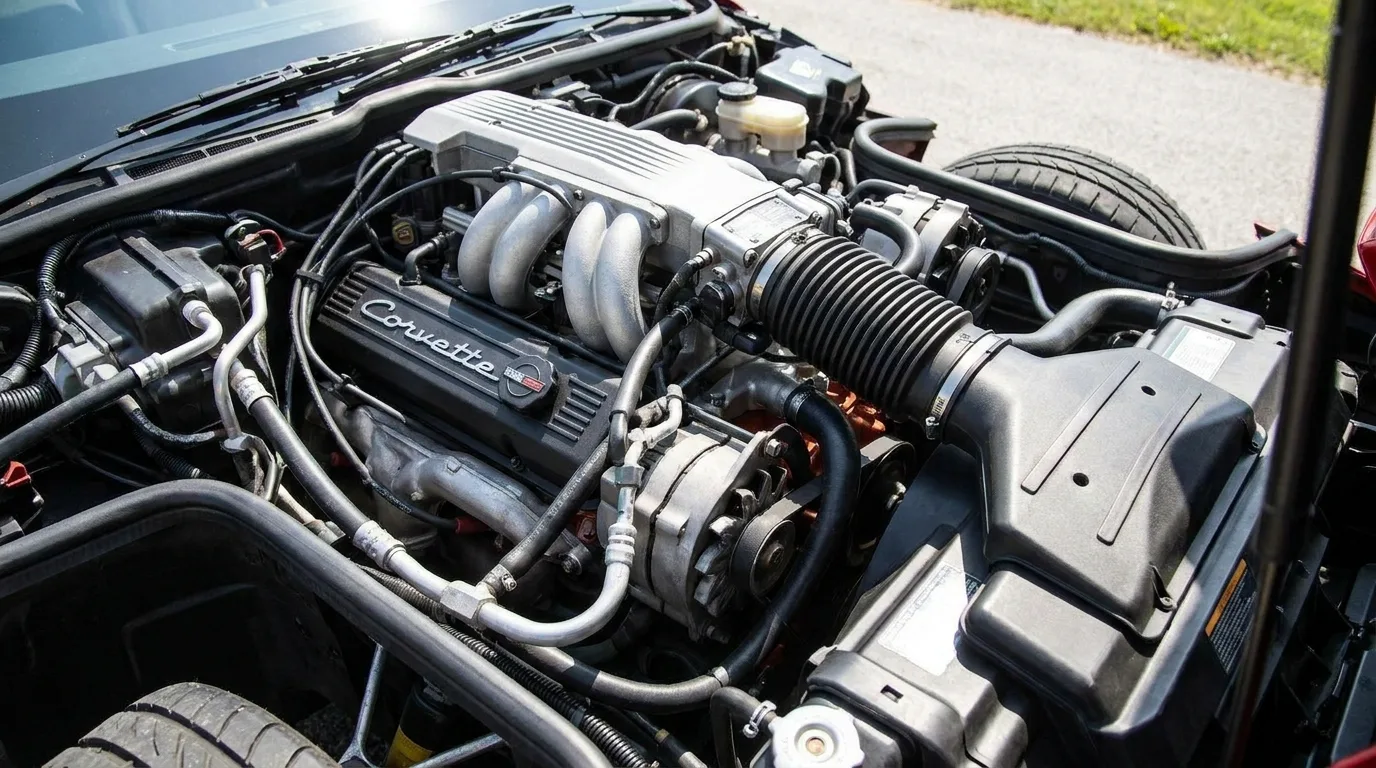
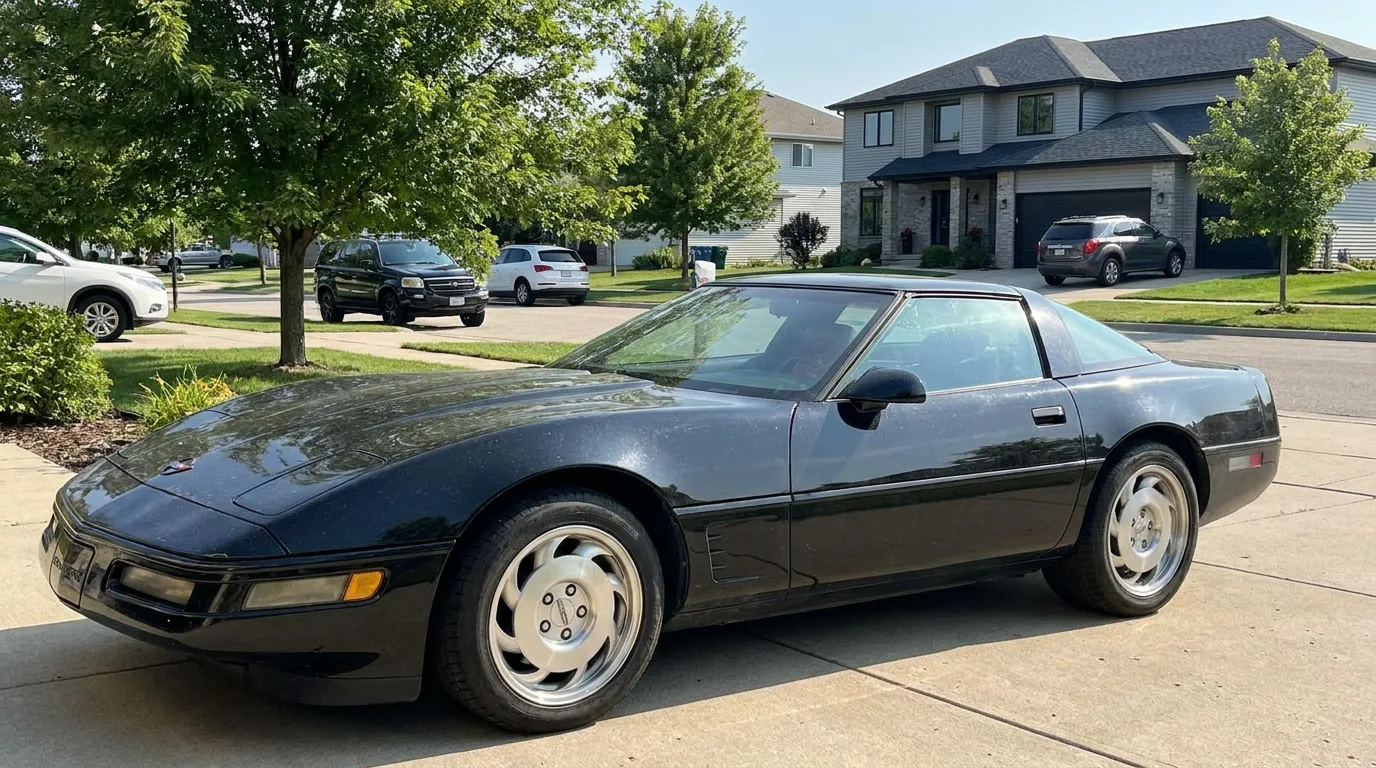
What the C4 does well daily is move you from point A to point B with a level of mechanical engagement that most modern cars do not offer at any price. The later LT1-equipped cars, from 1992 onward, are the easiest to recommend for daily use. The engine is more refined than the L98 it replaced, the electronics are better sorted, and parts availability is strong. You can find LT1 service items at any decent auto parts store. The L98 cars from 1985 to 1991 are fine too, but they have a few quirks worth knowing before you commit to one as a driver.
The real maintenance picture
The C4's reputation for unreliability comes from two places: badly maintained examples and a handful of genuinely known issues that have been well understood for decades. Neither one should scare off a buyer who does their homework.
The cooling system wants attention. Early C4s with the L98 ran hot in stop-and-go traffic, and if previous owners let that slide, you may be looking at a head gasket situation. Before buying any L98 car, get a coolant pressure test and check for combustion gases in the coolant. It takes ten minutes and tells you most of what you need to know.
The optispark ignition distributor on LT1 cars is the one component that gets the most forum airtime, and it deserves some of it. Located at the front of the engine beneath the water pump, it is susceptible to moisture intrusion. When it goes, you know: hard starting, misfires, rough idle. Replacement is not cheap because of the labor involved, but an LT1 that has had a vented optispark upgrade and a fresh unit installed is not going to leave you stranded. Ask for service records. A seller who has already dealt with it has done you a favor.
The automatic transmissions, the 700R4 and 4L60 in earlier cars and the electronically controlled 4L60-E from 1993 on, are generally reliable when serviced properly. Manual gearboxes are more maintenance-friendly. If you are buying a car where the transmission service history is unknown, budget for a fluid change and inspection before you start using it hard.
The economics of daily driving a C4
This is where the C4 story gets genuinely interesting. A solid driver-quality C4, particularly a coupe from the late 1980s or early 1990s, can generally be found for roughly $8,000 to $15,000, with good-condition (Hagerty #3) examples often landing under $11,000 to $12,000 and cleaner cars pushing higher. That is a real sports car with a V8, reasonable fuel economy for its era, and a parts network that has had thirty-plus years to develop. You are not hunting for unobtanium when something needs replacing.
Wear items are affordable. Tires for the C4 are not exotic fitments. Brake components are widely available and not expensive. The fiberglass body does not rust, which removes the single largest ongoing cost from most vintage American car ownership. What you are paying for in maintenance is mechanical attention, not bodywork.
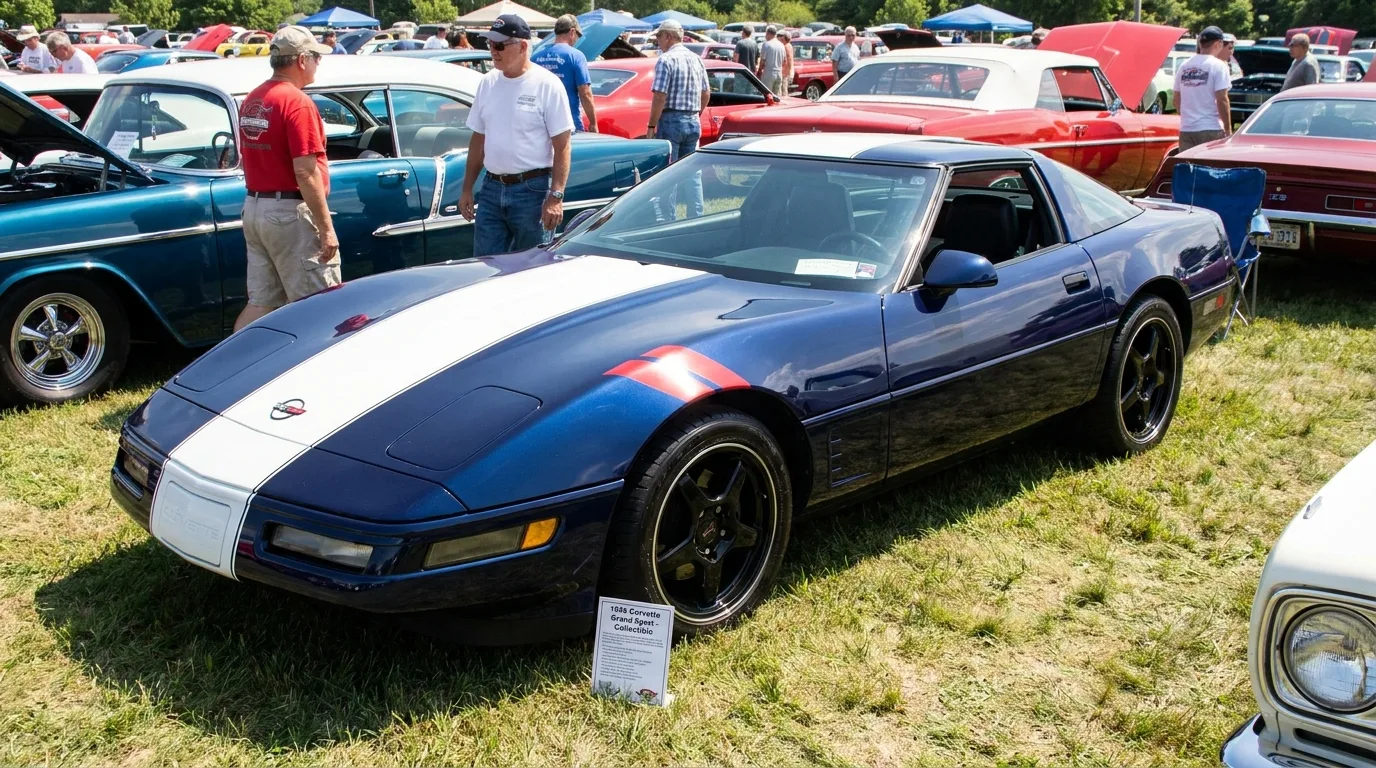
The 1996 collector edition and Grand Sport cars command premiums and probably belong in someone's collection rather than daily service. The cars to buy for driving are the workhorse coupes and convertibles from the middle years, the ones nobody has babied, the ones with honest miles and honest service records. A car with 80,000 to 100,000 miles that has been maintained is not a risk. It is a known quantity.
"I've driven C4s in January in Michigan. Not ideal, but not impossible. The car tells you everything through the steering and the seat. Once you learn what it's saying, you trust it. Most modern cars don't talk to you at all."
— Mike Sullivan
What to watch for before you buy a C4 daily driver
The fiberglass body is low-maintenance, but it is not indestructible. Check the front clamshell for stress cracks around the mounting points, particularly on cars that have seen track use or aggressive driving. Panel gaps should be consistent. A car with inconsistent panel gaps has either been in a collision or was assembled sloppily, and neither is something you want to overlook on a car you will drive every day.
Interior plastic on C4s degrades with age and heat. The dashboard is the main concern: cracking and warping is common on cars that spent years in hot climates without a sunshade. Replacement dashes are available from reproduction suppliers, but it is a project. Factor that into your offer if the dash is cracked.
Get under the car and look at the frame rails. The C4 uses a perimeter frame that is generally solid, but any car that has been driven year-round in salt-belt states will show corrosion at the suspension pickup points and exhaust hangers. Surface rust on the underside is normal. Structural rust at the frame attachment points is a different matter entirely.
If you are considering a C4 for the first time, read the related story on why these cars are attracting a new generation of buyers. The market has been moving, and understanding that context helps you buy at the right price rather than getting caught up in the current momentum.
The case for driving the thing
There is a version of classic car ownership where the car sits in a climate-controlled garage and gets driven to shows twice a year. That is a legitimate choice. It is not what the C4 was built for.
The C4 was built to be used. It is the first Corvette that could genuinely compete with European sports cars on their own technical terms, not just on straight-line speed. The suspension is capable, the brakes are competent, and in a well-sorted example, the car rewards driver engagement in a way that has nothing to do with nostalgia.
If you want to find one and see what the current market looks like, C4 Corvettes for sale are worth browsing to get a feel for what clean driver-quality cars are actually trading for. The spread between a rough project and a sorted daily driver is wider than most people expect, and buying right at the start saves you the work of sorting someone else's problems.
The C4 is not a perfect car. No car is. But it is an honest sports car with a long parts tail, a strong owner community, and enough mechanical character to make the commute interesting. That is a reasonable trade.
Sources and notes
- Wikipedia: Chevrolet Corvette (C4) — confirmed 1984-1996 production run and L98/LT1/LT4 engine timeline
- Corvsport: A Guide to Every C4 Corvette Engine — confirmed L98 (1985-1991) and LT1 (1992-1996) power figures, including 300 hp/340 lb-ft for the LT1
- Corvette Action Center: 1986-1996 Corvette Antilock Brake and Traction Control Systems — confirmed Bosch ABS II arrived as an option in 1986 and standard from 1987
- Corvette Action Center: Optispark Dissection and Replacement — confirmed labor scope (4-6 hours) and failure symptoms for the LT1 optispark distributor
- Corvsport: Automatic Transmissions in Chevy Corvettes — confirmed 700R4/4L60 in early C4s and 4L60-E from 1993 onward
- Hagerty Insider: The fourth-gen Corvette deserves your attention — confirmed current market pricing trend and condition-based valuations for driver-quality C4s