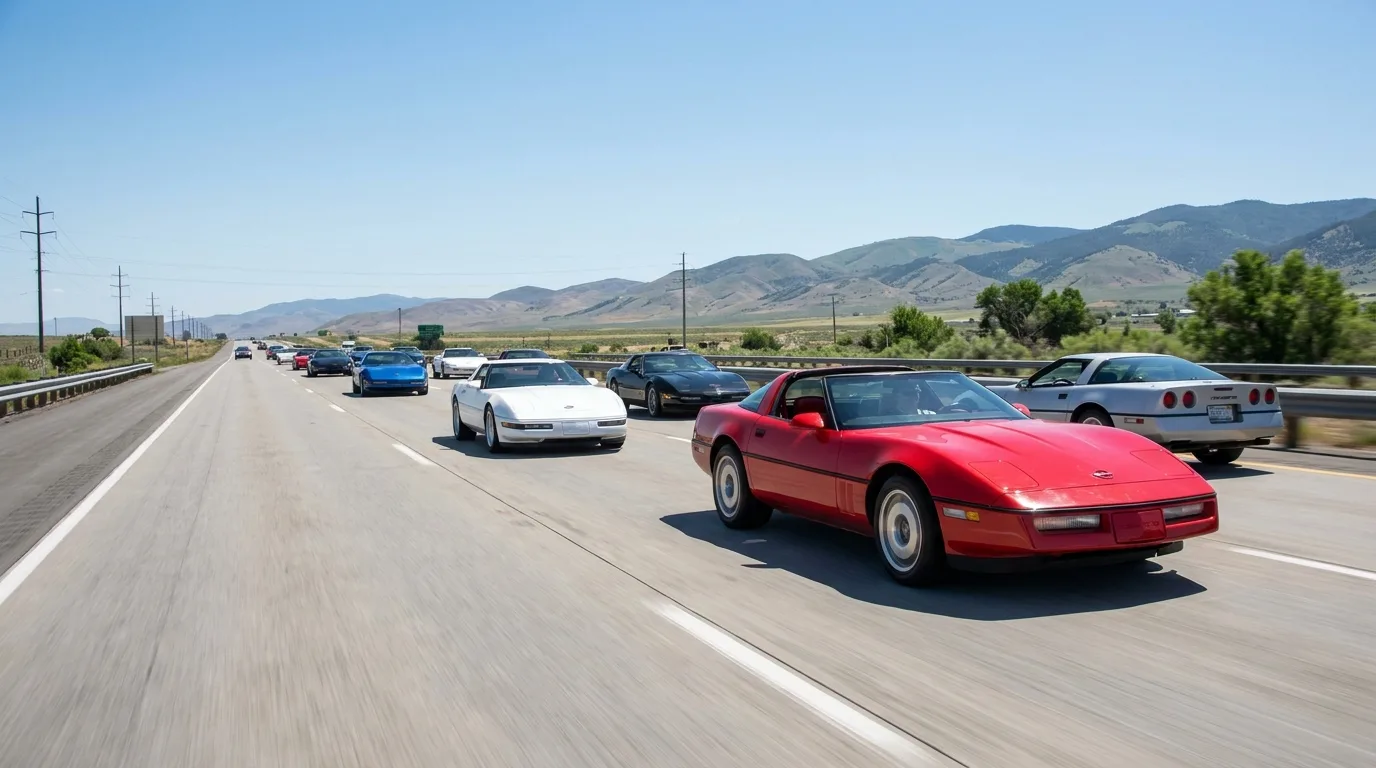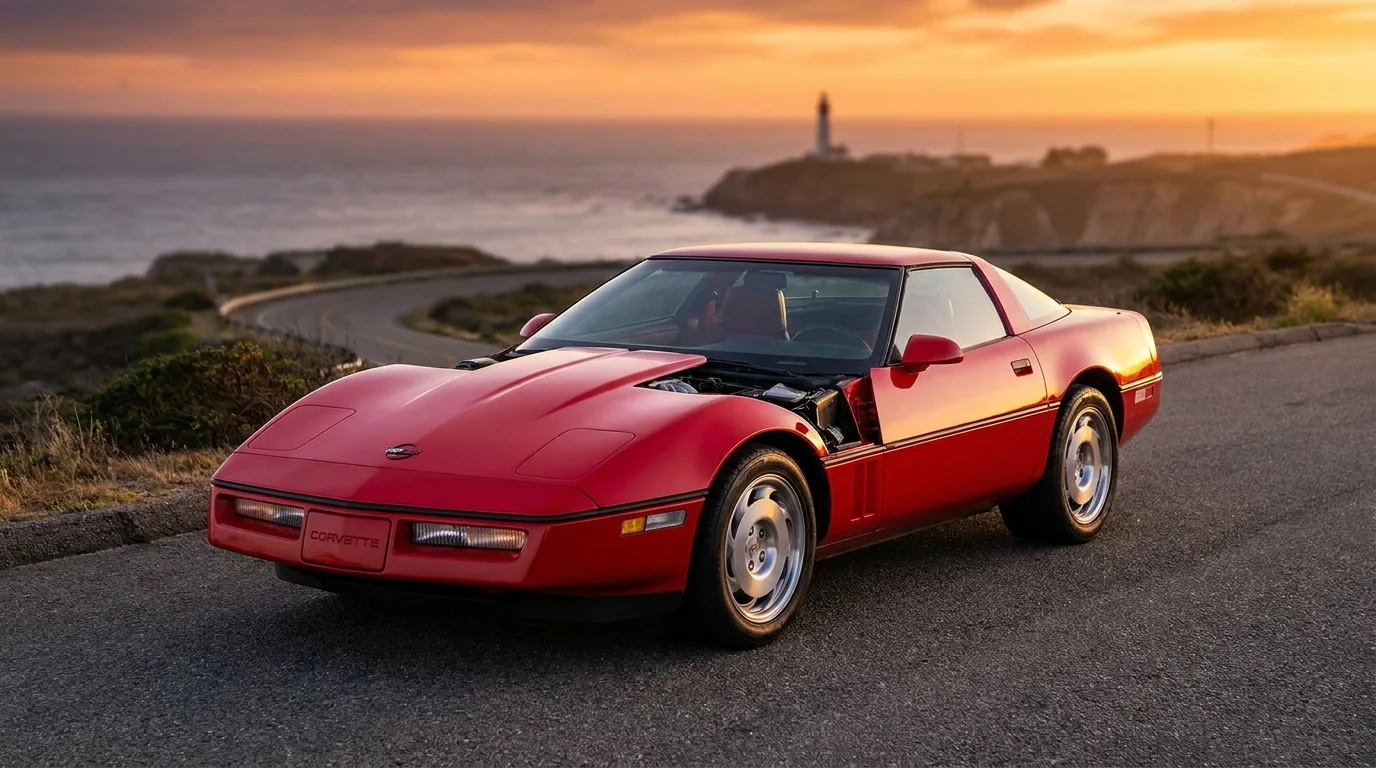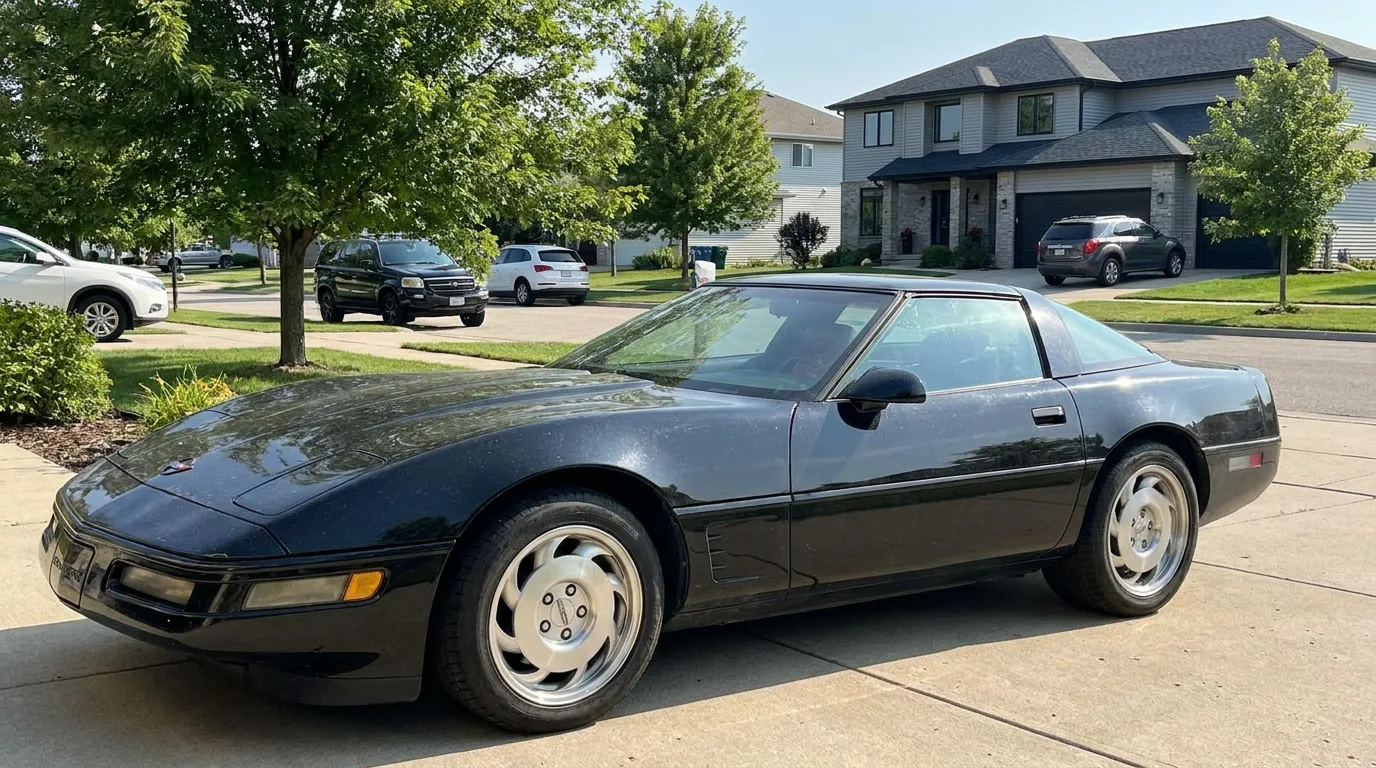

The C4 finally gets its moment
For most of the 1990s and the decade after, the C4 Corvette was the car serious collectors skipped. Too recent, too common, too associated with the Reagan-era Wall Street crowd. The C3 had soul; the C5 had performance credibility. The C4, built from 1984 through 1996, sat in the gap and depreciated accordingly. That window has closed. For more on c4 corvette as a collector platform, the shift in the market over the past three years is worth understanding before prices move further.
What changed? Part of it is generational. Buyers who were teenagers in 1990, staring at a Polo White coupe on a dealer lot, now have the discretionary income to act on that memory. That dynamic has pushed prices on clean, low-mileage examples noticeably above where they were in 2020, particularly on the last-year 1996 Grand Sport and Collector Edition cars.
What the market is doing right now
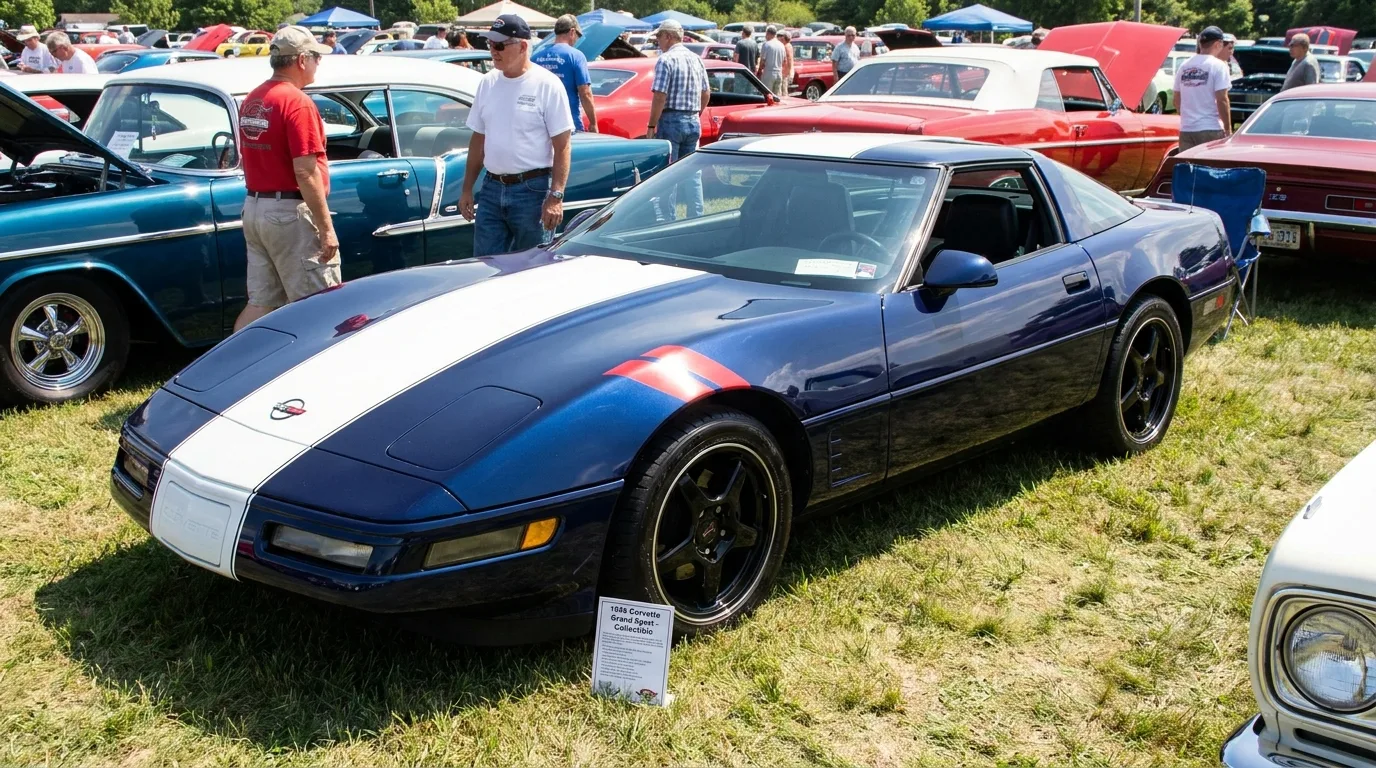
Entry-level C4s, meaning higher-mileage coupes from the mid-1980s through early 1990s, still trade in the $8,000 to $15,000 range at auction depending on condition and options. That is where the floor has held for several years. The real movement is at the top of the market. Clean 1996 Grand Sports, of which Chevrolet built 1,000 total, 810 coupes and 190 convertibles, have crossed $35,000 at Mecum and Barrett-Jackson in recent seasons, including a documented coupe that brought $55,000 at Barrett-Jackson Palm Beach in April 2024. Documented ZR-1s in sorted condition have brought $40,000 to $55,000 depending on mileage and color.
Driver-quality examples from the middle years, 1990 to 1994, represent the value pocket right now. A solid coupe with under 60,000 miles, no structural issues, and a functioning LT1 after 1992 can be found in the $12,000 to $18,000 range from private sellers. At auction, expect to add 15 to 20 percent for buyer's fees. These cars run, they're parts-supported, and the ceiling on what clean examples can bring is still being established.
| Years | Engine | Est. power | Approx. market range (2025) |
|---|---|---|---|
| 1985-1991 | L98 5.7L V8 | 230-250 hp | $8,000-$16,000 driver quality |
| 1990-1995 | LT5 5.7L DOHC (ZR-1) | 375 hp (1990-1992), 405 hp (1993-1995) | $28,000-$55,000 depending on miles/docs |
| 1992-1996 | LT1 5.7L V8 | 300 hp | $10,000-$22,000; '96 specials higher |
| 1996 | LT4 5.7L V8 (Grand Sport) | 330 hp | $28,000-$40,000+ for clean examples |
Which C4s are collectors actually buying
The ZR-1 has its own dedicated following, and those buyers tend to be more sophisticated. They want documentation, low miles, and ideally the original window sticker. A ZR-1 without service history is a harder sell than one that can be traced. The engine is complex, the parts are expensive, and buyers know it. To understand where the C4 fits in the bigger picture of the Corvette's collector arc, the ZR-1 represents the performance pinnacle of the generation, but not the broadest part of the market.
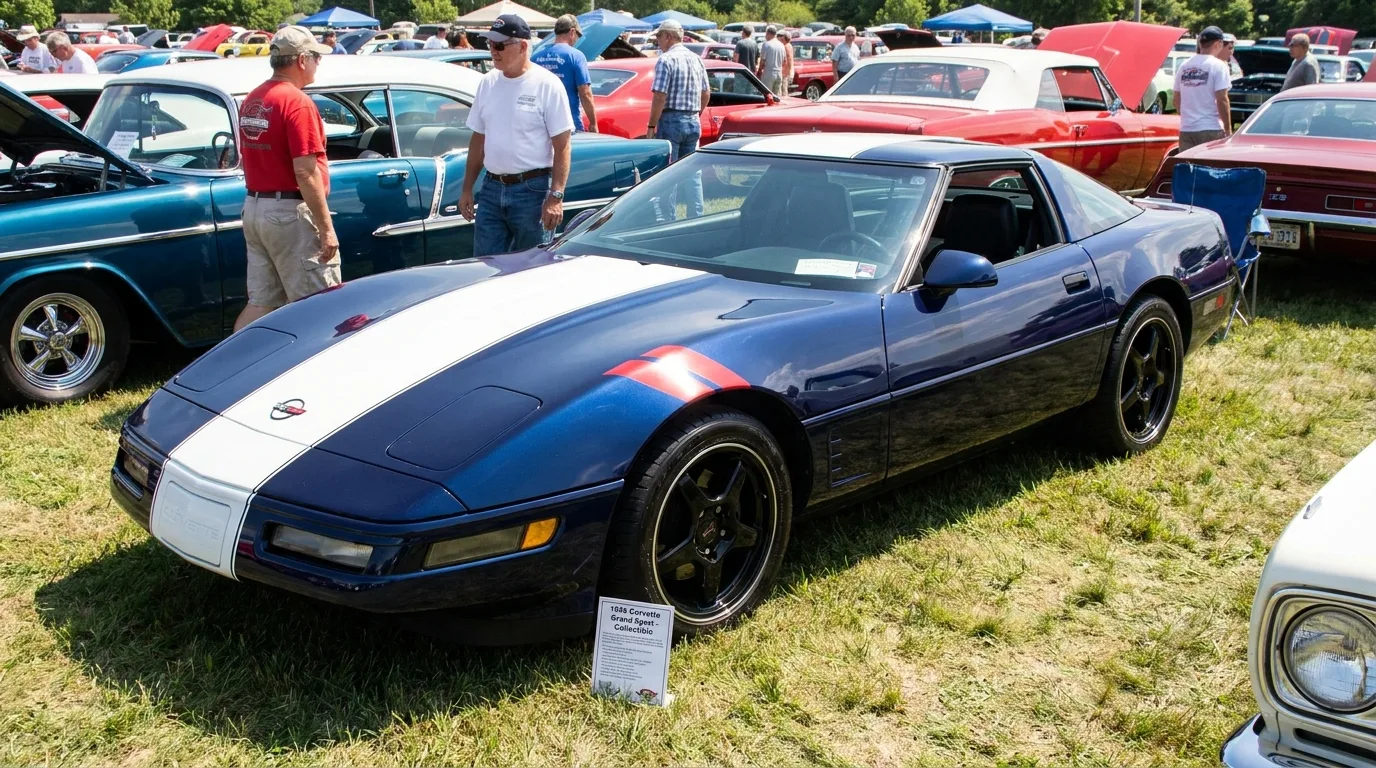
The 1996 Grand Sport is the sentimental choice. The blue-with-white-stripe livery references the 1963 racing cars, and GM built it specifically as a send-off for the C4. That kind of intentional farewell tends to age well with collectors. The Collector Edition, also from 1996, is a different car with different aesthetics, and the market treats it differently. Grand Sport coupes hold a premium; convertibles a further one.
For buyers not chasing the bookend cars, the 1991 to 1994 coupes with the L98 or early LT1 offer the most driving value per dollar. The LT1 was a genuine improvement over the L98 in refinement and efficiency. These cars drive well, parts are available from multiple sources, and they sit at a price point where a mechanical issue is not a financial emergency. The convertibles from these years carry a 10 to 20 percent premium over equivalent coupes.
What to watch for when buying
The C4 has known weak points that haven't changed. Rear differential carrier bearings wear, and the repair is not cheap. The convertible rear glass can delaminate or develop fogging that makes it effectively opaque. Early cars had emissions and fuel system issues that have mostly been sorted by now through owner experience, but a car that hasn't been properly maintained will remind you of every deferred item at once.
The pop-up headlights, which are part of the C4's look, are motor-driven and prone to failure. Replacement motors exist, but it's worth confirming both headlights cycle fully before buying. Interior plastics from the 1980s cars crack and shrink. Replacement parts exist, but a fully restored interior on an early C4 is not cheap to source. The door panel caps and upper dash sections are the first to go.
Rust is not a major C4 story in the way it is for C3s. The fiberglass body is immune to surface corrosion, but the frame and suspension components are not. Cars from northern states with road salt exposure need the same underbody scrutiny as any steel-framed vehicle from the era. If you're buying, get it on a lift. The C4 that looks perfect from the driver's seat can have frame issues that only show up underneath. If you want to see where the C4 story starts, the next chapter of C4 history goes back to the 1984 debut and the decisions that shaped the whole generation.
"The C4 market is doing what I expected it to do, just about three years later than I thought. The driver-quality cars are still rational. The moment the 1996 Grand Sports start routinely clearing $45,000 at the majors, the whole segment moves up with them. We're not there yet, but the direction is clear."
— David Mercer
Is this the time to buy
The honest answer is that the window for getting ahead of the market on C4s has partially closed, but not entirely. Three years ago, a clean 1996 Grand Sport coupe could be found in the low twenties. That price is gone. What remains is a range of driver-quality coupes from the middle years of production that still represent good value against where they are likely to go as the car's collector profile continues to firm up.
For buyers approaching this as a driver rather than an investment, the calculus is straightforward. A sorted LT1 coupe from the early 1990s delivers a genuine American sports car experience at a price that makes regular driving practical. Insurance is reasonable. Parts support is solid. The aftermarket never abandoned the C4, and that makes ownership substantially less painful than many cars from the same era.
Buyers chasing appreciation should focus on the 1996 cars with low miles and documentation. Those represent the ceiling of what the C4 can do as a collectible, and the ceiling appears to still be moving. Current listings on 1996 Corvettes for sale give a real-time read on where sellers are pricing these cars and how long they're sitting.
Sources and notes
- Corvette Action Center: 1996 Grand Sport production figures, 1,000 total (810 coupes, 190 convertibles)
- Corvette Action Center (GM press release archive): confirms the 1996 LT4's 330-hp rating, standard on Grand Sport
- Wikipedia: Chevrolet Corvette (C4) — engine and model-year overview, L98/LT1/LT5/LT4 power ratings
- Hagerty Media: C4 ZR-1 market context, clean examples trading in the $40,000 range with rare outliers higher
- Barrett-Jackson Palm Beach 2024 docket: 1996 Corvette Grand Sport auction result, $55,000
- OnAllCylinders (Summit Racing): C4 digital dash timeline, 1984-1989 digital cluster replaced by analog gauges starting 1990