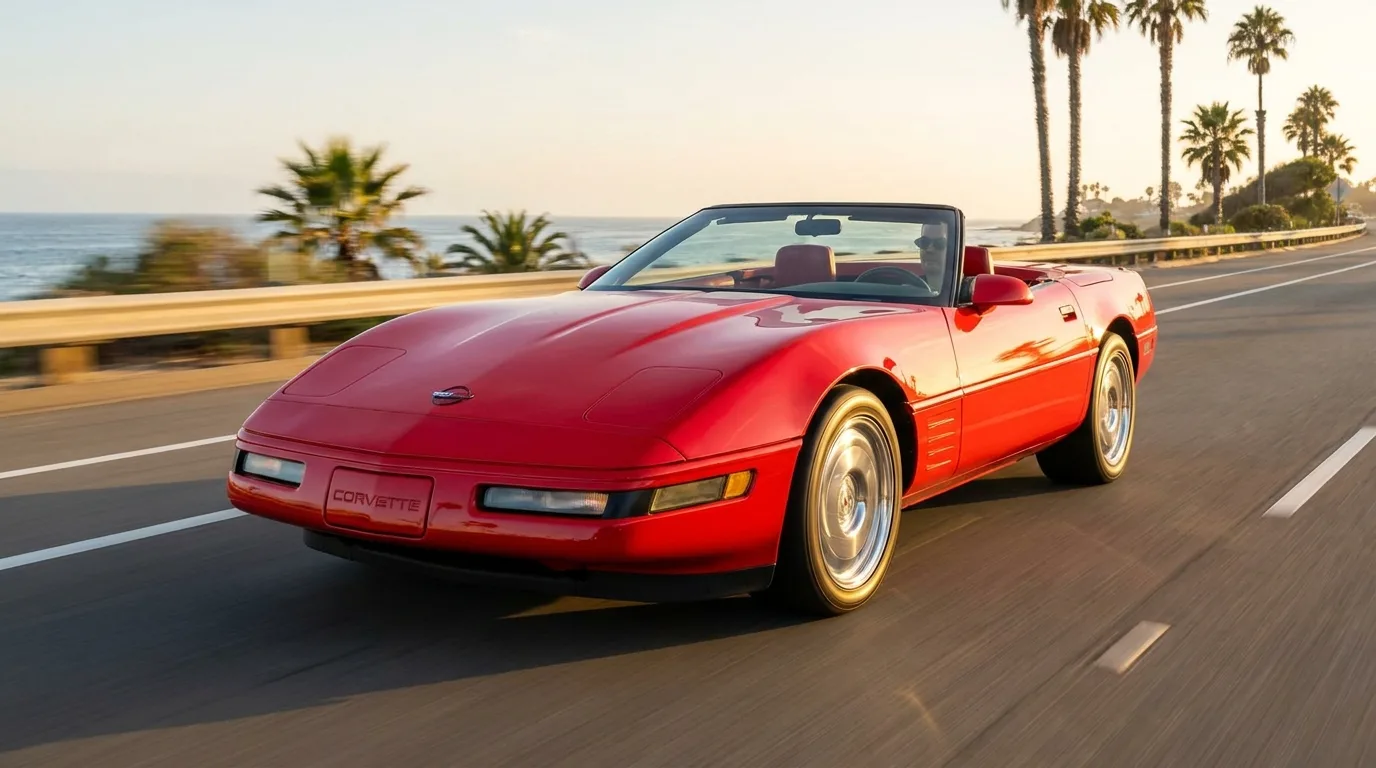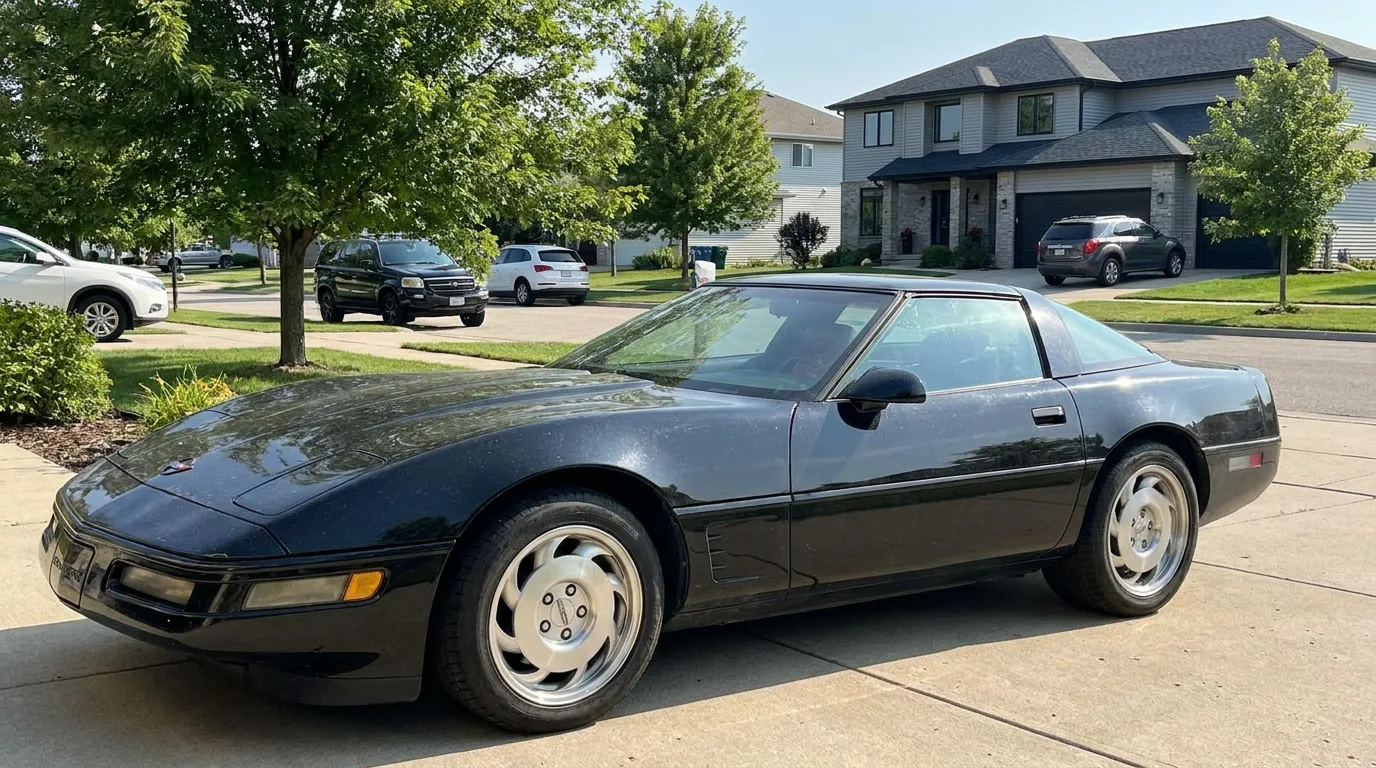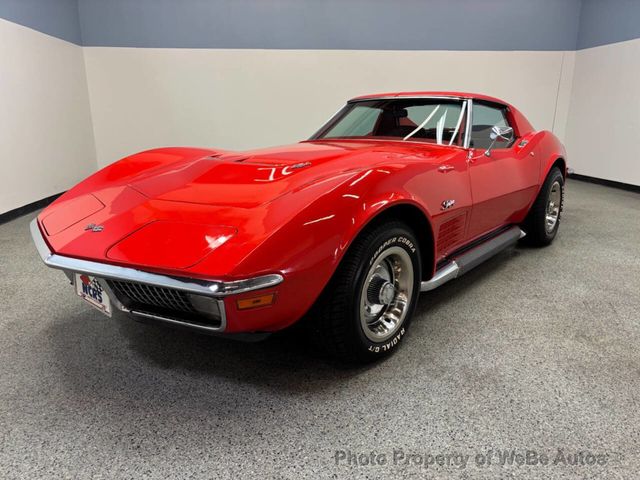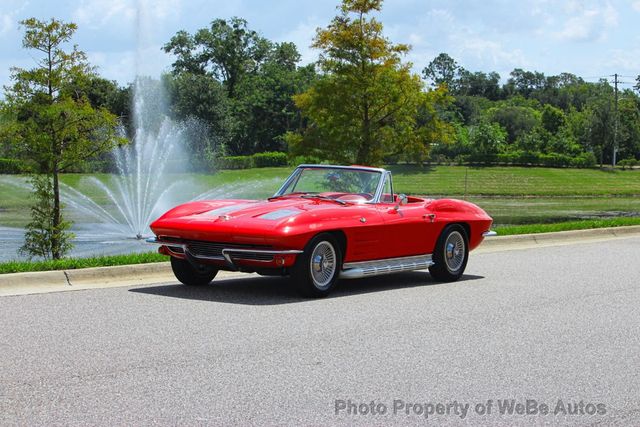
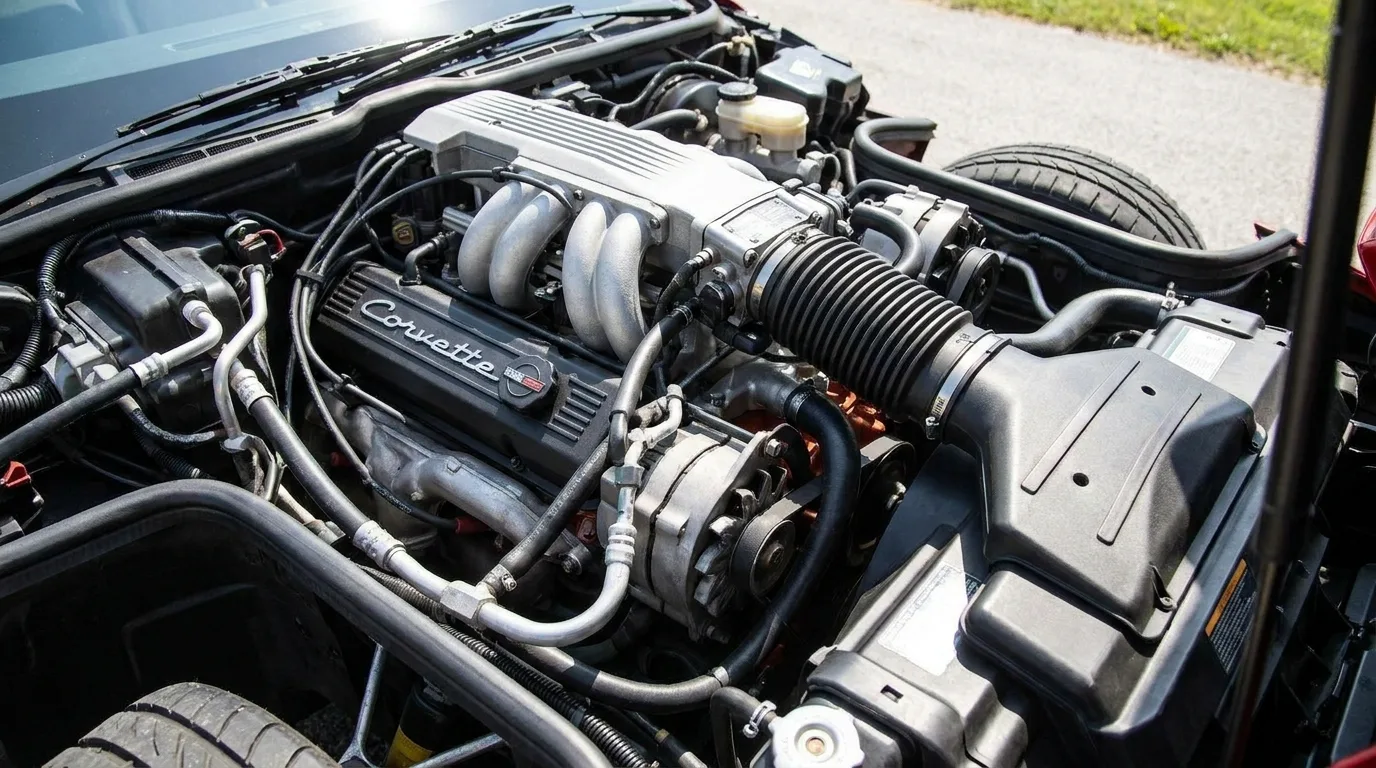
The 1992 model year is where the C4 Corvette story took a turn that most buyers still don't fully appreciate. Chevrolet swapped out the aging L98 small-block and dropped in the LT1, a redesigned 5.7-liter V8 that had more in common with the coming LT5 philosophy than it did with what it replaced. The result was a car that felt substantially different to drive, and one that reshaped what buyers expected from a Corvette for the rest of the decade.
If you're researching the C4 generation, our c4 corvette guide gives you the full arc from the 1984 redesign through the final 1996 model. This article goes narrower: specifically what the LT1 was, what it changed, and why the 1992 introduction year matters when you're evaluating a car. For the full arc, see America’s sports car story.
What replaced the L98 and why it mattered
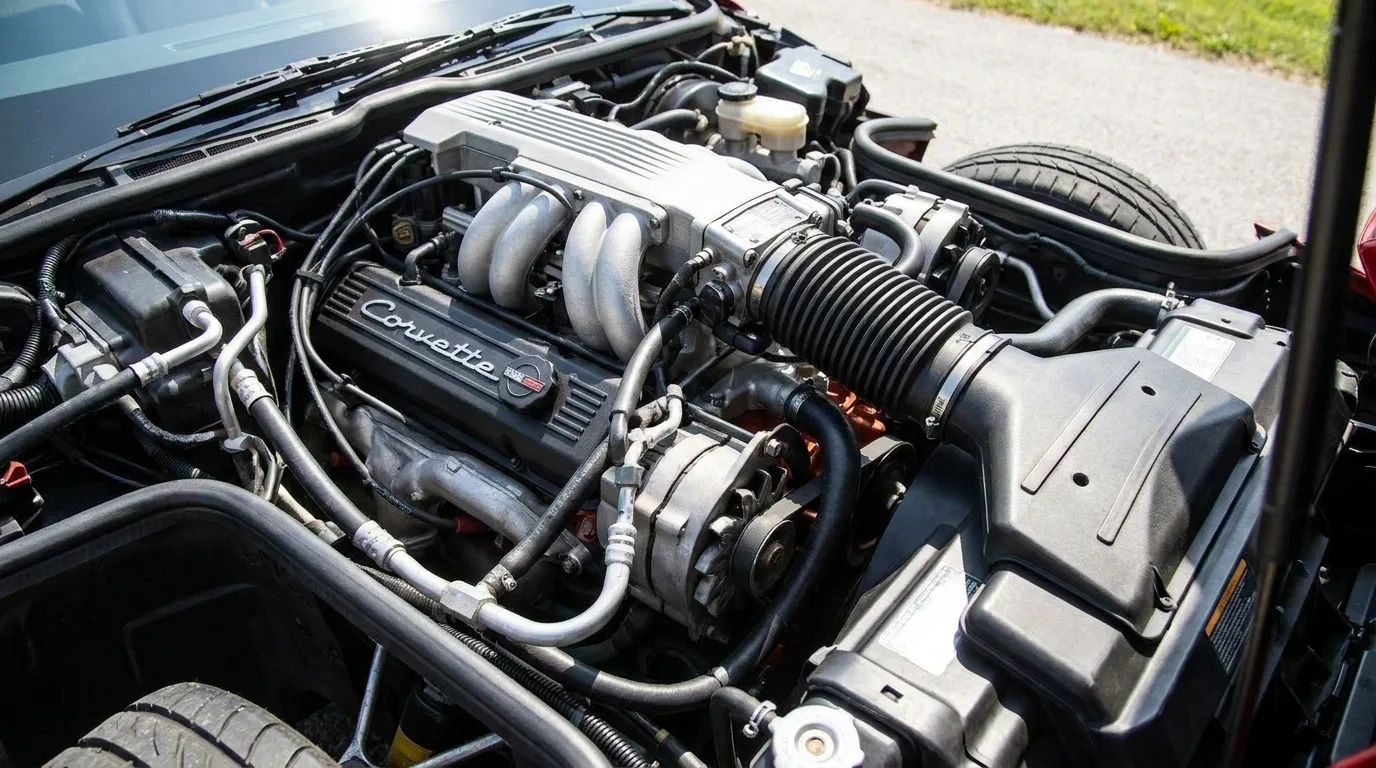
The L98 had powered the C4 from 1985 onward. By any honest measure, it had become the car's weak point. Rated at 245 hp in its final year, 1991, it was a competent engine but not an exciting one. Fuel delivery was tuned-port injection, combustion efficiency was behind what the competition was achieving, and the architecture was essentially the same small-block that Chevrolet had been evolving since the 1950s.
The LT1 arrived as a genuine redesign. The reverse-flow cooling system is the detail that engineers still point to: instead of routing coolant to the heads first and then to the block, the LT1 cooled the combustion chambers first. This allowed higher compression without knock, and higher compression meant more power from the same displacement. Chevrolet rated the 1992 LT1 at 300 hp at 5,000 rpm and 330 lb-ft of torque at 4,000 rpm. Those are the factory numbers from period literature, and the jump from 245 hp to 300 hp was immediately apparent to anyone who drove both back to back. It was the first time a base Corvette had cleared the 300 hp mark since the muscle car era.
The sequential port fuel injection was another meaningful change. It replaced the L98's throttle-body setup and delivered fuel directly to each cylinder's intake port, improving both power delivery and fuel efficiency.
The opti-spark: the LT1's most discussed weakness
Any honest account of the 1992 LT1 has to spend time on the opti-spark ignition system, because it is the most consequential maintenance item on these engines and the one that has defined the ownership experience for a lot of C4 buyers.
The opti-spark is an optical distributor mounted at the front of the engine, behind the water pump. Its location means that when the water pump weeps or fails, coolant can find its way into the distributor. The opti-spark itself doesn't like heat or moisture, and when it starts to fail, the symptoms range from rough idling and misfires to complete no-start conditions. The replacement procedure requires removing the water pump to access it, which adds labor time.
Chevrolet revised the system in 1995, adding a vented cap with vacuum and air-intake lines to reduce moisture ingress, but the fundamental vulnerability remained through most of the LT1's production run, including the 1992 through 1994 model years. When you're inspecting a 1992 specifically, ask about the service history on both the water pump and the opti-spark. If neither has been replaced and the car has 80,000 miles on it, budget for both. The parts and labor together are not inexpensive, but they are not catastrophic either, and a freshly serviced LT1 is a reliable engine.
"The opti-spark gets a bad reputation, and some of it is earned. But most of the horror stories I've seen trace back to deferred maintenance, not a fundamentally flawed design. If the service records show that the water pump and distributor have been done, I'm not worried about it. If the car has 90,000 miles and no paperwork, I want to know who's been maintaining it before I write any checks."
— Tom Ramirez
LT1 specifications and what the factory delivered
| Specification | 1992 LT1 (C4 Corvette) |
|---|---|
| Displacement | 5.7L (350 cu in) |
| Bore x Stroke | 4.00 in x 3.48 in |
| Compression ratio | approximately 10.5:1 |
| Horsepower (rated) | 300 hp @ 5,000 rpm |
| Torque (rated) | 330 lb-ft @ 4,000 rpm |
| Fuel delivery | Sequential port fuel injection (SPFI) |
| Ignition | Opti-spark optical distributor |
| Cooling | Reverse-flow |
| Transmissions offered | 6-speed manual (ZF), 4L60 automatic |
The ZF six-speed manual introduced with the LT1 was a meaningful pairing. It was a proper gearbox from a German manufacturer already supplying European sports cars, and it gave the Corvette a transmission that felt calibrated to the engine rather than grafted onto it. The 4L60 automatic was available for buyers who preferred it, and it was capable, but the six-speed combination is what enthusiasts sought and what tends to command a premium in the used market today.
Why 1992 specifically, and how it differs from later LT1 years
The 1992 model year is the LT1's debut, which gives it both a distinction and a caveat. First-year engines of any significant redesign can carry production issues that get sorted in subsequent years. The opti-spark venting improvements did not arrive until the 1995 model year, so the 1992 through 1994 cars all share the same unvented, moisture-prone distributor design. Buyers who prefer first-year cars for collector reasons accept this; buyers who are primarily interested in a driver sometimes prefer a 1995 or 1996 car specifically because of the revised opti-spark.
That said, the 1992 Corvette is not an unreliable car when maintained. Chevrolet built 20,479 Corvettes for the 1992 model year (14,604 coupes, 5,875 convertibles, and 502 ZR-1s), a volume broadly in line with other C4 years, which has limited relevance for collectibility, since the C4 is not yet at the point in its collector arc where production numbers drive significant price differences across years.
The broader LT1 generation ran from 1992 through 1996, with the final 1996 Corvette receiving the Grand Sport and Collector Edition packages that have made it the most sought-after C4. The 1992 sits at the opposite end of that spectrum: it is the entry point to the LT1 era, priced accordingly, and in good condition represents a capable car at a reasonable cost.
To understand how this engine fits into the longer America's sports car story, the C4's place in that narrative is the generation that modernized the platform after the slow sales years of the late 1970s and early 1980s. The LT1 was the engine that confirmed the modernization was real.
What these cars cost and where the market sits
A driver-quality 1992 Corvette with the LT1 and reasonable service history can generally be found in the $8,000 to $18,000 range, depending on condition and options, with listed asking prices spanning roughly $7,500 to $30,000 across the current market. Clean, low-mileage examples with strong documentation push toward the higher end of that range. The six-speed manual adds value over the automatic. Convertibles command a premium over coupes at every condition tier.
The C4 market has been firm without being exciting. These are not investment cars at this price point, but they are also not depreciating. Buyers in the enthusiast community treat them as drivers, and the supply of well-maintained examples is adequate enough that you should not feel pressure to buy a marginal car when a better one is available.
If you're actively shopping, the 1993 Corvettes for sale listings give a useful baseline for where adjacent-year LT1 cars are priced, since the 1992 and 1993 command similar values in comparable condition.
For more on what comes next in the C4's history, including the later refinements to the platform and the 1996 special editions, read next in the series, which covers the C4 as a daily driver proposition across the full model run.
Sources and notes
- Vettes of Atlanta, C4 Corvette FAQ (LT1/LT4, 1992-1996): confirmed 1992 LT1 rating of 300 hp at 5,000 rpm and 330 lb-ft at 4,000 rpm
- Automobile-Catalog, 1991 Chevrolet Corvette spec sheet: confirmed final L98 rating of 245 hp for the 1991 model year
- Corvette Action Center, 1992 Corvette production numbers: confirmed 20,479 total units (14,604 coupes, 5,875 convertibles, 502 ZR-1s)
- Corvette Central Tech Blog, The LT1 Opti-Spark Distributor: confirmed the unvented 1992-1994 design versus the vented cap introduced for 1995-1996
- CorvetteForum, Complete Vented Optispark Replacement Guide: corroborated the 1995 timing of the vented opti-spark revision
- Classics on Autotrader, 1992 Chevrolet Corvette listings: used to confirm current asking-price range for driver and clean examples