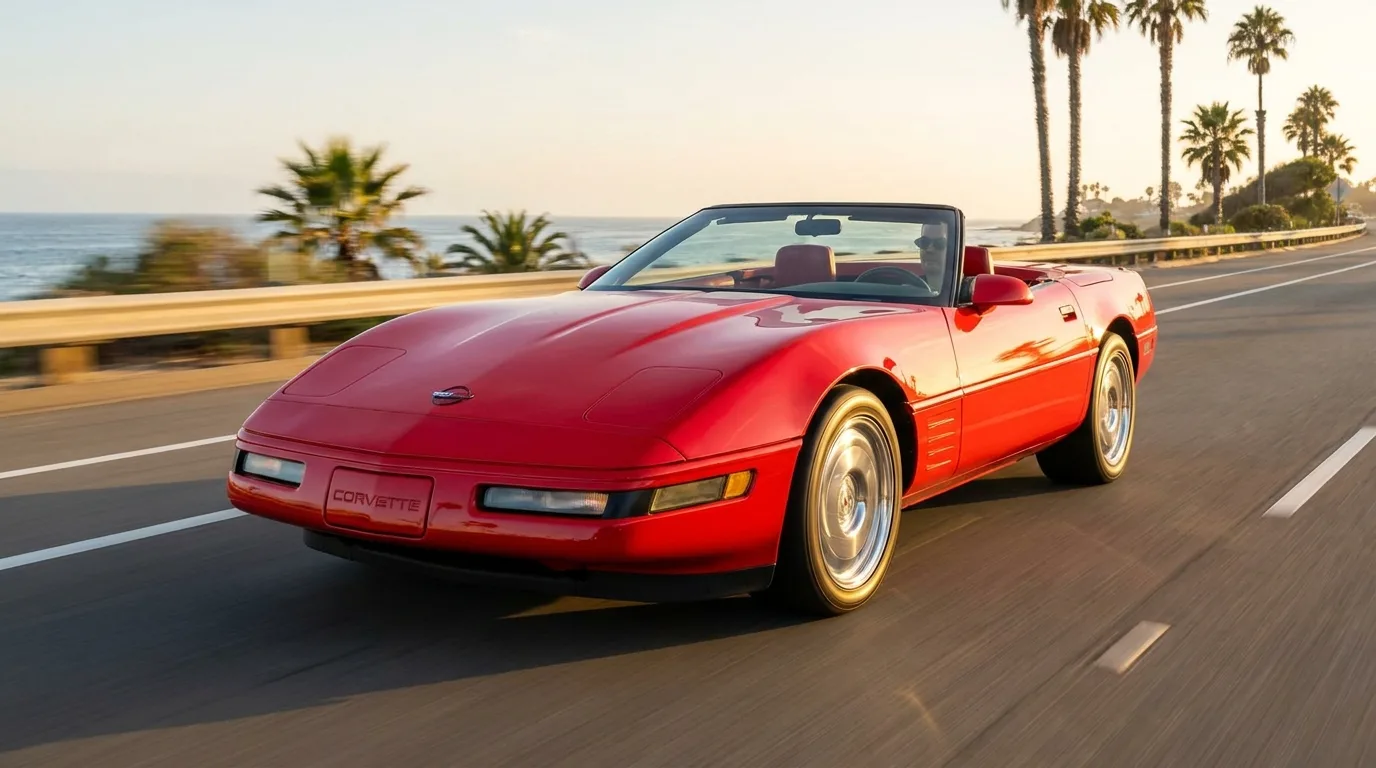
Why 1992 was the year the open-air Corvette came back
The C4 Corvette convertible did not disappear quietly. When production stopped after the 1975 model year, it left a gap that a lot of buyers noticed, and Chevrolet noticed the buyers noticing. The ragtop returned for 1986 as the first factory Corvette convertible in eleven years, and by 1992 it had settled into its stride. The 1992 model year is worth understanding on its own terms, not just as part of a decade-long run, because that year brought a meaningful powertrain change that altered what the convertible actually drove like.
The broader story of the fourth-generation car is covered in the c4 corvette era, but the convertible deserves specific attention. It sold alongside the coupe and the ZR-1 coupe in 1992, and it made up a significant portion of total Corvette production that year. The buyers who chose the ragtop were not giving up performance in any meaningful sense.
The LT1 engine arrives for 1992
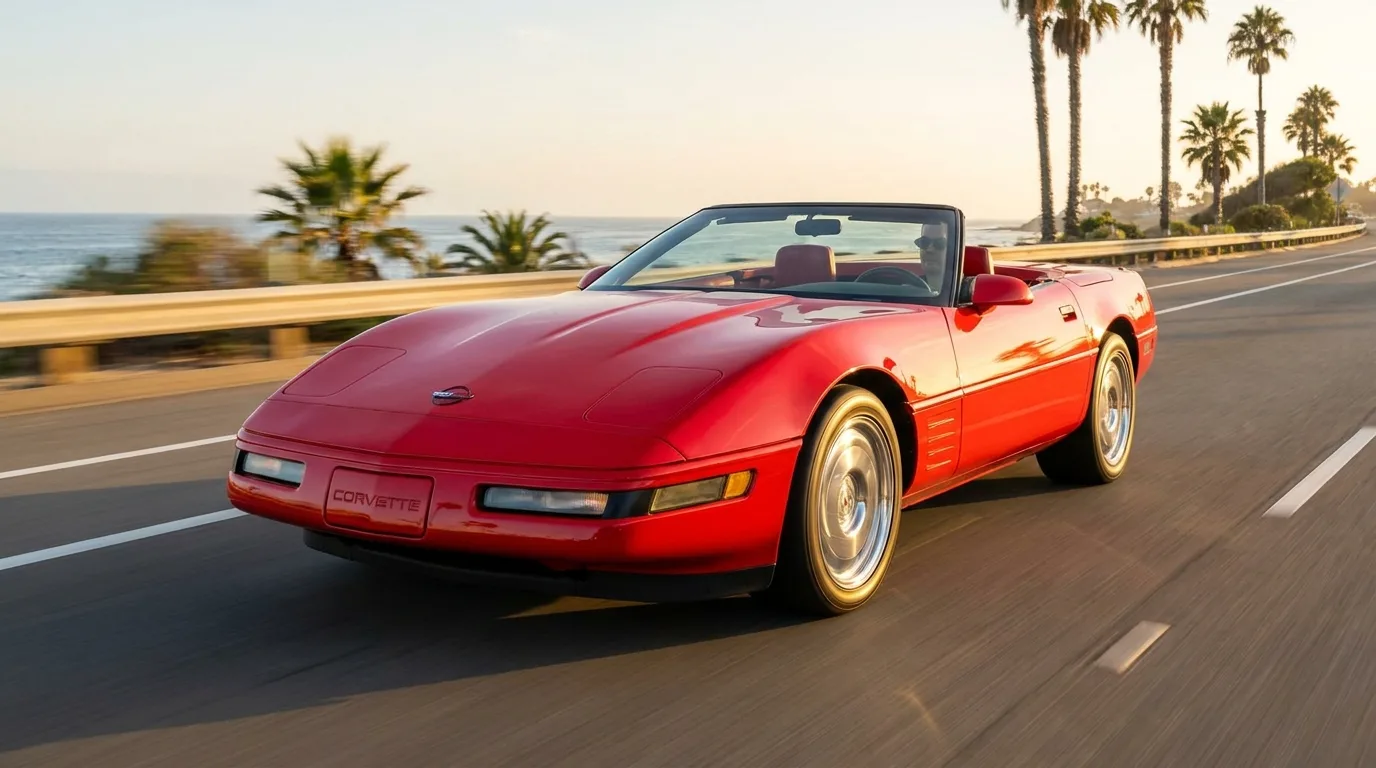
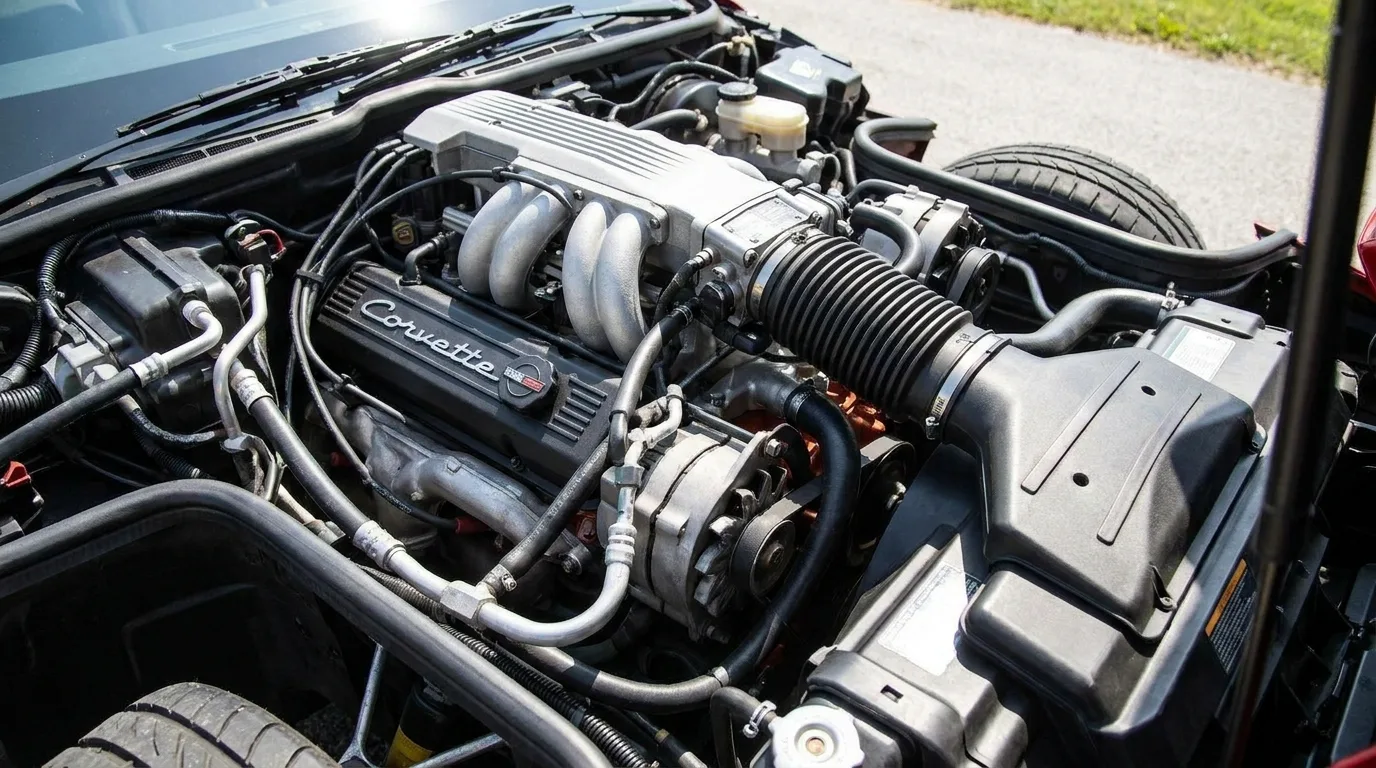
The most consequential fact about the 1992 Corvette convertible is the engine. Chevrolet introduced the LT1 V8 for the 1992 model year, replacing the L98 that had powered C4 Corvettes since 1985. This was not a minor update. the related article goes into the LT1's engineering in detail, but the summary is that the new engine made more power and more torque than what it replaced, and it achieved this with a reverse-flow cooling system that was unusual enough at the time to generate genuine factory documentation.
Factory ratings for the LT1 in the 1992 Corvette came in at 300 horsepower at 5,000 rpm and 330 lb-ft of torque at 4,000 rpm. The L98 it replaced had been rated at 245 horsepower in its final year, 1991. That is a substantial step, and it changed the character of the car. The LT1 pulled harder from lower in the rev range. Reviewers at the time noted it as a genuine improvement, not a paper upgrade.
The convertible used the same LT1 as the coupe, with the same output. Unlike some manufacturers who tuned their open-car variants differently for structural reasons, Chevrolet kept the specifications matched. The convertible did weigh more than the coupe due to the reinforced structure required by the open body, but the power difference between the old L98 coupe and the new LT1 convertible still favored the ragtop.
How the 1992 convertible was built
The C4 convertible body required structural reinforcement that the coupe did not need. Without the fixed roof contributing to chassis rigidity, the engineers added a reinforced frame section and stiffened the underbody. This added weight, and some owners report a degree of cowl shake on rough roads that the coupe does not have. It is not severe, and it is characteristic of open cars from this era, but buyers looking at a 1992 convertible today should drive one on a washboard surface before committing.
The convertible top was manually folded on the standard car, tucking behind the seats under a soft cover, though a power-operated top was available as a factory option. The mechanism is not complicated, but the seals and the rear window (glass on later cars, plastic on earlier ones) are age-sensitive items. A 1992 car is now over three decades old, and any convertible top showing its age needs factoring into the purchase price.
| Specification | 1992 Corvette Convertible |
|---|---|
| Engine | 5.7L LT1 V8 (new for 1992) |
| Horsepower (rated) | 300 hp @ 5,000 rpm |
| Torque (rated) | 330 lb-ft @ 4,000 rpm |
| Transmission options | 4-speed automatic (4L60), standard; 6-speed manual (ZF S6-40), no-cost option |
| Body style | 2-door convertible |
| Convertible top | Manual-fold standard, with a power-operated top available as a factory option |
| Production year | 1992 (model year) |
What factory records say about 1992 production
Chevrolet built 20,479 Corvettes for the 1992 model year, the lowest total since 1962. Of those, 14,604 were coupes, 5,875 were convertibles, and 502 were ZR-1 coupes. The convertible made up close to a third of total production, a healthy share for an open car in a soft market year. The ZR-1, which was only available as a coupe, sat above the standard car in price and performance, and it affected how buyers thought about the standard convertible: if you wanted the ZR-1's power in an open car, you could not have it in 1992. The LT1 convertible was the only factory ragtop option.
Option codes on a 1992 Corvette convertible are worth understanding before buying. The RPO system Chevrolet used lets a tank sticker or build sheet tell you exactly how the car left the factory, including transmission, exterior color, interior, and any factory options. Cars with documented build sheets command a premium in the collector market, and the documentation is worth finding before negotiating on a private sale.
"The tank sticker on a 1992 convertible is not decoration. It is the factory's own record of what left the line that day. A car without one is not worthless, but you are buying someone's word instead of Chevrolet's."
— Tom Ramirez
What to watch when buying a 1992 convertible today
Three decades of use, storage, and owner decisions have left the 1992 convertible population in variable condition. The LT1 has known issues that every buyer should understand. The opti-spark ignition distributor, located at the front of the engine under the water pump, is prone to failure from moisture ingestion and heat cycling. Replacement is not complicated but requires removing the water pump to access it. On a car this age, budget for the opti-spark if the service history does not show a recent replacement.
Cooling system maintenance is important on any LT1. The reverse-flow design means water pump direction matters, and using the wrong aftermarket pump is a real failure mode in the used car market. Check service records for any cooling work and verify the correct pump type was installed.
The convertible top itself deserves close examination. A proper top sits flat, seals at all four corners without gaps, and operates without binding. The rear window on a 1992 car is likely plastic rather than glass, and plastic rear windows scratch, craze, and lose clarity over time. Replacement top assemblies are available from the Corvette aftermarket, but a quality installation on a car in good underlying condition is not cheap.
Price ranges for 1992 Corvette convertibles in the current market depend heavily on condition and documentation. Driver-quality examples with honest cosmetics and a running LT1 move in a range that reflects the strong C4 interest that has developed over the past several years. Solid, presentable cars with clean tops and documented history sit higher. Show-quality examples with original paint and confirmed build-sheet matching can reach a level where ZR-1 money starts to look interesting by comparison, though exact figures move with the broader collector market. The convertible premium over a coupe of the same year and condition is real and has been fairly consistent.
Anyone seriously considering a 1992 Corvette convertible should look at available inventory before committing to a specific car. Corvette convertibles for sale gives a current picture of what the market is actually offering across condition grades and price points, which is more useful than any single asking price from a private seller.
Sources and notes
- CorvSport: 1992 LT1 (350ci) Engine Guide — confirmed 300 hp and 330 lb-ft factory ratings and reverse-flow cooling design
- Corvette Action Center: 1992 Corvette Production Numbers — confirmed the 14,604 coupe / 5,875 convertible / 502 ZR-1 production split
- CorvSport: 1992 Corvette Production — confirmed total 1992 output of 20,479 units, the lowest since 1962
- Vettes of Atlanta: C4 Corvette FAQ (1988-1991) — confirmed the L98's final-year 245 hp rating and its replacement by the LT1 for 1992
- Vettes of Atlanta: C4 Corvette FAQ (1992-1996) — confirmed 1992 transmission options: standard 4L60 automatic and no-cost ZF 6-speed manual, both available on the convertible
- Kelley Blue Book: 1992 Chevrolet Corvette Convertible pricing — reference point for current resale and trade-in value ranges