
How the C4 pulled Corvette out of the low-power years
By the early 1980s, the Corvette's reputation had taken a beating it hadn't deserved to take quietly. The C3 generation had soldiered through the emissions era with strangled engines, rubber bumpers, and horsepower figures that would have embarrassed the car's 1960s self. The 1980 L48 small-block was down to 190 hp. That's not a sports car number. It's a number that tells you something went wrong.
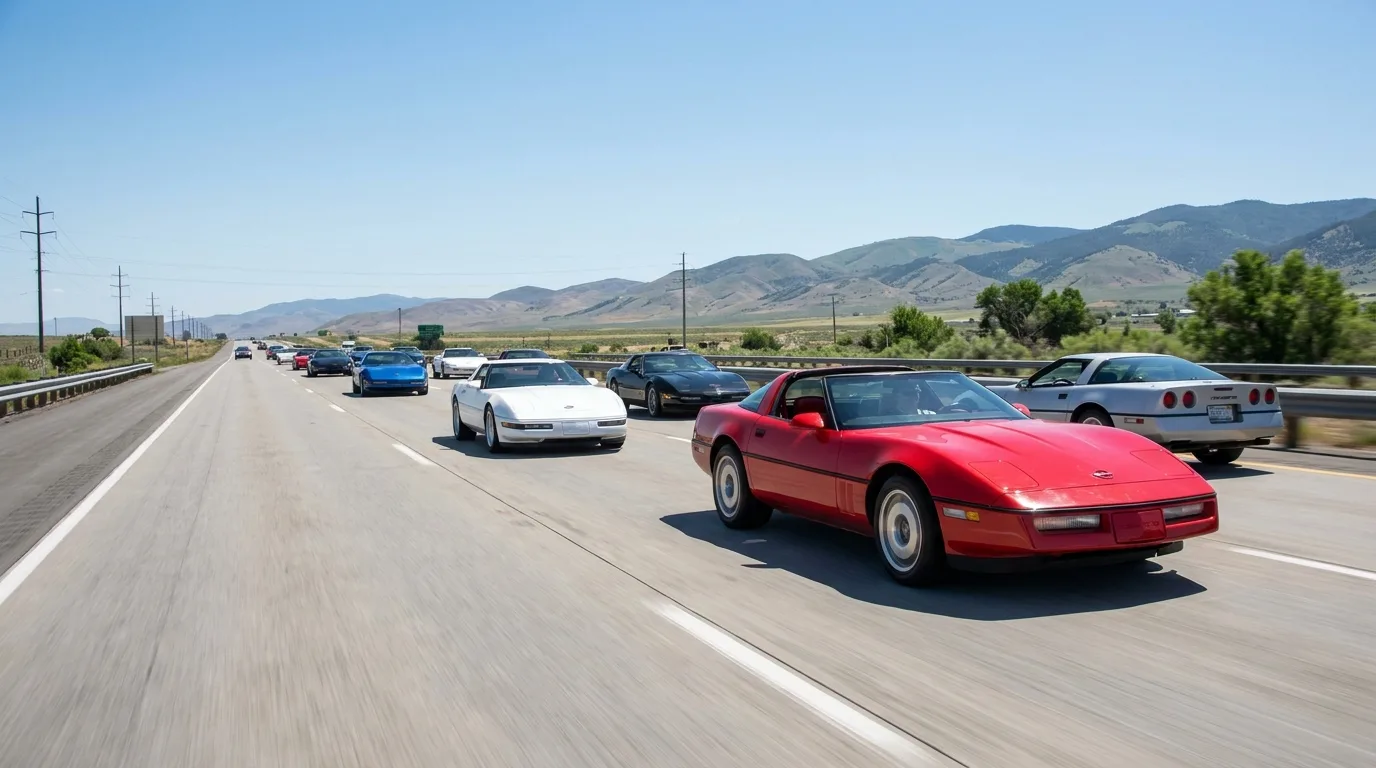
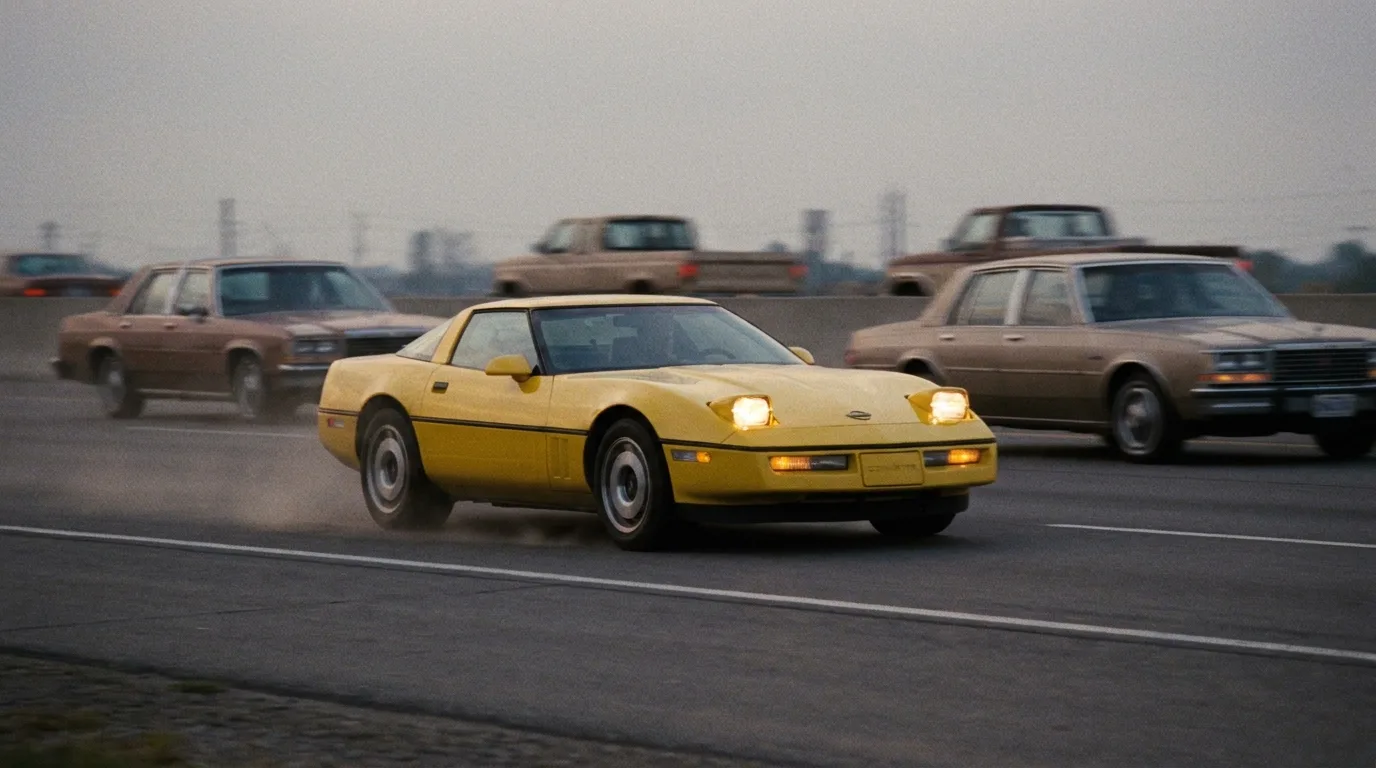
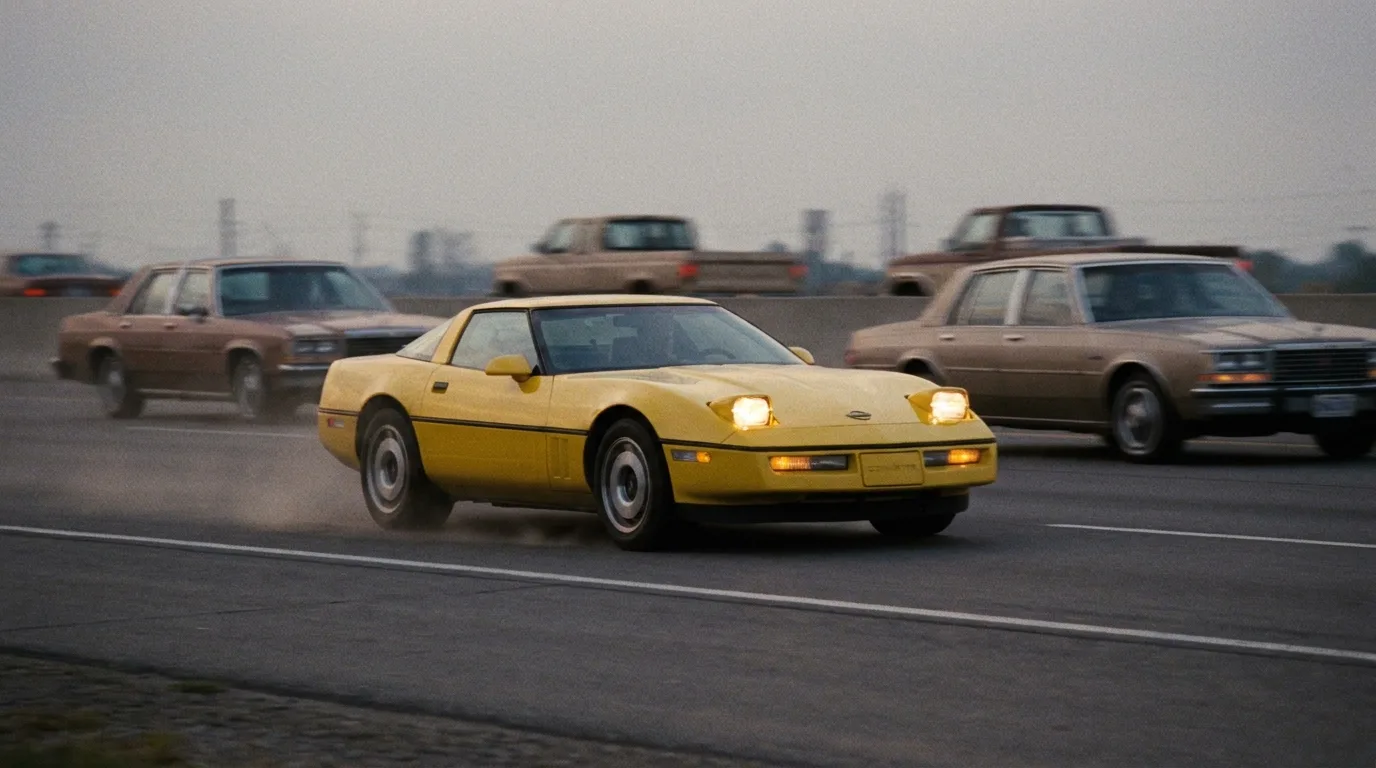
The C4, which arrived for 1984 as a 1984 model year car after a one-year production gap, was Chevrolet's answer to a question the company had been avoiding: what does a serious American sports car look like when it has to meet modern standards and still mean something? The story of how that answer came together, and how it got progressively better through the generation's twelve-year run, is worth knowing before you look at one of these cars. For anyone wanting the full picture, the c4 corvette era covers the generation end to end.
What Corvette inherited from the 1970s
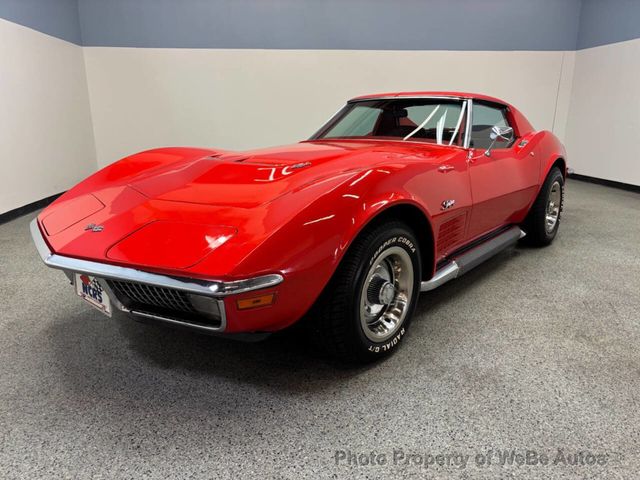
The emissions and fuel economy regulations that reshaped American performance cars through the 1970s hit Corvette harder than most. The original 1970 LT-1 small-block produced 370 gross hp. By 1975, the standard L48 350 had fallen to 165 hp, with the optional L82 rated at 205 hp, depending on the state of tune. The numbers tell the story without editorializing.
Corvette engineers were not sitting still through this period. The Cross-Fire Injection system introduced for 1982 was a genuine attempt to recover efficiency and output without violating what the regulations required. It wasn't successful enough to fix the perception problem, but it pointed toward where the engineers wanted to go. Throttle-body injection, better combustion chamber design, improved breathing all of it was on the table when the C4 program got serious funding.
The other thing Corvette inherited was a chassis that had been carried essentially unchanged since 1963. The C3 rode on a modified version of the C2 ladder frame. By the early 1980s, it was showing its age in handling dynamics, cabin noise, and the way it communicated with the driver. A new car needed a new structure.
The C4 baseline: 1984-1991
The 1984 Corvette launched with the L83 Cross-Fire Injection 5.7-liter V8 producing 205 hp. That was a meaningful step up from the worst years of the C3, but it wasn't enough for the car Chevrolet was claiming it had built. The structure was genuinely new: a steel birdcage, fiberglass reinforced plastic body panels, a fully independent rear suspension, and rack-and-pinion steering. The engineering underneath was finally modern.
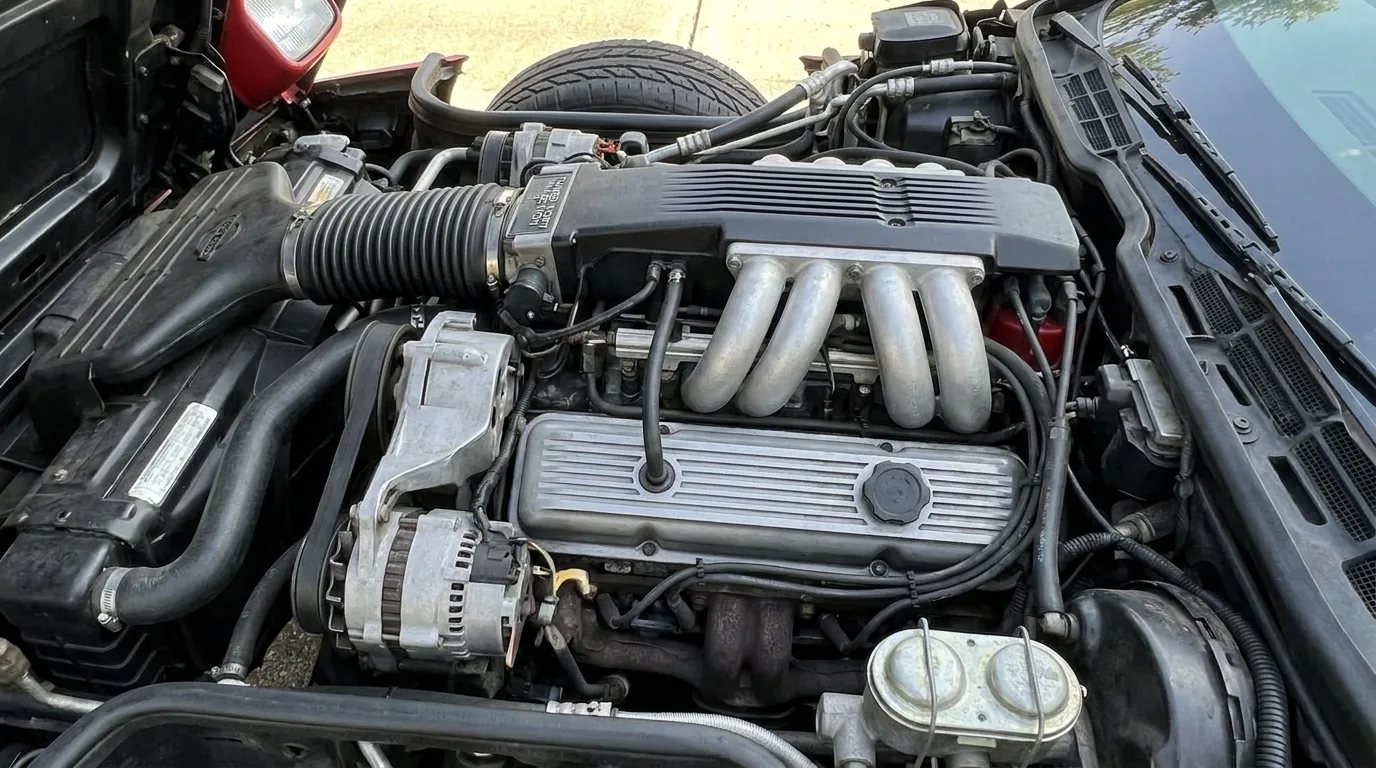
For 1985, the L98 Tuned Port Injection engine replaced the Cross-Fire system. The L98, a 5.7-liter small-block with individual-runner intake manifolds and sequential port fuel injection, produced 230 hp when it debuted. This is the engine that gave the C4 its footing as a legitimate performance car again. Fuel economy improved, throttle response improved, and the top-end power curve was substantially better than anything Corvette had offered since the early 1970s.
The L98 continued through 1991 with incremental improvements. By 1990 it was producing 245 hp (250 hp with the performance-axle option's less restrictive exhaust). The Callaway Twin Turbo option, available through a Chevrolet dealer network arrangement starting in 1987, pushed L98-based cars to substantially higher outputs for buyers who wanted more than the factory offered, but those numbers varied by tune and year and aren't factory-documented figures.
The ZR-1 deserves its own treatment. Announced in 1989 and available from 1990, the ZR-1 used the LT5 all-aluminum DOHC V8 developed with Lotus, producing 375 hp in its original 1990-1992 form and upgraded to 405 hp for 1993-1995. The ZR-1 option was expensive and the wider rear bodywork made it visually distinct from the standard car, but it established that GM was serious about Corvette as a performance benchmark. If you want a 1988 Corvette without the ZR-1 premium, there's a solid market for standard coupes and convertibles; browse 1988 Corvettes for sale to see what's currently available.
| Years | Engine | Est. output | Notes |
|---|---|---|---|
| 1984 | L83 5.7L TBI | 205 hp | Cross-Fire Injection, final year of that system |
| 1985-1991 | L98 5.7L TPI | 230-245 hp | Tuned Port Injection; incremental gains each year |
| 1990-1995 | LT5 5.7L DOHC | 375-405 hp | ZR-1 option only; Lotus-developed; limited production |
| 1992-1996 | LT1 5.7L OHV | 300 hp | Reverse-cooling design; standard engine from 1992 |
| 1996 | LT4 5.7L OHV | 330 hp | Manual transmission only; final year of C4 |
The LT1 and the final years: 1992-1996
The second significant engine upgrade came for 1992. The LT1 5.7-liter V8, not to be confused with the original 1970-era LT-1 option, used a reverse-cooling design where coolant flowed to the heads before the block. The output was 300 hp in standard form, which was the first time a base Corvette had cleared that mark since the classic muscle car era. The improvement in driveability over the L98 was noticeable.
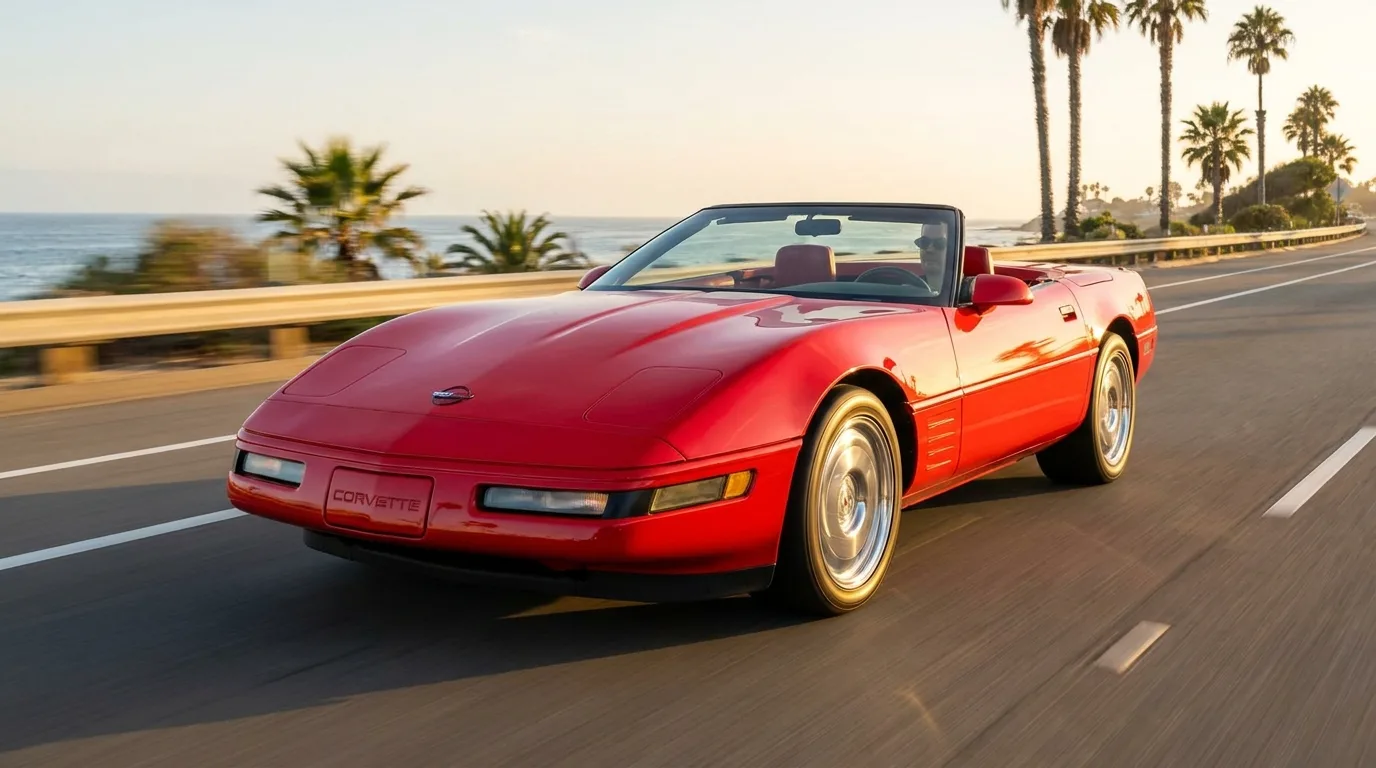
The convertible returned for 1986 after a long absence. That return mattered to the market, and it expanded the C4's appeal to buyers who had wanted an open Corvette and couldn't get one. You can read on about the significance of the convertible coming back and what it meant for the car's identity through the rest of the generation.
The 1996 LT4, available only with the six-speed manual transmission, produced 330 hp. It was offered in the standard Corvette and the Collector Edition and Grand Sport packages. The Grand Sport, with its Admiral Blue paint and white stripe, is among the more sought-after C4 variants today precisely because it combined the LT4 with a visually distinct appearance that holds up well.
"The LT1 in 1992 is where the C4 stops being an apology for the 1970s and starts being a real Corvette again. Three hundred horsepower, reverse cooling, and a chassis that had been refined through eight years of incremental work. The last few years of C4 production are underrated."
— Tom Ramirez
What the C4 era actually accomplished
The recovery from the malaise years wasn't a single event. It was a twelve-year accumulation of engineering improvements made under real constraints: emissions regulations, corporate fuel economy requirements, and a budget that required the C4 to sell in meaningful numbers to justify its existence. The engineers who worked that problem didn't have the luxury of starting clean.
By 1996, the standard Corvette (LT1) was producing roughly 80 percent more power than the base engine's lowest point in the mid-1970s, and the Grand Sport's optional LT4 doubled it, all while delivering better fuel economy, cleaner emissions, improved reliability, and a chassis that was genuinely competitive with European sports cars in the same price range. The 0-60 times improved steadily through the generation; a well-maintained 1996 LT4 Grand Sport will cover that sprint in roughly 4.9 to 5.2 seconds depending on conditions and testing methodology.
The C4 also produced some engineering that carried forward. The aluminum-frame structure that underpinned later Corvettes had its conceptual roots in where the C4 program was heading by the mid-1980s. The electronic systems developed through the generation were production-tested refinements that the C5 team inherited rather than reinvented.
Sources and notes
- Corvsport: 1980 Corvette Specifications: confirmed L48 190 hp / 280 lb-ft for 1980
- Corvsport: 1970 LT-1 Small-Block Engine Guide: confirmed 370 gross hp at 6,000 rpm and 1970-1972 LT-1 power decline
- Automobile-Catalog: 1975 Corvette Stingray 350 V8 specs: confirmed base L48 165 hp and optional L82 205 hp for 1975
- Wikipedia: Chevrolet Corvette (C4): confirmed 1984 launch, 1986 convertible return, and generation timeline
- Hagerty: The 1986 Corvette convertible was a big deal: confirmed convertible's return after a decade-plus absence and Indy 500 Pace Car status
- Vette Vues: C4 Corvette ZR-1 History: confirmed LT5 output of 375 hp (1990-1992) and 405 hp (1993-1995)
- Corvette Action Center (GM press release archive): confirmed 1996 LT4 330 hp, Grand Sport standard fitment, manual-only availability
- HotCars: The Story Of The One And Only 1983 Corvette: confirmed 43 pre-production 1983 cars, 42 destroyed, sole survivor at the National Corvette Museum