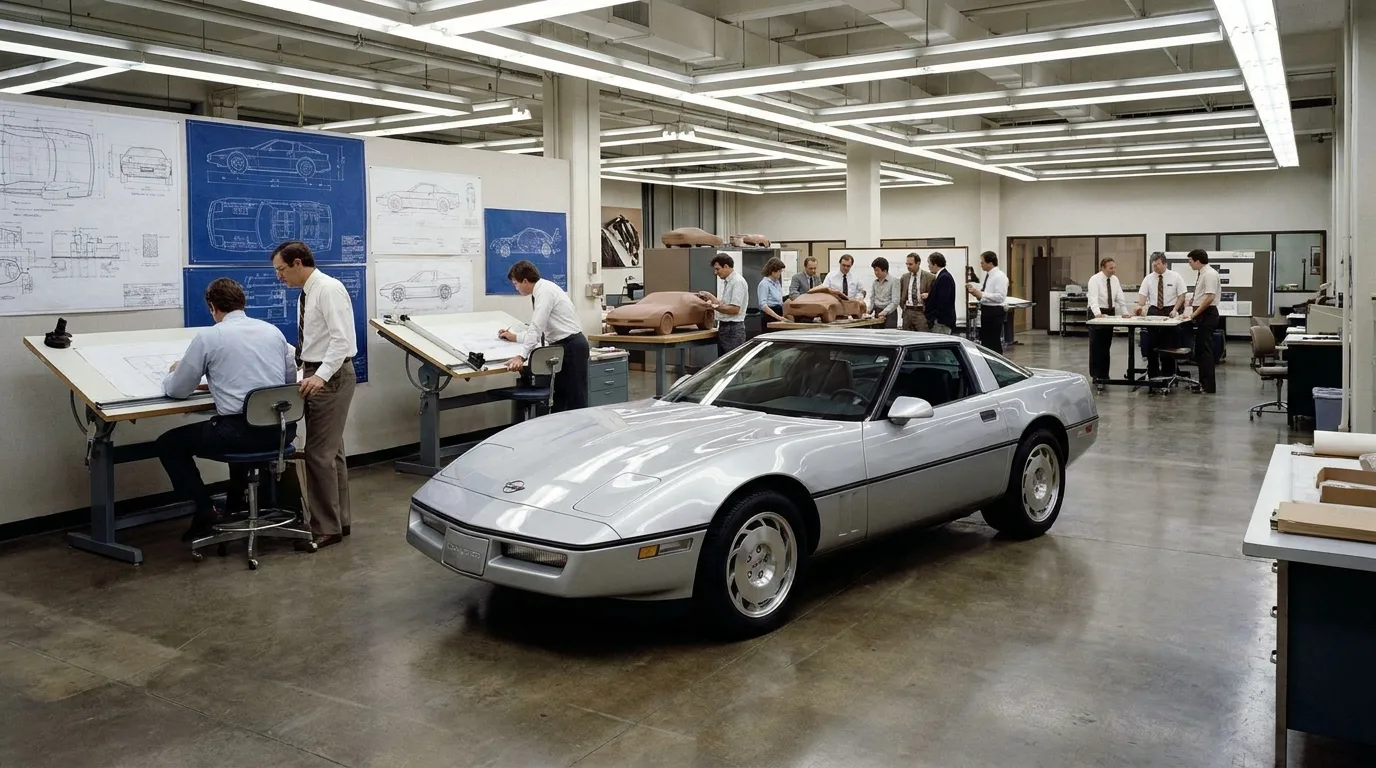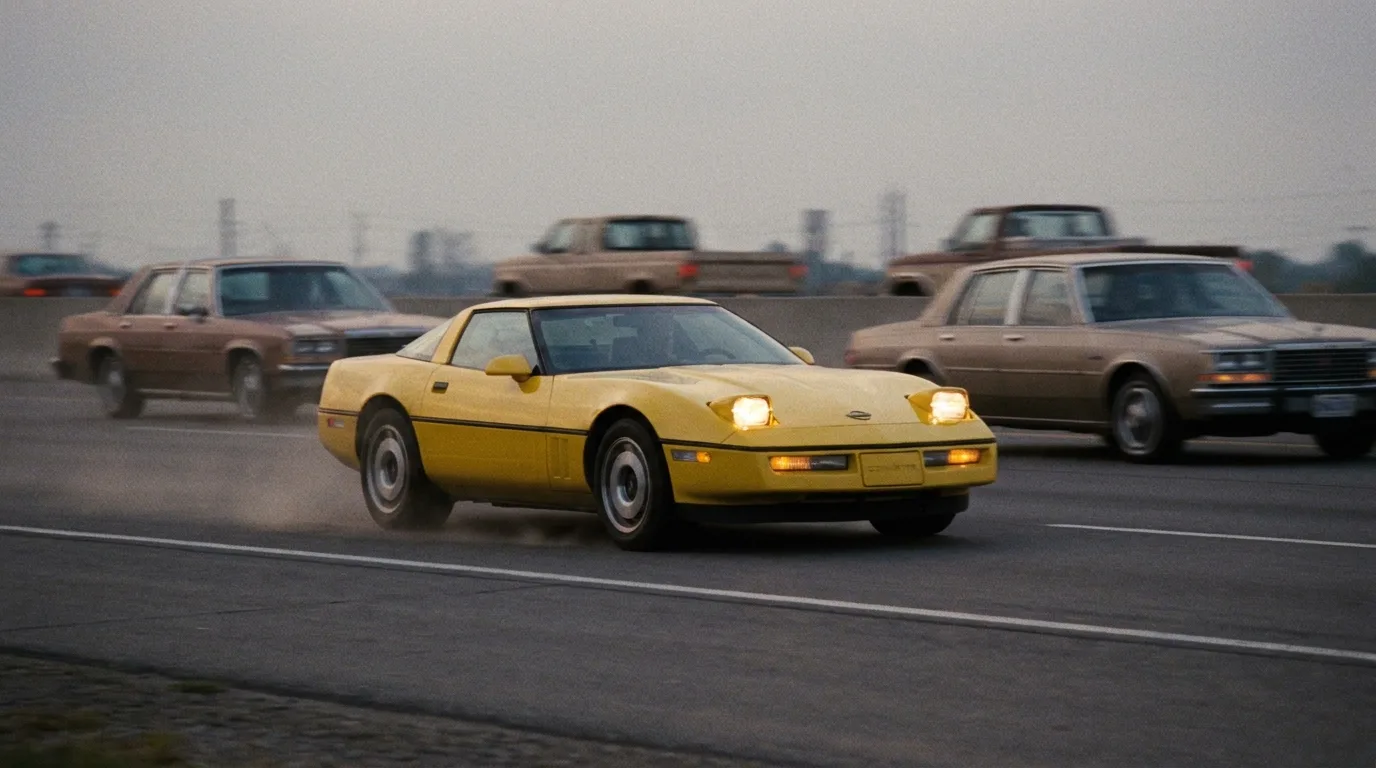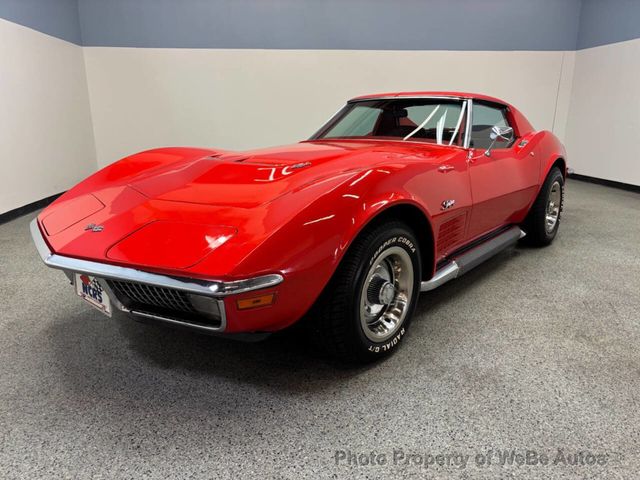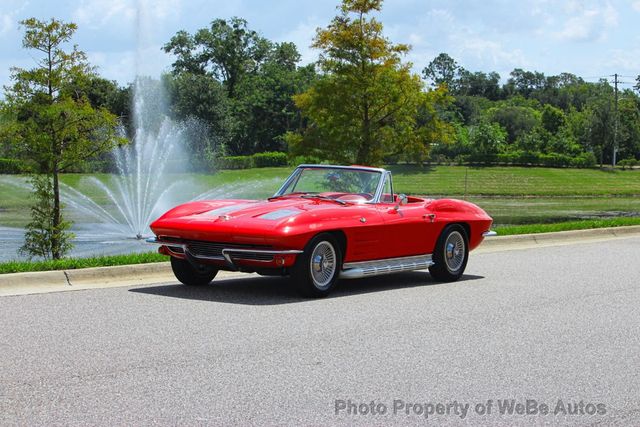

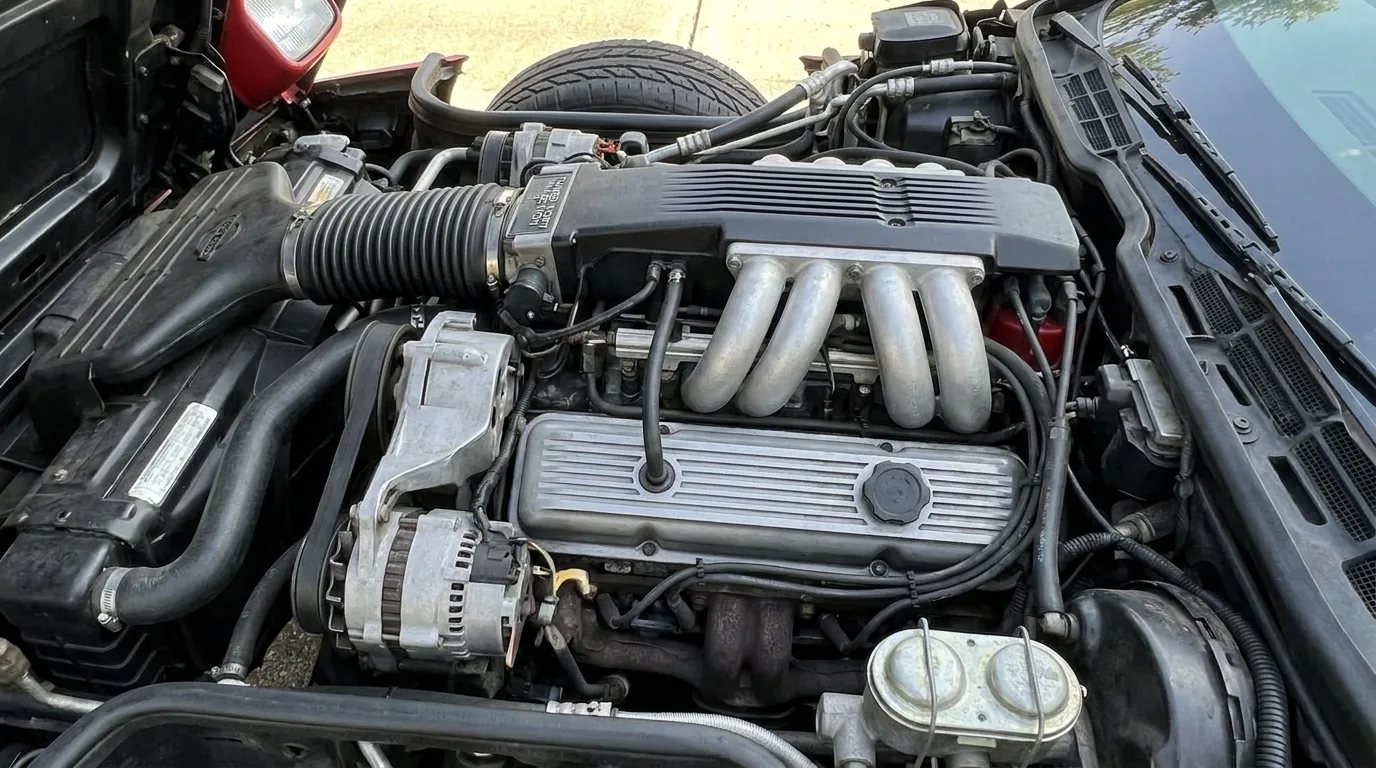
The C4 Corvette's fuel delivery system is one of the most significant engineering shifts in the car's history, and it doesn't get the attention it deserves. When Chevrolet moved away from carburetors and toward electronic fuel injection in the early 1980s, the results were uneven at first. The Cross-Fire injection system that debuted on the 1982 model was a throttle-body arrangement that looked impressive and worked adequately, but it wasn't the solution the Corvette needed. Tuned Port Injection was. For the deeper story of the C4 generation, the TPI system's introduction marks the moment the car started becoming something worth taking seriously again.
TPI arrived for the 1985 model year on the L98 V8, and it changed what the C4 was capable of both on paper and in practice. This article focuses on that system: what it is, how it worked, what it delivered, and what owners should know about it today.
What tuned port injection actually is
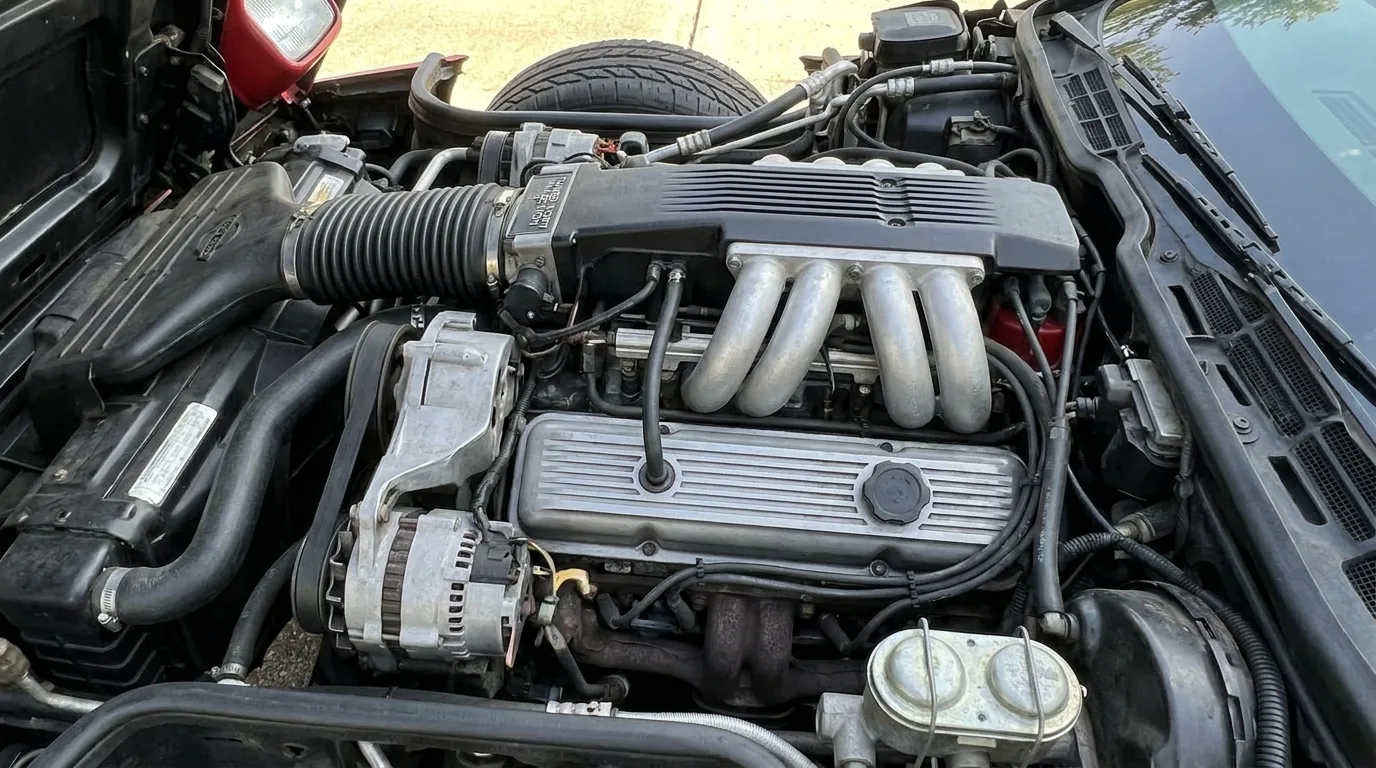
The name is descriptive. Tuned Port Injection uses individual fuel injectors mounted at each intake port, with long, tuned intake runners that are sized to take advantage of intake charge resonance at specific engine speeds. The length of those runners matters. Longer runners favor low-end torque; shorter ones favor high-rpm power. Chevrolet engineered the TPI runners for the L98's operating range, which prioritized strong street performance across a broad rpm band rather than peak power at the top of the tach.
The injectors themselves are top-feed units, fired sequentially by the engine control module based on inputs from the throttle position sensor, manifold absolute pressure sensor, coolant temperature sensor, and oxygen sensors. This was not a simple system for 1985. The ECM calibration work that went into the L98 TPI application represented a serious engineering effort, and the factory spent considerable time refining the fuel maps through the late 1980s.
The L98 engine and TPI's output through the C4 run
The L98 was a 350 cubic inch (5.7-liter) small-block V8. With TPI, the factory rated it at 230 horsepower at 4,000 rpm and 330 lb-ft of torque at 3,200 rpm for 1985. Midway through the 1986 model year, new aluminum cylinder heads (paired with a compression bump from 9.0:1 to 9.5:1) pushed output to roughly 235 horsepower, though early 1986 cars built with the carryover cast-iron heads stayed at 230 horsepower. Hydraulic roller lifters arrived for 1987 and lifted the rating to 240 horsepower and about 345 lb-ft of torque. Revised aluminum heads and camshaft work brought the L98 to its peak TPI-era rating of 245 horsepower for 1988, a figure that held steady through 1989. These aren't staggering numbers by later standards, but in context they represented a real improvement over the early 1980s Corvette, which made 200 horsepower with Cross-Fire injection in 1982 and 205 horsepower in 1984. TPI, combined with the compression and cylinder-head work Chevrolet did through the mid-1980s, returned the car to genuine performance territory.
The 1990 and 1991 model years are where sources diverge somewhat: the L98 is most commonly cited at 245 horsepower for both years, though some factory literature and period road tests reference figures as high as 250 horsepower for 1990 following a switch to speed-density air metering. Either way, output stayed in the same narrow band through the end of the L98's run. The 1992 model year brought a significant change: the LT1 engine replaced the L98, and with it came a revised sequential fuel injection system that was not the same as TPI. So the TPI era on the C4 runs from 1985 through 1991, a seven-year span that covered roughly half the generation's production life. If you want to understand the C4 from this perspective, the companion story covers the broader power recovery arc across the full generation.
| Year range | Engine | Rated HP (approx.) | Notes |
|---|---|---|---|
| 1985 | L98 350 V8 w/ TPI | 230 hp | TPI debut year |
| 1986 | L98 350 V8 w/ TPI | 230-235 hp | Aluminum heads phased in mid-year; convertible returns |
| 1987 | L98 350 V8 w/ TPI | 240 hp | Hydraulic roller lifters added |
| 1988-1991 | L98 350 V8 w/ TPI | ~245 hp | Revised heads/cam; most stable TPI output period |
| 1992-1996 | LT1 (not TPI) | 300 hp | TPI replaced by LT1 injection |
Why TPI worked where Cross-Fire didn't
The Cross-Fire injection system on the 1982 and 1984 C3 predecessor (Chevrolet skipped the 1983 model year for public sale entirely, using the time to sort out quality issues before launching the all-new C4 as an early 1984 model; a single 1983 pilot-line car survives at the National Corvette Museum) used two throttle-body injectors mounted on a dual-plane intake. It worked, but it was essentially a fuel-injected carburetor setup in terms of fuel distribution. Each injector fed the entire intake, and the fuel had to travel through the intake runners before reaching the ports. Fuel puddling was a real issue, particularly during cold starts and tip-in throttle transitions.
TPI put fuel delivery at the port. The injector fires and the charge goes directly into the combustion chamber on the next intake stroke. Distribution is even across all eight cylinders. Cold-start behavior improved substantially. Throttle response sharpened. And the ECM could trim fuel delivery per bank based on oxygen sensor feedback, which meant the system could adapt to operating conditions in ways a carburetor simply couldn't.
The factory documentation from this period shows how seriously Chevrolet took the calibration work. NCRS resources on the L98 include multiple technical service bulletins addressing ECM programming updates, which tells you that the factory continued refining the system after it left the line. If you're researching a specific car's history, Corvette history explained at Corvette history explained provides useful context for where TPI fits in the broader narrative.
"The factory spent years getting the L98 TPI calibration right, and the TSBs show it. When I'm looking at a TPI car from the late 1980s, I want to know whether the ECM has the right calibration for the year. There were enough running changes that it matters."
— Tom Ramirez
Common TPI problems owners face today
The TPI system is old enough now that specific components have predictable failure modes. The fuel injectors themselves, particularly on early cars, can develop leaks at the O-rings. The O-rings harden with age and heat cycling, and a leaking injector creates a rough idle and a fuel smell that's hard to miss. Replacement O-rings are available and the job is manageable, but it requires removing the plenum, which means a proper coolant drain and reassembly sequence.
The mass airflow sensor used on early TPI cars, from the 1985 through 1989 model years, is another point of failure. These sensors are sensitive to oil contamination from a poorly maintained crankcase ventilation system, and a contaminated MAF reads low, causing the ECM to run the engine lean. The symptom is usually a hesitation under load that goes away at idle, which makes it easy to misdiagnose as an ignition problem. Chevrolet moved to a speed-density system using a manifold absolute pressure sensor for 1990 and later L98 cars, which eliminated the MAF-contamination failure mode for those model years but introduced its own diagnostic quirks.
The throttle position sensor and the idle air control valve both wear. TPS failure typically shows up as a hesitation during light throttle transitions. The IAC, when it sticks or wears, creates an unstable idle. Both are straightforward replacements once diagnosed correctly.
Fuel pressure is worth checking on any TPI car you're evaluating. The factory specification calls for roughly 38 to 43 psi at the fuel rail depending on whether the regulator's vacuum line is connected, and a weak fuel pump or a failing fuel pressure regulator will cause performance issues that mimic other problems. A fuel pressure gauge is cheap insurance before you start chasing sensors.
What TPI cars look like on the market today
TPI-era C4s cover a range of prices depending on condition, mileage, and options. A high-mileage driver-quality 1987 or 1988 coupe generally trades in the low five figures, with exact numbers moving with the broader collector market, so check current Hagerty or auction data before setting expectations. Cars with low documented mileage, original paint, and a clean service history push well above that. The convertible version, which came back for 1986, carries a premium over comparable coupes at every condition level.
The Z51 performance handling package is the option most buyers look for on TPI-era cars. It included stiffer suspension tuning, larger stabilizer bars, and quicker steering, and it changes the driving character of the car substantially. A Z51 car in clean condition is worth looking for. If you're in the market now, 1987 Corvettes for sale is a reasonable starting point for getting a sense of what's available and what condition levels are actually bringing.
One market consideration specific to TPI cars: the ECM, sensors, and harness add complexity that a carburetor-era car doesn't have. Buyers who aren't comfortable with electronic diagnostics sometimes avoid TPI cars for that reason, which creates occasional buying opportunities. A TPI car with a documented mechanical history and a known-good ECM is not harder to live with than a carbureted car once you understand the system. It's more sophisticated, not more fragile, when it's properly maintained.
Sources and notes
- CorvSport, 1985 C4 Corvette specifications: confirmed 1985 L98 TPI rating of 230 hp at 4,000 rpm and 330 lb-ft at 3,200 rpm
- Corvette-C4.com, L98 engine data: confirmed year-by-year L98 horsepower progression (1986 aluminum heads, 1987 roller lifters to 240 hp, 1988 245 hp) and the 1990 switch to speed-density/MAP air metering
- Corvette Report, Cross-Fire Injection Corvettes 1982-1984: confirmed Cross-Fire ratings of 200 hp (1982) and 205 hp (1984)
- Hagerty Media, on the missing 1983 Corvette: confirmed GM skipped the 1983 public model year and that one pilot-line survivor exists at the National Corvette Museum
- CorvetteForum, L98 TPI fuel pressure discussion: confirmed factory fuel rail pressure specification in the 38-43 psi range
- CorvetteForum, MAF vs MAP discussion: confirmed 1990-and-later L98 cars moved to speed-density/MAP metering rather than a mass airflow sensor