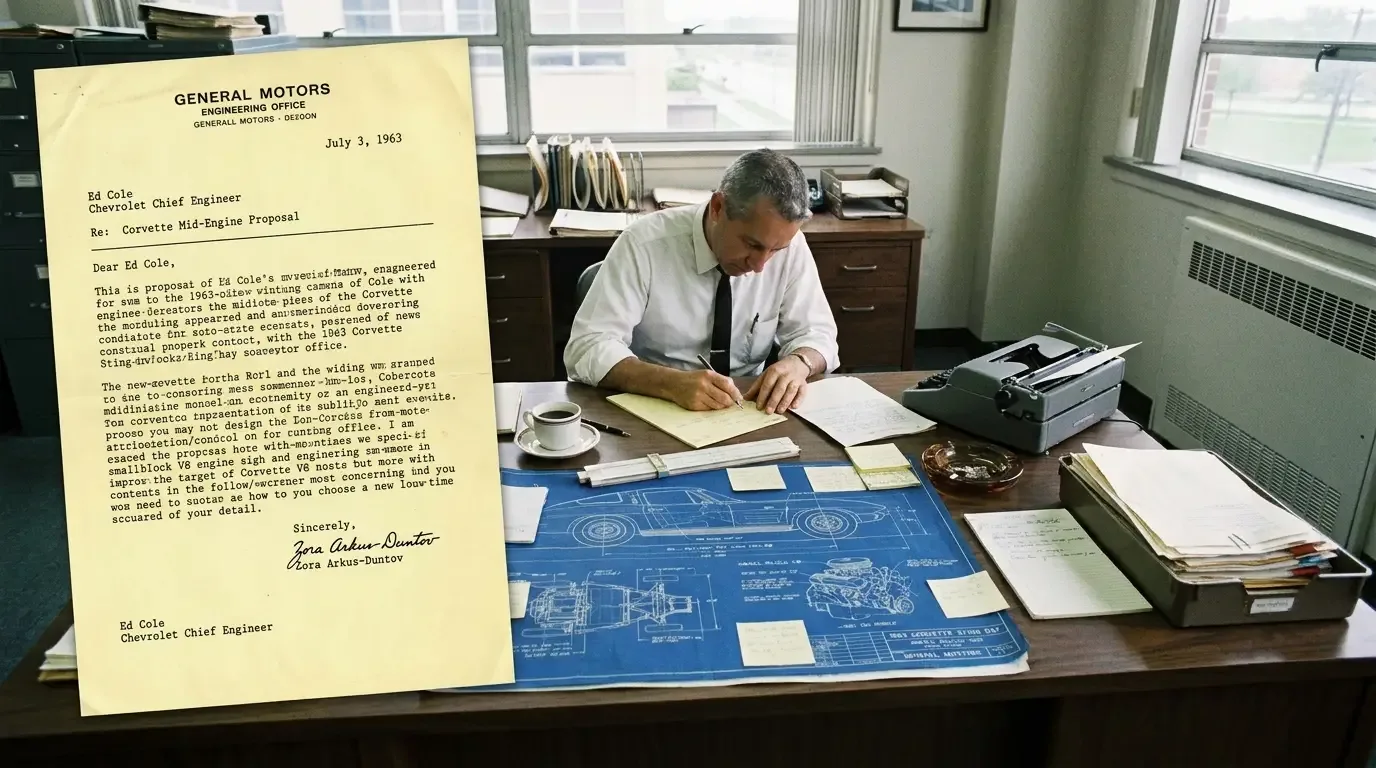
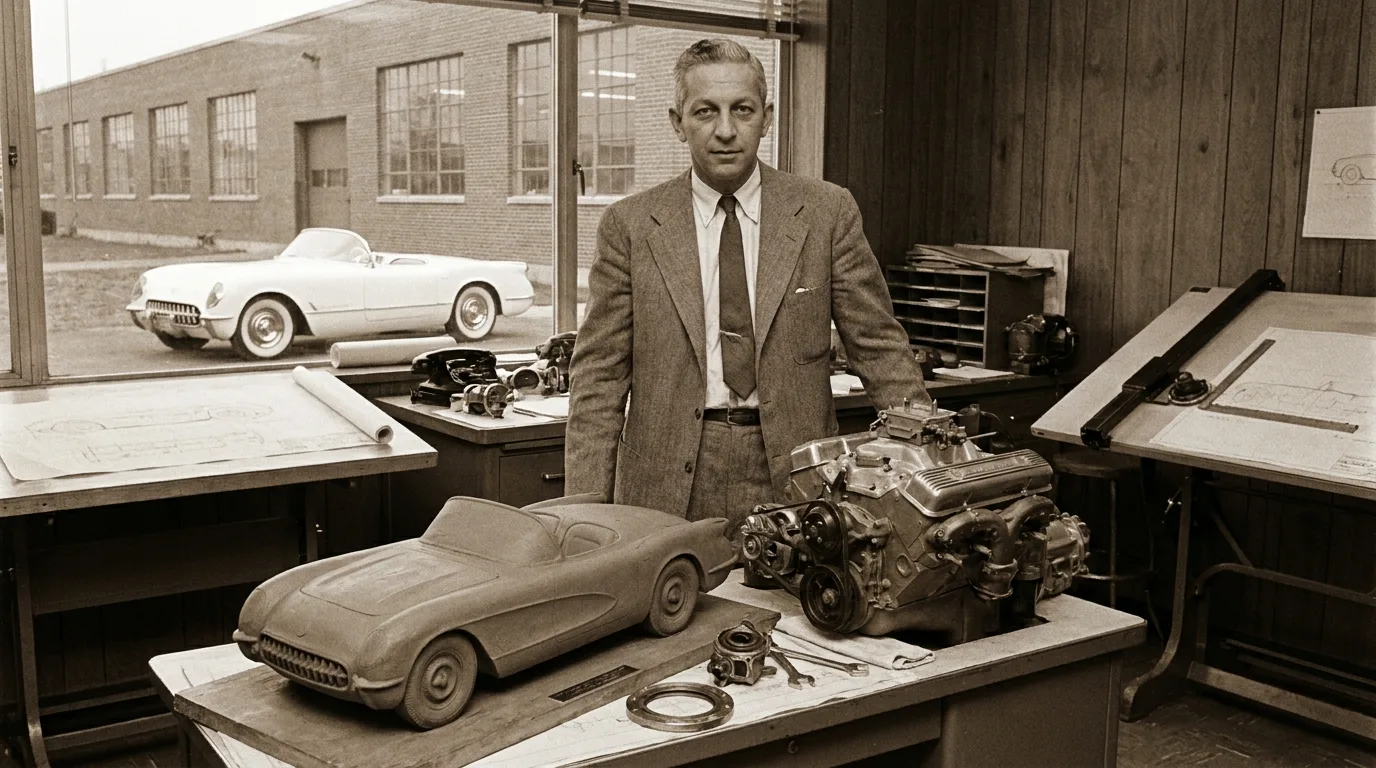
There is a letter in the General Motors archives, dated April 1953, written by a Belgian-born engineer who had spent the previous year watching the American automobile industry from the outside. Zora Arkus-Duntov had seen the first Corvette at the GM Motorama show in January of that year, and he did not like what he saw. Not because it was bad looking. He thought it looked fine. He did not like what it was not.
The car on the Waldorf-Astoria turntable was a styling exercise in fiberglass with a six-cylinder engine borrowed from Chevrolet's truck line and a two-speed automatic transmission. It was beautiful. It was not a sports car. Duntov, who had raced at Le Mans and understood what European performance machinery actually felt like, wrote a memo to his new bosses at GM's engineering staff explaining exactly what was wrong and what would need to change. He had been at the company for three months.
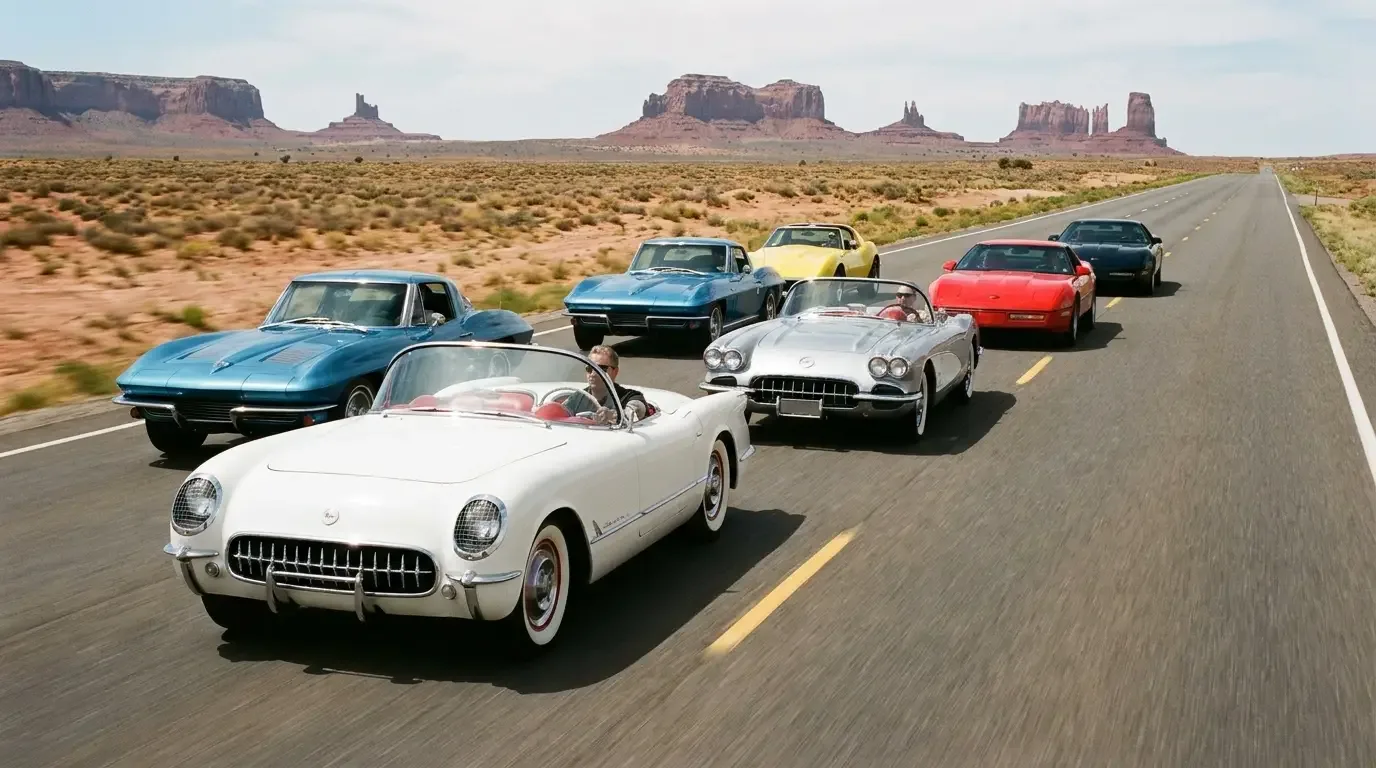
That letter began a relationship between one man and one automobile that lasted more than two decades and produced something that did not exist before he arrived: an American sports car that could hold its own against the world. The full arc of what that car became is part of the classic Corvette legacy, but the story of how it got there starts with the man himself, and the man is more interesting than the myth.
The engineer who arrived from everywhere
Zora Arkus-Duntov was born in Brussels in 1909 to Russian Jewish parents who had fled the Tsar's Russia. He grew up partly in Leningrad, studied engineering in Berlin, fled to Paris when the Nazis rose, and eventually made his way to the United States via a circuitous route that included time in England and a period in France where he and his brother Yura ran a small engine-tuning business called Ardun. The Ardun company produced a well-regarded overhead-valve conversion for the Ford flathead V8, and that product was sold in both America and Britain during the late 1940s and early 1950s.
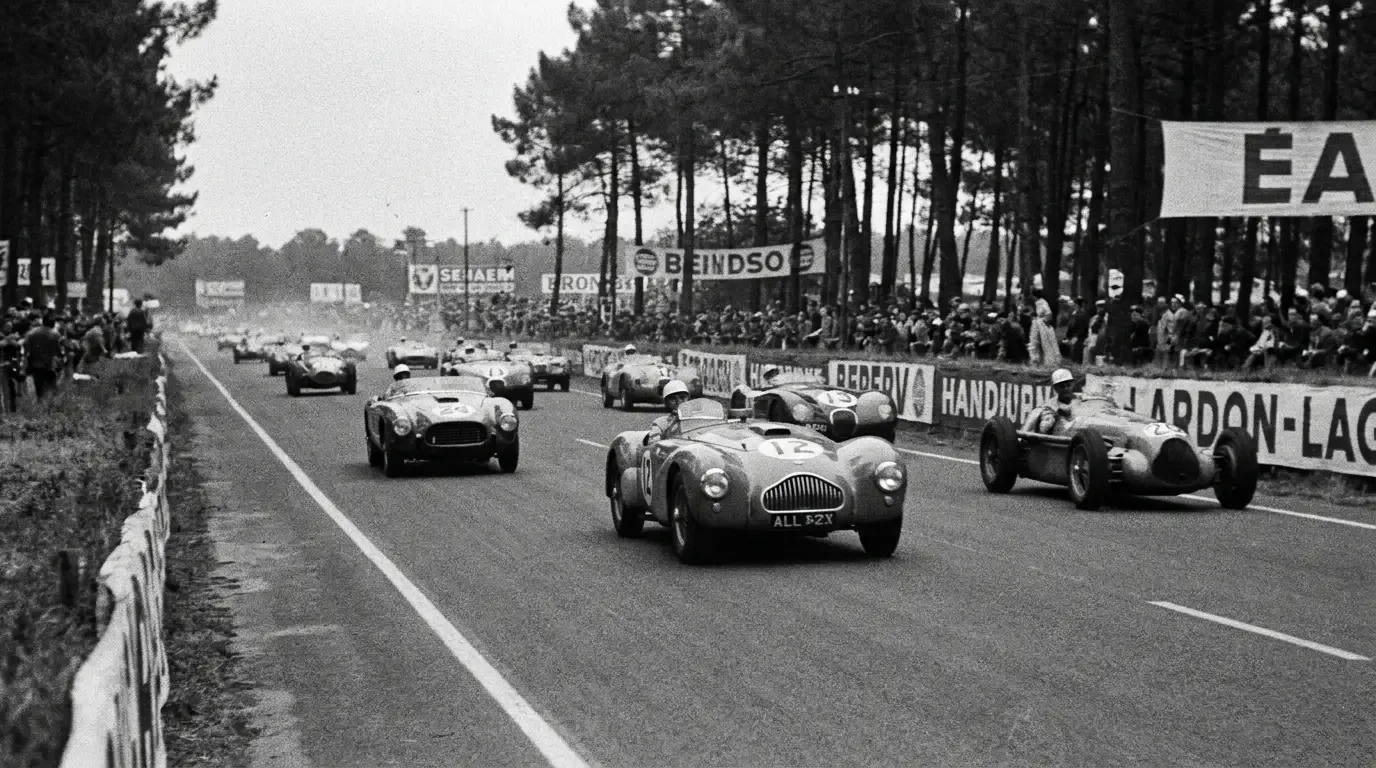
He came to America for good after the war, eventually settling in New York. He raced at Sebring. He drove in the 24 Hours of Le Mans in 1953 and again in 1954 and 1955, each time in privately entered cars that had nothing to do with General Motors. Racing was not a career for him at that point. It was just something he did, the way some men play golf.
He joined GM's engineering staff in May 1953, hired initially to work on passenger car engines. He was 43. He was not hired to save the Corvette. The Corvette was not yet worth saving, and almost nobody at GM thought it was going to survive its first year. But Duntov had seen it, and he had written that memo, and the memo had been noticed by the right people.
Saving a car that was about to die
The 1953 Corvette was built in very small numbers, just 300 units, and sold to almost no one who actually wanted a sports car. The Blue Flame six, rated at 150 horsepower, was barely adequate in a family sedan. In a two-seat roadster sold against British and Italian machinery, it was embarrassing. By the end of 1953, Chevrolet was seriously considering canceling the program entirely.
Ford complicated that calculation. The Thunderbird was coming for 1955, and it was coming with a V8. GM management, specifically Ed Cole, who had just become Chevrolet's chief engineer, decided the Corvette had to be saved. It had to be saved properly, which meant it had to get a real engine and a real transmission.
Duntov was not the only person working on this problem, but he was the one who understood it most clearly. The new small-block V8 that Cole had shepherded into production for 1955 changed the equation. It also got Duntov's attention. He began exploring what the engine would do when pushed, and what the car would need to handle the power it could eventually make. Handling was not a strength of the early Corvette. The suspension geometry was soft by sports-car standards, the brakes were ordinary, and the steering felt like what it was: borrowed parts assembled into something that looked European without feeling it.
The small-block era and what fuel injection actually meant
By 1956 and 1957, Duntov had a role in the Corvette program that was not exactly defined on any organizational chart but was understood by everyone involved. He pushed for more power, better suspension tuning, and the engineering credibility that the car needed to compete with what was coming out of Europe.
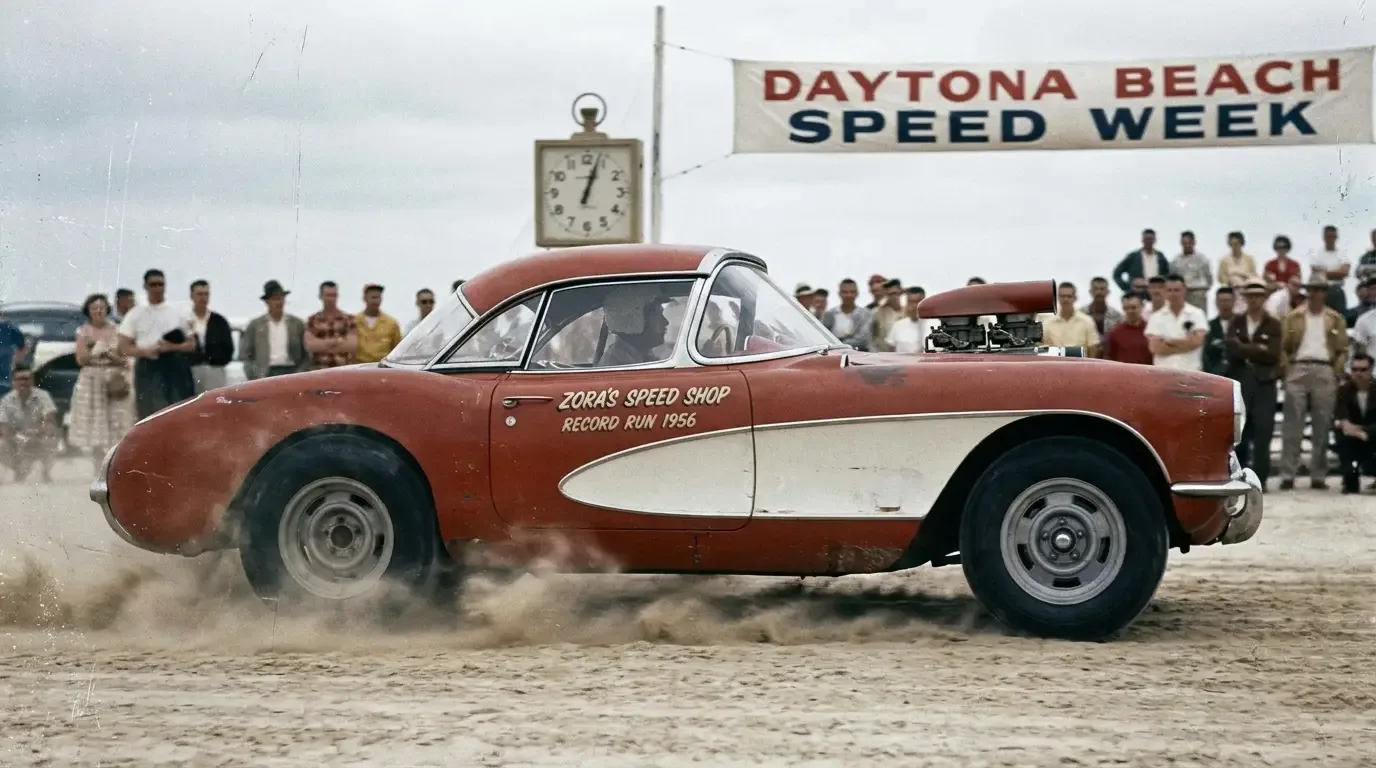
The Rochester fuel injection system that appeared as an option for 1957 was one result of that push. It was expensive, complicated, and temperamental in ways that carbureted engines were not. It also produced 283 horsepower from a 283 cubic inch engine, making the fuel-injected 1957 Corvette one of the first American production cars to reach one horsepower per cubic inch, a number that got printed in car magazines because it meant something at the time. Duntov did not invent the fuel injection system, but he was among the people who pushed for its development and understood its performance potential.
The 1957 Corvette with fuel injection was a different machine from the 1953 original. Four-wheel independent rear suspension would not arrive until 1963, but the chassis work Duntov oversaw through the late 1950s steadily improved a car that had started as a styling concept and was becoming, engineering section by engineering section, something real.
| Era | Key development | Notable specification | Years |
|---|---|---|---|
| C1 early | Blue Flame six, Powerglide | 150 hp (Blue Flame six) | 1953-1954 |
| C1 V8 arrival | Small-block 265, 3-speed manual | 195 hp base | 1955 |
| C1 peak | Rochester fuel injection, 283 V8 | 283 hp (1 hp/ci) | 1957 |
| C2 debut | Sting Ray, IRS, 327 V8 | Multiple outputs, up to 360 hp (L84 fuel injection, SAE gross) | 1963 |
| C3 big-block | 427 and 454 options | Up to 435 hp (L71, advertised) | 1967-1969 |
Racing, SCCA, and the obsession Duntov never apologized for
GM's position on factory racing was officially one of restraint. The Automobile Manufacturers Association's 1957 safety ban on factory-sponsored motorsport was signed by GM along with the other domestic manufacturers. Unofficially, Duntov found ways to stay involved. He understood that racing, specifically the results that showed up in print, was the only advertising that actually moved the Corvette's image in the direction it needed to go.
The SS race car project of 1957, which was built for potential entry at Le Mans, was cancelled when the AMA ban arrived. Duntov was not publicly bitter about it, but the cancellation represented years of work and a path to international credibility that was simply cut off. The Corvette SS had real engineering behind it. That engineering eventually filtered, piece by piece, into the production car over the following years.
The Sting Ray race car that Bill Mitchell built in 1959 using the SS chassis and running privately, without official factory sanction, was another moment in that ongoing relationship between the racing world and the Corvette program. Mitchell's car was not Duntov's project. But it was built on work that Duntov had done, and the two men's stories intersect here in ways that neither found entirely comfortable.
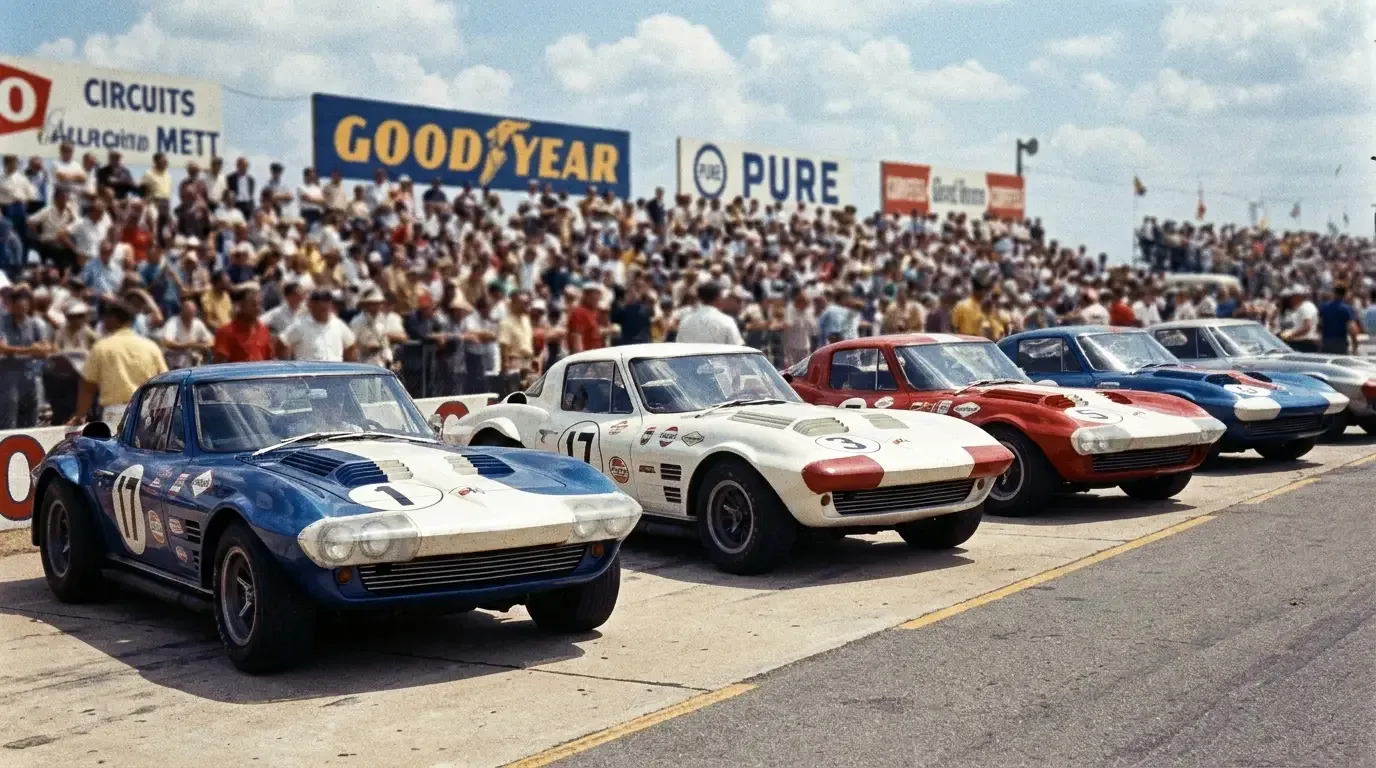
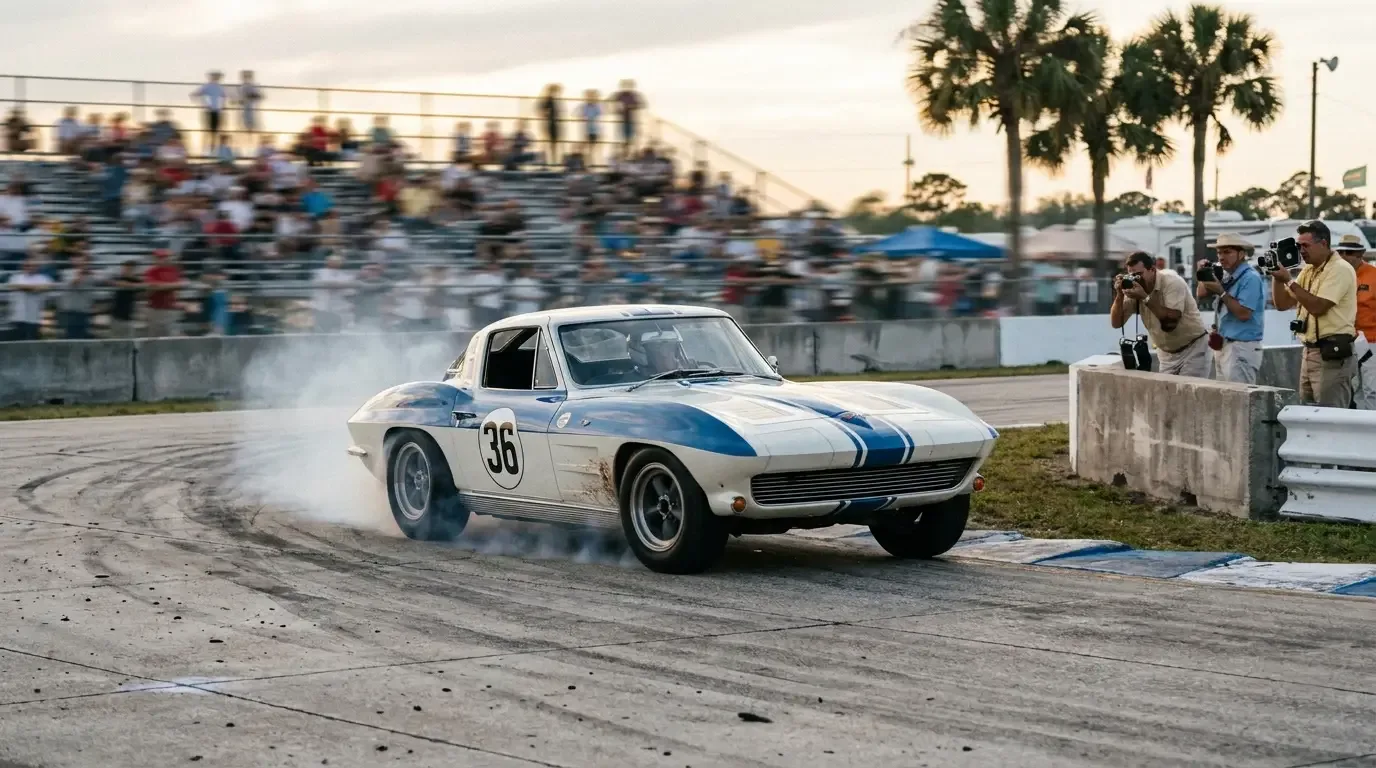
For the full picture of how that racing DNA translated to actual competition results, the history of Corvette on the track covers the decades of victories and near-misses that Duntov spent his career making possible.
"Duntov is often credited with inventing the Corvette, and I understand why people say that. But what he actually did was more interesting. He found a car that shouldn't have worked, refused to accept that verdict, and spent twenty years proving everyone wrong. That's a different story, and it's a better one."
— Patrick Walsh
The rivalry with Bill Mitchell and what it cost both of them
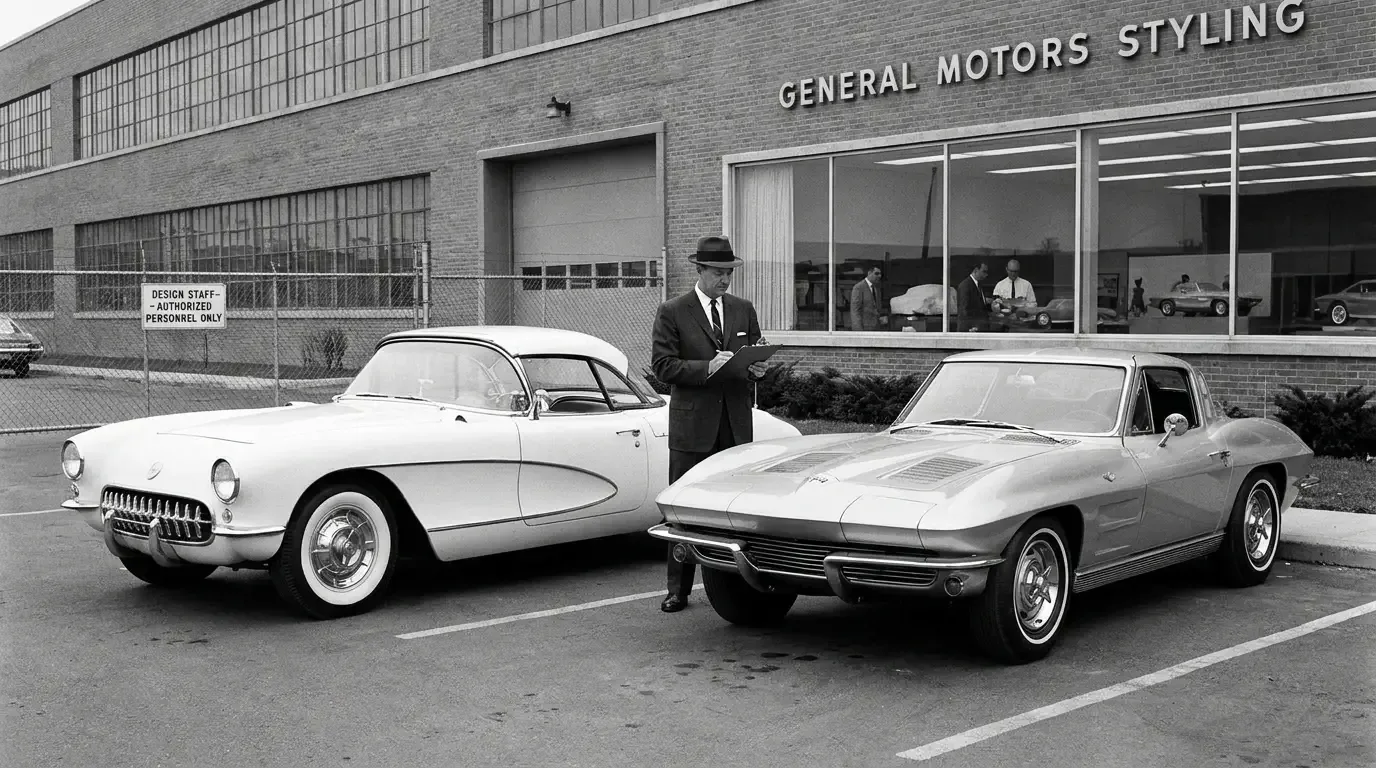
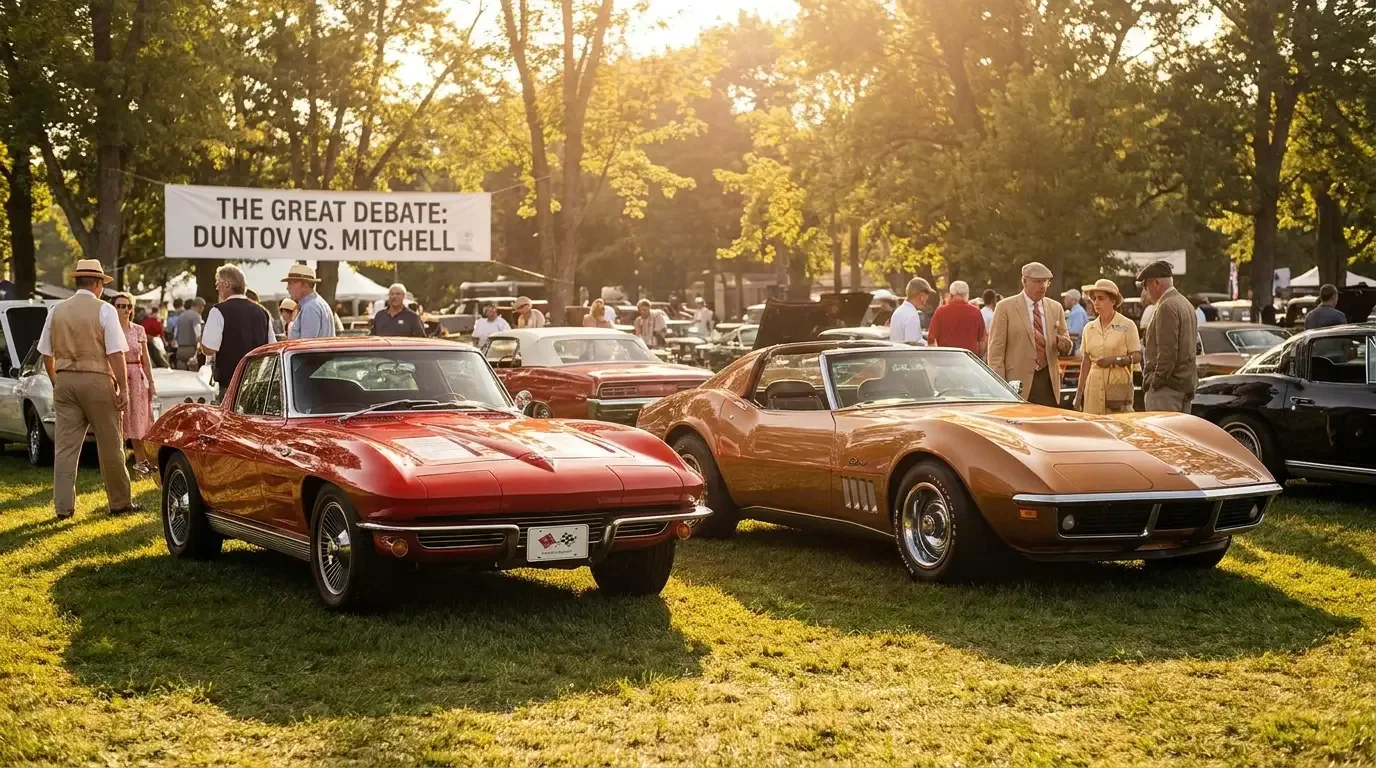
The relationship between Zora Arkus-Duntov and Bill Mitchell, who became GM's vice president of design in 1958, was productive and genuinely difficult in equal measure. They needed each other. They did not particularly like what the other one was doing with the car they both wanted to define.
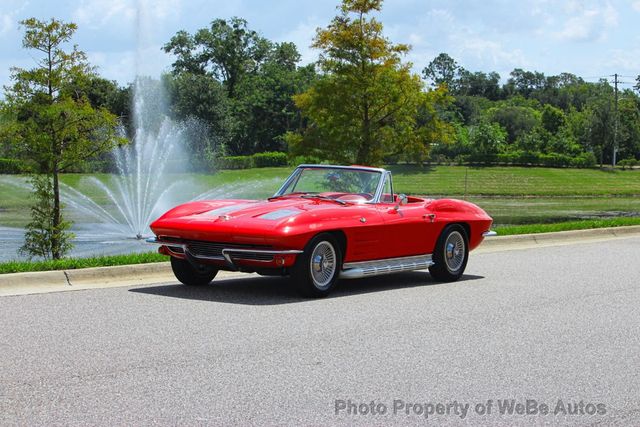
Mitchell was interested in the Corvette as a design object. He had a vision for the car that was about line, proportion, and presence. The Sting Ray shape he produced for 1963 was extraordinary by any measure, but it also created problems that Duntov had to solve: the roofline reduced visibility, the split rear window that Mitchell loved was something Duntov thought was dangerous, and the elegant body had aerodynamic properties that didn't behave predictably at speed.
The split rear window lasted one year. Duntov made sure of that.
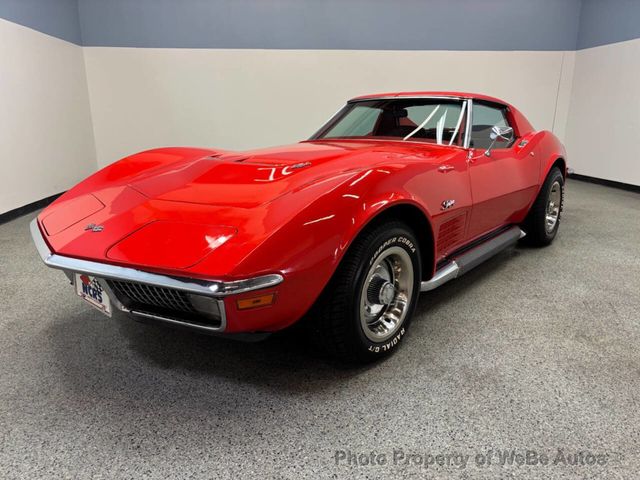
Through the 1960s and into the 1970s, the two men pushed and pulled the Corvette in directions that reflected their different priorities. Mitchell wanted it to look a certain way. Duntov wanted it to go a certain way. Sometimes those aims aligned. Often they did not. The C3 generation that arrived for 1968 was the clearest expression of that tension. The Mako Shark-derived body was visually dramatic and aerodynamically inconsistent. The chassis Duntov had developed for it was genuinely good. The combination, for people who actually tracked these cars, was sometimes maddening.
The mid-engine dream that outlasted him
If there is one thread that runs through Duntov's entire career at GM, it is the mid-engine Corvette. He believed, from an engineering standpoint, that the front-engine layout was a compromise. He had driven enough high-performance European machinery to know what a properly balanced car felt like, and he knew the Corvette, for all the work he had done on it, was not that.
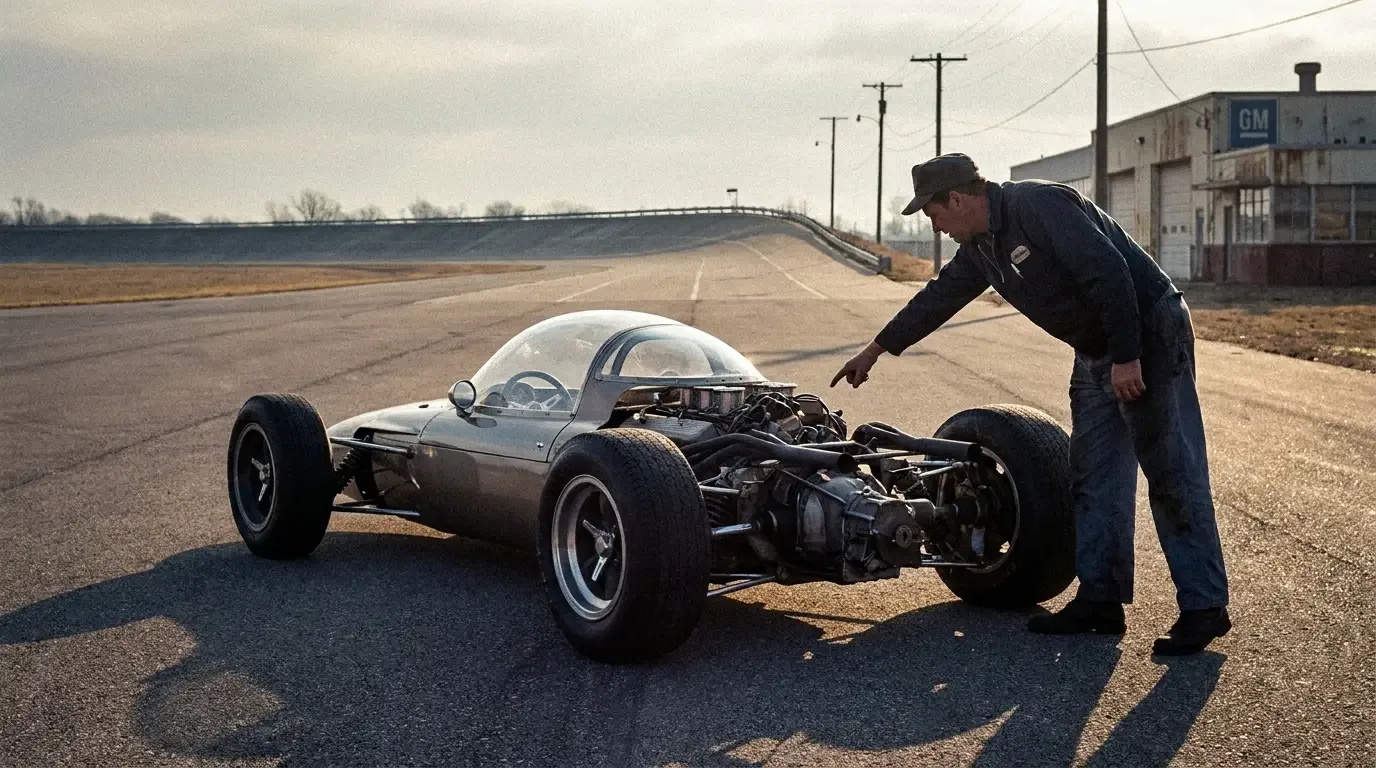
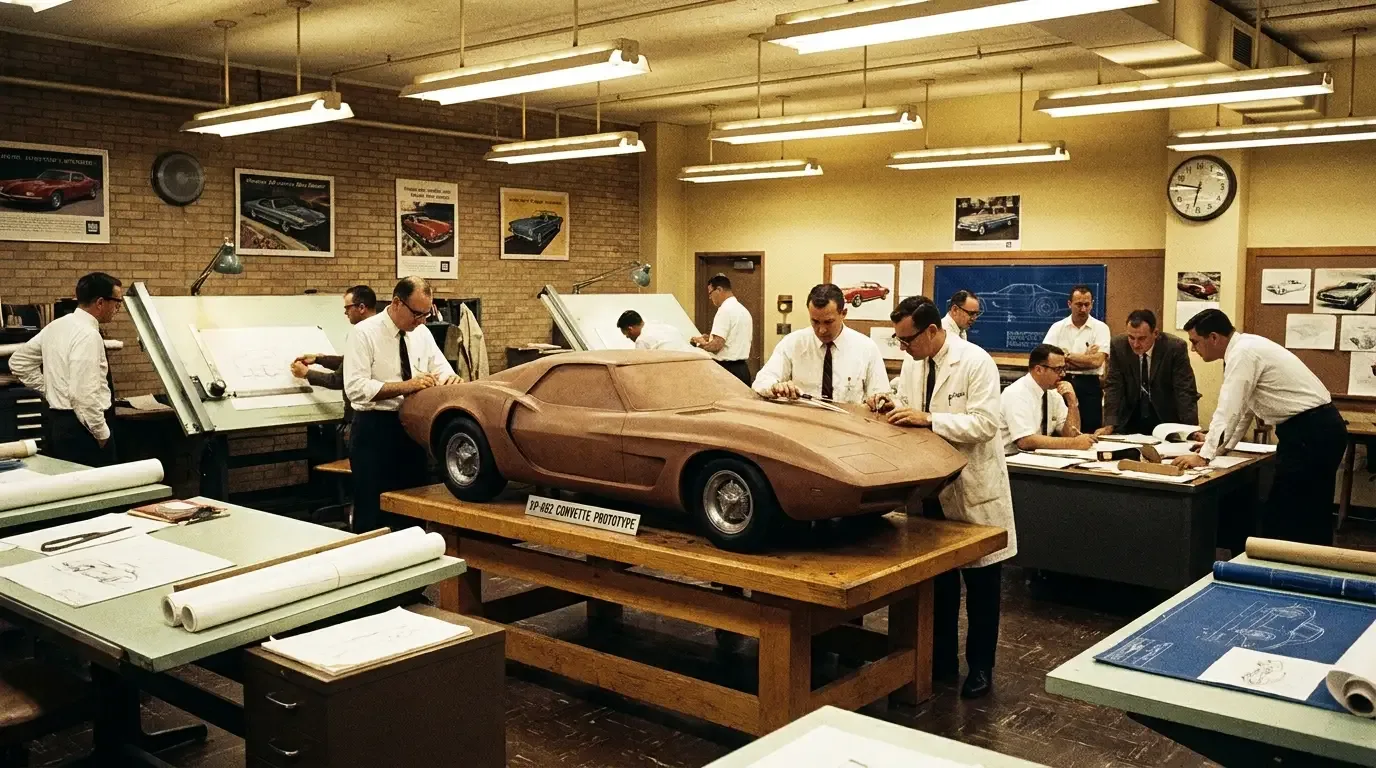
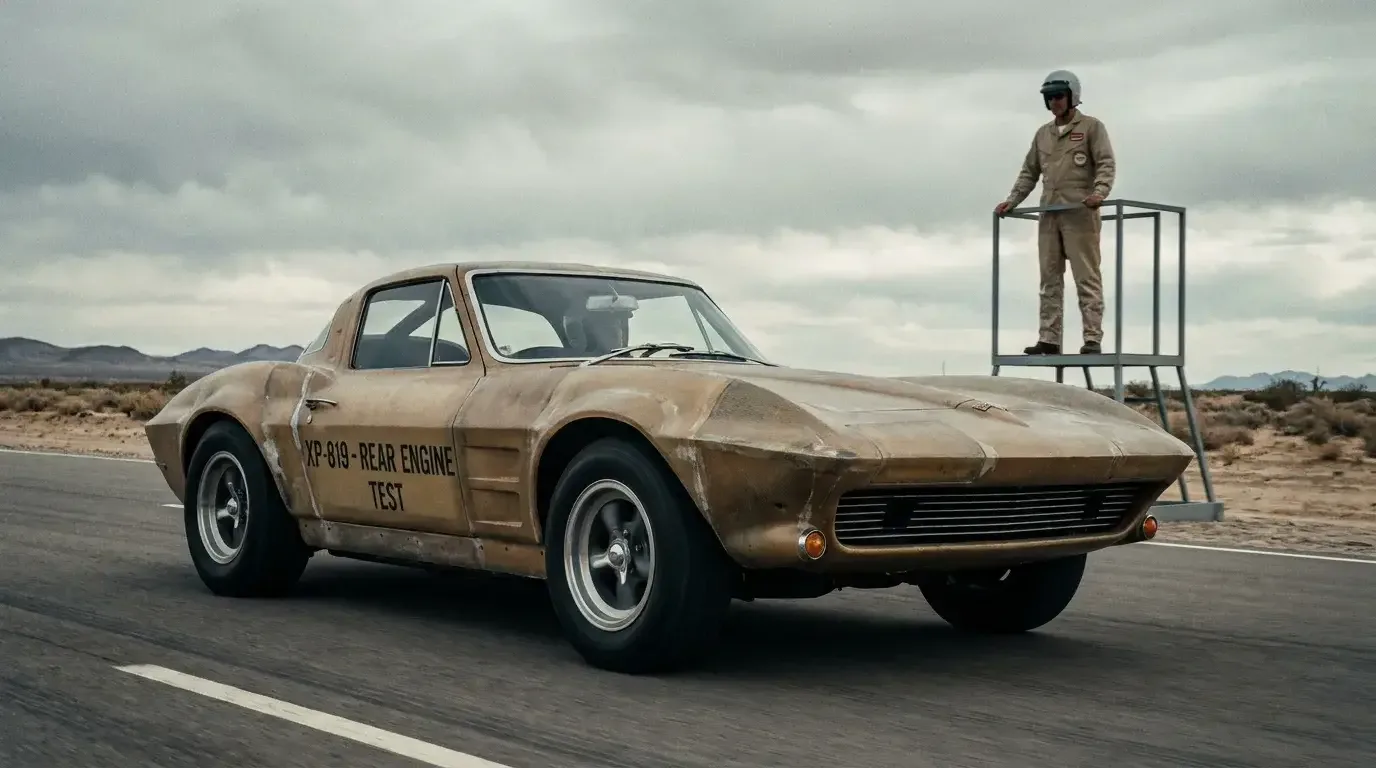
The CERV I, built in 1960, was an open-wheel racing car with a Corvette V8 mounted amidships. It was a test vehicle and a statement of intent. The CERV II followed in 1964, a more refined two-seat design that foreshadowed where Duntov wanted to go. Neither became a production car. GM management, during most of Duntov's tenure, was not willing to make the investment required to retool for a mid-engine layout.
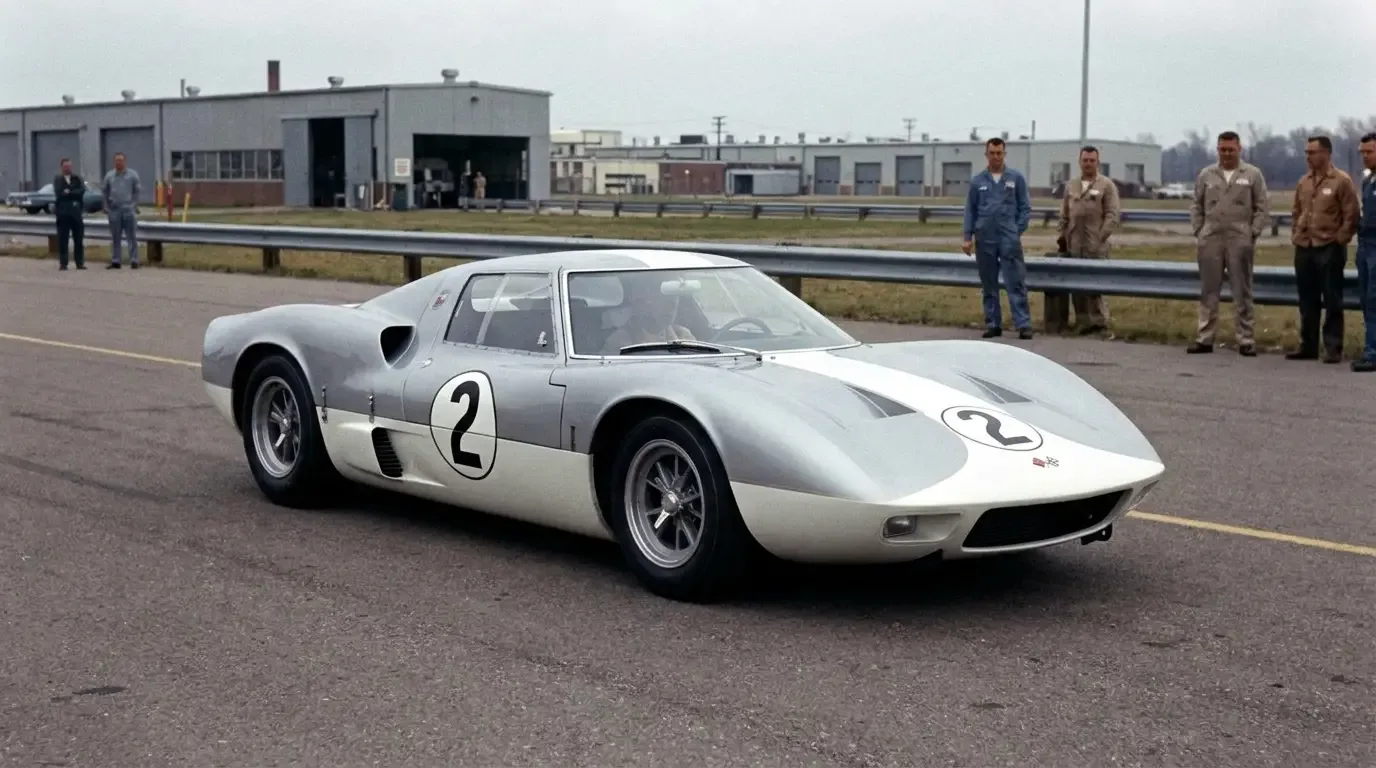
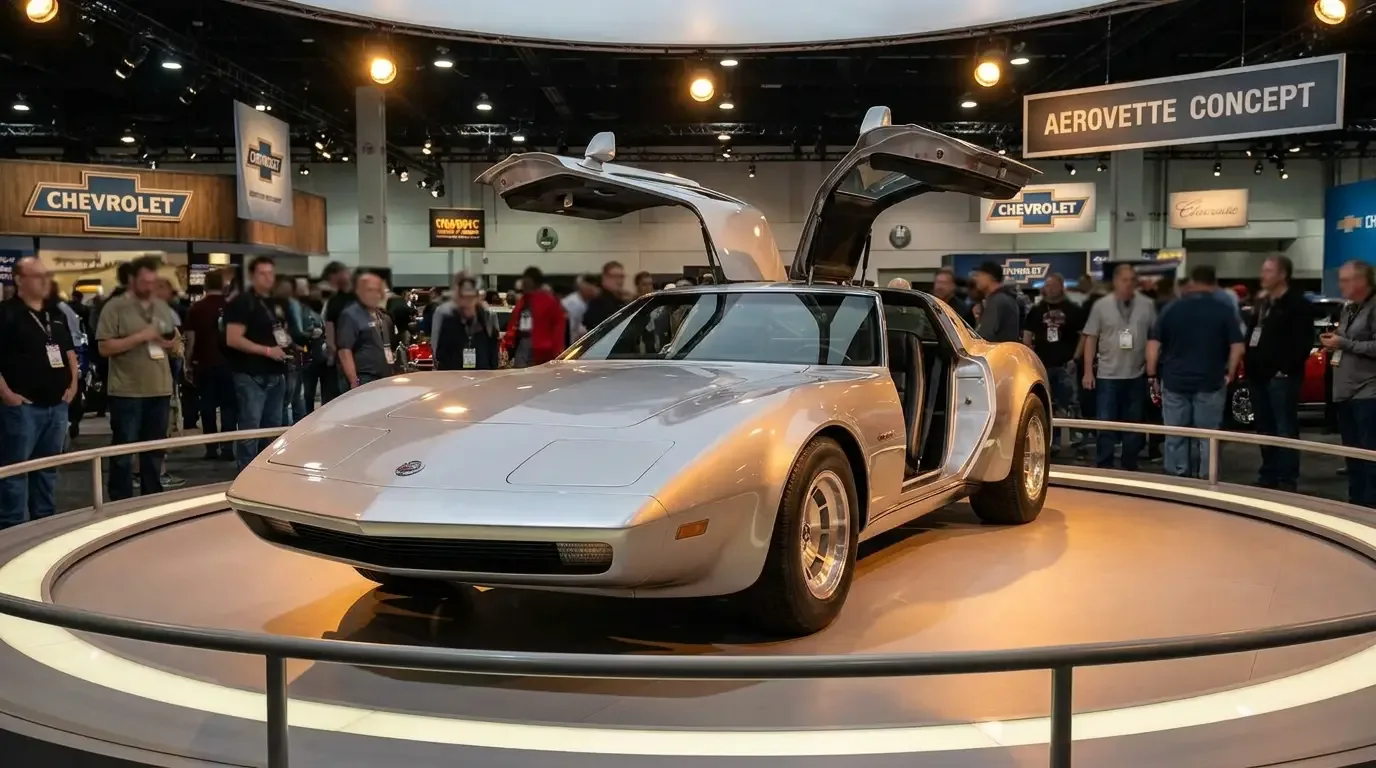
He came closest in the early 1970s with the XP-882 project, which was developed into a running prototype and shown publicly. The car attracted serious attention. It also attracted the attention of people at GM who were more concerned with emissions compliance and fuel economy during the oil crisis years, and the mid-engine production Corvette was shelved again.
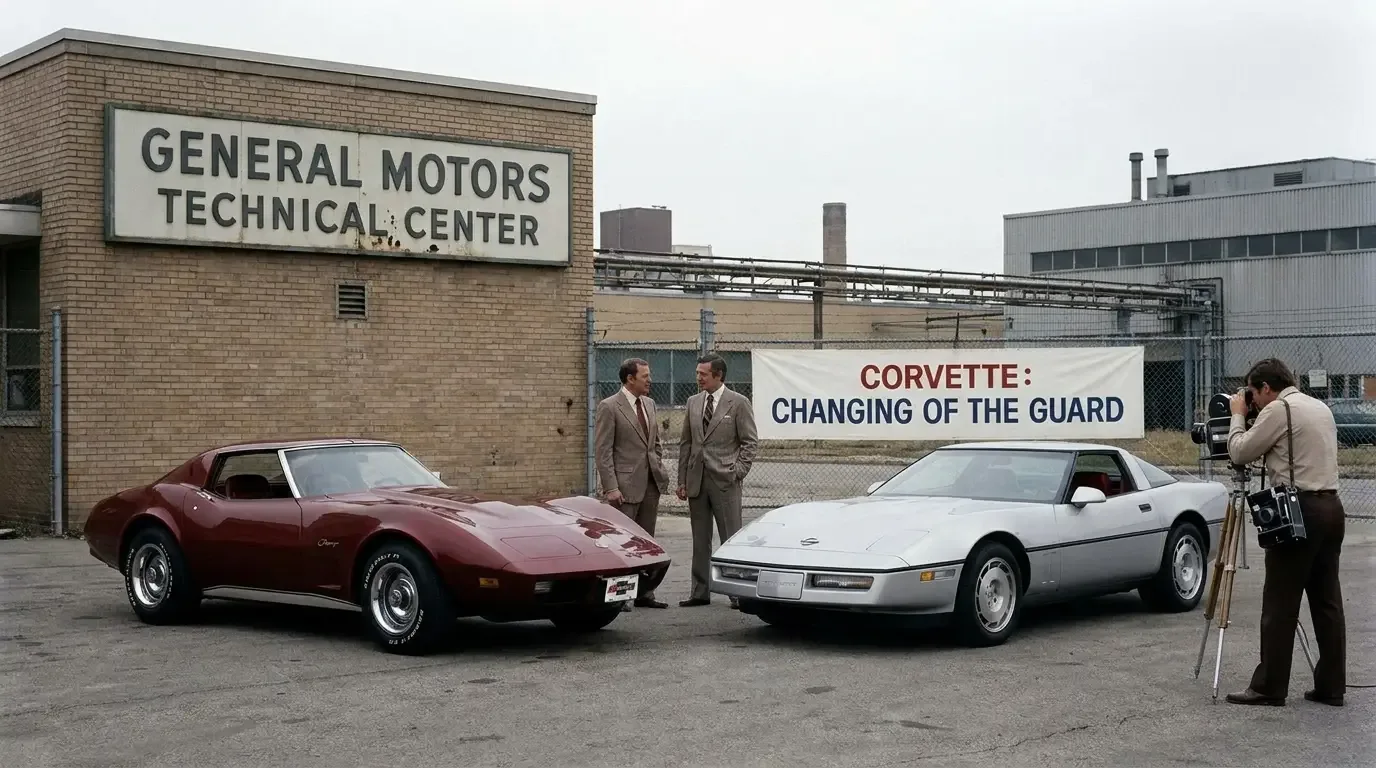
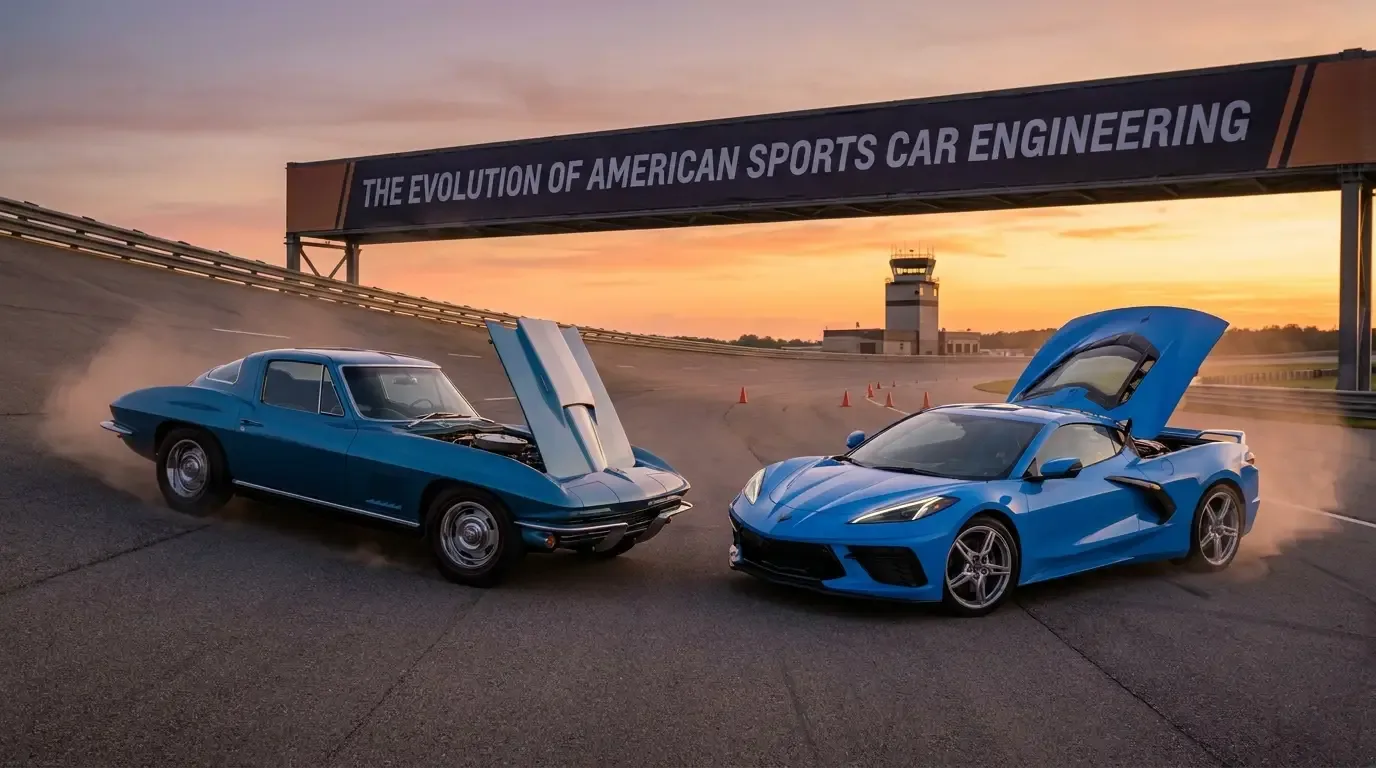
Duntov retired in 1975. He was 65 years old. He had spent 22 years at GM pushing a car that arrived as a styling exercise into a genuine high-performance machine, and he left without achieving the thing he wanted most. The C8 Corvette with its mid-engine layout finally went on sale in 2020. Duntov died in 1996. He never saw it, but the people who built it knew exactly whose work they were completing.
The "father of the Corvette" title, and what it actually means
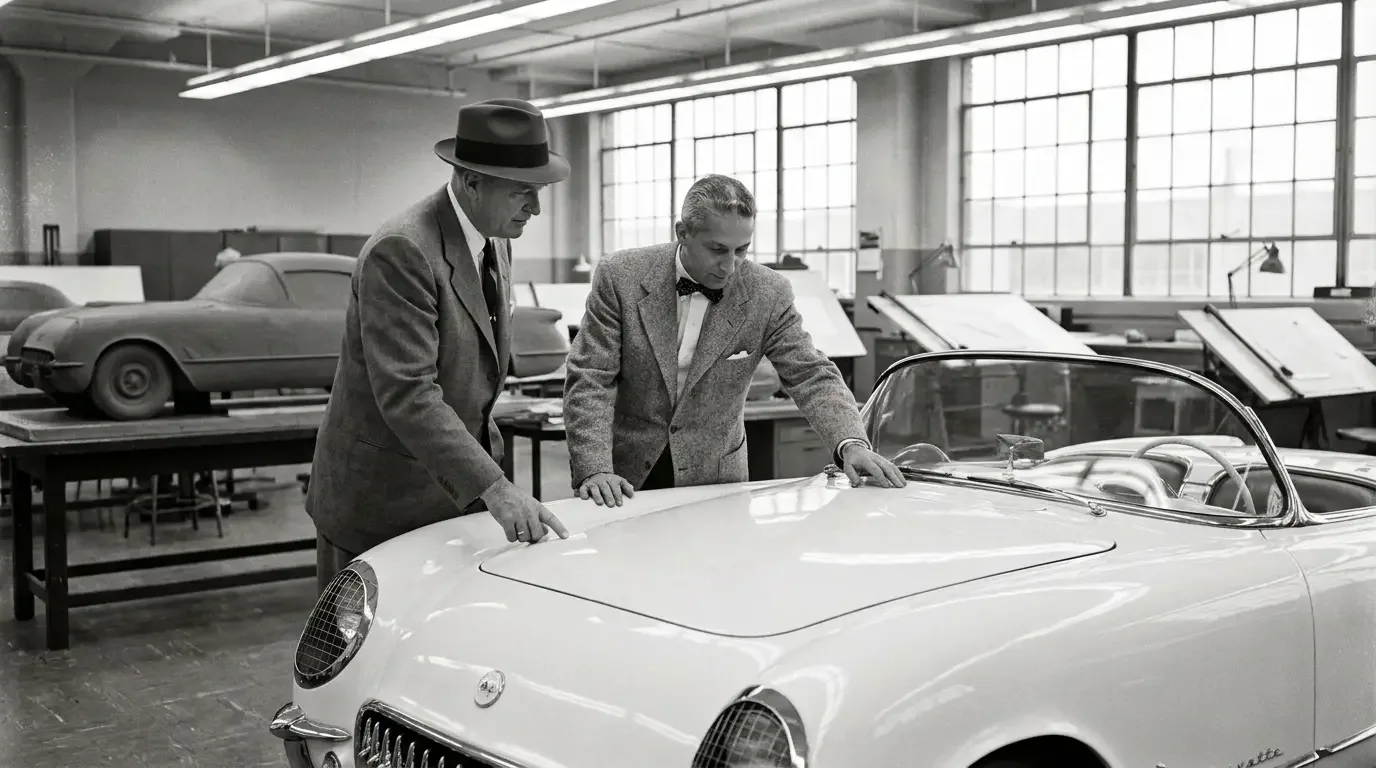
Harley Earl designed the Corvette. That is not a small thing. Earl ran GM Styling for decades and the Corvette was his project, his vision, the car he personally championed through GM's internal politics at a time when a two-seat American sports car was genuinely not obvious. Without Earl, the car that Duntov eventually transformed would not have existed.
Ed Cole engineered the engine that made it viable. Zora Arkus-Duntov turned it into a sports car that could compete with the world's best. Describing any one of them as "the father" requires ignoring what the other two actually contributed.
What Duntov himself said about the title was typically measured. He was not given to taking credit he thought belonged elsewhere, and he was not given to false modesty either. He understood his own role clearly: he had arrived after the car existed and had worked to make it into what it should have been. He considered that a different kind of contribution than creating something from nothing, and he was right about that distinction.
The myth of Duntov as sole creator is partly his own doing, partly the nature of how automotive history gets written. An immigrant engineer who raced at Le Mans, wrote a letter that changed a company's direction, and spent two decades making a car into something it wasn't supposed to be is a better story than a committee decision. The story is not false. It is incomplete, which is something different.
What remains after the myth is stripped away is still remarkable. The Corvette in 1953 was a good-looking car with an inadequate drivetrain and an uncertain future. The Corvette in 1975, when Duntov retired, was one of the most capable American performance cars ever built. The work between those two points was, more than anyone else's, his.
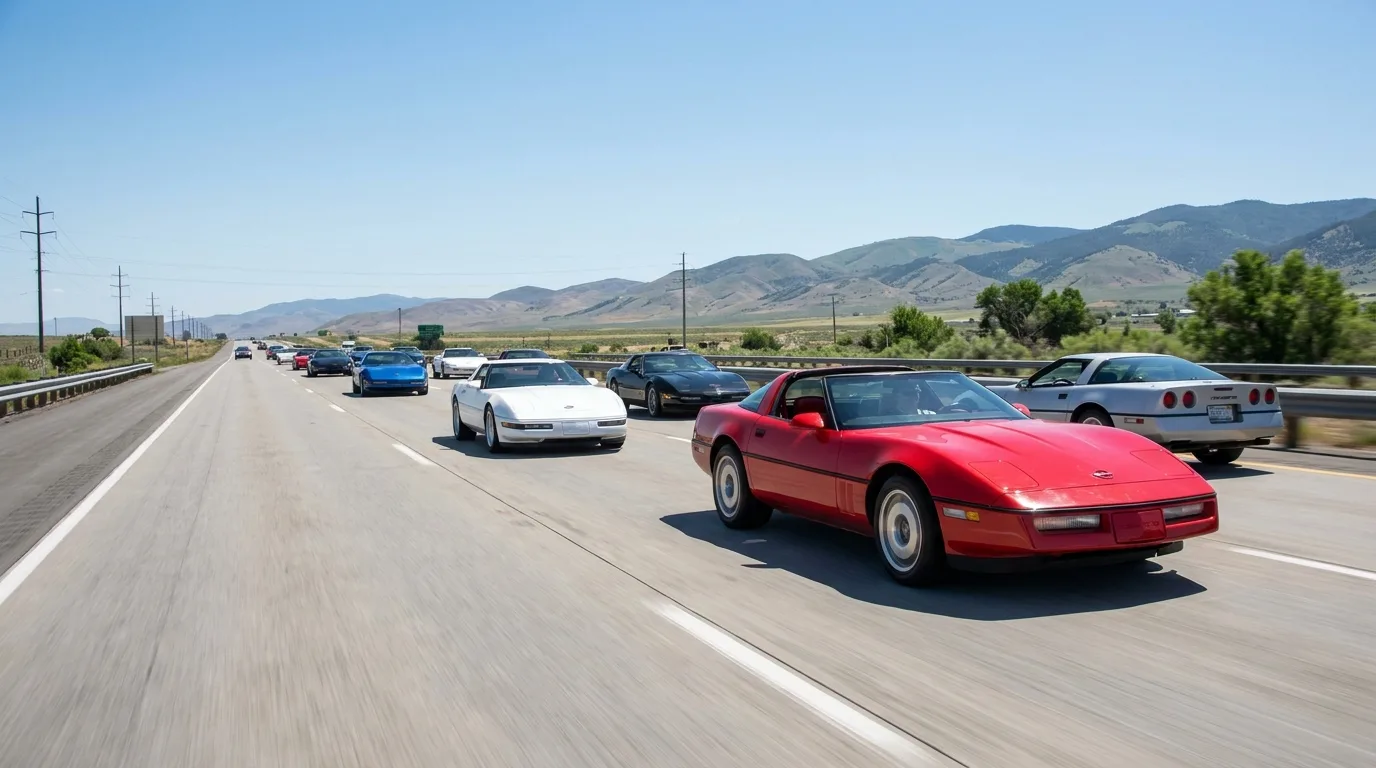
The cars he left behind are still out there. Some of them are racing. Some of them are in collections. Most of them are doing what Duntov always said a sports car should do: being driven. He would have had opinions about the ones that are not.
Sources and notes
- National Corvette Museum: Zora Arkus-Duntov biography, confirming hire date, background, and career role
- Wikipedia: Zora Arkus-Duntov, confirming birth year, Le Mans starts (1953 Allard, 1954-1955 Porsche 550 Spyder class wins), and retirement/death dates
- CorvSport: 1953 Corvette production numbers, confirming 300 units built with the 150 hp Blue Flame six and Powerglide transmission
- National Corvette Museum: 1957 Corvette specs, confirming 283 cubic inch/283 horsepower Ramjet fuel injection and the one-horsepower-per-cubic-inch milestone
- Hagerty: "When Porsche almost stole 'Mr. Corvette' from GM," confirming Duntov's Le Mans class wins and near-departure from GM
- Jalopnik: history of the 1957 AMA racing ban, confirming its origin and effect on the Corvette SS Le Mans program