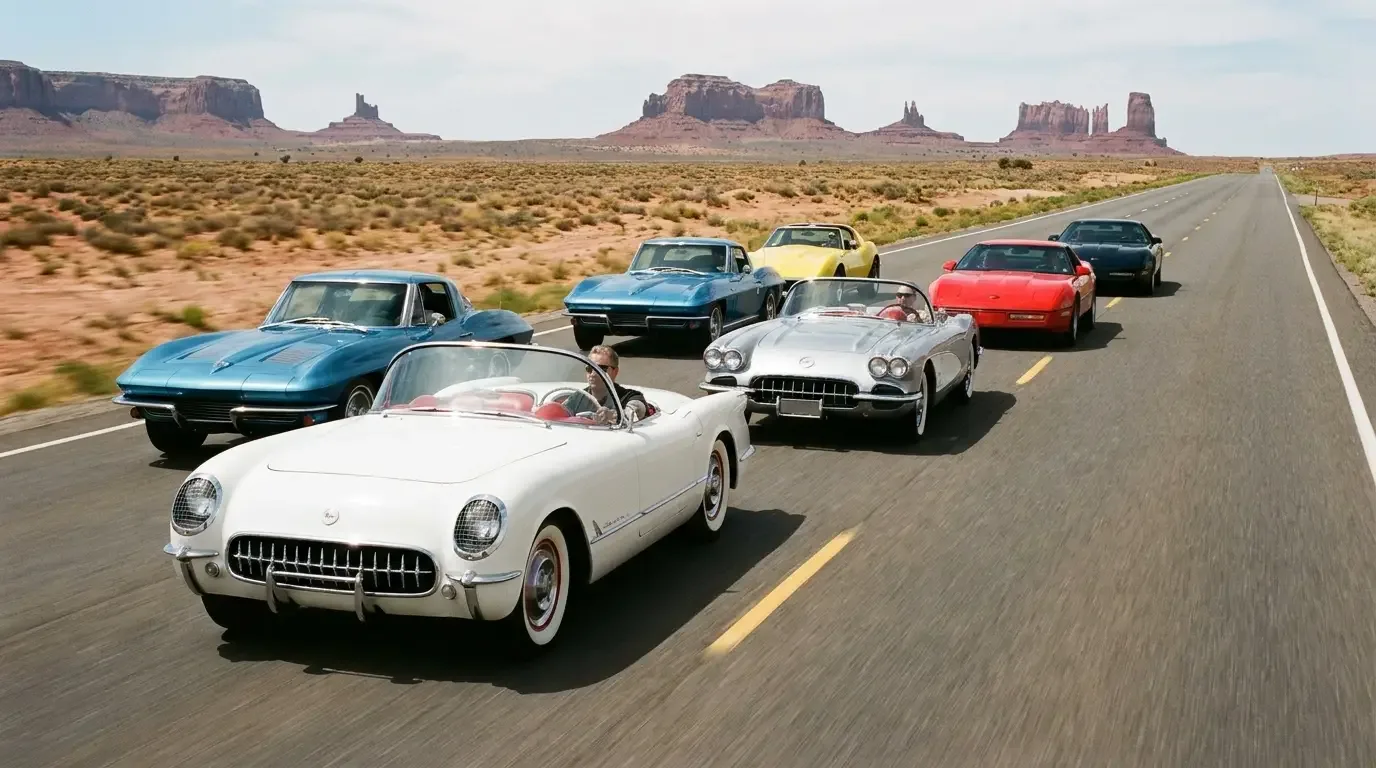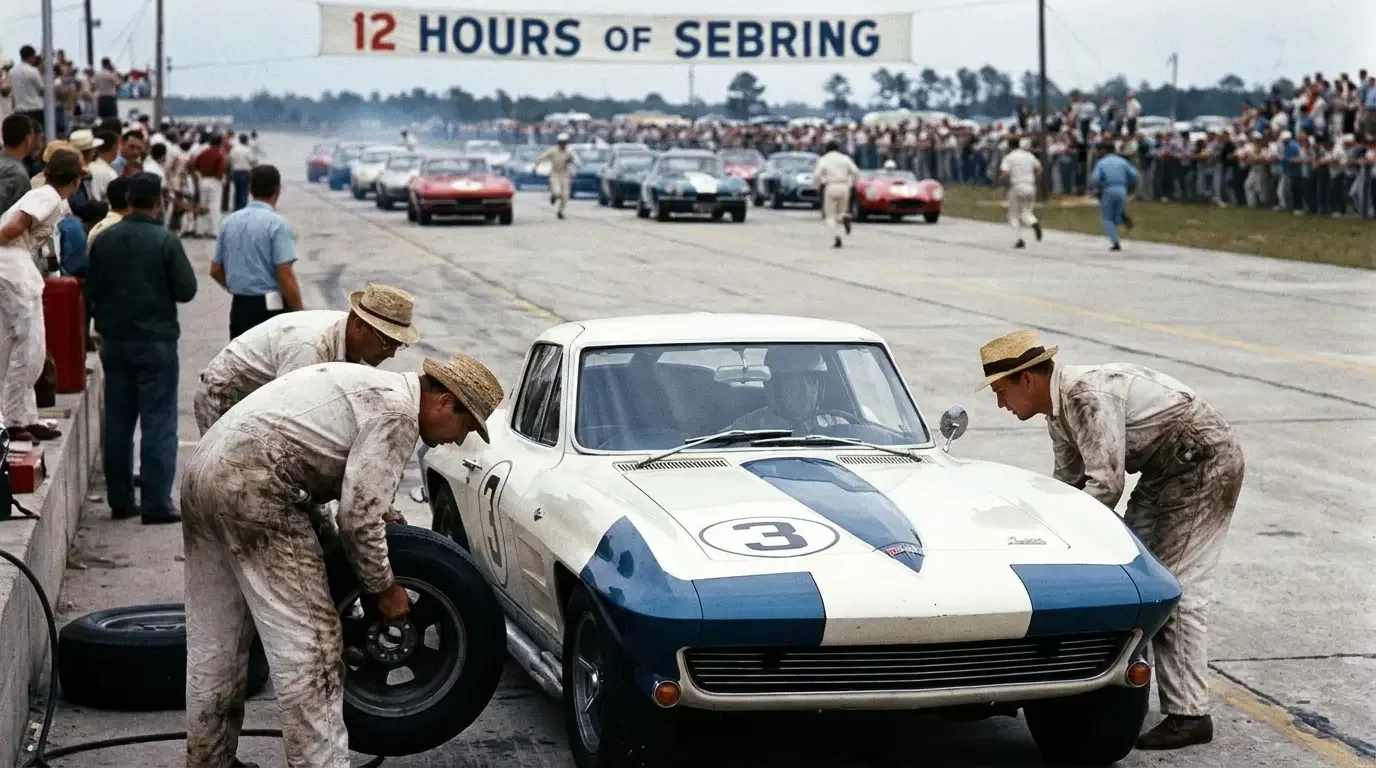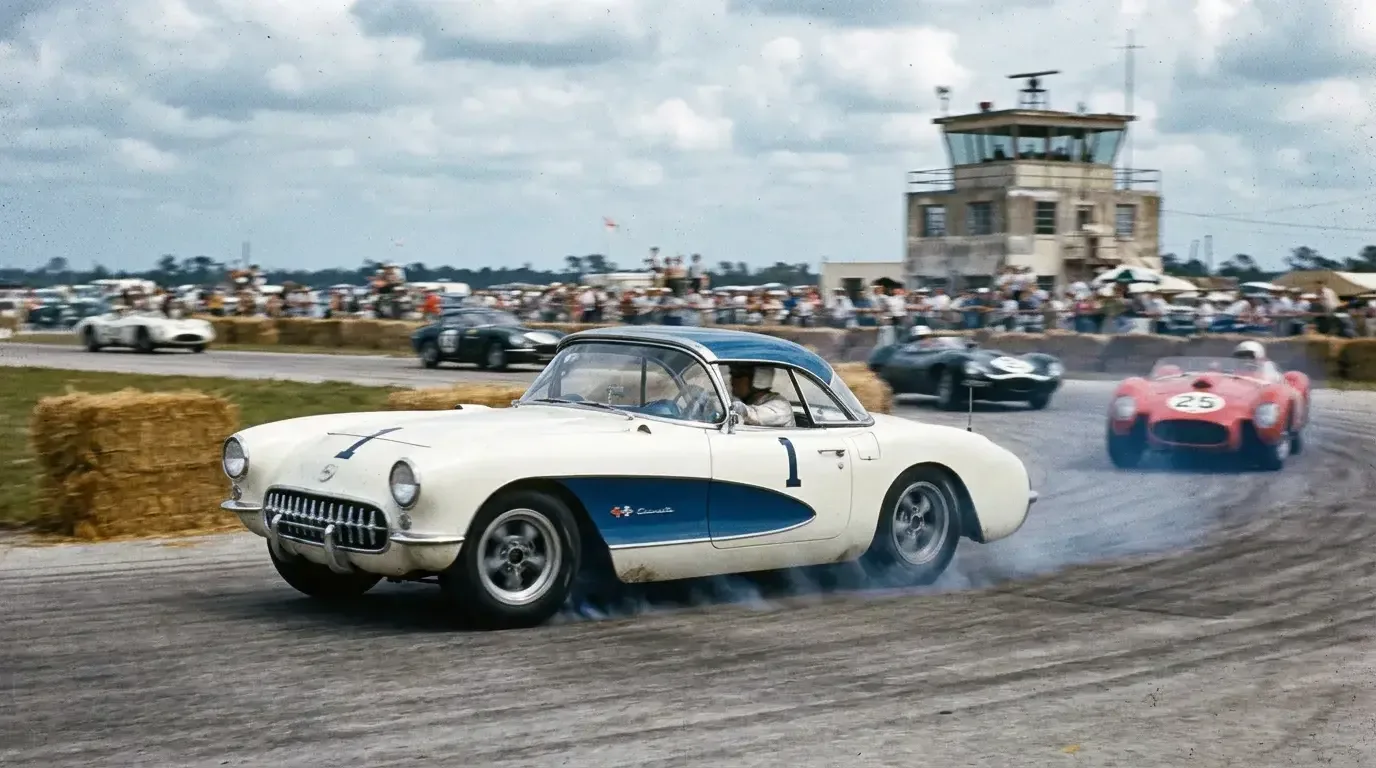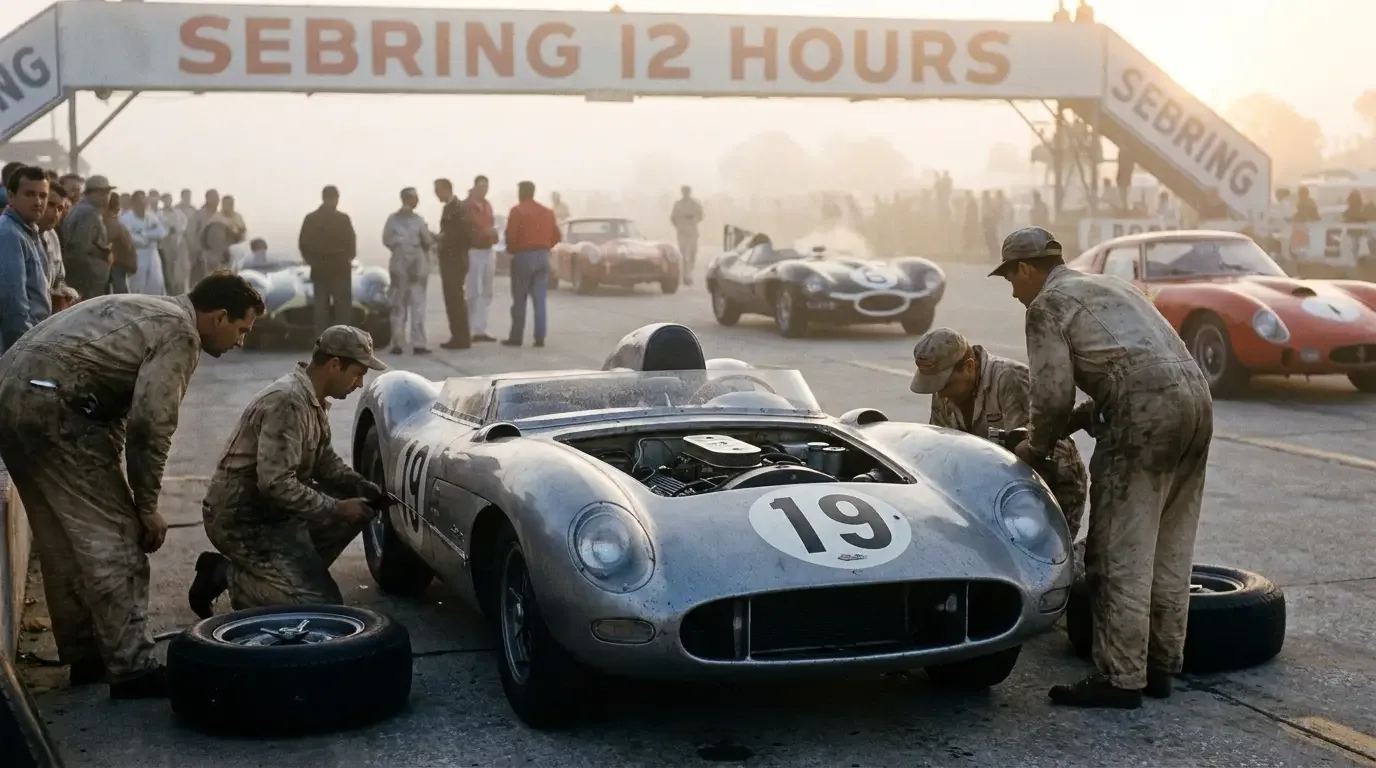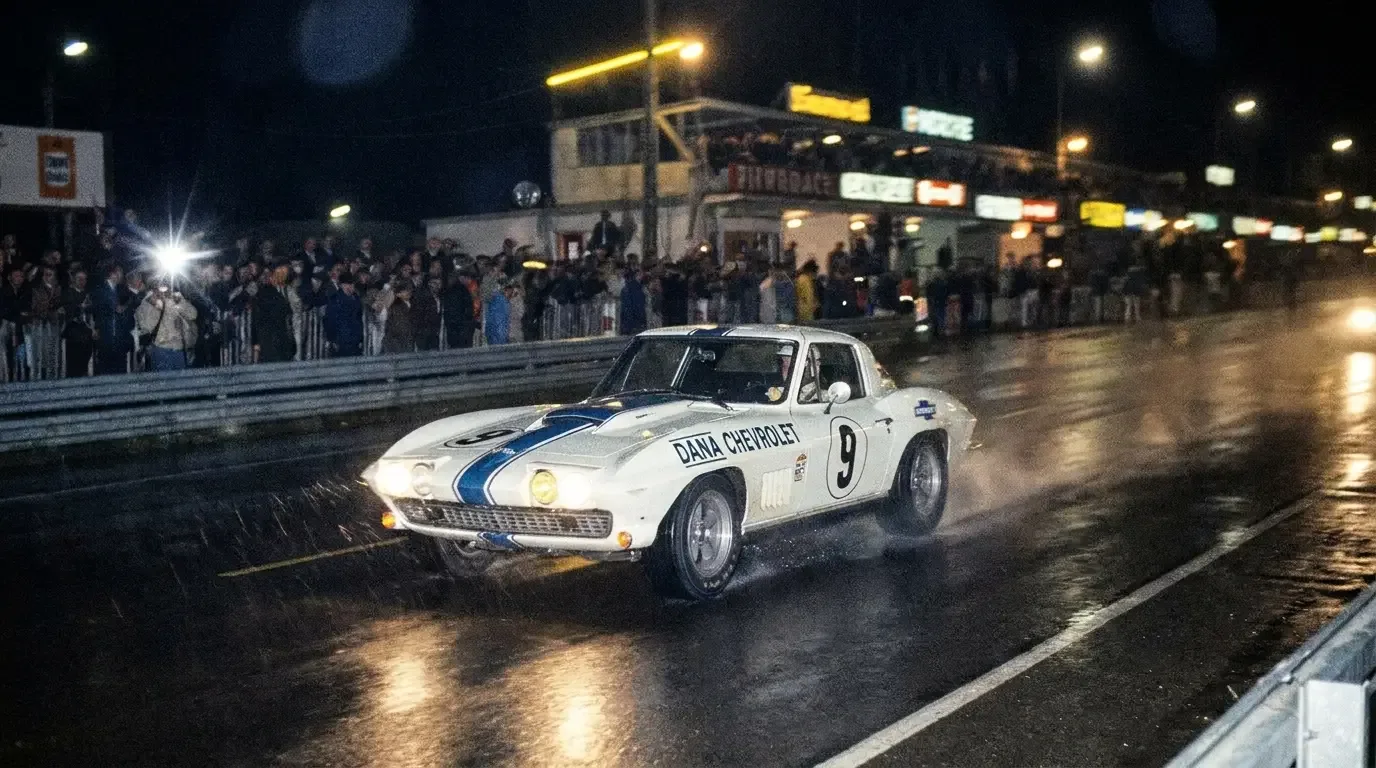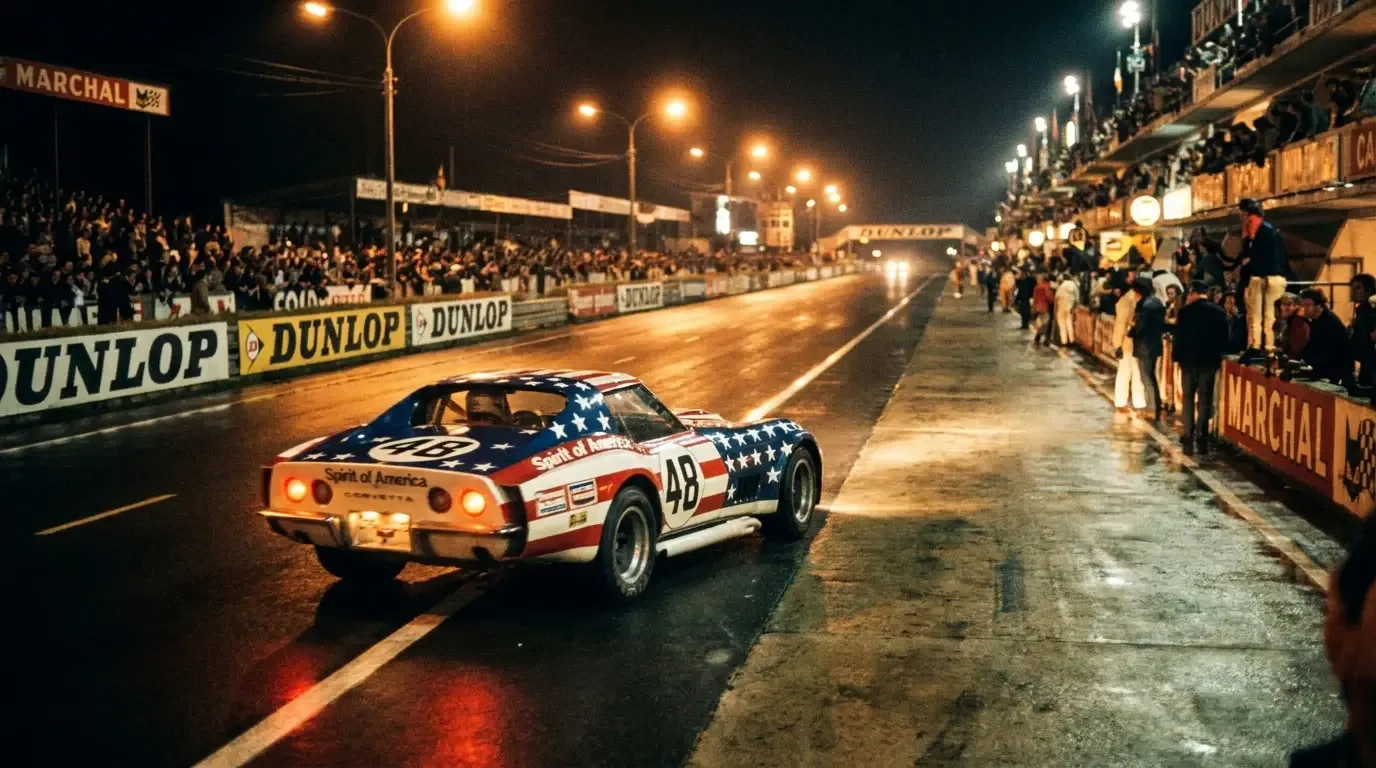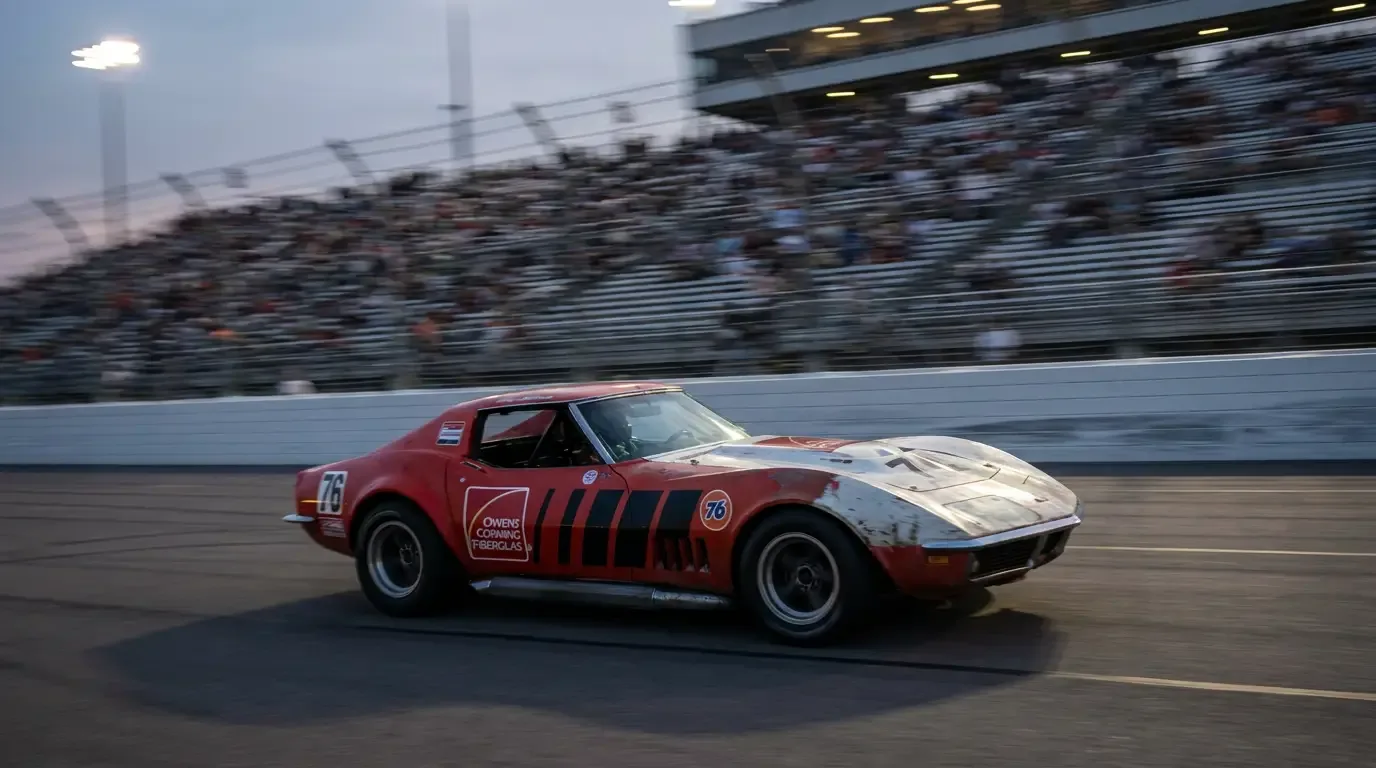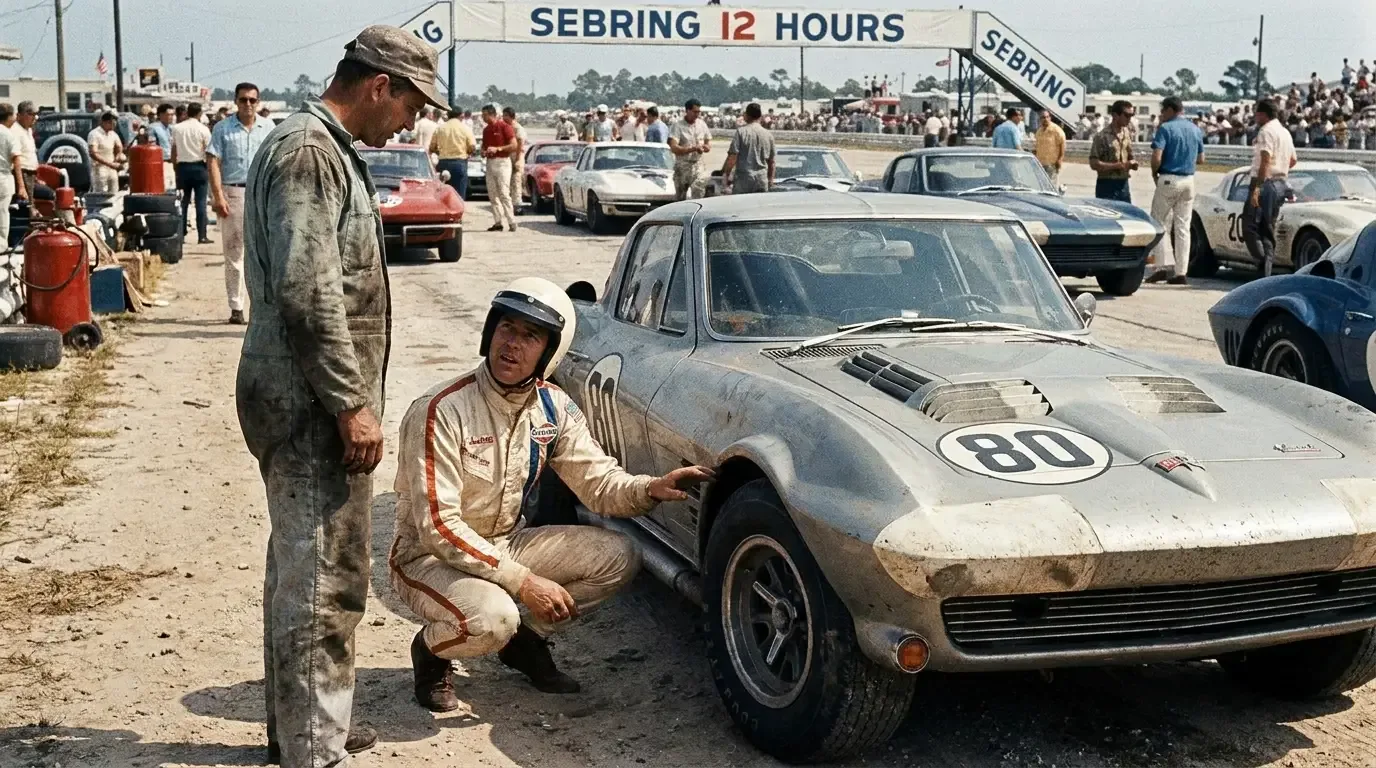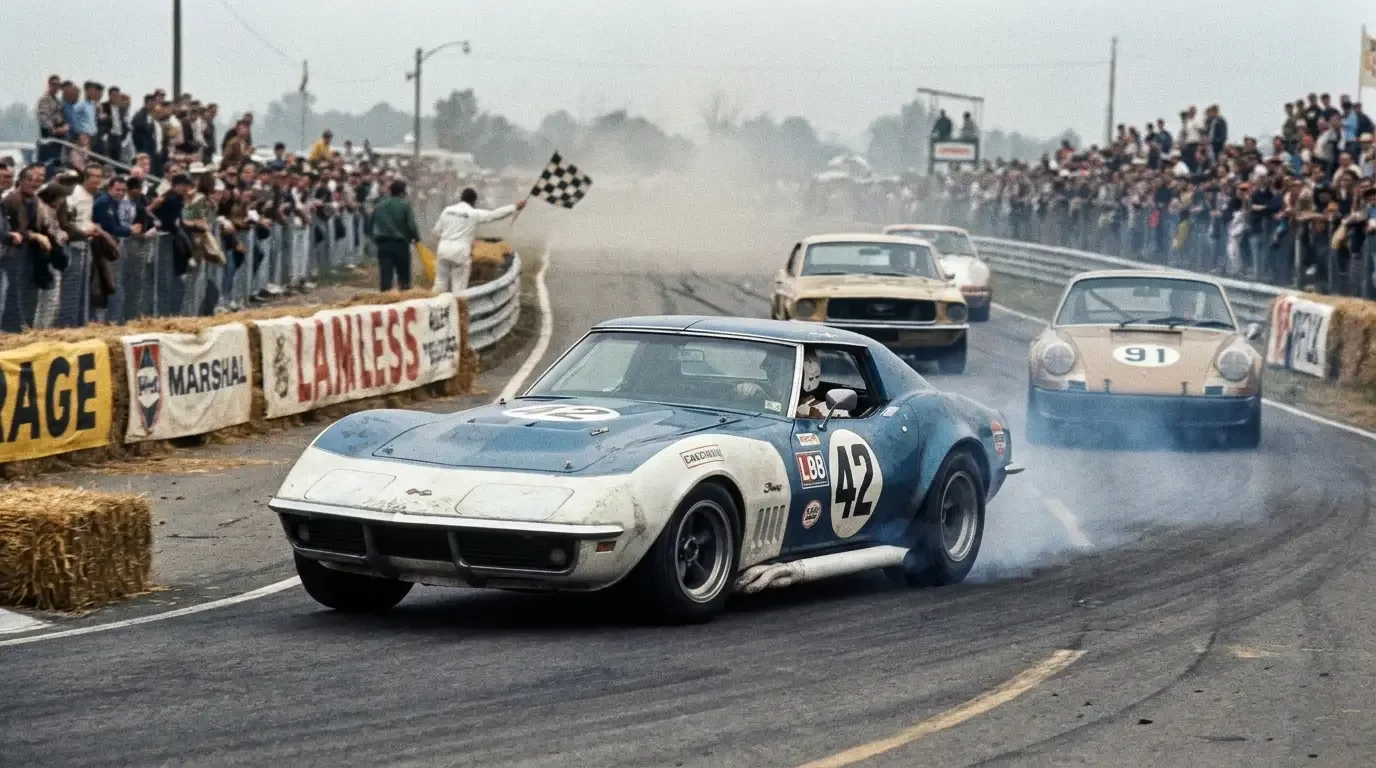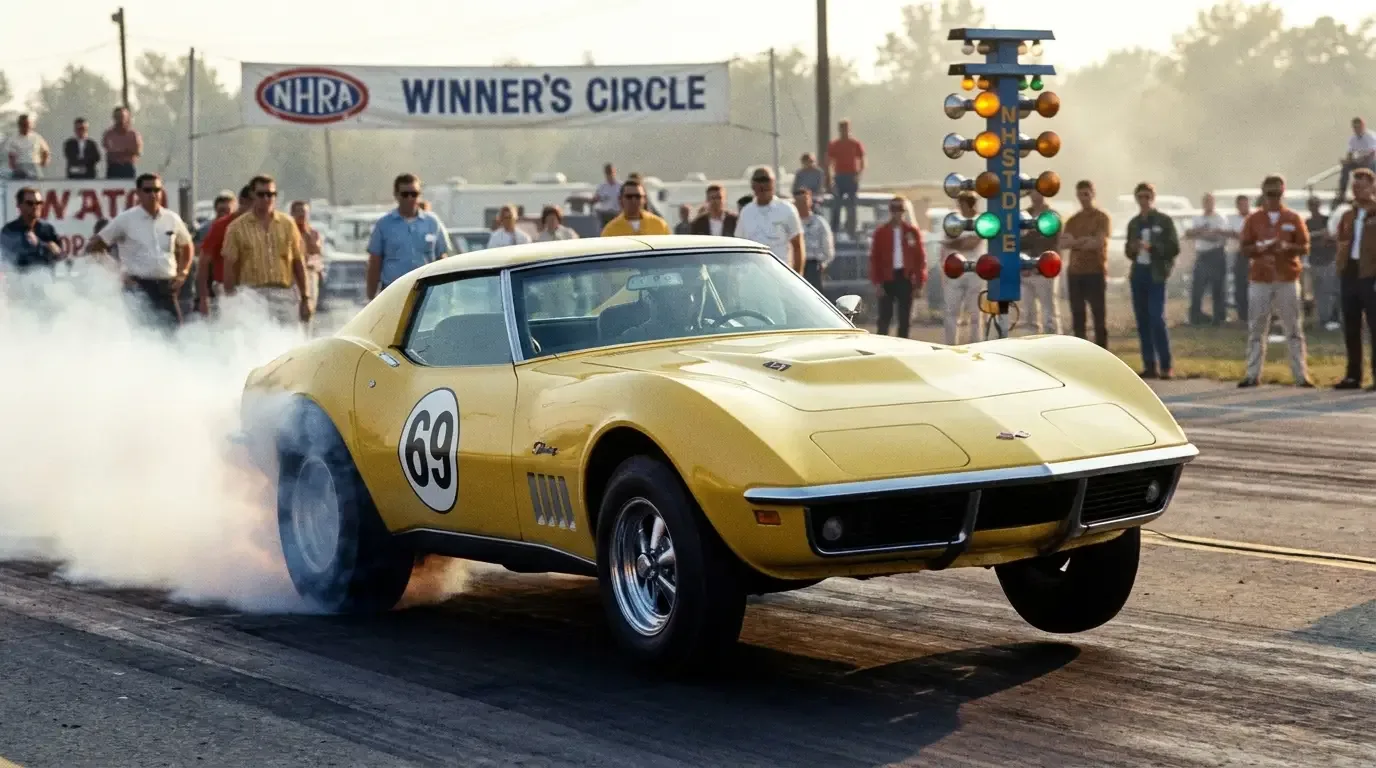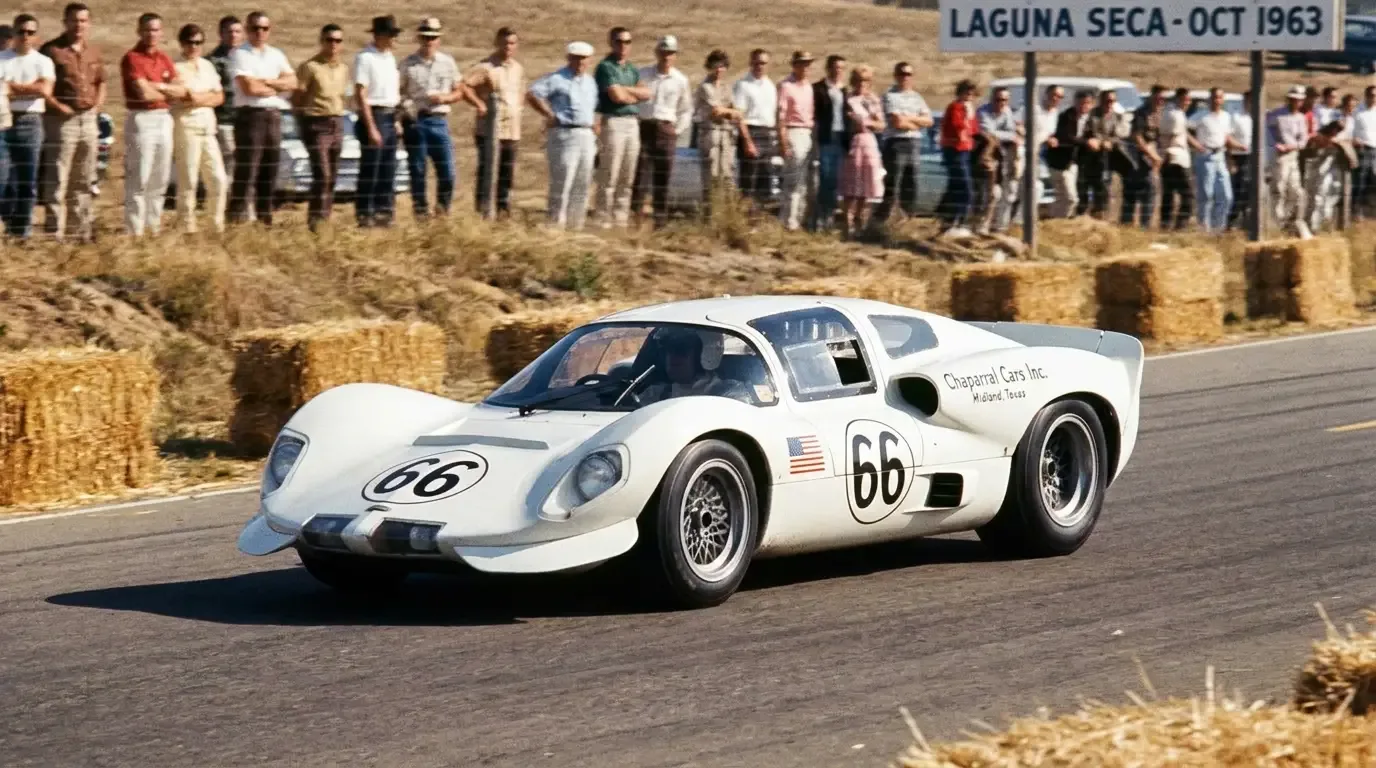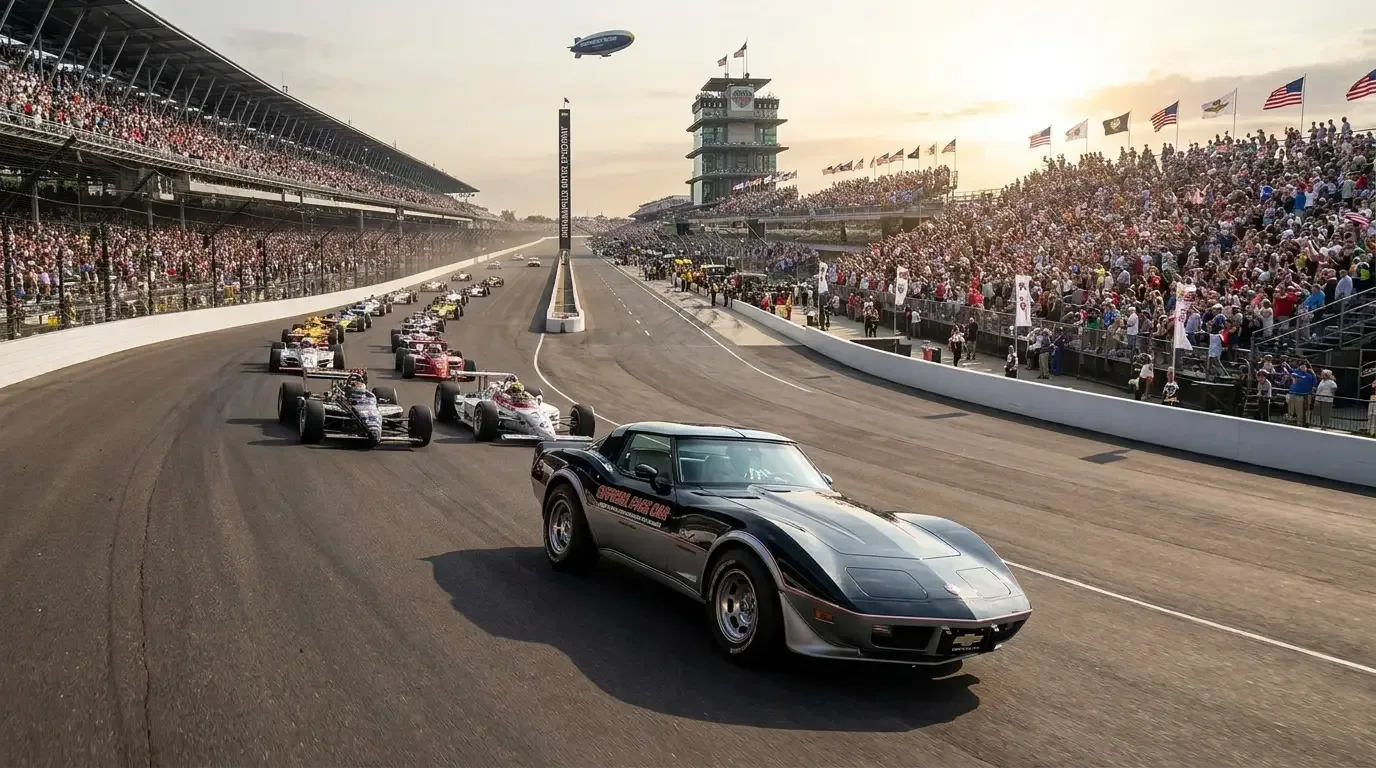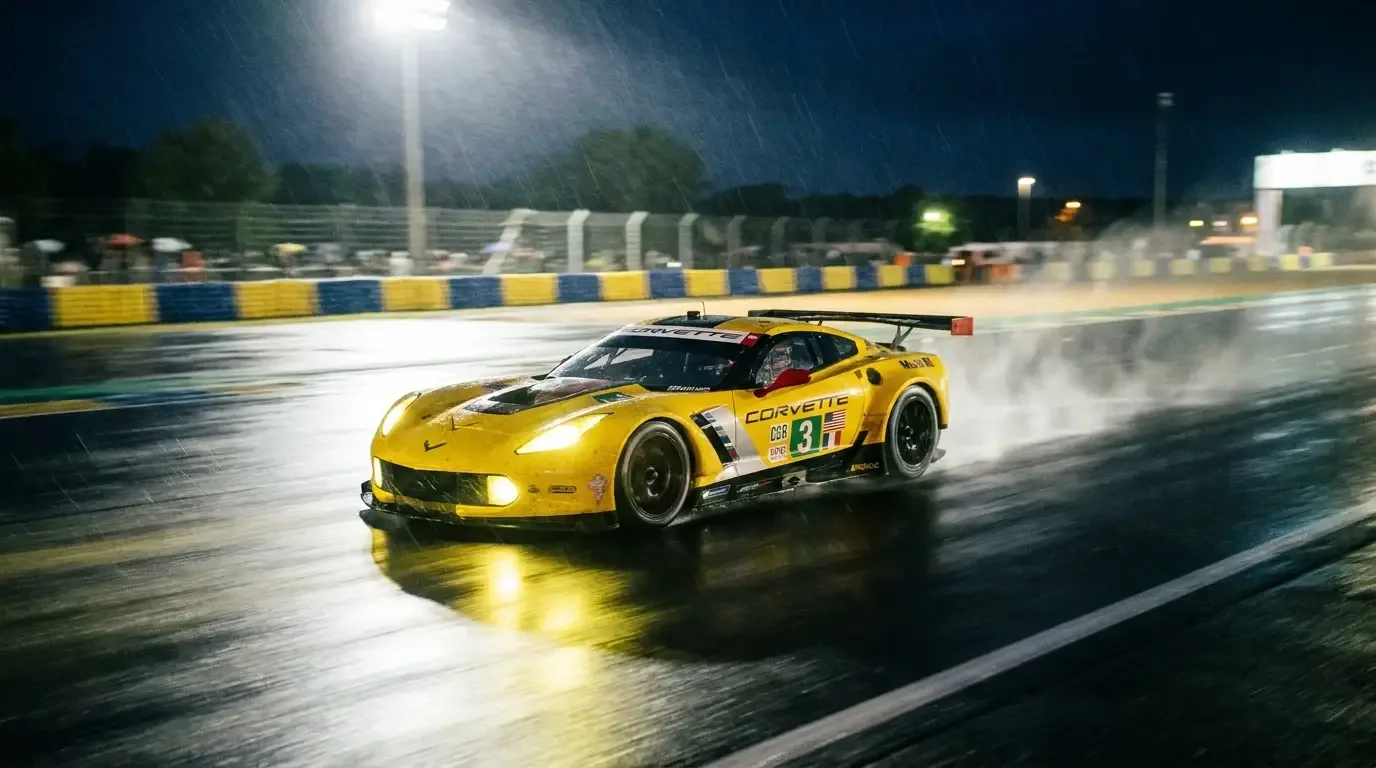

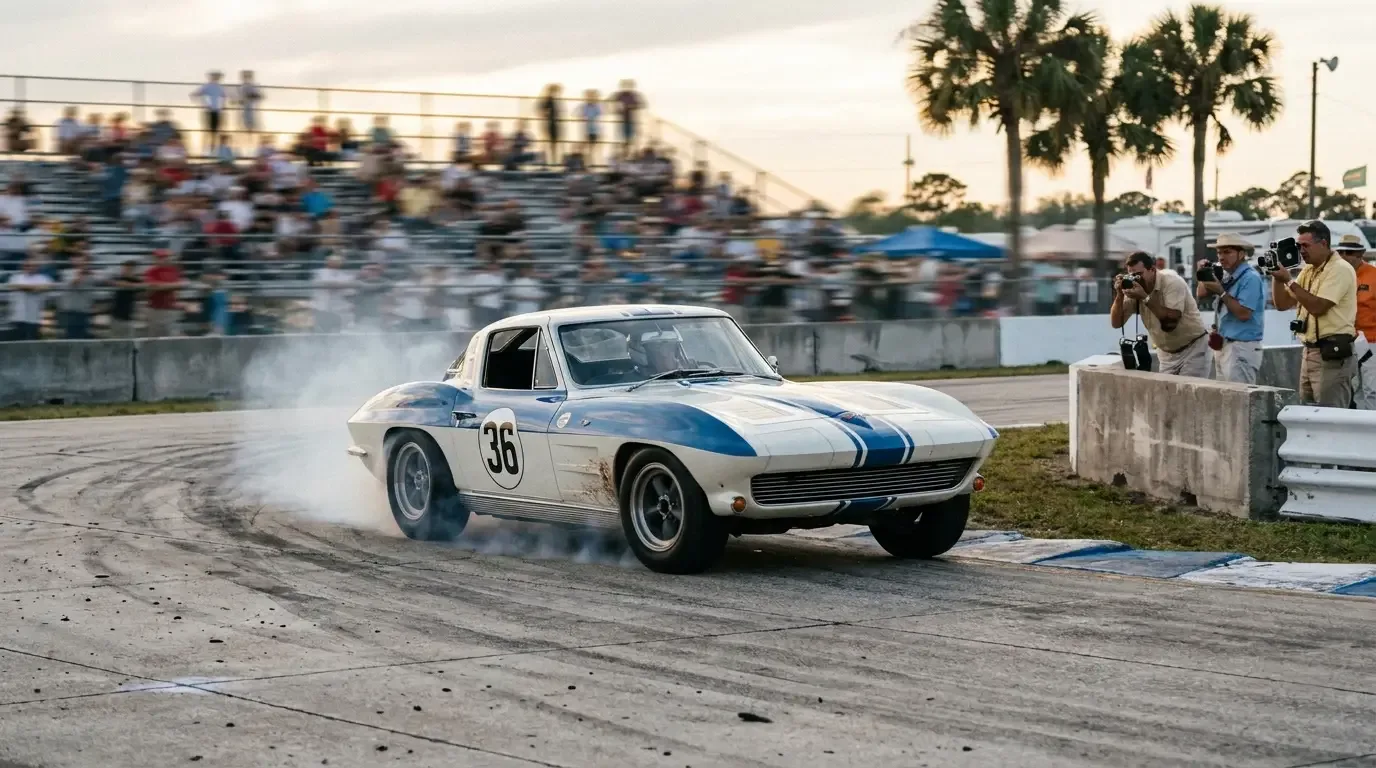
There is a photograph taken at Sebring in March 1956. Two Corvettes are lined up on the grid, white with blue racing stripes, and the drivers standing beside them look completely unbothered. They should have been nervous. The Corvette had been a styling exercise in 1953, a car that automotive writers called underpowered and underdeveloped. Three years later, it was at an international endurance race, and the people inside Chevrolet engineering knew something the rest of the world was still figuring out. The full arc of Corvette heritage runs through nearly seven decades of competition, and almost all of it traces back to what happened in those early Florida mornings when the car was still new.
Sebring and the birth of a racing program
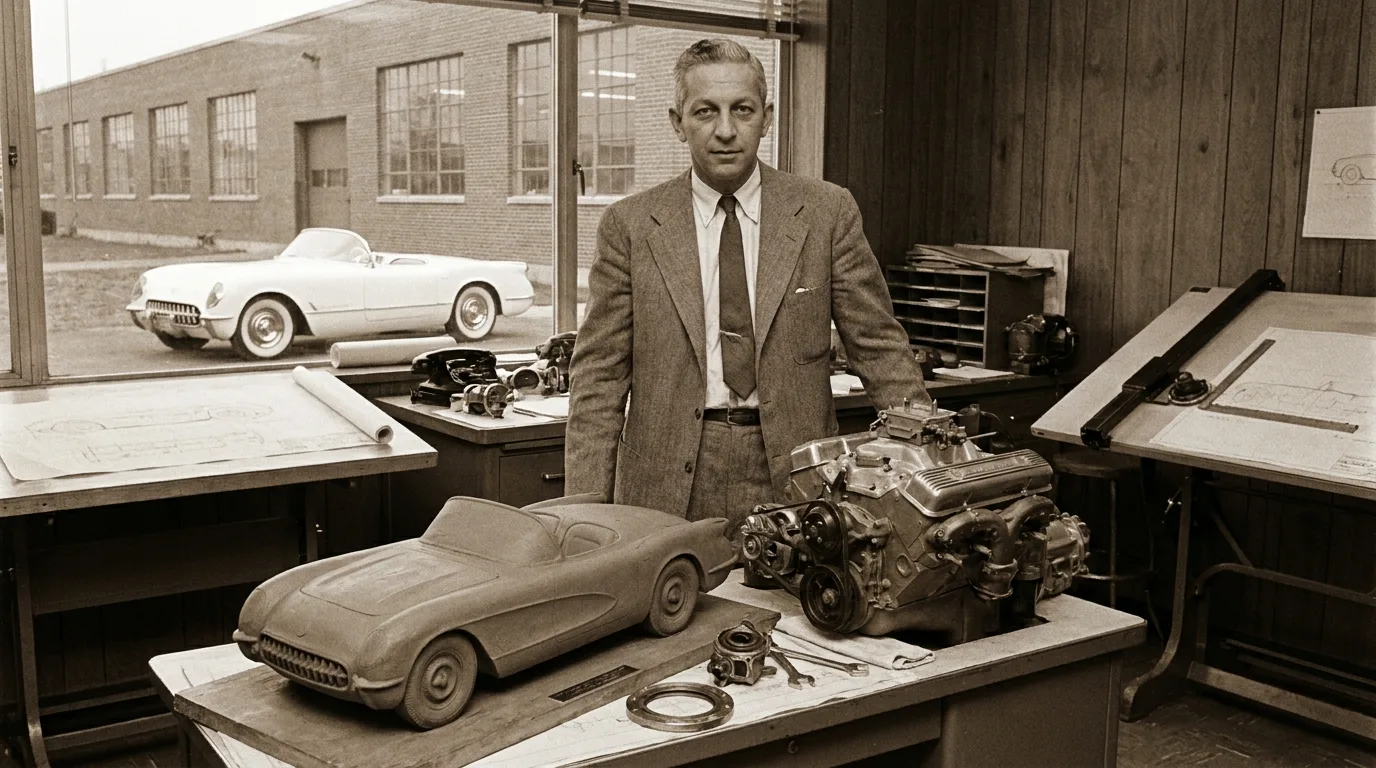
The 1956 Sebring 12 Hours was not Corvette's first race appearance, but it was the first time the factory treated competition seriously. Zora Arkus-Duntov, the Belgian-born engineer who had already written Chevrolet an unsolicited memo about what the Corvette could become, pushed the effort from the inside. The 1956 cars ran on a 265 cubic inch V8 that had been modified for the demands of endurance racing, and though neither car finished in a position that rewrote the record books, they ran. They competed. Against Jaguars and Ferraris on a circuit that sorted out machinery in ways that a sales brochure never could.
The following year brought something more serious. Chevrolet built the Corvette SS, a purpose-built racing car with a tubular space frame and a magnesium body. It was designed for Le Mans. The car made its one significant appearance at Sebring in 1957, driven by John Fitch and Piero Taruffi. Juan Manuel Fangio had been signed as an original driver but was released from that commitment before the race; he did set a remarkable lap record in the test mule during practice. A bushing failure ended the SS's race run after just 23 laps. The SS never made it to Le Mans. What the project produced instead was a test car and engineering knowledge that fed directly back into production Corvette development.
The 1957 AMA ban and the privateer era
June 1957. The Automobile Manufacturers Association voted to withdraw factory support from racing. The official line was safety. The real pressure was political, following a Le Mans disaster in 1955 that had killed more than eighty spectators, and American manufacturers facing congressional scrutiny over horsepower advertising and racing promotion. General Motors signed on. Chevrolet was supposed to stop.
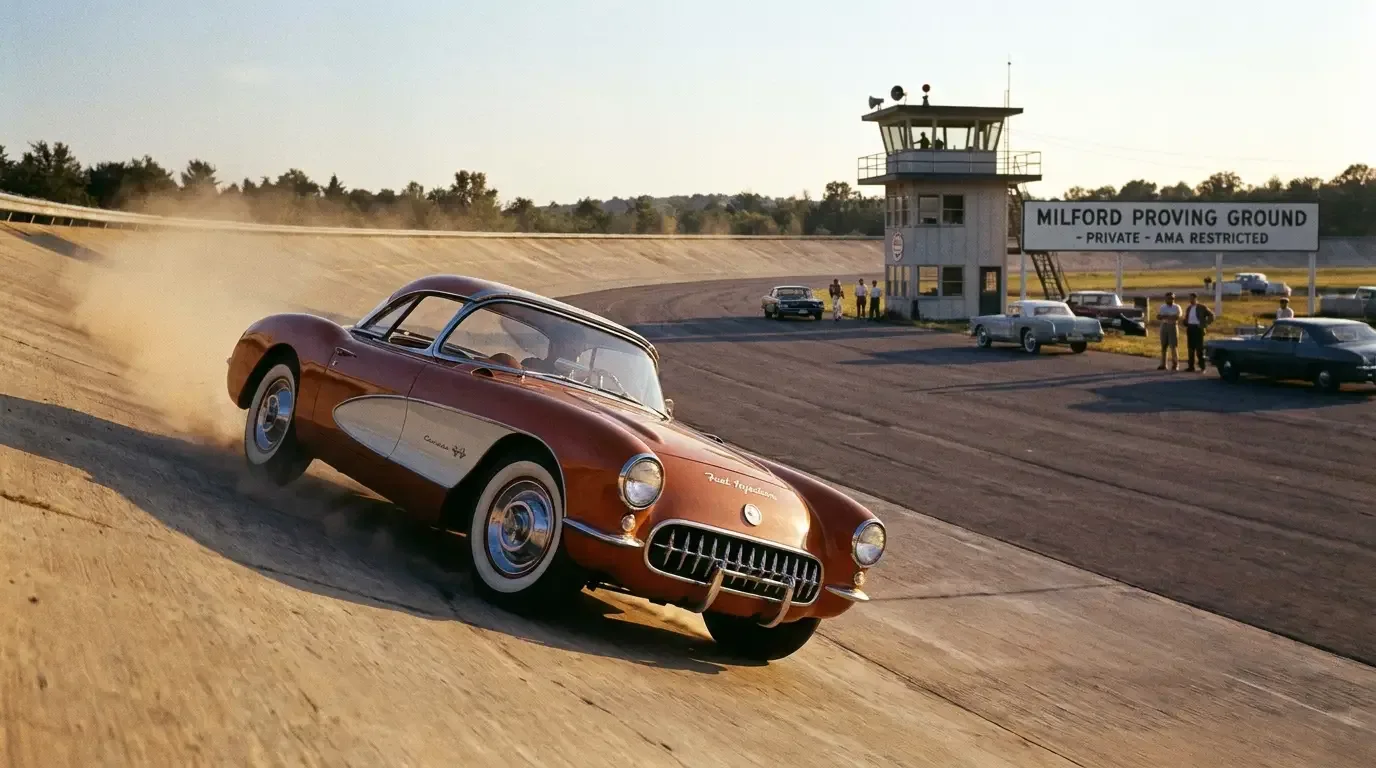
They did, officially. What happened in practice was more complicated. Duntov kept working. Development continued under the cover of "product testing." And across the country, private buyers were taking the fuel-injected 283 Corvette that Chevrolet had put into production in 1957 and racing it anyway. The AMA ban stopped factory teams; it did not stop the car. Dr. Dick Thompson, a Washington dentist who had been racing Corvettes since 1956, kept competing on the SCCA circuit and took the B-Production national championship in 1957 and again in 1961. He earned the nickname "The Flying Dentist" through results, not press releases. The privateer era proved something important: the Corvette could win without a factory budget behind it.
Briggs Cunningham at Le Mans, 1960
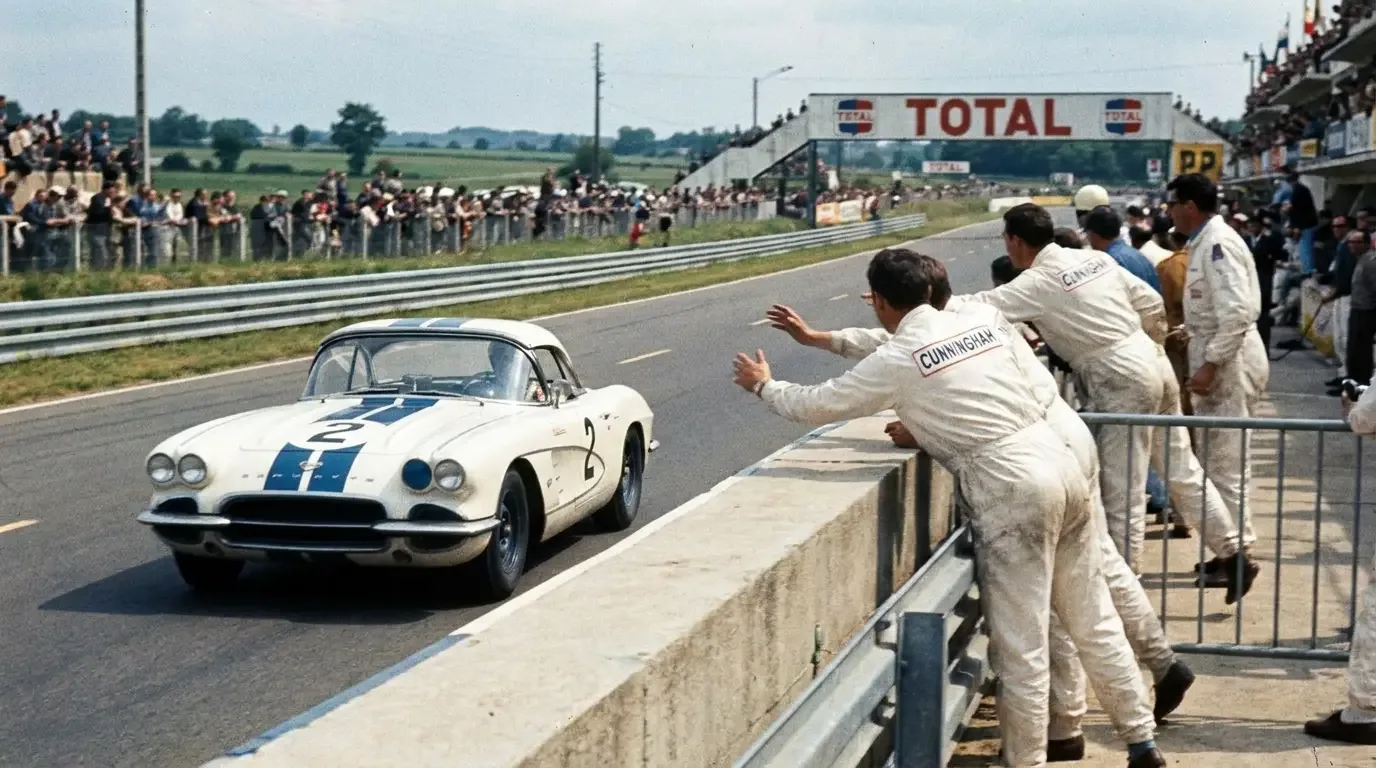
If you want a single moment that captures what the Corvette had become by the turn of the decade, find the 1960 Le Mans entry list. Briggs Cunningham, the American sportsman who had been trying to win at La Sarthe for years with various machinery, entered three Corvettes. These were not stripped-down racers built from scratch. They were production-based cars, running on the 283 fuel-injected engine, prepared by Cunningham's team in Greenwich, Connecticut and shipped to France.
One of them finished eighth overall. In a field that included factory Ferraris and Aston Martins, a car built on a production Corvette platform placed inside the top ten at the world's most demanding endurance race. John Fitch and Bob Grossman shared the wheel for that result, also taking the GT class win. The other Cunningham Corvettes did not finish, but the one that did made the argument better than any advertisement could have.
| Era | Key car / effort | Notable result | Engine |
|---|---|---|---|
| 1956-57 | Production Corvette, Corvette SS | Sebring appearances; SS retired after 23 laps | 265/283 V8 |
| 1957-63 | SCCA privateer cars | Multiple SCCA titles (Thompson: B-Production 1957, 1961) | 283 fuel injection |
| 1960 | Cunningham Le Mans entry | 8th overall, GT class win | 283 fuel injection |
| 1963 | Grand Sport | Nassau Speed Week competition; strong showings against Cobras | 377 cu in V8 (prototype) |
| 1967-68 | L88 Corvette, Le Mans | GT class leading pace; mechanical retirements | 427 L88 V8 |
| 1999-2004 | C5-R | GTS class wins, Le Mans 2001 1-2 class finish | LS-based V8 |
The 1963 Grand Sport and the car that almost was
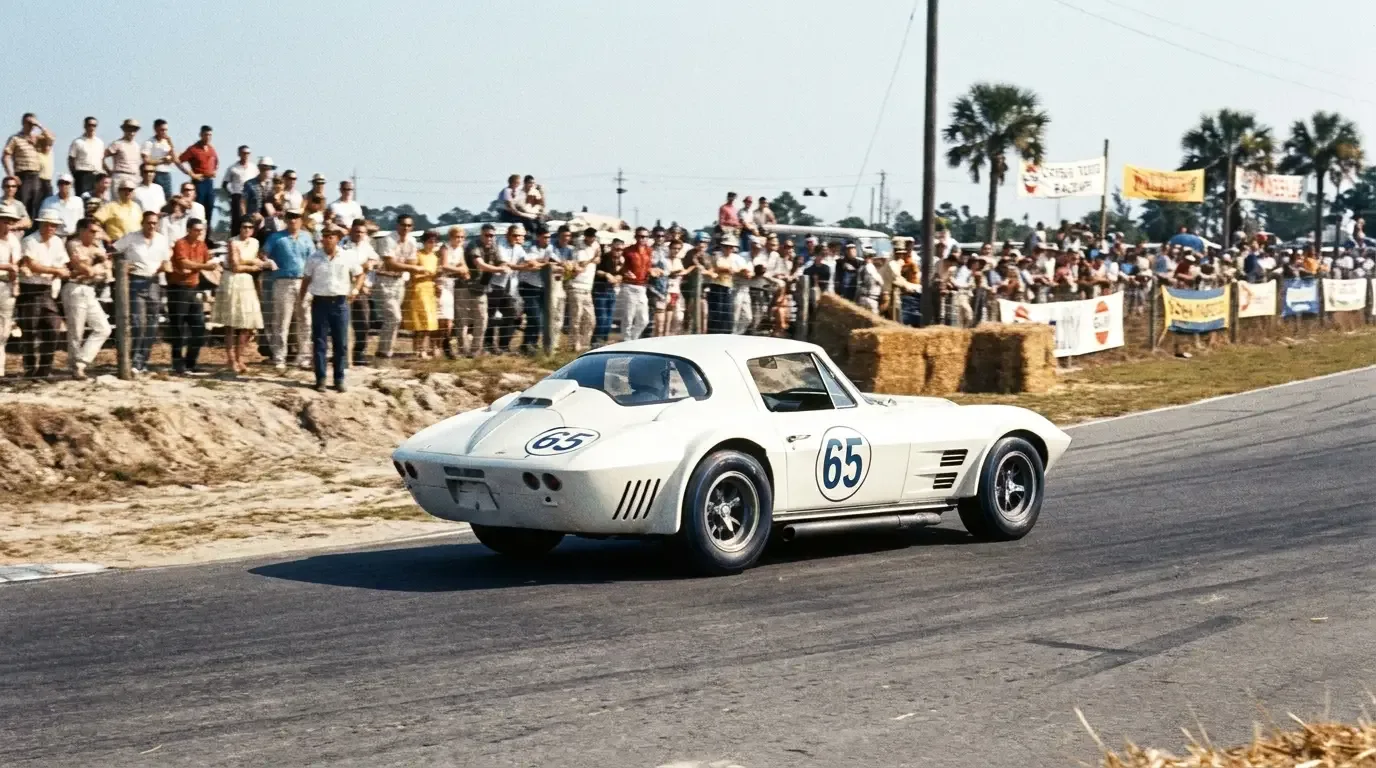
Duntov wanted to race at Le Mans properly. In 1962 and 1963 he began building the Grand Sport, a lightweight Corvette racer with a fiberglass body over an aluminum frame, weighing around 1,900 pounds compared to the production car's roughly 3,000. The engine was a prototype small-block V8 displacing around 377 cubic inches. General Motors management killed the program in early 1963, reportedly after the company reaffirmed its AMA ban commitments under pressure. Only five Grand Sports were built before the order came down to stop.
Those five cars did not disappear into a warehouse. They were sold to private racers. Roger Penske ran one. Grady Davis and others campaigned them through 1963 and into 1964. At the 1963 Nassau Speed Week the Grand Sports went up against Carroll Shelby's Cobras, and while the Corvettes ran competitively throughout, they finished third and fourth in the main event. Penske returned to Nassau the following year and won the Nassau Trophy race outright. The Grand Sport became one of the most mythologized Corvettes ever built, not because of what it won but because of what it almost was. Five cars. Each one carrying the full weight of a factory program that was stopped before it could prove itself.
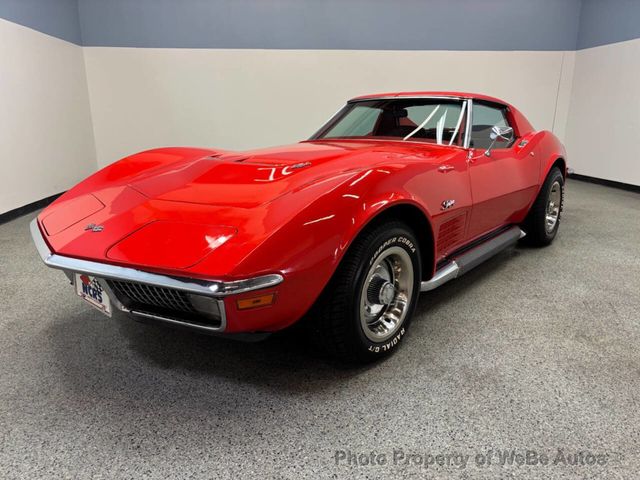
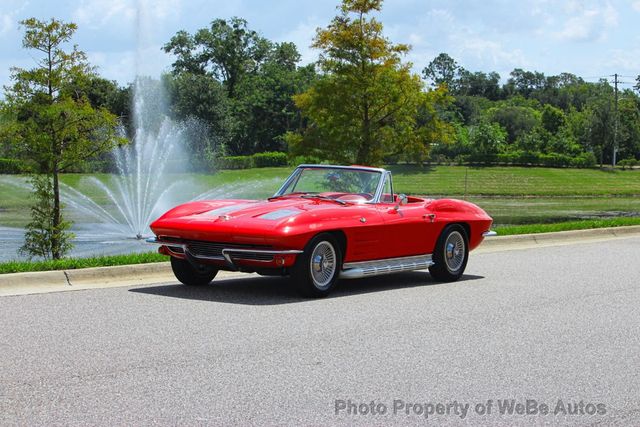
Today, if you want to see what that era produced, you can look at the surviving originals or browse what collectors have preserved. If you are looking to buy into the Corvette story at a more accessible level, there is a full range of classic Corvette for sale listings where the early production-era cars, including C1s from 1958 to 1962, appear regularly.
"The Grand Sport is the car Duntov built in defiance of his own company's official position. Five cars, killed before they could race properly at Le Mans, sold off to privateers who went out and won with them anyway. That story is more interesting than any race result."
— Patrick Walsh
The L88 era and the late 1960s Le Mans campaigns
By 1967, the AMA ban was a formality that everyone had quietly abandoned. Chevrolet released the L88 option, a 427 cubic inch big-block rated at 430 horsepower on paper when the actual output was almost certainly higher, possibly around 500 or more horsepower in racing trim. The L88 was not a street engine in any practical sense. It required 103-octane fuel, had almost no vacuum advance for low-speed drivability, and came with the understanding that you were going to race it.
Private teams took L88 Corvettes to Le Mans in 1967 and 1968. Dick Guldstrand and Bob Bondurant drove an L88 at the 1967 race, setting a class speed record of around 171 mph on the Mulsanne Straight before a connecting rod failure ended their run. The L88 campaigns never produced a class win at La Sarthe, but the cars were factory hardware operated by the privateer community, and the pace they showed on the timing sheets kept the Corvette name in the international conversation through a decade when General Motors was officially not competing.
The Greenwood era and Trans-Am in the 1970s
John Greenwood built some of the most visually arresting race cars the Corvette name was ever attached to. His wide-body C3 Corvettes, running in IMSA and at Le Mans in the early 1970s, wore the Owens-Corning fiberglass sponsorship colors and bodywork that extended the fenders several inches beyond the production car's silhouette. The aerodynamics were crude by modern standards, but the visual impact was anything but. Greenwood took his cars to Le Mans multiple times in the mid-1970s, and while outright wins at La Sarthe eluded him, the campaigns kept an American privateer effort visible on the world stage.
The SCCA Trans-Am series offered a different kind of competition. The Corvette raced in the series across multiple seasons in the late 1960s and 1970s, competing against the Mustang, Javelin, Camaro, and the foreign machinery that filtered into the class. Jerry Thompson and Tony DeLorenzo won the 1969 Trans-Am GT class in Corvettes. The series proved that the car could compete in door-to-door American road racing, which was a different discipline from endurance racing and demanded a different kind of toughness from both car and driver.
The C5-R and the Le Mans dynasty
The gap between the Greenwood era and the C5-R campaign is long, roughly twenty years during which the Corvette raced in various forms but without the international profile that Le Mans provides. The C5-R changed that. Pratt & Miller Engineering built the cars, working from the C5 production platform that Chevrolet had introduced for 1997. The engine was a version of the LS small-block, developed for endurance racing with the kind of sustained reliability that wins at La Sarthe.
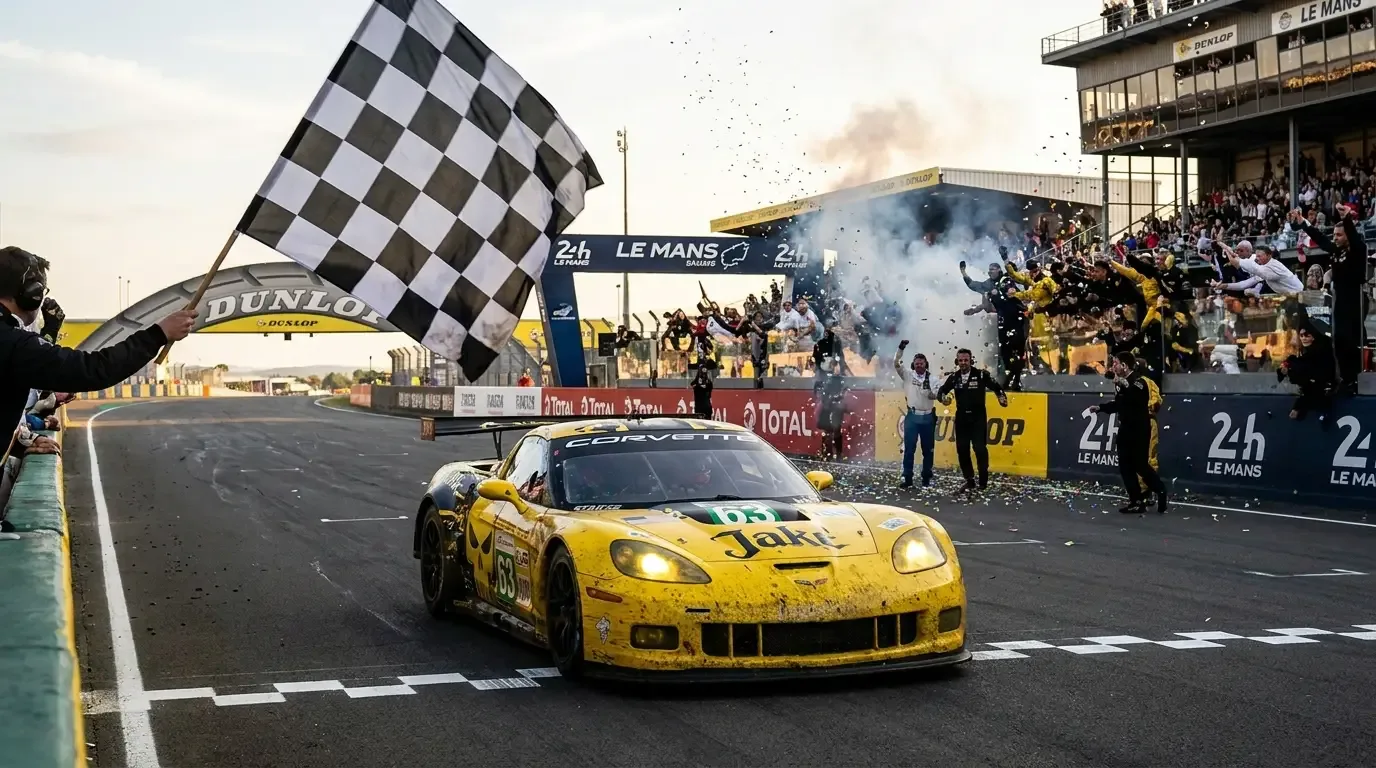
The 2001 Le Mans 24 Hours produced the result that Duntov had been working toward forty years earlier. The C5-R finished first and second in the GTS class. Ron Fellows, Johnny O'Connell, and Scott Pruett took the class win in the No. 63 car, with Andy Pilgrim, Kelly Collins, and Franck Freon close behind in the No. 64. It was the first time a Corvette had won at Le Mans in any recognized class under the factory Corvette Racing program, and it came in the year the team had properly committed to the effort. The 2002 and 2003 seasons added more class wins. The dynasty was real, not a one-off result that enthusiasts had to qualify with asterisks.
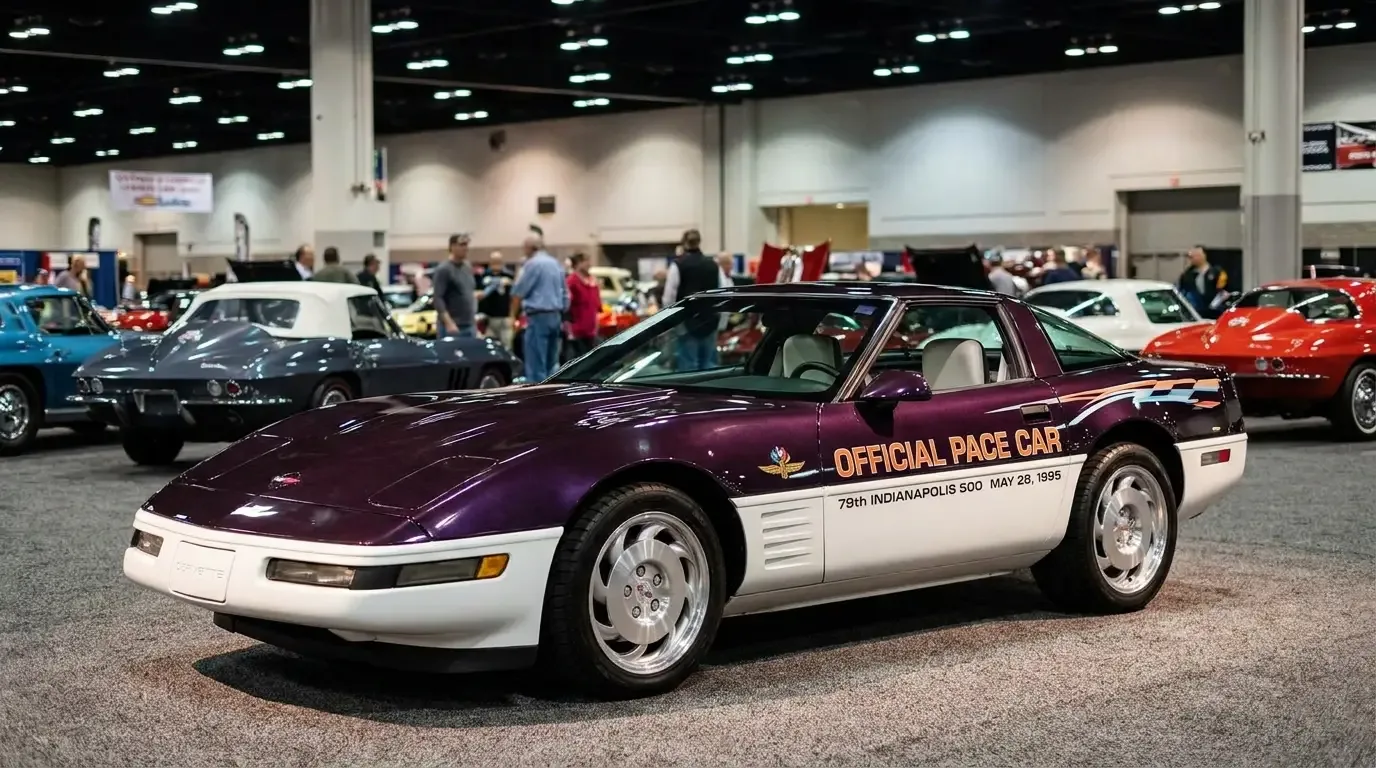
The through-line from Sebring 1956 to Le Mans 2001 is not a straight line. It runs through a factory program that got cancelled, through a ban that didn't actually stop anyone, through privateers who kept going with their own money, and through an engineer named Duntov who spent thirty years trying to give the car the racing program it deserved. The C5-R result completed something that had been started in the 1950s and interrupted repeatedly before anyone got to finish it. For more on the special-edition cars that came out of this racing culture, the Corvette special editions article covers the production variants that drew directly on what the race team learned.
The corvette racing history written between 1956 and 2004 is the story of a car that kept getting better because the people around it refused to let it stay still. Duntov, Cunningham, Thompson, Penske briefly, Greenwood, and eventually Pratt & Miller. Each of them pushed the car into competition when it would have been easier not to, and the results built the record that makes a Corvette something more than just a sports car sold in American showrooms.
Sources and notes
- This Day In Automotive History: Corvette SS Sebring 1957 — confirmed race drivers, bushing failure, and 23-lap retirement
- 24 Heures du Mans official: 1960 Corvette GT class win — confirmed Fitch/Grossman 8th overall and class winner
- Wikipedia: Dick Thompson — confirmed SCCA championship years (1956, 1957, 1960, 1961, 1962); no 1959 B-Production title
- Hagerty Media: L88 Corvettes — confirmed 430 hp rating, approximately 216 total units built across 1967-1969
- Wikipedia: 2001 24 Hours of Le Mans — confirmed GTS class 1-2: #63 Fellows/O'Connell/Pruett, #64 Pilgrim/Collins/Freon
- CorvSport: 1963 Grand Sport guide — confirmed 377 cu in engine, Nassau Speed Week results (3rd and 4th in 1963; Penske won Nassau Trophy in 1964)