When Corvette went racing: the Trans-Am and SCCA connection
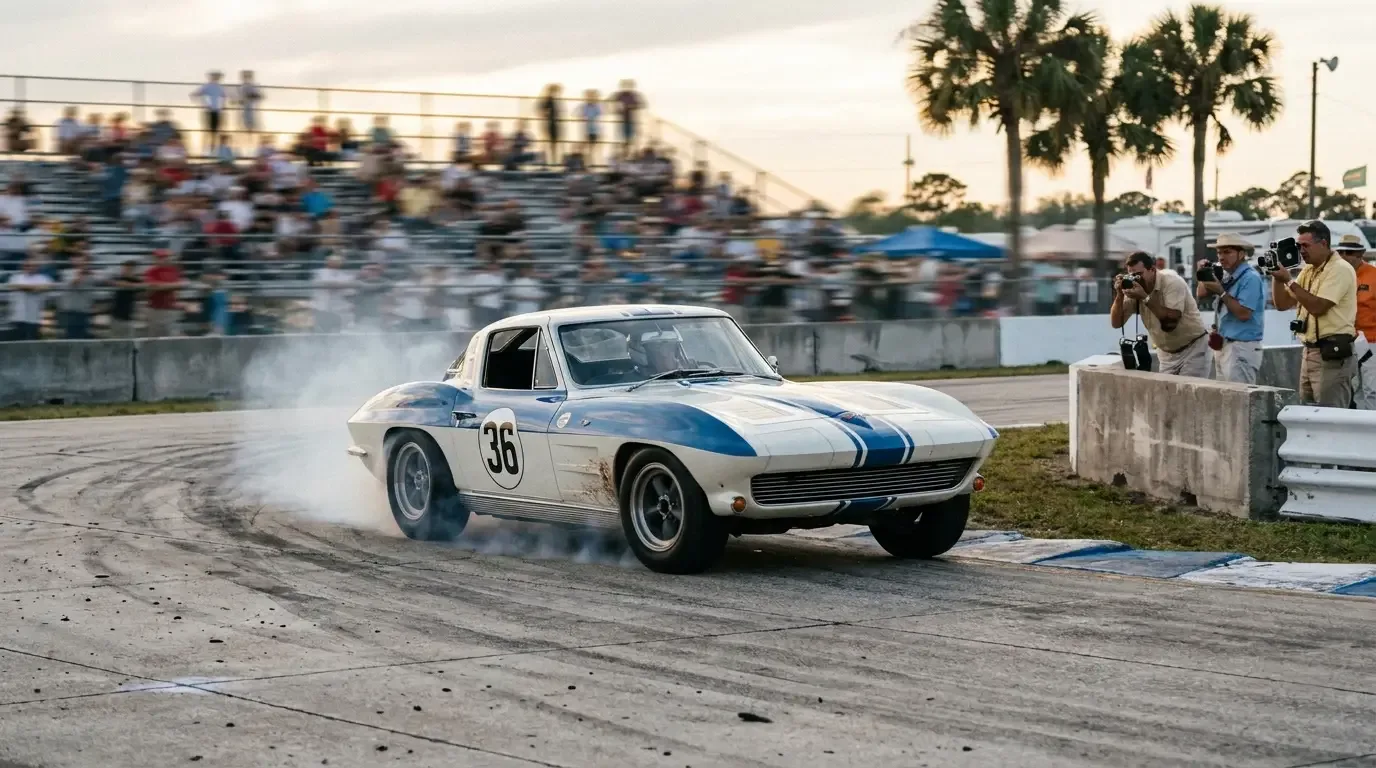
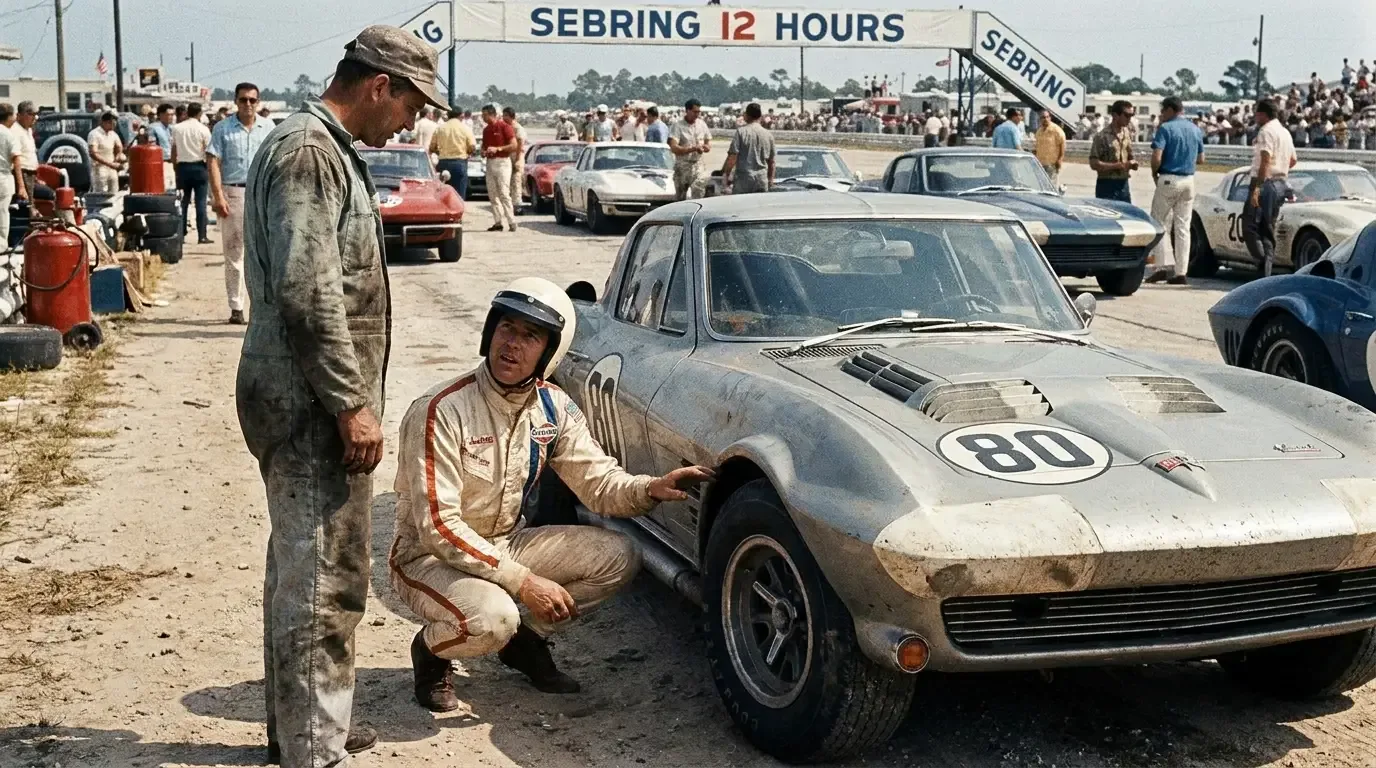
There is a period in American road racing that most people skip over when they talk about corvette racing history, the late 1960s and early 1970s, when Chevrolet's engineers and a handful of independent teams dragged production-based Corvettes into the SCCA's Trans-American Sedan Championship and its related sports car classes. It was not glamorous work. The rulebook was adversarial, the competition from Ford and Penske was serious, and the results were mixed. But the racing shaped the C3 Corvette in ways that still show up on cars you can buy today.
Patrick Walsh has been writing about this period for years. The story keeps pulling him back because it sits at the intersection of factory ambition, grassroots racing, and the regulatory chaos that defined American motorsport before the energy crisis changed everything.
The SCCA landscape in the late 1960s
The Sports Car Club of America ran two main competitive structures that mattered to Corvette. The first was the A-Production class, which the Corvette had competed in through most of the 1960s under drivers like Don Yenko and later the factory-connected teams. The second was the Trans-Am series, which started in 1966 as a manufacturer's championship for production sedans in two displacement classes: over 2.0 liters and under 2.0 liters. Corvette sat outside the Trans-Am's primary structure because it was a two-seat sports car, not a sedan, but Chevrolet's interest in the broader series drove significant engineering work that filtered directly into Corvette development.
By 1968 the factory's motorsport philosophy was shifting. GM's public stance against factory racing, formalized in 1963, had never fully stopped the back-channel support flowing to teams like Roger Penske's Camaro operation. Corvette benefited from the same culture. Engineers at Chevrolet worked on high-performance components that were technically available over the counter, which kept the factory's hands technically clean while funding serious race-development work.
The L88 and race-ready production
The RPO L88 engine option, available on the C3 starting with the 1968 model year, is the clearest example of how the race program and production line talked to each other. (The L88 had also appeared in the final C2 in 1967, carried over into the new body for 1968 and 1969.) Chevrolet rated the L88 at 430 horsepower on paper, a figure that most serious observers at the time considered deliberately conservative. The actual output in race tune was substantially higher, though published dyno figures from the period vary enough that specific numbers deserve scrutiny before you repeat them. What is not in dispute is that the L88 was incompatible with street use as Chevrolet delivered it: no choke, a high-compression ratio that demanded 103-octane fuel that was difficult to find at ordinary gas stations, and a cooling system calibrated for sustained high-speed operation rather than stop-and-go traffic.
Production numbers for the L88 were extremely small. Total L88 Corvettes built across the C3 generation numbered in the hundreds rather than the thousands, and the per-year figures are well-documented in NCRS records for anyone who needs the exact counts. The rarity was intentional. Chevrolet wanted the option technically available to homologate the equipment for racing, not to sell it to commuters.
If you are thinking about acquiring one of these cars, C3 Corvettes for sale span a wide range from genuine documented race cars to cars that have been retroactively fitted with L88 equipment. The difference in price between an authenticated L88 and a look-alike built from a base 350 car is substantial, and the authentication process is exacting.
| Engine option | Nominal rating (advertised) | Primary application | Approx. years available (C3) |
|---|---|---|---|
| L88 427 | 430 hp (factory claim) | Competition / homologation | 1968-1969 |
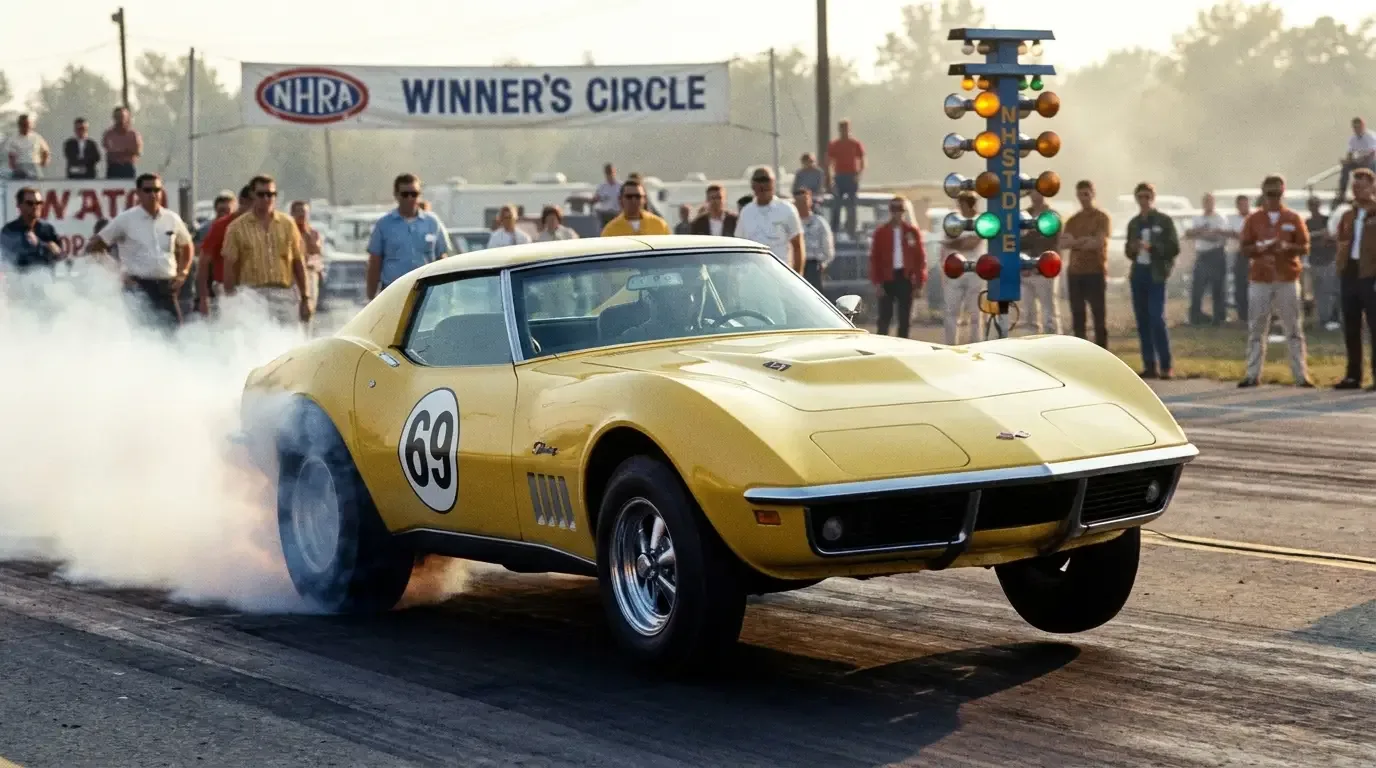
| ZL1 427 aluminum | 430 hp (same rating) | Drag racing / all-aluminum race use | 1969 only |
| L71 427 | 435 hp (factory claim) | Performance street / track | 1967-1969 |
| LT1 350 | 370 hp (1970) / 330 hp (1971) | Road course competition, class rules | 1970-1972 |
Factory teams and the SCCA A-Production class
The SCCA A-Production class was where Corvette spent most of its competitive energy through this period. Teams running Corvettes built under SCCA's production-based rules competed against a class that also included Cobra, Ferrari, and Porsche 911S variants, depending on the year and the specific event. Corvette's size and weight were a disadvantage on tight, technical circuits. On faster tracks with long straights the big-block cars could compensate, but the rulebook kept tightening and the competition kept developing.
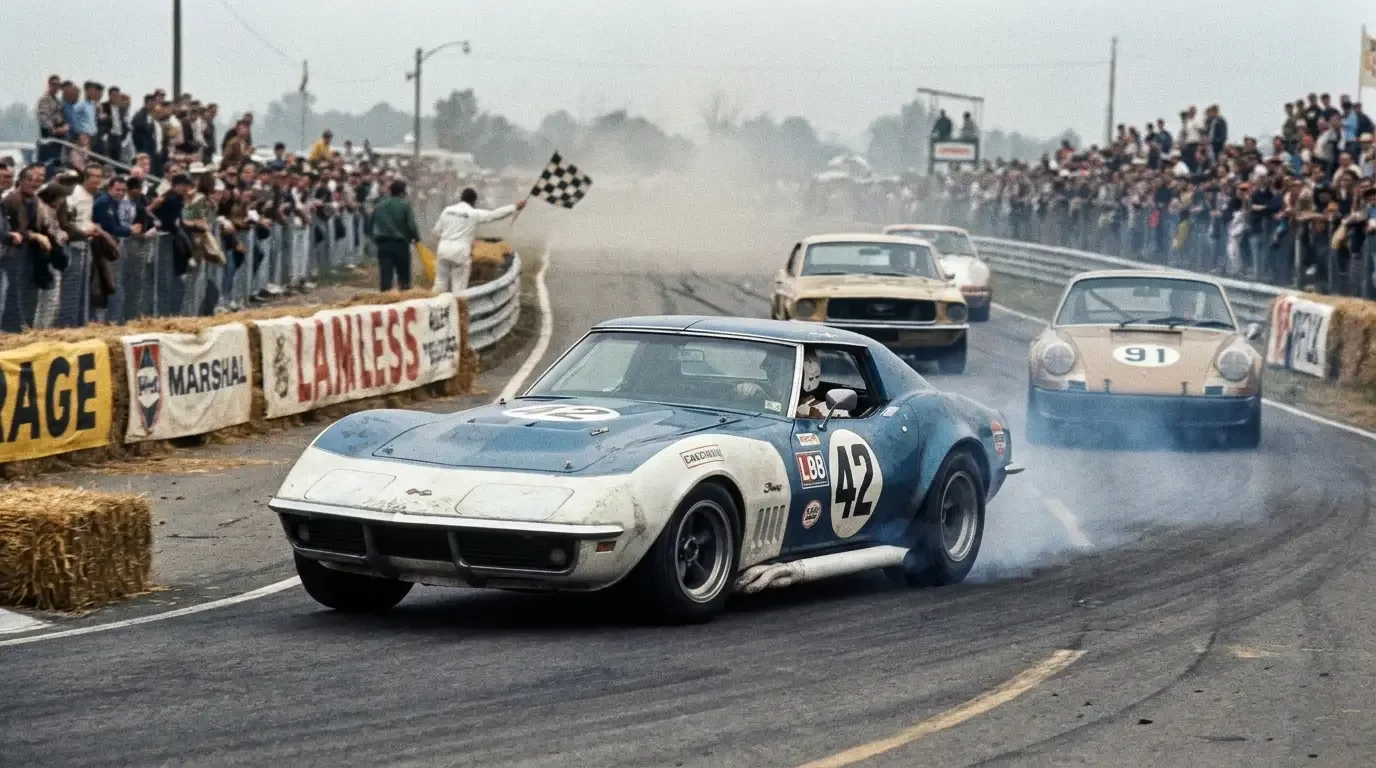
The 1969 season saw several factory-connected Corvette teams running in SCCA national events, with drivers including Tony DeLorenzo and Gerald Thompson, whose Owens Corning-sponsored L88 Corvettes would go on to win 22 consecutive A-Production races between 1969 and 1971. The relationship between Chevrolet and these teams followed the pattern established with Penske's Camaro work: technical assistance, parts availability, and engineering support that stopped short of anything that would require a formal factory-racing acknowledgment. By the early 1970s the approach was becoming harder to sustain as insurance costs rose, the muscle car market softened, and GM's internal politics shifted away from performance.
"The SCCA period is where you see Chevrolet engineering a production car toward a racing application and then selling the result over the counter. The L88 was never meant to be a street car. The buyers who ordered it knew that. The dealers who took the orders often didn't."
— Patrick Walsh
What the race program left behind
The engineering developed through SCCA competition did not disappear when the factory interest faded. The suspension geometry work done to make C3 Corvettes competitive on road courses influenced production setup specs. The brake development, the cooling work, the work on the chassis to stiffen torsional flex, all of it fed back into the production car in some form, though separating race-driven development from ordinary model-year evolution is difficult without access to internal GM engineering documents.
The most tangible legacy is the parts ecosystem. Components developed for or associated with the race program, particularly the big-block engine options, became collectible and then valuable in ways nobody predicted in 1972. Today the authentication of those parts is a cottage industry inside the Corvette hobby. The NCRS and Bloomington Gold judging programs both address race-associated documentation, and the standards are specific enough that casual fraud is detectable to an experienced judge. For anyone researching this period more broadly, a related piece covers how the big-block development played out in the drag racing context, where the same engines competed under very different rules.
The Trans-Am series itself became a Camaro and Mustang story in its primary classes, which is why Corvette's SCCA period often gets treated as a footnote. It was not a footnote for the engineers involved or for the cars that came out of it. The C3 Corvettes that raced in A-Production represent a specific and well-defined chapter in what the car was built to do, and the survivors carry that history in their build sheets and their wear patterns, if not always in their paperwork.
Sources and notes
- National Corvette Museum: Dick Thompson biography -- confirmed championship years (1956, 1957, 1960, 1961, 1962) in SCCA A, B, and C-Production classes
- Wikipedia: Trans-Am Series history -- confirmed 1966 start date and original over/under 2.0-liter displacement classes
- CorvSport: 1967-1969 L88 Model Guide -- confirmed L88 factory rating of 430 hp, C2 debut in 1967, C3 availability 1968-1969
- CorvSport: 1970 LT-1 Small-Block Engine Guide -- confirmed 370 hp rating in 1970 and 330 hp in 1971
- CorvSport: Tony DeLorenzo profile -- confirmed DeLorenzo / Thompson Owens Corning L88 program and 22 consecutive A-Production wins, 1969-1971
- CorvSport: 1969 Corvette ZL-1 -- confirmed ZL1 factory rating of 430 hp, 1969-only availability, all-aluminum 427