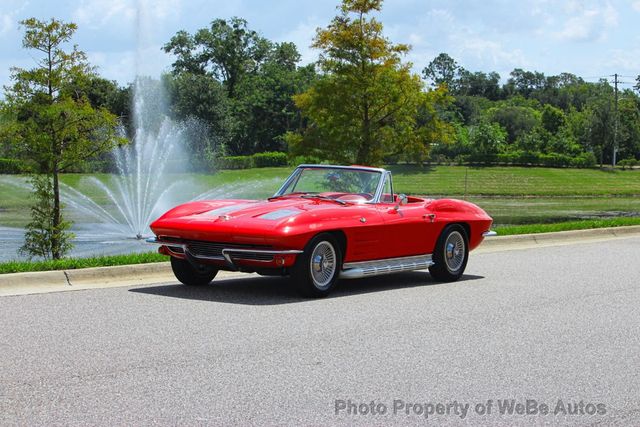
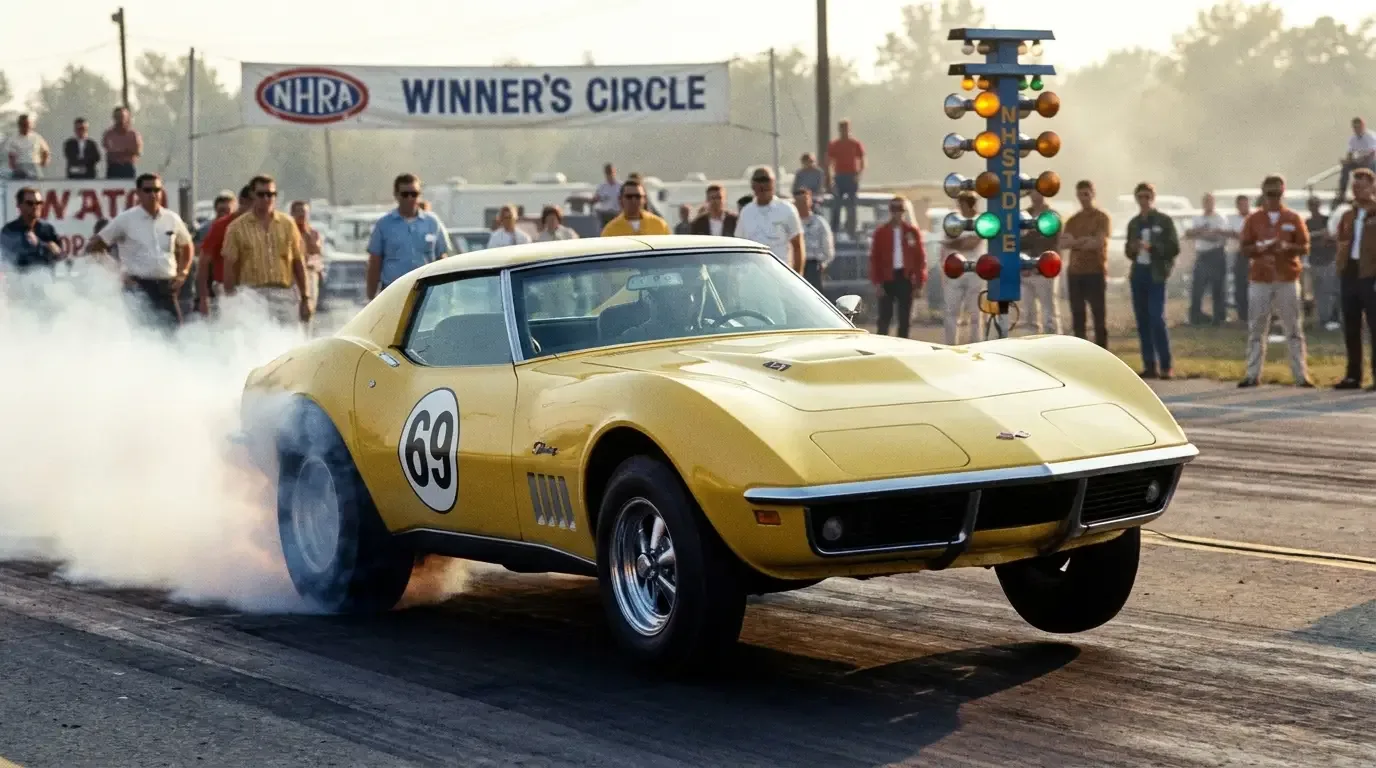
When the 427 arrived under the hood of the Corvette in 1966, it changed what the car was for. Before that, the 327 small-block had made the Corvette a sports car in the European sense: a driver's car that happened to win races. The big-block era turned it into something else. It became a quarter-mile weapon. the background on how the Corvette got there matters, because the transition from sports car to drag machine was not accidental.
What the big block brought to the strip
Chevrolet's L36 427 debuted in the 1966 Corvette rated at 390 hp. The L72 option stepped that up to 425 hp. At the drag strip, these numbers translated into elapsed times that the small-block cars simply could not touch. Factory drag racers were clocking mid-12-second quarter miles in 1966 with street-legal equipment, which made the big-block Corvette among the quickest production cars sold through a dealer in America at that point.
What separated the L72 from the regular 427 was not just displacement. The L72 used a solid-lifter camshaft, a higher compression ratio (11.0:1), and a larger Holley four-barrel. It required high-octane fuel and did not pretend to be a mild street car. Buyers who ordered one knew what they were getting.
The L88 and what it actually meant
The L88 is where the factory's drag racing intentions became undeniable. Introduced for 1967, this engine was built around aluminum cylinder heads, an aggressive solid-lifter cam, a 12.5:1 compression ratio, and a single 850 cfm Holley carburetor. Chevrolet's published output figure of 430 hp was widely disbelieved at the time. Period tests and dyno pulls suggested the actual figure was closer to 550 hp, with modern engine rebuilds confirming figures in the 520 to 560 hp range on factory-spec assemblies.
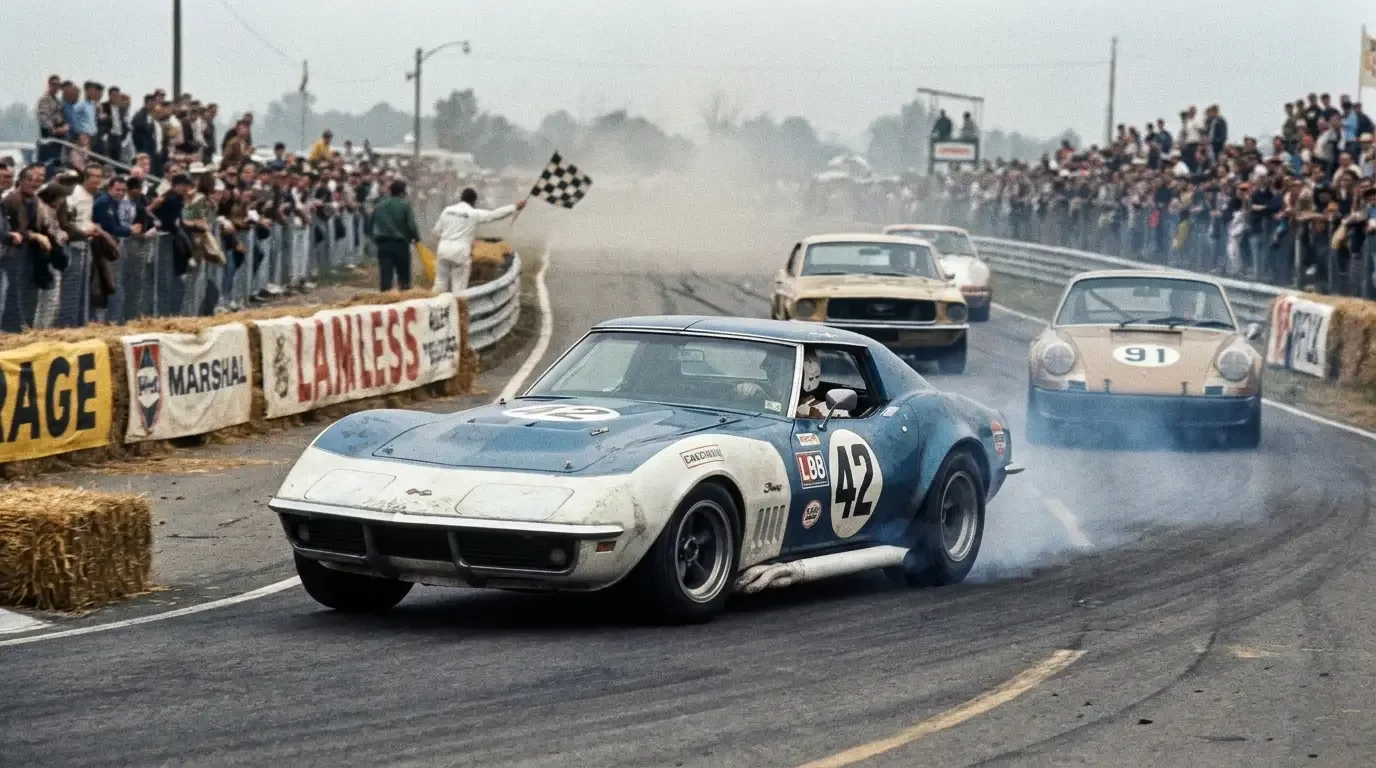
The L88 came with a list of mandatory options that made its purpose clear. Air conditioning was not available. A heavy-duty battery was required. The radio delete was standard. Chevrolet was building a drag racer and making the paperwork say something different. To get the full picture of how the L88 fit into Corvette's broader competition history, you have to look at both strip and circuit: the same engine that won at the drags was campaigned at Le Mans and Sebring by privateers in the late 1960s.
| Engine option | Years available | Rated hp | Key features |
|---|---|---|---|
| L36 427 | 1966-1969 | 390 | Hydraulic cam, 3x2-barrel option available |
| L72 427 | 1966-1969 | 425 | Solid-lifter cam, 11.0:1 compression, Holley 4-barrel |
| L88 427 | 1967-1969 | 430 (understated) | Aluminum heads, 12.5:1 compression, 850 cfm Holley, no A/C option |
| ZL1 427 | 1969 only | 430 (understated) | All-aluminum block and heads, estimated 560-585 hp |
The ZL1: an all-aluminum race engine in a street car
For 1969, Chevrolet went further with the ZL1 option. Where the L88 used aluminum heads on a cast-iron block, the ZL1 replaced the block with aluminum as well. The result was an engine that weighed roughly 100 lbs less than the iron-block L88, which made a material difference in weight distribution and handling at the strip. Rated identically to the L88 at 430 hp, the ZL1 was understood to produce considerably more, with period accounts and modern testing estimating output in the 560 to 585 hp range.
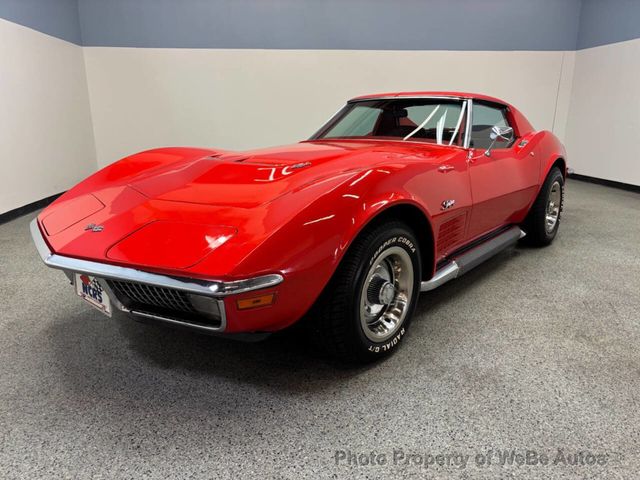
Only two ZL1 Corvettes were sold to retail customers for 1969, and their cost was extraordinary. The ZL1 option itself added $4,718 to the base price, at a time when a fully optioned standard Corvette could be had for well under $6,000. These were special-order cars built at factory request for specific racers. The ZL1 in the Camaro received more attention because 69 of them were built, compared to just two Corvette examples, but the Corvette versions are among the rarest factory drag-racing cars from any American manufacturer in this period. Buyers looking at cars from this generation can browse big-block Corvettes for sale to get a sense of what the market holds today.
"The factory production records on ZL1 Corvettes are thin enough that every one needs independent verification before you can be certain what you have. The option code appearing on a tank sticker is a starting point. It is not the end of the conversation."
— Tom Ramirez
Strip culture and the Corvette's place in it
The NHRA Super Stock and A/Production class structures of the late 1960s were shaped significantly by the big-block Corvette. Factory teams and well-funded privateers ran these cars in a period when the rulebooks were still being written around what the manufacturers were doing. Chevrolet's engineers were not silent participants. The available documentation suggests active coordination between Chevrolet's performance division and the racers running their cars at the strip, though formal factory backing was officially denied throughout this period.
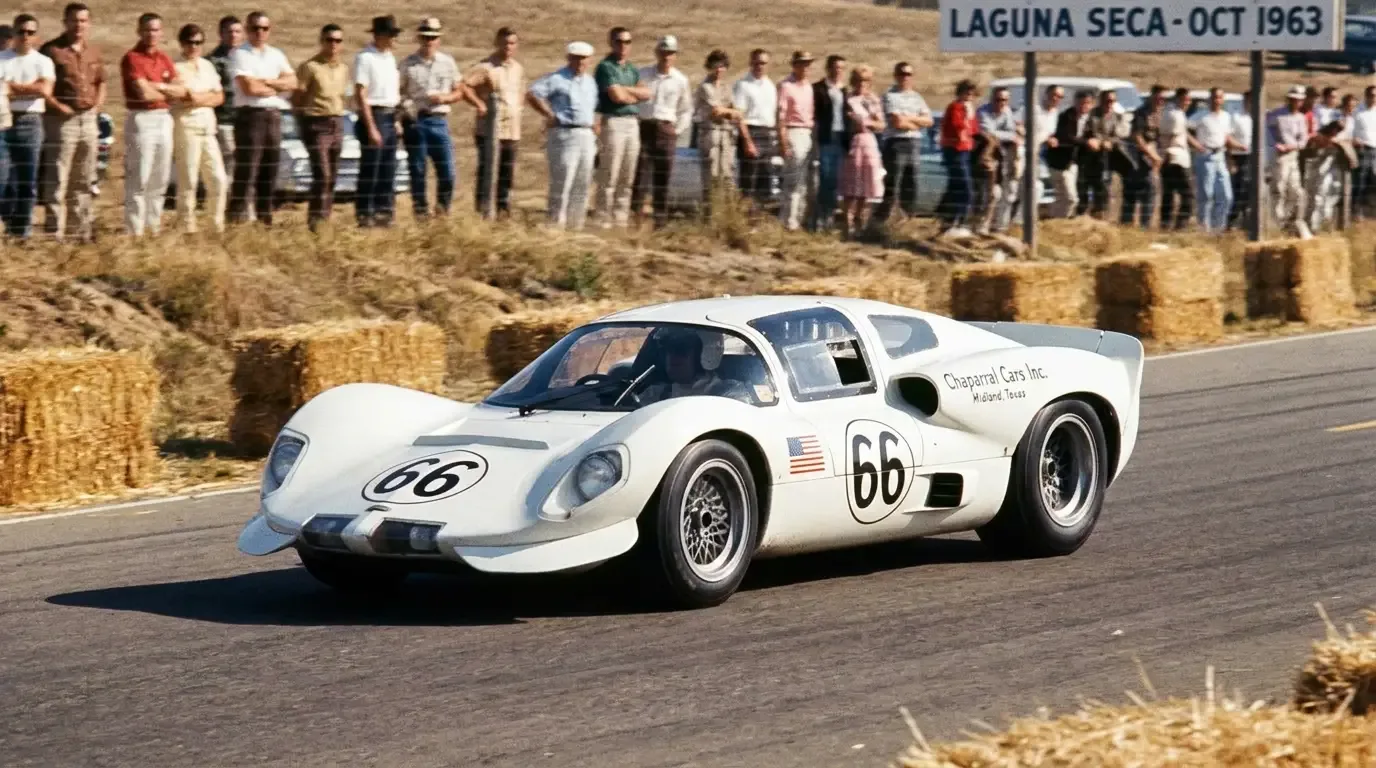
The independent racing efforts using big-block Corvettes in this era had connections to other factory-adjacent programs. The relationship between Chevrolet engineering and independent racers during the 1960s was a recurring theme across multiple programs; more here on how that played out in the road-racing context with Chaparral, which drew on some of the same engineering resources.
What these cars are worth now and what to verify
The market for documented big-block Corvettes from 1966 to 1969 is substantial and well-established. L72 cars in solid driving condition have sold in ranges from $60,000 into the low six figures depending on options and documentation, with well-documented examples reaching $250,000 at major auctions. L88 cars with verifiable documentation regularly clear $500,000 at major auction houses, with 1967 examples commanding over $1 million and some exceptional cars exceeding $3 million. The ZL1 Corvette is so rare that individual sale prices are not a reliable guide to a market in the conventional sense; each transaction is essentially its own negotiation.
The practical issue for buyers is authentication. The values attached to the L88 and ZL1 option codes are high enough that misrepresentation has occurred over the decades. An engine compartment that looks correct and numbers that appear to match is not sufficient due diligence on a car at this price level. Primary documentation, including the tank sticker, build sheet where available, and NCRS evaluation by experienced judges, is the floor for any serious acquisition in this segment.
Sources and notes
- Corvette Action Center: L88 production numbers by year (20 in 1967, 80 in 1968, 116 in 1969, 216 total)
- Vette Vues: L88 Corvette history, specifications, and rarity documentation
- CorvSport: 1969 ZL1 Corvette -- option price ($4,718), production (2 sold), horsepower (560-585 estimated)
- Hagerty Media: 1969 ZL1 Corvette valuation and history; one-of-two surviving examples
- Chevy Hardcore: Comparing L88, ZL1, and ZZ427 engine specs including compression ratios and carburetion
- Corvette Story: 1966 Corvette specifications confirming L36 390 hp, L72 425 hp, and L72 11.0:1 compression ratio