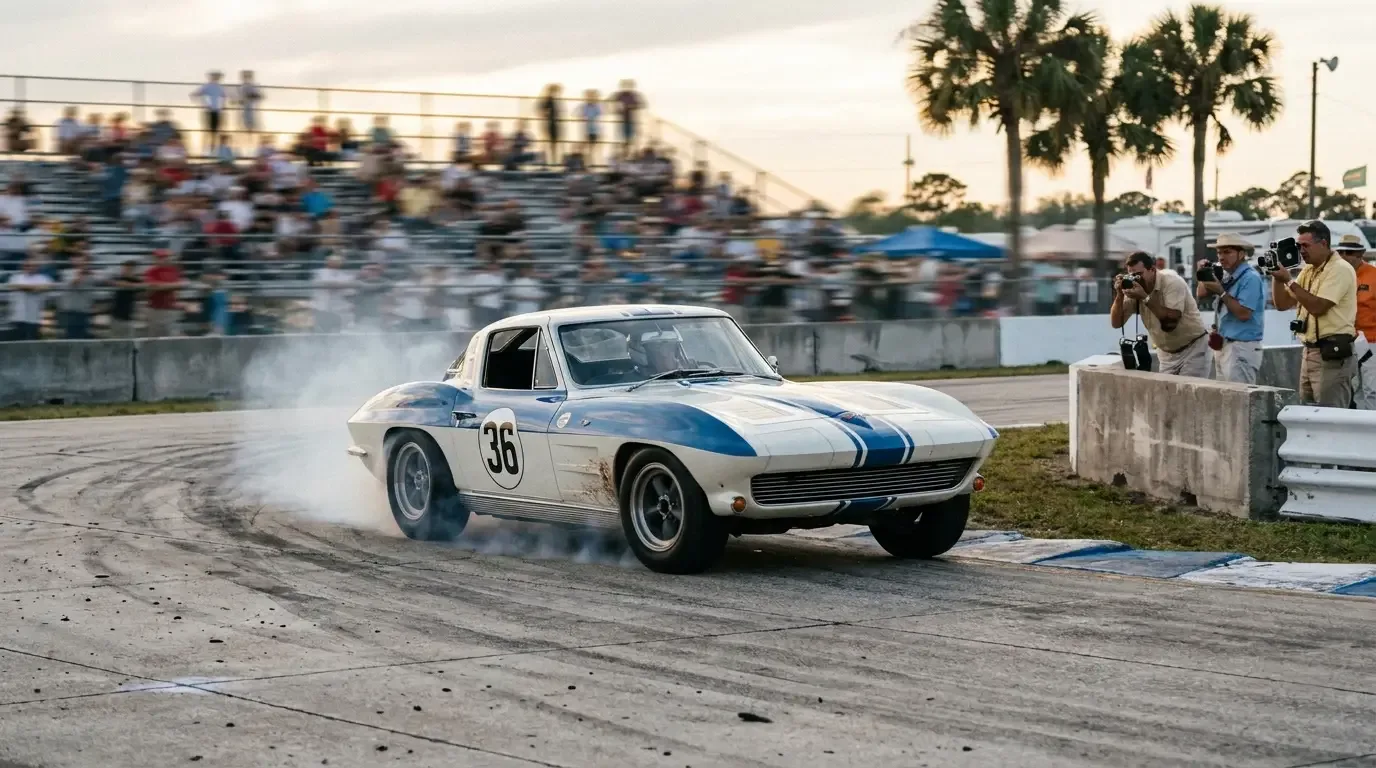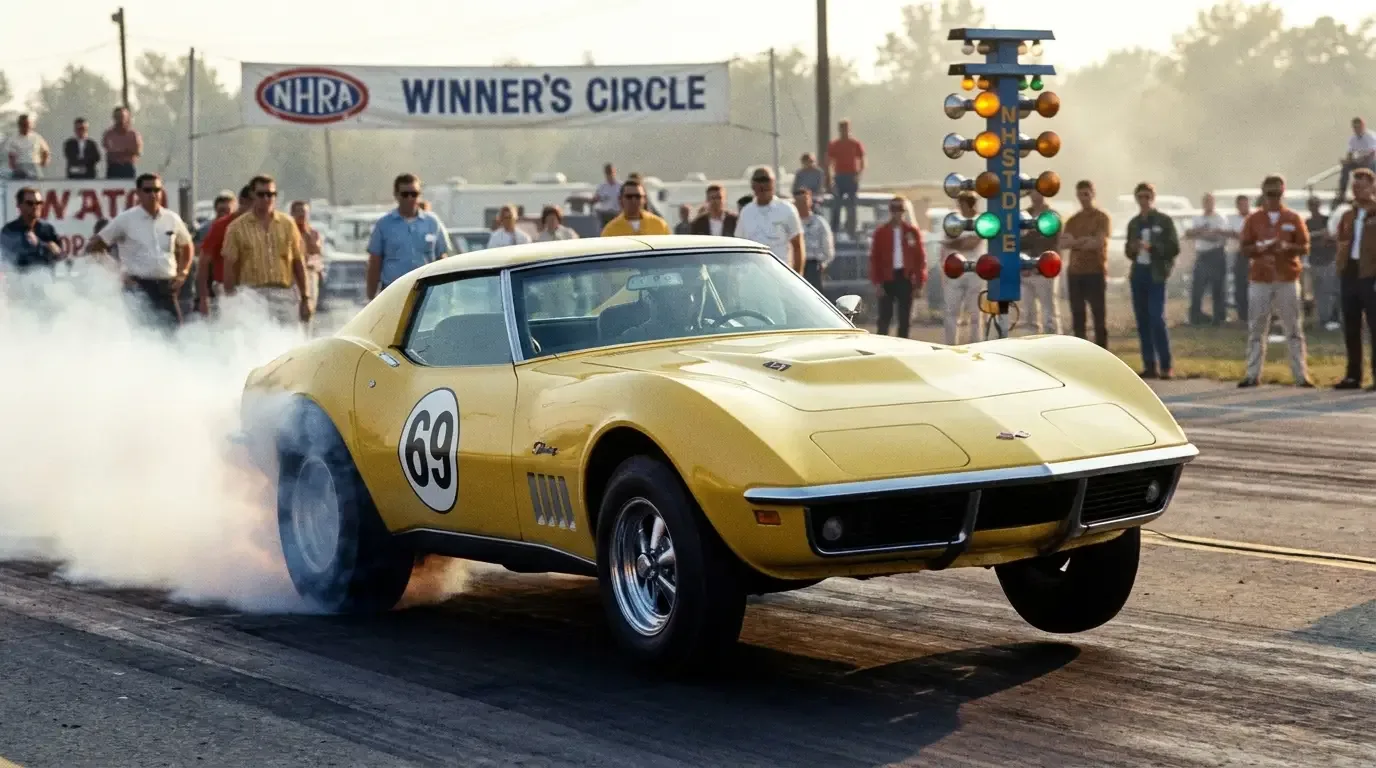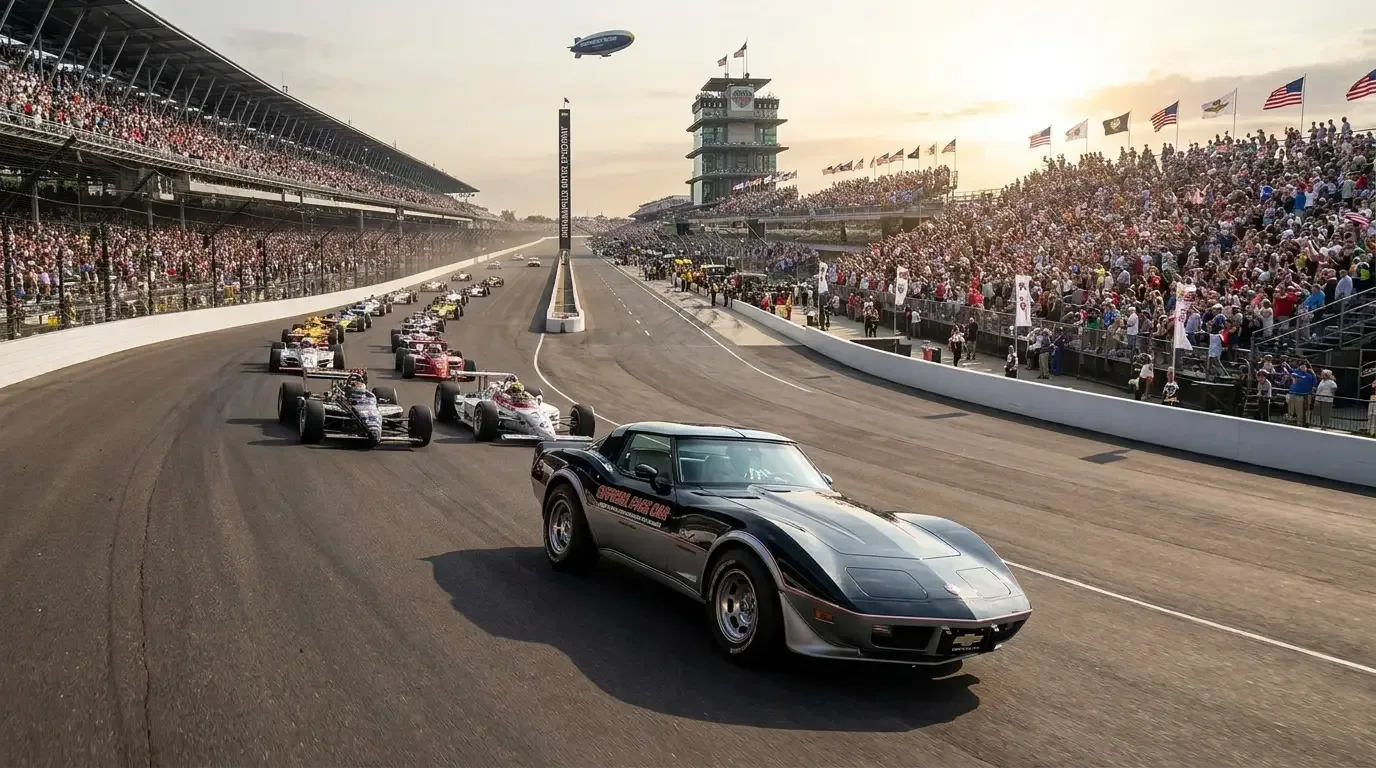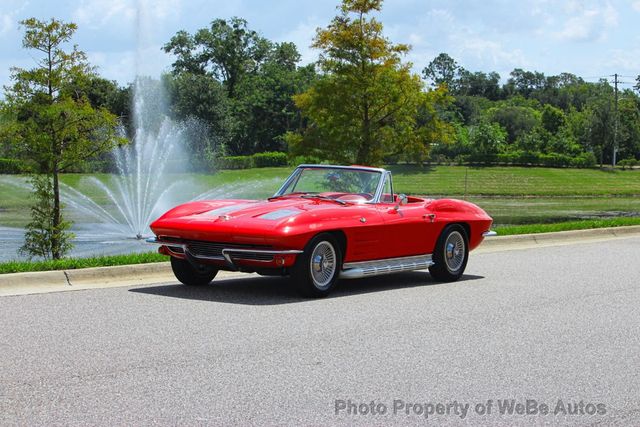
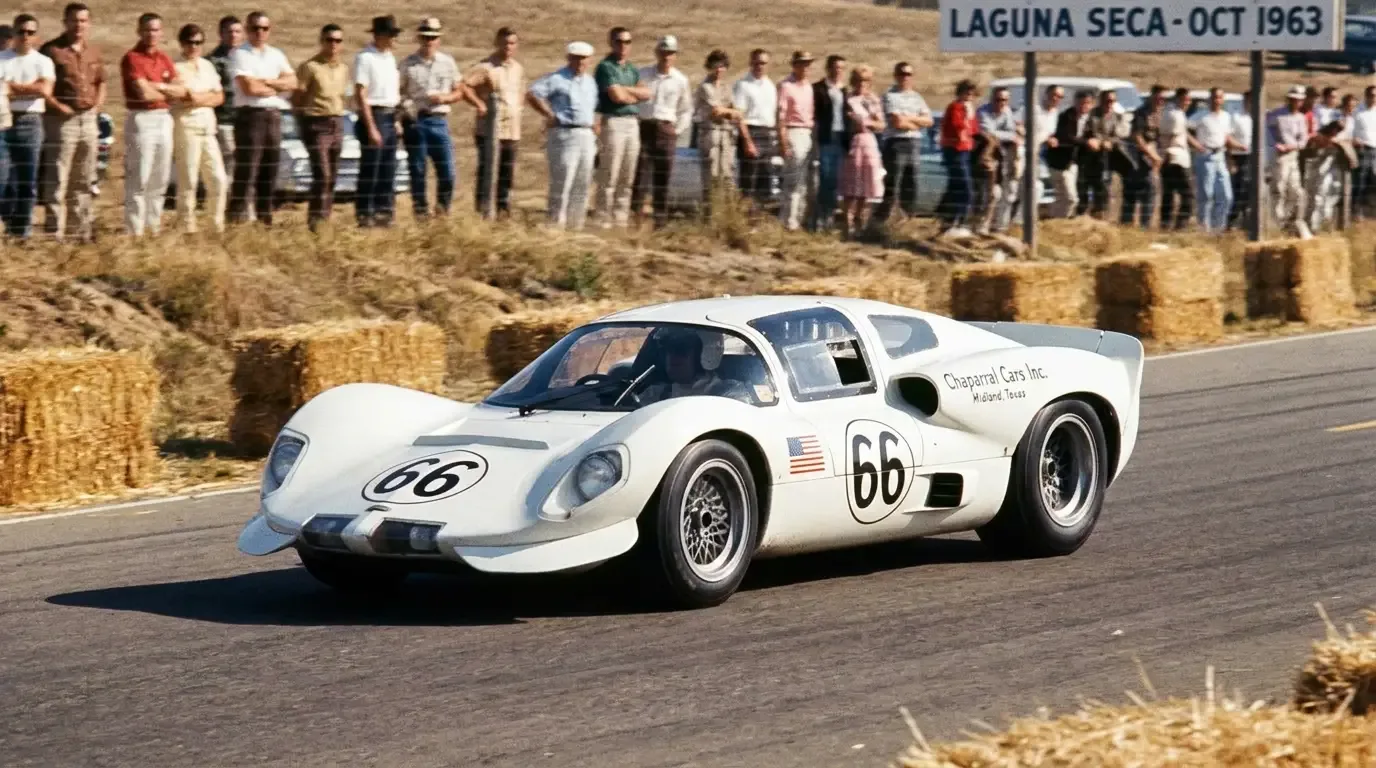
There is a moment in the early 1960s that you have to understand if you want to make sense of Jim Hall and what he built in Midland, Texas. General Motors had poured serious resources into racing through its relationship with Hall's Chaparral Cars operation, and a big chunk of what Chaparral learned came from Corvette powertrains. Hall was not just a privateer running somebody else's parts. He was working directly with Chevrolet engineers, testing ideas that were too radical or too legally complicated for the factory to put its name on publicly. The Corvette was where the collaboration started, and the lessons that came out of it showed up in sports cars that changed the sport.
For more on corvette racing history, the Chaparral chapter is hard to skip. Hall's work sits at a crossroads between Corvette development and the broader American racing program of the 1960s, and once you understand the connection you see both stories differently.
Jim Hall and the Midland, Texas racing operation
Jim Hall grew up in Texas, studied engineering at Caltech, and came back with a methodical approach to going fast that was different from most American racers of the era. He was not a seat-of-the-pants guy. He measured things. He built things to test specific ideas rather than copying what was already working. When he founded Chaparral Cars with Hap Sharp in 1962, the plan was to race in the United States Road Racing Championship with cars built to their own specifications rather than bought off the shelf.
The engine question got answered by Chevrolet. Hall had a relationship with Zora Arkus-Duntov and other Chevrolet engineers that gave him access to small-block V8s and, critically, to the people who knew those engines deeply. The Corvette production program was generating engineering knowledge at a rapid pace through the early 1960s, and Hall could draw on that. He got engines, technical support, and something harder to quantify: a back-channel with the factory at a time when GM's public position on racing was more complicated than its private one.
The Corvette powerplant as a development engine
The Corvette V8 was a particularly useful starting point for Hall because it was already well-developed for high-performance use. The small-block had been through successive upgrades for Corvette duty, and the Corvette racing program had stress-tested it in ways that a purely road-car application would not have. Hall was not just bolting in a production engine and calling it done. He and Chevrolet engineers were modifying and developing further, but they were starting from a base that had already been pushed hard.
What Chaparral needed from an engine in a sports racer was different from what a Corvette needed. The weight envelope was smaller. The packaging requirements for a mid-engine or rear-engine layout were different from the front-engine Corvette. Hall worked through these problems with Chevrolet support, and what came back into the broader Chevrolet engineering program was knowledge about how the engines behaved at the limits of their operating range. This kind of iterative exchange was exactly what made the relationship valuable to both sides.
The Chaparral 2, which first appeared in competition in late 1963 at Riverside, took the concept further. The fiberglass construction technique was something Hall and Chevrolet both had interest in, given the Corvette's fiberglass body program that dated back to 1953. Hall was not inventing fiberglass racing cars from nothing. He was applying knowledge that already existed within the GM orbit and pushing it in a new direction.
Automatic transmission experiments and shared technology
One of the most discussed elements of the Chaparral program is Hall's use of a two-speed automatic transmission in competition, at a time when every serious racing car ran a manual gearbox. The automatic allowed Hall to explore aerodynamics in a way that was harder with a manual, because the driver's left hand was free. It also reflected a particular engineering philosophy: question the assumptions, especially the ones everyone treats as obvious.
Chevrolet had substantial interest in automatic transmission development, and the knowledge that came out of Chaparral's racing use of automatics fed back into that work. The connection to Corvette here is indirect but real. Corvette buyers in the 1960s were predominantly manual-transmission customers, but Chevrolet's automatic programs were advancing in parallel, and the extreme-duty testing that Chaparral's racing use provided was relevant engineering data.
"The thing that separates Hall from most of his contemporaries is that he was solving engineering problems rather than driving problems. The Corvette connection gave him a base to work from, and what he built on top of that base was genuinely new. Not just faster, but different."
— Patrick Walsh
The 2J and the end of the factory relationship
By the late 1960s, the Chaparral program had evolved well past its Corvette-engine origins. The 2J, which appeared in Can-Am competition in 1970, used fans to generate downforce independent of the car's aerodynamic shape. It was so effective that it was banned after the season concluded, before it could return for 1971. By this point, the Corvette connection was largely in the past. Chevrolet had officially withdrawn from direct factory racing support in 1963, and Hall was working with different engines.
But the foundation that the Corvette-era relationship built was still visible in what Chaparral became. The fiberglass expertise, the willingness to experiment with unconventional drivetrain configurations, the relationship with Chevrolet engineers who understood high-performance applications deeply: all of that came out of the early 1960s collaboration. The 2J was not a Corvette-related project in any direct sense. It was, in some ways, the furthest logical extension of what Hall had been doing since the beginning.
What the connection means for Corvette history
The Jim Hall story is usually told as a Chaparral story. Which it is. But the Corvette thread running through the early years of that program matters for understanding what the Corvette program meant beyond its production numbers and its street performance. The Corvette was Chevrolet's engineering laboratory in a way that few production cars were for any American manufacturer. The engines that went into Chaparral's early cars, the fiberglass techniques, the back-channel relationship with Zora Arkus-Duntov's group: these were the resources that a serious American privateer racer could draw on in the early 1960s, and they came from the Corvette program.
Hall's success demonstrated something important about the value of that program. He won races. He built cars that won races even after he stopped driving them. The technical approaches he validated showed up, eventually, in how aerodynamics were thought about across the sport. None of that happens the same way without the Corvette connection at the beginning.
For readers who want to go further into how these threads connect, the companion story on the Corvette's pace car history shows another dimension of how Chevrolet used the Corvette as a public statement about its racing identity. Hall's program was a private version of the same impulse: American engineering proving itself on the track, with the Corvette as the foundation.
The Chaparral operation closed after Hall suffered serious injuries in a crash in November 1968 at Las Vegas. The cars he built are in museums now. The 2J is in the Midland collection. The early fiberglass Chaparrals that ran Corvette-derived engines are documented thoroughly enough that the historical record is solid even where the factory relationship had to stay quiet. That quiet is itself part of the story. GM was officially out of racing while Hall was winning with GM engines. The Corvette made that arrangement possible, and it is one of the more interesting chapters in what was already an interesting history.
Sources and notes
- Wikipedia: Chaparral Cars — founding year (1962), Chaparral 2 debut (late 1963), GM under-the-table support, 2J ban after 1970 season
- Wikipedia: Jim Hall — Caltech engineering education, Hap Sharp partnership, 1968 Las Vegas crash details
- Racing Sports Cars: 1968 Stardust Can-Am results — confirmed November 10, 1968 race date of Hall's crash
- PontiacV8.com: GM's 1963 Racing Ban — confirmed January 1963 Frederic Donner edict ending factory racing support
- Revs Institute: Chaparral 2J — confirmed car completed full 1970 season (four races) before ban was implemented for 1971
- Caltech ENGenious: James E. Hall — confirmed Caltech mechanical engineering education and oil/gas business background