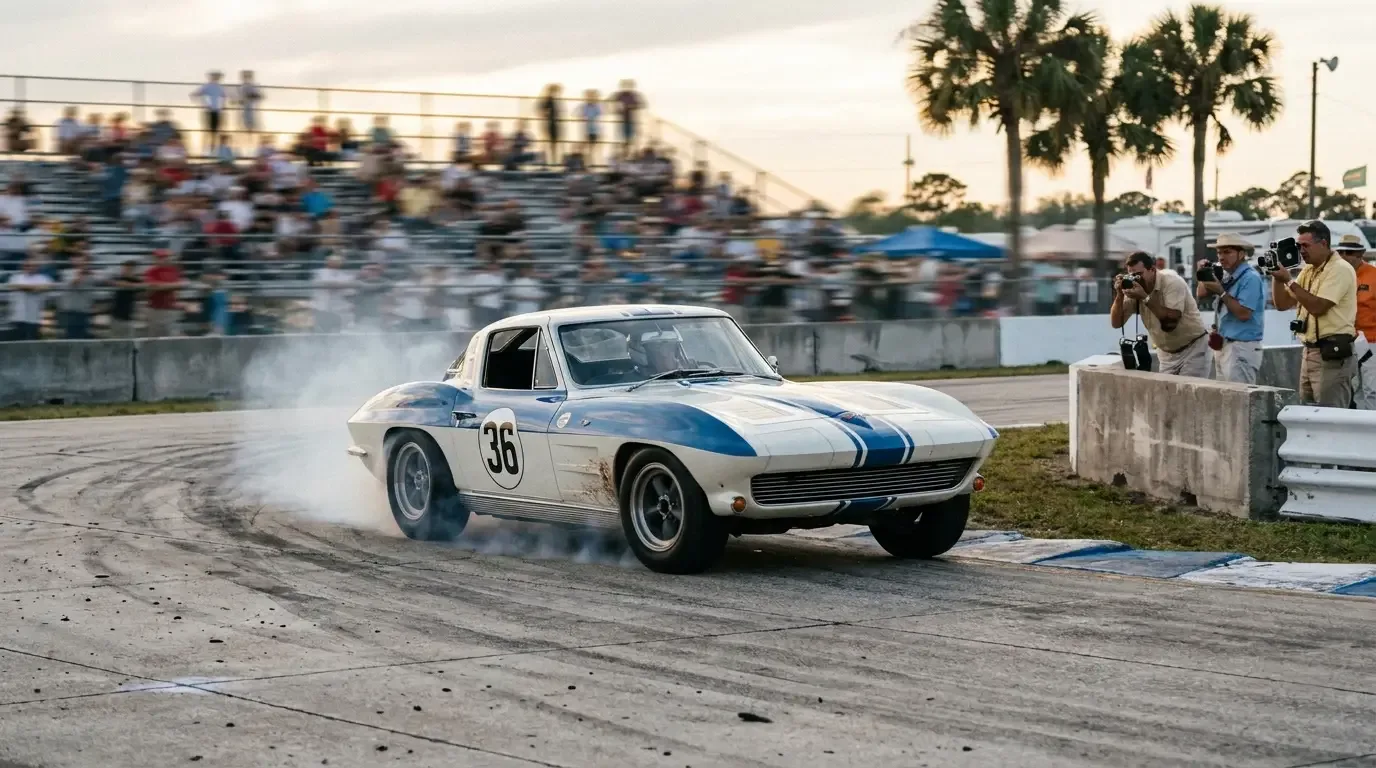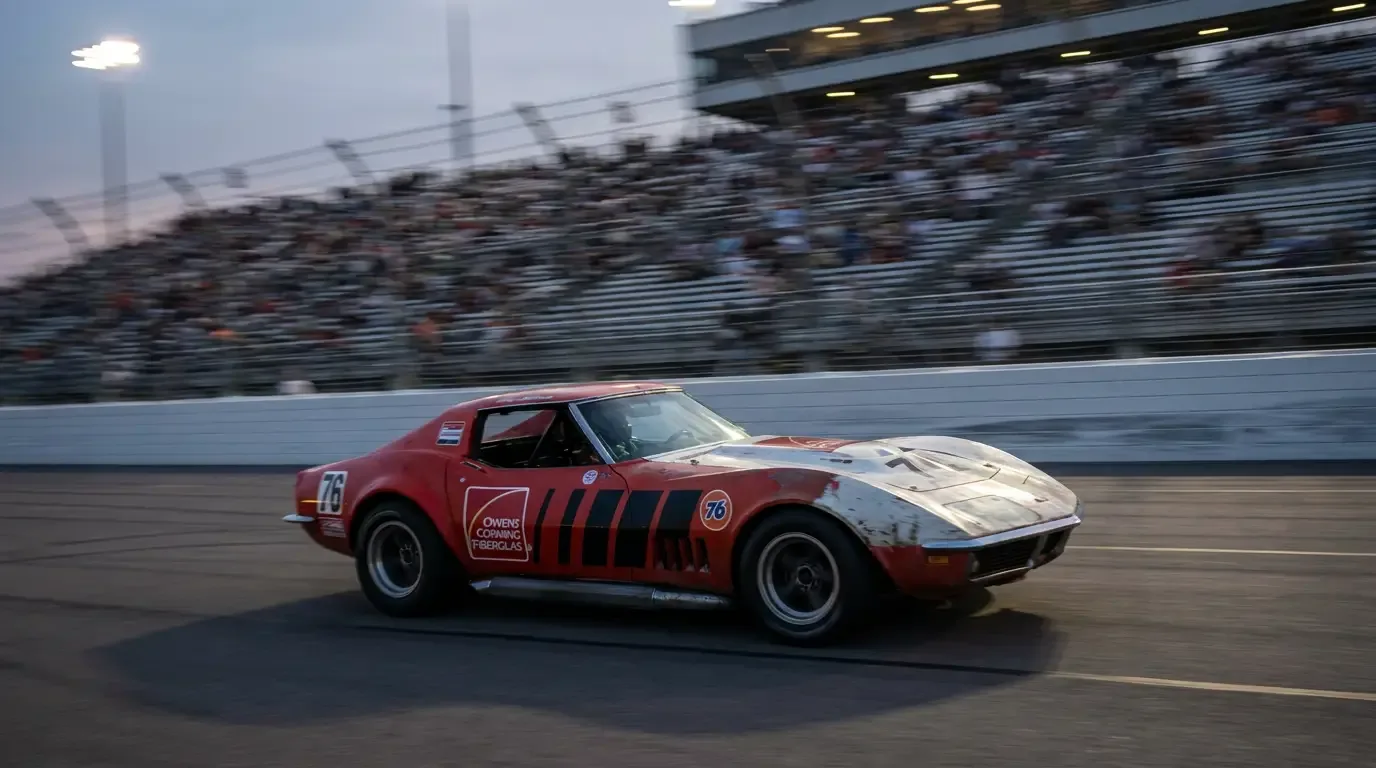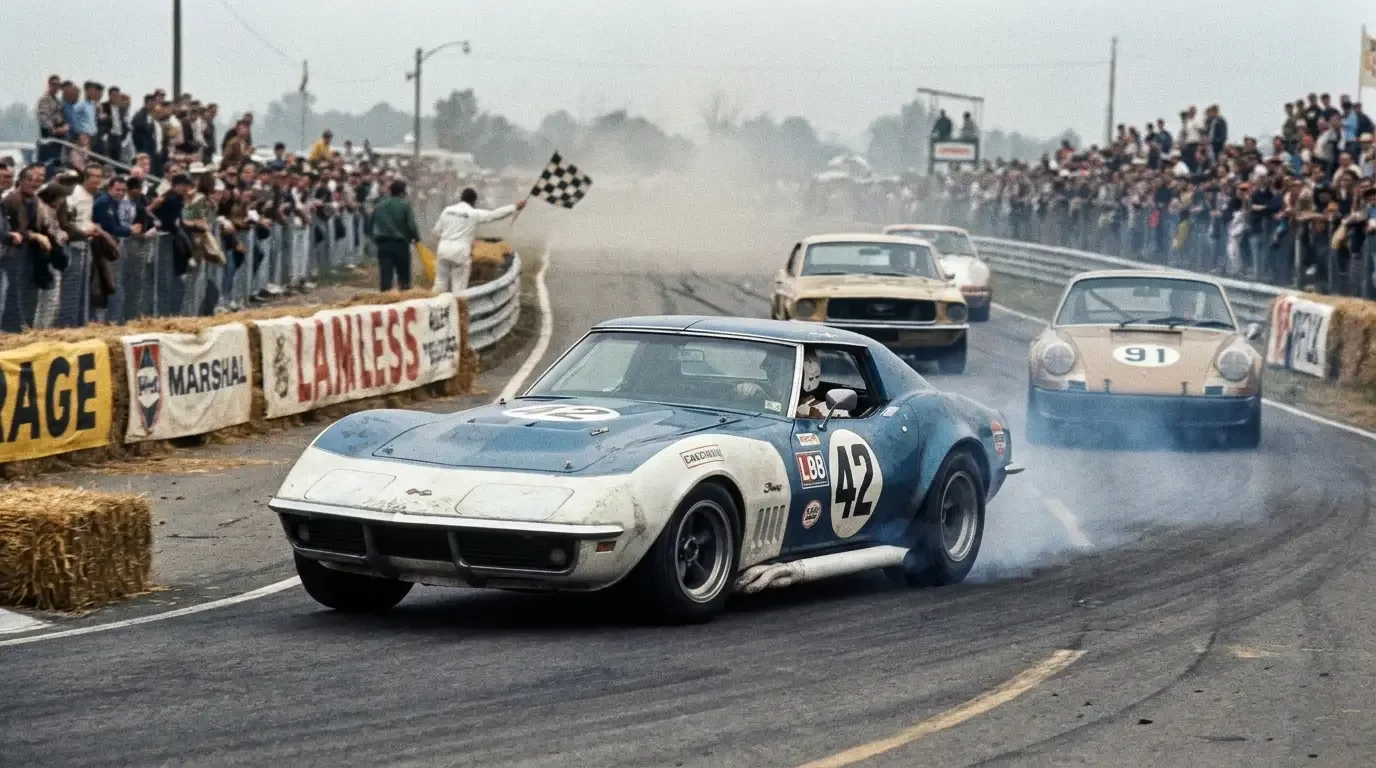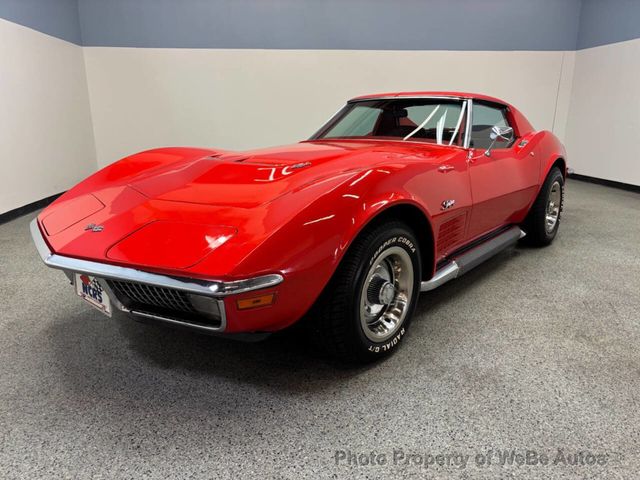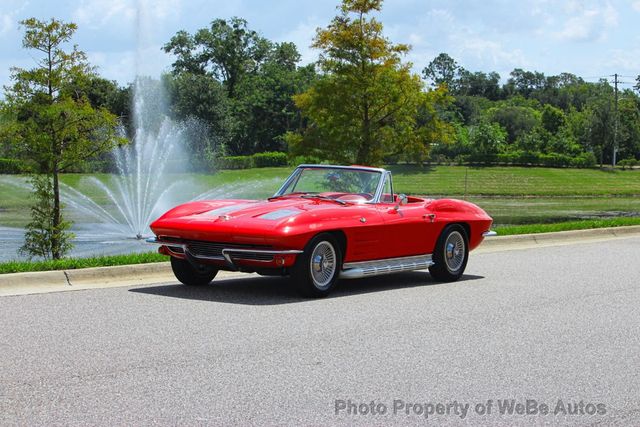
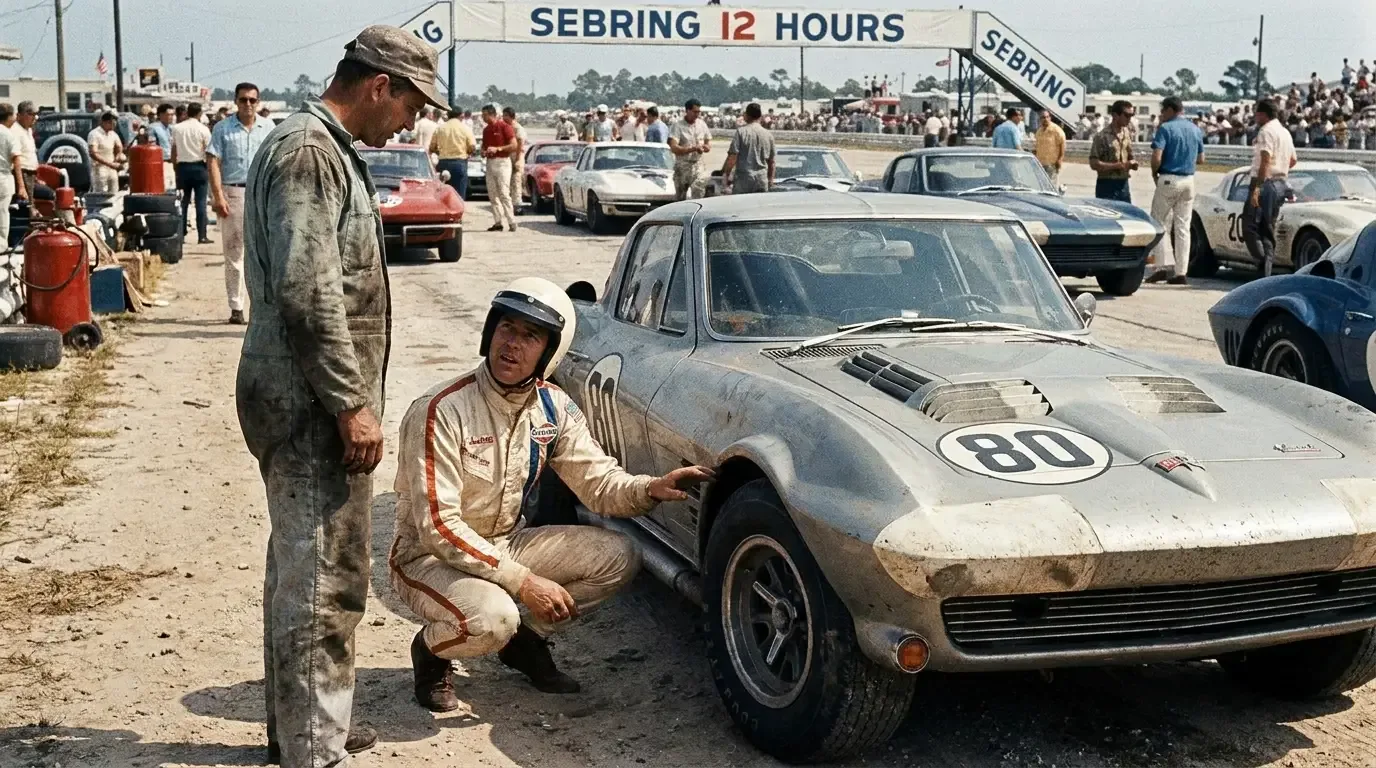
There is a photograph taken at Sebring in 1966 that tells you most of what you need to know about Dick Guldstrand. He is crouched beside a Corvette Grand Sport, pointing at something in the wheel well, talking to a mechanic who is clearly listening hard. Not a pose. Not a publicity shot. A man who has already figured out something the mechanic hasn't, and is making sure the information gets where it needs to go before the car goes back on track.
That instinct, part racer and part engineer, part showman and part craftsman, ran through everything Dick Guldstrand did with the Corvette for more than five decades. He drove them, built them, tuned them, and eventually became so identified with the car that the nickname followed him everywhere: Mr. Corvette. He did not give himself that name. The people who watched him work did.
From dragstrips to road courses
Guldstrand was born in 1927 in Hollywood, California, and came up through the Southern California car culture of the 1950s, which meant dragstrips and dry lakes before it meant road courses. He was quick in a straight line, but he had an engineer's mind and that pushed him toward circuit racing, where you had to think about the whole lap, not just the reaction time. By the early 1960s he was racing Corvettes in SCCA events and starting to win, taking three consecutive SCCA Pacific Coast Championships from 1963 through 1965.
The relationship with Chevrolet deepened in 1966 when he drove one of the five Corvette Grand Sports at Sebring and Nassau. The Grand Sport was a factory-backed race car that Chevrolet officially disowned due to the Automobile Manufacturers Association's racing ban, which meant it was built, then orphaned, then left to privateers and drivers like Guldstrand to actually campaign. He understood those cars as well as anyone outside the factory, which was part of why Chevrolet kept finding reasons to work with him even when they were officially not supposed to be working with anyone.
His performance that decade, at Sebring, at Daytona, and in SCCA regional and national events, established his reputation. He was not a factory driver in the formal sense, but he was as close as Corvette had to one during the years when the factory relationship with racing was complicated and unofficial. For more on corvette racing history, the Guldstrand years are one of its most interesting chapters because so much of it happened in a gray zone between factory support and plausible deniability.
The shop on Culver City
Racing is a young man's game in the sense that the physical demands are real, but Guldstrand's influence on the Corvette lasted far longer than his time on the circuit. In 1968 he opened Guldstrand Engineering in Culver City, California, and built it into one of the most respected Corvette tuning and preparation shops in the country. The work was specific: Corvette performance modifications, race preparation, and eventually the construction of complete turnkey cars built to his specs.
The shop attracted serious customers because the work was serious. Guldstrand was not selling go-fast parts in a catalog. He was doing the engineering, testing the results, and standing behind what he built. In an era when plenty of shops would bolt on power and let the customer figure out the handling, he cared about the whole package. The cars that left his shop were balanced in a way that reflected his road-racing background.
| Era | Role | Notable activity |
|---|---|---|
| 1960s | Racing driver | SCCA Pacific Coast Championships (1963-65), Sebring, Nassau, Grand Sport campaigning |
| 1968 onward | Builder / tuner | Guldstrand Engineering, Culver City, Corvette performance and prep |
| 1980s-1990s | Custom builder | Guldstrand GS80, GS90, limited-edition Corvette variants |
| Ongoing | Ambassador | Bloomington Gold, NCRS events, Corvette community figure |
The GS80 and GS90
If you want to understand what Guldstrand thought a Corvette should be capable of, look at the GS80 and GS90 projects from the 1980s and 1990s. These were modified C4 Corvettes, built to his specifications, with suspension tuning, aerodynamic bodywork, and engine work that turned the production car into something closer to what a factory-backed version might have been if Chevrolet had commissioned it directly.
The GS90 in particular was built in extremely limited numbers -- fewer than ten examples were completed and sold -- and represented his vision of what the C4 platform could do when the compromises of volume production were removed. These were not cheap cars. The customers who bought them were buying access to decades of Guldstrand's accumulated knowledge about what made a Corvette work and what it needed to work better.
The broader story of how the Corvette became an American institution, and what its racing DNA contributed to that identity, is told in the Classic Cars Arena Corvette story. Guldstrand's chapter in that story is specific: he was the guy who took the car to its limits and then went home and figured out how to push those limits further.
"Guldstrand never talked about what the Corvette was. He talked about what it could be. That's a different conversation, and it's the one that kept him working on these cars for fifty years."
-- Patrick Walsh
Legacy in the community
The collector Corvette community has a specific relationship with Dick Guldstrand because he was not an abstract figure. He showed up at events. He judged at Bloomington Gold and NCRS meets. He talked to people who owned the cars, answered questions, signed things, and kept current on what was happening in the hobby long after most of his contemporaries had stepped back from it.
That presence mattered in a community where provenance and authenticity count for everything. A car he had touched, a modification he had specified, carried weight because he had earned that weight over decades of results. He was not trading on nostalgia. He was still doing the work.
The SCCA Trans-Am series, which Guldstrand competed in during the 1960s, represents the next chapter in the Corvette's transition from boulevard cruiser to genuine road-racing machine. Guldstrand was central to that transition, as driver and as the person who understood what the cars needed to be competitive.
What the nickname earned
Dick Guldstrand died in September 2015 at the age of eighty-eight. The tributes from the Corvette community were long and specific, which is the right kind of tribute for someone who had been specific his entire career. People remembered exact cars, exact races, exact conversations at the shop. That is the currency that matters in this hobby, and he had earned a lot of it.
Mr. Corvette is a title that could mean almost anything. In his case it meant something particular: a racer who understood engineering, a builder who understood racing, and a person who cared about the car itself more than what the car represented. The Corvette has had plenty of champions. Dick Guldstrand was one of the people who made it worth championing.
Sources and notes
- Hagerty Media: Dick Guldstrand obituary -- birth year 1927, death 2015, SCCA Pacific Coast Championships, Le Mans 1967
- Corvette Blogger: Guldstrand dies at 88 in 2015 -- shop opened 1968 in Culver City as Guldstrand Engineering
- National Corvette Museum: Guldstrand Hall of Fame biography -- three consecutive SCCA Pacific Coast Championships 1963-65
- 24 Heures du Mans official site: Guldstrand 1927-2015, raced 1967 L88 at Le Mans with Bob Bondurant
- Corvettes.nl: GS90 production -- only six GS90 coupes were built and sold
- LSX Magazine: Mr. Corvette obituary -- biography and career summary