The red-and-white car that changed everything
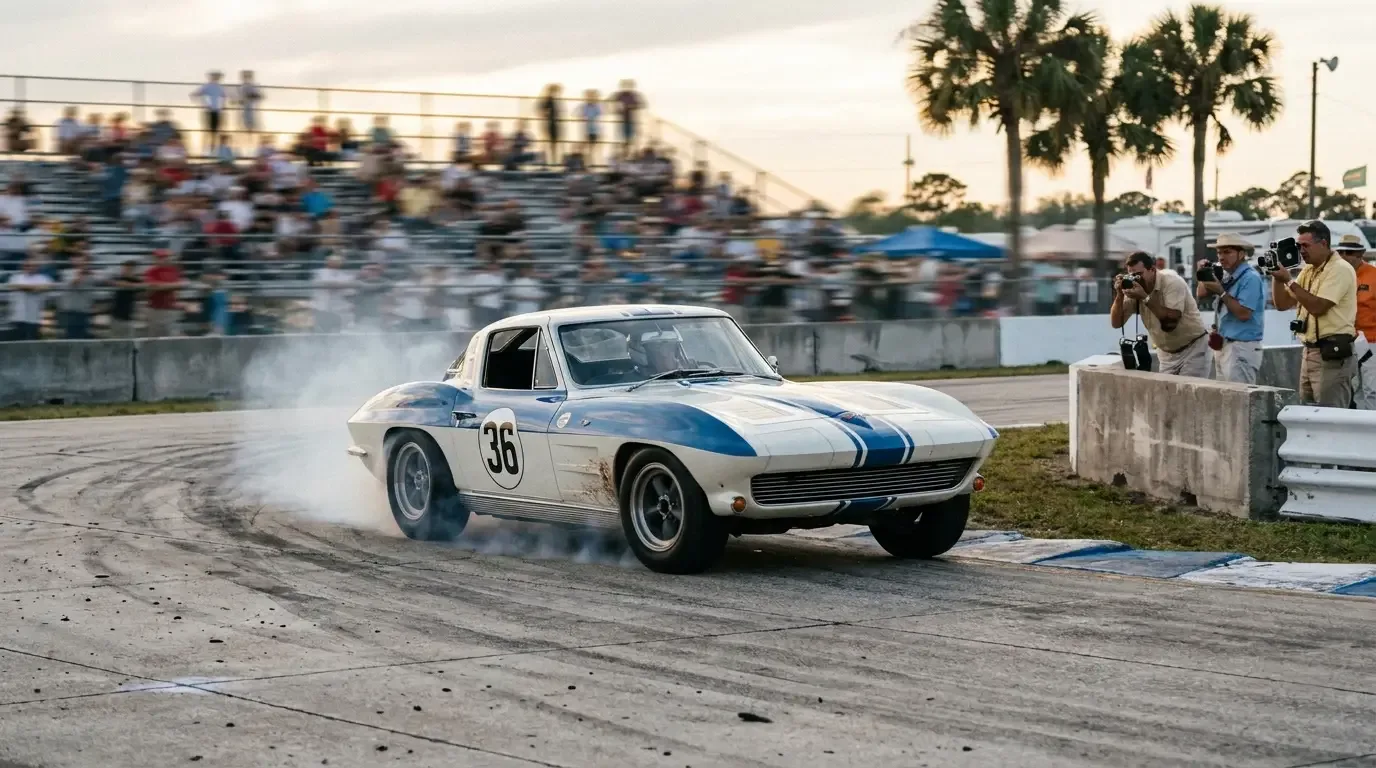
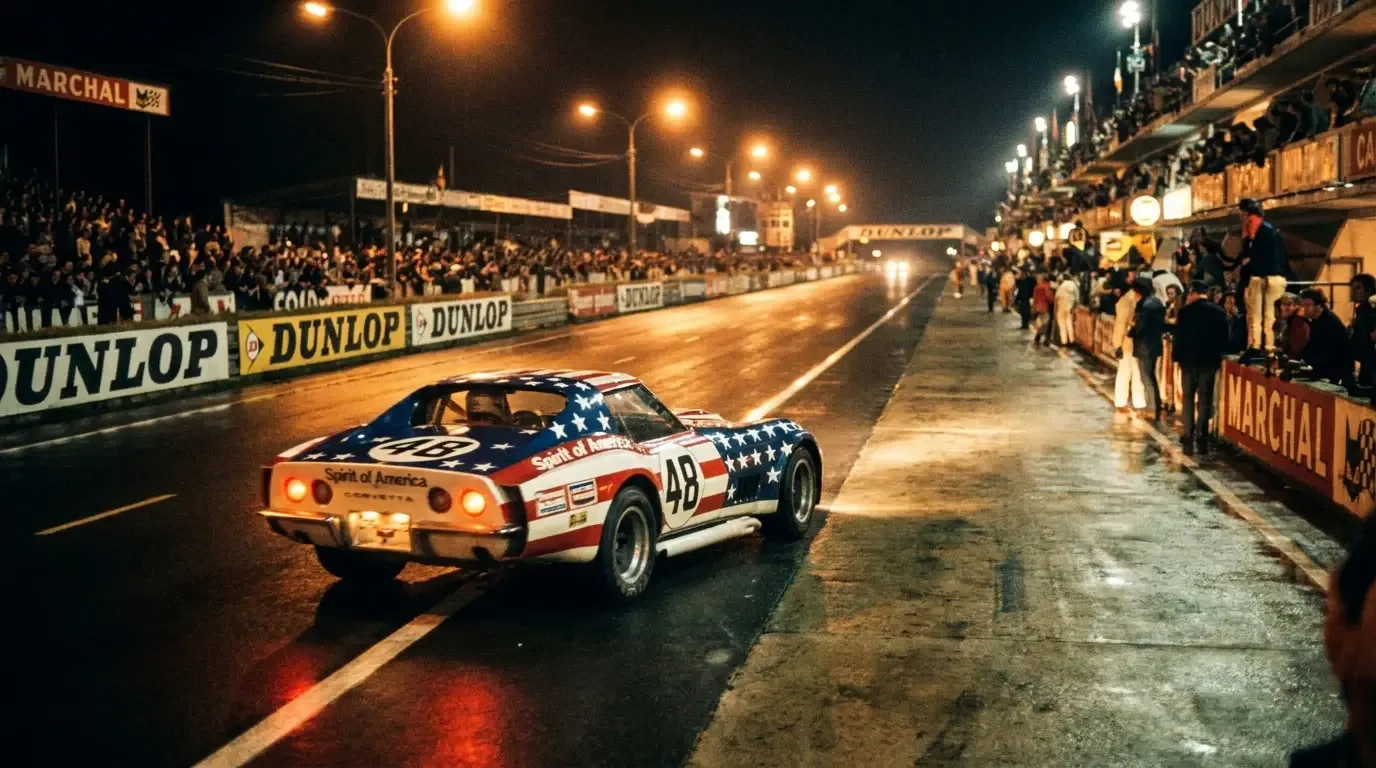
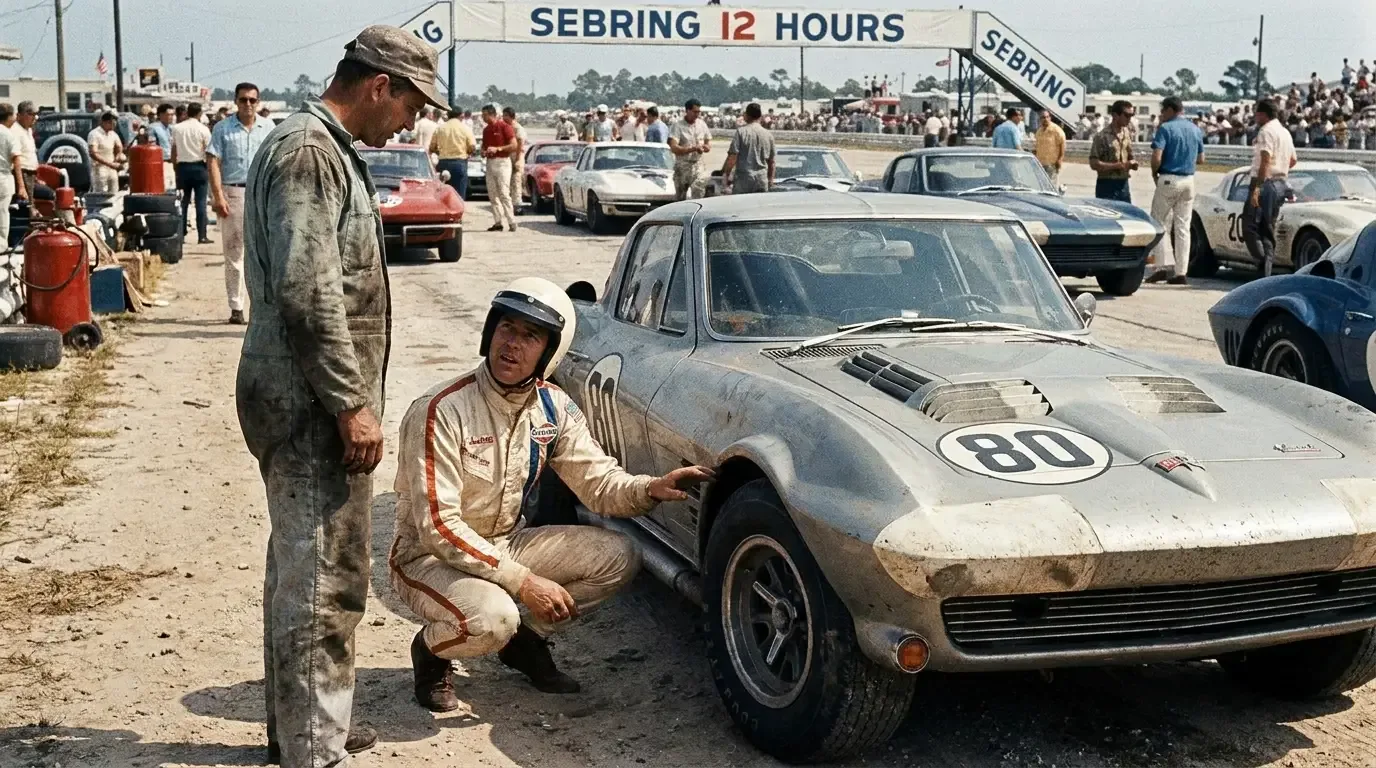
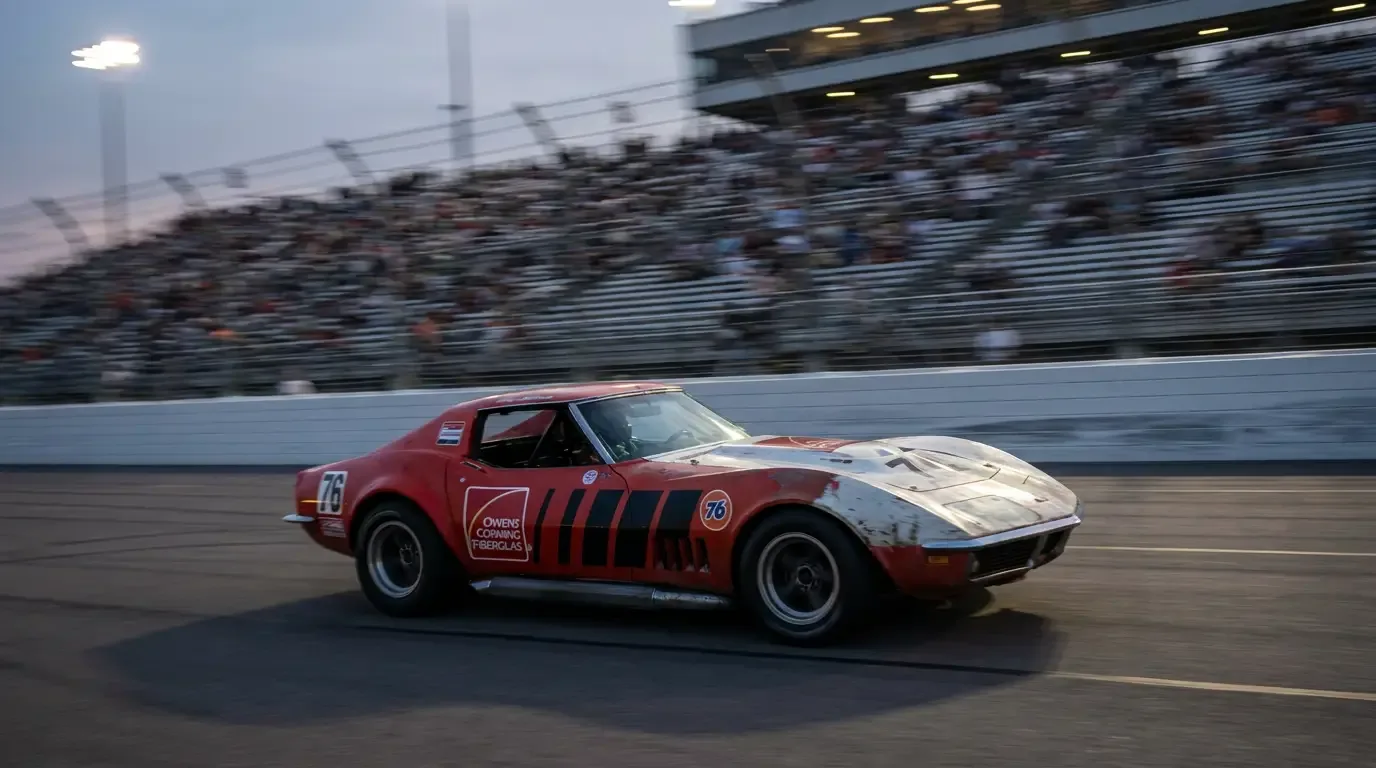
There is a moment in every motorsport partnership where you realize the two things belong together. For Owens Corning and Corvette racing, that moment came somewhere on the long straights of Daytona and the sweeping corners of Sebring, painted in red and white Owens/Corning Fiberglas corporate colors, going fast enough to beat everything in class. The Owens Corning Corvette Racing program did not invent the idea of a factory-backed Corvette on a race circuit. But it gave the effort a visual identity that stuck, and it planted a flag at a time when the Corvette's racing credibility needed exactly that kind of visible commitment.
The partnership grew out of the late 1960s, when Tony DeLorenzo and Jerry Thompson formed one of the most formidable driver pairings in American sports car racing. To understand the full scope of what Corvette racing meant in this era, the full picture spans multiple campaigns, many drivers, and a complicated relationship between the factory and the racers who kept showing up anyway.
What Owens Corning brought to the program
Owens Corning was not a traditional motorsport sponsor in the mold of oil companies and tire brands. The Toledo-based manufacturer of fiberglass insulation and composite materials had a more literal connection to the Corvette: the car's body was made from fiberglass. In 1953, Owens Corning and General Motors jointly announced the first production automobile to be built entirely of fiberglass-reinforced plastic, the Chevrolet Corvette. The sponsorship had the kind of internal logic that made sense to an engineering-minded audience, and it gave Owens Corning a moving billboard for a material that most consumers associated with pink batts in their attic walls, not race cars going 150 miles per hour.
The red and white livery, featuring graphic designer Randy Wittine's distinctive "speed blocks" treatment, was instantly recognizable. Racing Corvettes in this era wore various corporate colors, but the Owens/Corning Fiberglas scheme stood out on track and in photographs, which mattered for a sponsorship relationship that needed to demonstrate value back to the parent company's marketing department. The bright red-on-white paint and bold block lettering made the cars immediately identifiable even in the middle of a crowded field.
The drivers and the cars
The Owens Corning-backed Corvettes competed in SCCA A-Production racing and major FIA endurance events, which formed the most prominent sports car competition in North America during the late 1960s and early 1970s. The A-Production class was where the highest-displacement production-based sports cars fought it out, and the big-block Corvette was a natural fit. The cars were L88-engined C3 Corvettes, built from 1968 and campaigned seriously through the 1971 season.
Dick Guldstrand was one of the key figures in Corvette racing during this broader period, and his work developing the car for competition shapes a lot of what the Corvette racing world was able to accomplish. If you want to understand the technical side of how these Corvettes were prepared, read the related story on Guldstrand's career and his specific contributions to making the Corvette competitive at the professional level.
The two primary drivers of the Owens Corning cars were Tony DeLorenzo and Jerry Thompson. DeLorenzo, whose father was a senior General Motors executive, founded Troy Promotions Inc. to manage the effort. Thompson brought genuine mechanical engineering credentials alongside his driving ability and had already won SCCA national and divisional titles in Corvairs and Corvettes before joining the program. Owens/Corning Fiberglas came aboard as sponsor in the summer of 1968, and from 1969 onward the team fielded two L88 Corvettes, running what the AutoExtremist described as "a 45-foot tractor trailer rig emblazoned with Owens/Corning Fiberglas Corvette Racing Team graphics" to every event.
"The Owens Corning Corvette program was doing something that mattered beyond the finish positions. It was telling the enthusiast community that this car belonged on a real race circuit, with real money behind it, and real drivers behind the wheel. That message has lasting value."
— Patrick Walsh
Racing results and legacy
The Owens Corning program achieved extraordinary results. DeLorenzo and Thompson won 22 consecutive SCCA and FIA national events from 1969 through 1971, with fourteen of those victories coming as 1-2 finishes for the two-car team. Thompson secured the 1969 and 1972 SCCA A-Production national championships. On the endurance side, the team earned GT class wins at the 1969 and 1970 24 Hours of Daytona, a GT class win at the 1970 12 Hours of Sebring, and a GT class win at the 1969 Watkins Glen 6 Hours. The 1970 Daytona result placed them sixth overall, ahead of a Ferrari 250 LM. At the 1971 Daytona 24 Hours, the No. 11 OCF Corvette finished fourth overall and first in GT class, driven by DeLorenzo, Don Yenko, and John Mahler.
What the program accomplished in the longer view had less to do with trophies than with continuity. The Corvette needed visible, professional-level racing activity to maintain its identity as a performance car, and the Owens Corning sponsorship provided funding stability that allowed the team to develop the cars far more seriously than contingency money alone would have permitted. The surviving race car earned a 2007 American Heritage Award from the National Corvette Restorers Society, recognition of how significant the program is to the marque's history.
The C3 Corvette that underpinned this racing program is now a collectable in its own right. The 1978 model year represents one of the more significant design updates of the C3 generation, introducing the new fastback roofline and the 25th Anniversary edition, and buyers interested in street examples from this period will find a range of options in the market. 1978 Corvettes for sale give a sense of what the street-legal version of this generation currently commands, which provides useful context for understanding what the racing program was drawing from as its platform.
Why this partnership matters to Corvette history
Corporate sponsorships in racing come and go. Most of them disappear from the historical record without leaving much trace. The Owens Corning program has lasted in the Corvette community's memory partly because of the visual distinctiveness of the cars, and partly because it represents a bridge moment. Between 1969 and 1971, when DeLorenzo and Thompson were rolling up 22 consecutive victories, the Corvette's racing legitimacy was not in question. That record of dominance in class-level competition helped sustain the argument that the Corvette was a serious machine, an argument that mattered when the C4 arrived for the 1984 model year and had to make its own case from scratch.
The fiberglass connection between sponsor and car was real, not manufactured. Owens Corning's materials had been part of the Corvette since the very first production car in 1953, and the racing program made that connection tangible in a way that press releases and technical bulletins never could. For a company looking to associate itself with innovation and American engineering, there were worse places to put a logo than on a red-and-white race car running at the front of the field at Daytona.
The program also sits within a longer tradition of independent operators and corporate backers keeping Corvette racing alive between the official periods of factory involvement. That tradition is what makes the car's competition history so textured and difficult to summarize briefly. The Owens Corning chapter is one of several in a story that stretches from the Sebring entries of the 1950s through to the factory-backed C5.R program that finally gave Corvette Racing its most sustained professional success. Each era built on the credibility that the previous one had established, and the corporate-sponsored campaigns of the late 1960s and early 1970s were part of that chain.
Sources and notes
- National Corvette Museum: Anthony DeLorenzo and Gerald Thompson — confirmed drivers, years active (1968-1971), 22-race winning streak, SCCA and FIA results
- RM Sotheby's Monterey 2012: 1968 Chevrolet L-88 Corvette Owens/Corning FIA/SCCA Racing Car — confirmed chassis details, L88 engine, 1969/1972 SCCA titles, Daytona and Sebring results, NCRS American Heritage Award
- AutoExtremist.com, The Glory Days Part II — confirmed Owens/Corning sponsorship start August 1968, OCF corporate colors (orange/red and white), Randy Wittine "speed blocks" livery, 45-foot team transporter
- AutoExtremist.com, The Glory Days Part V: The Owens/Corning Trans-Am Adventure — confirmed red and white OCF corporate livery, key race results including 1971 Daytona 4th overall with DeLorenzo/Yenko/Mahler
- Owens Corning Corporate History — confirmed Toledo, Ohio headquarters and 1953 joint announcement with GM of first fiberglass-bodied production automobile, the Corvette
- CorvetteBlogger.com: 1968 Owens-Corning L88 Racer — confirmed SCCA series (not IMSA), race results, 1968-1971 active years, primary drivers DeLorenzo and Thompson