The agreement that changed everything
June 1957. The Automobile Manufacturers Association met and voted to withdraw from motorsport. Every major American automaker signed on: Chrysler, Ford, General Motors. The resolution said manufacturers would stop factory-sponsored racing, stop funding development of speed equipment, and stop running advertisements that promoted performance. On paper it was a voluntary industry agreement. In practice it landed like a thunderclap on every racing program that had been building momentum through the mid-1950s.
For the Corvette, the timing could not have been worse. The car had only recently found its footing as a genuine performance machine. The six-cylinder cars from 1953 and 1954 had not exactly set the world on fire. But by 1956 and 1957, the Corvette was evolving into something that could run at Sebring and hold its own. The AMA ban put a hard stop on where that trajectory was heading, and the effects played out through the rest of the decade. To understand what was lost, you have to understand what had just arrived. You can read the corvette racing history story for the full arc, but the 1957 moment deserves its own treatment.
What the 1957 Corvette had become
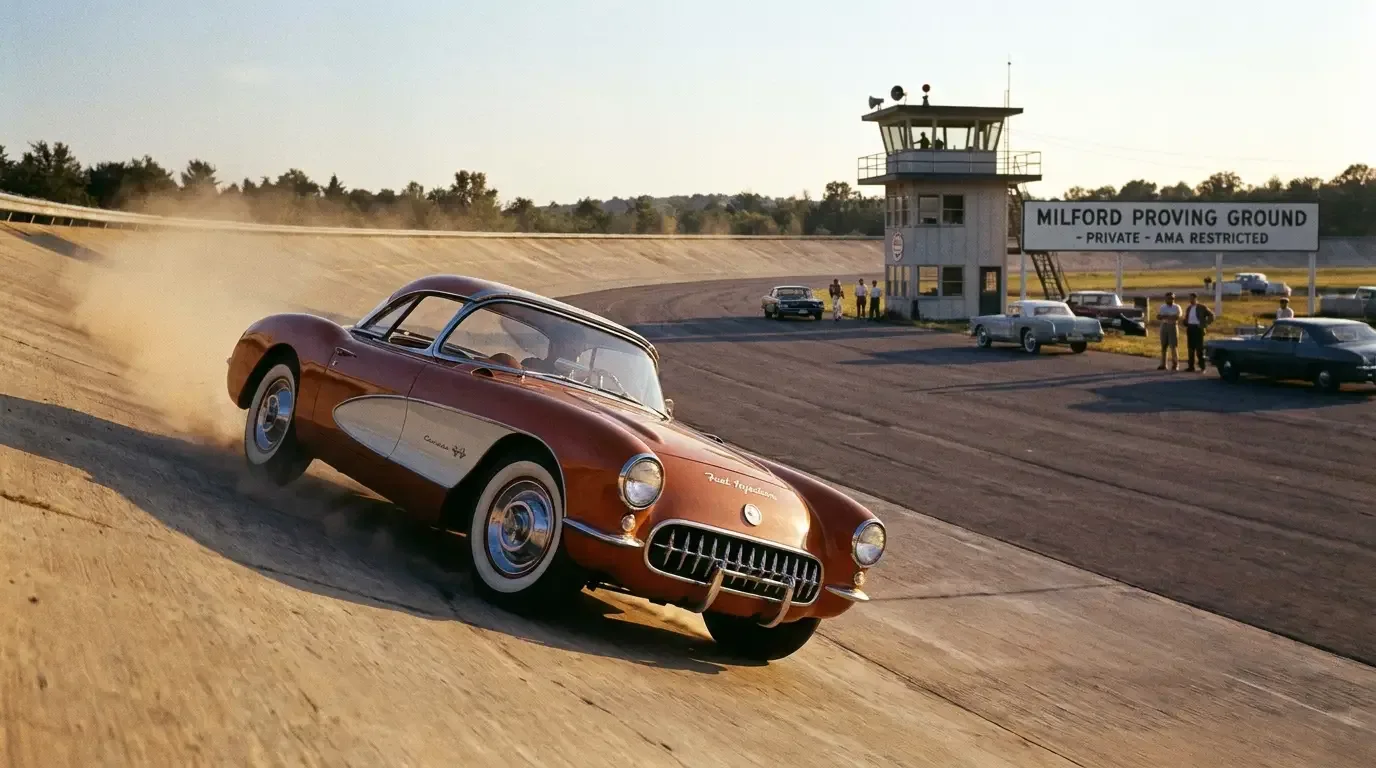
By model year 1957, the Corvette offered the fuel-injected 283 cubic inch V8. The top "fuelie" option was rated at 283 horsepower, making it one of the first American production engines to achieve one horsepower per cubic inch. That was not marketing language at the time. It was a genuine engineering achievement, and it came at a moment when the Corvette had started to establish itself in competition.
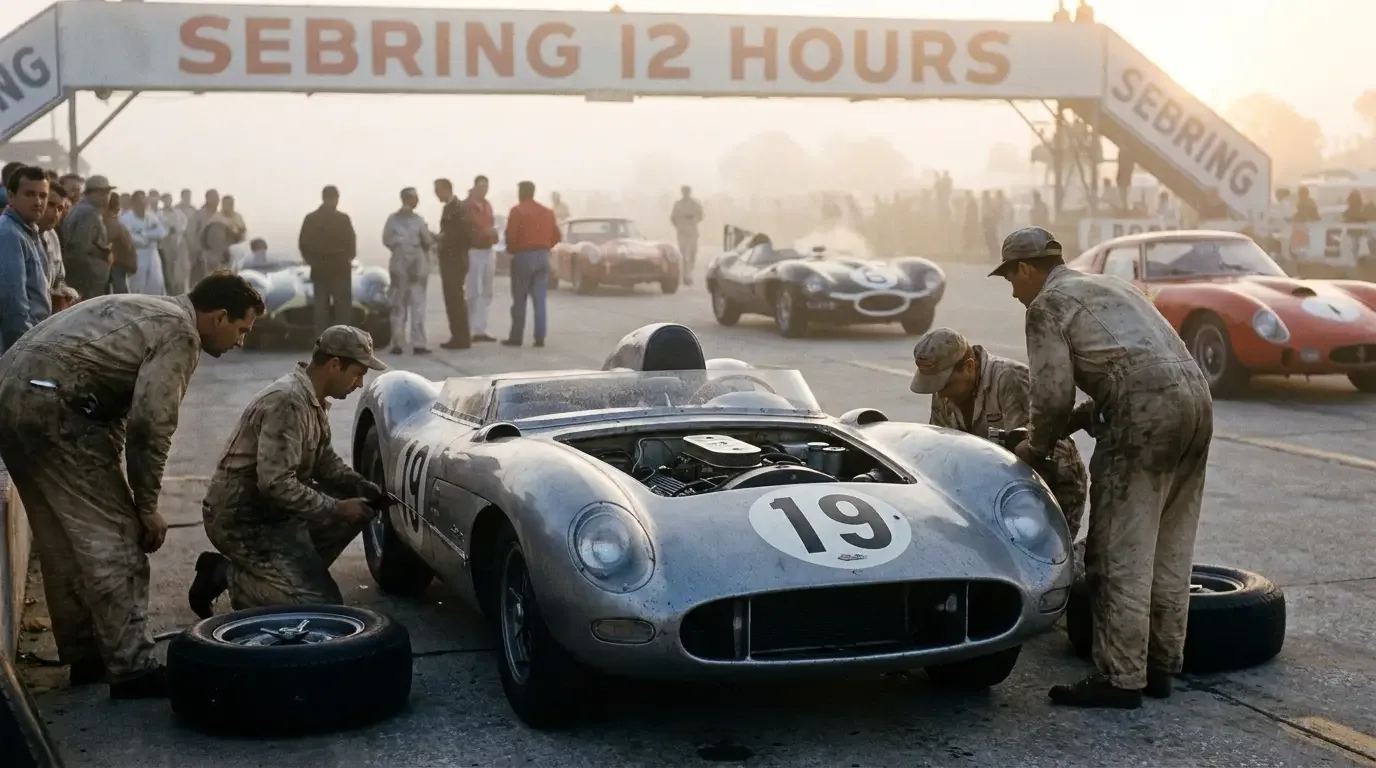
Zora Arkus-Duntov had been working to transform the Corvette from a styling exercise into a serious sports car. The heavy axle hop problems that plagued earlier cars were addressed. Handling improved. The car that showed up at Sebring in March 1957 was a different machine from what had embarrassed the nameplate a few years earlier. GM entered four factory Corvettes in that race, and two of them finished first and second in the GT5.0 class. The factory had been directly involved in preparation, with Duntov and team manager John Fitch overseeing the effort.
| Year | Engine option | Rated output | Notes |
|---|---|---|---|
| 1955 | 265 V8 (base) | 195 hp | First V8 in Corvette |
| 1956 | 265 V8 (dual carb) | 225 hp | Handling improvements, new body |
| 1957 | 283 fuel injection (top) | 283 hp | AMA ban enacted mid-year |
| 1957 | 283 dual quad (mid) | 270 hp | Continued in production post-ban |
Why the AMA acted when it did
The ban did not come from nowhere. The mid-1950s had been a rough stretch for public perception of the auto industry and speed. The 1955 Le Mans disaster killed over eighty spectators and forced Mercedes-Benz to withdraw from racing entirely. American highways were seeing their own casualties attributed, fairly or not, to the horsepower race between manufacturers. Congressional attention was sharpening. The AMA's 1957 resolution was at least partly a preemptive move to avoid federal regulation.
There was also competitive tension behind the curtain. Ford had been spending heavily on racing through its 1956 Thunderbird program and affiliated efforts. General Motors, whose corporate culture under president Harlow Curtice had leaned into performance marketing, was in a bind. The resolution gave everyone a face-saving way to step back. Whether they actually stepped back is a different question.
How GM and the Corvette navigated the ban
General Motors signed the AMA resolution and officially withdrew from factory racing. The Corvette performance parts catalog, which had been growing, was quietly pulled from official channels. Racing equipment that had been under development was set aside. Advertisements stopped mentioning speed records and track results.
What actually happened under the surface was more complicated. Duntov continued his engineering work. Performance parts remained available through dealers, even if Chevrolet was not advertising them. Privateers who wanted to race Corvettes could still find what they needed, just not through official factory support. The line between "factory involvement" and "factory tolerance" was blurry enough that serious racing did not simply stop. It went underground in a corporate sense.
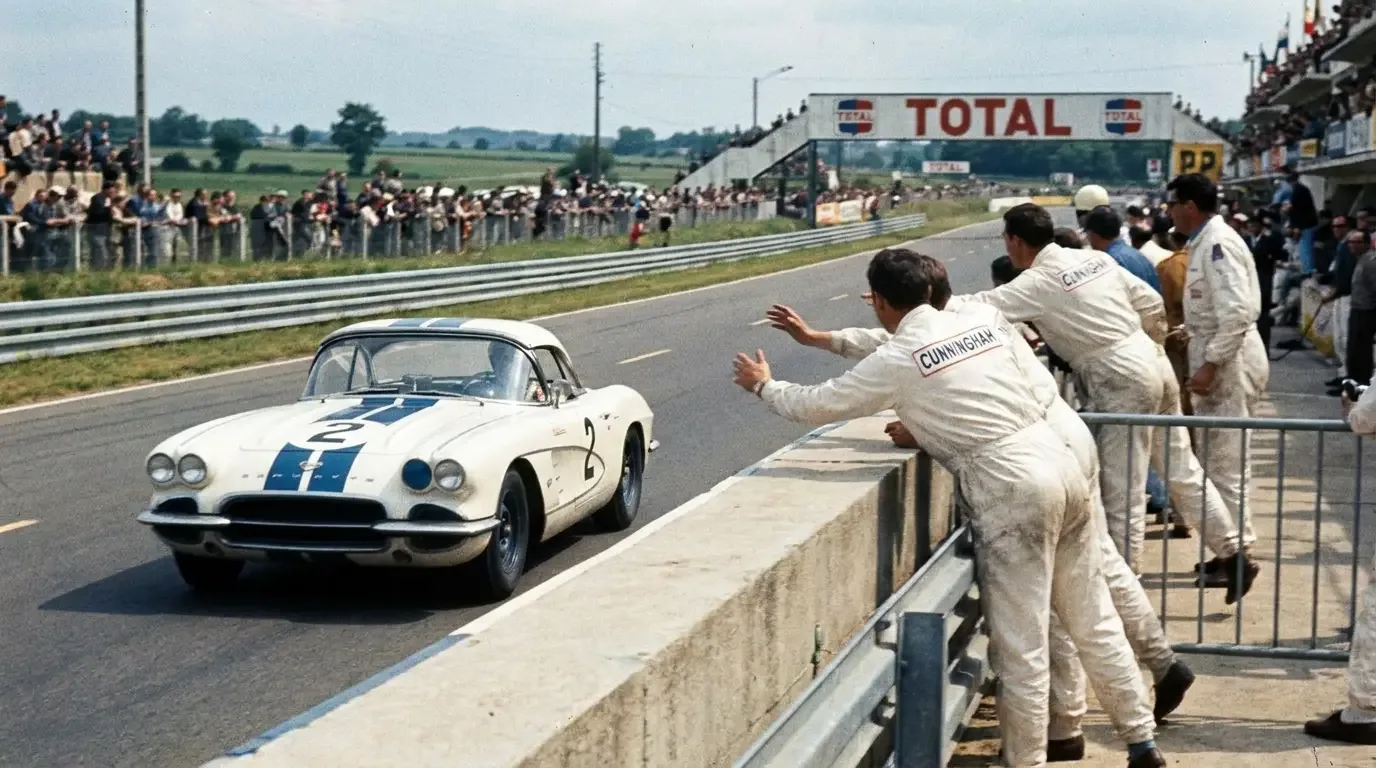
The fuel-injected 1957 Corvette stayed in production and stayed in the lineup. GM did not delete the performance engines to comply with the spirit of the ban. The cars that were already out in the world and the mechanical knowledge that had been accumulated did not disappear. Dedicated racers kept finding ways. You can read more here about how the Corvette eventually found its way back to international competition through Briggs Cunningham's independent effort at Le Mans in 1960.
"The 1957 ban is sometimes read as a story about bureaucrats killing something good. That's not quite right. The engineering that made the early racing Corvettes work didn't vanish in June 1957. It went quiet for a while. The cars that came out of that period, especially the fuel-injected examples, carry that history whether or not the factory was officially watching."
— Patrick Walsh
The legacy for 1957 cars today
Among Corvette collectors, 1957 holds particular significance precisely because of where the car stood at that frozen moment. The fuel-injected 283s produced that year represent the peak of what Chevrolet was willing to put into a production car before the AMA resolution changed the calculus. These are not the rarest Corvettes, but they carry an outsized historical meaning.
Genuine fuel-injected 1957 examples command serious premiums over carbureted cars from the same year. The Rochester fuel injection unit is one of the known authentication challenges: units have been swapped, replaced, and fabricated over the decades, and a claimed fuelie car needs documentation. Build records, tank stickers, and NCRS authentication are the standard verification path. Without documentation, price negotiations should reflect the uncertainty.
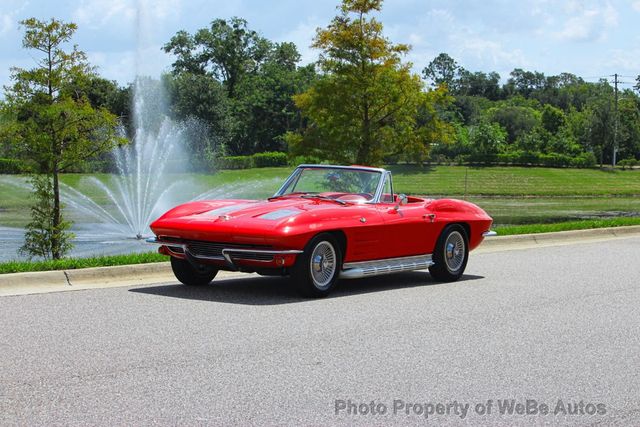
The AMA ban of 1957 did not end Corvette performance. It interrupted an official program at a moment of genuine momentum and forced the engineering to continue through other channels. That compression, ironically, may have pushed Duntov and his team to develop approaches that would not have emerged as quickly under open factory sponsorship. The Sting Ray that arrived in 1963 owed something to the years of unofficial, low-profile work that the ban made necessary.
Sources and notes
- Jalopnik: How The 1957 Racing Ban Killed American Factory Race Teams Overnight -- confirmed June 6, 1957 AMA resolution date and scope of the ban
- National Corvette Museum: 1957 Corvette Specs -- confirmed 283 hp fuel injection and engine option lineup
- Curbside Classic: 1957 Chevrolet Fuel-Injected 283 V8 -- confirmed one horsepower per cubic inch achievement and production figures
- Wikipedia: 1957 12 Hours of Sebring -- confirmed Corvette GT5.0 class 1st and 2nd place finishes and factory entry status
- Barn Finds: 1957 Chevrolet Corvette Dual-Quad -- confirmed 270 hp rating for the dual-quad 283 option
- Wikipedia: Harlow Curtice -- confirmed GM president 1953-1958, covering the period of the AMA ban