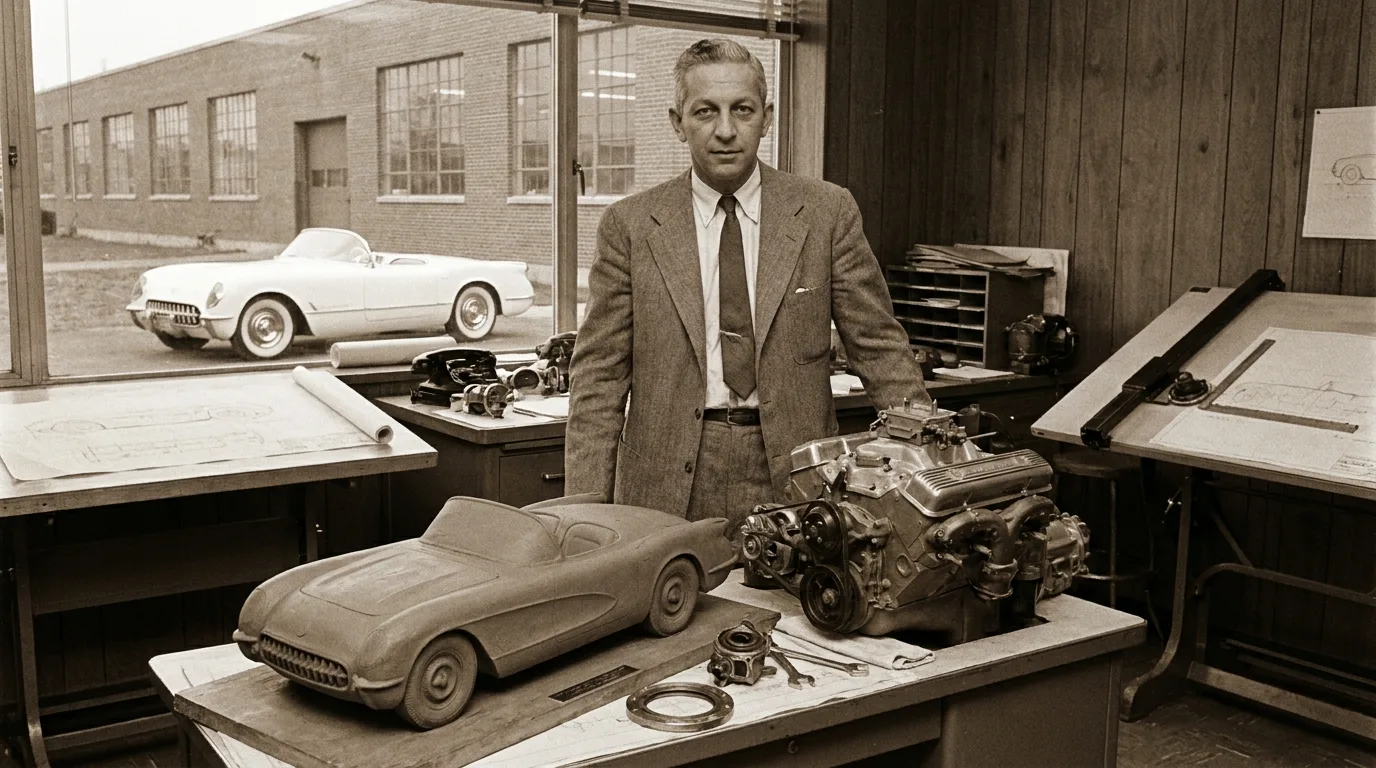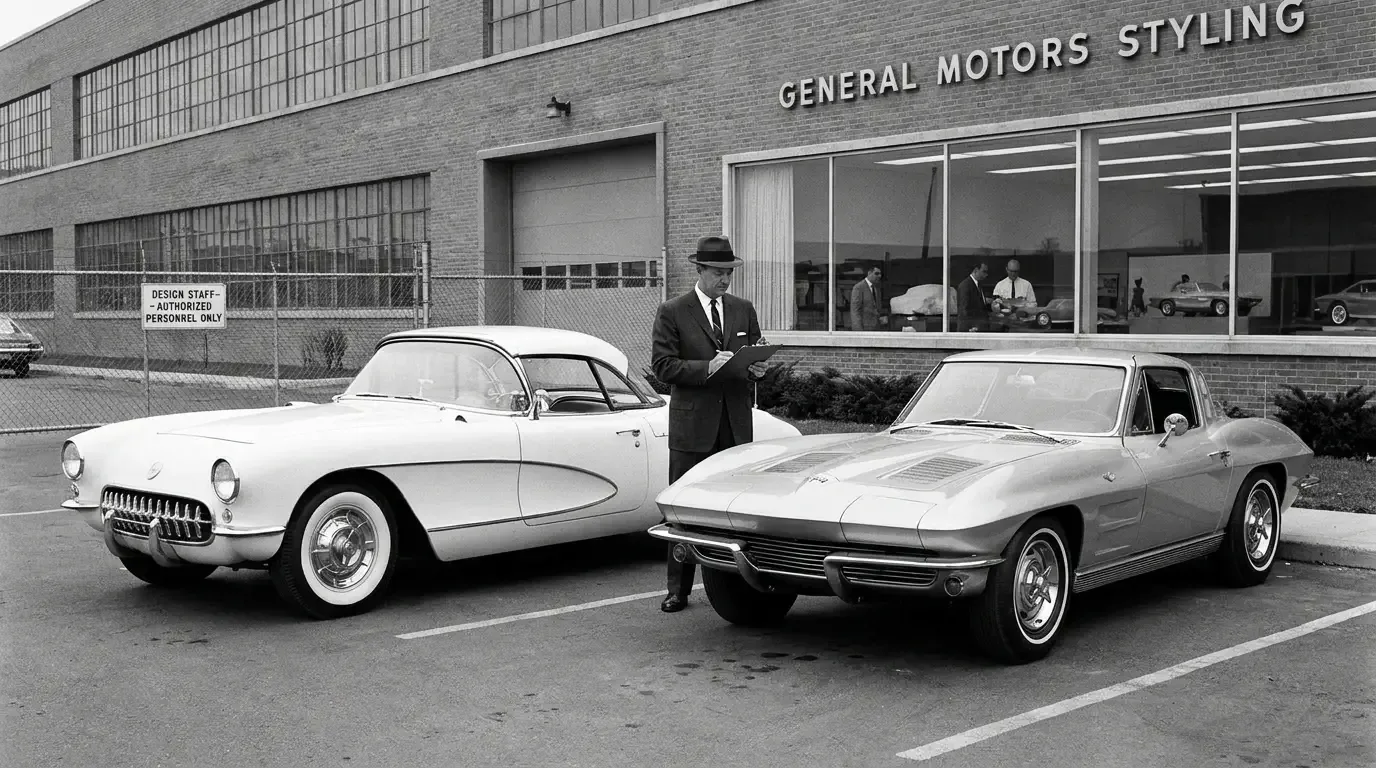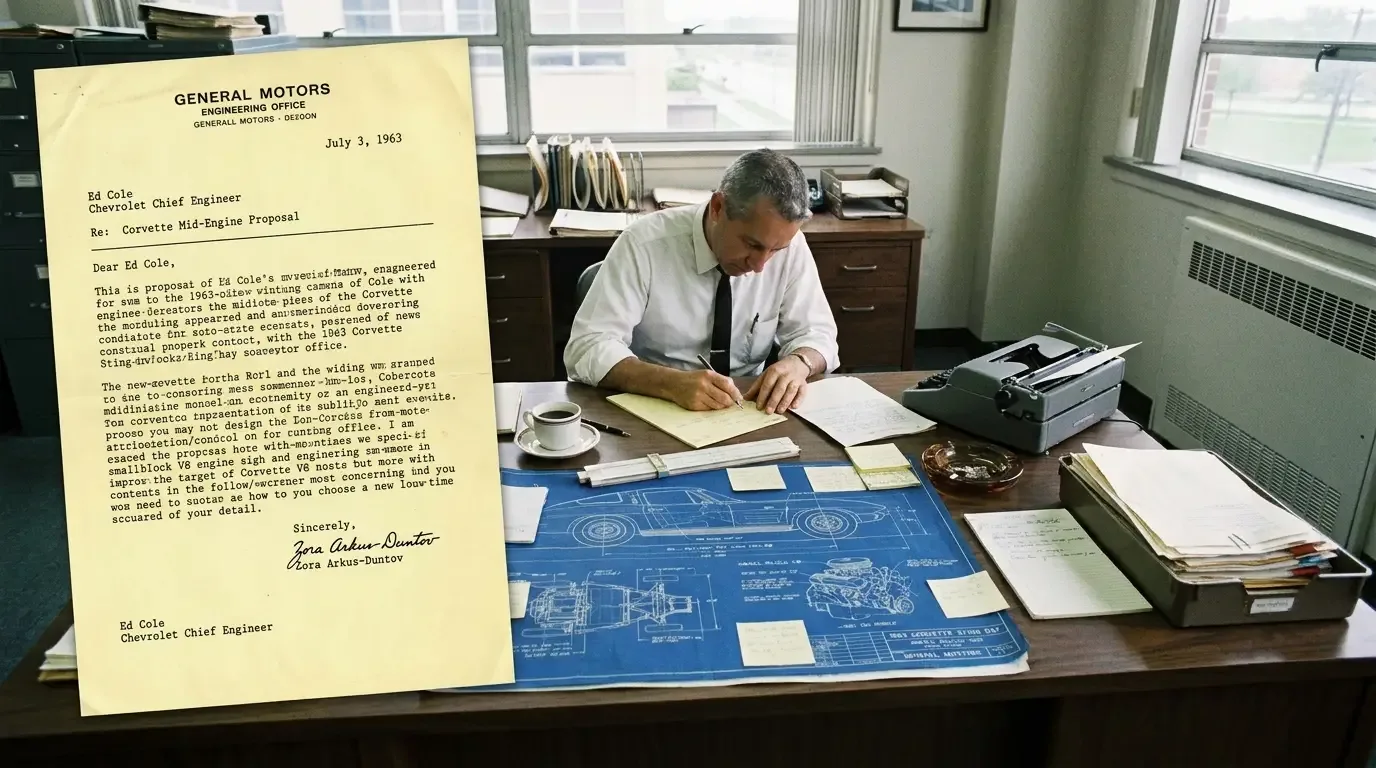

Zora Arkus-Duntov did not arrive at General Motors as a racing man looking for a job. He arrived as a racing man who had spotted something in a show car that nobody else at GM had quite figured out yet. The 1953 Corvette was a pretty object with a borrowed engine and soft suspension. Duntov saw past that. He wrote a memo to Chevrolet chief engineer Ed Cole laying out what the car could become. That letter started the next chapter of his career and, not coincidentally, the real history of the Corvette as a performance machine.
But before any of that, before the factory and the memos and the option codes, Duntov raced. His racing career predates his GM tenure by years, and it shaped every engineering instinct he brought to Bowling Green. Understanding what he actually did on circuits across Europe and America tells you something essential about why the Corvette became what it became. You can read the next chapter of how he turned that memo into a job, but this is the chapter before it.
European roots: the pre-war and wartime years
Zora Arkus-Duntov was born in Belgium in 1909, grew up partly in Leningrad, and came of age in Berlin during the late 1920s when German motorsport was at an early peak. He studied engineering at the Charlottenburg Institute of Technology and graduated in 1934. That engineering background was never separate from his interest in cars and speed. For Duntov, engines were something you understood from first principles, not just operated.
His early racing activity in the 1930s was informal by later standards: motorcycle competition and oval-track outings around Berlin, including a cycle-fendered German "Bob" special that reportedly had no front brakes and weak rear brakes. He was not yet a Le Mans entrant in this period; that came later, after the war, once he had relocated to the United States and connected with the British Allard company. These early years were seat time on two wheels and four, hard experience with unreliable machinery, and the kind of learning that only comes from managing a car when something starts going wrong.
The war interrupted everything. Duntov spent the war years in a complicated path through France, eventually emigrating to the United States in 1943. He and his wife Elfi settled in New York, where he worked in various engineering capacities. Racing was put away for the duration.
The Ardun cylinder head and postwar competition
After the war, Duntov's engineering mind found an immediate outlet. Together with his brother Yura, he developed the Ardun overhead-valve conversion kit for the Ford flathead V8. The Ardun hemispherical-combustion-chamber cylinder head was a legitimate piece of engineering, not a garage experiment. It substantially increased the power output of a very common American engine and put the Duntov name in front of the American hot rod and racing community at exactly the right moment.
The Ardun business also got Duntov back to racing. He and Yura competed in American events through the late 1940s and into the 1950s, running at road courses when the sport began to organize itself in postwar America. The Sports Car Club of America was codifying rules. Watkins Glen was running its early street circuit races. California had Pebble Beach and Torrey Pines. Duntov was in the middle of it, racing and watching and absorbing what the American market wanted from performance cars.
Le Mans 1952-1953 and the Allard years
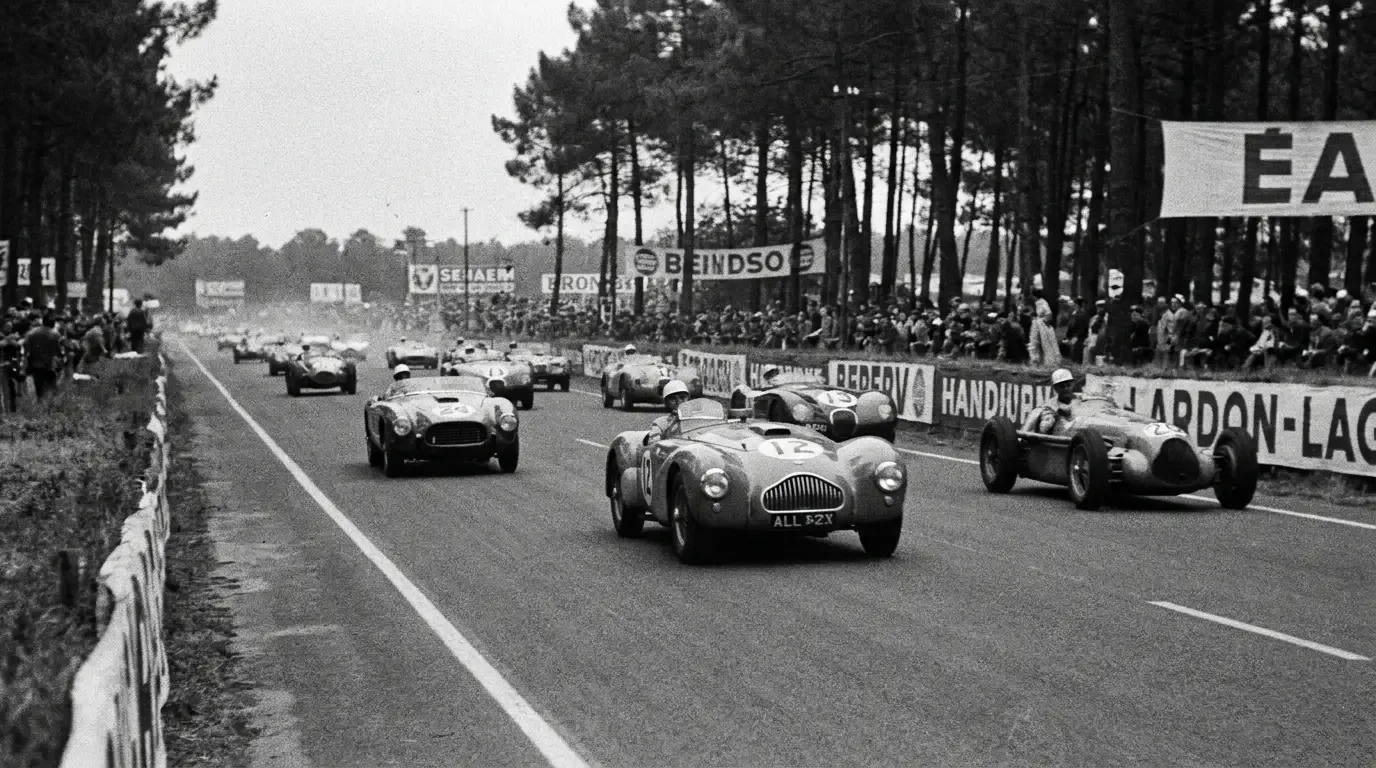
The races that put Duntov's driving credentials on record in a way that directly intersects with the Corvette story were his Le Mans entries for the British Allard company. After the war, Duntov had gone to England and talked his way into a relationship with Allard, both as the UK outlet for Ardun heads and as a driver. In 1952 he co-drove an Allard J2X at Le Mans; that car retired before the finish. In 1953 he was paired with Ray Merrick in an Allard JR, running as high as roughly 98 mph average before an engine failure on the Mulsanne Straight ended the effort after some 560 miles. Neither year produced a finish, but both put him in a car at the most demanding endurance race on the calendar, against factory efforts from major manufacturers, in the same year (1953) that Chevrolet unveiled the Corvette as a show car at the Motorama.
The contrast between what GM was offering as a show car and what a serious sports car needed to do under 24 hours of racing conditions was not abstract to Duntov. He had just driven it, and failed to finish it, which is its own kind of education about what components need to survive.
If you want to explore how that experience fed directly into his design philosophy, the deeper story covers his full engineering contribution to the car he came to define.
Class wins at Le Mans with Porsche
Duntov joined GM in May 1953, shortly after the Motorama debut, hired as a staff engineer. That did not end his outside driving. In 1954 and again in 1955, he returned to Le Mans behind the wheel of a Porsche 550 RS Spyder and took the 1.1-liter class win both years, finishing 14th overall in 1954 and 13th overall in 1955. These were his actual Le Mans finishes, arriving after two DNFs with Allard, and they are the closest thing to a genuine podium result his driving career produced. The line between factory racing and Duntov's own competitive instincts was never perfectly clean, and GM appears to have tolerated the outside program because of what it said about his judgment behind the wheel.
Pikes Peak and the speed run years
The Pikes Peak hillclimb was where Duntov made his most publicized driving statement on GM's behalf. On September 9, 1955, he drove a camouflaged pre-production 1956 Chevrolet sedan up the mountain and set a new stock/sedan-class record of roughly 17 minutes 24 seconds, cutting more than two minutes off the previous mark. This was not a simple weekend project. The car was prepared with performance modifications that Duntov had a hand in engineering, and the run demonstrated something GM needed demonstrated: that its cars could compete on a demanding course against serious machinery. The publicity value was real. So was the driving.
| Year | Event | Car / Entry | Result / Notes |
|---|---|---|---|
| 1930s | Motorcycle and oval-track events, Berlin | Motorcycle; "Bob" cycle-fendered special | Informal club-level competition; pre-Le Mans years |
| 1952 | Le Mans 24 Hours | Allard J2X | DNF |
| 1953 | Le Mans 24 Hours | Allard JR (co-driver Ray Merrick) | DNF (engine failure); same year as Corvette Motorama debut |
| 1954 | Le Mans 24 Hours | Porsche 550 RS Spyder | 1.1-liter class win; 14th overall |
| 1955 | Le Mans 24 Hours | Porsche 550 RS Spyder | 1.1-liter class win; 13th overall |
| 1955 | Pikes Peak Hillclimb | Camouflaged pre-production 1956 Chevrolet | Stock/sedan-class record, roughly 17:24 |
| 1956 | Daytona Speed Weeks | Modified '54 Corvette chassis with '56 body ("the mule") | 150.583 mph solo flying-mile run in January; 147.300 mph in official February competition |
The Daytona Speed Weeks runs deserve separate mention. In January 1956, Duntov took a modified '54 Corvette chassis carrying preview '56 body panels, known informally as "the mule," onto the Daytona beach course and clocked a solo 150.583 mph over the flying mile. At the official Speed Weeks event in February, running the same car against headwinds, he posted the fastest time in the modified class at 147.300 mph and 89.753 mph in the standing mile. These were not circuit races but they were timed, public, and competitive against other entries. GM was watching carefully how the public responded to Corvette performance claims. Duntov delivering actual numbers on Daytona beach gave those claims substance.
What the racing career built
It is tempting to overstate Duntov's racing career as a driver, and some accounts do. He was not a works driver for a major factory team over a sustained period, and his overall results were modest: two DNFs at Le Mans with Allard, followed by two class wins (not overall wins) at Le Mans with Porsche, plus record runs at Pikes Peak and Daytona. He never won Le Mans outright or a major American road race outright. What he was, consistently and consequentially, was a competent, experienced racing engineer who drove his own engineering work in competition and understood from the inside what a performance car needed to do.
That distinction matters. Duntov's value to Chevrolet was not his lap times. It was the fact that when he engineered a suspension change or specified a camshaft profile, he had personally felt what the car was doing at the limit. That is a different kind of knowledge than what comes from dyno sheets and telemetry, and it is rarer than it sounds. Most engineers of his generation did not race. Most racing drivers of his generation did not hold engineering degrees from German universities.
"Duntov's racing gave him something no amount of test-track time fully replaces: he had been in the car when things went wrong at speed, and he knew how much time a driver needs to react. That knowledge went straight into every suspension and handling decision he made for the Corvette."
— Patrick Walsh
By the time the fuel-injected 283 arrived in 1957 and the solid-lifter high-performance camshaft that bears his name became an option, the engineering philosophy was already fully formed. The Duntov cam was not a marketing exercise. It was an engineer who had raced specifying a grind that would let the engine breathe at high rpm in the way he knew a competition driver would use it.
The racing career ended as a primary pursuit when Duntov settled fully into his GM engineering role, though he remained active at the wheel in various capacities through the 1950s and into the 1960s, often in testing and development roles that kept him on circuits without formal competition entries. His last significant competitive driving was essentially woven into his engineering work, which is maybe the most honest summary of what the whole career had been: engineering expressed through driving, and driving refined through engineering.
Sources and notes
- Wikipedia: Zora Arkus-Duntov (confirmed the Allard Le Mans DNFs in 1952-53, the Porsche 550 RS Spyder class wins at Le Mans in 1954-55, the May 1953 GM hire date, and the Ardun cylinder head origin)
- OldRacingCars.com driver profile (corroborated the Le Mans class wins and Pikes Peak speed record summary)
- CorvSport: 1956 Daytona Beach Speed Weeks (confirmed the "mule" car identity, the 150.583 mph January run, and the 147.300 mph/89.753 mph official February results)
- Mac's Motor City Garage: Duntov and the 1956 Chevy conquer Pikes Peak (confirmed the September 9, 1955 date and roughly 17:24 sedan-class record)
- Audrain Auto Museum: 1953 Allard J2X (background on the Allard J2X/JR models Duntov raced at Le Mans)
- Curbside Classic: 1957 Chevrolet Fuel-Injected 283 V8 (confirmed the 1957 introduction of the Duntov cam and fuel-injected 283)