The man who saved the Corvette
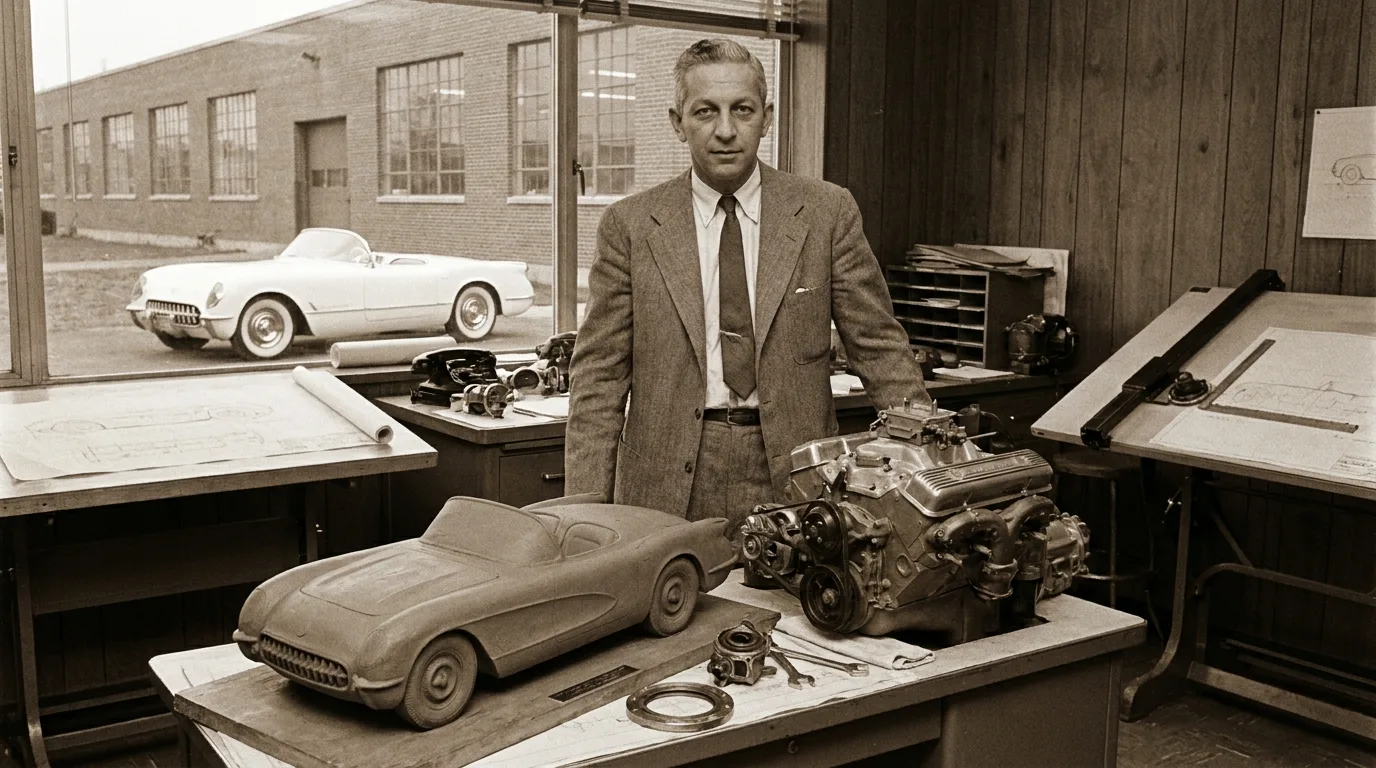
There is a version of history where the Corvette quietly disappears after 1955, killed by slow sales, cheap plastic that warped in the sun, and a corporate culture that never fully understood what it had built. Zora Arkus-Duntov is the reason that version never happened. He arrived at General Motors in 1953 with a racing pedigree most American engineers could barely imagine, and he spent the next two decades making the Corvette something worth caring about. If you want to understand why the Corvette became America's sports car and stayed that way, the zora arkus duntov story starts here.
Born in Brussels on December 25, 1909, to Russian Jewish parents, Arkus-Duntov grew up across Europe, studied engineering in Berlin, and competed in some of the most demanding motorsport events on the continent before emigrating to the United States during World War II. By the time he saw the Corvette show car at the GM Motorama in January 1953, he had already raced at Le Mans and developed the Ardun overhead-valve conversion kit for the Ford flathead. He knew what a serious performance car needed. The Corvette, as shown, was not one.
Engineering background and early racing career
Arkus-Duntov graduated from the Technische Hochschule Charlottenburg in Berlin in 1934. He worked as an engineer in various capacities across Europe before turning seriously to motorsport. He and his brother Yura co-founded the Ardun Mechanical Corporation in 1942, and by 1947 the company was producing aluminum overhead-valve cylinder head conversions for the Ford flathead V8, which gave hot rodders and racers a meaningful power boost from an engine that was already everywhere. The Ardun heads became well known in American racing circles, which is part of why his name carried weight when he approached GM.
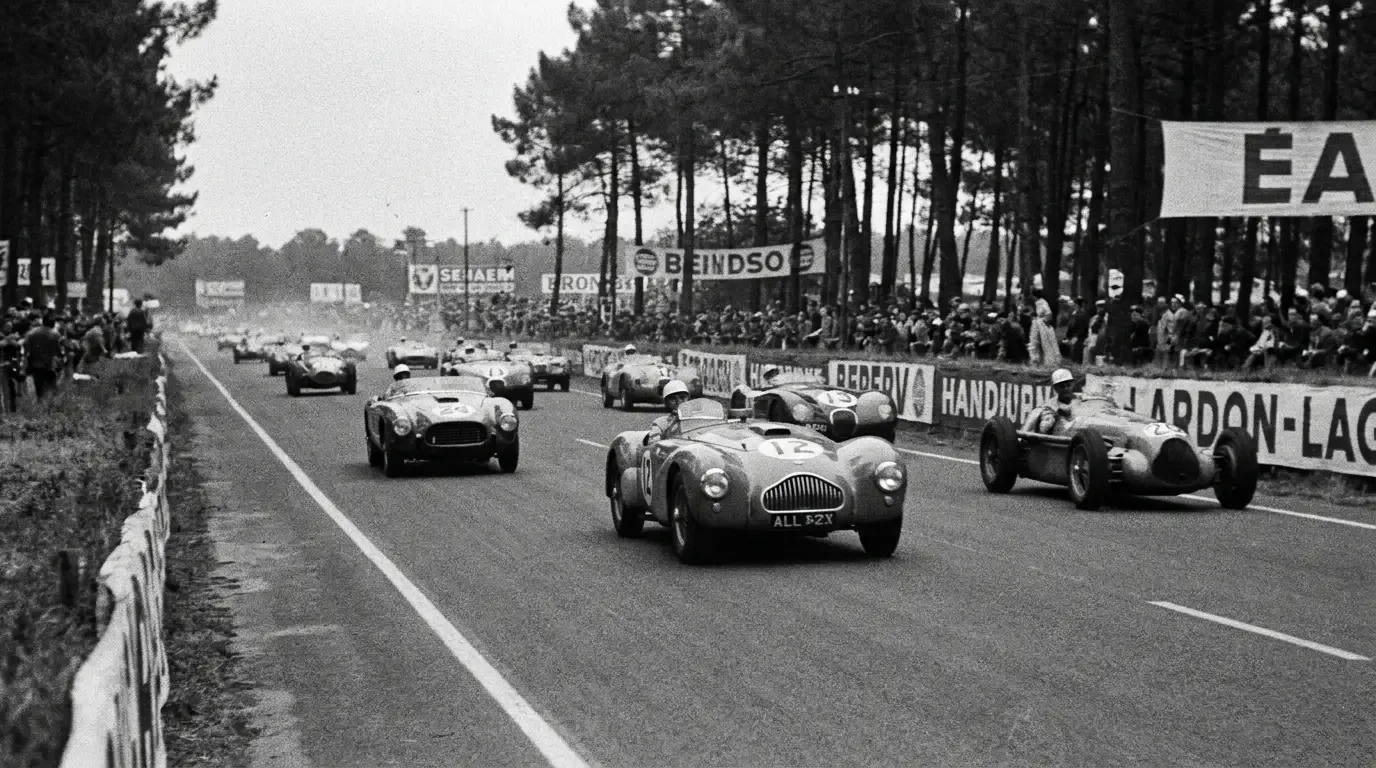
His racing record was real. He competed at Le Mans four times in the early 1950s, taking class wins in a Porsche 550 RS Spyder in 1954 and 1955, and in September 1955 he set a sedan-class stock car record at the Pikes Peak Hill Climb, driving a camouflaged pre-production 1956 Chevrolet 210 to the summit in roughly 17 minutes, 24 seconds, which was not an accident. He understood how to build a car for competitive use and how to demonstrate its capabilities in public in a way that generated attention. GM eventually came to value that second skill as much as the first. To understand how his racing shaped his engineering philosophy, read the related story on his competition career.
Joining GM and reshaping the Corvette
Arkus-Duntov joined Chevrolet's research and development staff in May 1953. His formal title changed over the years, but his informal mission stayed constant: make the Corvette a car that serious drivers would take seriously. The first-generation Corvette used a six-cylinder engine because the V8 small-block had not yet arrived. When it did, in 1955, sales were already bad enough that GM leadership was actively discussing cancellation.
The reprieve came partly from Ford's two-seat Thunderbird entering the market in 1955, which gave Chevrolet an internal argument for keeping a two-seater alive. But the engineering credibility came from Duntov. He pushed for the fuel-injected 283 cubic-inch V8 that appeared in 1957, and the top EL-code version, with 10.5:1 compression, was rated at 283 horsepower at 6,200 rpm, an extraordinary one-horsepower-per-cubic-inch figure for the time that gave the Corvette something to advertise beyond its fiberglass body. Only 1,040 fuel-injected Corvettes were built for 1957, and roughly 756 of those carried the 283-horsepower engine, with the rest fitted with a milder 250-horsepower version. That one engine, that one claim, changed the conversation about what the car was.
He also worked on chassis development and suspension tuning. The handling of the early Corvette was a known weakness, and Duntov addressed it systematically. By the late 1950s the car handled well enough to compete with European sports cars, which was the point. The broader story of this era is told in the Corvette from the start, which covers the entire arc from 1953 forward.
"Duntov's real contribution wasn't any single engine or any single lap time. It was the insistence, year after year, that the Corvette be judged against the best sports cars in the world and not found embarrassing. That standard is why the car is still here."
— Patrick Walsh
The C2 era and the Sting Ray
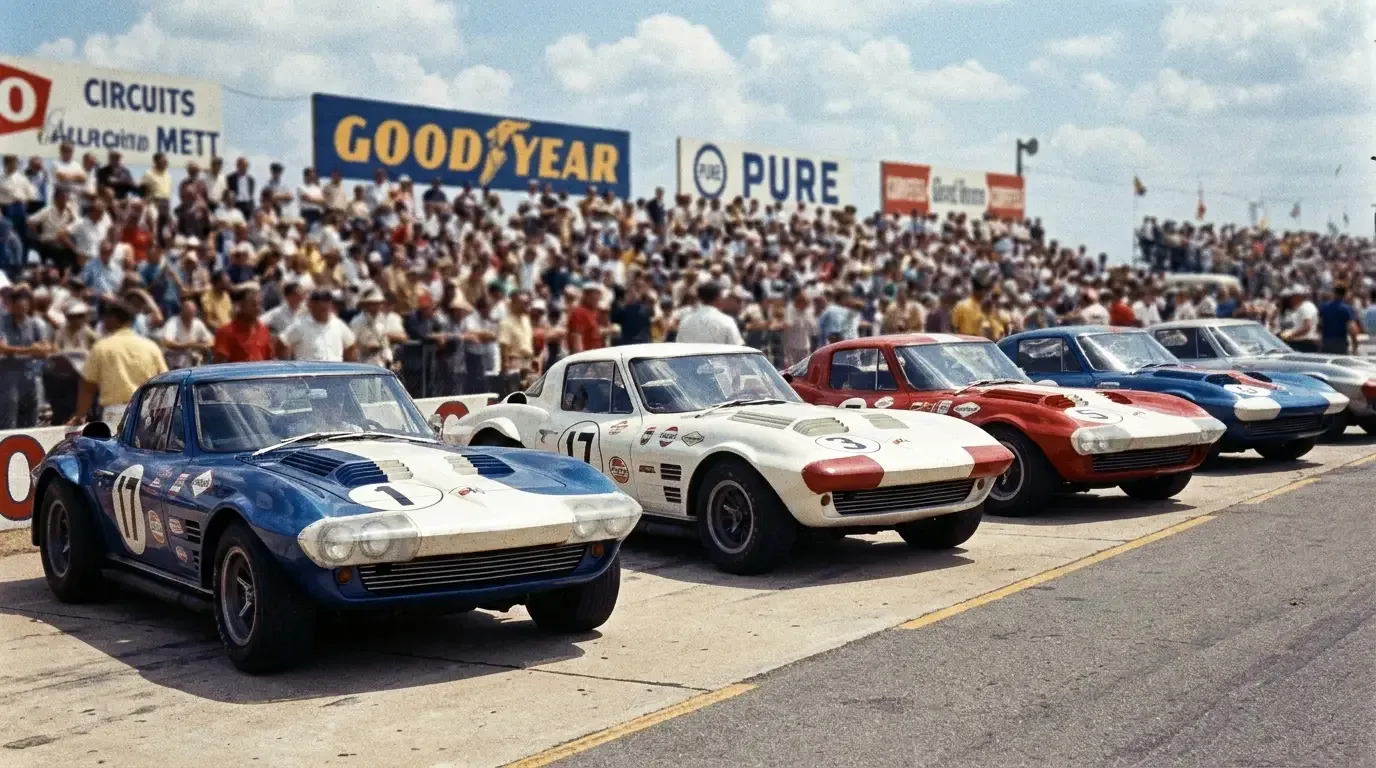
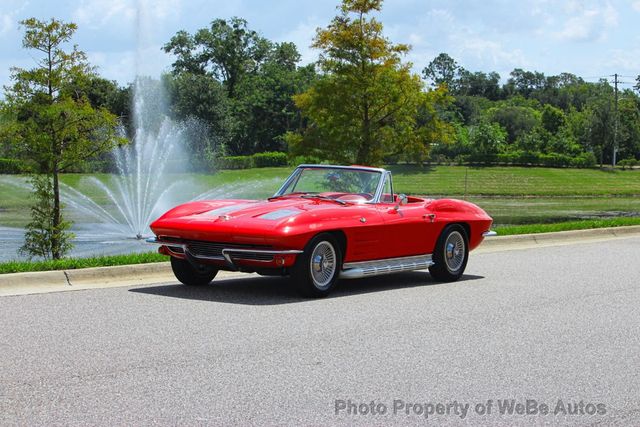
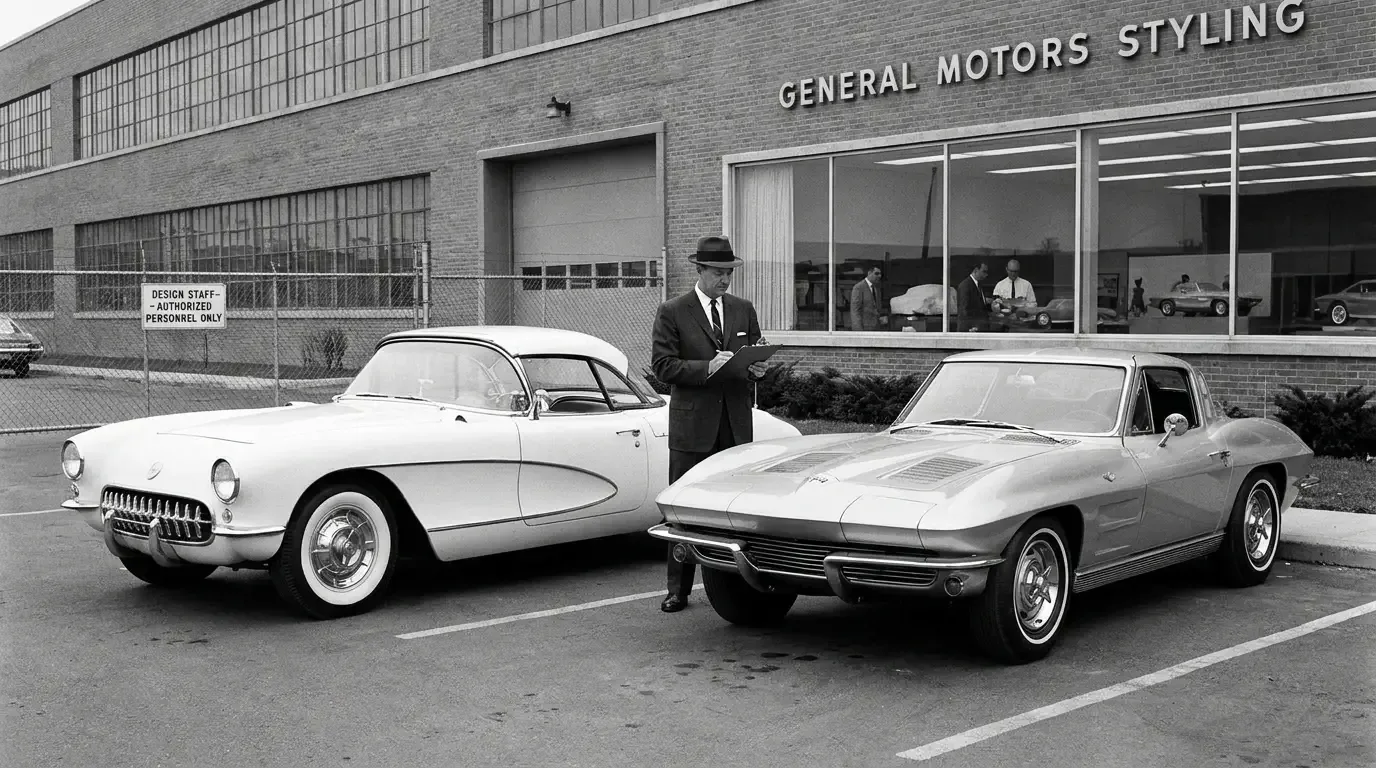
The second-generation Corvette, introduced for 1963, is widely considered the design and engineering peak of the model's first three decades. Arkus-Duntov was deeply involved in its development. The independent rear suspension that debuted on the C2 was a priority for him; the solid rear axle on the earlier cars was a genuine performance limitation, and he had argued for the change for years. The 1963 split rear window coupe became an immediate collector piece, though Duntov himself reportedly found the rear visibility poor enough to push for removing the divider after one model year.
Performance options expanded significantly through the C2 years. The big-block engines arrived in 1965 with displacements and power outputs that put the Corvette firmly in a different category from the European sports cars it had once tried to emulate. The L88, a racing-oriented big-block variant produced only from 1967 through 1969, is among the most sought-after Corvettes today. Chevrolet built roughly 20 L88s in 1967, about 80 in 1968, and about 116 in 1969, for a total of around 216 cars over the three years, and examples with full documentation command prices far above comparably configured cars.
Legacy and the end of an era
Arkus-Duntov retired from General Motors in 1975. The mid-engine Corvette he had long advocated for did not appear during his tenure; GM came back to that idea decades later with the C8, which arrived for the 2020 model year. He died in April 1996 at age 86. The Corvette he helped build had by then survived production cancellation threats, emissions regulations that gutted its engine options in the early 1970s, and a long stretch where the car was faster in concept than in execution. It had also survived long enough to become exactly what he argued it could be in 1953: a car with genuine international credibility.
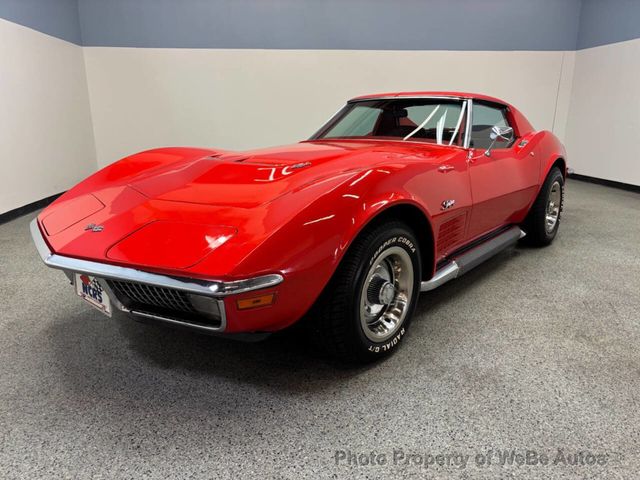
His name appears on the Corvette Hall of Fame, on the wall of the National Corvette Museum, and on the short list of individuals who changed the direction of an American car through sustained personal effort. Collectors who care about where the Corvette came from tend to know his biography in some detail. Collectors who only care about driving one sometimes encounter his influence without knowing it, in the suspension geometry, the engine options, the general posture that the car takes toward performance. If you are looking at classic Corvette for sale, the cars from his years at GM, roughly 1953 through 1975, represent the period his engineering shaped most directly.
| Period | Key contribution | Corvette generation |
|---|---|---|
| 1953 | Joined GM; internal memo advocating for performance focus | C1 (pre-production) |
| 1955 | Pikes Peak Hill Climb sedan-class record (1956 Chevrolet 210); chassis and suspension development | C1 |
| 1957 | Fuel-injected 283 V8 development (283 hp, EL code) | C1 |
| 1963 | Independent rear suspension; Sting Ray chassis | C2 |
| 1965 | Big-block engine integration; L88 development | C2 |
| 1968-1975 | C3 performance direction; emissions-era engineering | C3 |
| 1975 | Retirement from GM after 22 years | C3 |
Sources and notes
- Wikipedia: Zora Arkus-Duntov confirmed birth date and place, Charlottenburg graduation year, Le Mans race results by year, Ardun Mechanical Corporation founding, GM hire date, and retirement and death dates.
- National Corvette Museum: Zora Arkus-Duntov confirmed his Corvette Hall of Fame induction and role at GM.
- Hagerty Media: the 1957 fuel-injected 283 Corvette confirmed the 283-horsepower rating, production split with the 250-horsepower version, and total 1957 fuel-injection production count.
- Corvette Action Center: L88 production numbers confirmed annual L88 production for 1967, 1968, and 1969.
- Mac's Motor City Garage: Duntov and the 1956 Chevy at Pikes Peak confirmed the September 1955 sedan-class Pikes Peak record set in a pre-production 1956 Chevrolet 210, not a Corvette.
- Curbside Classic: 1957 Chevrolet fuel-injected 283 V8 corroborated the one-horsepower-per-cubic-inch rating and engine configuration.