There were supposed to be 125 of them. Chevrolet's racing division had the build sheets ready, the lightweight bodies were being fabricated, and Zora Arkus-Duntov had the engineering behind it to beat Ferrari outright at Le Mans. Then GM's corporate management pulled the plug in January 1963, and the entire program collapsed down to five cars. Those five became one of the most talked-about small production runs in American racing history.
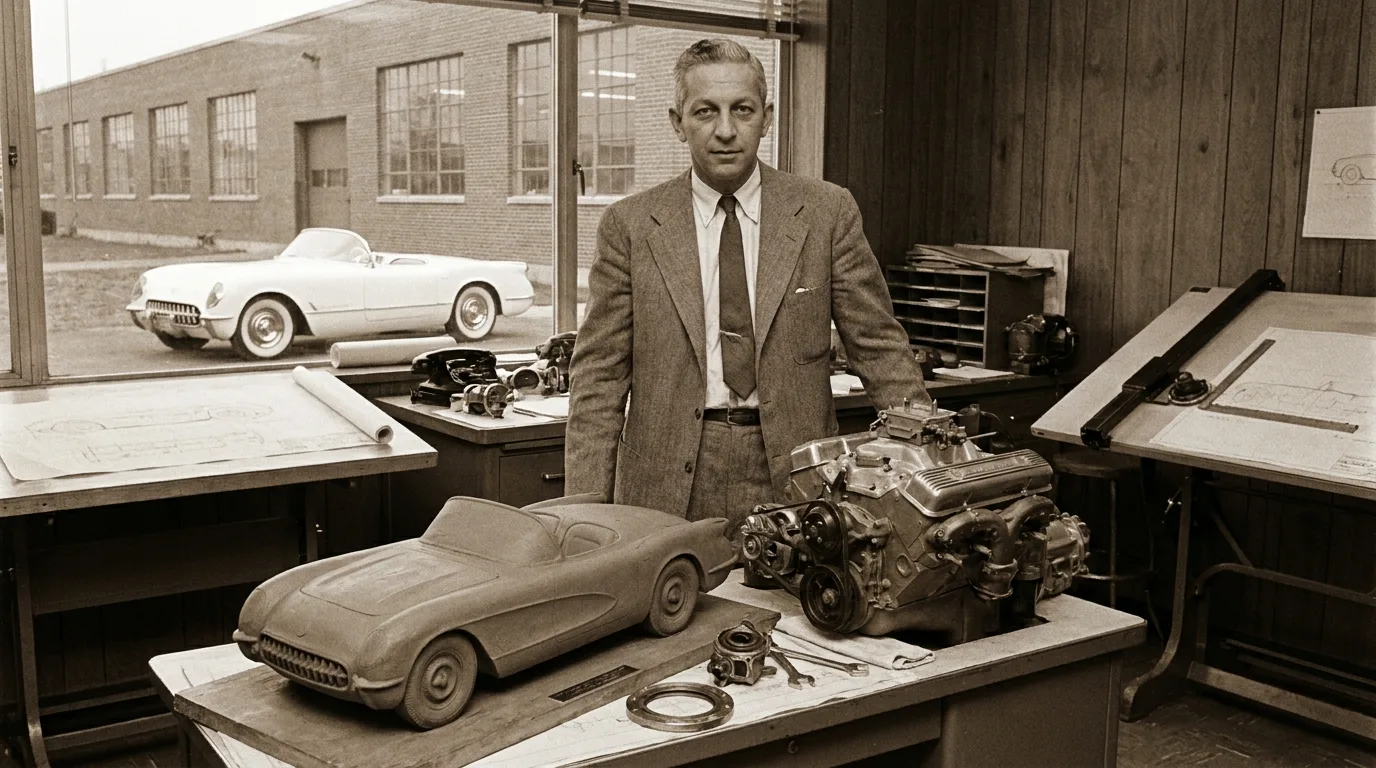
The Grand Sport story is inseparable from Zora's story. For the full picture of the man behind this program, Zora Arkus-Duntov: Father of the Corvette traces how he shaped the car from the ground up. What this piece covers is what happened when he tried to build a racing weapon out of it, and why only five cars ever existed.
The program that almost was
The Automobile Manufacturers Association had a gentlemen's agreement in place since 1957: no factory racing. GM, Ford, and Chrysler all signed it. The problem was that Ford ignored it almost immediately, and by 1962 the Cobra was being campaigned aggressively with support that was barely hidden. Duntov had been watching this with obvious frustration.
His solution was the Grand Sport. The plan called for 125 cars to be built, which would have qualified them for FIA GT class competition. The cars would shed weight wherever possible: fiberglass body panels that were much thinner than production Corvette pieces, aluminum body components, drilled frame rails, a stripped interior. The target weight was around 2,000 pounds, compared to the production Corvette's roughly 3,000 pounds. The engine would be a new small-block variant displacing 377 cubic inches, built to produce competitive power output.
Construction started in late 1962. By January 1963, GM's corporate leadership had found out about the program and ordered it stopped. The five cars that existed at that point were the entire output. Three were completed coupes; two were roadsters converted from coupe bodies later. Rather than destroy them or let them sit in a warehouse, Duntov found a way to get them into the hands of privateers who could campaign them through 1963 and 1964.
The five cars and where they went
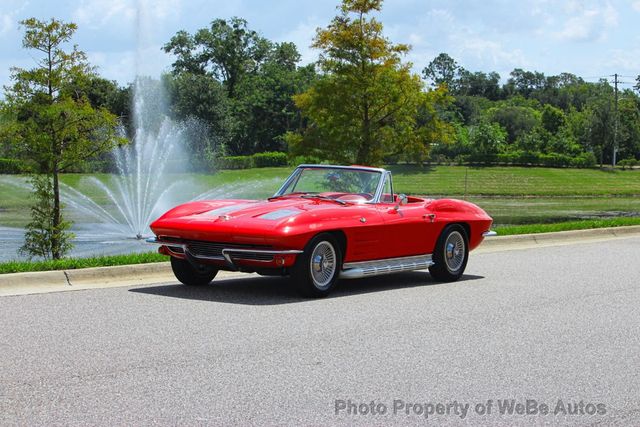
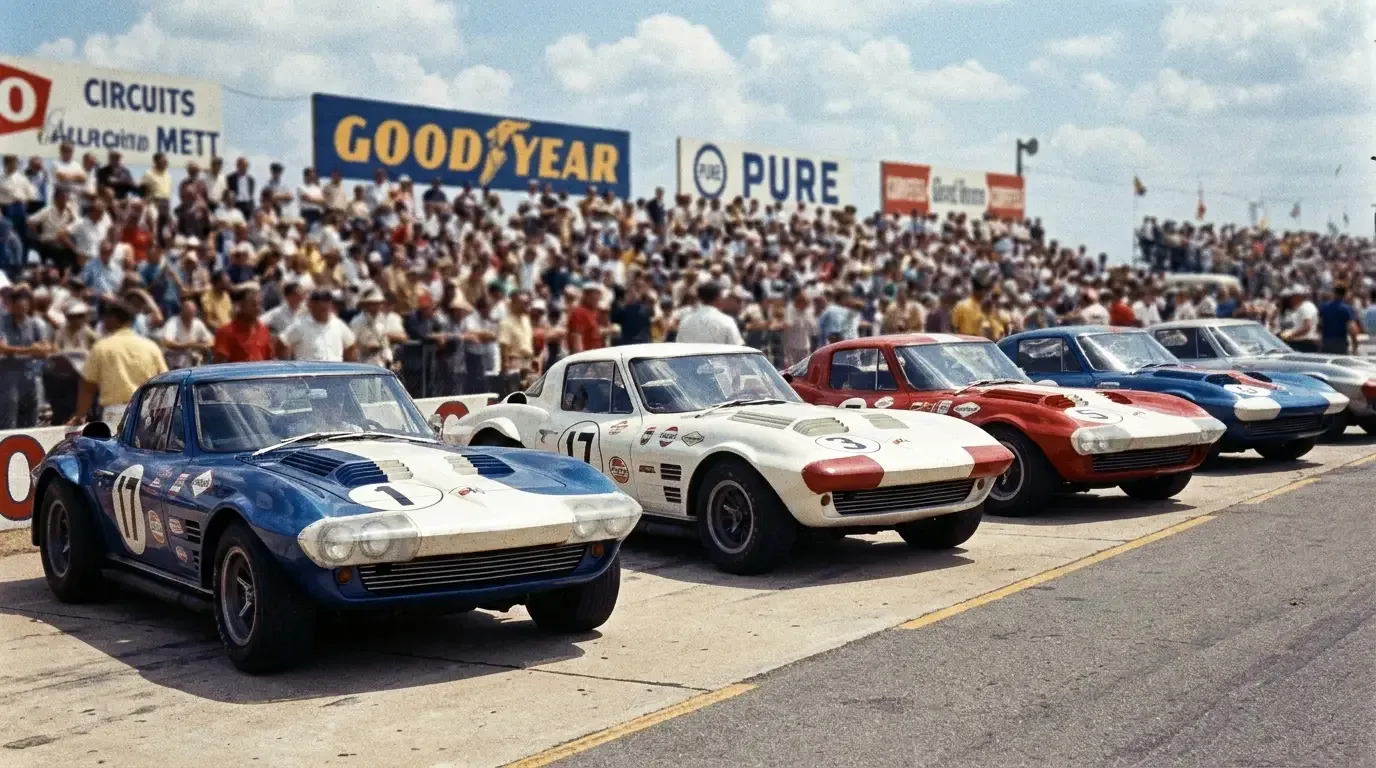
The chassis numbers ran from GS 001 through GS 005. Three were built as coupes with the distinctive wide body and prominent air intakes cut into the front fenders. All five eventually saw road racing in period, though their configurations changed significantly as the cars were modified by their privateer owners.
Dick Doane of Doane Racing received GS 003. Grady Davis, a Gulf Oil executive, was loaned GS 004, which he had driven by Dr. Dick Thompson in SCCA C/Modified events, including a win at Watkins Glen in August 1963. Delmo Johnson subsequently campaigned GS 004 as well. The three coupes (GS 003, 004, and 005) also ran together at Nassau Speed Week in late 1963 under the banner of John Mecom's team, giving spectators a rare chance to see multiple examples on the same course.
Roger Penske, then at the beginning of his career as an owner and operator, drove one of the Mecom Grand Sports at Nassau Speed Week in December 1963, finishing third in the Governor's Cup race. GS 001 and GS 002, the two roadsters retained by GM, were sold to Penske in early 1966; he entered GS 001 at Sebring that year. The cars were quick but fragile in their early configuration. The engines were experimental, and the privateer teams didn't always have factory support to keep them running through long-distance events.
By 1964 the roadster conversions were complete. The two coupes selected for conversion had their rooflines cut and the bodies reshaped, giving the five-car fleet a mix of body styles. The roadsters reportedly handled differently in some conditions, though the drivers of the era had varied opinions on which configuration they preferred.
| Detail | Specification |
|---|---|
| Total built | 5 cars (3 coupes, 2 roadsters converted) |
| Base chassis | 1963 Corvette Sting Ray (heavily modified) |
| Target weight | ~2,000 lbs (approximately 1,980 lbs per factory spec) |
| Engine displacement | 377 cu in all-aluminum small-block (later Nassau specification) |
| Program cancelled | January 1963 |
| Planned production | 125 (FIA GT homologation requirement) |
Racing history through 1966
The Grand Sports ran through the mid-1960s in various configurations and with various engines fitted by their owners. The original powerplant was replaced in at least some cars as the teams tried different approaches to making them competitive. Big-block engines found their way under some hoods, which changed the character of the cars considerably from what Duntov had originally designed.
Sebring 1966 brought the Grand Sports back into the spotlight. By then the cars had been through years of development and modification, and they were no longer the factory-spec machines that had left GM in 1963. Some had been fitted with larger-displacement engines. Body modifications had accumulated. The cars that showed up at Sebring that year were, in a sense, evolving prototypes that had grown organically through privateer development rather than factory engineering.
The racing career of the five cars stands as a record of what American privateer racing looked like in that period. There was improvisation, financial constraint, mechanical ingenuity, and occasional brilliance mixed with frustrating reliability issues. If you want to understand what happened after the Grand Sports, and how Duntov's legacy continued through the Corvette program, the next in the series covers the full arc of his time at Chevrolet.
"Five cars built before someone upstairs said stop. Duntov found a way to get them racing anyway. That's the whole story of how he operated at Chevrolet for thirty years."
— Patrick Walsh
Where the cars are now
All five Grand Sports survived, which is not something you can say about many period racing cars. This is partly because their significance was recognized relatively early, and partly because the collector market for Corvette race history has always been strong enough to make sure the important cars get proper care.
GS 001 and GS 002 are in private collections. The National Corvette Museum in Bowling Green has hosted Grand Sport examples for display over the years. Several of the cars have appeared at the Monterey auctions and Pebble Beach events. When they come up for sale, which is rarely, they represent some of the highest transaction values in Corvette history. A Grand Sport changing hands is news in the collector community, and the provenance documentation that goes with each car has been researched extensively by NCRS and independent historians.
The values reflect the story. These are not just old race cars. They are the physical record of what Zora Duntov tried to do when GM said no, and what a small group of privateer racers accomplished with what they were handed. That combination of factory ambition and real-world competition history is exactly what the serious collector market responds to.
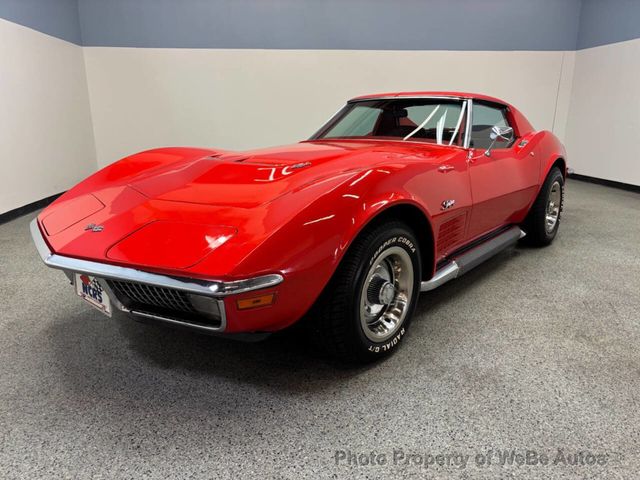
If the Grand Sports have put the Corvette on your radar as a collector car, browsing classic Corvette for sale is a good place to start understanding the breadth of the market, from driver-quality C1s through the C2 era that produced these race cars.
Why five cars made history
The Grand Sport program failed on its original terms. It never ran at Le Mans. It never homologated for FIA GT class. The 125-car production run never happened. By the measures Duntov cared about, the January 1963 cancellation was a genuine defeat.
What remained was five hand-built cars that carried the full ambition of the program in their engineering and construction, and a racing record assembled by private teams who made the most of what they had. The cars raced through the mid-1960s, modified and developed by their owners, and survived into the modern era as documented pieces of American motorsport history.
That is a specific kind of significance. Not factory victories, not championship titles, not the sales success that would have come from homologation. Just five cars, built before the order came down to stop, that got out into the world and ran. For anyone who follows the history of the Corvette as a performance car, the Grand Sport program is where Duntov's ambitions were clearest and where the corporate reality of American racing politics was most visible.
Sources and notes
- Corvette Action Center: 1963 Grand Sport Specifications -- confirmed weight of approximately 1,980 lbs and 377 cu in engine
- Chevy Hardcore: Corvette Chronicles -- confirmed GS 003 to Dick Doane, GS 004 to Grady Davis, and Mecom team history
- Classic Car Collector News: Grand Sport history -- confirmed chassis distribution, Nassau Speed Week entries, and Penske's 1966 purchase of GS 001 and GS 002
- Rick Carey Collector Car Reports: GS 002 history -- confirmed Roger Penske acquired GS 001 and GS 002 in 1966 and raced GS 001 at Sebring
- Jalopnik: The 1957 AMA Racing Ban -- confirmed the gentlemen's agreement and its terms
- ConceptCarz: 1963 Grand Sport Lightweight -- confirmed 377 cu in all-aluminum engine rated at 550 hp and overall chassis details