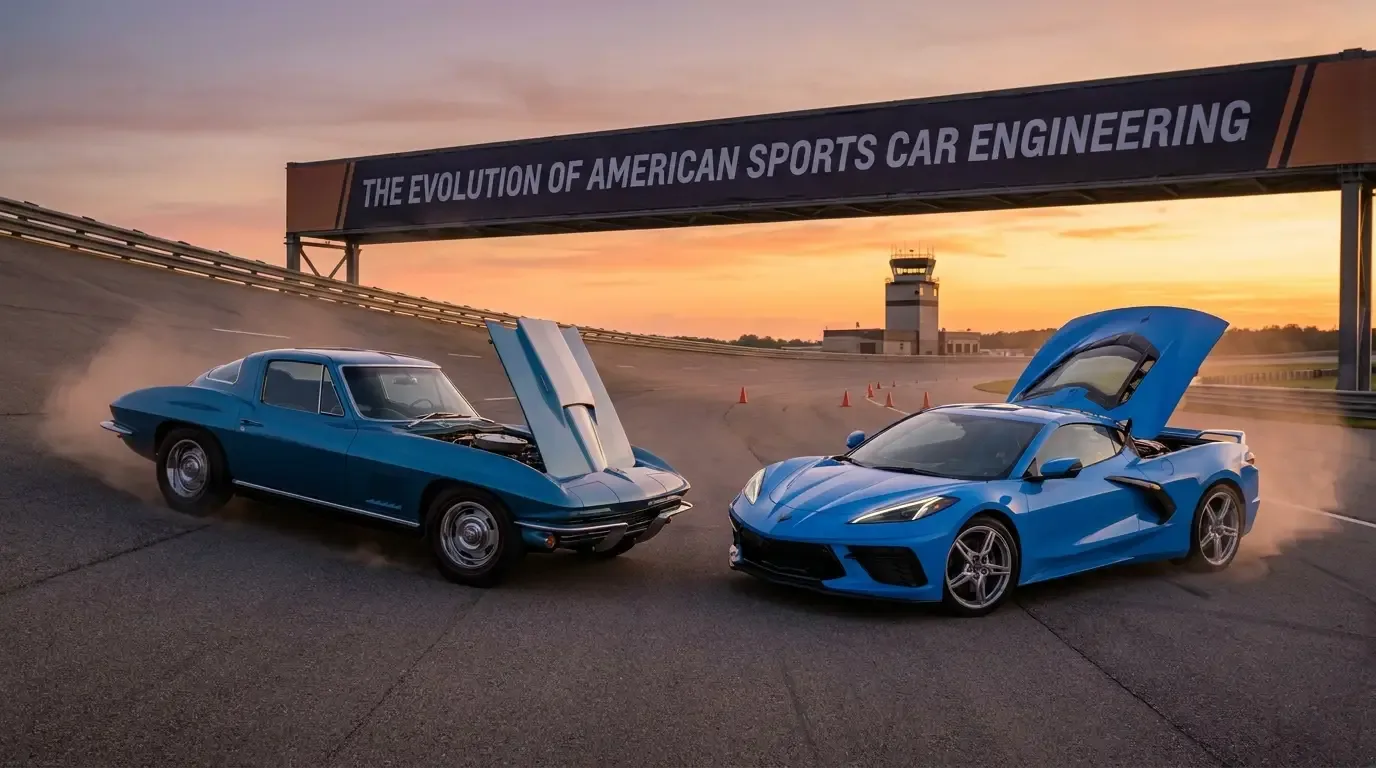
The Corvette has been front-engined for most of its production life, but the idea of moving the engine behind the driver is almost as old as the car itself. The engineering arguments were sound from the beginning. The racing results confirmed them. What took so long was the political and commercial reality of selling a car that looked like nothing General Motors had ever sold before. The story of how that shift finally happened runs through six decades of concept work, cancelled projects, and engineering stubbornness that eventually won out.
To understand where the C8 came from, you have to start with the experimental vehicles that laid the groundwork. Zora Arkus-Duntov was thinking about mid-engine placement long before most American engineers considered it a serious option for a production car.
The CERV I and the first proof of concept
The Chevrolet Engineering Research Vehicle No. 1, built in 1959, was Duntov's personal argument in metal. It was a single-seat open-wheel car, roughly Formula-car in layout, with a small-block V8 mounted amidships and the driver seated ahead of it. The CERV I was not a production proposal. It was a test bed, built to understand how a mid-engine Corvette might actually behave at speed.
What the CERV I demonstrated at Riverside and on GM's test track at Milford in the early 1960s was that the weight distribution changed everything. With the heavy mass centered between the axles rather than cantilevered out front, the car responded differently, recovered from slides differently, and could be pushed harder before it reached its limits. Duntov knew this from European racing. The CERV I gave him American data to back it up.
CERV II and the road not taken
The CERV II, built in 1964, went further. This was a two-seat car with all-wheel drive, a single 377-cubic-inch aluminum V8 driving front and rear through an ingenious dual-transmission arrangement, and bodywork that looked closer to a production prototype than an open experiment. It was intended to demonstrate that a mid-engine layout could support a real vehicle with real passenger space. The engineering behind it was sophisticated enough that GM seriously considered entering it at Le Mans, though that plan was shelved.
By the mid-1960s, Duntov was pushing hard for a mid-engine production Corvette. The timing seemed right. Ford was fielding the GT40. Ferrari's mid-engine road cars were generating serious attention. The argument for a major layout change was coherent and backed by racing evidence. GM management said no, and the reasons were not primarily technical. Manufacturing retooling costs were real. Dealer reception was uncertain. The front-engine Corvette was selling. In the collector car world you can read more on the history of how those commercial pressures shaped every generation of the car.
The mid-engine concept did not die. It went underground, resurfacing as an internal study roughly once per decade, each time getting closer before running into the same institutional resistance.
| Vehicle | Year built | Layout | Purpose |
|---|---|---|---|
| CERV I | 1959 | Mid-engine, RWD, single seat | Handling research, speed testing |
| CERV II | 1964 | Mid-engine, AWD, two seat | Production feasibility study |
| Aerovette (XP-882) | 1973 | Mid-engine, RWD | Proposed C4 basis, cancelled |
| CERV III | 1990 | Mid-engine, AWD | Supercar study, not produced |
| C8 Stingray | 2020 | Mid-engine, RWD | Production |
The Aerovette and the closest call before the C8
The XP-882 project in the early 1970s produced a car that went public as the Aerovette in 1973. It was a proper mid-engine show car with production-feasible proportions, a transverse-mounted V8, and styling that looked like something GM could actually build. John DeLorean was reportedly in favor of taking it to production. The car appeared on magazine covers. Public response was strong.
It did not happen. DeLorean left GM in 1973. The C3 was still generating revenue. When the decision point came for the C4, the accountants and the engineers who would have to retool production facilities looked at the numbers and the conventional layout won again. The Aerovette went into the GM Heritage Center collection, where it stands as the clearest reminder of how close the idea came to production decades before it finally happened.
"The CERV vehicles were not show cars. They were working documents. Every one of them was Duntov making the engineering case in language that management could drive, not just read in a memo. The fact that it took until 2020 to get a production mid-engine Corvette doesn't mean the case wasn't made clearly. It means the institutional barriers were real."
— Tom Ramirez
How the C8 finally crossed the line
The mid-engine layout that launched with the 2020 C8 Stingray was the result of engineering work that had been accumulating since the C7 was still in development. The team led by Tadge Juechter spent years building the business and engineering case simultaneously. The key difference from earlier attempts was that GM's manufacturing footprint had been rationalized enough that the Bowling Green plant could absorb the layout change without the retooling costs that had killed previous proposals.
The C8's 6.2-liter LT2 V8, mounted behind the driver, produces 490 horsepower in base Stingray trim (495 hp with the optional performance exhaust). The Z51 package adds cooling, brakes, and aerodynamic changes that improve track performance without touching the engine output. The more significant engineering change from the C7 is the eight-speed dual-clutch transmission replacing the traditional manual. That decision was controversial in the Corvette community and reflects how completely the car's character shifted with the layout change.
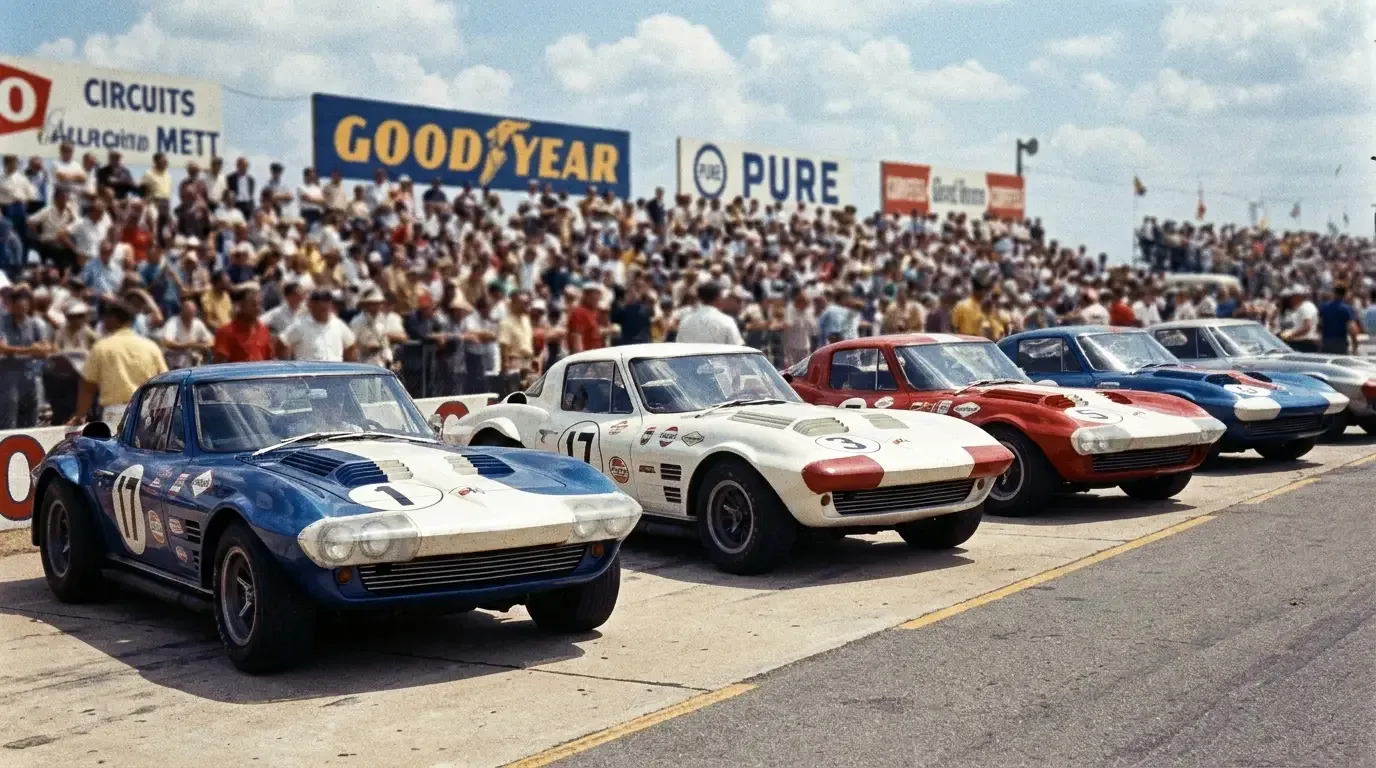
For historical context on how the Grand Sport program fits into this engineering lineage, the related article covers how racing priorities shaped the Corvette's development at the moments when management was willing to listen.
What the CERV legacy means for collectors
The CERV vehicles themselves are not collectible in any conventional sense. They are factory property, held by GM, and none of them have ever changed hands at public auction. What they represent for collectors is a documented engineering lineage that makes the C8 something more than a marketing exercise in catching Ferrari. The mid-engine Corvette arrived backed by sixty years of internal research, cancelled proposals, and persistent advocacy from engineers who believed the layout was right even when management disagreed.
For C8 values, the early production cars from model year 2020 are already attracting attention as the first year of a new era. That said, the collector market for C8 is still forming. Low-mileage early examples are being held by buyers who see the layout change as historically significant, but hammer prices at auction have varied considerably depending on options and condition. The Z06 and ZR1 variants that followed will likely carry stronger long-term collector interest than base Stingrays, based on how the C7 market has developed by generation.
The practical lesson from the CERV history is that the mid-engine Corvette was not a sudden decision. It was the end of a very long argument. That persistence is what makes the C8's engineering coherent rather than rushed. The car works because the people who built it had been thinking about it for a long time before they were allowed to build it.
Sources and notes
- Wikipedia: Chevrolet Engineering Research Vehicle -- CERV I built 1959, CERV II built 1964, single V8 engine in CERV II with dual-transmission AWD
- CorvetteForum: CERV I -- 206 mph at GM Milford Proving Grounds, public debut at Riverside 1960
- Wikipedia: Chevrolet Aerovette -- XP-882/XP-895 development timeline, DeLorean's role, program cancellation
- National Corvette Museum: 2020 Corvette specs -- LT2 V8 490 hp base, 495 hp with performance exhaust, Z51 package details
- GM Authority: CERV III 1990 -- mid-engine AWD supercar study, 650 hp twin-turbo LT5 V8, never produced
- Hagerty: DeLorean and the mid-engine Corvette -- DeLorean's support for and departure from the Aerovette program