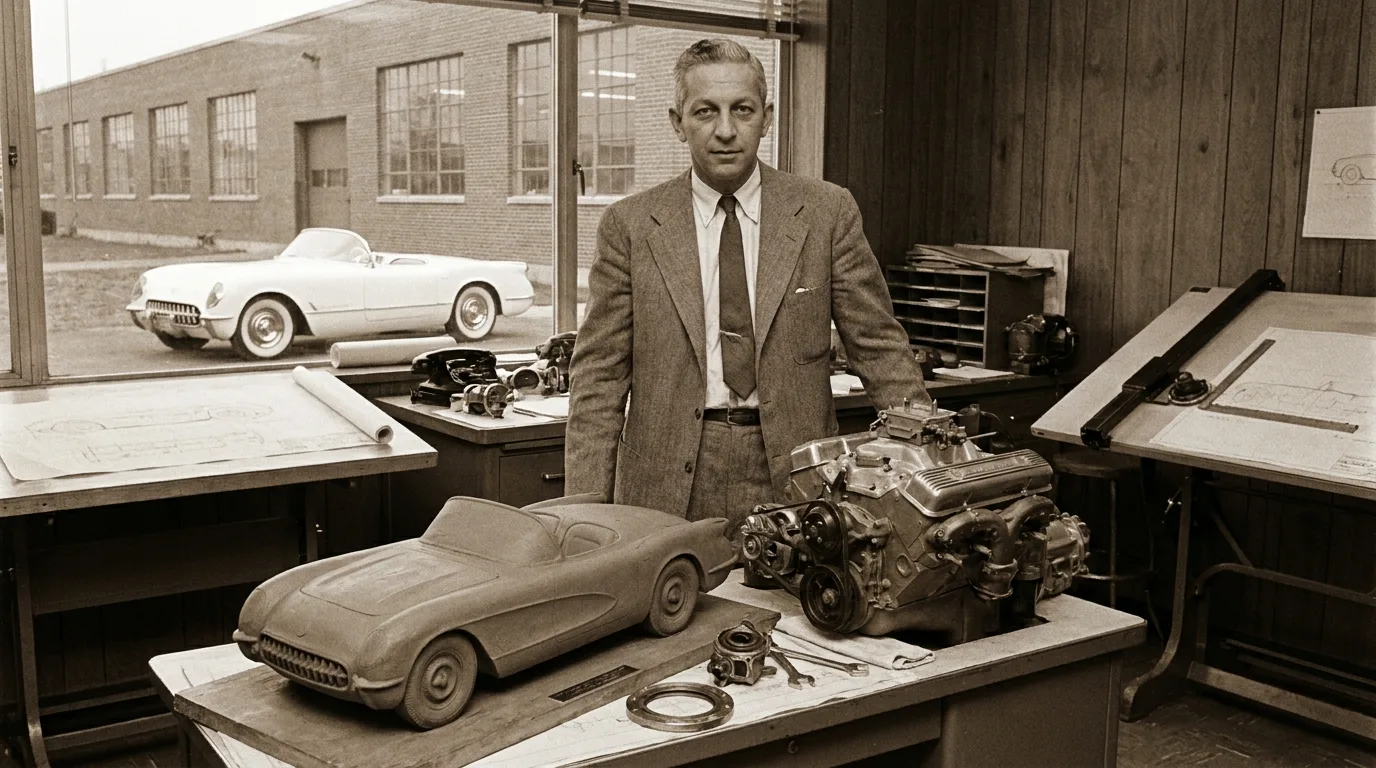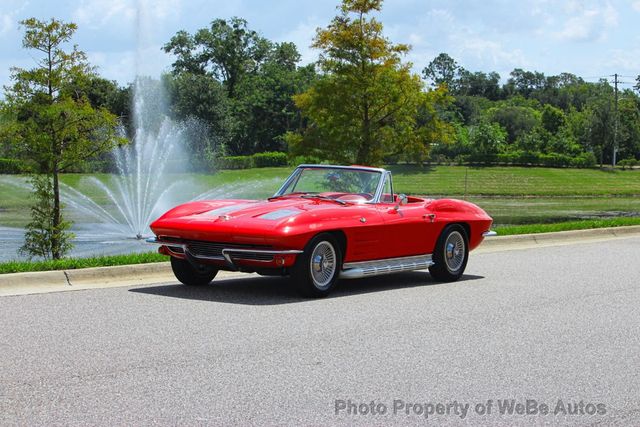
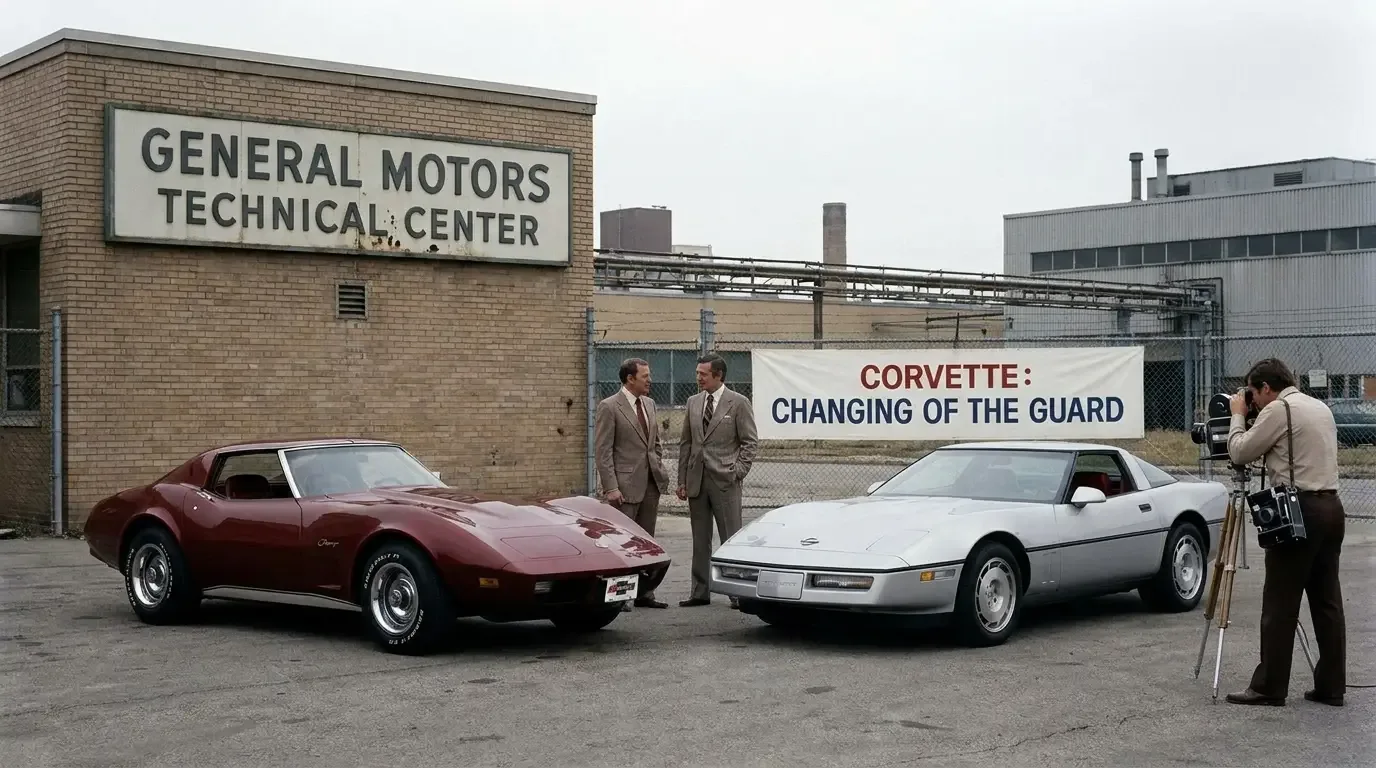
There is a story about Zora Arkus-Duntov that doesn't get told often enough. Not the one about the Corvette saving itself in 1953, and not the one about the 1956 Pikes Peak run. This one happens at the end, in 1975, when Zora handed over his office and his unfinished arguments to a man named Dave McLellan. Most histories treat that handoff as a footnote. It wasn't.
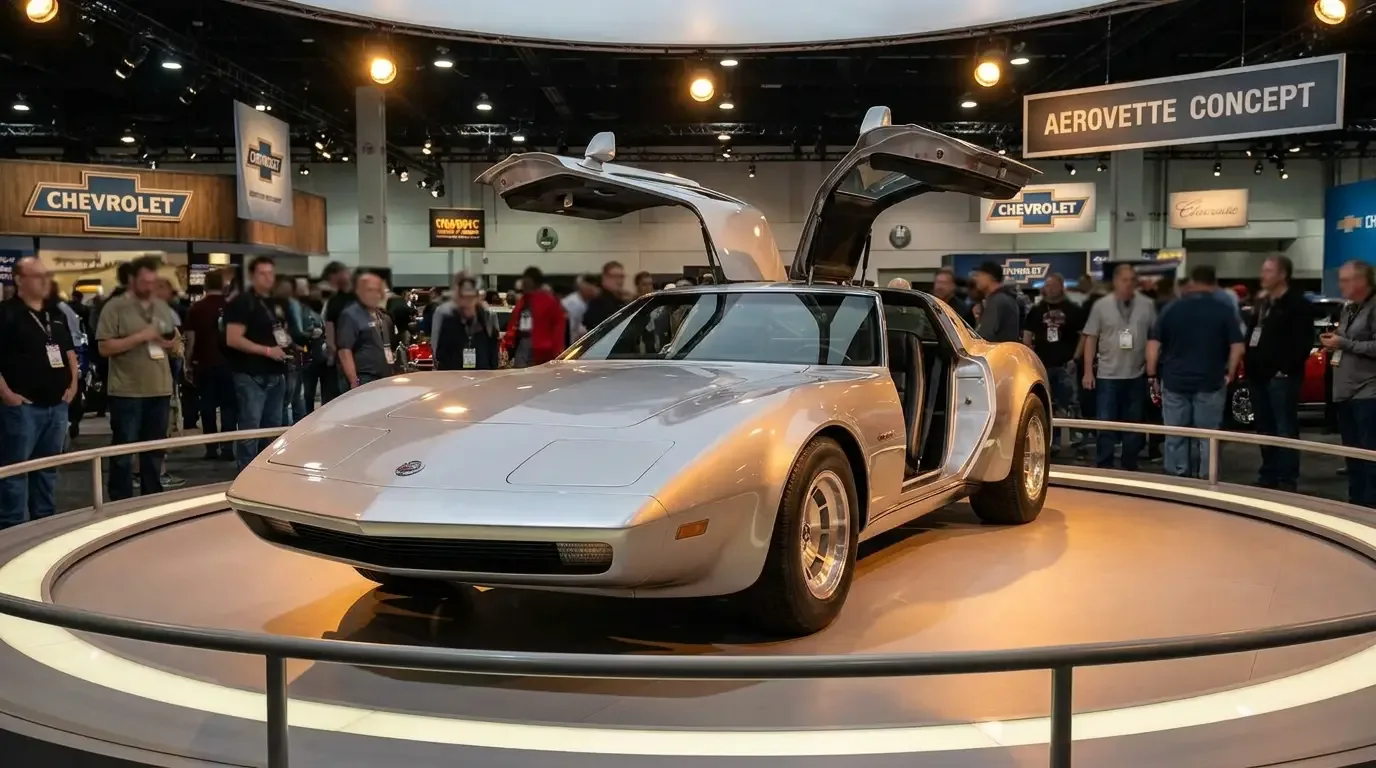
To understand what McLellan inherited, you have to understand what Duntov spent twenty years trying to do. He wanted a mid-engine Corvette. He said it plainly, repeatedly, and to anyone at General Motors who would sit still long enough to listen. The CERV I, the CERV II, the various XP studies, these weren't skunk-works diversions. They were Zora making his case in metal. If you want to read on about how that dream finally reached production decades later, the path from those early concepts to the C8 is a long one. But it runs directly through the retirement moment and what happened after it.
What the retirement actually meant
Duntov turned 65 in December 1974. The GM mandatory retirement age at the time was firm, and Zora knew it was coming. What he didn't know, or wouldn't quite accept, was that his departure would land the Corvette program in the middle of a decade that seemed determined to kill it.
The 1973 and 1974 oil crises had reshaped the American automotive market fast. Insurance surcharges on high-performance cars were stacking up. Federal emissions regulations were strangling horsepower numbers across the board. The Corvette's compression ratios had been dropping since 1971. By 1975, the base 350 small-block was making around 165 horsepower, a number that would have felt like a bad joke to the engineers who had spec'd L88s and ZL1s just six years earlier.
Duntov handed McLellan a car that was, by any honest measure, at a low point. The 1974 Corvette had been the last year for a true dual exhaust system; by 1975, catalytic converters arrived and the exhaust routing changed to a Y-pipe arrangement that altered the packaging entirely. The big-block option was gone. Road and Track had been politely skeptical for two years running. The program needed defending, and Zora's departure meant that job fell to someone new.
The man who took over
Dave McLellan was not a showman. Where Duntov had been a European-born racing driver who could command a room, McLellan was an engineer in the quieter GM mold. He had studied engineering, come up through the technical ranks, and understood the Corvette's chassis from the inside out. He wasn't a celebrity. He was methodical.
That turned out to be exactly what the program needed in the mid-1970s. The arguments that worked for Zora, charisma, a racing record, the ability to say "I drove this car up Pikes Peak faster than anyone else", those weren't the arguments that survived the 1975 corporate environment. What survived was engineering data, fuel economy projections, and the ability to make a case to financial review committees.
McLellan made that case. He kept the Corvette alive through the Carter years and the second fuel crisis. He saw the program through the C3's long twilight and then, crucially, he designed the C4 from the ground up. The 1984 Corvette that arrived after the model year gap was McLellan's first full-ownership product, and it was a genuine technical step forward: a new ladder frame, a new suspension geometry, a new interior. It was not a Duntov Corvette. It was a McLellan Corvette. The difference matters.
"What Duntov passed to McLellan wasn't just a job title. It was an unfinished argument with General Motors about what the Corvette should be. McLellan won parts of that argument that Zora never got to finish."
— Patrick Walsh
Duntov in retirement
Retirement didn't end Zora's involvement. He stayed connected to the Corvette community in the way that people who spent a career on something tend to do. He showed up at events. He gave interviews. He never stopped having opinions about mid-engine layouts, and he watched the CERV concepts gather dust in GM's heritage collection with the particular mix of pride and frustration that belongs to engineers who were right before the timing was.
He also kept a relationship with the enthusiast community that was genuinely warm, which wasn't always a given for someone of his stature. People who met Duntov at shows in the late 1970s and 1980s describe a man who was happy to talk shop, who remembered specific cars and specific runs, and who had not softened his views about what he thought GM should have done with the platform. You can read more here about the full arc of his involvement with the car from 1953 through his retirement years.
He died on April 21, 1996, twenty-one years after leaving GM. By then the C4 had come and gone and the C5 was in development. The mid-engine Corvette he spent his career lobbying for was still roughly twenty-three years away.
Why the handoff matters for collectors
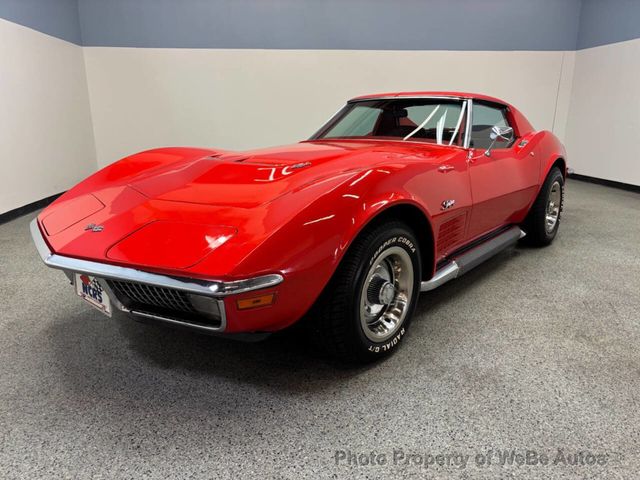
For anyone who collects or studies Corvettes, the 1975 model year sits at an interesting inflection point. Cars from this period are not rare, and they are not currently among the most expensive Corvettes to buy. A solid 1975 coupe in driver condition trades somewhere in the $12,000 to $20,000 range depending on options and color, which puts it below equivalent C2 cars and below the early C3 cars that the market has been paying attention to more recently.
But they are the last Corvettes that carry Duntov's full influence on the engineering decisions. The choices made about suspension tuning, chassis geometry, and brake specification in the 1974 and 1975 cars reflect two decades of his thinking about what a Corvette should handle like. McLellan respected that foundation and built from it, but the C4 that followed was a cleaner sheet relative to what Duntov had been working with.
| Model year | Chief engineer | Base engine (approx. hp) | Key change |
|---|---|---|---|
| 1974 | Duntov | 350 cu in, ~195 hp | Last year for true dual exhaust; first year with urethane bumpers front and rear |
| 1975 | Duntov (retired) | 350 cu in, ~165 hp | Catalytic converter introduced; first year without true dual exhaust |
| 1976 | McLellan | 350 cu in, ~180 hp | First full production year under McLellan |
| 1984 | McLellan | 350 cu in (L83), ~205 hp | C4 launch, new frame and suspension design |
The longer view
What the Duntov retirement and the McLellan succession represent, looked at from some distance, is a kind of relay race. Zora ran his leg of it through the golden years and then into the hard years. He handed the baton at a moment when the track conditions were worse than they had been in a long time. McLellan ran the next leg, kept the car alive, and passed it to Dave Hill, who oversaw the C5. The thread is continuous even if the names changed.
The enthusiast community sometimes treats the mid-1970s as dead years for the Corvette, and in terms of raw performance numbers, that reading is understandable. But it misses what was actually happening inside the program: a transition in leadership that turned out to be well-executed, and a set of engineering decisions that kept the platform competitive long enough for the good years to come back around.
Duntov knew what he was leaving. He said, in various interviews in the years after his retirement, that he believed in McLellan and that he believed the car would survive the decade. He was right on both counts, which is more than you can say for a lot of optimistic retirement statements.
Sources and notes
- Wikipedia: Zora Arkus-Duntov — birth date (December 25, 1909), retirement year, death date (April 21, 1996)
- Wikipedia: Dave McLellan — confirmed GM start date (July 1, 1959), chief engineer tenure 1975-1992
- CorvSport: 1975 Corvette Specifications — base L48 rated at 165 hp; L82 optional at 205 hp
- CorvSport: 1974 C3 Corvette — base L48 at 195 hp; 1974 confirmed as last year for true dual exhaust and for big-block option
- CorvSport: 1975 C3 Corvette — confirmed 1975 as first year without true dual exhaust, due to catalytic converter Y-pipe routing
- Amazon: Dave McLellan, "Corvette from the Inside" (Bentley Publishers, 2002) — primary source for McLellan's account of the Duntov handoff