The Aerovette is one of those concepts that gets misread the most often in Corvette history. People treat it as a styling exercise, a showcar that went nowhere. The factory record tells a different story. For a period in the mid-1970s, Chevrolet was genuinely preparing to build a mid-engine Corvette, and the Aerovette was the closest that program ever got to a production commitment. To understand why it didn't happen, you have to understand what was actually on the table and what killed it. For the origin story of the Corvette as a whole, that background matters.
Where the mid-engine idea came from
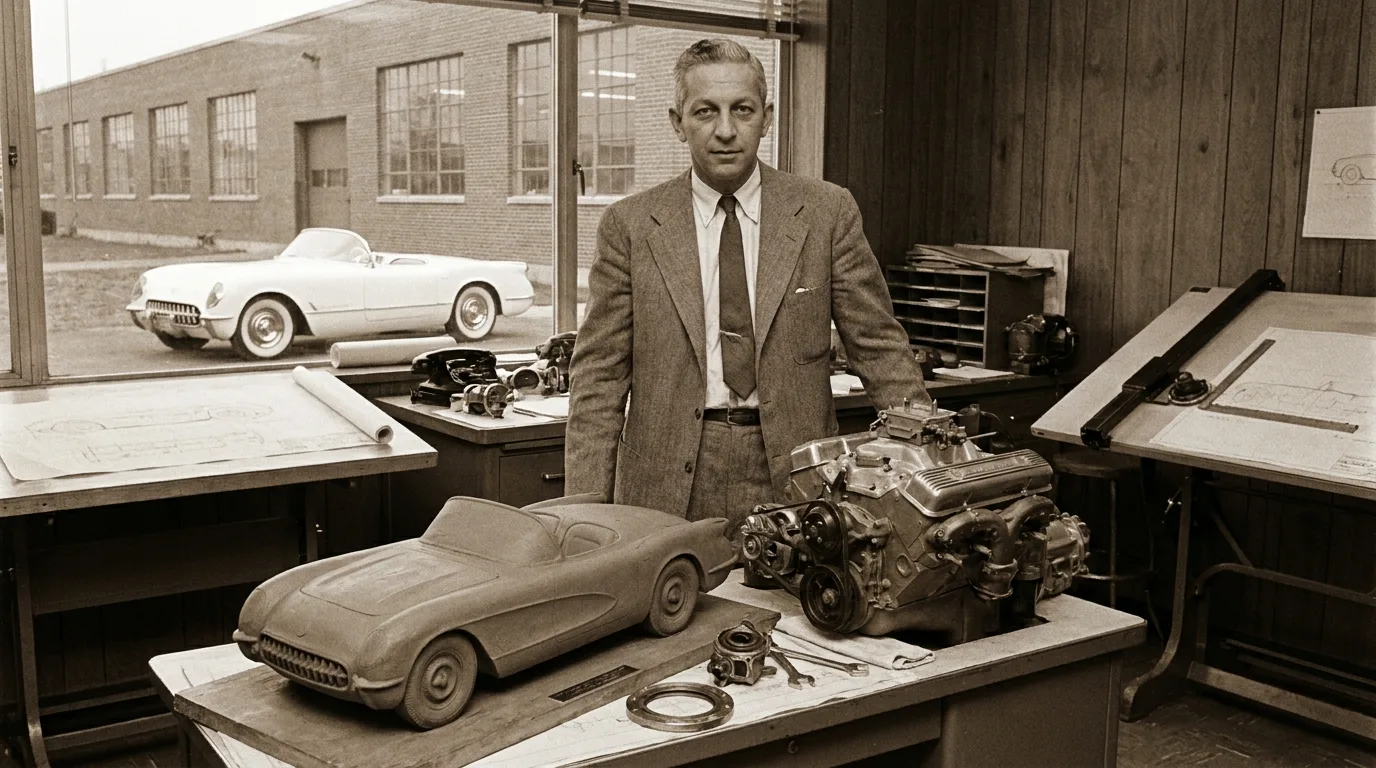
The mid-engine Corvette concept did not begin with the Aerovette. It goes back further, to the early 1960s, when Zora Arkus-Duntov started pushing for a layout that put the engine behind the driver and ahead of the rear axle. His reasoning was engineering-driven: better weight distribution, improved handling balance, a lower polar moment of inertia. The front-engine Corvette was a capable car, but Duntov believed the architecture had a ceiling, and he kept coming back to the mid-engine alternative throughout his tenure at Chevrolet. For more on zora arkus duntov and the full arc of his influence, the record is clear that mid-engine development ran alongside front-engine production for years.
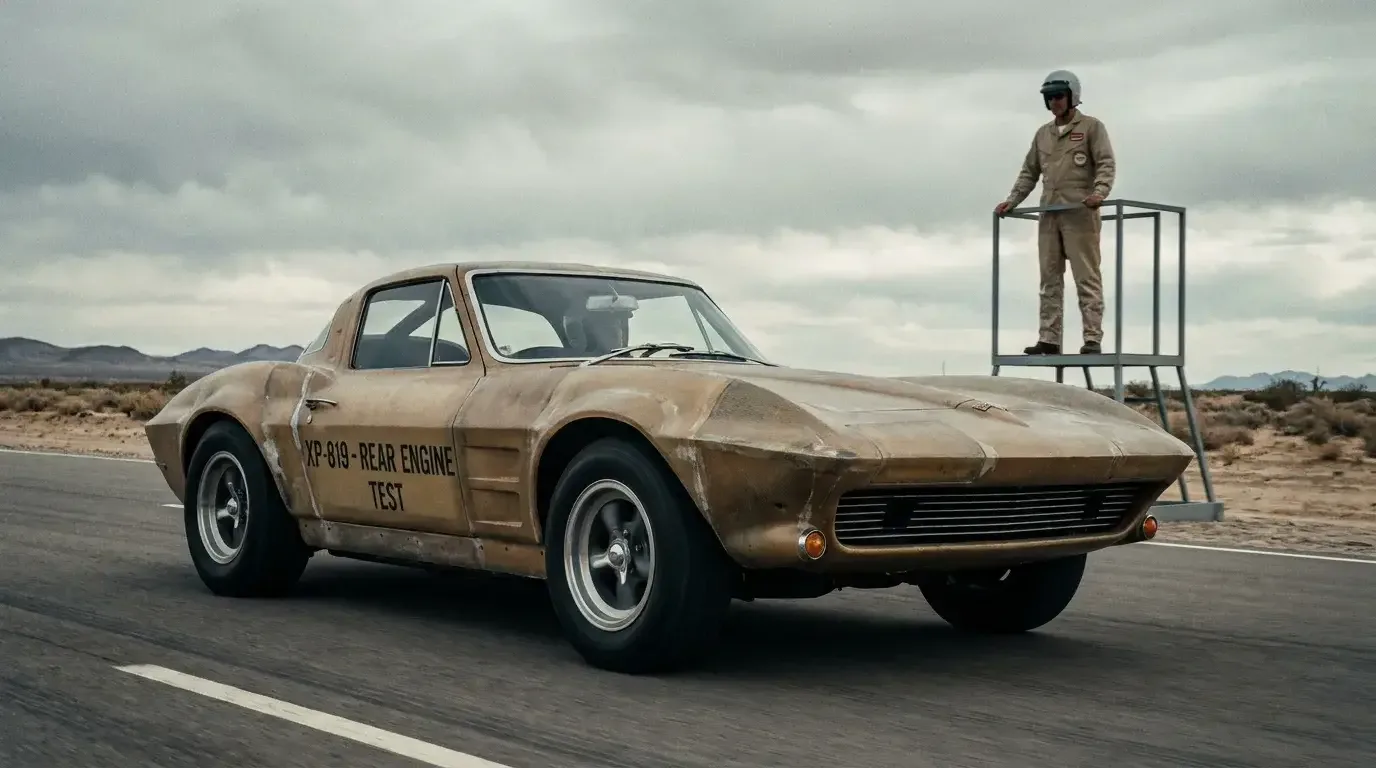
The XP-882 prototype in 1969 was one serious attempt. Then came the four-rotor concept, which Chevrolet built using a pair of coupled two-rotor Wankel engines and displayed at the 1973 Paris Motor Show as the "Corvette Four Rotor" (also referred to as the XP-895 in period records). When the rotary program was scrapped around 1974 amid the fuel crisis, the car was rebuilt with a conventional V8 and rechristened the Aerovette.
What the Aerovette actually was
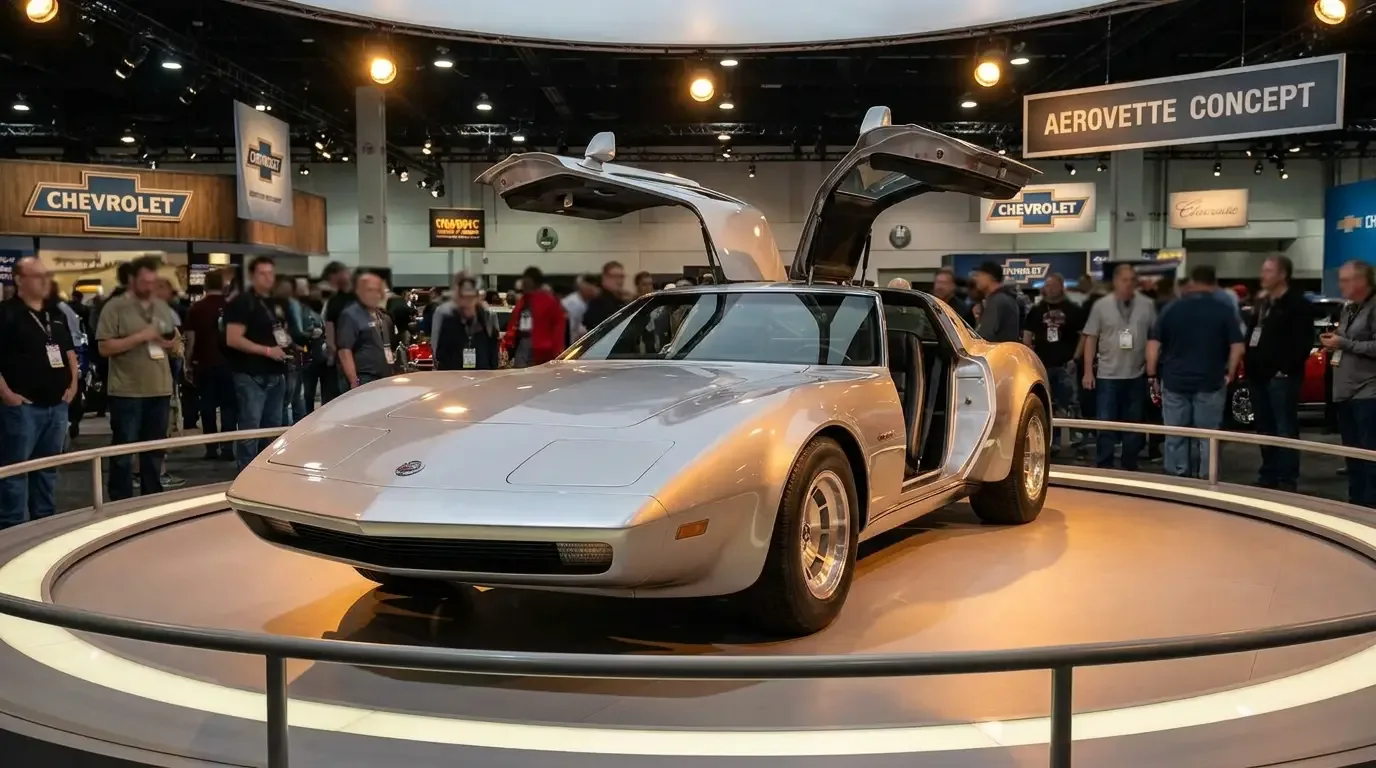
The 1977 Aerovette was a full-scale show vehicle built on a mid-engine platform. The engine, a 400-cubic-inch (6.6-liter) small-block V8, was mounted transversely behind the passenger compartment, driving the rear wheels through a transaxle. The body used bi-fold gull-wing doors that lifted upward, a design choice that created some production complexity but generated the kind of attention Chevrolet needed to gauge public interest.
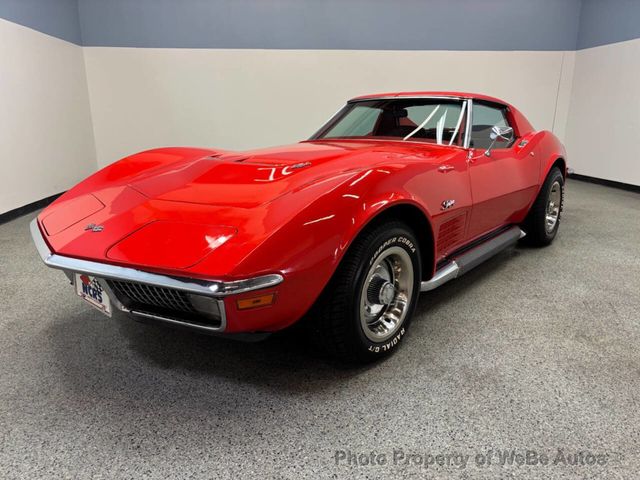
The proportions were notably different from the production C3 Corvette of the period. The hood was low, almost flat, because there was no engine under it. The passenger compartment sat further rearward. The rear haunches were wider and more pronounced to accommodate the engine. Whether or not it would have translated to an affordable production car is a different question, but the Aerovette was not styled at random. It reflected where Chevrolet's designers thought a mid-engine Corvette would actually have to go to meet the packaging requirements.
| Detail | Specification |
|---|---|
| Configuration | Mid-engine, rear-wheel drive |
| Engine (rebuilt version) | V8, 400 cu in (6.6 liters) |
| Engine mounting | Transverse, behind passenger compartment |
| Body style | Gull-wing coupe (bi-fold doors hinge upward) |
| Predecessor concept | Corvette Four Rotor / XP-895 (1973, Paris Motor Show) |
| Show debut (Aerovette name) | 1976-77 auto show circuit |
| Production decision | Approved by GM chairman Thomas Murphy in 1977, targeted for the 1980 model year, later canceled |
How close it came to production
This is the part of the Aerovette story that the factory record supports clearly, and that gets glossed over in the enthusiast press. GM's management gave the mid-engine Corvette a green light: in 1977, GM chairman Thomas Murphy approved the Aerovette for production, targeted for the 1980 model year. The Aerovette was not just a what-if. There were plans, tooling considerations, and an actual model-year target for when this car would replace the C3.
What changed was a combination of factors. The C3, despite its age, kept selling. Chevrolet's cost-reduction priorities in the late 1970s raised the bar for what a new platform had to justify. And there was a personnel change that mattered: Zora Arkus-Duntov had retired in 1975, and the program lost its most consistent internal advocate. The companion story on his retirement and Dave McLellan's arrival covers how the engineering leadership shifted during exactly this period.
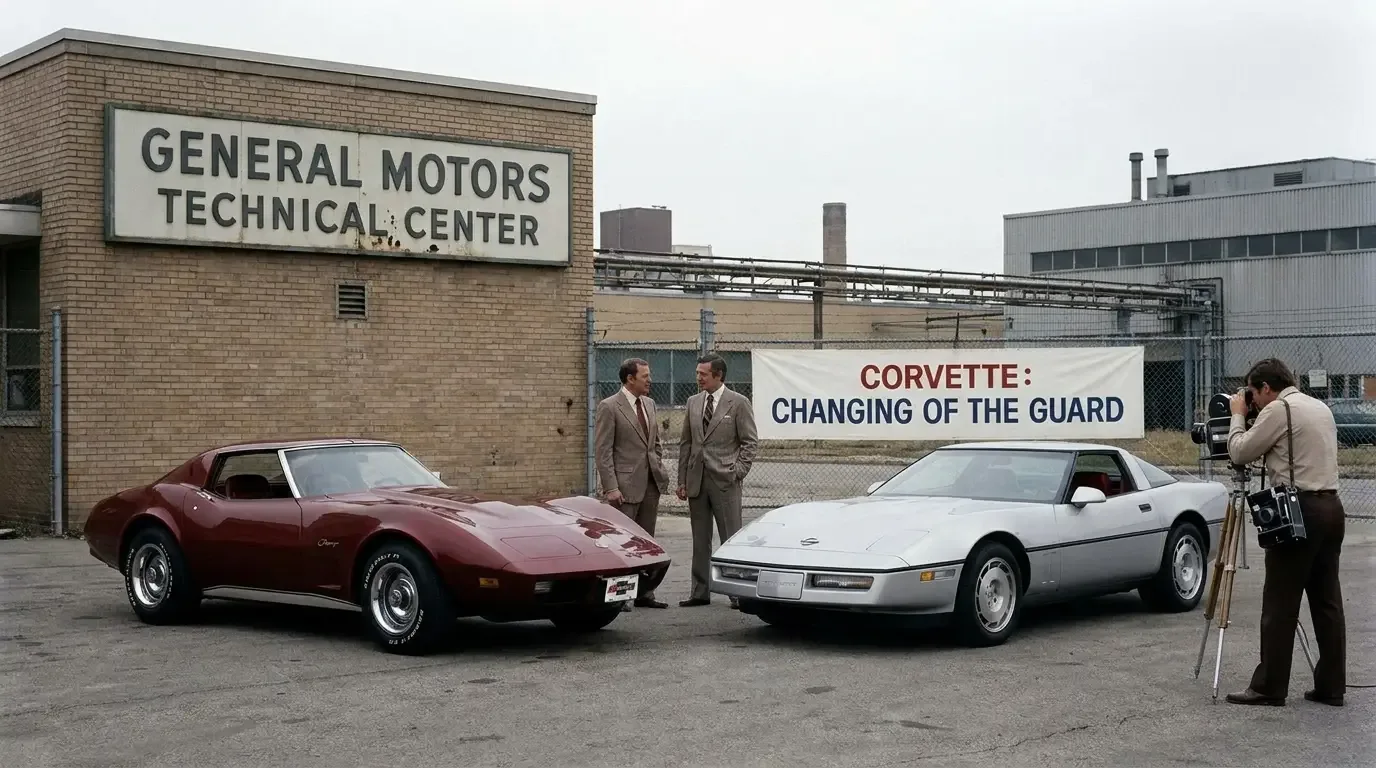
Dave McLellan, who took over as Corvette chief engineer after Duntov's retirement, ultimately concluded that the front-engine layout still had room to develop. The C4 Corvette that arrived for 1984 was a front-engine car. The mid-engine Corvette concept would not reach production until the C8, which debuted for 2020.
"The Aerovette gets called a concept car, and technically it was. But there was a period when it was also a production decision. The green light was given. That's what makes this one interesting to track through the factory record, because the cancellation is as instructive as the car itself."
— Tom Ramirez
What the Aerovette's cancellation meant for the C4
The decision to stay with a front-engine layout for the C4 was not made carelessly. McLellan's team had specific engineering targets: improved rigidity, better aerodynamics, lower weight than the aging C3. The front-engine architecture let them work within budget constraints and use supplier relationships that were already in place. A mid-engine car would have required a clean-sheet transaxle program, new supplier tooling, and a longer development cycle.
In retrospect, the C4 was a successful car on its own terms. It addressed the C3's most significant weaknesses, the interior quality and structural rigidity, and it set up the platform that eventually produced the ZR-1 in 1990. Whether a mid-engine C4 would have been better is an unanswerable question. What the factory record shows is that the decision against it was deliberate, not an oversight.
The Aerovette's place in the record
What separates the Aerovette from a standard show car is that it was tied to an actual production decision at a specific moment in GM's history. The concept itself is significant as a design artifact, but its real historical weight comes from what happened around it: a green light that was given, a program that was genuinely funded, and a cancellation that redirected Corvette development for roughly forty years.
For anyone studying how the Corvette evolved from the C3 through the C8, the Aerovette is not a footnote. It sits at the fork in the road, and understanding what was weighed on both sides of that decision explains a great deal about why the mid-engine Corvette took roughly four decades longer to arrive.
Sources and notes
- GM Heritage Collection: confirmed the Aerovette's origin as the 1973 Four Rotor show car and its ownership by GM today
- Wikipedia, Chevrolet Aerovette: cross-checked the four-rotor engine (420 hp, from coupled Vega two-rotor units), the 400 cu in V8 swap, and transverse mid-engine layout
- CorvSport, 1977 Aero-Vette Concept: confirmed GM chairman Thomas Murphy's 1977 production approval, the 1980 target model year, and Duntov's 1975 retirement
- CorvSport, 1973 Corvette XP-882 Four Rotor: confirmed the 1973 Paris Motor Show debut and the rotary program's cancellation around 1974
- GM News, Retro Rides on the Aerovette: confirmed the rotary-to-V8 rebuild and the gull-wing body carrying over largely unchanged
- HotCars, GM's Experimental Wankel Rotary Corvette: confirmed the four-rotor engine's 585 cu in displacement and the fuel-crisis-driven cancellation of the rotary program