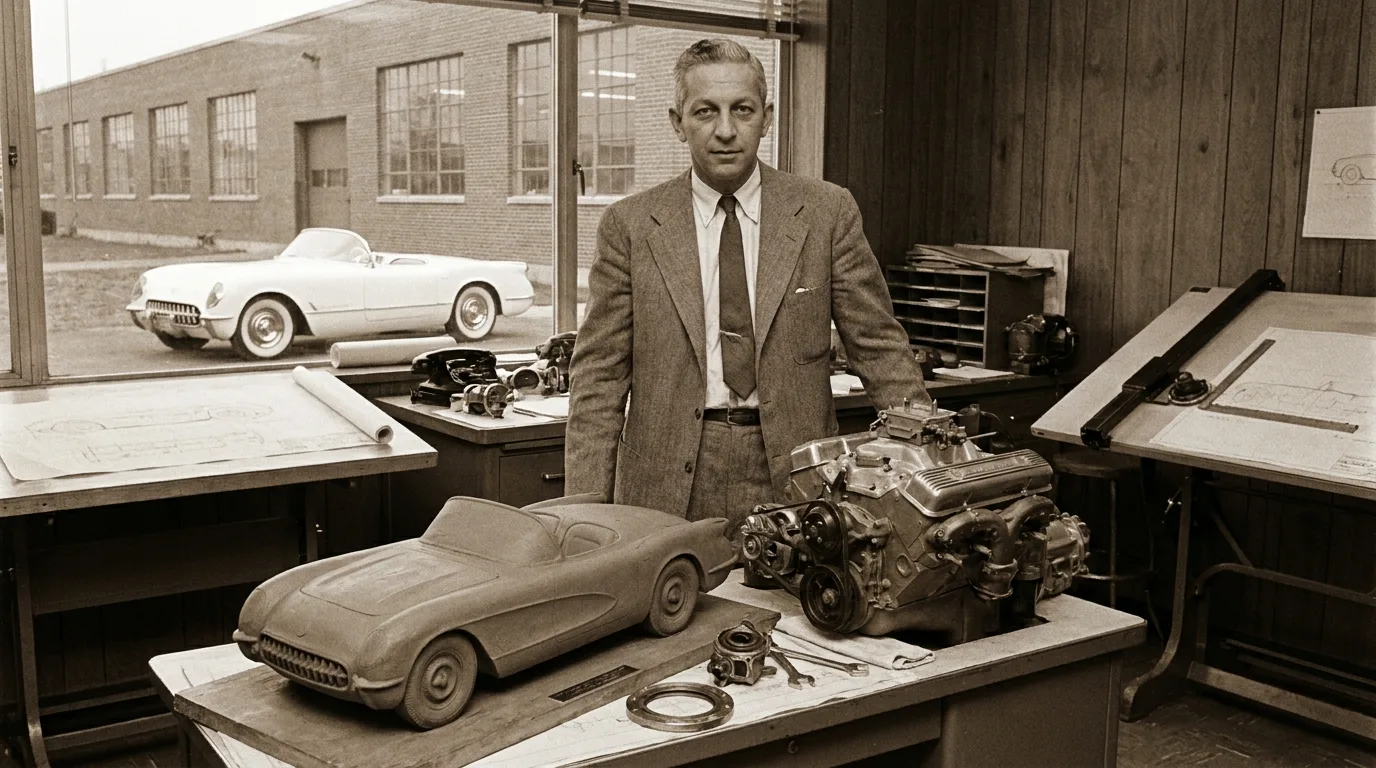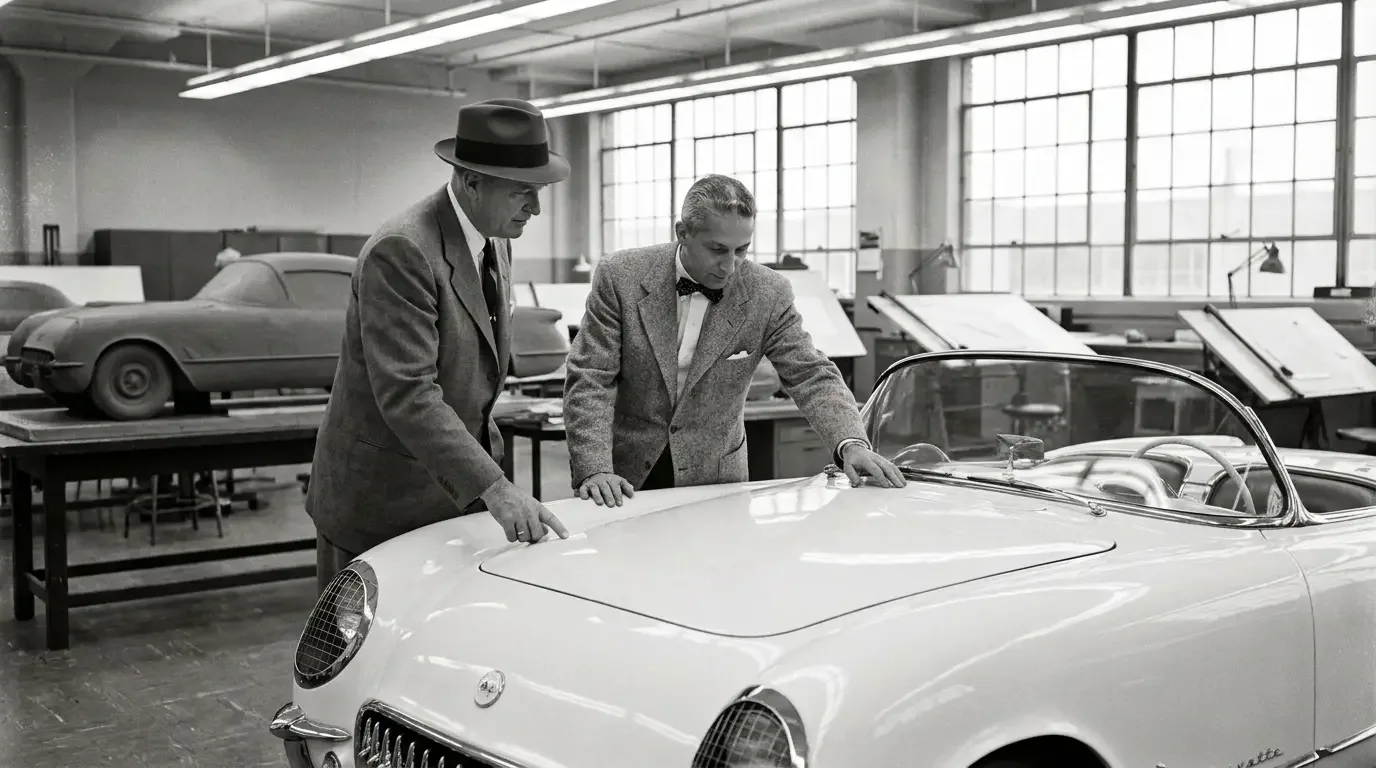
By 1953, the Corvette existed. By 1956, it was finally becoming what Zora Arkus-Duntov had insisted it should be from the start: an actual sports car. That distinction sounds harsh, but it's the right word. The first Corvettes were underpowered, automatic-only, and plagued by enough quality problems that Chevrolet came close to canceling the program entirely. Duntov changed that. The 1956 model year is where the proof lives.
Understanding what happened in 1956 requires knowing what Duntov found when he joined Chevrolet in 1953. He was a Belgian-born engineer who had raced at Le Mans, built his own high-performance cylinder heads, and spent years in the European sports car world. He wrote a memo to his superiors almost immediately after his hire, pointing out what the Corvette lacked. The factory records from that period are clear about his priorities: performance, handling, and the kind of credibility that only came from competing and winning. For the full picture of his decades-long influence on the car, the documentation stretches well past 1956. But this year is the clearest single turning point.
What Duntov inherited and what he changed
The 1953 and 1954 Corvettes used a 235 cubic-inch inline-six producing 150 horsepower (a mid-year 1954 camshaft change lifted some cars to 155 horsepower), paired with a two-speed Powerglide automatic. There was no manual gearbox option. Road testers were polite. Sports car enthusiasts were not. Sales were poor enough that of the 3,640 Corvettes built for 1954, roughly a third, well over 1,000 cars, were still unsold at year's end.
The 1955 model brought V8 power for the first time, a 265 cubic-inch small-block rated at 195 horsepower, and a three-speed manual transmission became available. Production that year dropped to just 700 units, partly because the redesigned 1956 was already in development and partly because the market was still uncertain about the car's identity.
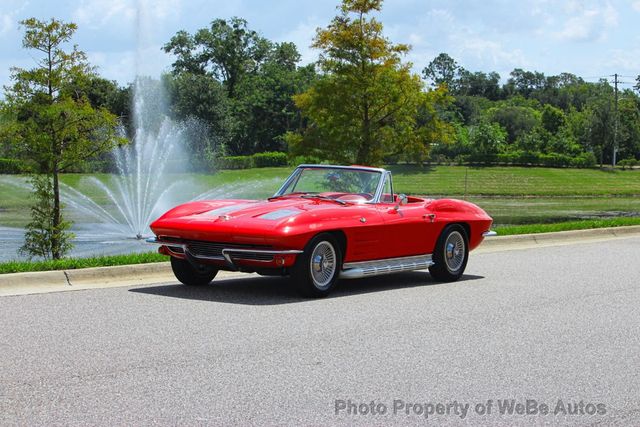
For 1956, Duntov pushed through changes on several fronts simultaneously. The body got a genuine restyling: the external door handles that the first-generation cars lacked were finally added, along with concave side coves that would define Corvette styling for years. The windshield moved to a more conventional wraparound design. These changes were cosmetic, but they addressed real criticisms. The 1953-55 cars looked like a show car. The 1956 looked like something you could actually use.
The engine options that mattered
The 265 small-block carried into 1956, but the output options expanded significantly. The base version produced 210 horsepower at 5,200 rpm. A dual four-barrel carburetor setup, RPO 469, brought that figure up to 225 horsepower at 5,200 rpm; 3,080 Corvettes were built with this option, roughly split between manual and Powerglide cars. And then there was the top option, the dual four-barrel paired with the special high-lift camshaft (RPO 449) and a higher-compression ratio, which Duntov had a direct hand in specifying. That one is rated at 240 horsepower at 5,600 rpm, though period road tests sometimes found more depending on test conditions.
The cam itself became known colloquially as the "Duntov cam." The factory called it something else in the parts records, but the enthusiast community attached his name to it early and it stuck. NCRS documentation for 1956 cars is specific about which engine code corresponds to which carburetor and cam configuration, and those codes matter for authentication now. A 1956 Corvette claiming to be a dual-carb car should have the correct engine tag and casting dates that align with factory records.
| Engine option | Carb setup | Rated power | Trans available |
|---|---|---|---|
| 265 V8 base | Single 4-bbl | 210 hp @ 5,200 rpm | 3-speed manual / Powerglide |
| 265 V8 mid (RPO 469) | Dual 4-bbl | 225 hp @ 5,200 rpm | 3-speed manual / Powerglide |
| 265 V8 top (RPO 469 + 449) | Dual 4-bbl + Duntov cam | 240 hp @ 5,600 rpm | 3-speed manual only |
Racing and the credibility question
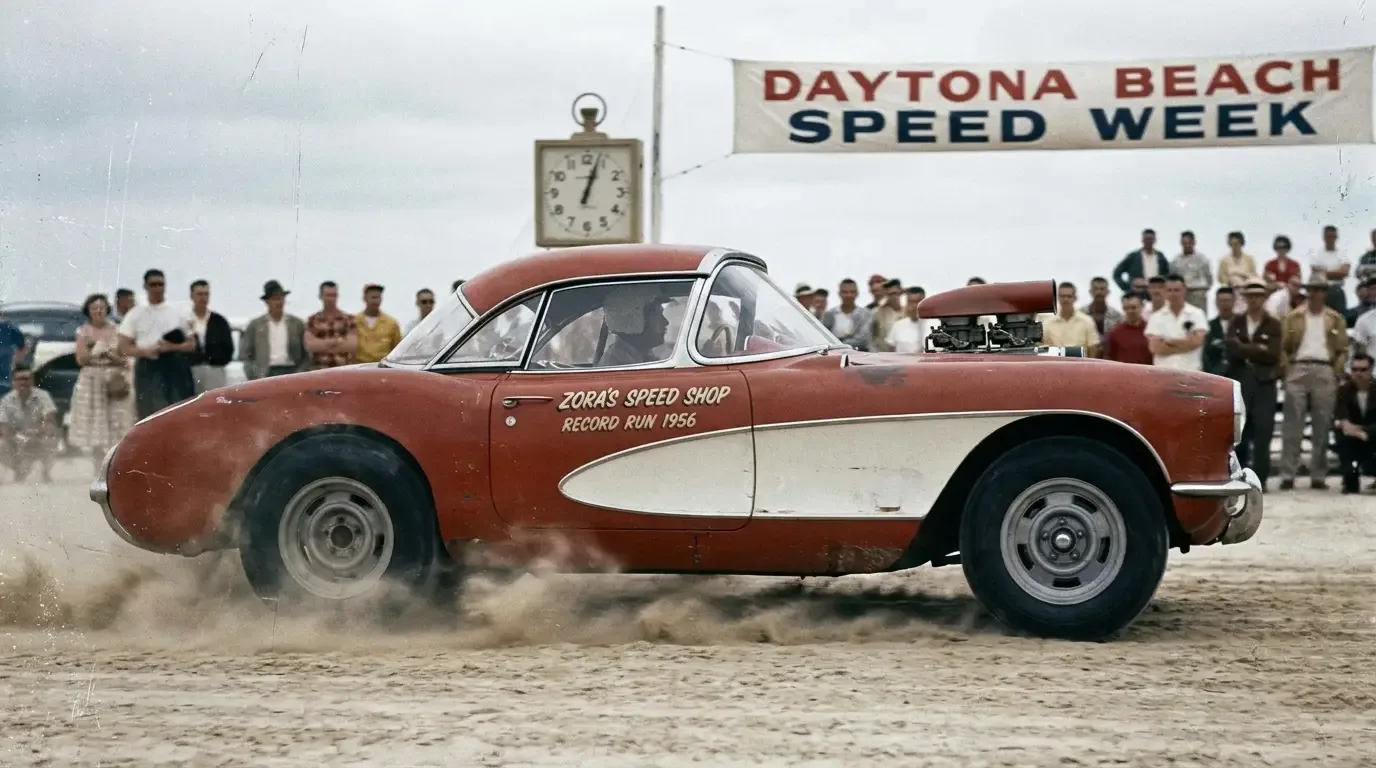
Duntov understood that European sports car buyers and enthusiasts did not take factory horsepower claims seriously without race results. He was right. The Corvette's 1956 Daytona Speed Week appearances were not accidental. The car that ran the flying mile was a stock-bodied Corvette, and the speeds it recorded put the model on the map in a way that no advertisement could. If you want to read the related story about how Duntov's contributions have sometimes been overstated and how history has assigned credit, it complicates the picture in useful ways. But the 1956 Daytona results were real, and they landed in the press at exactly the right moment.
John Fitch also drove for Chevrolet in 1956 competition efforts, and his involvement gave the car additional credibility with the import-car crowd that Duntov was specifically trying to reach. Fitch was known from his Mercedes-Benz racing years and carried a reputation that the Corvette name alone couldn't yet claim.
"The 1956 is where the tank sticker starts telling a more interesting story. Before that year, most of the options weren't options you wanted. After 1956, you're looking at a car that could actually be specified to do something."
— Tom Ramirez
Production numbers and what survives
Total 1956 Corvette production is documented at 3,467 units. That's a substantial jump from the roughly 700 cars built in 1955, and it reflected genuine market confidence returning to the program. The breakdown by engine option is available through NCRS data, but the dual-carb cars represent a minority of production, with 3,080 of the 3,467 total built with the RPO 469 dual four-barrel option. Most 1956 Corvettes left the factory with the single four-barrel setup and the Powerglide.
Survival rate for 1956 cars is reasonable by collector-car standards. The fiberglass body doesn't rust, which has helped more of these survive than comparable steel-bodied contemporaries. The frames rust, the floors behind the seats rust, and the birdcage structure under the body can corrode in ways that aren't obvious until you start looking carefully. But a dry-climate 1956 that hasn't been badly abused has a fighting chance of being a solid survivor.
Collectors looking at early Corvettes for sale will find that 1956 cars carry a premium over 1953-55 examples in most conditions, partly because the performance options are more desirable and partly because the body style is cleaner than the early cars. The dual-carb versions command significantly more than single-carb cars when properly documented.
Why 1956 matters for the larger story
The conventional history of the Corvette credits 1955 with saving the car because the V8 arrived. That's not wrong, but 1956 is when the package came together in a way that made the case to buyers who had been skeptical. The manual transmission, the restyled body, the expanded engine options, and the race-proven credibility added up to something that 1955 alone couldn't deliver.
Duntov's role in pushing the 1956 changes through is well-documented in factory records from the period. He was not the only engineer working on the car, and the styling changes came from a different department entirely, but his fingerprints are on the performance engineering in ways that the documentation makes clear. The cam that carries his name is the most obvious example, but the approach to Daytona, the specific engine configurations, and the push to make the manual transmission a real option rather than an afterthought all trace back to his priorities.
For the collector market, the 1956 occupies an interesting position. It's the first year that most serious Corvette historians point to as a mature product, which drives demand. But it's also a year where a lot of claims about originality and configuration need to be checked carefully. The cars have been around long enough that restorations, rebodies, and number changes have all happened. The documentation process matters here more than with many other collector cars, and the NCRS standards for 1956 are specific enough to be genuinely useful.
Sources and notes
- National Corvette Museum: 1956 Corvette specs, confirming production total of 3,467 units and model-year styling changes
- CorvSport: 1956 Corvette performance specifications, confirming 210/225/240 hp engine ratings and RPO 469 dual four-barrel option
- CorvSport: 1956 Corvette RPO codes, confirming RPO 469 (dual four-barrel carburetors) and RPO 449 (special high-lift camshaft)
- CorvSport: 1956 Corvette production numbers, confirming total of 3,467 units and the 3,080 cars built with the RPO 469 option
- Wikipedia: Chevrolet Corvette (C1), confirming 1953-55 235 cu in six-cylinder output (150-155 hp), 1954 production of 3,640 units, and 1955 production of 700 units
- Let's Go Bench Racing: account of Duntov's January 1956 Daytona Beach flying-mile run, confirming the 150.583 mph two-way average