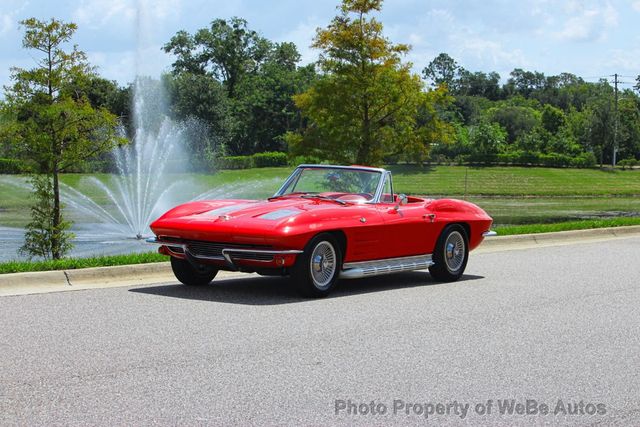

The question sounds simple enough: who was the father of the Corvette? Ask it at any car show and you'll get an answer within seconds, always confident, usually the same name. But the history is messier than the legend, and understanding why that matters tells you something real about how American cars actually get made.
The short version most people carry is this: Zora Arkus-Duntov saved the Corvette, turned it from a styling exercise into a sports car, and became its spiritual father. That story is not wrong, exactly. But it compresses a complicated decade into a single hero, and it erases the people who built the car before Zora ever touched it. For the full Corvette history, that compression costs you something worth having.
Where the myth starts: the 1953 original
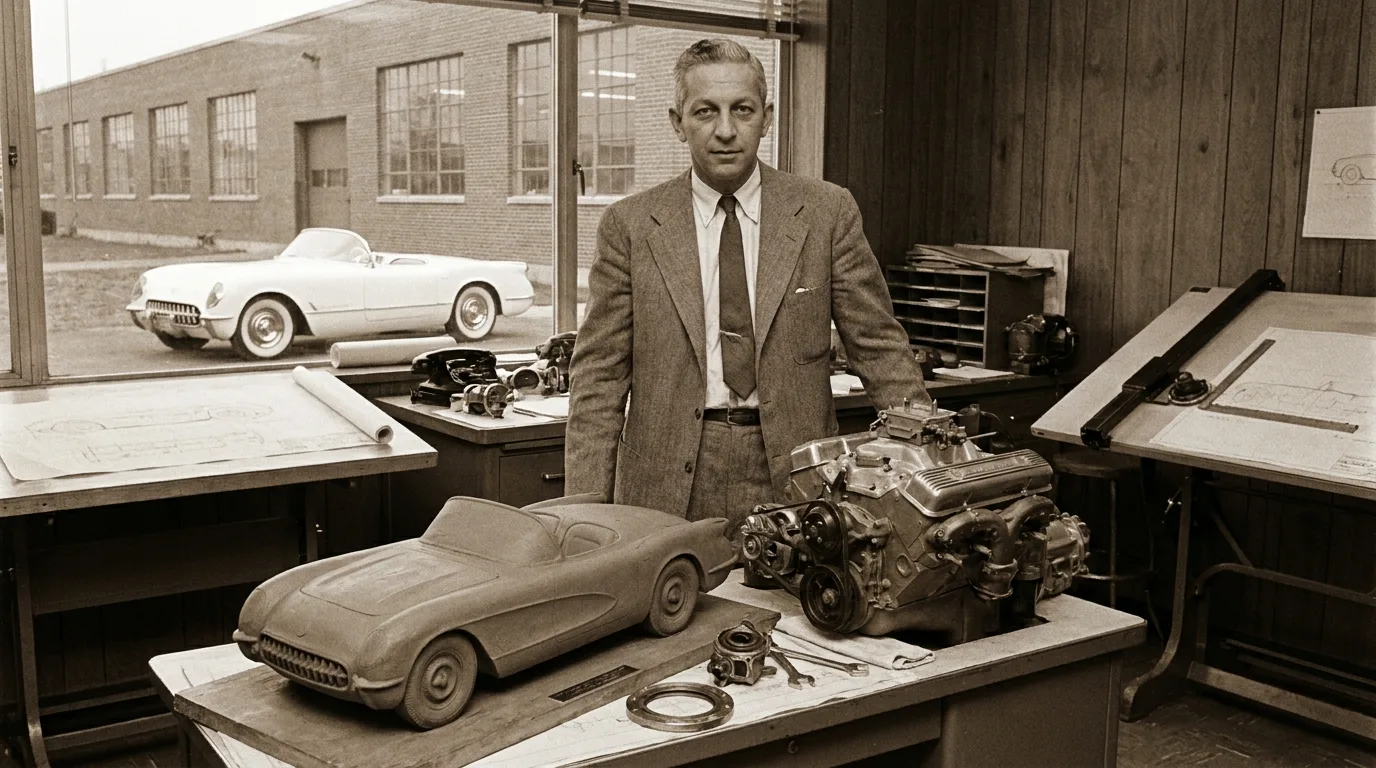
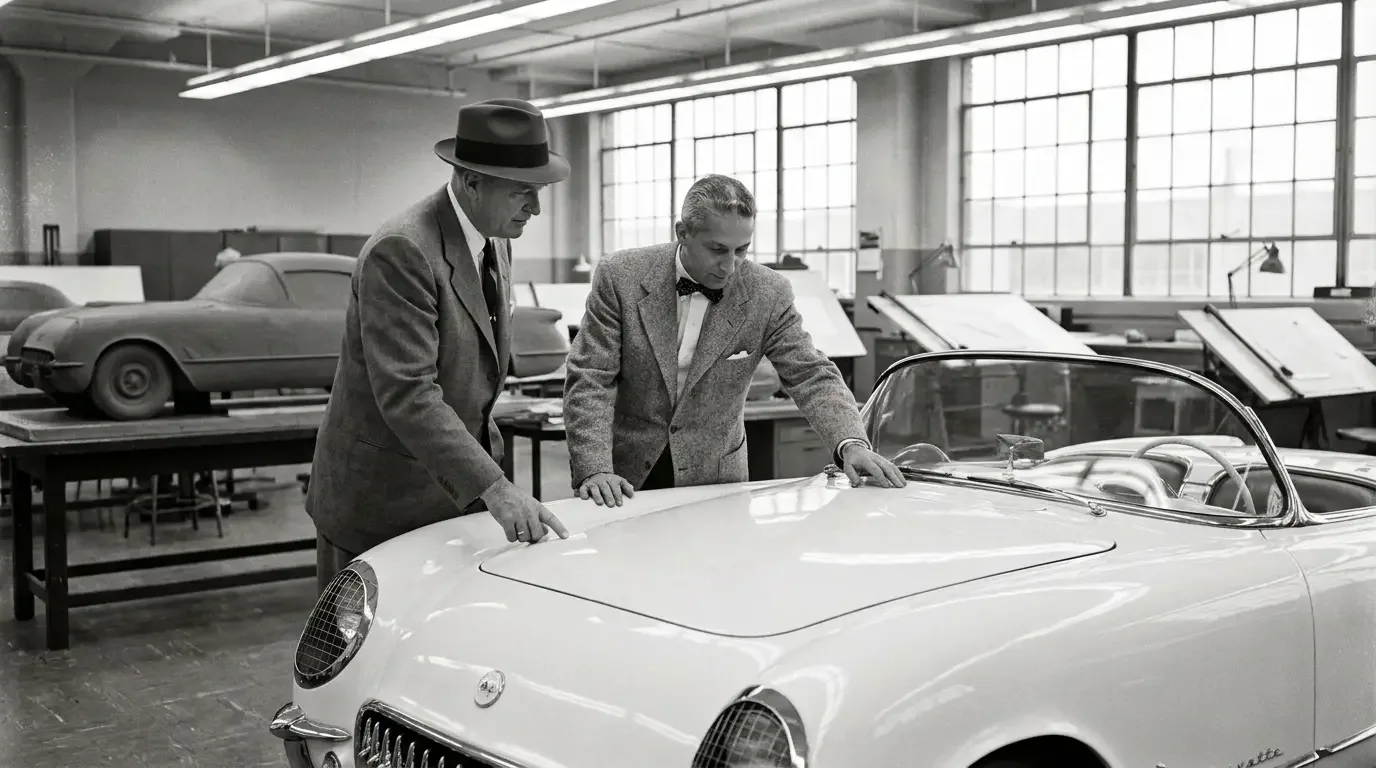
The first Corvette debuted at the 1953 Motorama show in New York as a dream car, a concept wrapped in fiberglass and aimed squarely at the European roadsters flooding into American ports. The man behind that original concept was Harley Earl, GM's head of design and the most influential stylist in American automotive history. Earl wanted a showpiece. He got one.
Ed Cole, Chevrolet's chief engineer at the time, pushed the car toward production. Cole is the figure most often left out of the popular telling. He made the call to use fiberglass construction, not because it was cheaper (it wasn't, at low volumes) but because it let the design team move fast without tooling up for stamped steel. He also championed the 150-horsepower Blue Flame inline-six that powered the first cars, though he knew it was underpowered for a sports car from the day it was installed. Cole's influence on the Corvette's early direction was substantial, and it tends to get absorbed into the Zora mythology that followed.
The car nearly died before Zora arrived
By 1954, the Corvette was in serious trouble. Sales were slow. The car's performance didn't match its looks, and American buyers who wanted a true sports car were still choosing a Jaguar XK120 or an Austin-Healey. GM management began discussing whether to kill the program entirely.
What saved it, at least in part, was Ford. When word got out that Ford was developing what would become the Thunderbird, GM's competitive instinct kicked in. Canceling the Corvette right as a rival was entering the market was not an appealing option for General Motors leadership. The car survived, but it needed a direction.
Zora Arkus-Duntov had joined Chevrolet's engineering staff in 1953, after writing an unsolicited letter to GM praising the Motorama Corvette and suggesting ways to improve it. That letter is often treated as the founding document of the Zora legend. He was brought in as an assistant staff engineer, not a savior. The role he would eventually play came later, gradually, through specific technical contributions rather than any single decision.
What Zora actually did, and when
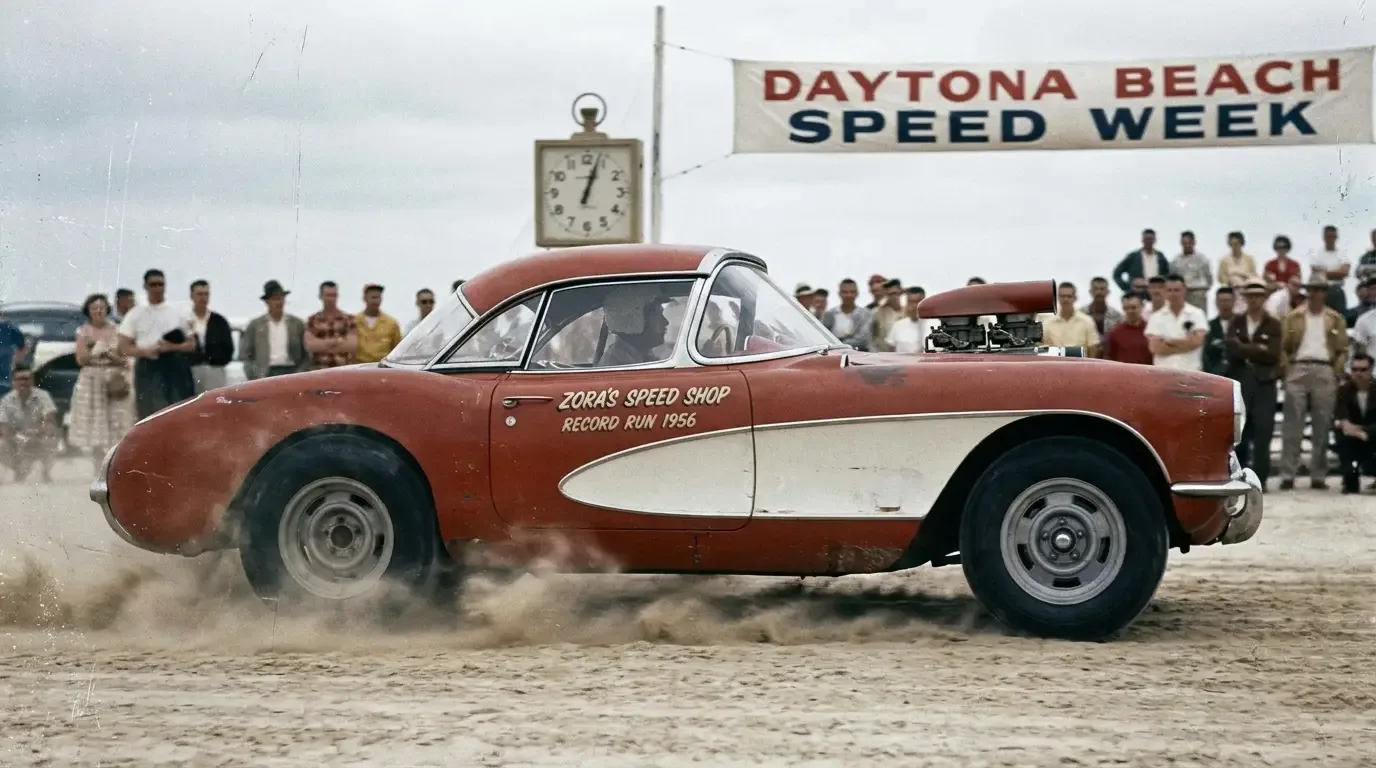
Duntov's real impact came from a series of concrete engineering moves rather than any single moment of rescue. He developed the Duntov camshaft, a high-lift, long-duration cam profile that meaningfully improved the small-block Chevy's output in the Corvette application. He advocated internally for the V8 that arrived for 1955, which genuinely transformed the car's performance character. He pushed hard for independent rear suspension, which the Corvette didn't get until the redesigned 1963 Sting Ray. He drove the Corvette at Pikes Peak and Sebring to gather real data, not just to get his name in the press.
These were the contributions of an engineer who understood sports cars from the inside, having raced in Europe before coming to GM. They were real, sustained, and important. But they happened over years, not as a single act of salvation. And they happened inside an institution that had already committed to keeping the car alive before Zora had enough seniority to push anyone very far.
"The 'father' question is the wrong frame. Corvette history runs better when you track who made which specific decision, in which year, under what pressure. The people who did real work tend to be more interesting than the myth."
— Patrick Walsh
Why the single-father story persists
Zora Arkus-Duntov is genuinely compelling. He was a Belgian-born, Russian-raised engineer who raced at Le Mans and ended up shaping an American icon. His biography reads like a novel, which is part of why it fills the frame so completely. He was also a skilled self-promoter in the best sense, someone who understood that results matter more when people know who produced them.
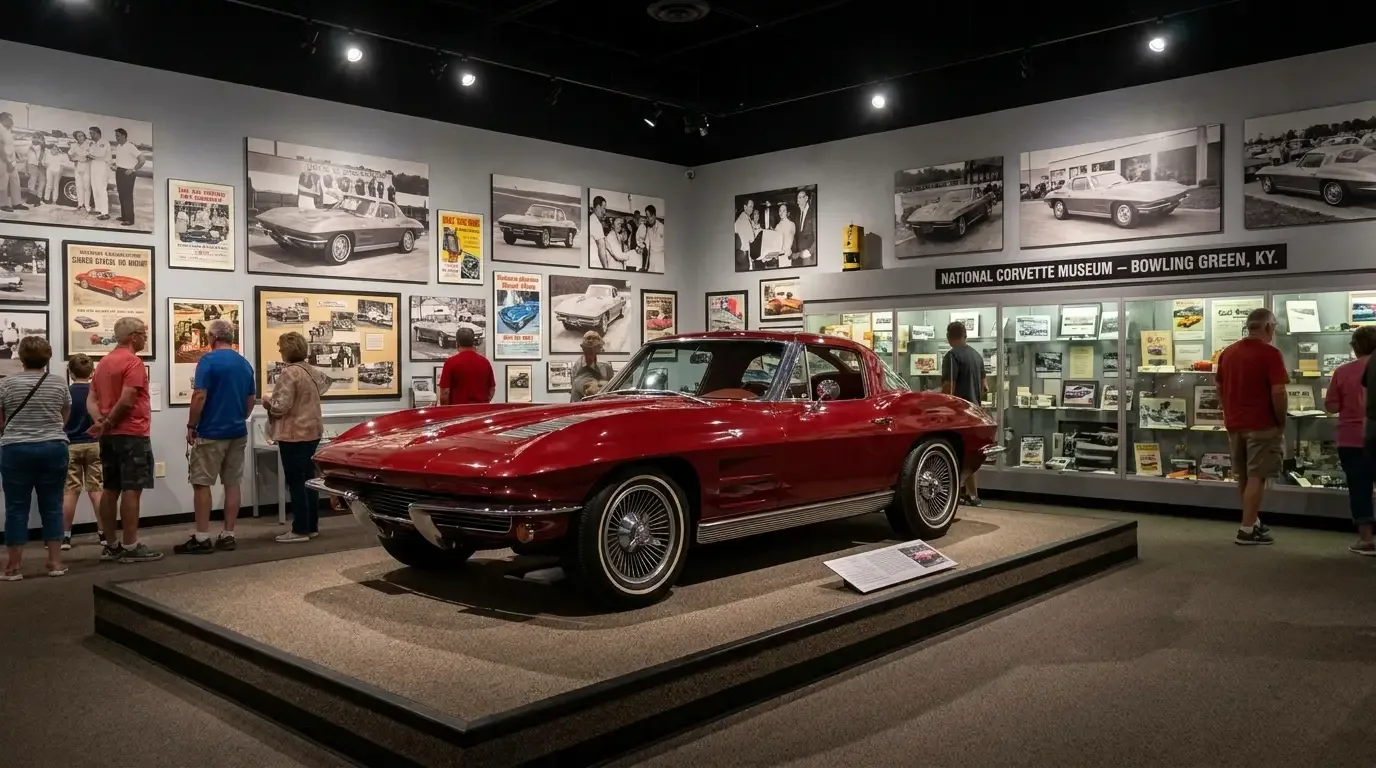
The Corvette also needed a human story. Muscle cars had their racing heritage and their street reputations. The Corvette, as it matured into a genuine sports car, needed a name to attach to its credibility. Duntov provided that. The NCRS community, Corvette historians, and the National Corvette Museum have all contributed to preserving and amplifying his legacy, which he earned. Read more on Zora Arkus Duntov to understand the full scope of his engineering record.
What the single-father narrative costs you is the rest of the picture. Harley Earl's design vision created the car people wanted to buy. Ed Cole's engineering decisions made production possible. The team at Flint who hand-built 300 cars in 1953 under pressure and on a deadline made the thing real. The Corvette was a collective project from the start, which is how most significant cars actually get made.
The legacy question, answered more carefully
Duntov himself reportedly downplayed the "father" title at times, preferring credit for the specific engineering work over the mythology, though accounts of his exact words vary by source. Whatever his feelings about it, the designation stuck. GM made it official in 1967 when they named him the Corvette's chief engineer, a title that came with real authority and real responsibility. From that point through his retirement in 1975, he shaped the car more directly than anyone else.
So the answer to the "father" question is probably this: Harley Earl conceived it, Ed Cole made it possible, and Zora Arkus-Duntov turned it into what it needed to be. That is not a less satisfying answer than the single-father version. It is a more accurate one, and it gives you a better map of how the car developed through its most important decade.
The Corvette that Duntov handed off when he retired was a car that had earned its reputation on tracks, not just in ads. That matters. And it happened because multiple people over multiple years made multiple good decisions under the pressure of a corporation that could have ended the program any time it stopped being worth the investment. To see where that handed-off legacy went next, follow the next chapter.
The myth is good. The history is better.
Sources and notes
- CorvSport: 1953 Corvette production numbers confirmed the 300-unit 1953 production count and the Flint, Michigan hand-build facility.
- Wikipedia: Zora Arkus-Duntov confirmed his May 1953 hire date at Chevrolet, the "Thoughts Pertaining to Youth, Hot Rodders and Chevrolet" memo, and his 1975 retirement.
- National Corvette Museum: Zora Arkus-Duntov confirmed his engineering contributions and career timeline at Chevrolet.
- Ate Up With Motor: 1963-1967 Corvette Sting Ray confirmed the independent rear suspension arrived with the 1963 C2 redesign under Duntov's direction.
- Hagerty: On this day in 1953, America met the Corvette confirmed Harley Earl's and Ed Cole's roles in the original concept and its push to production.
- Automotive News: Zora Arkus-Duntov didn't father the Corvette; he immortalized it confirmed that credit for the original concept belongs to Harley Earl, not Duntov, and that Duntov's 1967 chief engineer title marked his period of greatest authority.