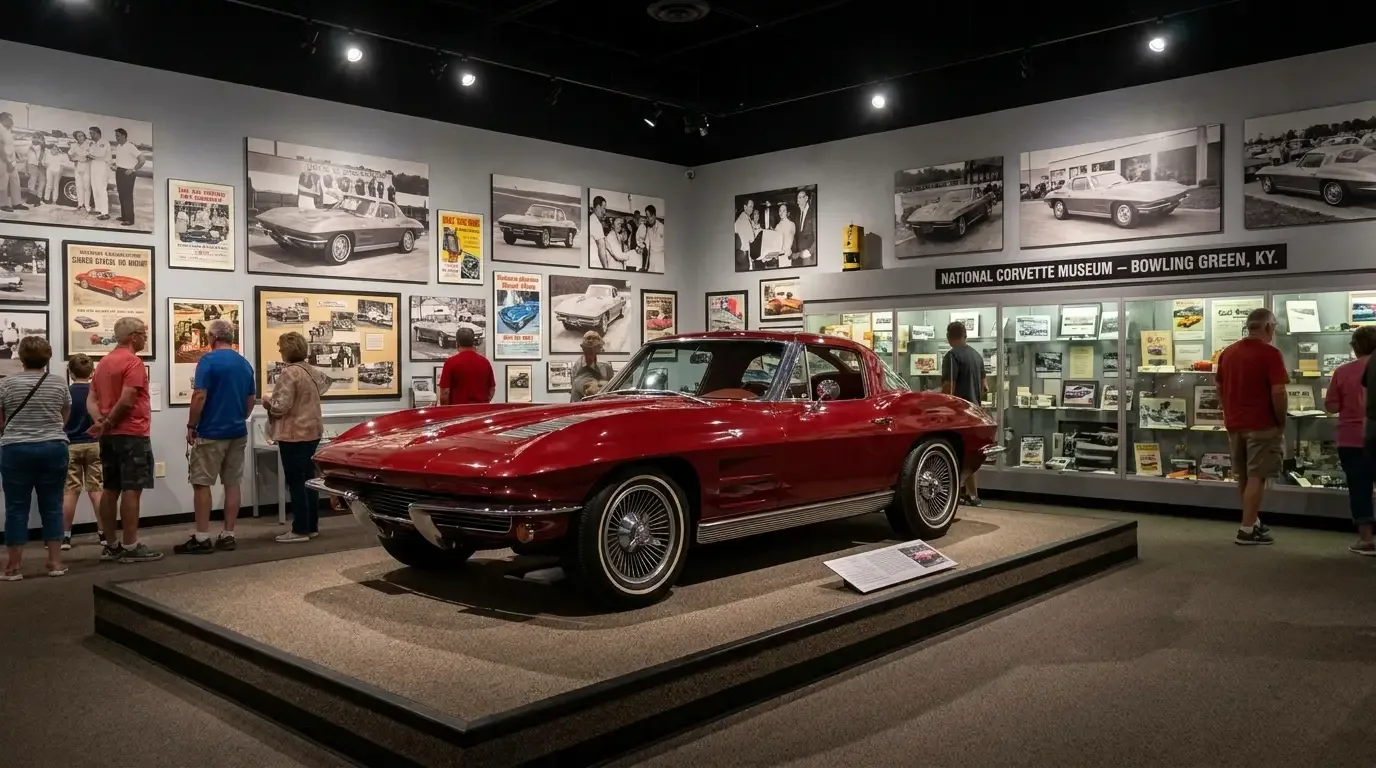
Inside the National Corvette Museum in Bowling Green, Kentucky, as part of the exhibit dedicated to him, sits an urn holding the cremated remains of a man named Zora Arkus-Duntov. It is not a famous cemetery. There is no grand monument. There is a display, his own 1974 Corvette parked nearby, and the hum of the museum floor just a few steps away. For the people who understand what that name means, it is exactly the right place for him to be.
Duntov died in April 1996 at the age of 86, and it was his own last request that his ashes come to rest at the National Corvette Museum, the place he loved most. The museum itself had only opened in September 1994, two years before he died, and Duntov had been a presence at the opening. That his remains would end up there was not inevitable, but it feels, in retrospect, like the only thing that could have happened. The man and the museum belong together in a way that goes beyond sentiment. For more on his full career, zora arkus duntov is worth reading before you visit.
How his ashes came to rest at a car museum
The National Corvette Museum opened its doors on September 2, 1994, on land adjacent to the General Motors assembly plant in Bowling Green where Corvettes had been built since 1981. Duntov attended the opening ceremony. He was 84 years old, in declining health, and he knew it. He had been living in Michigan for decades, but his connection to the Corvette had never faded.
Duntov made it known before his death that he wanted his remains kept at the museum, near the cars that had defined his career. After he died in April 1996, his ashes were entombed there as part of a permanent exhibit honoring him. The urn sits near a bust of the longtime engineer and close to his own personally owned 1974 Corvette, a big-block four-speed car donated to the museum after his death, in what is now the museum's Corvette Hall of Fame area. The exhibit is included with regular museum admission.
His wife Elfi Duntov was devoted to protecting his legacy and remained closely associated with the Corvette community for years after his death. She was present at numerous events and anniversaries. That continuity matters. Keeping his ashes at the museum was not a corporate gesture. It followed his own wishes, because the museum was where the meaning of his life's work had taken a permanent form.
What Duntov actually did for the Corvette
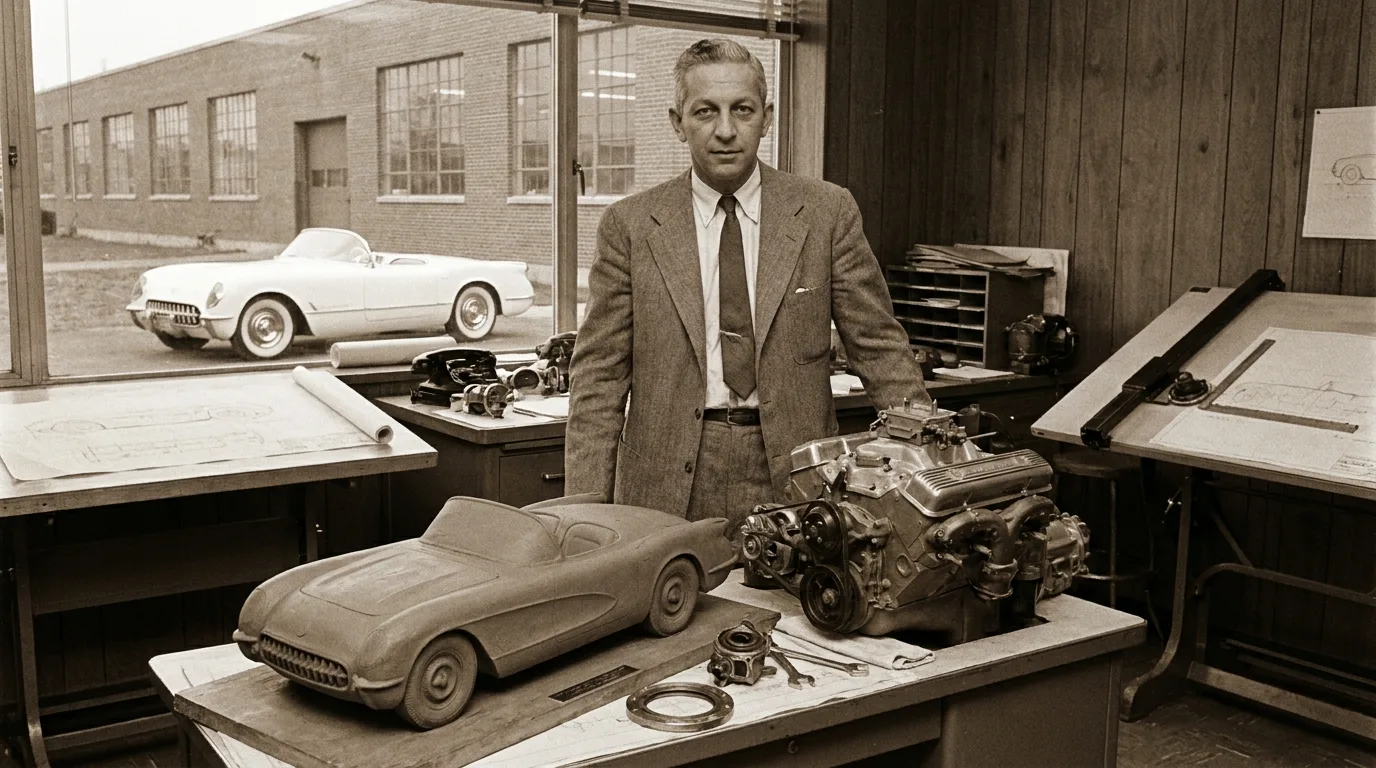
The short version: when Zora joined Chevrolet Engineering in 1953, the Corvette was already in production but not yet convincing. The first-generation car had a six-cylinder engine and a two-speed Powerglide automatic transmission. It was pretty. It was not fast. It was losing the argument for its own existence inside General Motors, where executives were not persuaded that a slow sports car with poor sales justified its place in the lineup.
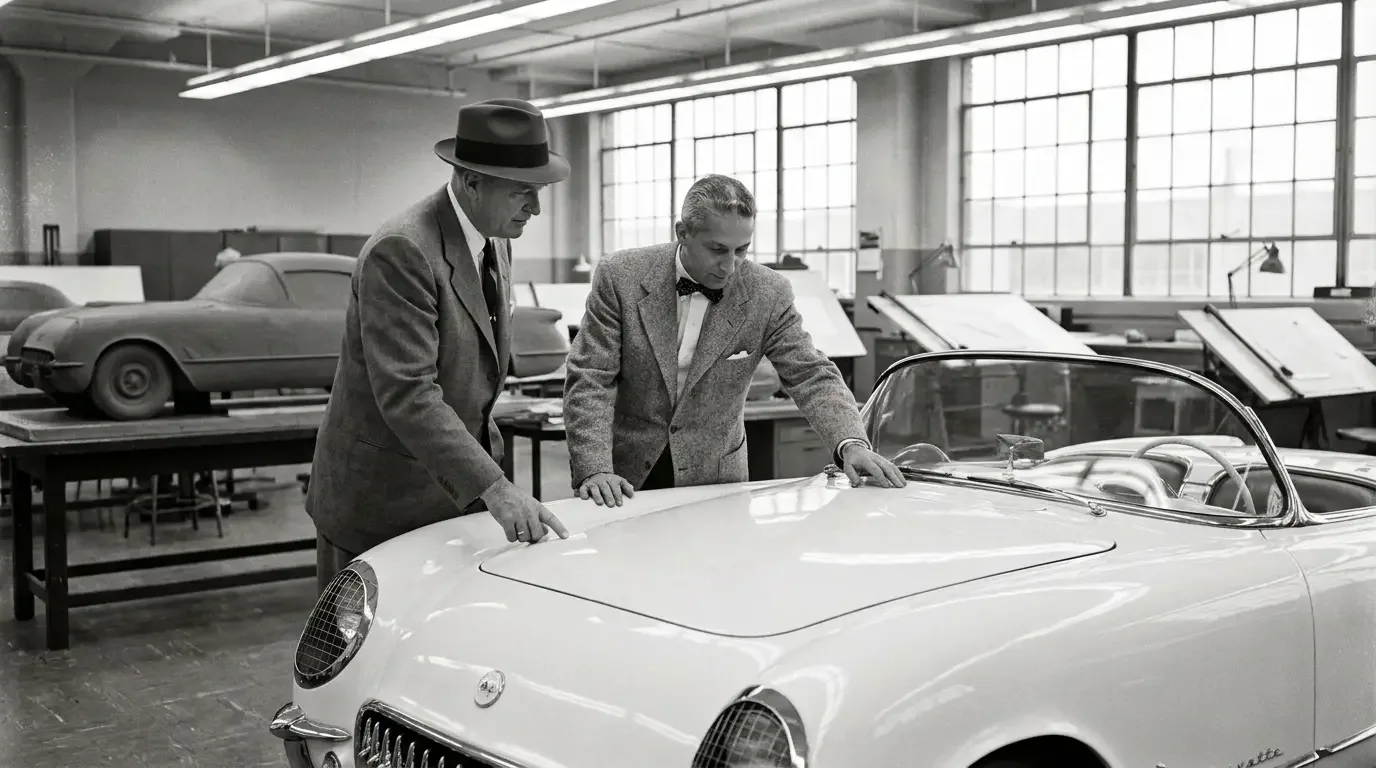
Duntov changed that argument from the inside. He was a racing engineer who understood what made a car actually perform, and he applied that knowledge systematically. His 1953 memo to Chief Engineer Ed Cole, written shortly after he joined GM, laid out what the Corvette needed to be competitive. Cole read it and Duntov got to work.
The mechanical contributions followed over the next two decades. He developed the high-lift performance camshaft that carries his name, first appearing in the 1956 parts manual and later refined into the well-known "097" solid-lifter cam used in fuel-injected and high-performance small-block Corvettes from 1957 through the early 1960s. He pushed for the small-block V8 to be fitted to the Corvette. He worked on the Rochester mechanical fuel injection system that appeared on the Corvette in 1957, which was a landmark for American production cars of that era. He argued for independent rear suspension, which arrived with the 1963 Sting Ray. And in 1956 he set a two-way flying-mile speed record of just over 150 mph at Daytona Beach in a Corvette, a year after setting a stock-car hillclimb record at Pikes Peak, giving the car something it badly needed: proof.
He became the first Corvette Chief Engineer in 1967, a title he held until his retirement in 1975. His tenure covered the C2 and C3 generations, and his fingerprints are on both.
| Era | Key contribution | Corvette generation |
|---|---|---|
| 1953-1956 | Performance memo to Ed Cole; Pikes Peak hillclimb record (1955); Daytona two-way speed record of roughly 150 mph (1956) | C1 |
| 1957 | Rochester mechanical fuel injection debuts on Corvette, up to 283 horsepower from the 283-cubic-inch V8 | C1 |
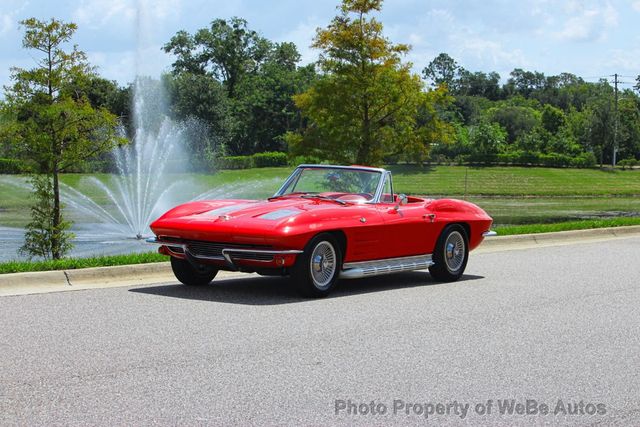
| 1963 | Independent rear suspension on Sting Ray | C2 |
| 1967-1975 | Chief Engineer tenure; LT1-powered ZR1 package (1970-1972) developed under his leadership | C2 / C3 |
The museum as a final destination
The National Corvette Museum is not a solemn place. It is loud and enthusiastic, full of show-quality cars on pedestals and interactive exhibits and the kind of energy that comes from a building full of people who actually love what they are looking at. The sinkhole that opened in the garage floor in 2014 and swallowed eight museum cars has its own permanent exhibit now, which tells you something about the culture. The museum does not look away from its own drama.
Duntov's exhibit sits quietly within all of that, part of the collection rather than separate from it. People who know it is there seek it out. People who come across it while touring the floor sometimes have to ask what they are looking at, and then they understand.
That the man who did more than anyone to save the Corvette in its first decade, who gave it the mechanical substance to match its styling, rests within the walls of the place dedicated to that car's history is the kind of story that does not need embellishment. It simply is what it is. If you are making the drive to Bowling Green to see the museum and the plant, build in a few extra minutes to find the exhibit. It is a worthwhile stop.
"The museum celebrates everything the Corvette became. The garden reminds you of the person most responsible for making sure it got there."
— Patrick Walsh
Visiting Bowling Green: the full picture
Bowling Green draws Corvette enthusiasts from across the country, and most of them are doing two things: touring the assembly plant and walking through the museum. The plant tour has a waitlist that can stretch months, so booking ahead is essential. The museum walk-in admission is straightforward. Both are worth doing if the Corvette matters to you at any level.
The museum also runs the Bash, an annual spring event that brings in thousands of Corvette owners for a multi-day gathering. If you are going to be in the area during the Bash, the museum grounds take on a different character entirely. Row after row of privately owned Corvettes, spanning every generation, parked on the grounds while their owners talk to each other about the cars. Duntov would have recognized the culture immediately. He spent decades cultivating it.
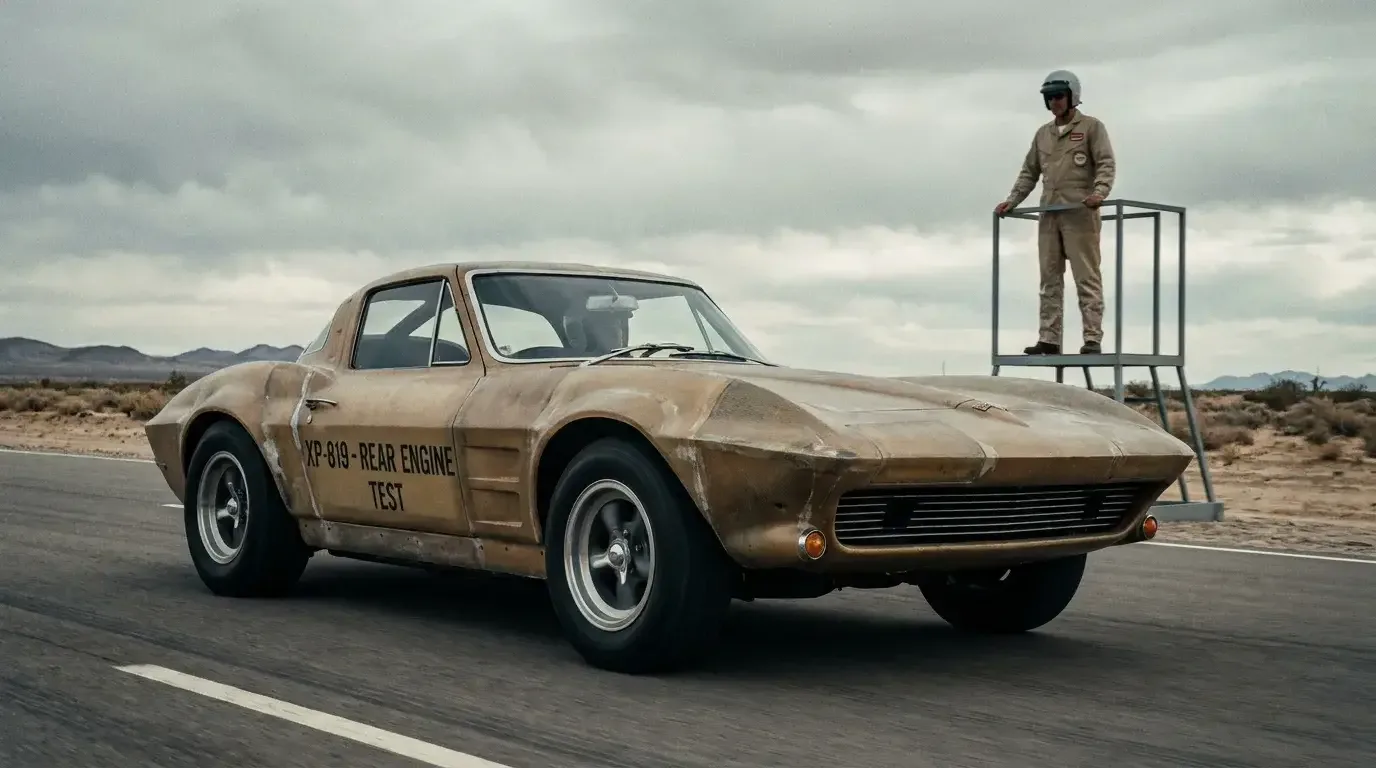
For enthusiasts who want to extend the trip, a related piece worth reading is a related piece on the experimental XP-819 rear-engine Corvette project that Duntov opposed. That project's story runs directly counter to his engineering philosophy and explains something important about how he thought about the car.
Why it matters that he is there
There are people who built important things and were forgotten before they were gone. Zora Arkus-Duntov is not one of them. He lived long enough to see the museum open, to watch the Corvette become the object of serious collector attention, to understand that what he had worked on for two decades had lasted. That is not a common gift.
Keeping his ashes at the museum is a statement about belonging. Engineers are often absent from the mythologies of the things they built. The designer gets the cover story; the engineer gets the footnote. Duntov is the exception. He is named by Corvette people with the same automatic recognition that they give to the cars themselves, and the museum's decision to hold his remains makes that recognition physical.
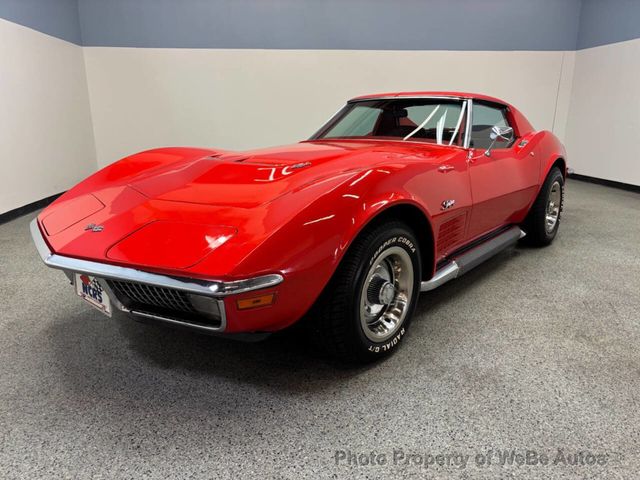
If you are in the market for a Corvette of your own, browse classic Corvette for sale listings and see what the market looks like across generations. But if you visit Bowling Green to look at the cars, spare a few minutes for the exhibit. The name on the display is the reason the cars are worth looking at.
Sources and notes
- Corvette Blogger: confirmed Duntov's ashes are entombed at the National Corvette Museum in an urn on display as part of his exhibit, near his 1974 Corvette
- Hagerty: confirmed his 1974 Corvette was his only personally owned Corvette, donated to the museum after his death and displayed with his ashes
- Wikipedia: confirmed birth/death dates, 1953 hiring, 1967 Chief Engineer title, 1975 retirement, and the Daytona Beach two-way speed record
- This Day in Automotive History: confirmed the National Corvette Museum's September 2, 1994 opening date
- Chevy Hardcore: confirmed the origin and part numbers of the Duntov high-lift camshaft, including the 1957-63 "097" grind
- Supercars.net: confirmed 1957 Corvette Rochester fuel injection horsepower ratings up to 283 hp
- Vette Vues: confirmed the LT1-powered ZR1 option package ran 1970-1972 under Duntov's tenure as Chief Engineer