What the Duntov cam actually was
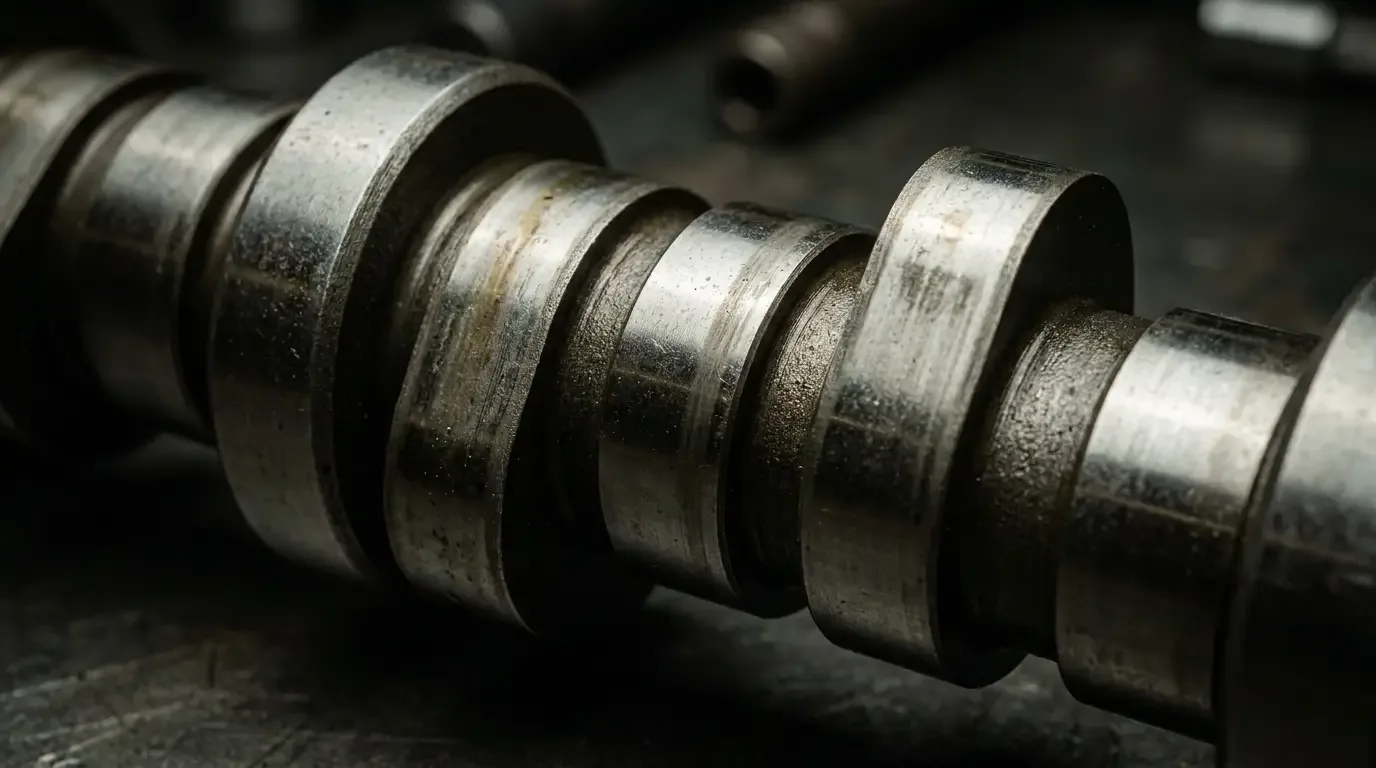
The name gets thrown around at every Corvette show, usually by someone pointing at a carburetor. It is worth being precise. The "Duntov cam" refers to the solid-lifter camshaft that Zora Arkus-Duntov developed in the mid-1950s, officially released by Chevrolet as RPO 449 in 1956. The 1956 casting carried part number 3734077, and its purpose was specific: give the 265 cubic-inch small-block enough valve timing to be competitive in sports car racing without rebuilding the entire engine architecture. That is a narrower brief than the mythology suggests, and understanding it changes how you evaluate cars that claim to have one.
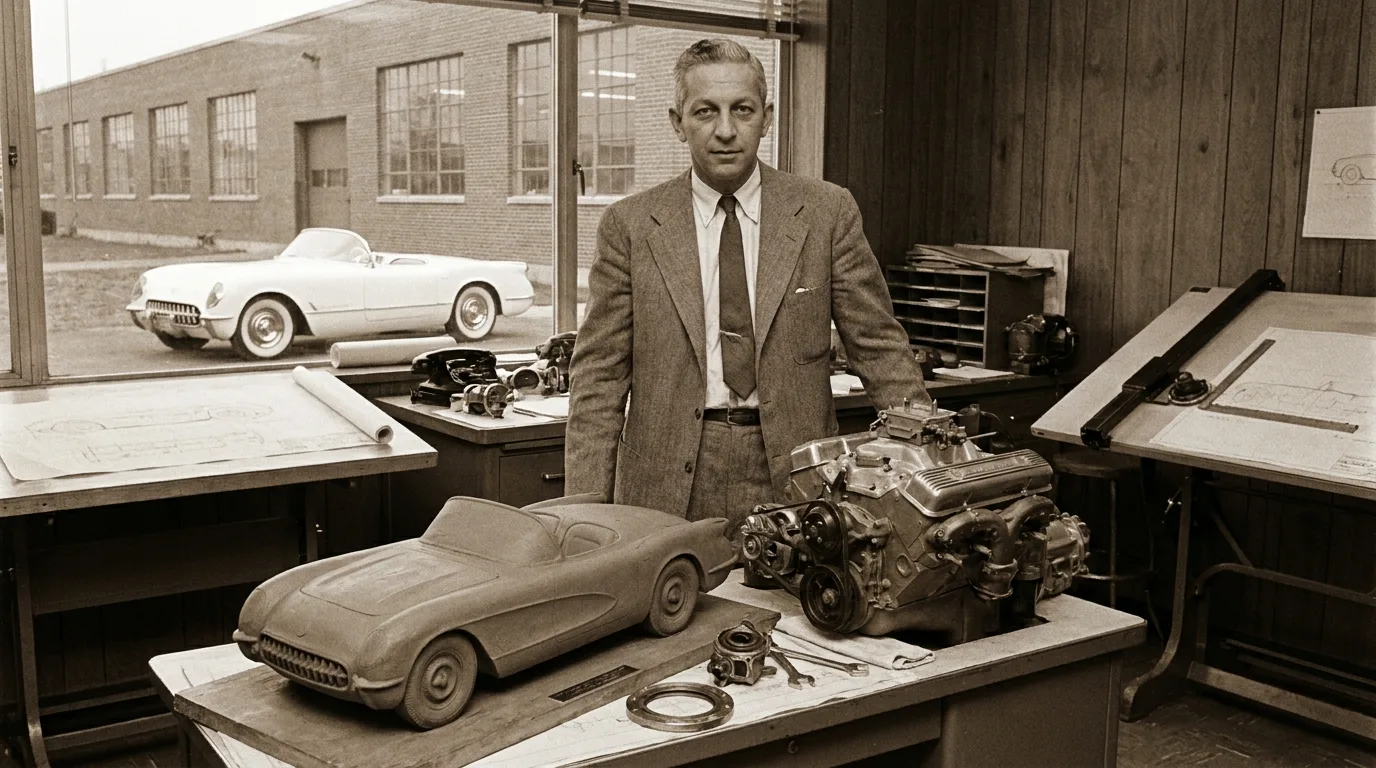
Duntov joined Chevrolet in 1953, shortly after the first Corvette appeared. His engineering background was European, his experience was racing, and his opinion of the Corvette's original six-cylinder powerplant was not flattering. By the time the small-block V8 arrived in 1955, he was already working on ways to extract more from it. You can read the zora arkus duntov story for the full biography, but the cam is where his engineering priorities show most clearly: more lift, longer duration, tighter lash, designed for an engine that spins rather than pulls.
Specifications and what they mean in practice
The Duntov cam used a solid-lifter valvetrain, which was not standard equipment on the 265 small-block at the time. Hydraulic lifters are quieter and require less maintenance, but they bleed off at high rpm as oil pressure fluctuates. Solid lifters maintain a fixed mechanical gap between the camshaft lobe and the rocker arm, which means the valve event stays consistent at higher engine speeds. The tradeoff is that the gap must be set and periodically re-checked by hand.
| Attribute | Duntov Cam (RPO 449) | Standard 265 cam |
|---|---|---|
| Lifter type | Solid (mechanical) | Hydraulic |
| Intake duration | 287° | ~200° (est.) |
| Exhaust duration | 287° | ~200° (est.) |
| Valve lash (hot) | 0.012" intake / 0.018" exhaust | Zero-lash (hydraulic) |
| Power band | Mid-to-high rpm | Low-to-mid rpm |
| Street manners | Rough idle, low-end sacrifice | Smooth, driveable |
The power gain over the stock 265 was real but not dramatic at low engine speeds. Below 3,000 rpm the engine actually felt worse, with a lumpy idle and reduced vacuum that affected accessories. Above 4,500 rpm the picture changed. The cam let the engine breathe properly at speed, and combined with the dual four-barrel carburetor setup (two Carter WCFB units) available in 1956, the result was 240 hp at 5,600 rpm, up from the base dual-quad engine's 225 hp. This was the configuration Duntov had in mind when he set his speed record at Daytona in January 1956, running a modified Corvette down the beach course.
Which Corvettes were built with it
RPO 449 was a dealer-ordered option on 1956 and 1957 Corvettes, available only in combination with the top dual four-barrel 225 hp engine. Customers who ordered it were buying a car that required more mechanical attention and gave up low-speed driveability in exchange for top-end performance. The option was not widely ordered. Total production of 1956 Corvettes was 3,467 units, and of those, only around 111 were built with RPO 449, a genuinely rare combination. Exact breakdowns by option can vary slightly between published sources, and this is precisely where the NCRS documentation process matters.
The 1957 model year expanded the performance picture considerably. The 283 cubic-inch small-block arrived, displacing the 265, and Chevrolet offered fuel injection for the first time. A revised solid-lifter camshaft, part number 3736097, carried the same 287-degree duration forward but with slightly reduced lobe lift compared to the 1956 unit, now applicable to a larger engine with more potential. The "fuelie" 283 with the Duntov cam in its highest state of tune (RPO 579B) was rated at 283 hp at 6,200 rpm on 10.5:1 compression, which Chevrolet promoted as one horsepower per cubic inch, a benchmark that carried marketing weight at the time. It was only the second American production engine to reach that figure, after Chrysler's 354 cubic-inch Hemi in 1956. If you are looking at 1957 Corvettes for sale, understanding which engine and camshaft combination is present matters considerably to both authenticity and value.
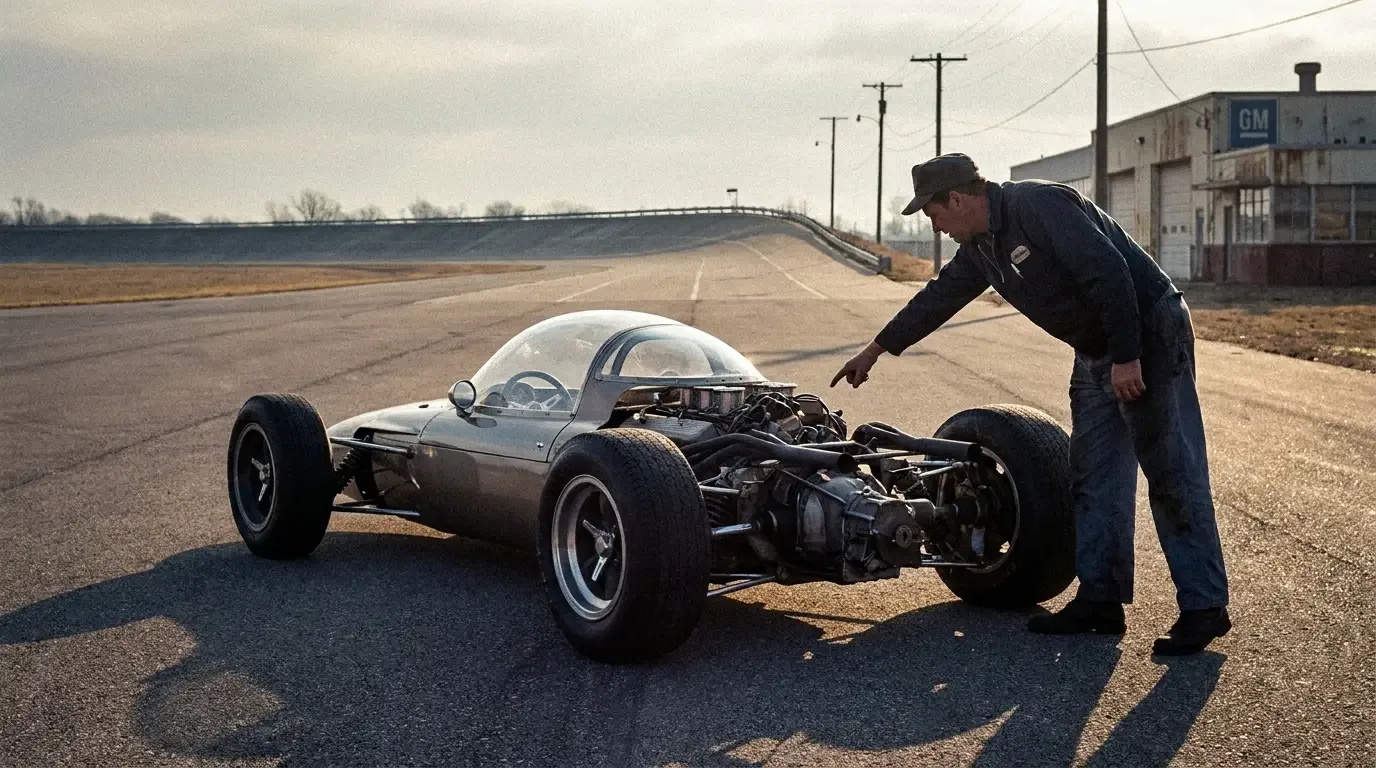
Duntov continued developing the Corvette's mechanical architecture through this period, and the cam bearing his name was one piece of a larger engineering program that included suspension revisions, brake improvements, and the eventual development of independent rear suspension for the C2. His work on the CERV I experimental vehicle, described more here, shows how the camshaft development fit into a broader engineering agenda aimed at making the Corvette a serious racing platform.
Authentication and what to look for
The Duntov cam is one of the most frequently misrepresented components in the 1956-1957 Corvette market. A solid-lifter camshaft installed in a car does not mean the car left the factory with RPO 449. The cam is not difficult to source from the reproduction and performance parts market, and its presence under the valve covers tells you what is there now, not what was ordered on the window sticker.
"The camshaft itself doesn't tell you much without the tank sticker and the build documentation behind it. Anyone can drop a solid-lifter cam into a small-block. What I want to see is the original RPO listing and, ideally, the dealer paperwork. The cam should match what the documentation says was ordered."
— Tom Ramirez
For a car claiming factory RPO 449 equipment, the documentation chain matters. The tank sticker, sometimes called the broadcast sheet, is the factory production record attached inside the car during assembly. It lists the RPOs as-built, which is not necessarily identical to what was ordered. Cars that were modified on the line, or at the dealer level under the "Special Performance" program, can have a murky paper trail. The NCRS judges have seen enough of these to know where the inconsistencies appear. Before paying a premium for a documented Duntov-cam car, have someone from the registry evaluate the paperwork.
Why it still matters in the current market
Documented 1956 and 1957 Corvettes with factory high-performance equipment have held value through most of the collector car market's recent volatility. The 1957 fuel-injected cars in particular attract serious buyers who understand what the documentation means. A correctly documented RPO 449 car in solid driver condition commands a meaningful premium over an otherwise similar car with aftermarket modifications, and the gap widens as condition improves toward show quality.
The broader significance of the Duntov cam is not the horsepower number, which is modest by later Corvette standards. It is what the option represented: a factory commitment to building a car that could be taken seriously in competition. That shift in intent, documented in the factory records of 1956 and 1957, is what separates the early Corvette's history from the years that preceded it. The cam is the paper trail for a decision that changed what the car was.
Sources and notes
- Chevy Hardcore: Duntov camshaft history confirmed part numbers 3734077 (1956) and 3736097 (1957), the 287-degree duration figure, and hot valve lash of 0.012" intake / 0.018" exhaust.
- Corvette Blogger: rare 1956 RPO 449 Duntov cam feature confirmed the roughly 111-unit RPO 449 production figure and the 240 hp / 5,600 rpm rating for the 1956 dual-quad cam engine.
- Corvsport: 1956 Corvette production numbers confirmed total 1956 production of 3,467 units.
- Street Muscle: the first fuelies confirmed the 283 hp at 6,200 rpm rating for RPO 579B and its status as the second American production engine to reach one horsepower per cubic inch, after Chrysler's 1956 Hemi.
- Corvsport: 1956 Daytona Beach Speed Weeks confirmed Duntov's 150.583 mph two-way average flying-mile run in January 1956.
- Wikipedia: Zora Arkus-Duntov corroborated the Daytona speed record and Duntov's role developing the high-lift camshaft and 1957 fuel injection.