A dream that took fifty years to reach production
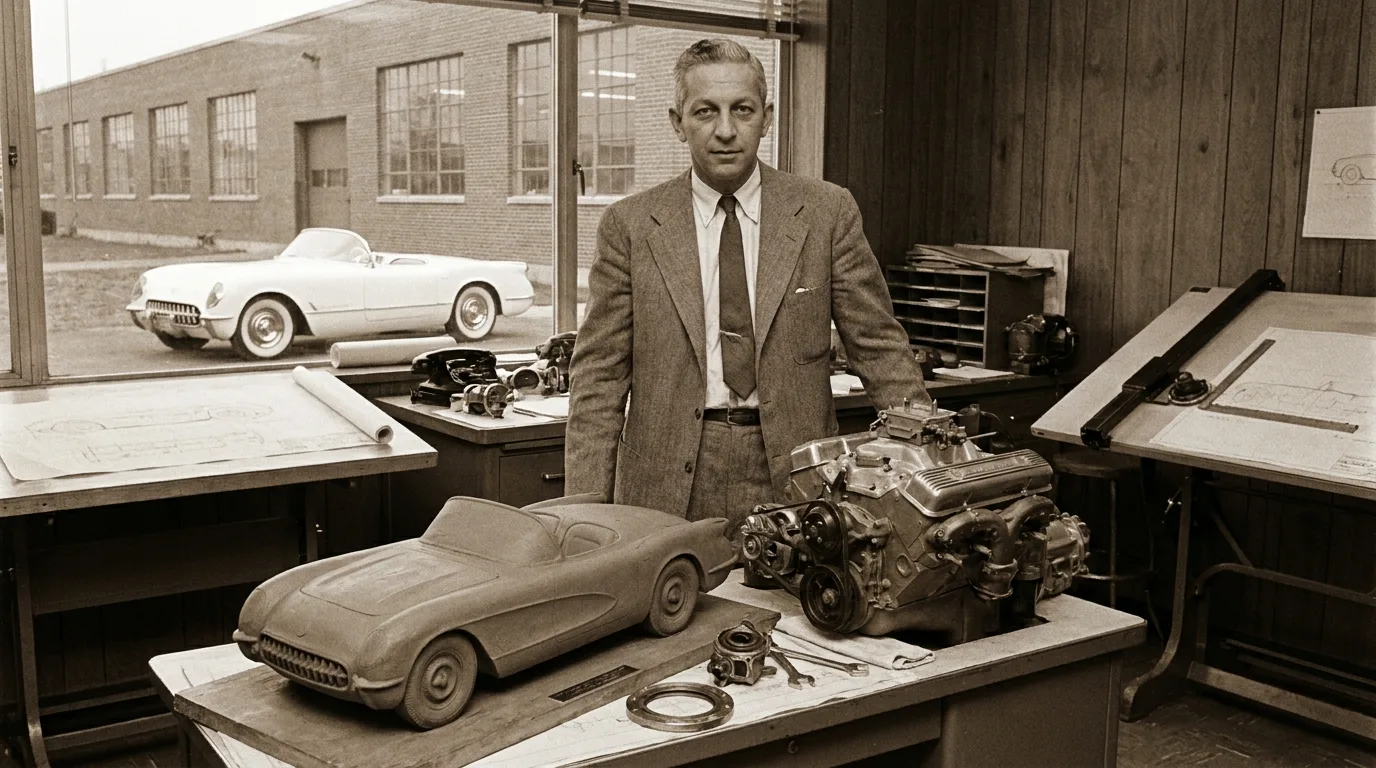
The mid-engine Corvette did not arrive with the C8 in 2019. The idea arrived decades earlier, drawn on paper by engineers who believed the Corvette's natural evolution pointed the engine behind the driver. Understanding why it took so long, and who pushed it hardest, means tracing the career of one man: Zora Arkus-Duntov, the Belgian-born engineer who joined Chevrolet in 1953 and spent the next two decades trying to move the engine to the middle of the car. To understand the full scope of what he built first, read the origin story of America's sports car.
Duntov's case for a mid-engine layout was never purely theoretical. He had raced in Europe, understood what a rear-weight-bias chassis cost in the corners, and watched the European sports car manufacturers move toward mid-engine designs in the late 1950s and early 1960s. The front-engine Corvette he inherited was fast in a straight line. What he wanted was something that could compete at the highest levels of road racing on both sides of the Atlantic.
The CERV prototypes and what they proved
The practical history of Duntov's mid-engine work runs through a series of experimental vehicles built inside GM, most of which never reached the public. The CERV I (Chevrolet Engineering Research Vehicle), built during 1959 and 1960 and unveiled publicly at Riverside International Raceway in November 1960, was a single-seat open-wheel research car that gave Duntov a testbed for mid-engine handling dynamics. It was not a production proposal. It was proof of concept, and it worked well enough to justify further work.
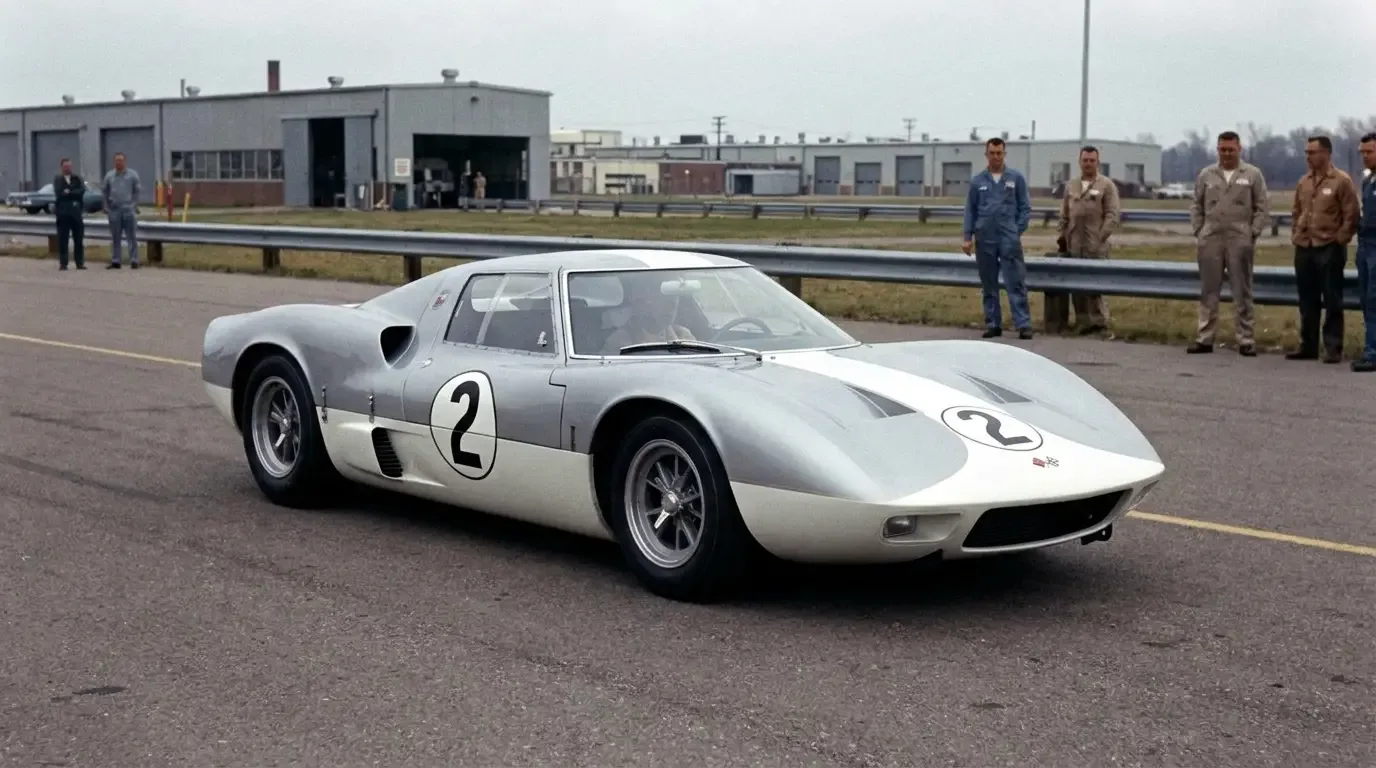
CERV II followed in 1964 with a more radical specification: an all-wheel-drive layout built around a single 377-cubic-inch (roughly 6.2-liter), Hilborn fuel-injected, overhead-cam V8 that drove the front and rear wheels through two separate automatic transmissions, one ahead of the engine and one behind it. It was not a true twin-engine car, but the dual-transmission AWD system let Duntov's team explore a configuration at the farthest edge of what the engineering team could attempt. These vehicles were never shown as production plans, but they established something important. Duntov's team could build a mid-engine chassis, tune it, and make it handle. The barrier to a mid-engine production Corvette was not engineering. It was organizational.
The XP-882 and the politics of the project
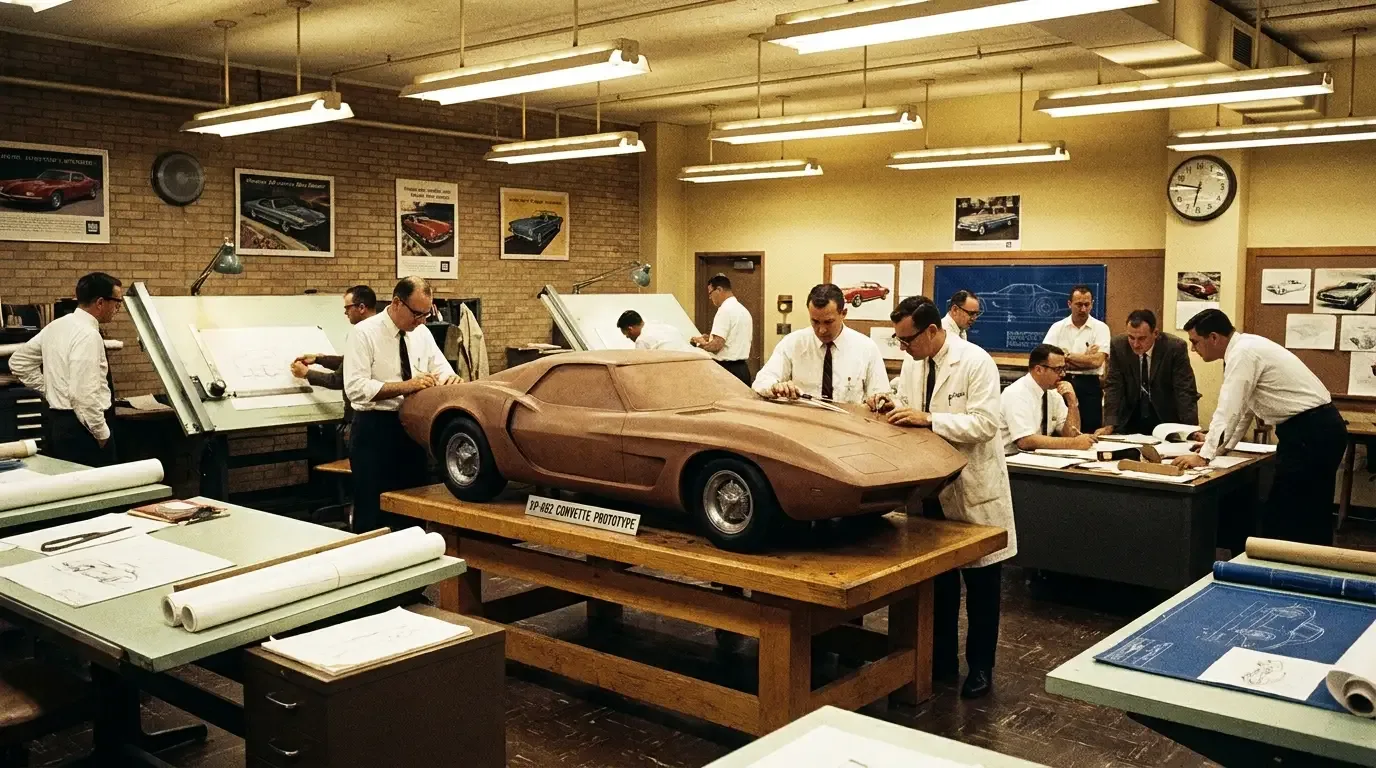
By the late 1960s, the mid-engine Corvette had a serious prototype: the XP-882, a transverse-engine concept developed under Duntov's direction that showed what a production-feasible mid-engine layout might look like. GM actually put the car on display at the New York Auto Show in 1970, which created public attention and pressure that worked in complicated ways.
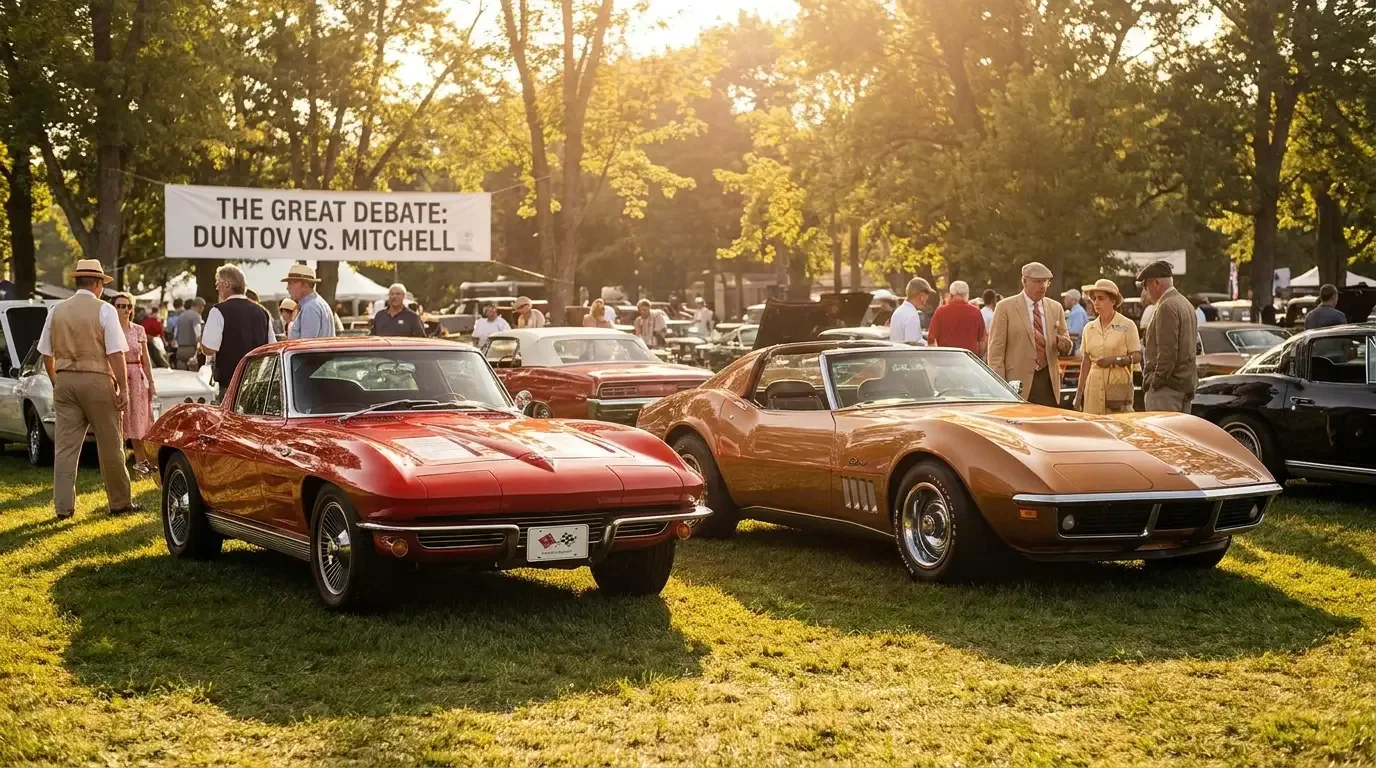
The internal battles over this project are part of the related article on Duntov's relationship with GM design chief Bill Mitchell. The short version is that Mitchell's design priorities and Duntov's engineering priorities did not always point the same direction, and the Corvette sat at the intersection of both departments. A mid-engine car required a different body structure, different proportions, and a cockpit layout that gave the driver a different relationship to the car than any previous Corvette had offered. These were not trivial changes to negotiate inside a large manufacturer.
The XP-882 also surfaced at a time when GM's corporate leadership was watching fuel economy regulations and emissions standards approaching from the federal government. A high-performance mid-engine sports car was a difficult argument to make to executives who were trying to manage the company's regulatory exposure. Duntov made the argument anyway. It did not prevail during his tenure.
| Prototype / vehicle | Approximate era | Configuration | Outcome |
|---|---|---|---|
| CERV I | 1959-1960 | Single-seat, mid-engine, open-wheel research car | Engineering testbed, not production proposal |
| CERV II | 1964 | Mid-engine, dual-transmission all-wheel-drive research car | Proved mid-engine AWD handling, never near production |
| XP-882 | c. 1969-1970 | Transverse V8, mid-engine production concept | Shown publicly 1970; project shelved under fuel crisis |
| Aerovette | 1973-1977 | XP-882 evolution, Wankel then V8 mid-engine | Nearly approved for 1980; shelved after Duntov's retirement |
The Aerovette and how close it came
The closest the mid-engine Corvette came to production in the twentieth century was a vehicle called the Aerovette, developed from the XP-882 platform through the early-to-mid 1970s. In 1976, after the car's rotary engine was swapped for a 400-cubic-inch V8, GM design chief Bill Mitchell secured approval to put the Aerovette into production for the 1980 model year. The story of that near-approval, and what stopped it, runs through the zora arkus duntov era in full.
Duntov retired from GM at the end of 1974, effective January 1975. The Aerovette project, which had been built substantially on his credibility and his sustained advocacy, lost momentum without him. The Corvette that arrived for 1984 as the C4 was a thoroughly updated front-engine car. The mid-engine question went dormant for another decade and a half.
What is worth understanding about the Aerovette period is not just that the project came close, but why it kept coming back. Duntov had built a persuasive internal case that was hard to permanently dismiss. He had test data from the CERV vehicles. He had a working prototype in the XP-882 and Aerovette. He had made the handling argument clearly enough that his successors in Corvette engineering understood what the front-engine layout cost in cornering performance at high speeds. The question after his retirement was not whether his case was correct. It was whether the timing and business conditions would ever align.
"The Aerovette file is the most interesting thing in the archive because you can see exactly where the decision turned. The engineering was approved. The business case collapsed. That distinction matters for understanding why the C8 took another forty years."
— Tom Ramirez
From concept to C8: the long road through the C5 and C7 era
Zora Arkus-Duntov died in 1996. The mid-engine Corvette he had spent much of his career advocating for did not reach production until 2020, as the 2020 model year C8 Stingray. The intervening decades were not idle. Corvette engineers through the C5 and C6 generations pushed the front-engine rear-wheel-drive formula to a point where a Z06 or ZR1 could run lap times that reportedly rivaled far more expensive European sports cars. But the handling limitation Duntov had identified in the 1960s remained: putting 650 horsepower (C7 Z06) or better yet 755 horsepower (C7 ZR1) through a chassis with the engine ahead of the front axle creates balance problems that become more expensive to engineer around as power levels climb.
By the C7 era, the Corvette engineering team was openly acknowledging that the next step in performance would require moving the engine. The Z06 and ZR1 variants of the C7 used increasingly elaborate aerodynamics, cooling packages, and suspension geometry to manage a front-weight-bias chassis at performance levels that ranked among the quickest production cars sold in America. The case Duntov had made in 1968 was still the case in 2013.
The C8 Stingray that launched for the 2020 model year placed a mid-mounted 6.2-liter LT2 V8 producing 490 horsepower and 465 lb-ft of torque in base form (495 horsepower with the optional NPP performance exhaust). The layout Duntov had drawn in proposals and built in prototypes over the 1960s and 1970s was finally in production, priced to reach buyers rather than sitting in a museum. Whether Duntov would have had opinions about the execution is a reasonable question. He was specific about engineering in a way that rarely settled for "close enough."
Sources and notes
- Corvette Action Center: CERV I build and debut timeline (1959-1960, Riverside International Raceway debut November 1960)
- CorvSport: CERV II specifications, including the 1964 date, dual-transmission all-wheel-drive layout, and 377-cubic-inch V8
- Wikipedia: Zora Arkus-Duntov biography, including birth in Brussels, 1953 Chevrolet start date, and April 1996 death
- Wikipedia: Chevrolet Aerovette, confirming the 1976 V8 conversion and 1980 model year production approval that was later canceled
- Corvette Report: XP-882 development and its April 2, 1970 New York Auto Show debut
- National Corvette Museum: 2020 Corvette C8 Stingray specifications, confirming 490 hp / 465 lb-ft LT2 base output