The year GM pulled the plug before a single car reached a buyer
Chevrolet built Corvettes in 1983. The cars existed. They went through the Bowling Green assembly plant, received VINs, and were photographed by the press. Then General Motors made a decision that has no exact parallel in American automotive history: they scrapped essentially every one of them. No 1983 Corvette was sold to the public. If you have ever tried to register one, you already know how that conversation ends.
The factory records on this are clear enough that the NCRS has documented it thoroughly. This is not a rumor or an urban legend that grew up around a production gap. It is a factory decision with a specific cause, and understanding it requires understanding what Chevrolet was attempting with the fourth-generation Corvette and what went wrong during the launch window.
What the C4 was supposed to be
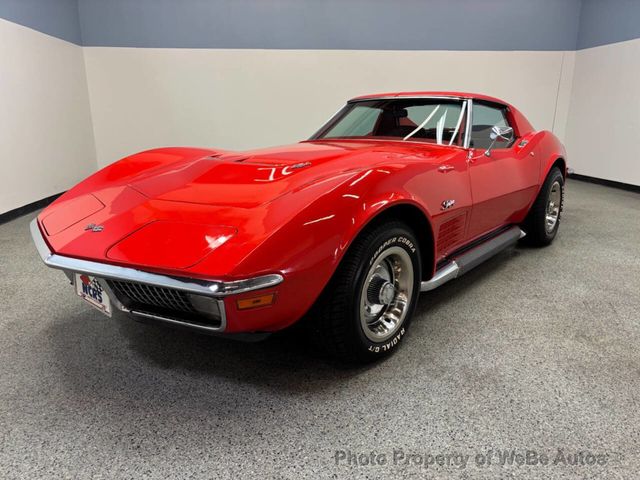
The C3 Corvette had run from 1968 through 1982, and by the end of that generation, the car was carrying real weight. Emissions regulations had drained horsepower through the 1970s. The 1980 base L48 350 was rated at 190 hp; California-spec cars could not get the 350 at all and instead used a 305 cubic inch V8 rated at 180 hp, a number that would have been unthinkable at the start of the C3. The body had been updated and re-updated, but the basic structure was aging.
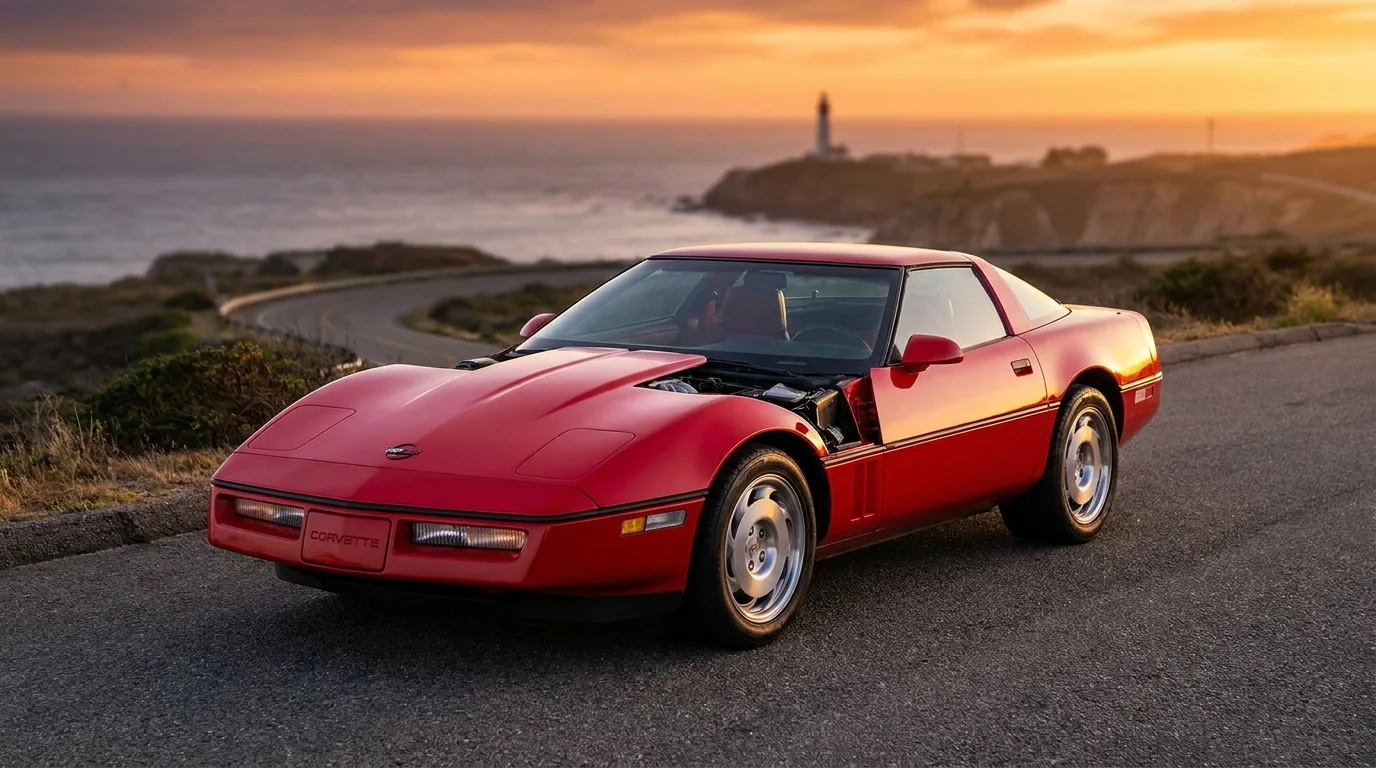
What Chevrolet built for 1984 was genuinely new in almost every meaningful dimension. The C4 carried a completely redesigned chassis with a backbone frame design, a new cross-fire injection system that would itself be replaced quickly, a clamshell hood that opened from the front, and a new digital instrument cluster that attracted as much comment as anything else on the car. The wheelbase changed. The proportions changed. The car was shorter overall but felt more modern. To read the next chapter in the Corvette's evolution is to understand how much Chevrolet invested in getting the C4 right.
The problem was that "getting it right" took longer than the launch schedule allowed.
The quality control crisis at Bowling Green
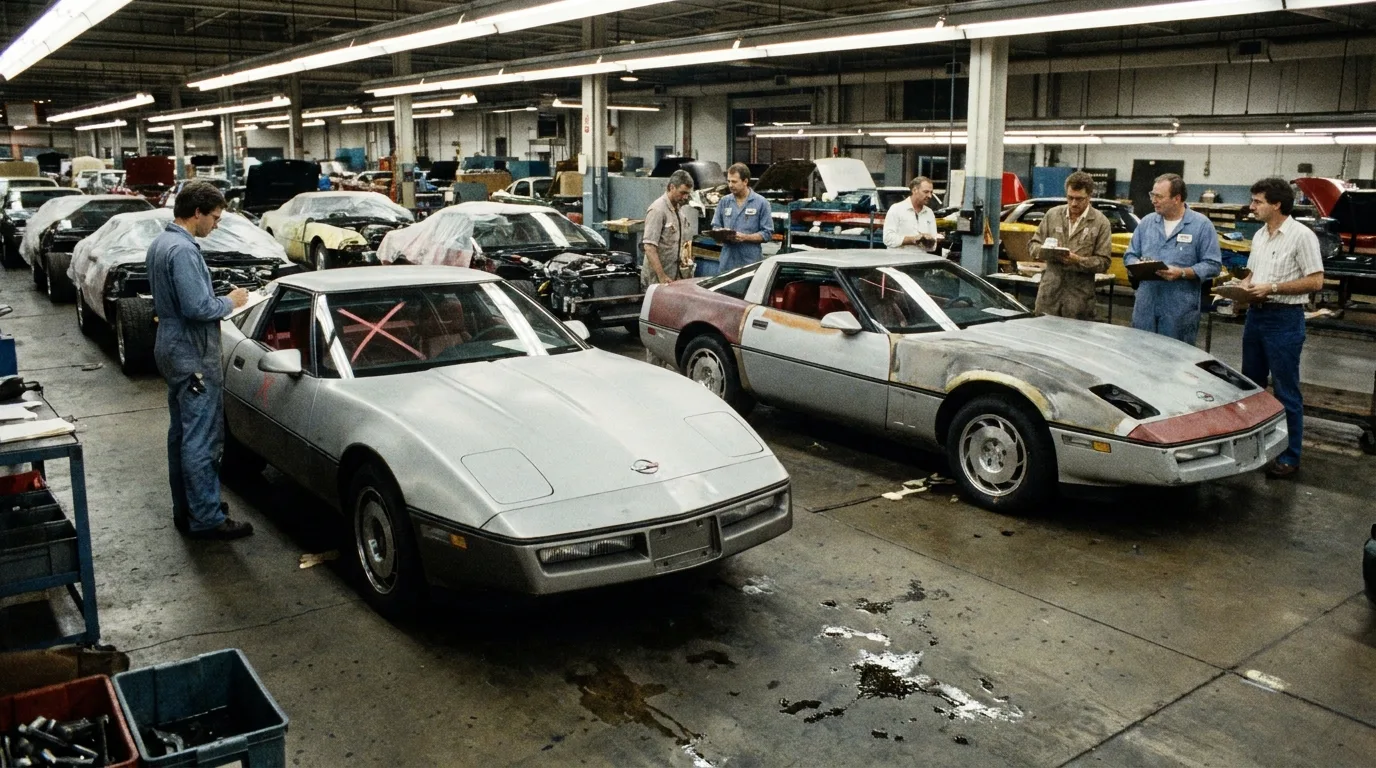
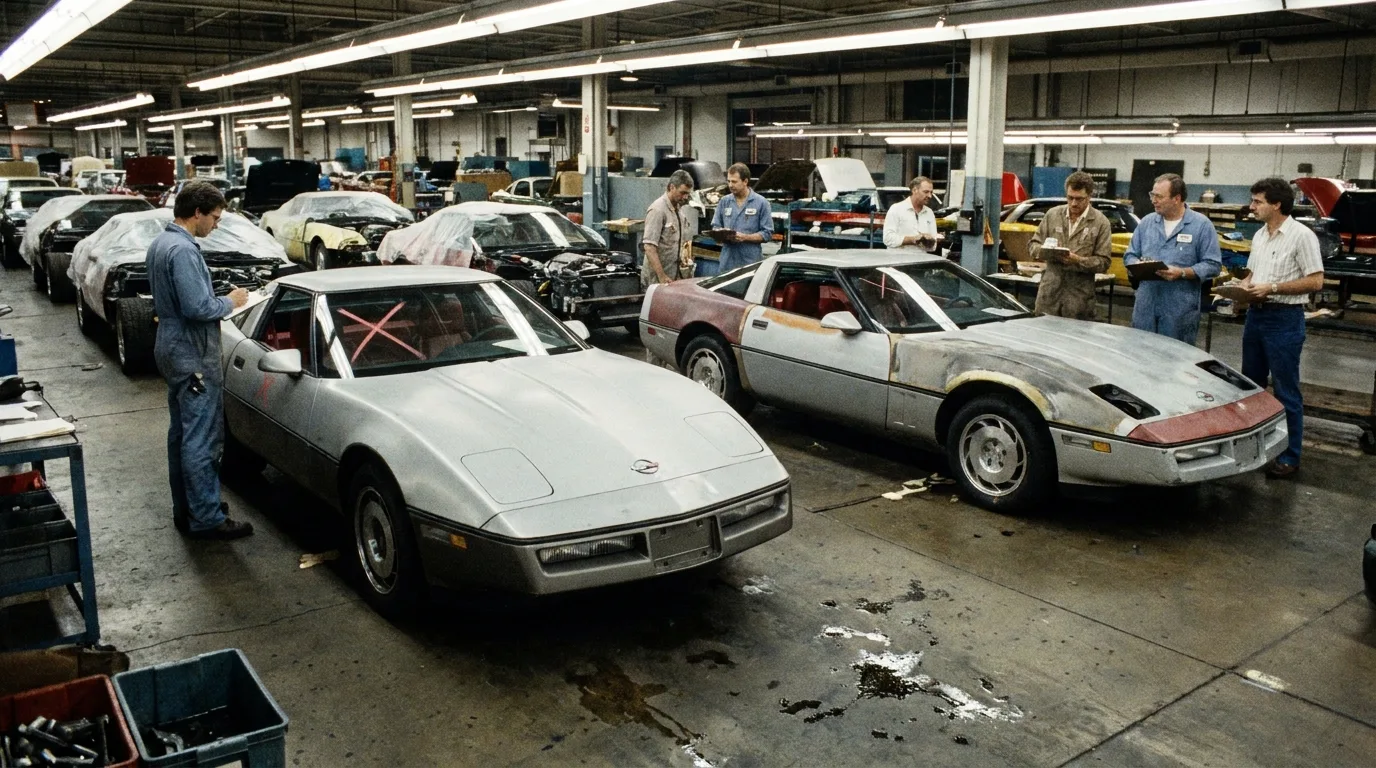
When the first 1983 production cars came off the line, the assembly quality was not where Chevrolet wanted it. The accounts from that period consistently describe fit and finish problems, panel gaps, and quality issues that the division judged unacceptable for what was supposed to be a flagship statement. The new plant in Bowling Green was itself relatively new at the time, having opened in 1981 to replace Corvette production at the St. Louis facility, and the workforce was still working through the learning curve on the new platform.
The specific issues cited in various factory-adjacent accounts include door fit, top latching problems on the removable roof panels, and general build quality inconsistencies. Whether any single defect was the trigger or whether it was the cumulative picture remains somewhat disputed in the documentation I have seen. What is not disputed is Chevrolet's response: production continued for a period, but the decision was made not to release model-year 1983 cars to the public.
Instead, Chevrolet pushed the introduction date to March 1983 and called the cars 1984 models. The calendar year 1983 cars were thus a production batch that went nowhere except, ultimately, to destruction.
| Detail | Fact |
|---|---|
| 1983 Corvettes produced | 43 (pilot/pre-production cars) |
| 1983 Corvettes sold to public | Zero |
| Surviving 1983 example | 1 (National Corvette Museum, Bowling Green, KY) |
| Official 1984 introduction date | March 1983 |
| 1984 model year production | 51,547 |
What happened to the cars
Of the 43 pilot cars that had been assembled, 42 were crushed. General Motors did not offer them to employees, did not auction them, and did not allow them to enter the market in any form. The logic was straightforward if painful: releasing substandard cars under the Corvette name, particularly at a moment when the model was supposed to be announcing a generational leap forward, would have done lasting damage. The decision to scrap was a quality-over-schedule call.
One car escaped the crusher. The Corvette that now sits in the National Corvette Museum in Bowling Green was retained as a development and historical reference example. It carries documentation establishing its 1983 build date and is the only physical proof that the production run happened at all. The museum has detailed records on the car's history from the factory.
"The decision to scrap those cars was not made lightly. Chevrolet had a new assembly plant, a new platform, and a reputation to protect. They chose the reputation. That is a hard call to make when you have 43 pilot cars sitting there, and it was the right one."
— Tom Ramirez
How the 1984 model corrected the problems
The 1984 Corvette launched to strong reception and solid sales. Chevrolet used the extra time between the scrapped 1983 production run and the public launch to address the assembly quality issues, and the 1984 cars were generally regarded as well-built examples of what the C4 was intended to be. The only engine offered was the L83 350 cubic inch V8 with Cross-Fire fuel injection, rated at 205 hp at 4,300 rpm and 290 lb-ft of torque at 2,800 rpm, not a dramatic number by later C4 standards, but the chassis and the overall engineering package impressed the automotive press.
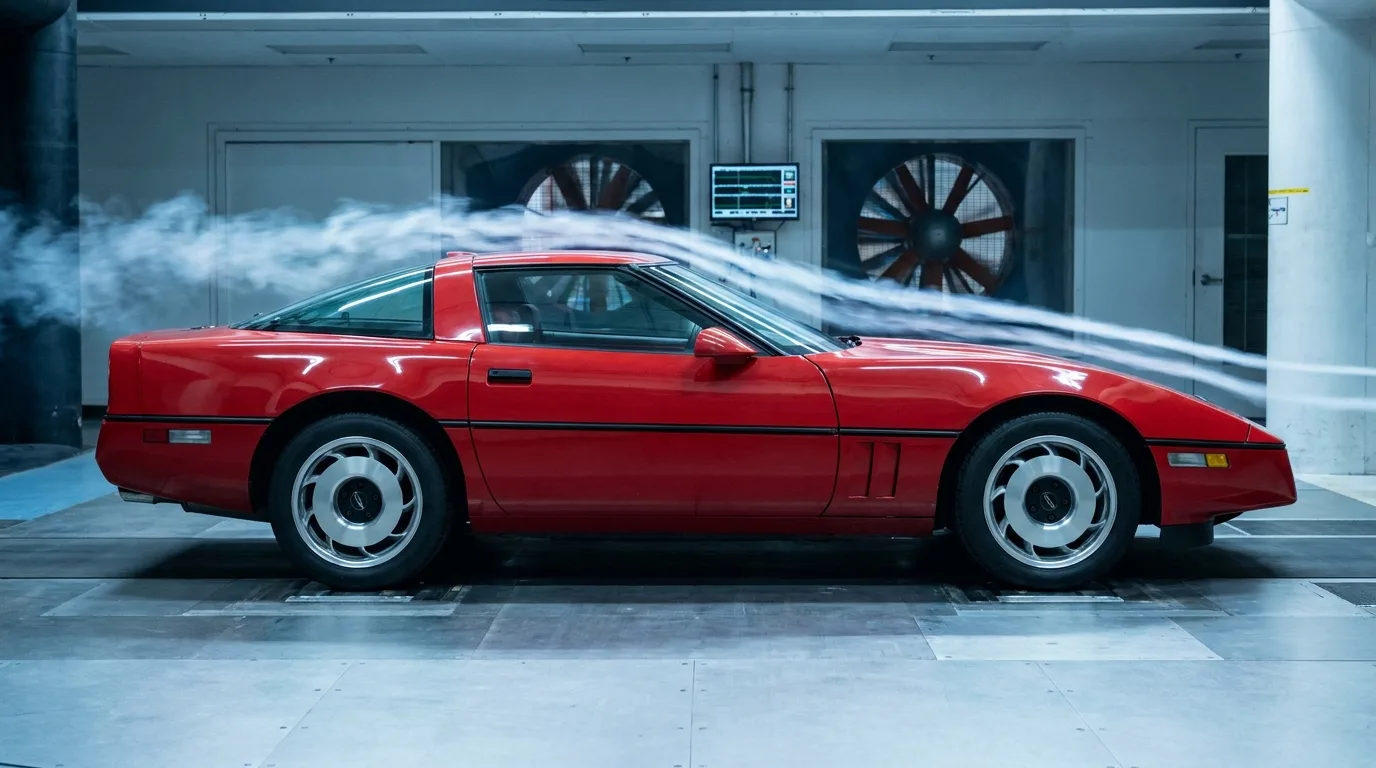
The digital instrument cluster generated controversy, as new technology in cars often does. Some buyers appreciated it. Others preferred analog gauges and said so loudly. Chevrolet later offered an analog option. But the structural decisions, the new frame, the revised suspension geometry, the better aerodynamics, those were received as genuine improvements over what the C3 had become by 1982. For the deeper story of what the C4 became across its twelve-year production run, the 1984 launch is where that story begins.
Sources and notes
- Hagerty: confirmed 43 pilot cars built, 42 destroyed, and the survival story of the sole 1983 Corvette
- Vette Vues Magazine: confirmed the survivor's VIN (1G1AY0783D5110023, pilot car RBV098) and its display history
- Corvsport: confirmed 43 pilot/pre-production cars, the quality and frame-redesign issues behind the delay, and the survivor's move to the National Corvette Museum
- Corvsport: confirmed 1984 model year production total of 51,547 units
- Wikipedia: confirmed 1980 base L48 350 rated at 190 hp, with California cars limited to the 305 cid LG4 rated at 180 hp
- Old Car Memories: confirmed the 1984 L83 350 Cross-Fire V8 rating of 205 hp at 4,300 rpm and 290 lb-ft at 2,800 rpm