The option code that started everything
In early 1963, Chevrolet quietly made available a dealer-order package for the new Sting Ray coupe that most buyers never heard of and almost nobody received. RPO Z06 was a $1,818.45 option that grouped together the heaviest-duty suspension, the largest-displacement fuel-injected engine, and a set of components borrowed directly from Zora Arkus-Duntov's competition development program. It was not advertised in the way Chevrolet typically sold equipment. You had to know it existed.
That obscurity is part of what makes the 1963 Z06 significant to researchers today. The car was not a factory racing package in the sense of a homologation special with stripped interiors and roll cages. It was a performance equipment group, ordered through normal dealer channels, that happened to put a street Corvette closer to track specification than anything Chevrolet had previously offered. To understand what it represented, you have to look at what the Sting Ray itself was trying to accomplish in 1963, and what the competition landscape looked like. You can read how the Corvette evolved from its origins to the moment the Z06 arrived.
What the Z06 package actually included
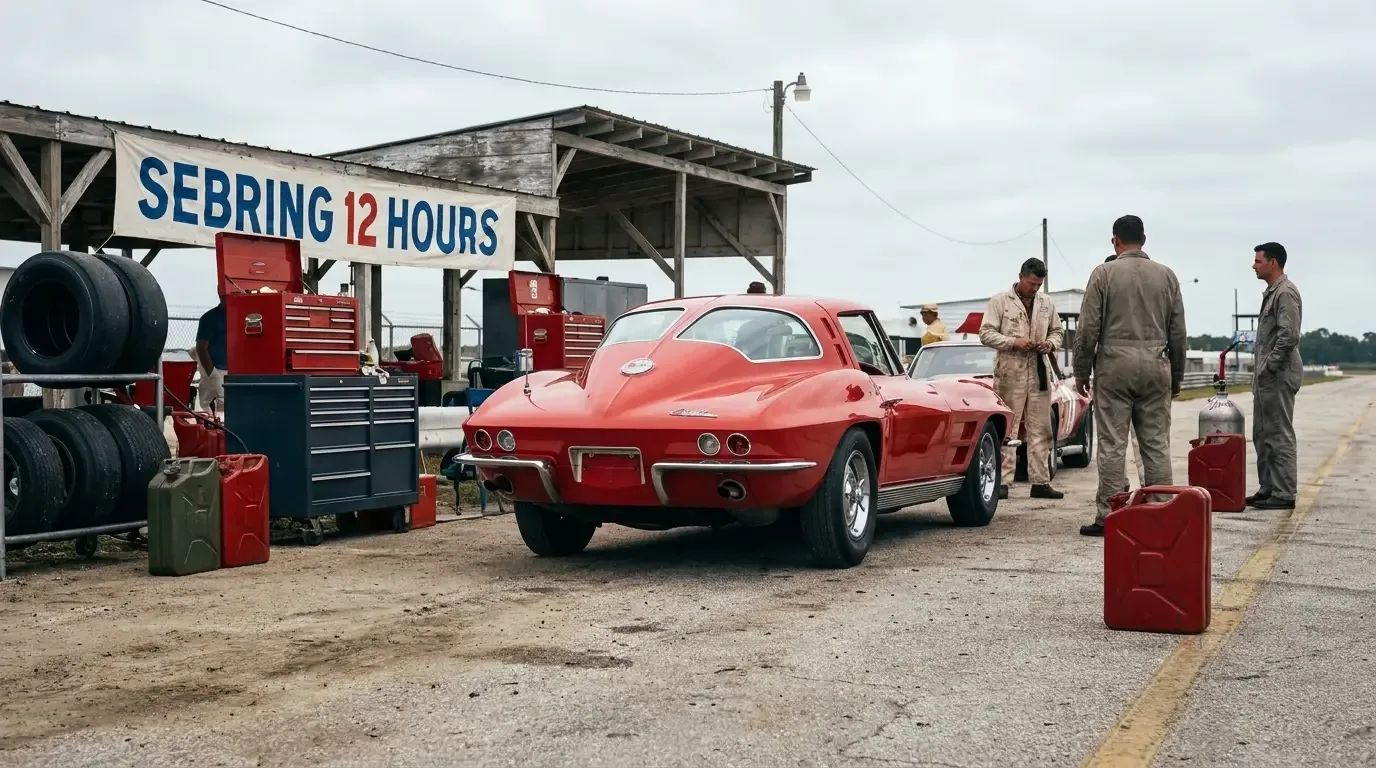
The Z06 option as offered in 1963 consisted of several specific components ordered together. The engine was the 327 cubic inch V8 with mechanical fuel injection, the L84, rated at 360 hp at 6,000 rpm and 352 lb-ft of torque at 4,000 rpm. The suspension package included heavy-duty springs and shocks and a larger front anti-roll bar. Braking was addressed with sintered metallic linings. A separate option, RPO N03, added a 36.5-gallon fiberglass fuel tank for long-distance competition use; it was not standard equipment on every Z06 and was ordered on only 63 of the 199 Z06 cars built for 1963.
The knock-off aluminum wheels deserve specific mention, and the real story is less tidy than club lore sometimes suggests. RPO P48 cast-aluminum knock-off wheels were listed as a factory option for 1963, and roughly a dozen cars were fitted with them at the plant. But the castings proved porous and would not reliably hold air, so tires went flat on cars sitting in the storage yard before they could be loaded for shipment. Chevrolet pulled the aluminum wheels and refitted those cars with the standard steel wheels before they ever reached a dealer. No 1963 Corvette is documented as having left the factory for a customer riding on knock-off aluminum wheels; the option did not become a genuine production reality until 1964. Any 1963 car offered today with aluminum knock-offs installed is running a period-style or reproduction wheel, not an as-delivered factory fitment, and that distinction matters for authenticity.
The Sting Ray platform underneath it
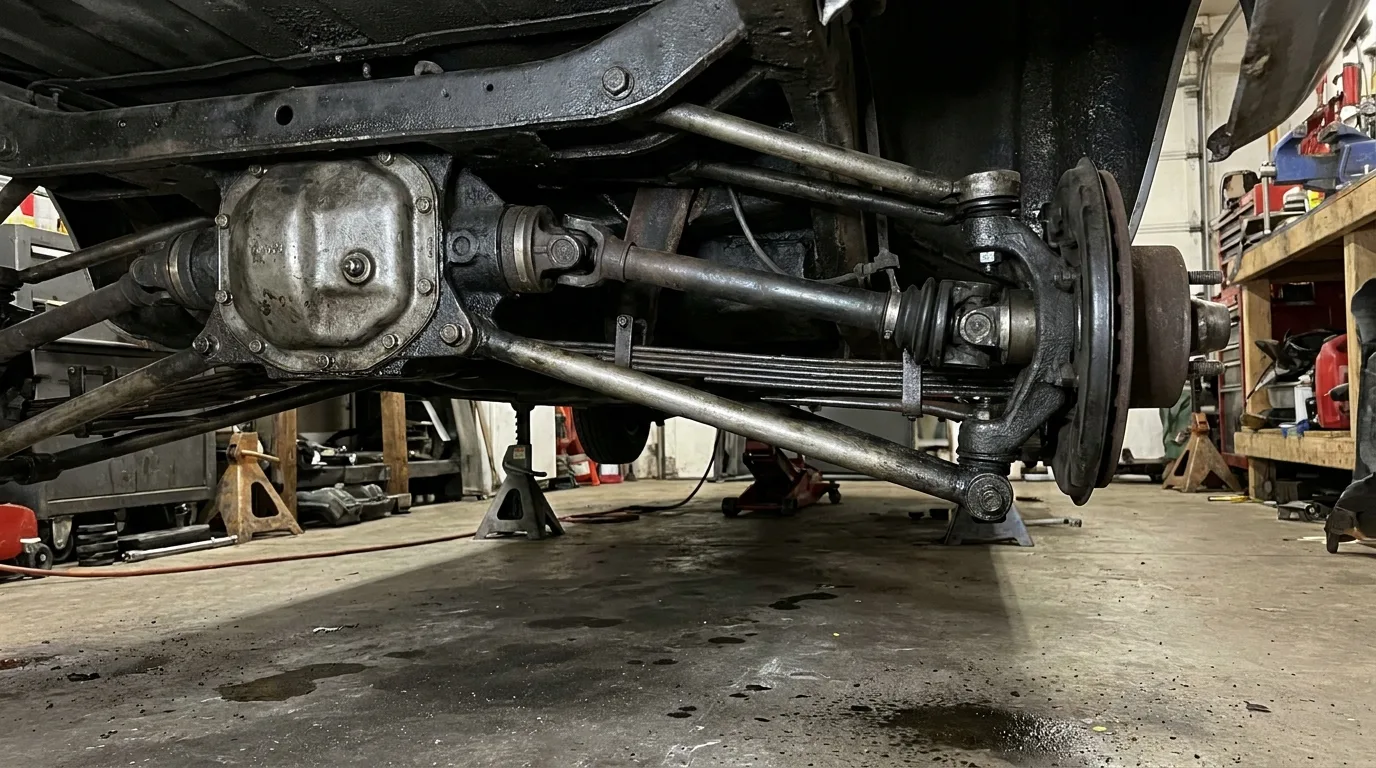
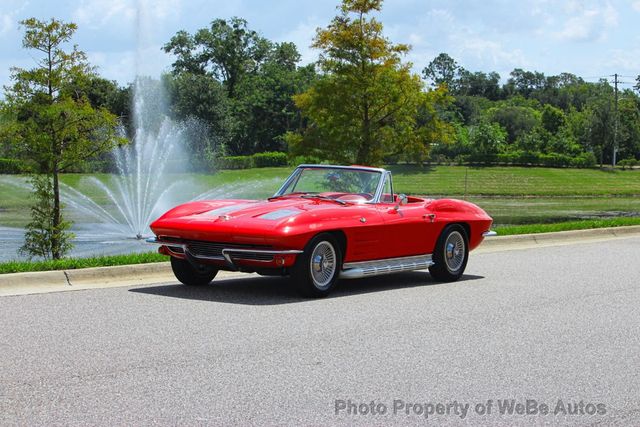
The 1963 Corvette Sting Ray was itself a significant engineering departure from the C1 cars it replaced. The new body was shorter in wheelbase, the chassis was more rigid, and the rear suspension moved to an independent design that Duntov had been working toward for years. That independent rear suspension changed how the car put power to the road and how it handled weight transfer under hard braking. The Z06 package sat on top of this already-improved foundation, which is why the 1963 car felt so different from the 1962 fuel-injected Corvettes that preceded it. For the engineering story behind that rear end, the companion story covers what Duntov's team changed and why it mattered.
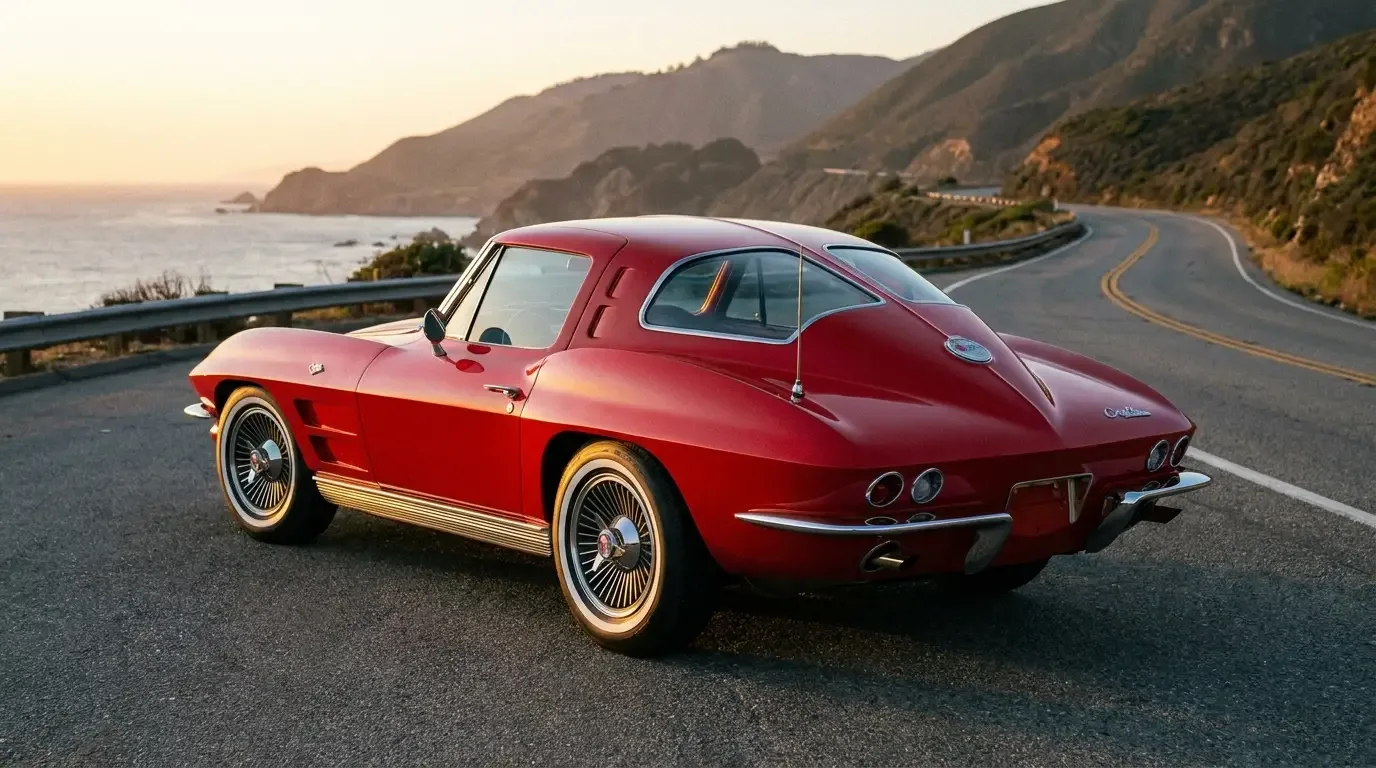
The coupe body, which appeared for the first time in 1963 with the Sting Ray, added structural rigidity compared to the roadster. For competition use, that mattered. The split rear window on the 1963 coupe is well known as a one-year styling element, but from a chassis standpoint the coupe gave the Z06 package a stiffer platform than the roadster would have provided. This is one reason the Z06 was offered only on the coupe for 1963.
| Specification | 1963 Z06 detail |
|---|---|
| Base vehicle | 1963 Corvette Sting Ray coupe (C2) |
| Engine (RPO) | 327 cu in V8, fuel injected (L84), 360 hp @ 6,000 rpm |
| Transmission | 4-speed manual (required with Z06) |
| Suspension | Heavy-duty springs, shocks, larger front anti-roll bar |
| Brakes | Sintered metallic linings, heavy-duty drums |
| Fuel tank (RPO N03, separate option) | 36.5-gallon fiberglass tank, 63 of 199 Z06s so equipped |
| Wheels (RPO P48) | Cast-aluminum knock-offs listed as an option, but not delivered to customers on 1963 cars due to porous castings; production cars shipped on steel wheels |
| Production | 199 units |
| Option price (1963) | $1,818.45 |
How to read the documentation on a claimed Z06
The tank sticker is the starting point. A 1963 Corvette with a Z06 claim needs factory documentation showing the option code on the original sticker, and the sticker needs to match the VIN on the car. Option codes on the Corvette tank sticker from this era are specific enough that a Z06 package is identifiable from the factory record, not from visual inspection alone. Anyone presenting a Z06 car without a readable tank sticker or NCRS documentation needs to be asked the right questions before money changes hands.
The VIN itself carries limited information for this purpose. The RPO codes are what matter. A Corvette researcher or NCRS judge looking at a 1963 Z06 claim will want to see the option group recorded on the sticker, the correct engine suffix codes stamped on the block, and ideally documentation that traces the car through its ownership history. Bloomington Gold judges have developed specific criteria for evaluating these cars, and consulting with someone who has judged Z06 Corvettes is worth the time before any major purchase.
"The Z06 is exactly the kind of car where the paperwork is the car. You can build a Corvette that looks like a Z06 and drives like a Z06, but without the tank sticker showing that option code, you have a well-optioned Sting Ray, not a Z06. The market knows the difference and prices accordingly."
— Tom Ramirez
Where these cars fit in the C2 story
The 1963 Z06 was the first time Chevrolet grouped competition-oriented Corvette components under a single option code. It set a template for how the factory would handle serious performance packaging going forward through the C2 generation and beyond. The Z06 name returned in later Corvette generations, but it carries different technical meaning in each context. The 1963 application was specific to that moment in the car's development, when Duntov was trying to give serious drivers access to equipment that had previously required dealer modifications or aftermarket sourcing. For anyone interested in the deeper story of the C2 Sting Ray as a whole, the Z06 represents one data point in a broader factory effort to take the Corvette seriously as a competition machine.
Current market values for documented 1963 Z06 Corvettes reflect their rarity and historical significance, and the numbers run considerably higher than for a standard Sting Ray. Recent public results have ranged from the high $300,000s for a standard-tank car up into seven figures for exceptional, fully documented examples, including "Big Tank" N03 cars that have brought over $1 million at auction. The spread is wide because documentation quality, originality, and the presence of the rarer N03 tank drive valuation more than condition alone for this car. A Z06 with a questionable history sells at a significant discount to one with a clean NCRS trail.
For buyers actively looking, 1963 Z06 Corvettes for sale appear occasionally in the collector market, though documented examples sell quickly when they surface at the right price. Patience is part of the process with this one.
Sources and notes
- Corvsport, 1963 Corvette Z06 Model Guide: confirmed the $1,818.45 option price, 199-unit total production, and the RPO N03 36.5-gallon tank being fitted to only 63 of those cars
- Chevy Hardcore, 1963 Corvette Z06/N03 "Ultimate Split Window Tanker": confirmed the 36.5-gallon N03 tank spec and the 63-of-199 production split for the big-tank cars
- Corvette Club of Columbus Indiana, P48 Quick Take-Off Wheel Option: confirmed that porous castings kept 1963 aluminum knock-off wheels from reaching customers and that production cars shipped on steel wheels
- GM Authority, The Story Behind the 1963 Chevrolet Corvette Z06: confirmed the L84 360 hp fuel-injected engine and the Duntov-driven origin of the Z06 option
- Vette Vues, Mecum Indy 2024 result: documented a standard 1963 Z06 split-window coupe selling for $687,500, used to calibrate the current market range
- Barrett-Jackson, coverage of a "Big Tank" 1963 Z06 auction result exceeding $1 million, used to confirm the top end of current Z06 valuations